Xinbeitou Train Station Finally Comes Home
Sam Ju / photos Jimmy Lin / tr. by Geof Aberhart
June 2013


Xinbeitou in Taipei’s Beitou District is well known across Taiwan for its hot springs. When the area was to become home to an MRT station in 1989, its old train station was sold and moved to Changhua to serve as a historical exhibit. Now, as its hundredth birthday approaches, the old Xinbeitou station building is coming home. Having been dismantled and moved to Changhua 24 years ago, it is finally returning to its place of origin. Behind this homecoming is a tale of growing awareness of the importance of preserving cultural assets, of an awakening of community consciousness, and of the overcoming of sectionalism across administrative units.
On April 29, 2013, the Changhua County Cultural Affairs Bureau convened a “tangible heritage evaluation committee,” which ultimately announced that it would not be permanantly listing the former Xinbeitou train station, which had been sold at auction, as a historic site.
Just a few days earlier, the station’s buyer had announced that it would donate the building to the Taipei City Department of Cultural Affairs. After Beitou residents had spent almost a decade campaigning to get the station back, just weeks after its 96th birthday the station received a late birthday present.
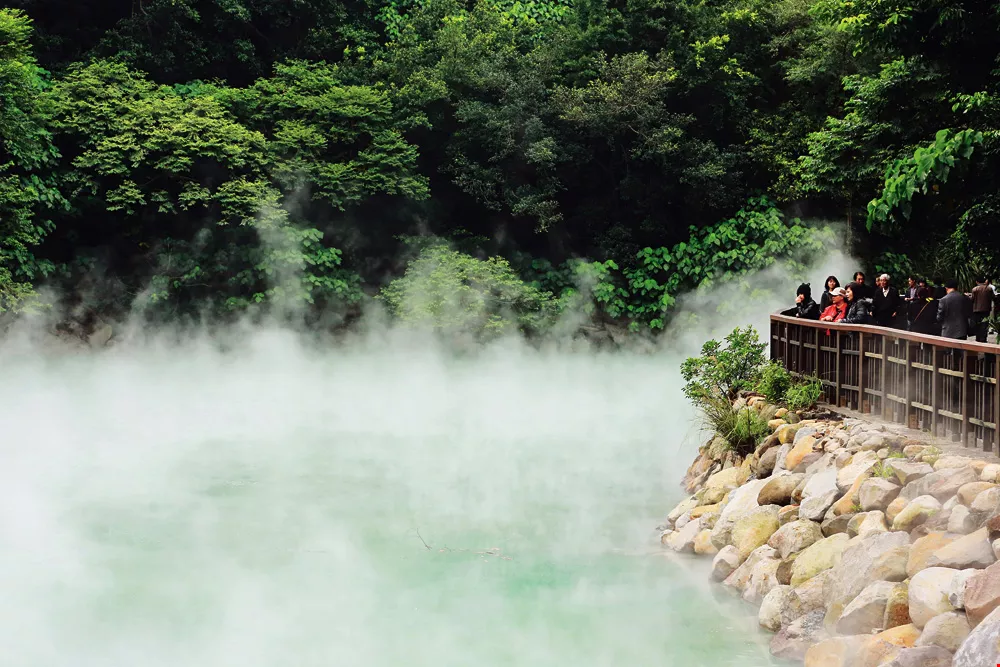
Xinbeitou has made a name for itself thanks to its green-sulfur hot springs, but its actual name comes from the Xinbeitou train station. This photo shows the area’s well-known thermal valley scenery.
On its opening in 1901, the Tamsui railway line became the first branch line in Taiwan. Departing from Taipei Station, it headed north, crossing the Keelung River, passing through the Guandu Plain and along the eastern bank of the Danshui River until it reached its destination, Tamsui.
Beitou Station was an important hub along the Tamsui Line. In 1916, a 1.2-kilometer branch line to Xinbeitou was added, with the original station situated catty-corner from what is now Beitou Park.
Nestled amongst the foothills of Mt. Datun, Xinbeitou Station was considered the most spectacular station along the line.
In 1937, as part of civil engineering efforts along Taipei’s railways, Xinbeitou Station was expanded by some 30%. Where the station originally had three dormer windows, it now had four, and the new station was constructed primarily out of Taiwanese cypress. From then through to its disassembly and removal in 1989, the station remained largely in that same state.
Sitting at the end of the Xinbeitou branch line, the station building was constructed perpendicular to the tracks and platforms, creating an almost garden-like setting that spectacularly showcased the area’s natural beauty.
Even more impressive is that the community around the station, renowned for its hot springs, actually took its name from the station!
But eventually the old, clunky trains were replaced as local transportation by subways. In 1988 Taipei City began construction of the Tamsui MRT Line, and on July 16 of that same year, the last train pulled out of Xinbeitou Station.
At the time, residents of Beitou were so excited by the arrival of the MRT system that no-one particularly cared about the old train station, and in October 1989 the Taipei City Government sold the station building to Taiwan Folk Village in Changhua County for a token NT$1 just to get it off their hands.
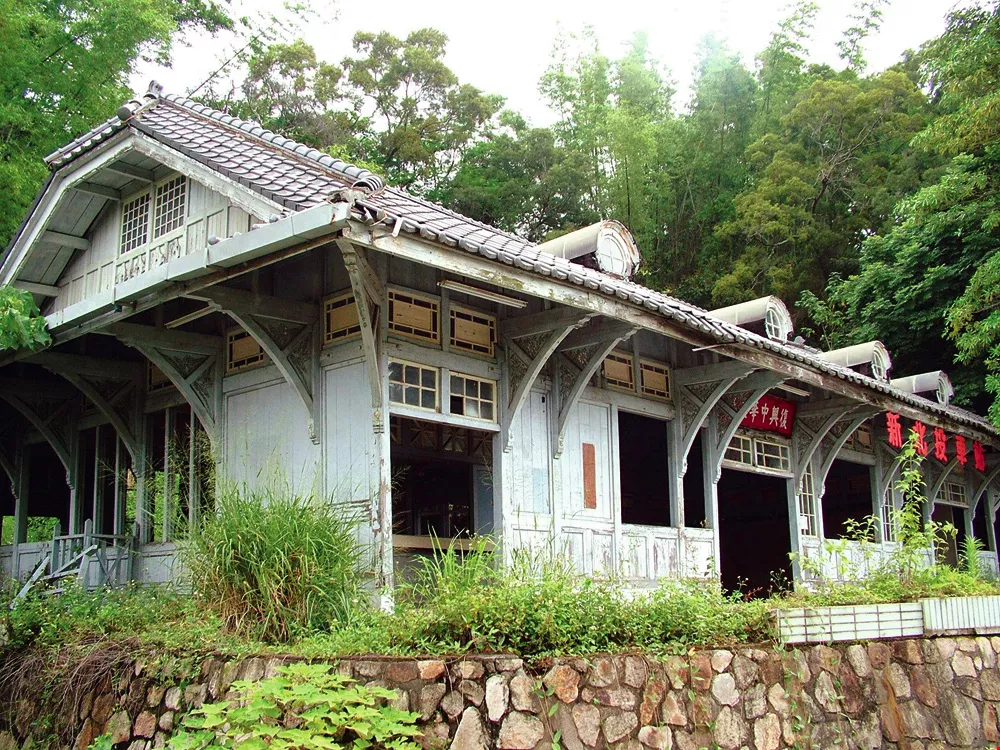
When Xinbeitou Station was sold to Taiwan Folk Village in Changhua, it went for a token price of NT$1. At the time of the sale, it was the last remaining station on the old Tamsui railway line. The photo below shows the station after its expansion in 1937.
Established in 1987 in Changhua’s Huatan Township, Taiwan Folk Village was once a well-known theme park, bringing together history, culture, education, and entertainment.
Shi Jinshan, the park’s founder, who passed away in 2007, had remarked that in 1989 he’d been the only person who considered Xinbeitou Station valuable, and that he had contacted the Taipei City Government expressing his willingness to preserve it. Once arrangements were made, he sent people north to take the station apart and transport it down to Taiwan Folk Village, where it was rebuilt and continued its life as the last remnant of the Tamsui railway line.
Shi was essentially a collector of large antiques, searching Taiwan for treasures. Over the years, Taiwan Folk Village became home not only to the Xinbeitou station building, but also the Shi Family Compound from Lukang, Dian’an Temple from Beidou, the Lin Family Compound from Madou, and some 10 other such buildings.
Following Shi’s passing, the management of Taiwan Folk Village was somewhat less than ideal, and out of concern for the historic buildings it hosts, the Changhua County Cultural Affairs Bureau provisionally listed seven of them—namely the Liao Family Clinic from Chiayi, the Lin Family Compound, the Shi Family Compound, Dian’an Temple, old structures from Douliu and Chiayi, and Xinbeitou Station—as historic sites that must be properly protected.
Additionally, due to the debt it had run up, Taiwan Folk Village was forced to auction off all of its buildings. In May 2012, asset management firm Sunrong Company acquired the title to Xinbeitou Station.
As Taiwan Folk Village’s assets were being sold off, Lin Guanhong, head of the Beitou Association’s Community Affairs Committee, visited the site to check on the condition of the station. He described the scene at the park as being “too terrible to look at,” “a complete disaster,” and “like some ruin left over from a war.”
However, compared to many of the other buildings, Lin said that the station building was still “somewhat complete,” despite it missing windows, doors, and seating, and some of its crossbeams having started to crumble. Hearing this, many Beitou residents were struck with guilt over their lack of action to preserve the building before it was torn down and relocated.
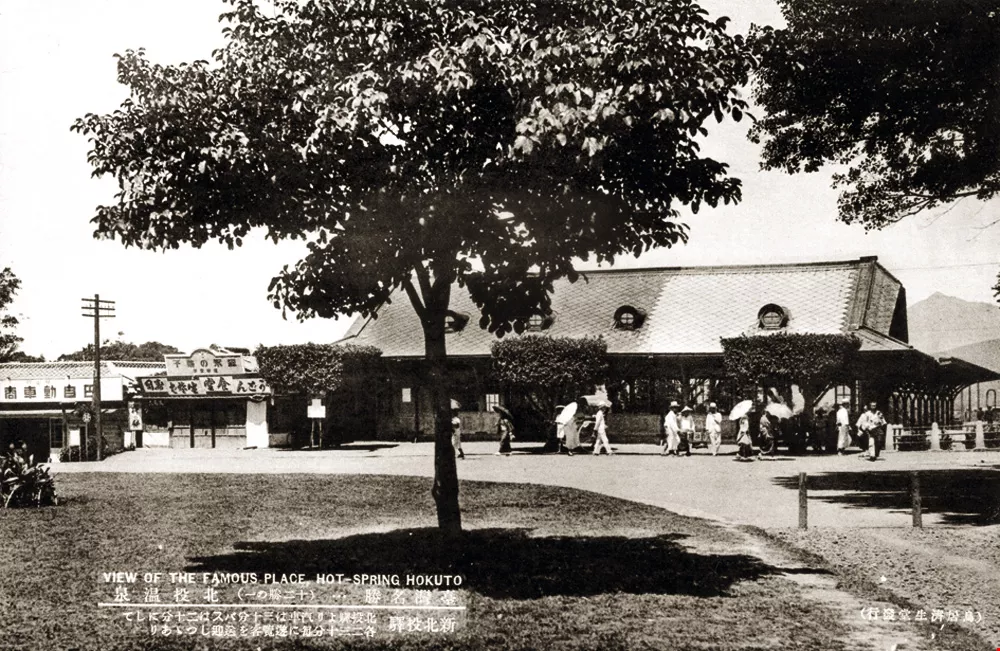
When Xinbeitou Station was sold to Taiwan Folk Village in Changhua, it went for a token price of NT$1. At the time of the sale, it was the last remaining station on the old Tamsui railway line. The photo below shows the station after its expansion in 1937.
Reflecting on Beitou people’s apathy toward the station at the time, Lin has but one word for it: “heartless.”
But as the idea of community building began to grow in Taiwan in the 1990s, people started focusing more on local cultural assets. Since 2003, repeated calls have come not only from ordinary residents, but also from people in politics, social campaigners and the cultural community for the Xinbeitou station building to be returned. Local musicians including Chen Ming-chang, composer for Hou Hsiao-hsien’s 1986 film Dust in the Wind, even put together an album entitled Our Beloved Station, giving voice to the feelings of the sons and daughters of Beitou toward the station and their wishes that it return home.
Sebastian Liao, then director of the Taipei City Department of Cultural Affairs, is amongst those sons of Beitou, and he and his successors have continued to be strong supporters of the efforts to bring the station back, including raising funds and facilitating negotiations between community representatives and the station’s titleholder.
Fate wasn’t finished with the beloved old building yet, though. In 2011, the Changhua County Government extended its provisional historic site designation on the Xinbeitou station building and six others originally under the care of Taiwan Folk Village, with effect until May 7, 2013. This meant that should the Changhua Cultural Affairs Bureau decide by that date that the station building was to be permanently listed, it would have to remain in Changhua, never again able to return to its home in Xinbeitou.
And with the station building having been auctioned off in 2012 and thus in private hands, even if it wasn’t made a permanent historic site, if the people of Beitou wanted it back they’d have to pay, and probably over NT$100 million.
Given the situation, Beitou residents had already laid out a plan for the worst-case scenario, deciding to build a replica of the station in the event that they couldn’t get it back.
In late April, with the deadline drawing near, things took a dramatic turn. First Sunrong Company, which had previously been unwilling to sell the building, wrote to the Taipei City Department of Cultural Affairs formally announcing their willingness to donate the building “without compensation.” This reignited hope in the hearts of the people of Beitou that the station would return.
Then, on April 29, the Changhua County Cultural Affairs Bureau convened a “tangible heritage evaluation committee,” ultimately announcing that while three of Taiwan Folk Village’s former buildings would be permanently listed as historic buildings, in the interests of cultural heritage preservation, they would request that the Taipei City Government take back Xinbeitou Station now that its temporary protection was to expire.
Changhua County chief executive Cho Po-yuan was pleased with the decision, stating that he believed such preservation of history, from the station’s escaping destruction in Taipei through its preservation in Changhua to its return home, was in line with the original intentions of Taiwan Folk Village founder Shi Jinshan.
The people of Beitou were overjoyed by the decision as well. Taipei’s Department of Cultural Affairs had long since arranged for a plot next to the park by Xinbeitou MRT Station to be kept vacant for the eventual return of the old station building, and the community was fully behind the station’s being returned to its old location and restored to its original condition.
Lin Guanhong of the Beitou Association has remarked that while getting the station back is absolutely a happy ending to the story, the process of actually moving the building should best be completed before Taiwan enters typhoon season, as the old wooden structure may not be able to withstand the ensuing storms.
The more than NT$600,000 collected through fundraising efforts aimed at buying the station back, says Lin, will be used to pay for the transportation and restoration of the station building. Meanwhile, the Taipei City Government has begun work on listing the building as a historic site, along with setting aside money in the 2014 budget for renovations, to join with the people of Beitou in celebrating the return of this relic.
After 24 years away, Xinbeitou Station is finally to be welcomed home again. And with the station set to celebrate its centennial on April 1, 2016, this nonagenarian son is sure to have quite the spectacular party.

@List.jpg?w=522&h=410&mode=crop&format=webp&quality=80)

@List.jpg?w=522&h=410&mode=crop&format=webp&quality=80)

@List.jpg?w=522&h=410&mode=crop&format=webp&quality=80)
@List.jpg?w=522&h=410&mode=crop&format=webp&quality=80)

