Film, Entertainment, Culture: Taking Taiwan’s Soft Power South
Cathy Teng / photos Jimmy Lin / tr. by Scott Williams
March 2017


Taiwan and Malaysia enjoy close linguistic ties that have supported continuous bilateral cultural exchanges. The Malaysian ethnic Chinese community’s use of various varieties of spoken Chinese and of Chinese characters means that we view the world through similar frames.
Every December, a group of more than 300 young Chinese Malaysians visits Taiwan for a 21-day tour of the island. Although many of these students are visiting Taiwan for the first time, most have already learned a great deal about our island and culture through the mass media.
Members of the study group, who range in age from 15 to 18 years old, chatter enthusiastically among themselves about books by Giddens Ko, films such as You Are the Apple of My Eye and At Cafe 6, shows like Kangsi Coming, TV hosts such as Kevin Tsai, Dee Hsu, and Woo Gwa, and their love of the music of Jay Chou, A-mei, and Jolin Tsai.
Having grown up learning about Taiwan through television, the kids now have the opportunity to experience the real thing for themselves.
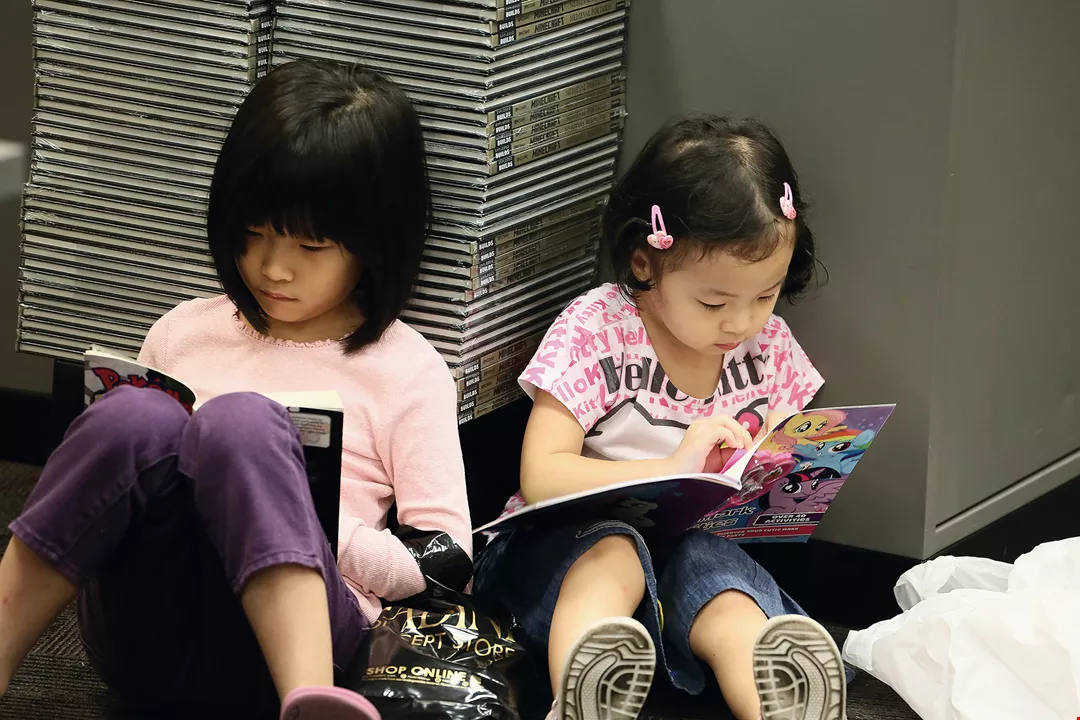
These children in a corner of a bookstore focus on their reading, immersing themselves in imaginary worlds.
Cultural connections
In contrast to this younger generation of Chinese Malaysians, who acquired their first impressions of Taiwan through movies and television, those born in the 1960s and 1970s got theirs from the works of Taiwanese authors.
Malaysia’s long tradition of Chinese-language education has helped the country maintain a large population of people who read Chinese. By whetting the literary appetites of Chinese Malaysians, this educational tradition has also turned bookshops into essential mediums of cultural transmission.
Well known throughout Singapore, Malaysia, and Hong Kong, the Popular Book Company opened its first Malaysian bookstore in 1984. It has since grown into Malaysia’s largest bookstore chain, with 89 outlets across the country. Executive director Lim Lee Ngoh has been working in book publishing for more than 30 years, and shares her perspective as she leads us around one of her stores. “Taiwan accounts for the bulk of our Chinese-language books, followed by mainland China, and then locally published books,” explains Lim.
She points to shelves lined with books by Taiwanese household names, ranging from Chang Man Chuan’s The Sea is Blue and San Mao’s collected works to titles by Neal Wu, Giddens Ko, Mark (Mark Lee), Deng Huiwen, and Juzi (Cao Xiaoru). There’s even a poster on the wall promoting a Malaysian lecture by Peter Su, the social media phenom who wrote On the Road to Dreams. It feels just like a bookstore in Taiwan!
Popular’s efforts to promote reading include recommending 19 new books (ten from Taiwan) every month and airfreighting them to Malaysia, which ensures that Malaysian readers have access to the hottest new Chinese-language titles.
Popular also organizes the Malaysian publishing industry’s annual BookFest, which attracted 680,000 visitors to its 11th iteration in 2016.
Taiwanese publishers have participated as a group for many years. In fact, the Ministry of Culture brought more than 300 publishers to the Taiwan pavilion for the 2016 expo. The MOC also invited authors Wu Mingyi, Tsai Shi-ping, and Chuang Tzu-i, as well as illustrator Chen Yingfan, to deliver lectures and participate in exchanges aimed at helping ignite Taiwanese‡Malaysian cultural fires.
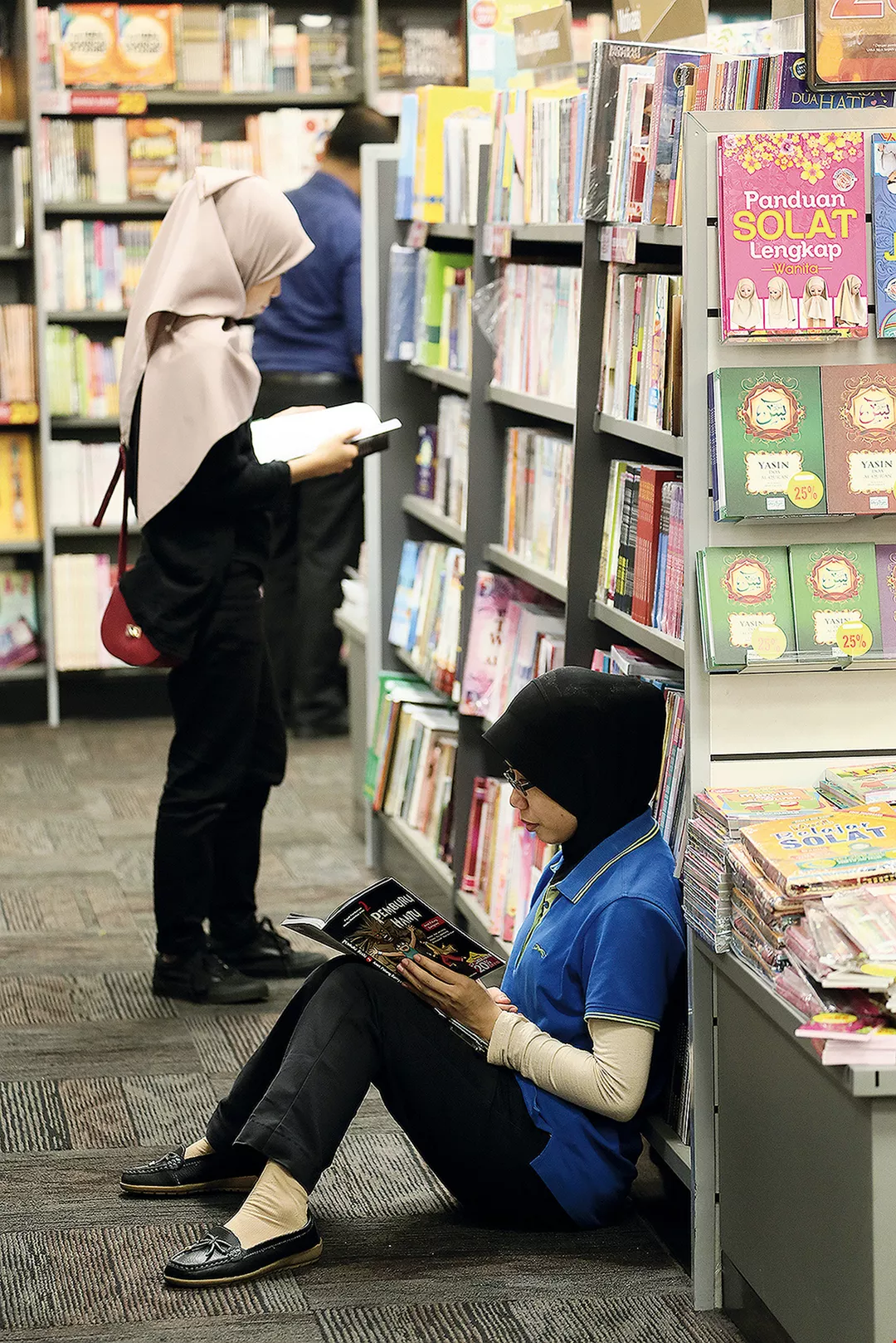
When you read a book, you come to know the author.
Musical exchanges
Taiwan is a trendsetter in the Chinese-language entertainment field. You can hear Taiwanese pop music just about everywhere you find ethnic Chinese. Albums released in Taiwan by Chinese-language pop stars not only circulate throughout Greater China, but also within Malaysia’s own large ethnic Chinese community. Taiwan also serves as an important market for Malaysian Mandopop singers who hope to take their talents abroad, one in which they have to compete.
Which Mandopop stars come from Malaysia? Eric Moo is an early example, but Taiwanese record companies have been scouting Southeast Asia for new talent since the 1990s, and their finds have included the likes of Fish Leong, Penny Tai, Michael Wong, Victor Wong, Nicholas Teo, and Ah Niu (Tan Kheng Seong).
TV programs have provided still more opportunities for exchanges between singers from Taiwan and Malaysia.
Malaysian singer Athena Beh appeared on the Taiwanese TV show One Million Star three times and received such high marks for her performance, in a song duel, of “I Admit It,” originally by the 1990s Taiwanese duo Youke Li Lin, that her record company had her record a new version of it for one of her albums. The recording by a relative youngster rejuvenated an old standard and created memories that can be shared across the generations.
Malaysian songwriters have also penned many a Taiwanese Mandopop song, including hits such as Jovi Theng’s “Can’t Help Falling in Love,” as well as Ah Niu’s “Look over Here, Girl” and “Waves Like Flowers” (performed by Richie Ren). Ah Niu’s use of distinctively Malaysian elements, such as Mamak stalls and multiple languages, in his songs has also helped bring greater diversity to Mandopop.
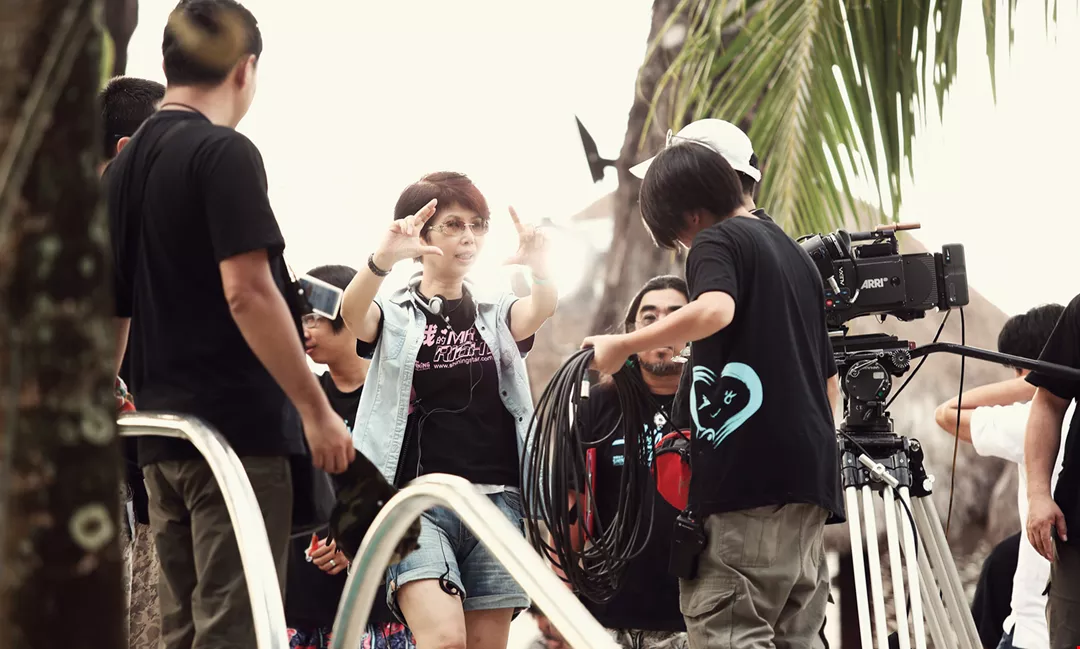
Yoko Chou’s My Mr. Right was the first Malaysian film to be made in coproduction between Malaysia, Taiwan and mainland China, establishing a template for future collaboration on Chinese-language films. (courtesy of Enjoy TV Corp.)
Television exchanges
Taiwanese‑Malaysian exchanges extend well beyond music. Turn on a TV at 3 p.m. in Malaysia and you’ll find long-running programs set in rural Taiwan that have a large Malaysian fan base. They’re so popular that Malaysia’s Astro television service even created a station devoted exclusively to them in 2007.
The Taiwanese “idol show” Meteor Garden has also been a huge hit, tearing through Malaysia like a whirlwind and turning not just ethnic Chinese but also native Malays into fans of the Taiwanese boy band F4.
Interestingly, the driving force behind the spread of Taiwanese TV shows on Malaysian TV has been a Taiwanese woman named Yoko Chou. Married to a Malaysian man, Chou also happens to be the CEO of Enjoy TV Holdings.
Chou has continued to pursue her TV career in Malaysia, using her extensive connections and experience to bring Taiwanese and Malaysian resources to bear on producing TV programs. She has also worked with mainland China’s Jiangsu Broadcasting and Malaysian television networks to shoot a variety of programs. “My role is to be something of a platform, to bring Taiwanese talent to Malaysia and mainland China, and to spur cooperation by enabling that talent to be seen.”
Chou branched out into film in 2012, and in 2015 released My Mr. Right, a film that features Taiwanese actors Tou Chung-hua and Lin Mei-hsiu, as well as Malaysian and mainland Chinese cast members. As the Malaysian film industry’s first “trilateral” venture, it established a template that the rest of the industry can follow to make Chinese-language films.
Taiwan’s experience has been proving important to the development of the Malaysian film industry. Chou’s husband Dato’ Sam Yap, president of the Kuala Lumpur Chinese TV & Film Association (KLCTFA), admits: “Malaysia’s film industry has developed more slowly than its other entertainment industries.”
Ah Niu filmed Ice Kacang Puppy Love in 2010. During a subsequent interview with Taiwanese variety-show matriarch Chang Hsiao-yen, he mentioned that Malaysian films with more than 60% of their dialog in Chinese were considered foreign films and subject to a 20% entertainment tax. The reporting of this news prompted the Malaysian government to amend the law, which in turn began the development of Chinese-language film in Malaysia. Such policy restrictions used to discourage Chinese Malaysians from going into film production, and contributed to the sector’s relatively late development. The industry’s next hurdle is overcoming its resultant lack of film professionals.
In 2015, the KLCTFA and the Taipei Economic and Cultural Office in Malaysia jointly organized the Malaysia and Taiwan Film Festival and the Golden Butterfly Awards, inviting Taiwanese and Malaysian directors, writers, producers, and actors to attend forums and take part in exchanges. Sam Yap, who chaired the organizing committee, says: “It was a good beginning. I hope to see more cooperation and exchange between Taiwan and Malaysia in the future.”
TV is an incredibly important form of entertainment in Malaysia, where the average urban household watches 3.7 hours per day and the average rural household watches 4.3 hours per day. With the Malaysian government planning to move all of the country’s state-owned TV stations to digital broadcasting by 2018, and with Enjoy TV Holdings having won the license to operate a block of the broadcasting spectrum and been authorized to devote it entirely to Mandarin programming, Chou and Yap believe that the time is right for Malaysia and Taiwan to deepen their cooperation and that such cooperation will benefit the professionals, capital, and talent on both sides.
Malaysians regularly listen to Taiwanese pop music, watch Taiwanese TV, and even occasionally read the books of Taiwan authors. Taiwan and Malaysia’s many years of close cultural exchanges have incorporated “Taiwanese elements” into Malaysian lives. Moving forward, cultural soft power will undoubtedly play an important role in our deepening ties to one another.
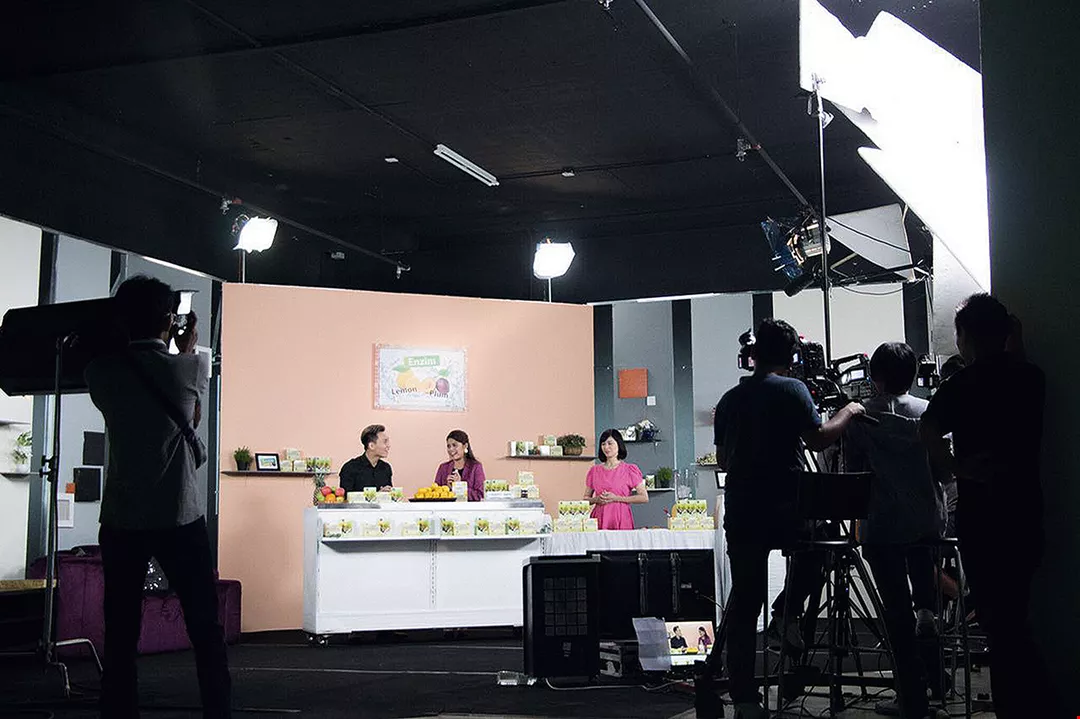
Taiwanese and Malaysian TV and film professionals are undertaking exchanges in multiple areas, creating opportunities for cooperation and mutually beneficial ventures. (courtesy of Enjoy TV Corp.)
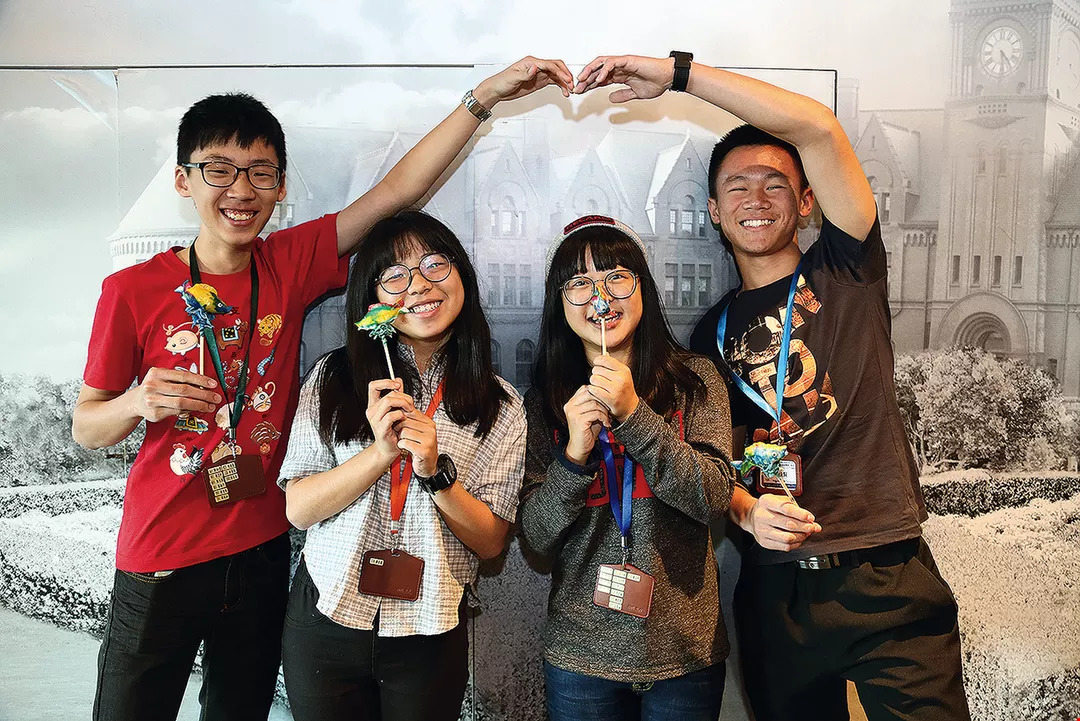
These members of a Taiwan study tour traveled the island for 21 days, learning about folk arts through experience-oriented classes.

Taiwan and Malaysia’s extensive musical exchanges include Malaysian singer Athena’s three appearances on the Taiwanese TV show One Million Star. (courtesy of Enjoy TV Corp.)
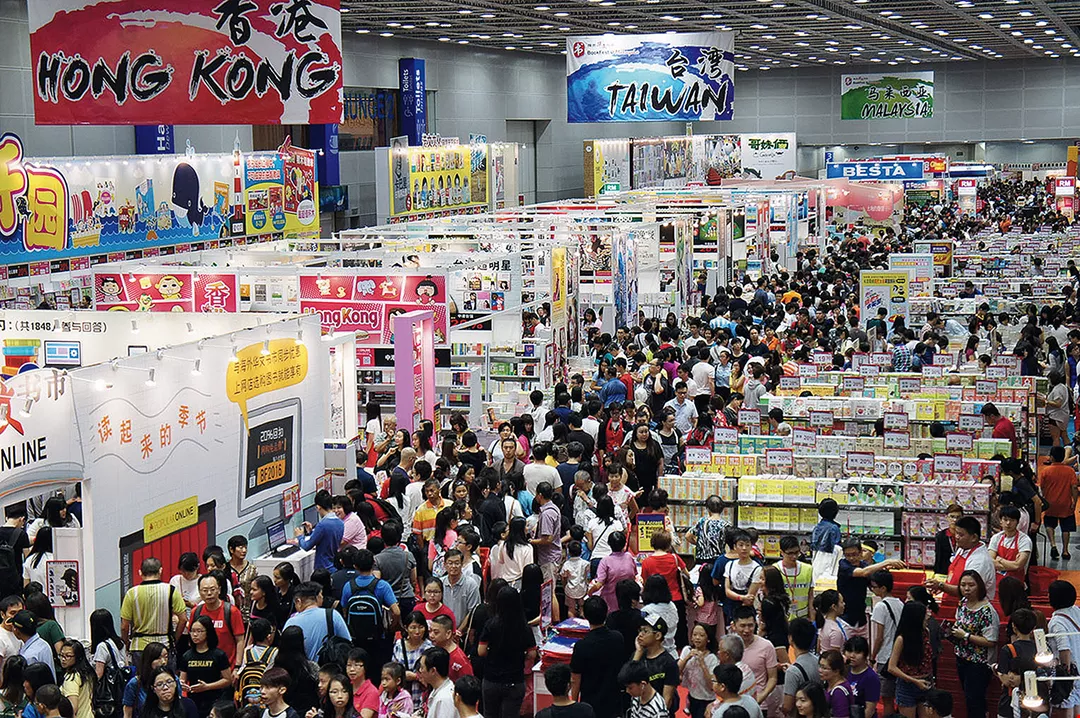
Crowds pack Malaysia’s annual BookFest. (courtesy of Popular Book Co.)
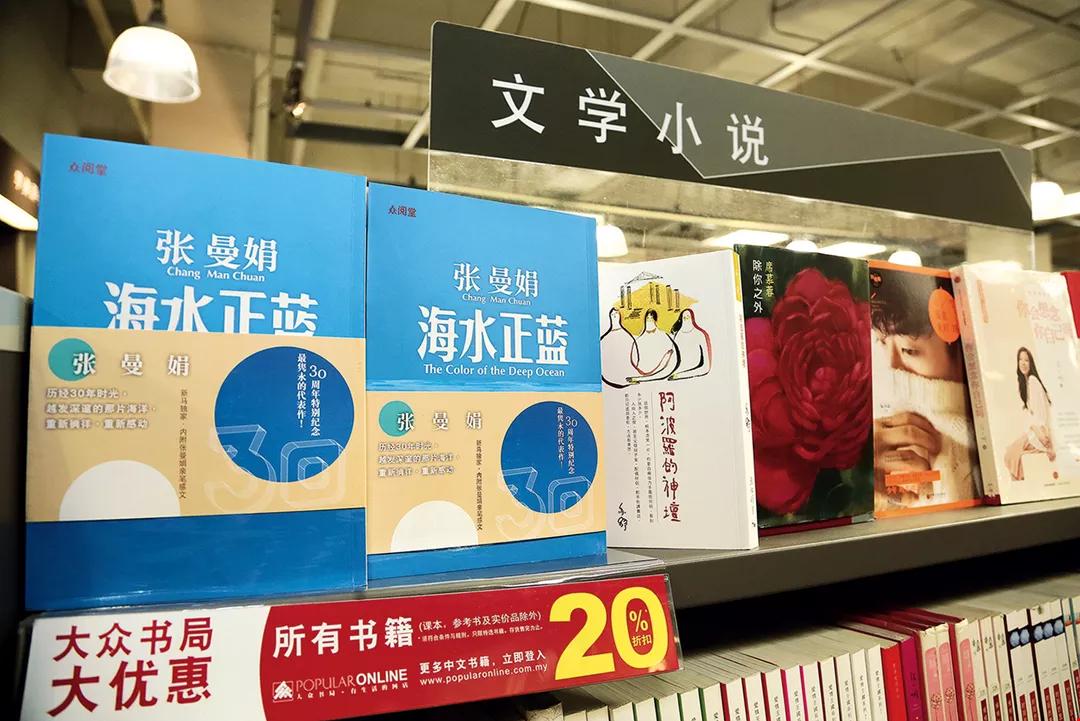
Drop into any Popular bookstore and you’re sure to find the works of Taiwanese authors on the shelves.


