Working for Taiwan: The National Conference on Economic and Trade Affairs
Kobe Chen / tr. by Geoff Hegarty and Sophia Chen
September 2014


The three-day program of the National Conference on Economic and Trade Affairs wound up on July 28, 2014. Delegates including government officials, businesspeople, academics and youth representatives gathered to discuss two themes: “Taiwan’s economic development strategies in the context of globalization,” and “Taiwan’s bid to participate in regional economic integration, and her cross-strait economic strategies.” The conference reached consensus on a number of issues, aiming to accelerate international integration, promote industrial innovation, assist young people to achieve their goals and reinforce social justice.
At the closing ceremony, President Ma Ying-jeou pointed out that Taiwan must move towards liberalization and internationalization, and that the next two years will be a critical period for Taiwan to integrate herself into Asia–Pacific economics and trade. All sectors will need to work together to develop realistic strategies to boost the nation’s economy and promote the greatest benefit for all.
Prior to the National Conference on Economic and Trade Affairs (NCETA), four regional conferences were held in Taiwan’s northern, southern, central and eastern regions. After assimilating ideas and opinions from the regional conferences, the two major themes for discussion at the main conference were decided.
President Ma instructed that participating government departments must transform NCETA accords into specific measures and formulate schedules and budgets to implement these as soon as is feasible.
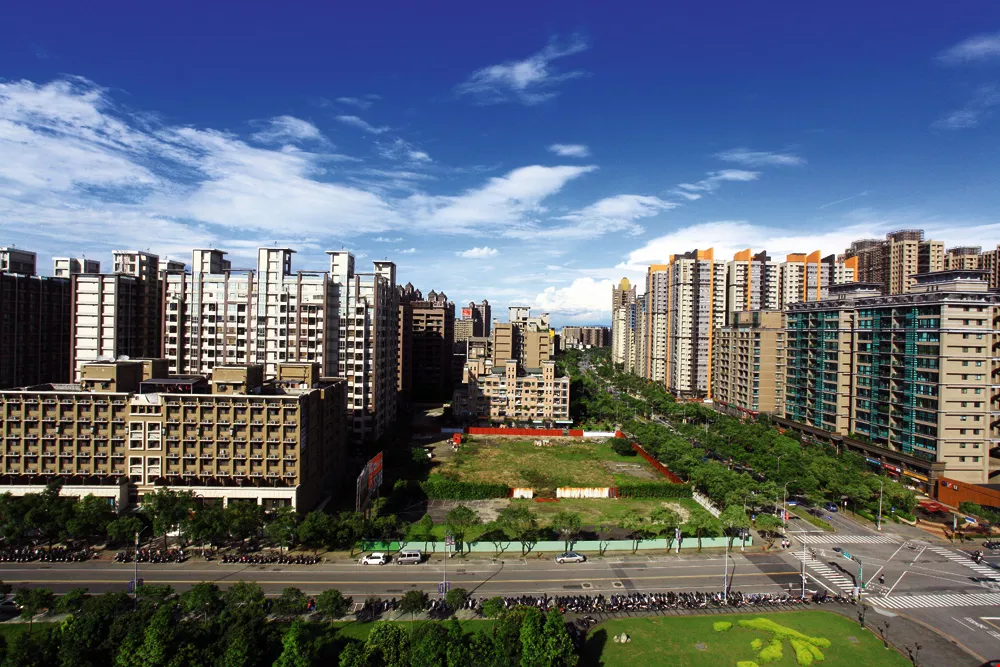
A major focus of discussions at the National Conference on Economic and Trade Affairs was to address the problem of Taiwan’s over-valued housing.
The decision to hold the conference resulted from the recent controversy over the Cross-Strait Trade in Services Agreement. In order to mitigate public criticism of any lack of transparency at the event, the NCETA employed webcasts throughout the conference, making videos and transcripts of all speeches available for public scrutiny.
“We are learning from the young people,” said Premier Jiang Yi-huah. The Sunflower Student Movement has involved greater numbers of young people in politics and contributed to the development of a supervisory mechanism on cross-strait agreements, currently under consideration in the Legislative Yuan. Premier Jiang believes that young people’s efforts deserve recognition.
From another perspective, the NCETA can also be seen as a way of reassessing changes that have occurred in the structure of Taiwan’s industrial economy over the past decade.
In the keynote speech at the opening of the conference, former vice president Vincent Siew pointed out that Taiwan’s sluggish economy had resulted from the effects of globalization and the onset of the knowledge economy: skilled personnel and capital tend to move to high-salary regions, while industry migrates to low-cost areas. But industries that lack advanced technology and people without special skills are unable to move to other countries, resulting in growing income inequality and wage stagnation for employees. In the knowledge economy, companies and countries that can innovate enjoy most of the profits, and this further exacerbates the income gap. It’s an issue not only in Taiwan: many countries around the world are also confronting the same problems of youth unemployment and wealth inequality. The key point, however, lies in how Taiwan is going to deal with these issues.
Local issues before globalizationThe conference brought together over 200 elite personnel from all sectors. Some raised questions, and many offered suggestions. Heads of government departments industriously took notes, seizing the opportunity to answer questions, and also seeking advice from all stakeholders. A diverse range of opinions were voiced.
Chief executive of Dr. Finance Lin Zuyi (who has just turned 30) took an active role in discussions on the first theme. Lin noted that Taiwan is facing three difficult issues: the rising cost of housing, wage stagnation, and an aging population.
“Young people’s wallets are becoming thinner,” said Lin. The youth employment program recently implemented by the government might reduce unemployment, but it wouldn’t solve the problem of low wages. Hopefully, the government would take this advice onboard.
Delegates offered many suggestions. Tax reform was the most popular proposal, and included ideas such as imposing levies on capital gains, taxing real estate transactions on the actual price paid rather than the officially assessed value, and taxing investment income separately from salaries. These measures would aim to build a rational tax system, and to narrow the gap between rich and poor.
The president of the Taiwan Confederation of Trade Unions, Chuang Chueh-an, suggested that the government should amend existing laws as soon as possible to reduce working hours from 84 to 80 hours per fortnight, and introduce a system for regularly adjusting the minimum wage to ensure that no worker need be concerned about basic survival.
Chou Ling-tai, professor of accounting at National Chengchi University, proposed “reducing taxes in exchange for increased salaries.” As an incentive to encourage companies to come on board, the government would provide tax breaks for companies if they raised payments to workers by a certain percentage.
Monitoring cross-strait agreementsGlobalization and economic integration were the two major themes discussed at the conference. Many countries are now accelerating regional economic and trade cooperation and negotiating bilateral free trade agreements. South Korea has signed free trade agreements with countries across the globe. Free trade negotiations between mainland China and South Korea will be completed by the end of this year, in fact. This should sound a serious warning to Taiwan, whose current priority is to join the Trans-Pacific Partnership Agreement and participate in regional economic integration.
Taiwan needs to handle cross-strait economic and trade issues with some sensitivity, and take seriously mainland China’s power to impact Taiwan’s economy. In 2013, trade with mainland China accounted for 40% of Taiwan’s total exports, and 65% of Taiwanese investment ended up in the same place. Proper negotiation of cross-strait economic and trade agreements is essential, but cross-strait dealings can be complex. There are pros and cons to the relationship, so Taiwan needs to tread cautiously.
A supervisory mechanism for cross-strait agreements is currently being considered by the Legislative Yuan. Only when the legislation is in place can the Cross-Strait Trade in Services Agreement be implemented. To allay public concerns over internationalization becoming “mainlandization,” the National Development Council has also proposed a national security review of cross-strait dealings. The NDC will publish a “cross-strait risk redbook” annually, and will establish risk management awareness to ensure that national security is not put at risk.
Reducing impacts, creating new opportunitiesFormer vice president Siew notes that any negotiation process will always involve gains and concessions on both sides, so the government needs to communicate and coordinate meticulously with all stakeholders to ensure that any undesired impact on vulnerable groups is minimized.
To lessen the impact of globalization on susceptible groups, many at the conference expressed the opinion that the government should establish clear criteria for identifying social enterprises, provide incentives for such groups, and encourage the development of localized industry as a response to economic and trade liberalization.
At the conclusion of the conference, Premier Jiang pointed out that Taiwan is a pluralistic society, with the voices of the people coming from all corners. Even when opinions differ, we are, in the end, working in the best interests of Taiwan. We’re all in the same boat, so conflict cannot be permitted to sink us, or even allow the boat to come to a halt.
The National Conference on Economic and Trade Affairs is the starting point for resolution of conflicts. Ideas and suggestions that have emerged and been brought together at the conference will become concrete proposals to assure Taiwan’s progress. The nation’s democratic structure will be made more stable and mature through the process of building consensus.
@List.jpg?w=522&h=410&mode=crop&format=webp&quality=80)

@List.jpg?w=522&h=410&mode=crop&format=webp&quality=80)


@List.jpg?w=522&h=410&mode=crop&format=webp&quality=80)

@List.jpg?w=522&h=410&mode=crop&format=webp&quality=80)
