Located in a remote mountainous border region between northwestern Thailand and Burma which is inhabited by minority tribes that lack educational and medical resources, Mae Sot has become a magnet for tens of thousands of refugees from Burma's civil war. For the past several years, numerous international NGOs, including Taipei Overseas Peace Service (TOPS), have set up aid operations in the town.
In recent years, CYCU's Department of Information Management has encouraged its students to take part in youth volunteering. During their time at the university, five fourth-year students--Chang Li-an, He Ssu-wei, Li Wo-chan, Cheng I-ting and Chung Chia-hsien--had already done voluntary work in Fuhsing Township, Taoyuan County, and on Tungying Island in the Matsu archipelago. Undeterred by cultural differences and the language barrier, and encouraged by their professors, the students left for Thailand in August 2005 and again in February 2006 to contribute their IT skills to a good cause.
The five volunteers flew from Taipei to Bangkok, slept rough in Bangkok's central bus station and took an eight-hour bus ride to Mae Sot. They arrived at the border travel-worn and weary. In light of the cultural gap and the area's limited infrastructure, the team set itself the twin goals of "stimulating children's interest in learning" and "sowing seeds by training local teachers." In collaboration with the TOPS team in Thailand, the students traveled to an elementary school in a remote tribal village in the mountains, where they organized a computer training camp to teach Thai and Burmese children how to use computers. Their aim was to open a window to the world for them.
The CYCU students offered training to local teachers and taught schoolchildren how to use computer software to draw pictures. In the computer training camp, children took turns using computers. Sweaty little palms betrayed how nervous they were the first time they came into contact with a computer. Although they were keen to learn, they were also disheartened when they realized that their educational environment was worlds away from that in Taiwan. The CYCU students were deeply impressed by the look of concentration on their charges' faces. They hope that this volunteering program will continue to strengthen international friendship.
As soon as the Taiwanese volunteers returned to Taiwan, they began to think of ways to provide people on the Thai-Burmese border with more opportunities to learn IT skills. They drew up a plan, raised funds to buy computers and sought support from the public. After countless setbacks, they finally obtained several computers from Acer Corporation and financial support from the Shinkong Life Foundation. In April of this year, they traveled once again to Mae Sot with nine computers for the Mae Tao Clinic. They guided clinic personnel, provided software and hardware maintenance training, and worked very hard to finish setting up the clinic's digital learning center.
The Mae Tao Clinic was founded by Dr. Cynthia Maung, who was exiled from Burma 18 years ago. To meet the health needs of people living along the Thai-Burmese border, Dr. Maung trains young Burmese refugees as doctors and nurses and provides public health education to the local community. She is also a rallying point for the Burmese peace and democracy movement. Consequently, she is known to many people around the world as the "Mother Theresa of Burma."
He Ssu-wei, a student who has taken part in all three overseas volunteering missions to Mae Sot, wrote, "We were told not to go there thinking that we were going to teach them, because we might end up learning much more from them than they from us. When I first heard this, I did not realize what it could possibly mean. But now that I'm back in Taiwan, I understand. Since returning to Taiwan, I have felt privileged to live in such a prosperous country. We don't value what we have and always complain about not having this or that."
The Mae Tao Clinic's digital learning center represents an even greater responsibility for the volunteers, who have committed themselves to a long journey of service learning. Over the coming summer vacations, they plan to guide a younger group of volunteers as they travel to Mae Sot to take over the management of the digital learning center, offer computer training classes to local youngsters and share Taiwan's IT expertise.
You don't have to be a saint to get involved in international volunteering. The same quality is required from student volunteers and from foreign aid professionals: a commitment to humanitarianism. The path of public service is full of surprises and is open to everyone.
It is gratifying to see a new generation of Taiwanese students leave their campuses to explore the wider world and gain experience in public service. These students are showing the world that Taiwan not only excels at manufacturing high-tech products but is also contributing its digital technology expertise to developing countries and is consequently making our global village a better place for all.
Taiwan is widely thought to be insular in outlook and to lack the means to spread its influence overseas. But on the Thai-Burmese border, everyone knows that we come from Taiwan and that we are making a great effort to benefit humanity. To Taiwan and its young people, I say: keep up the good work
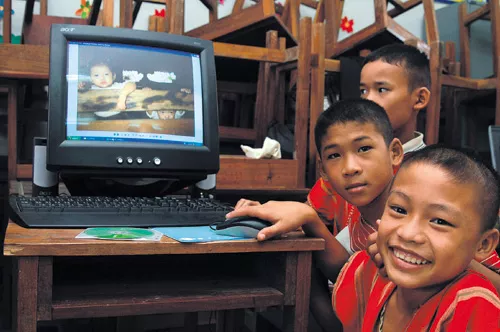
After getting the software installed, the most important thing is helping the kids learn to use the computers. Seeing the images on the screens, the children focus their attention and work hard to learn.
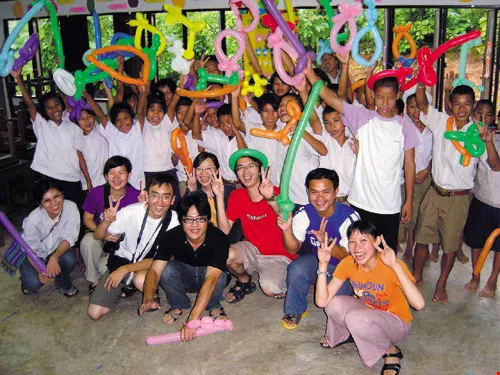
Volunteering abroad means overcoming differences in language and culture, and building friendships. This picture shows the volunteers sharing some fun activities with the children of the digital learning center.



@List.jpg?w=522&h=410&mode=crop&format=webp&quality=80)

@List.jpg?w=522&h=410&mode=crop&format=webp&quality=80)


@List.jpg?w=522&h=410&mode=crop&format=webp&quality=80)

@List.jpg?w=522&h=410&mode=crop&format=webp&quality=80)