New Taipei City’s Elder Services Program
Chang Chiung-fang / photos Jimmy Lin / tr. by Chris Nelson
September 2013


Which of Taiwan’s 21 municipalities and counties has the greatest number of elderly people? And in which city is the proportion of seniors the highest?
In both cases, the answer is New Taipei City.
The New Taipei City Government recently created a taskforce to address the issue of the aging population. The taskforce launched a program to promote local care and healthy lifestyles, aiming to give seniors a safe, comfortable and healthy learning and living environment.
Can this program, created for New Taipei City, be extended to help senior citizens throughout Taiwan?
“New Taipei City is a microcosm of Taiwan,” says New Taipei Social Welfare Department director Li Li-chun. Over 70% of the city’s residents are from elsewhere, and geographically it’s both urban and rural. So if the program can be implemented successfully in New Taipei, “it can be done anywhere in Taiwan.”
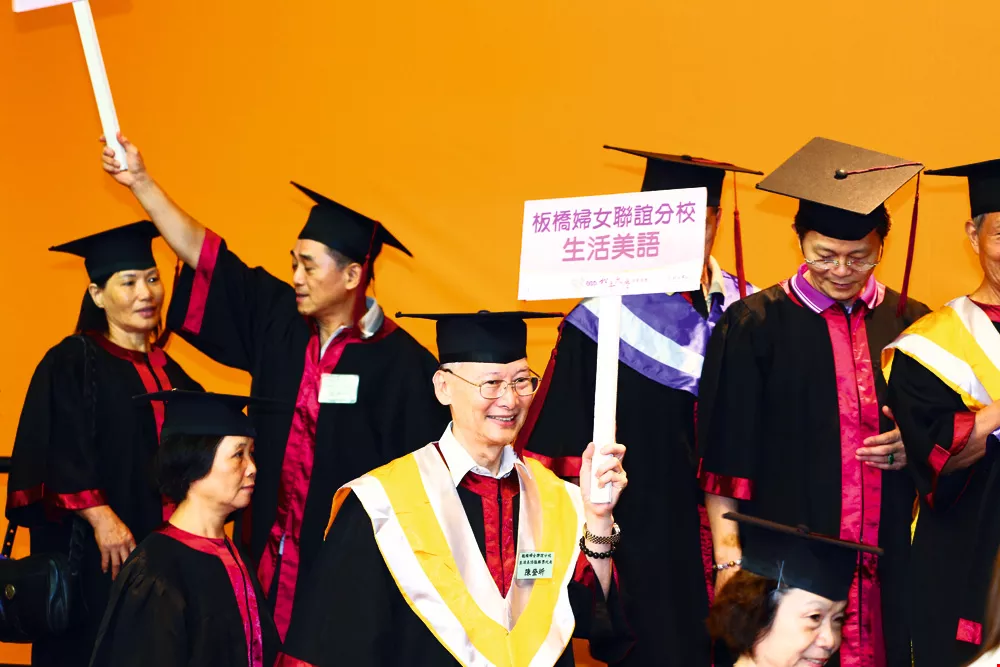
Learning is a form of social participation. In New Taipei City’s senior education program, there’s no lack of people in their 80s and 90s who are eager to learn.
New Taipei City’s population has grown sharply over the last decade or so, and the growth rate of its elderly population is four times that of the general population. Last year the number of those aged 65 or over grew by 1,000 a month; now the monthly increase is 2,200.
At the end of June 2013, the population of New Taipei City totaled over 3,940,000, with more than 360,000, or 9.2% of the city’s population, aged 65 or over.
The age profile varies greatly when we compare the city’s districts. Some are quite “young,” such as Tucheng, Luzhou, Xinzhuang and Taishan, with less than 7% of the population being seniors; this is well below the 11% average for Taiwan. Other areas, such as Ruifang, Shiding, Gongliao, Pinglin, Shuangxi and Pingxi, are much “older,” with an elderly population of over 15%. Pingxi beats all other areas in Taiwan in this regard, at 26.03%; that is, about one person in every four is a senior citizen.
Li Li-chun states that it’s a major challenge to provide both local care to the 10% of seniors who are disabled, and healthy living programs to the other 90%.
In 2010 and 2012, New Taipei City conducted comprehensive surveys of senior citizens living within each of its neighborhoods, gathering data to help provide services for seniors.
According to Li, it’s no surprise that seniors requiring care prefer to receive it at home or in a familiar community. Besides economic security, the things that healthy seniors care most about are physical health and social participation.
Based on these ideas, New Taipei formulated a program for a safe, comfortable and healthy learning and living environment centered on local living, care and well-being. The program includes communal dining, outings, senior citizens’ clubs, geriatric care products and healthcare services, building better amenities for an aging society step by step.
For getting around, New Taipei City has been replacing old buses with new low-floor models that are easier for seniors to board. And with its existing 257 “senior shuttles” not being sufficient, the Department of Transportation has launched a “senior taxi” service, offering operators a subsidy of NT$400,000 per vehicle as an incentive for retrofitting. At present there are 40 such senior taxis in the city, and the goal is to increase this figure to 100.
The city’s Tourism and Travel Department has also introduced a series of low-price day trips taking advantage of the concession of 60 free bus rides that seniors enjoy. Last year, day trips to Tamsui and the old sections of Sanxia and Yingge were offered for just NT$199; these proved very popular.
Surveys show that nearly 60% of New Taipei seniors live in old apartment buildings with no elevators. For safer living environments, the city government will ask eldercare professionals to conduct assessments and give recommendations for those residential areas which require retrofitting for accessibility.
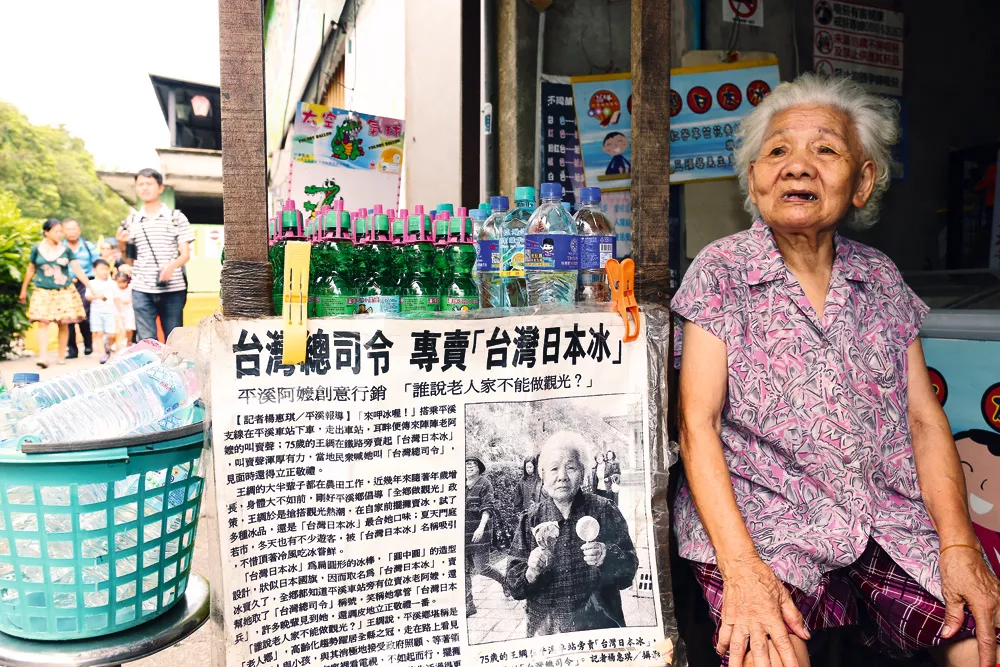
It’s said that food is everything. The city’s Social Welfare Department encourages civic groups and communities to contribute money and effort to organize communal dining activities. Between August 2012 and the end of August 2013, 337 organizations throughout the city responded to the call, and around 12,000 seniors took part.
“Communal dining is a social activity, not a form of social welfare,” says Li. The spirit of communal dining focuses on companionship and caring. But in the early stage nobody was sure what the program was about, thinking there were free meals being offered. It took the department a lot of effort to clarify what was really going on.
New Taipei City is geographically diverse, with thriving urban centers and remote rural areas, so communal dining activities need to be tailored to local conditions to meet the seniors’ disparate needs.
For instance, in the remote, mountainous tea town of Shiding, it’s not easy to call people together due to its expansive area. Volunteers have to drive deep into the mountains to bring old folks to the designated communal dining spot.
Gongliao’s Lookout Mutual Aid Society draws around 100 seniors to its communal dining events. The society takes a potluck approach, with volunteers supplying ingredients and chefs from local restaurants taking turns preparing healthy, hearty meals.
“The results of the communal dining were far better than we expected,” says Li. In addition to taking care of themselves, their spouses and their money, the elders also got to enjoy the company of old friends. Communal dining gives them the chance to get together and chat, for an enjoyable time no matter what is on the menu.
Never too old to learnCommunal dining provides bodily nourishment for seniors, while communal learning gives them opportunities to gain knowledge and skills.
The New Taipei City Government provides a subsidy of NT$70,000 per class each academic year, encouraging eldercare centers and senior citizens’ clubs to offer a rich variety of classes in subjects ranging from computers, tai chi, Chinese painting and oral history to the erhu (two-stringed fiddle).
But since seniors complained that they had to line up as early as three or four in the morning to register for the more popular classes, Mayor Eric Chu ordered the formation of more classes. Next year, total enrollment for such classes will be increased to 17,500.
The next thing the city government will work on is to attract the participation of senior men to serve as volunteers or attend classes. In general, senior women tend to be more socially active, while men tend to be more isolated. As a result, the male-to-female student ratio is 24% to 76% in senior-citizen classes. It’s evident that there’s a lot of room for improvement in terms of participation by senior men.
“In an aging society, don’t think of seniors as old, but as treasures,” says Li. Seniors need a chance to exercise their life experiences and impart their memories. Getting them out and about is only the first step.
@List.jpg?w=522&h=410&mode=crop&format=webp&quality=80)

@List.jpg?w=522&h=410&mode=crop&format=webp&quality=80)
@List.jpg?w=522&h=410&mode=crop&format=webp&quality=80)


定稿-1@List.jpg?w=522&h=410&mode=crop&format=webp&quality=80)
