Ancient Splendors East and West--Da Vinci and the Song Dynasty
Tsai Wen-ting / tr. by Robert Taylor
May 2000


Taiwan's presidential elections are over and done with, yet there are still many flags flying on Taipei's streets. The reason is that sharing the spring with the elections are two major exhibitions: Leonardo da Vinci at the National Museum of History, and Art and Culture of the Song Dynasty at the National Palace Museum.
Leonardo da Vinci, who lived 500 years ago in the Renaissance, and China's Song dynasty, which blossomed 1,000 years ago, are lending a new cultured air to Taipei City, which so recently was filled with the passions of the election campaign. These exhibitions give us an opportunity to know and appreciate two of the most brilliant pages in both Eastern and Western culture.
At the last weekend of the spring holiday, the visitors who have formed a long, orderly queue outside the National Museum of History (NMH) snake their way through its exhibition halls. Every day around 7,000 visitors enter the marvelous world of Leonardo da Vinci.
Artist, scientist, inventor
Just as in the Paris Louvre, on entering the museum many visitors first hurry to stand in front of the Mona Lisa and savor that enigmatic smile. But on learning that this Mona Lisa is a copy found in Gothenburg, Sweden in the 19th century, and that like a majority of the drawings in the exhibition it is not an original da Vinci, they cannot help being somewhat disappointed.
However, NMH director Huang Kuang-nan says that although most people only know about Leonardo's paintings the Mona Lisa and The Last Supper, in fact he made startling achievements in many fields, including science, invention, military matters, medicine and architecture. The more than 260 exhibits from over 30 art galleries worldwide, including paintings, anatomical drawings, mechanical designs, and models made from those designs, give us an insight into the many accomplishments of this all-round "Renaissance man."
Twenty computers set up in the exhibition hall-especially popular with schoolchildren-give access to a database of 8,000 works covering a period from the beginning of the Renaissance, and including all stages of da Vinci's career. The computers also offer simulations of bridge arches, to help visitors understand the mechanical concepts behind da Vinci's bridge designs. "This is not an ordinary art exhibition, but an exhibition of conceptual thought. It is of tremendous educational value," says exhibition planner Roland Oberzig.
The Song dynasty at the NPM
The National Palace Museum (NPM) has devoted five exhibition rooms in its main building to a display of 189 masterpieces of Song dynasty painting, ceramic art, calligraphy and other artefacts.
Although all the items on display are ones which local visitors may have seen before, the exhibition does include paintings such as Fan Kuan's Travelers Among Mountains and Streams and Cui Bo's Magpies and Hare, and calligraphies such as Huang Tingjian's Poem on Bitter Bamboo Shoots and Su Shi's The Cold Food Observance and Former Ode to the Red Cliff, which because they are so fragile and precious cannot be taken overseas for exhibition, and are usually only exhibited once every three years even in Taiwan.
Apart from classic art, exhibits also include Song porcelain, as fine as jade, and important Song editions of printed books. The exhibition is divided according to five themes: The Tao and Art, Nature as Teacher, The Beauty of Simplicity, Life and Art, and Cultural Synthesis.
Life is art, art is life
1,000 years ago, under the rule of scholars who valued culture over military prowess, Song-dynasty China saw rapid economic development and brought forth remarkable cultural and artistic achievements.
In the field of literature, Ouyang Xiu, Wang Anshi, the three Sus (Su Xun and his sons Su Shi and Su Zhe), Zeng Gong and others not only left behind many immortal works, but were also political reformers with lofty ideals. In the field of philosophy, Zhou Dunyi, the Cheng brothers (Cheng Hao and Cheng Yi) and Zhu Xi were the founding masters of Neo-Confucianism. In the field of painting, the first Song emperor, Taizu, set up a national art academy, which brought in artists from far and wide, including landscape painters such as Fan Kuan, Guo Xi, Ma Yuan and Xia Gui, bird-and-flower painters such as Yi Yuanji and Cui Bo, and figure painters such as Li Gonglin and Su Hanchen. As for the utensils used in everyday life, lacquerware from Wenzhou, "carved silk" tapestries from Dingzhou, inkstones from Duanzhou, and paper from Yuezhou, along with ceramics from kilns in many areas, were carried throughout the nation by economic prosperity and a far-reaching transport network.
In the center of one of the exhibition rooms, the NPM has laid out a realistic picture of the life of the literati, based on a portrayal in an anonymous Song painting. The main character sits alone in front of a painted screen depicting wild and domestic fowl. To one side, a servant pours tea from a white porcelain pot; on a table are two or three dishes of fruit and snacks. In front of the scholar stands a basket of classically arranged flowers. This is indeed the lap of luxury. Apart from the material trappings of Song-dynasty life, from Su Shi's calligraphy The Cold Food Observance we can gain a deeper appreciation of the emotions of a scholar-official who although banished to an impoverished and difficult existence in exile, was nonetheless able to take setbacks in his stride and retain a calm, confident and tolerant outlook on life.
Beauty of Simplicity, Nature as Teacher
The ruling scholarly elite led all fashions. Like their artist contemporaries, Song-dynasty artisans strove after a simplicity based on "incorporating all that is sublime, but not making a flashy show." A Ru ware narcissus basin, of a shade of blue like a clear sky after rain; a Guan ware dish with a chrysanthemum-petal rim and a crackled-ice-pattern glaze; Ding ware and Yaozhou ware with spirited motifs incised under ivory white or grey-green glazes-with their expert mastery of firing techniques, the Song potters sought to emulate the serene elegance of brush-and-ink calligraphy and painting. "Behind this deliberate abandonment of the bright, rich colors of the Tang and Six Dynasties eras in favor of the simple beauty of monochromes, one senses the rise of rationalism-the spirit of exhaustive enquiry into the nature of all things which typifies the Song-dynasty [Neo-Confucianist] School of Laws," comments Professor Ko Ching-ming of NTU's Chinese department.
This rationalistic spirit of enquiry is also expressed in the Song bird-and-flower paintings and landscape paintings.
Cui Bo's Magpies and Hare is the work of a formidable observer of nature who vividly depicts the interaction between a hare and two magpies in the wild; while Fan Kuan's Travelers Among Mountains and Streams reveals the very anatomy of the mountains and rocks.
"The Song painters firstly applied their perceptual powers to closely observe birds, flowers and other plants with deep interest, and then their rational powers in the attempt to bring out the eternal beauty of the universe from their real-world observations," says Ko Ching-ming.
Interestingly, five centuries later and half a world away, it was similarly through scientific drawings of the human anatomy and geometrical figures that the brilliant Renaissance artist Leonardo da Vinci sought universal truths.
An inventor far ahead of his time
The Renaissance is generally taken to mean the 200-year period of cultural florescence in Europe from the 14th to the 16th century. After several dark centuries of tight religious control over ideas, in the Renaissance people reawoke and began to feel with their own bodies and think with their own minds. In art, literature, music, philosophy and politics, there arose a powerful spirit of curiosity and enquiry, which produced the culturally most creative period in Western history. Leonardo da Vinci, born in 1452, was a polymath in keeping with his age, filled with curiosity about science, art and life.
Years before Copernicus advanced the theory that the sun was at the center of the universe, da Vinci surmised that the earth revolved around the sun; before Galileo improved the telescope, da Vinci had drawn designs for telescopes; long before the dawn of the Industrial Revolution, he invented a lathe, a lifting jack, a water pump, a lift, and geared machinery; he was also the first to use the modern plus and minus signs in mathematics.
Even as a young man, da Vinci became well known for his remarkable skill as a painter. Yet looking at his career, the amount of time he really devoted to painting was in fact very small, and only something over 10 completed paintings by him survive. He was passionately interested in science, medicine and mathematics, and he spent more of his time in morgues, where he dissected over 30 cadavers by flickering candlelight, or inventing and designing weapons, flying machines and bridges, than he spent painting.
The microcosm of the body
On display in the "Inventor" section of the exhibition are numerous anatomical drawings by da Vinci. These detailed, accurate drawings include studies of the structure of the skeleton, the muscles and tendons of the neck and shoulders, and dissection drawings of the heart, eyes, brain, reproductive organs and nervous system. These anatomical studies helped Leonardo to achieve greater realism when portraying movement in his paintings. But this was not his only motive for studying anatomy.
In da Vinci's eyes, the human body was a perfect scientific structure which contained the secrets of how the universe was constructed. The human skeleton could serve as the model for architectural structures, or even as the basis for designing machinery. From da Vinci's manuscripts we learn that while dissecting human hearts, he discovered that the blood which enters the heart is different from the blood which leaves the heart. He wrote: "The heart has tides like the sea." Seeing the broken limbs and viscera which resulted from dissections, he could not help also asking: "Where, then, is the soul?"
Scholar of aesthetics Jiang Hsun, in his book Leonardo Da Vinci, writes: "Science was merely the starting point from which he moved towards faith, beauty and the ultimate value of life."
Science or art?
The Song dynasty lies 1,000 years in the past, and da Vinci's Renaissance was 500 years ago. Yet today, when science and art seem as far apart as East and West, in the bird-and-flower and landscape paintings of the Song we can see the spirit of scientific research; and in da Vinci's sketches of the human body we see both scientific investigation into human anatomy and a return to aesthetic contemplations.
Zhuangzi said: "Heaven and earth have great beauty yet do not speak; the four seasons have clear rules yet do not debate; the world has established laws yet does not talk. From the beauty of heaven and earth, the sage discovers the laws of the world." Thus it seems that scientific thought and artistic aestheticism spring from the same source, and East and West are not so far apart.
p.78
The decoration on this white-glazed Ding ware ewer is like a brush-and-ink painting. It shows the simplicity which was essential to the Song aesthetic. (courtesy of the National Palace Museum)
p.79
From the birds' leisurely grace and the fine details of their feathers in Geese and Frosty Reeds, we not only see the great skill of the Song artist in the realistic depiction of life, but also gain a sense of man's harmony with nature. (courtesy of the National Palace Museum)
p.80
This model of a parachute was made according to one of da Vinci's many design drawings. As well as his outstanding artistic achievements, Leonardo was also a great scientist and inventor. (courtesy of the National Museum of History)
p.81
Leonardo da Vinci achieved fame as a painter even as a young man. The Virgin of the Rocks, which he painted in his early thirties, was to be copied by many later artists. (courtesy of the National Museum of History)
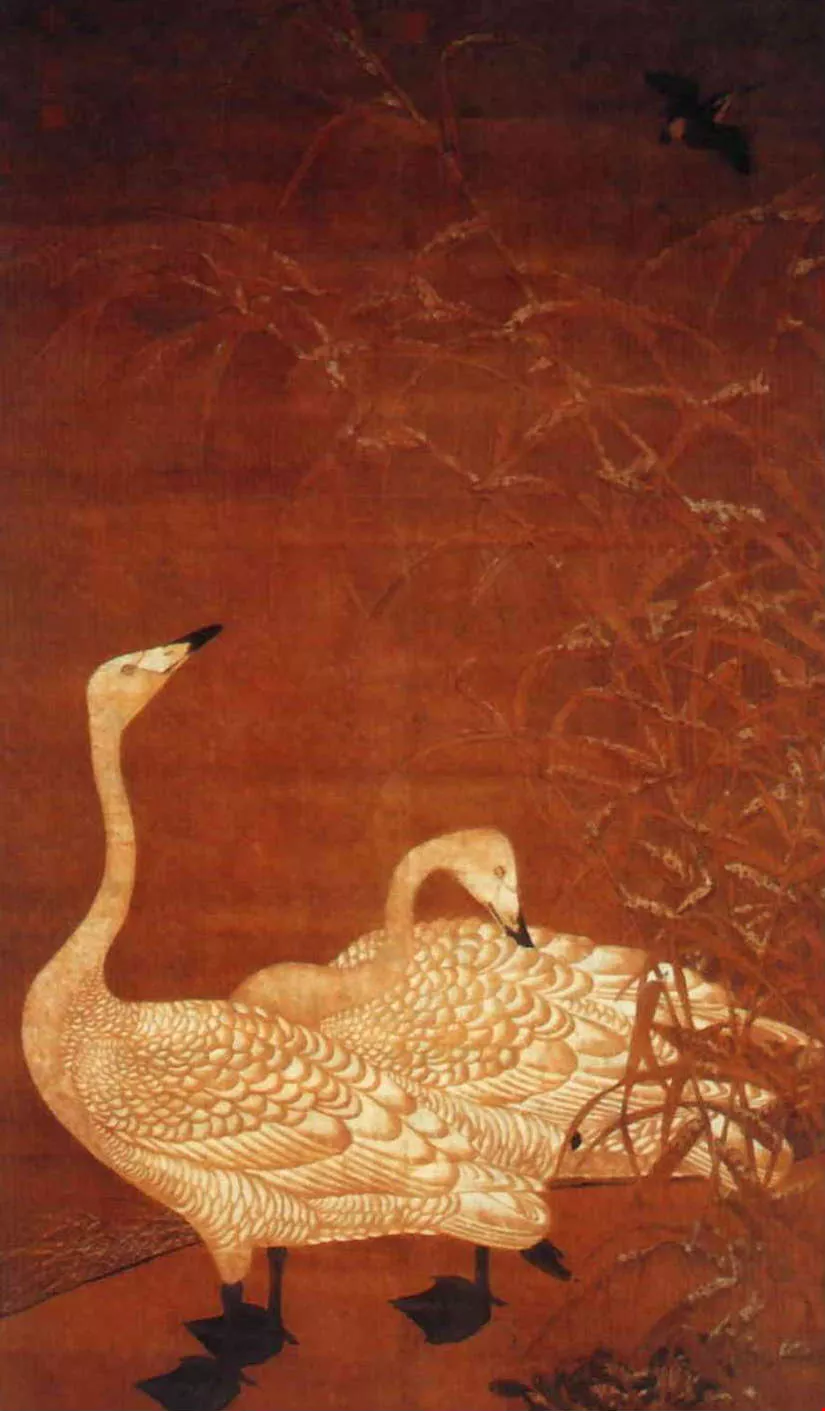
From the birds' leisurely grace and the fine details of their feathers in Geese and Frosty Reeds, we not only see the great skill of the Song artist in the realistic depiction of life, but also gain a sense of man's harmony with nature. (courtesy of the National Palace Museum)
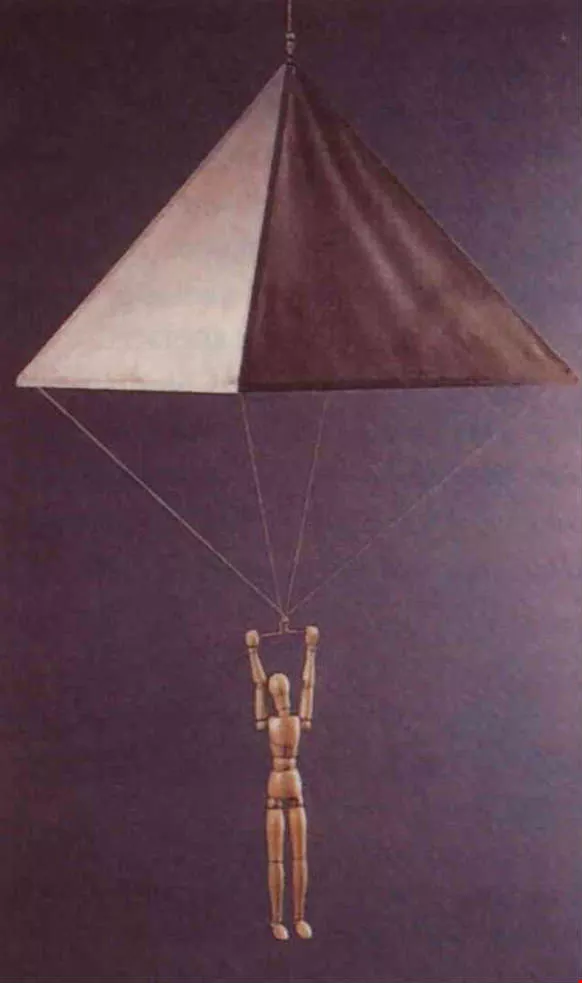
This model of a parachute was made according to one of da Vinci's many design drawings. As well as his outstanding artistic achievements, Leonardo was also a great scientist and inventor. (courtesy of the National Museum of History)
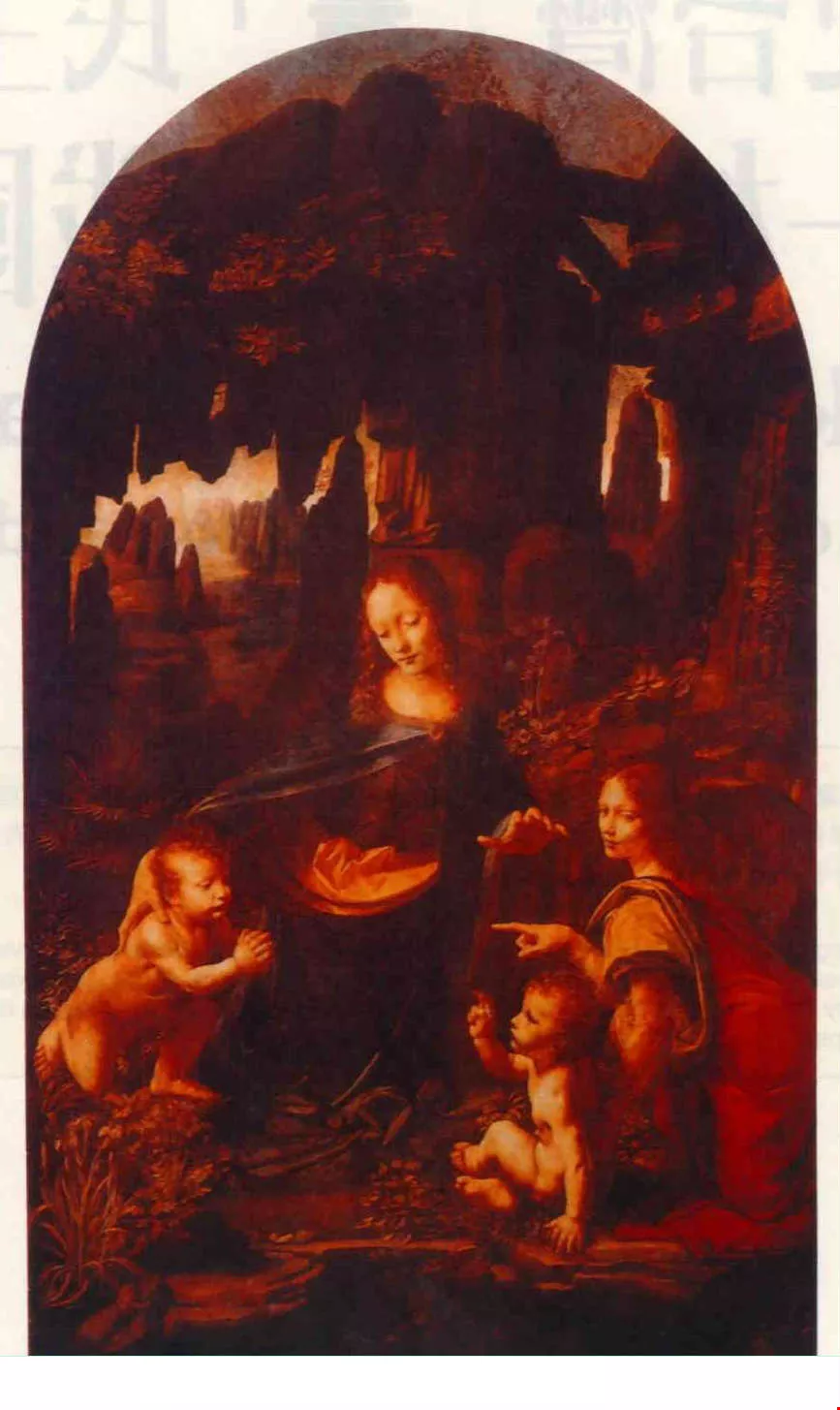
Leonardo da Vinci achieved fame as a painter even as a young man. The Virgin of the Rocks, which he painted in his early thirties, was to be copied by many later artists. (courtesy of the National Museum of History)

@List.jpg?w=522&h=410&mode=crop&format=webp&quality=80)
@List.jpg?w=522&h=410&mode=crop&format=webp&quality=80)


