Scat Detection Dogs: Partners in Bear Research
Coral Lee / photos Hsueh Chi-kuang / tr. by Chris Nelson
May 2010

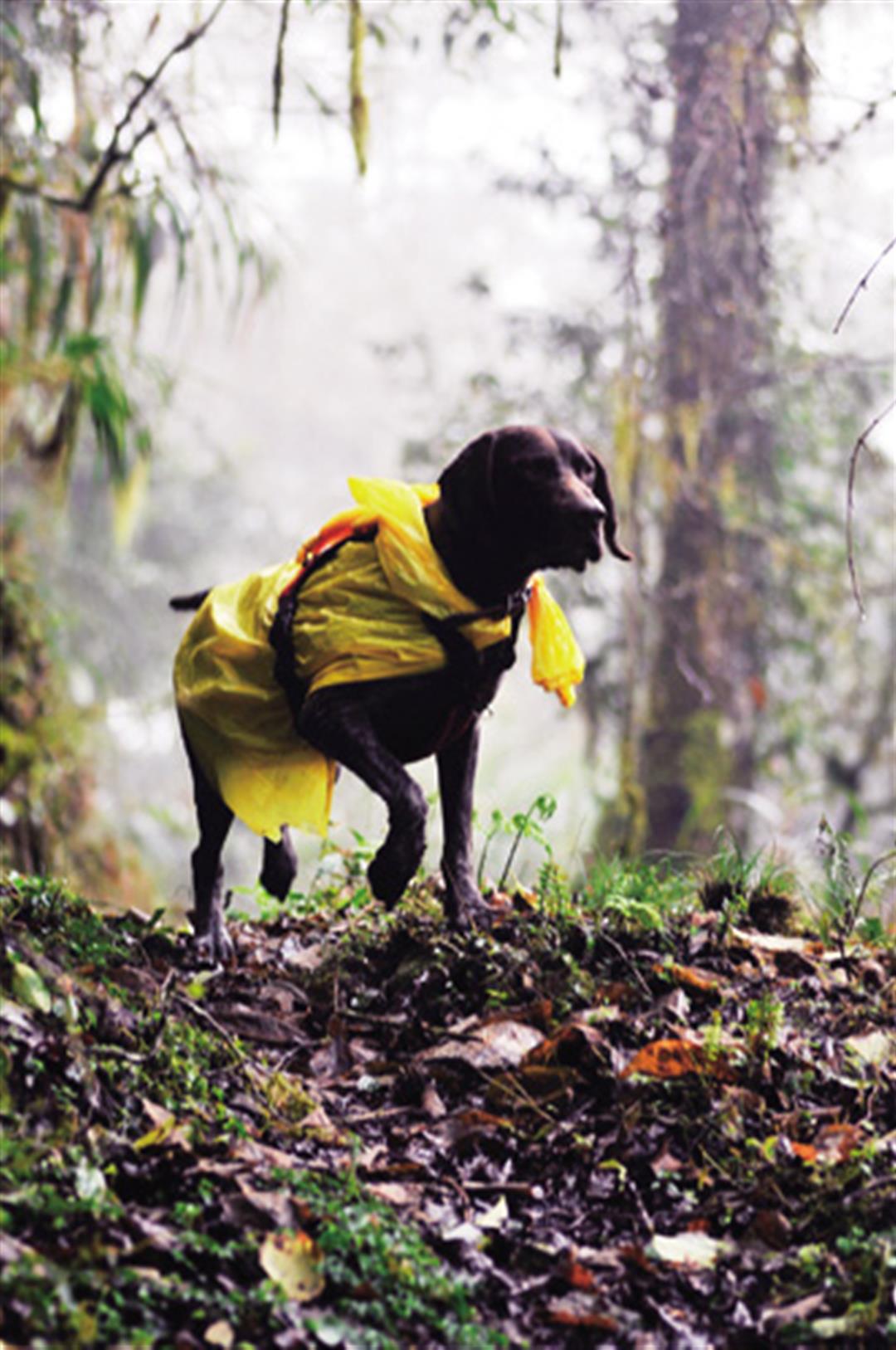
On this visit to the forests of Da- fen, Hwang Mei-hsiu has a mission besides her routine research: on-site training of Weily, a scat detection dog. This perky, two-year-old German shorthaired pointer, who Hwang lovingly calls "Handsome," sports short, brown fur dotted with grey. Crazy about his toy ball, he brings mirth and verve to the research team during their arduous work.
The first time I saw Weily was my first evening in the mountains. Hwang, Weily and grad student Kevin Huang were in the group behind us, and they arrived at Walami Cabin after nightfall, not having set out from the trailhead until noontime. Ignoring her sweat-soaked condition, Hwang set down her backpack and immediately went about toweling off Weily, and then, with only a feeble headlamp to see by (no electricity in the mountains), she gingerly inspected the dog's paws for scrapes, and then asked Kevin to feed Weily and prepare a blanket for him. An exhausted Weily finished his dinner, then obediently lay down under the eaves outside the lodge and fell asleep.
After a good night's sleep, Weily was in high spirits the next morning, playing ball with Kevin in the field by the cabin. Kevin, a stylish, pony-tailed student from Hong Kong, sometimes threw the ball far, and at other times held it teasingly in his hands. Weily's eyes were fixed on the yellow, baseball-sized ball, which, wherever it was thrown, he would immediately chase, find, and return to Kevin. Kevin constantly changed his pattern, and Weily looked like he was having the time of his life.
"The first requirement for a good sniffer dog is for him to be passionate about a thing. This thing can be a certain food, toy or even a towel. Weily's favorite thing is this ball," says Hwang, standing at the side watching Weily with satisfaction. Here, the trainer makes use of Weily's strong drive to play ball to stimulate his motivation to learn and willingness to work, producing a close association between the target scent (bear droppings) and the ball. Once he finds the target object, he is given the "reward" of playing ball; as such the dog becomes perfectly happy to work for many hours a day without tiring.
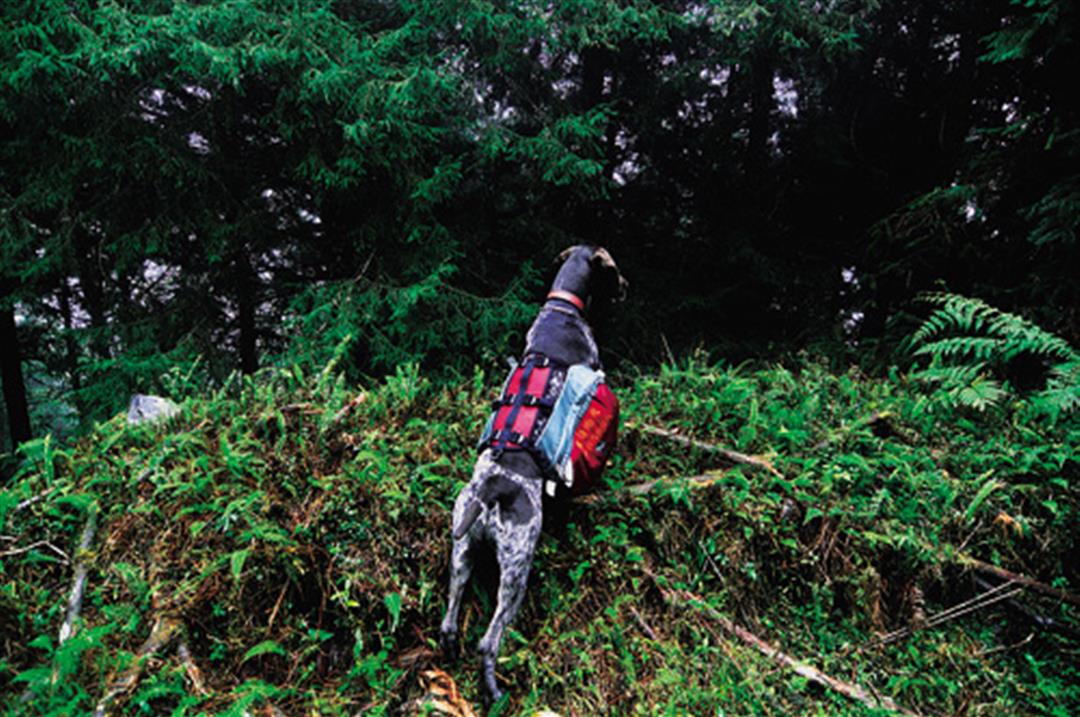
If a scat detection dog finds an animal or its droppings in the mountains, it must not chase after the animal or destroy the droppings. It must stay put and wait for the handler to come.
On the mountain trail to Dafen, Weily runs happily in front of the group, bounding far away, out of sight of his master, before running back. No matter how rugged the terrain, he keeps running back and forth, perhaps logging two to three times the distance of his human companions. Such nimbleness and command of different terrains make him ideal for field research.
According to Hwang, American researchers began using sniffer dogs in wild animal research in 2000. Detection dogs have been widely used in airports to sniff out drugs and illegal plants and animals, as well as for finding survivors of disasters, but their use in wild animal research is an emerging field. Asian countries have little experience in using sniffer dogs for such research; over the past two years mainland China has acquired scat detection dogs, but has had little success in training them.
"Sniffer dogs are especially well suited for studying rare and elusive species, such as detecting the droppings of Formosan black bears, mountain lions and foxes. They can also be trained to look for carcasses and cave lairs," says Hwang. Since trapping wild animals is not only time consuming but also ethically controversial, the use of sniffer dogs to locate the feces of rare species is becoming increasingly prominent, given dogs' keen sense of smell (over 100 times more sensitive than that of humans) and quick movement. Overseas research indicates that they are 10 times as effective as humans in this area.
But there's no such thing as a free lunch. Sniffer dogs are a research tool requiring a long-term investment. Notes Hwang, sniffer dogs aren't ready to work upon purchase; they must be professionally trained, and only with long-term maintenance of fitness and behavior can they qualify as sniffer dogs. The reason Hwang dared to purchase a sniffer dog despite the cost is that she knew she could depend on the Working Dog Training School at National Pingtung University of Science and Technology (NPUST) to train her dog. The school is the main base for training beagles to sniff out drugs at airports. Trainer Rene Gloor, hailing from New Zealand, volunteered to help her train scat detection dogs, and in 2006 Hwang footed the bill (dog plus shipping totaling NT$130,000) to import a pointer from New Zealand to train.
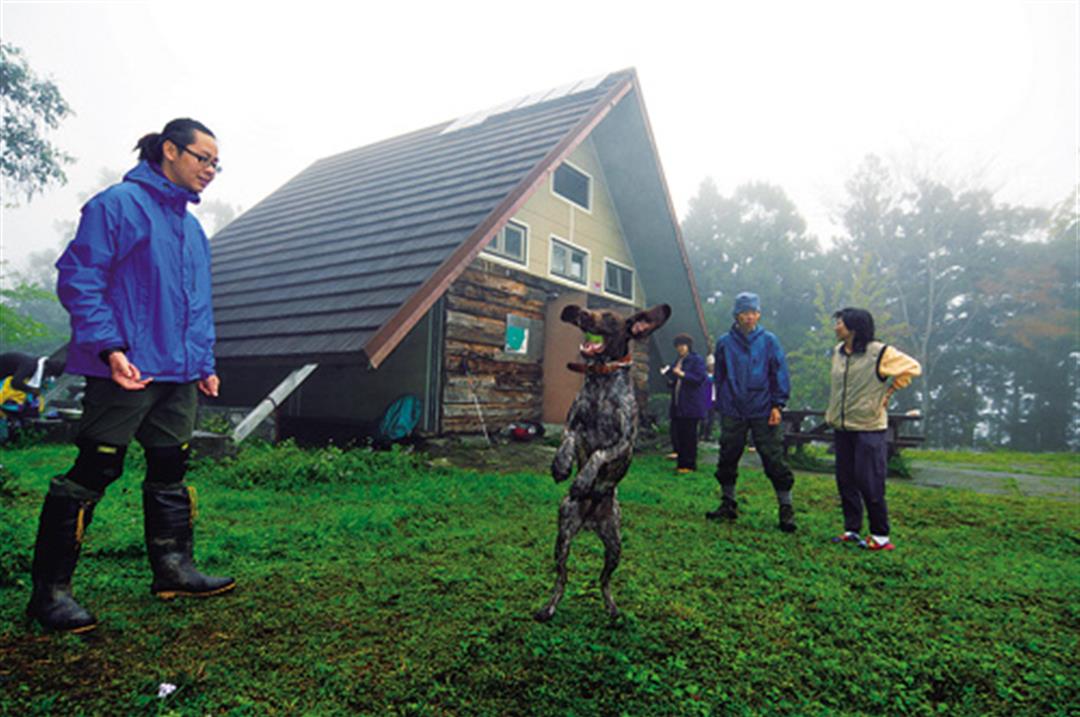
Handler Kevin makes use of Weily's strong drive to play ball to stimulate his motivation to learn and willingness to work. Here, Weily bites down on the ball Kevin tossed.
Why teach dogs to find droppings?
"Wild animal droppings are as valuable as gold to us," says Hwang. Droppings divulge more information about animals than other traces-claw marks, paw prints, bite marks, and such-and are an animal byproduct that is easy to gather in the wild.
First, the food remnants within droppings reveal which foods a bear has ingested. Besides Japanese blue oak (Cyclobalanopsis) acorns and muntjac hair, the seeds of Chinese hickory (Carya cathayensis), Machilus and indigenous cinnamon (Cinnamomum osmophloeum) have been found, showing that the bears spread seeds for these plants. DNA analysis of intestinal epithelial cells in droppings can identify individual bears; hormones can show whether the bear is in heat or pregnant; thyroid hormone can reflect the animal's nutritional status; the presence of parasites (such as roundworms or tapeworms) within droppings are important clues to bear diseases; and the places where the droppings are found provide information on game trails, activity ranges and habitats.
The uses of droppings are broad. The problem is that black bears don't stay put, and excrement decomposes quickly in the rain and moisture of the mountains. It's not easy to find a fresh piece of poop. On this excursion, Hwang Mei-hsiu and Lin Kuan-fu, both old hands in foraying, locate an average of five or six piles of feces of varying ages each day, not a bad result given the restrictions that terrain, vegetation density and weather place on two-legged humans. Sniffer dogs, on the other hand, are not limited in these ways: they can go anywhere a black bear can go.
On the second morning at Dafen, Hwang discovered a complete lump of brown scat while doing a line-transect survey in the Japanese blue oak forest. "This is about one or two months old!" said Hwang after visual inspection. She then told Kevin to bring Weily over to sniff it out. The odor was weak with age, and Weily, hunting to and fro nearby, didn't come near the droppings. Seeing this, Kevin placed the ball by the droppings and called Weily. Weily reluctantly yielded and finally sat down by the dung. "Good boy!" said Kevin, immediately squatting down, stroking his head and praising him; he then threw the ball, which unfortunately rolled down a 70-degree slope of dense forest. Weily chased the ball downward, and disappeared after several seconds. Kevin grudgingly chased after him. "All Weily sees is the ball, not the terrain," Hwang sighs.
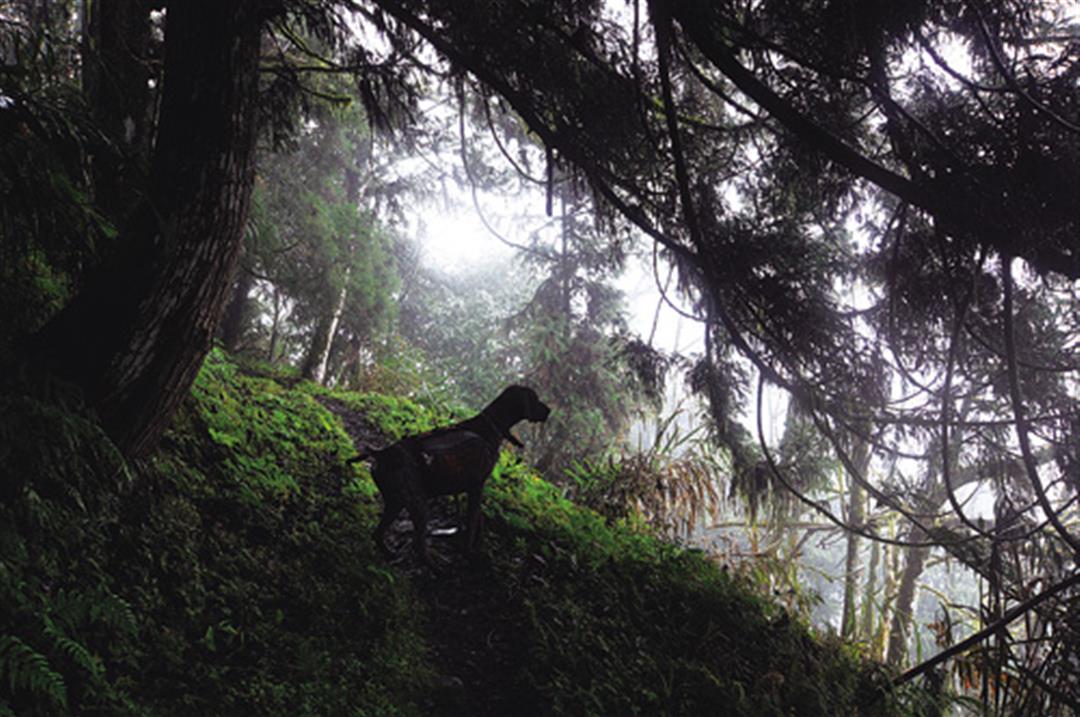
Sniffer dogs are a field research tool requiring long-term investment, especially well suited for studying rare and elusive species, such as Formosan black bears.
It's as if Kevin and Weily are joined at the hip: their teamwork is key to a successful assignment. Kevin's job title is "handler"; as such he wears many hats: caretaker, trainer and playmate. He needs to understand the information conveyed by the dog's behavior and give the proper responses, and when on assignment it is up to the handler to implement the searches at the worksite. Hwang says that since Kevin loves dogs and can adapt to outdoor life, he's the ideal person to be a handler. He's currently doing his master's thesis research on detection dogs.
Hwang says that Weily is of superior stock, chosen from a litter of six; he's energetic and self-assured, stable of mood and eager to work. Before he was brought to Dafen, he had received excellent training and care at the NPUST training center: besides undergoing professional scent training, he had to run an hour on the treadmill each day to maintain his fitness, learn good conduct in daily life (such as not overreacting to new things or the outside environment), obey the handler's instructions, and so forth. Now that he has returned from Dafen, he will go back to receive socialization training at the center, getting regular checkups, de-worming treatments and vaccinations to safeguard his health and prevent him from infecting or being infected by other dogs.
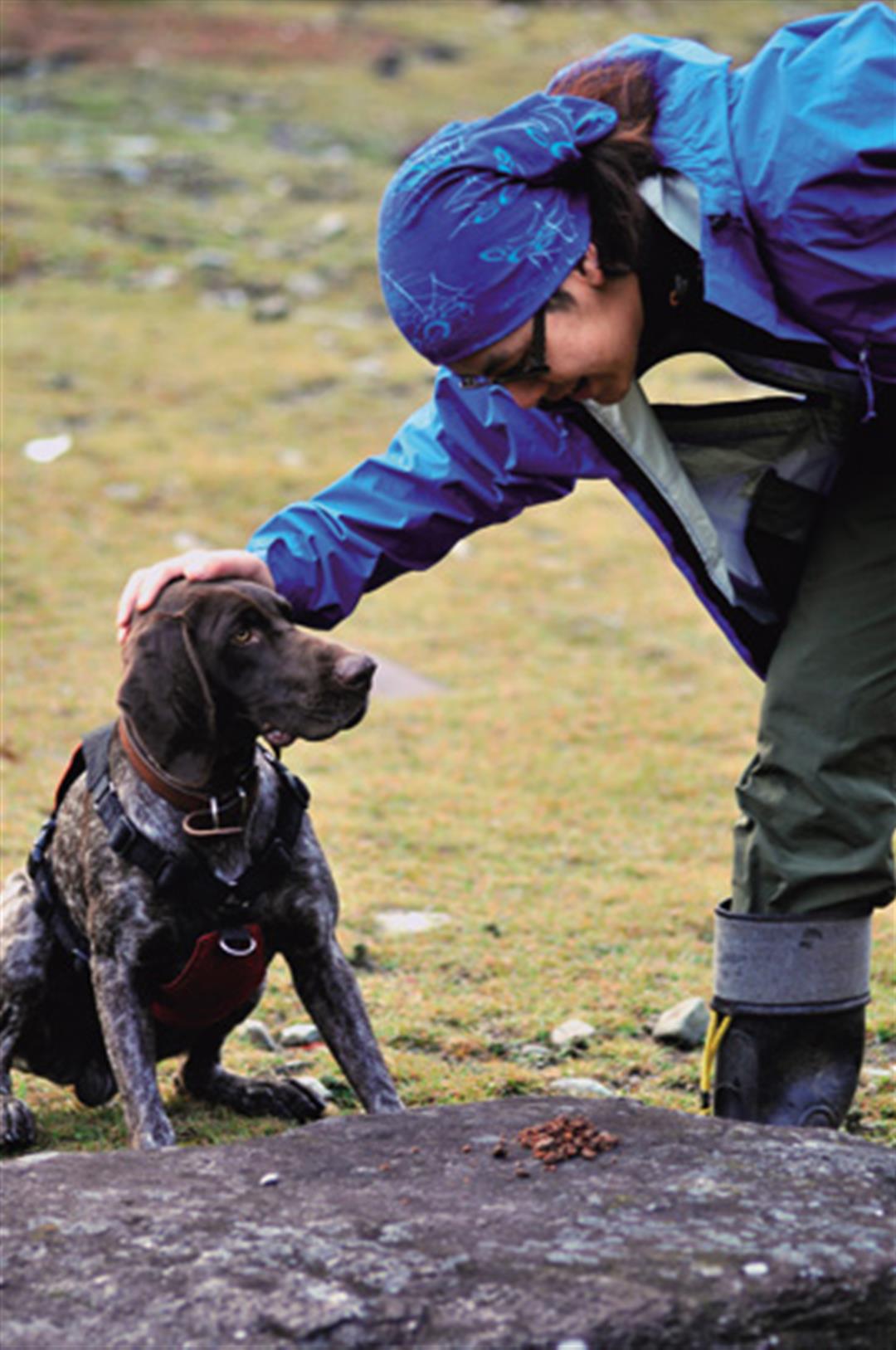
If Weily performs the correct action, Kevin will say "Good boy," stroke his head and reward him with some ball play.
"If Weily is given free rein for a period of time, his behavior will lapse, and we'd have to start all over," says Hwang, stroking Weily as he lies by her feet. Good care and management are key to the success of sniffer dog training. But this means a great deal of expense. Hwang estimates that without any assignments, everyday feeding and care costs NT$200,000 a year; adding the costs of assignments and handler's wages, it comes to about NT$350,000.
A year and a half ago, Hwang applied to an agency for funding for research using sniffer dogs, but was rejected. Besides those of Weily and the student training him, her expenses have been graciously defrayed by benefactors and other research funding sources. In January of this year, Hwang rallied people together to form the Taiwan Black Bear Conservation Association, in hopes of remedying the long-standing shortage of funding for black bear research.
To more effectively collect droppings in Dafen and to expand black bear research more broadly around Taiwan, "Sniffer dogs are worth the investment, and are bound to be part of the research arsenal," says Hwang. She places high hopes on this research team's new partner, and will continue to invest in training so that they can get working as soon as possible, bringing fresh troops into the forests to conduct black bear research.


@List.jpg?w=522&h=410&mode=crop&format=webp&quality=80)
