The Johnnie Walker Charity Classic Tees Off in Taiwan
Jackie Chen / photos Hsueh Chi-kuang / tr. by David J. Toman
November 1999


This November 9 through 14, the Johnnie Walker Charity Classic, a major golf event resulting from a full year of preparation, will tee off at the Dashee Golf Club in Taoyuan. With the likes of top-ranked superstar Tiger Woods, Ernie "The Bomber" Els (ranked 7th), and Vijay "Black Pearl" Singh ready to face off against each other, the golf world is looking forward to the event with great expectation.
In the aftermath of the September 21 Chichi earthquake, the organizers have decided to donate all proceeds from gate receipts, souvenirs, and clubs used in play by Tiger Woods and autographed Tiger Woods balls toward the earthquake relief effort. All told, the event stands to raise an estimated NT$300 million within a 20-day period.
With a prize purse worth over NT$40 million up for grabs, the Johnnie Walker Charity Classic will place Taiwan squarely in the spotlight for golf fans around the world. When it does, Taiwan's always controversial golf movement will surely become a subject of discussion.
Golf has actually had a long history in Taiwan, growing in popularity in recent years, boasting 400,000 players islandwide along with thriving golf apparel and equipment industries. Taiwanese businesses have gone as far as Vietnam to establish factories, and many enthusiasts venture to Europe or North America for coaching and courses in industry-related management.
From the self-taught pioneers that invariably come to mind when one thinks of Taiwan's earliest golfers-including Lu Liang-huan, Hsieh Min-nan, Chen Chih-chung, and Tu Ah-yu-to the widely held notion that golf is the pursuit of the nouveau riche, how has golf developed in Taiwan? Moreover, what represents Taiwan's "golf culture?"
After the quake, is "Taiwan" synonymous with "disaster?" "In order to rectify the negative image of Taiwan as synonymous with 'disaster,' we will hold a world-famous golf event on schedule. What's more, within one month, we will raise a sum of NT$300 million for hospitals located in disaster areas."
Such was the declaration of Ed J.H. Shyung, Asia-Pacific managing director of United Distillers and Vinters, in a statement made in mid-October at the Lai Lai Sheraton Hotel in Taipei. Shyung emphatically added, "Despite the earthquake, Taiwan will keep on walking."
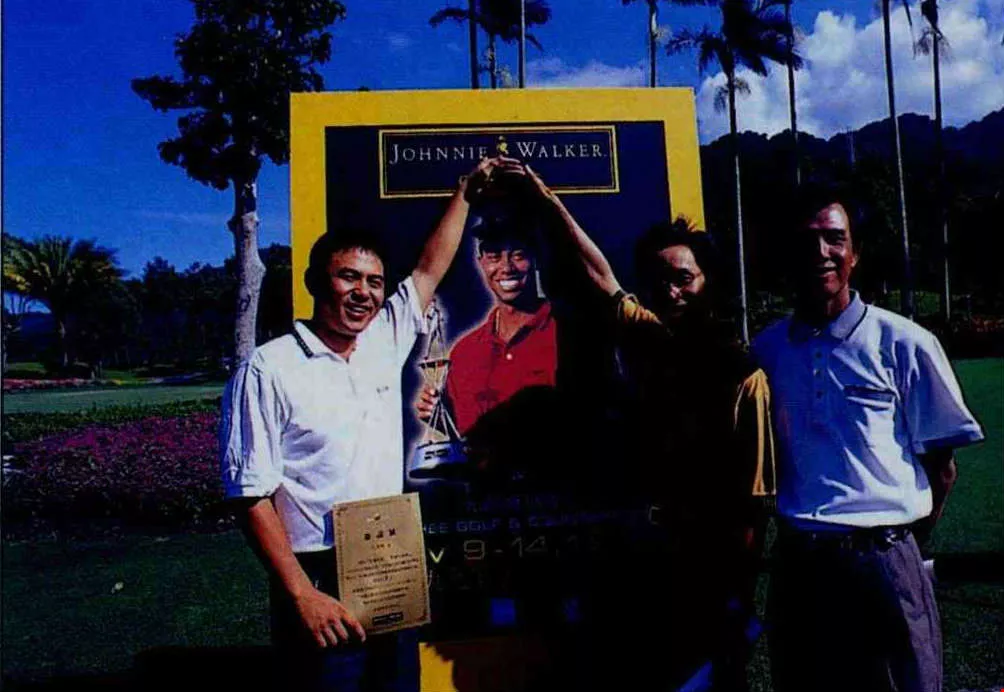
(right)These three lucky amateur golfers will pair up for a round of golf with Tiger Woods in November. Their joy is written all over their faces. (photo by Pu Hua-chih)
The declaration that Taiwan will keep on walking has set the stage for the Johnnie Walker Charity Classic, for which the golf world has long been mobilized in preparation. A full year ago, the host golf course, the Dashee Resort, set about modifying the course in line with international standards, increasing the difficulty of the greens by making them smaller, while also redesigning the sand hazards and the pitch of the fairways to increase the course's difficulty.
Local golfers look to the event with eager expectation. Following a preliminary 11-stage tour to select 98 sharp-shooting amateurs, the Johnnie Walker Pro-Am was held on October 15 at the Dashee Resort, after which the 12 top-ranked participants qualified to pair off and match their skills with the leading lights of pro golf, including Tiger Woods, Ernie Els, Vijay Singh, and Nick Faldo. Chiang Kui-hsi, sales representative at Gold Medal Cleaning Corporation in Hsinchu, distinguished himself as the top-ranking amateur in the tournament. Upon hearing that he'll be paired on the links with Tiger Woods, Chiang jumped right out of his seat and announced his intention to purchase five sets of charity items provided by Johnnie Walker to go toward the earthquake relief effort.
The sport of golf traces its origins to Europe. The most prestigious tournaments on the international competitive calendar are the British Open, US PGA Championship, US Open, and US Masters, known as the four "majors." For pro golfers, the highest honor is to win all four majors in one year, achieving golf's "Grand Slam." However, large purses now draw deep talent pools to other events around the globe, such as the Dunhill Cup and Martell Skins in Europe, and Asia's Johnnie Walker Charity Classic, which now enjoy excellent reputations in their own right.
Tony Lin, manager of Videoland Sports Channel, relates that the ranking of international professional golf events is essentially determined by the prize purse, and whether they can attract the world's top-ranking pros. The Johnnie Walker Classic is Asia's largest golf tournament. Throughout its 10-year history the tournament has offered a rich purse, helping earn it distinction among the top events on the European, Asian, and Australian tours.
This year's Johnnie Walker Charity Classic offers a purse of £800,000 (over NT$40 million), while Tiger Woods will take home over US$1 million in appearance fees. Tony Lin notes that, "Compared to the NT$10 million purse typically offered at domestic pro events like the ROC Open, PGA Open, and Mercuries Masters," the Johnnie Walker Classic will set a new record for money offered.
In addition to the rich cash rewards, Chien Lung-Kuo, secretary general of the Chinese Taipei Golf Association, relates that the Johnnie Walker Classic will attract 132 pro golfers to Taiwan, "many of whom could only previously be seen on television." Chien points out that their presence means a windfall for both fans and top local players, who get to watch them match skills or are even able to play side by side with them. Even more importantly, "with television broadcasts to one billion sports channel viewers around the world, the world will get a chance to become more familiar with Taiwan-including the nation's mood in the wake of the September 21 earthquake," says Ed Shyung.
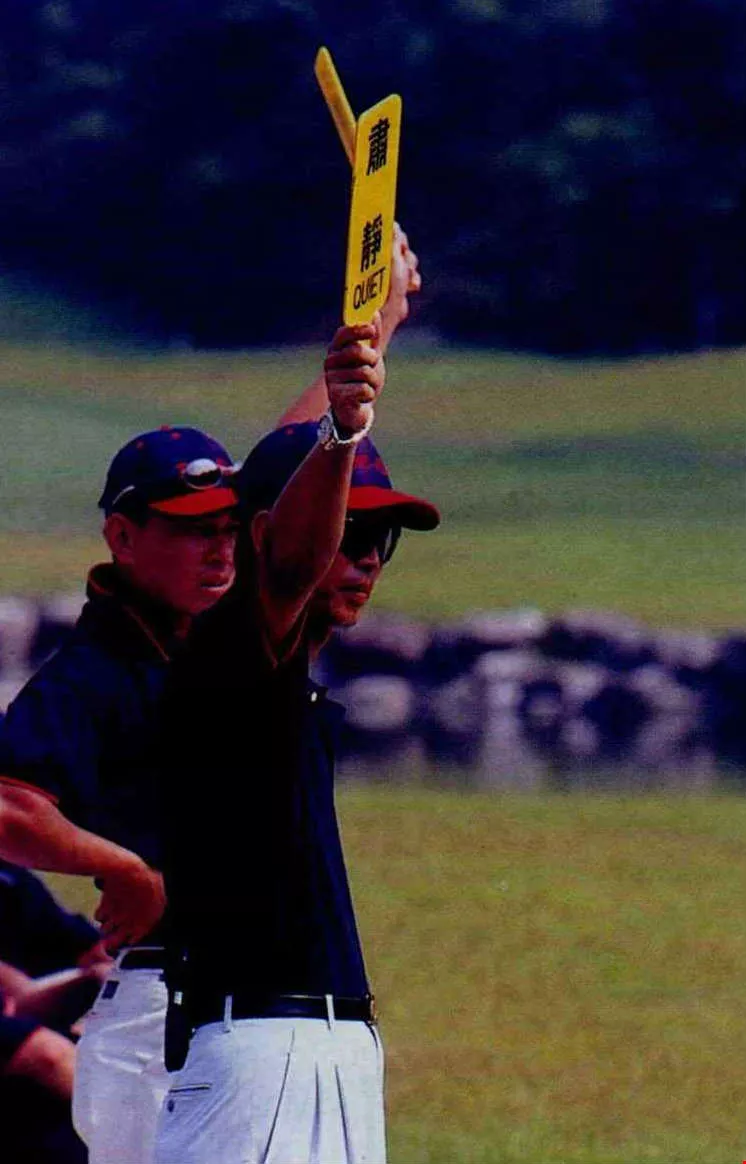
Basic etiquette of golf, known as the "gentlemen's game," requires that spectators maintain a respectful distance, turn off their mobile phones, and keep utterly silent while players shoot.
The golf world's feverish enthusiasm toward the Johnnie Walker Classic warms hearts. Nevertheless, over the course of its development in Taiwan, the sport of golf has had a polarized image.
The golf movement in Taiwan got its start during the Japanese colonial period with the establishment of the Tamsui Golf Course (today known as the Taiwan Golf Club or "Old Tamsui Golf Course") in 1914. At first, the course only had three holes, which were expanded five years later to nine holes, eventually reaching the standard 18 holes in 1929. During World War II, the course was closed to serve as a wartime provision facility with sweet potatoes and vegetables grown on the front nine and forts and pillboxes on the back nine by the sea. After retrocession, with the help of US military advisors and the ROC military, the old Tamsui golf course was re-opened. Taiwan's first golf course remained under the management of the US advisory delegation through 1974.
Some people refer to golf pejoratively as "lofty and rich," a play on words on the Mandarin transliteration of "golf" (gao er fu), and in Taiwan golfers are often labeled derisively as "upper crust." Particularly back in the days when golf courses were few and far between, "Golfers were either shining general-class military officers, or the few members of the business community with golf club passes," offers Chien Lung-Kuo, who worked for 17 years at Linkou's Chang Gung Golf Course. Certainly, given its history in Taiwan, golf's "lofty and rich" moniker is somewhat warranted.
Prior to the 1980s, Taiwan had only about two dozen golf courses, including the old Tamsui course, the Kuohua Golf Course, and the Taipei Golf Course in northern Taiwan, the Chingchuan Kang and Fengyuan courses in central Taiwan, and the Chengching Lake Golf Course in southern Taiwan. Then, with the stock market and real estate boom of the 1980s, part of the liquid cash flow found its way to investment in golf course management. Says Ho Min, secretary general of the ROC Golf Course Promotion Association, "Out of love for the sport, many business owners bought land and developed it into golf courses for the benefit of themselves and others." Thus, within just a decade, the number of golf courses grew dramatically from just over 20 before the 1980s to 83 currently registered with the Executive Yuan's National Council on Physical Fitness and Sports (NCPFS).
Led by their top brass, many large businesses formed golf teams, such as the Lai Lai Sheraton hotel's golf club, and China Trust Corporation, which holds an international Trust Cup regularly. Further, industry put up money to sponsor golf contests. With such contests as the Johnnie Walker Cup, the BMW Cup, and the Mercedes-Benz Cup, there is a golf tournament nearly every week in Taiwan.
On the flip side of the coin, the extensive and rapid development of golf courses has brought with it a sizable environmental impact, and reports of destruction of fragile hilly land areas, water consumption, pesticide use, and occupation of state land stream through the media in a constant flow. Exposure of such issues finally came to a head in the late 1980s, when environmentalists began the "movement against golf course development," which elicited general sympathy among the public. In turn, massive social pressures forced the Ministry of Education (formerly in charge of regulating the development and licensing of golf courses, subsequently undertaken by the NCPFS) in December 1989 to declare a moratorium on applications for golf course construction permits.
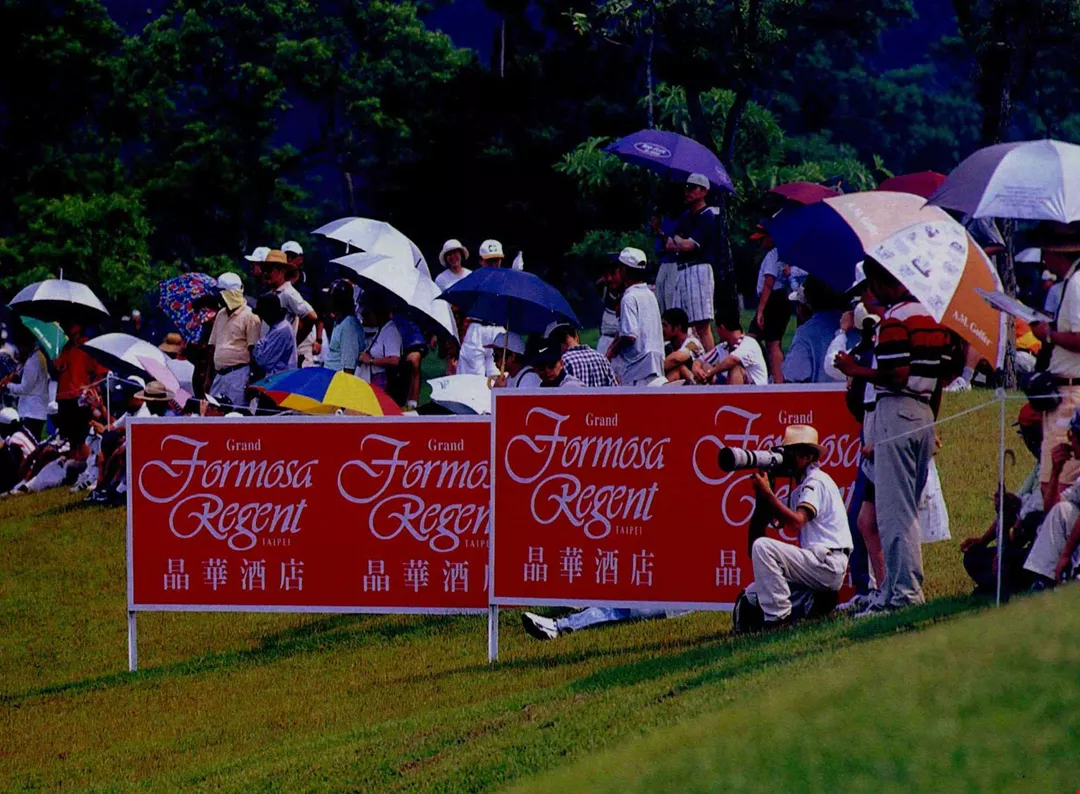
above) Golf courses are often aesthetically pleasing. Many fans bring their families along to the tournaments for a taste of the countryside.
Most golf enthusiasts pooh-pooh the notion of golf courses being responsible for "ecological devastation." Jennifer Su, manager of the Lai Lai Sheraton's financial department, relates: "On the links, what I see is the green trees and grass, the clubhouse, and other pastoral sights, not environmental destruction." Huang Wen-jung, NCPFS vice-chairman and the man in charge of helping unregistered golf courses conform with government regulations, adds that "One can even see wild animals on the golf courses, such as mountain deer, which are rare even in the mountain wilderness."
Videoland's Tony Lin offers that if there are golf courses that really damage the environment, then they are just a few "bad apples," and that the impact of golf on the environment can be minimized by control of pesticide dosage, careful selection of grass varieties, and proper selection of course locations. Linkou resident Chen Hung-yan, director of the physical education department at Fu-Jen Catholic University and an avid golfer, stresses that "athletics and environmental protection should be seen separately."
For many golfers, the joys of playing golf cannot be easily replaced. Huang Wen-jung relates that, as most golf courses are located away from the cities, the 3-4 hours spent in a round of golf allow players to walk around and take in fresh air, aiding respiratory functions. Golf requires players to stand up straight, stand firmly at the legs, knees, and back, and to squat down to check wind direction and the lie of the grass. Therefore, requiring the use of the arms, wrists, and abdominal muscles, it qualifies as an ideal athletic pursuit.
Jennifer Su feels that few sports put people in touch with nature as well as golf. "When a player is out on the fairways swinging away, with the breeze on her face, she looks up through the trees to see the sky is blue, and egrets take flight from the bough of a tree." Su, a devout Christian, is often moved to feel like singing psalms while out on the course. Especially in the early morning hours, treading over the dewy grass, with the smells of the freshly cut grass mingled with soil, the chirping of summer insects, or even the monochromatic mist of a rainy day, Su is impressed with the magnificence of the creator.
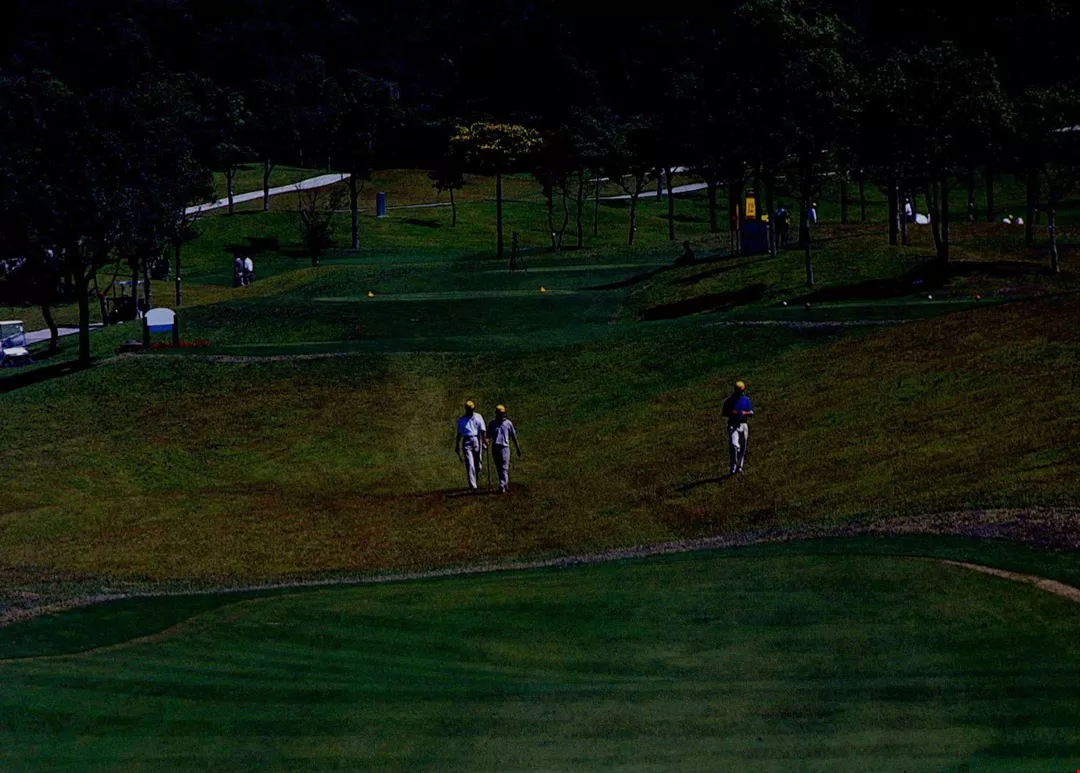
An 18-hole round of golf takes each participant 3,000-4,000 meters around the course. Just making the distance on foot is a test of stamina. (photo by Pu Hua-chih)
Jennifer Su, in her early forties, is a member of a company golf team with other young golfers who play for fitness or socializing. Most of her teammates pay for their own course passes, and benefit from discount vouchers provided by their companies. In contrast to the "lofty and rich" golfers who purchase club passes worth millions of NT dollars at the drop of a hat, the new breed of golfers is unconcerned with having membership passes. In fact, says Sudia Huang, marketing manager at Alfred Dunhill's Taiwan branch, they "feel sorry for members loyal to just one golf course, because they miss out on enjoying the unique features of different golf courses."
In the 1990s, a reverse aging trend appeared among golfers, from middle age and seniors to younger adults. However, "Due to the scarcity of land and the dense population, the cost of land is excessive in Taiwan, making it impossible for there to be a drop in the cost of playing golf," explains ROC Golf Course Promotion Association secretary general Ho Min. Currently, a golf pass costs between NT$2,000 and NT$6,000, not including transportation and meals. When equipment and apparel are figured in, at well over NT$10,000 per set, there is no question that golf is the exclusive territory of the middle- and upper-income classes in Taiwan.
A survey of golfers conducted in 1998 by the ROC Forestation Association found that the number of golfers in the 20-39 age group is already as high as that in the 40-49 age group, while the typical golfer takes in over NT$50,000 per month. By profession, the majority of golfers includes public officials, administrative supervisors, and business managers, followed by professionals, technicians, and members of service industries. Meanwhile, very few golfers are found in industries such as agriculture, forestry, fishing, and animal husbandry. (See sidebar.)
In Taiwan, where commercial activity flourishes, is golf really that popular among business managers? In a 1999 survey of recreational activities among business management at various levels conducted by the China Credit Information Service, over 2,600 respondents listed golf as their favorite recreational activity, far exceeding the number two activity, "reading," with over 1,100 respondents. In light of golf's popularity, various promotional slogans have appeared, making such claims as "in order to cultivate business skills, golf is a required course," or that "golf can help give you the chance to become a company manager." In addition to health and fitness, it would seem that golf offers such fringe benefits as career advancement and business hobnobbing.
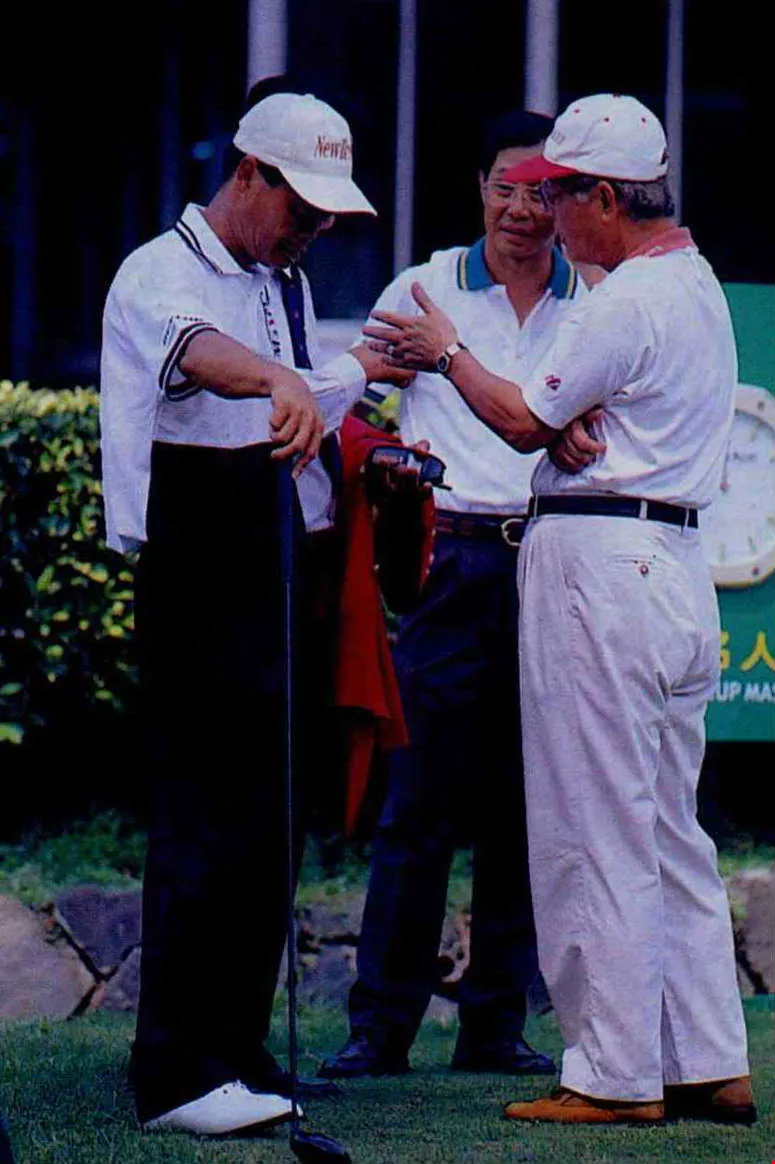
Combining exercise with socializing, golf is the favorite pastime of business managers. Many deals are locked up right out there on the links. Who Plays Golf?
According to Videoland's Tony Lin, golf is a "favorite" among professional managerial types for not requiring too stressful exertion, while allowing conversation as participants move about." Moreover, in Taiwan "Sometimes business isn't taken care of in the office," says Chien Lung-Kuo, who works at Formosa Plastics. "After a round of golf, the spirit soars, the mind is especially clear, and judgment and decision-making abilities are heightened. Not to mention that since everyone is busy with their professional matters, getting together to exchange market information or work experience over a round of golf is far healthier than playing mahjong, or heading to a bar or KTV."
For many golf enthusiasts, golf mirrors life, as the game provides certain life experiences. China Trust president Koo Chung-liang, who averages in the 70s, once remarked that he learned all about the business world and the secrets of business management through golf. Koo offered, "So many things in life are like taking a shot. Every shot is a choice, and you must not get down on yourself because of one poor shot."
While among golfers the consensus is that the environmental impact of golf and the social aspects of "golf culture" are positive, sports reporter Chen Chia-hui takes a different reading of these issues from the perspective of "sports culture."
While golfers become easily absorbed in their discussions of the sport, Chen asks whether society is alert to the fact that under the bright lights of the media, government officials and other movers and shakers in society habitually use "golf summits" as means to their own ends. Hardly giving this a second thought, people imitate this model in their own athletic lives, as if gaining acceptance into the ranks of golfers can take one up the express elevator of social status. Is this social psychology real, or is it an illusion? In the sporting world, which inflates the market price of global players and revolves around the US sporting establishment, can people detect that Taiwan is enveloped in the "golf globalization effect?"
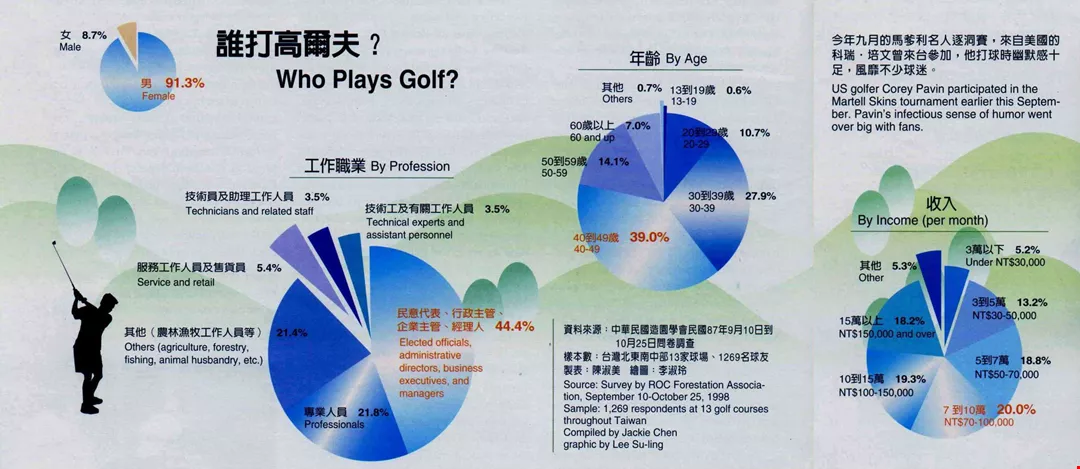
Who Plays Golf?Source: Survey by ROC Forestation Association, September 10-October 25, 1998.Sample: 1,269 respondents at 13 golf courses throughout Taiwan Compiled by Jackie Chen graphic by Lee Su-ling.
Like other sports, golf was once simply one athletic pursuit among many. However, according to studies by the ROC Forestation Association, at an average area of 60 hectares, an 18-hole golf course, serving 320 players per day, requires seven to 1,150 to 3,500 tonnes of irrigation, or seven to 15 tonnes per person-a full 15 to 30 times the average per capita water consumption. This statistic provides a good picture of the resource consumption at a typical golf course.
Chen Chia-hui believes that, given Taiwan's dense population and limited resources, golf's growth should be more deliberately and carefully mapped out. However, with the boom behavior in the economy the number of golf courses in Taiwan exploded within a mere decade. In stark contrast to the gradual development of golf in Europe, beginning in the 16th century, golf has developed too rapidly in Taiwan. "What other countries have developed in three or four hundred years, we've concentrated into just one decade," says Chen Chia-hui. Consequently, Taiwan's golf movement is associated with such unflattering descriptions as "environmental devastation," "the exclusive province of the privileged," and "social ball."
Chien Lung-Kuo relates that, due to the bumpy road golf has traveled in its development in Taiwan, at this time the Chinese Taipei Golf Association wants nothing more than to "return to the essence" of golf as a sport, "at least regaining the 'dignity of playing golf!'" Chien suggests promoting "indoor golf," which requires little room, is suitable for the whole family, and is easy on the budget.
When it comes to golf courses commonly seen as "exclusive," Chien offers that ways should be found to bring the game closer to the public, perhaps by holding fairs or other public service events such as charity fund-raisers, to give people a chance to get closer to the game. Alternately, perhaps a "golf day" could be designated when golf passes would be free or discounted, so that newcomers to the sport might get a chance to try their hand at it.
And if there is an appropriate piece of land, perhaps the government could put up the funds for the establishment of a public golf course, so that low-cost passes would enable anyone to play regardless of economic status. For instance, in Britain, where a golf pass at a public course costs just £8, people do not look askance at golfers. "Another purpose of public courses is to put pressure on privately run courses to keep them from getting too aloof with pricing," says Huang Wen-jung of the NCPFS.
When such steps are taken, more people will come around to appreciating golf, no longer seeing it as something out of their reach. With more people playing, and perhaps no shortage of players with refined skills, there will no longer be problems such as the Johnnie Walker Classic encountered, where the organizers, "looking to attract six of the top 30 money earners on the professional tour, were unable to get more than two qualified players interested," says Chen Chia-hui. Ultimately, the organizers relaxed the standards to include approximately 50 top players from the Asian Pro Tour, including Wang Teh-chang, Chang Tse-peng, Yeh Wei-chih, Lu Wen-teh, and rookie pro Hung Chia-yu.
Back when golf was the exclusive domain of the "lofty and rich," many children from poor families headed to the golf courses to serve as caddies for the wealthy, eventually making reputations themselves among Asia's few elite professional golfers. Such players as Lu Liang-huan, Hsieh Min-nan, and Chen Chih-chung share similar stories of struggle, from poverty to caddy, and finally to professional golfer.
Today, although society is wealthier and more people are playing golf, Taiwan's golfers have been unable to match the golfing skills of players from such upstart countries as South Korea and Thailand. Perhaps if golf's tarnished reputation is successfully cleared at home, Taiwan can one day regain the fine repute it once enjoyed on the world's golfing stage.
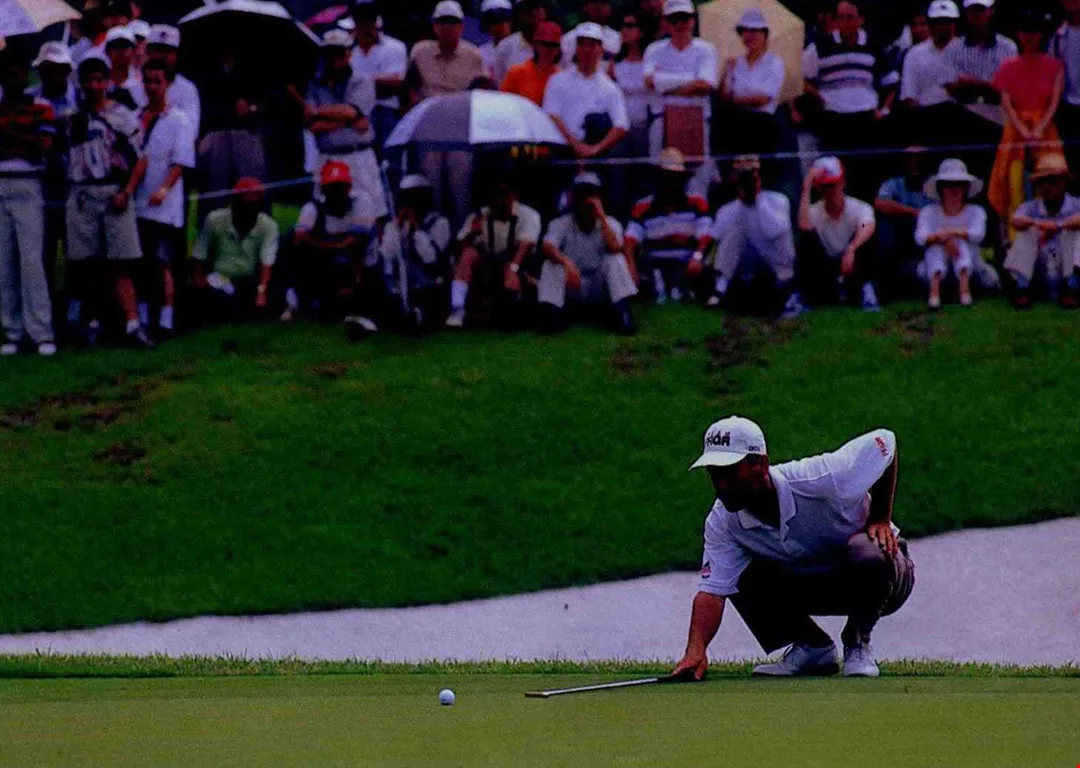
US golfer Corey Pavin participated in the Martell Skins tournament earlier this September. Pavin's infectious sense of humor went over big with fans.
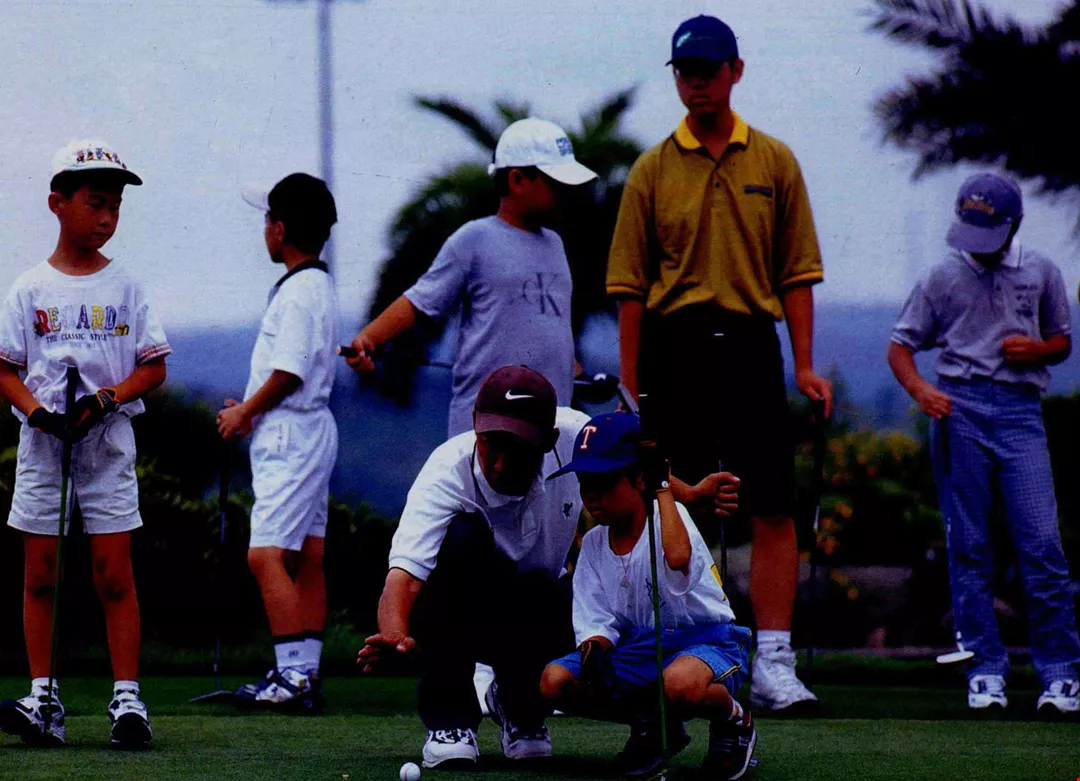
These days, players establish themselves in the pro ranks earlier than ever, and often it helps to get an early start in childhood. Is there a 'Tiger' lurking somewhere in Taiwan's future?
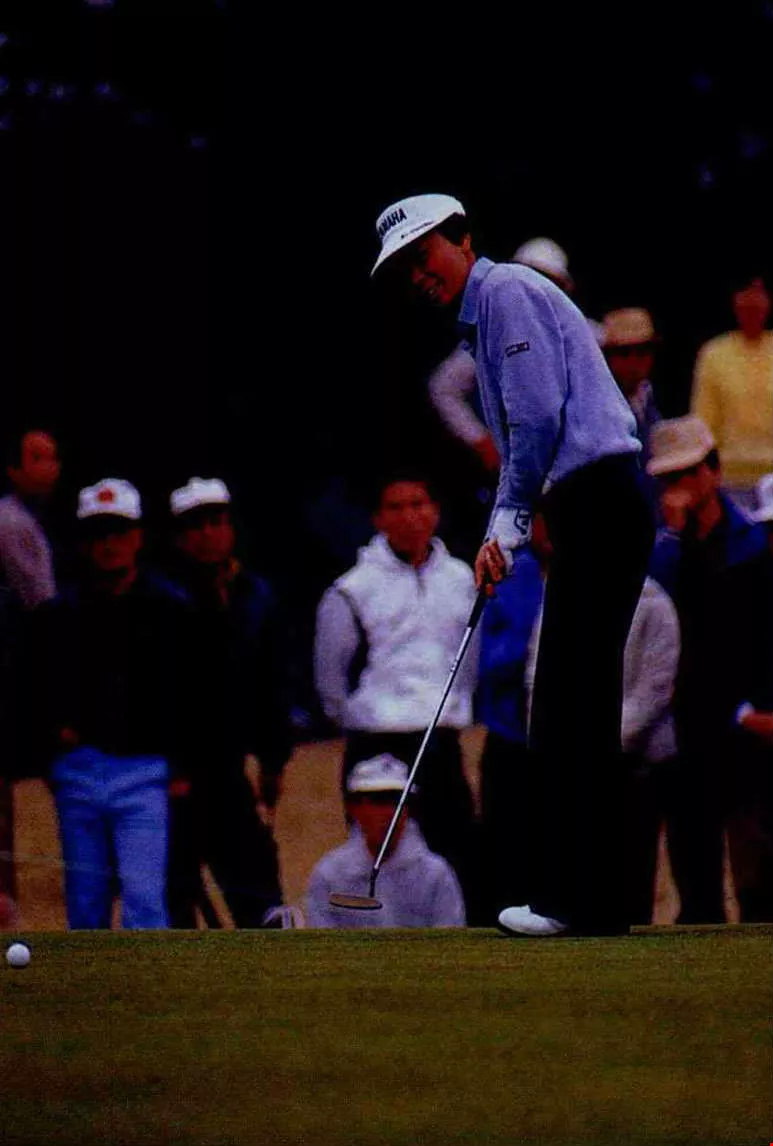
In the 1980s, ROC female golfer Tu Ah-yu made a big splash in Japan. Golf has always suffered from a lack of female participants. Tu Ah-yu is one of the few females to achieve worldwide pro ranking. (photo by Cheng Yuan-ching)
@List.jpg?w=522&h=410&mode=crop&format=webp&quality=80)

@List.jpg?w=522&h=410&mode=crop&format=webp&quality=80)
@List.jpg?w=522&h=410&mode=crop&format=webp&quality=80)


