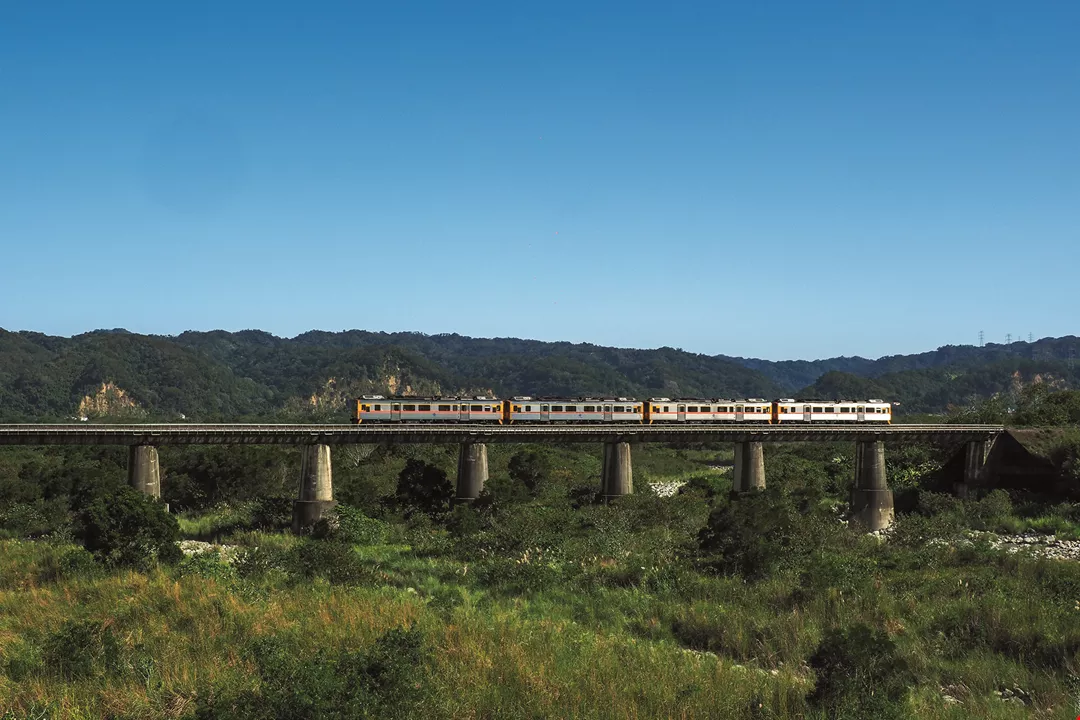
Railway Buffs’ Delight:
Chartering Retired Trains for Special Journeys
Esther Tseng / photos by Kent Chuang / tr. by Jonathan Barnard
September 2025
The Neiwan Line combines natural scenic beauty with cultural heritage and railway nostalgia.
When it comes to hiring a vehicle while traveling, you’re probably aware that you can rent a bicycle, motorcycle or car. But do you know that you can also hire a train?
Travel agencies, railway enthusiast clubs, and even government agencies can apply to Taiwan Railway (TR) to charter a train.
To appeal to train buffs, TR charters out special trains, including some hauled by steam engines, on branch lines such as the Pingxi and Neiwan lines. By stopping at stations that no longer have regular train service, they offer truly special railway experiences. There’s no need to rush to make a departure time, because the train will wait for travelers to board before departing. And everywhere the train passes, it gets the star treatment as cameras are held up to record the experience.
“The R113 Chu-Kuang Express special running on the Neiwan Line is about to depart. Passengers without tickets for this train are not allowed to board.” The announcement is clear enough, but to a train buff, something sounds off.
Normally, you wouldn’t find a Chu-Kuang Express operating on the Neiwan Line.

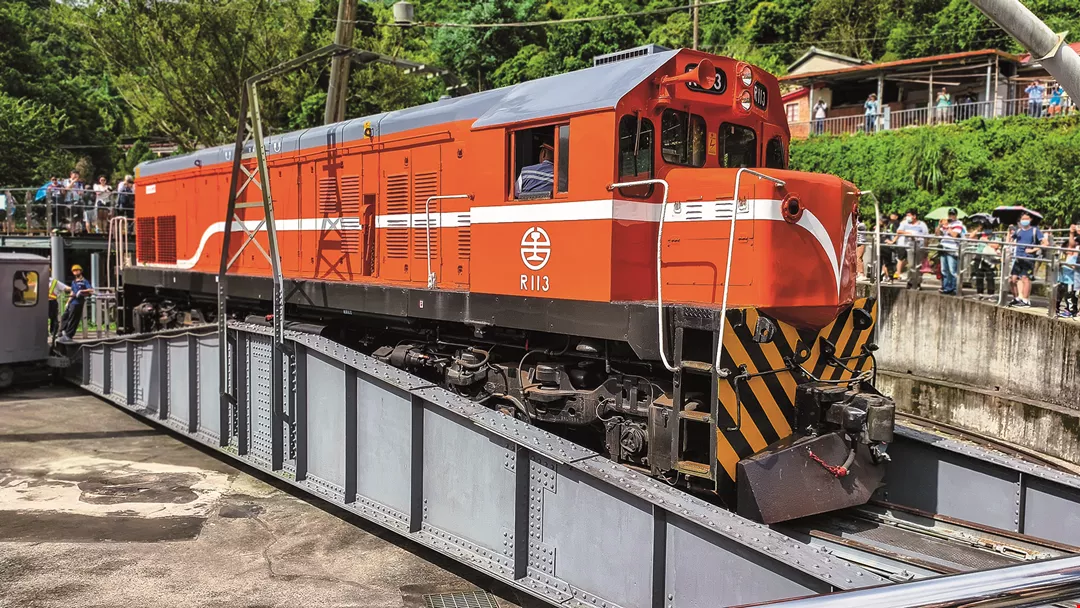
This demonstration of turntable operations at Neiwan Station attracted train buffs from as far as Southern Taiwan and even Taitung. (photo by Tony Wang)
A turntable show
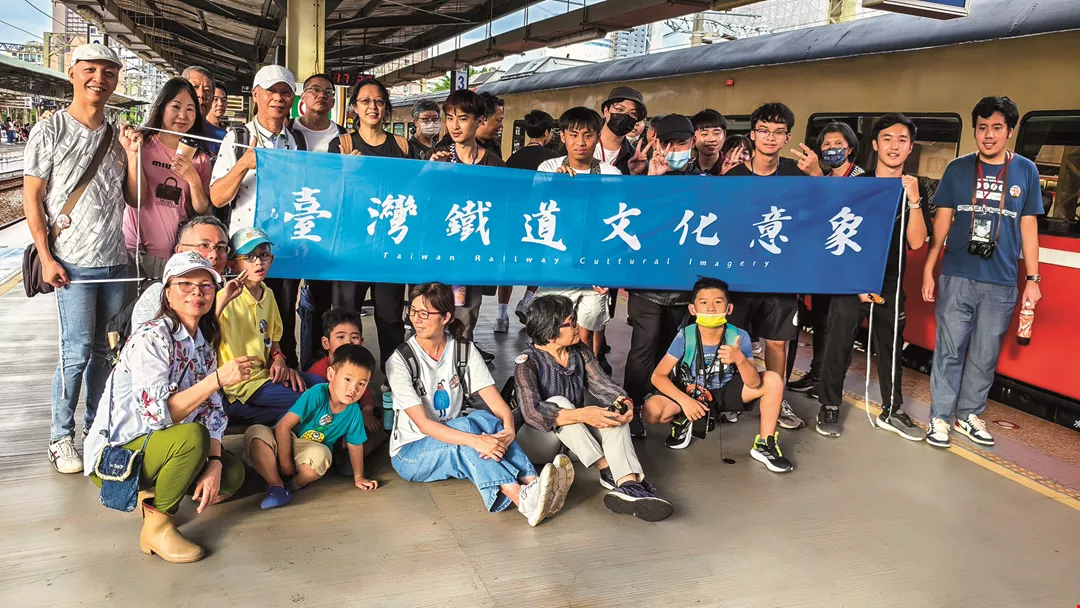
One weekend in July, a Chu-Kuang Express pulled by locomotive R113 (a diesel-electric built in the US in 1969) was running on the Neiwan Line as part of an event called “Summer Trip to Neiwan: A Stroll Through the Mountain Town,” organized by the Facebook group Taiwan Railway Cultural Imagery. The group had rented five Chu-Kuang train cars from TR for the occasion.
News of the Chu-Kuang Express running on the Neiwan Line quickly spread among train buffs. Along the route, trainspotter photographers with telephoto lenses gathered to capture the moment. The biggest attraction was the “turntable show” at Neiwan Station, where the locomotive was rotated on a railway turntable. The event drew train buffs from Southern Taiwan and even a few from as far as Taitung.
The Neiwan Line is a single-track railway, and with limited space at the station, trains used to need a locomotive at each end to be able to change directions. To solve this problem, TR refurbished a decommissioned turntable from a rail depot in Kaohsiung and installed it at Neiwan Station.
The staff inside the control cabin rotated the locomotive four times—twice to the left and twice to the right—so rail enthusiasts could fully enjoy the rare spectacle.

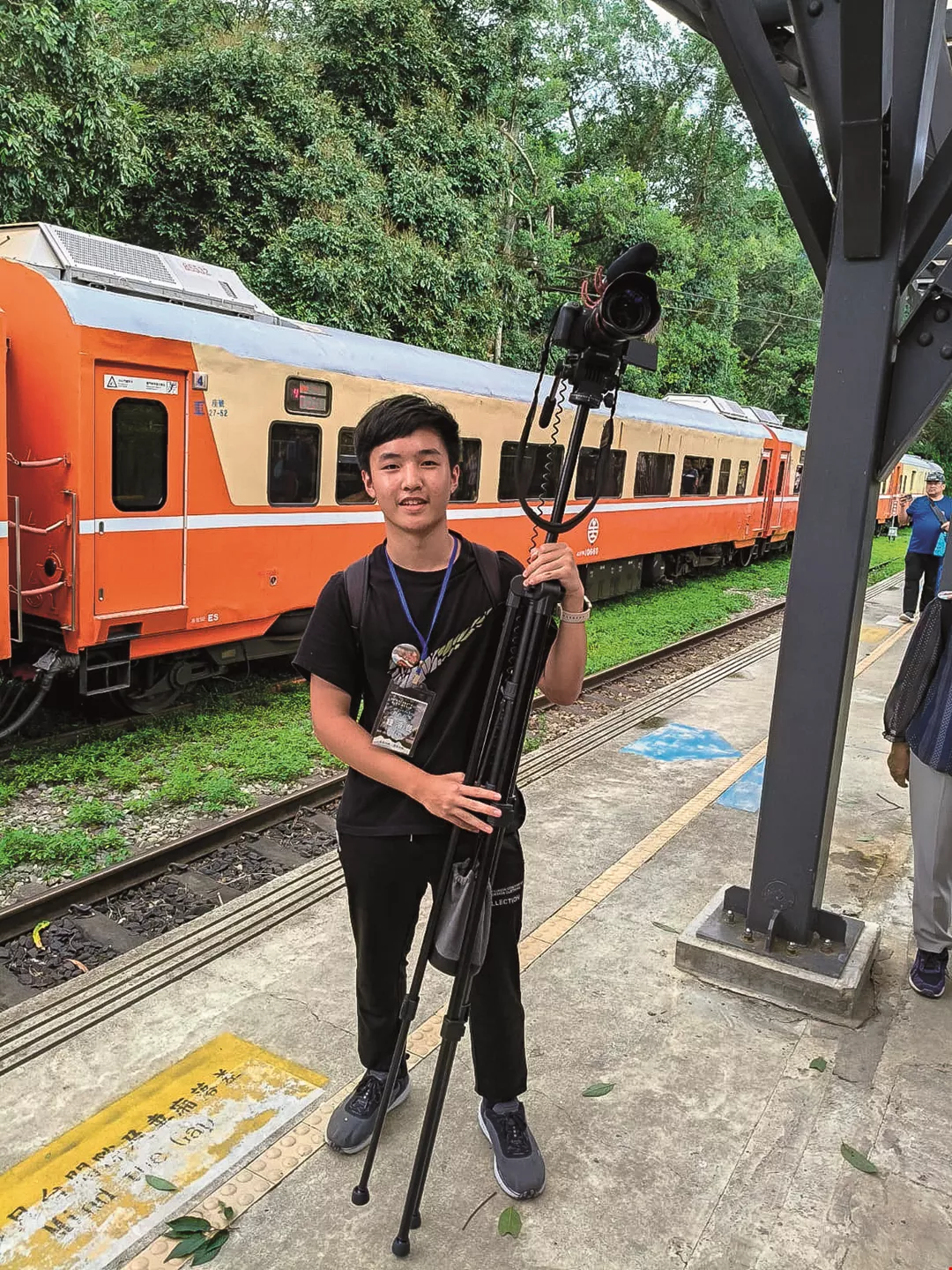
The Facebook group Taiwan Railway Cultural Imagery charters trains from Taiwan Railway. Its leader Jasper Chung has been a bona fide train buff since elementary school. (photo by Esther Tseng)
Appealing to true train buffs
Benjamin Zheng, a train buff with the Youtube channel Kuteeboy, explains that while a “diesel locomotive Chu-Kuang Express” might not sound special, nearly all of Taiwan’s railways have been electrified, so diesel-powered Chu-Kuang trains are now a rarity and highly valued by railway aficionados.
Ordinarily, passengers traveling to Neiwan would have to transfer to a local train. But the charter train had its electric locomotive swapped out for a diesel locomotive at Hsinchu Station before it was switched onto the Neiwan Line. Watching the changeover was another highlight of the journey.
YouTuber Chalis, who has been on similar chartered train trips in Japan, believes these trips are especially well suited to foreign tourists. They spare travelers the hassles of planning their own itineraries. Train buffs can have a wonderful time just by enjoying the stops the train makes at various stations. Taiwan’s three branch railway lines—Jiji, Neiwan, and Pingxi—are more than just rail routes. Each has a story, embodying its region’s unique character and history. These lines allow international visitors to understand Taiwan through its railways and to see the island from a different perspective.

Organized by a Facebook group of train buffs, the “Summer Trip to Neiwan” event allowed participants to enjoy the privileges of a chartered train. (photo by Tony Wang)

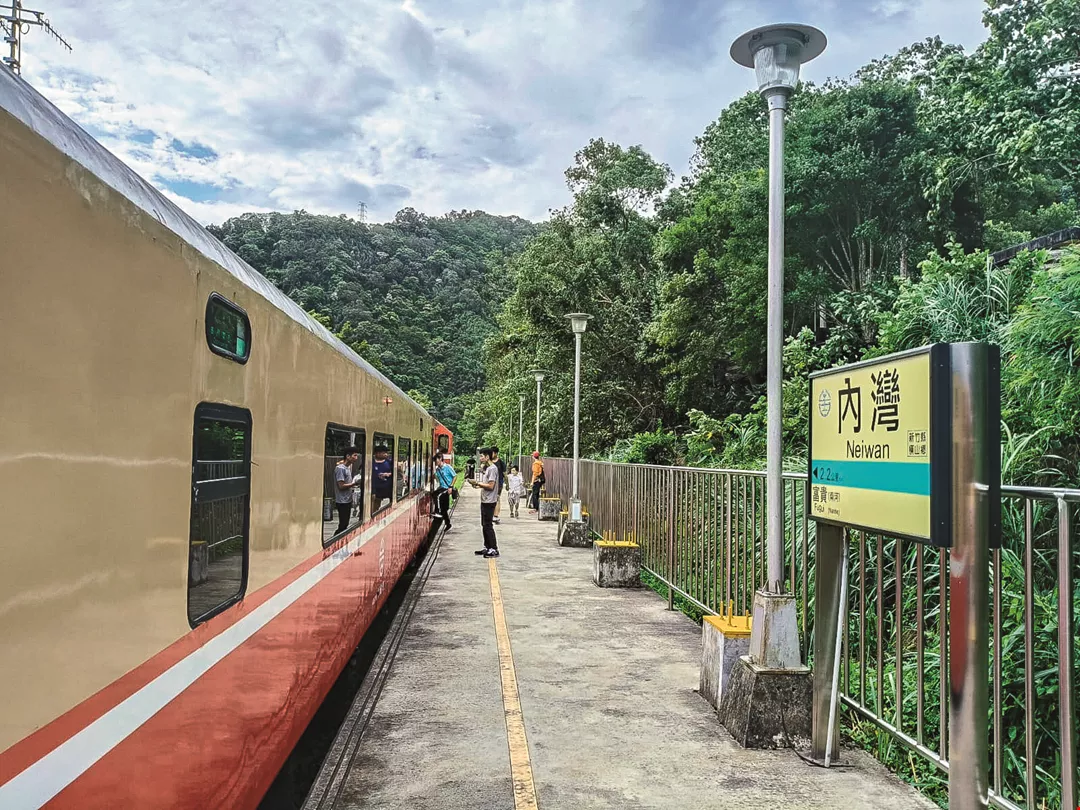
The sight of a Chu-Kuang Express on the Neiwan Line is a sure sign that this is a chartered train, which will wait for its passengers to board before leaving. (photo by Tony Wang)
Trains for all seasons
The members of the Facebook group Taiwan Railway Culture Imagery are train buffs ranging from junior high school students to working adults. Its leader Jasper Chung notes that renting five Chu-Kuang Express cars from Taiwan Railway cost around NT$98,000.
Chung, who is actually an eighth-grade student at Qingshan Junior High School in Xizhi, proposed the idea of renting a train from TR.
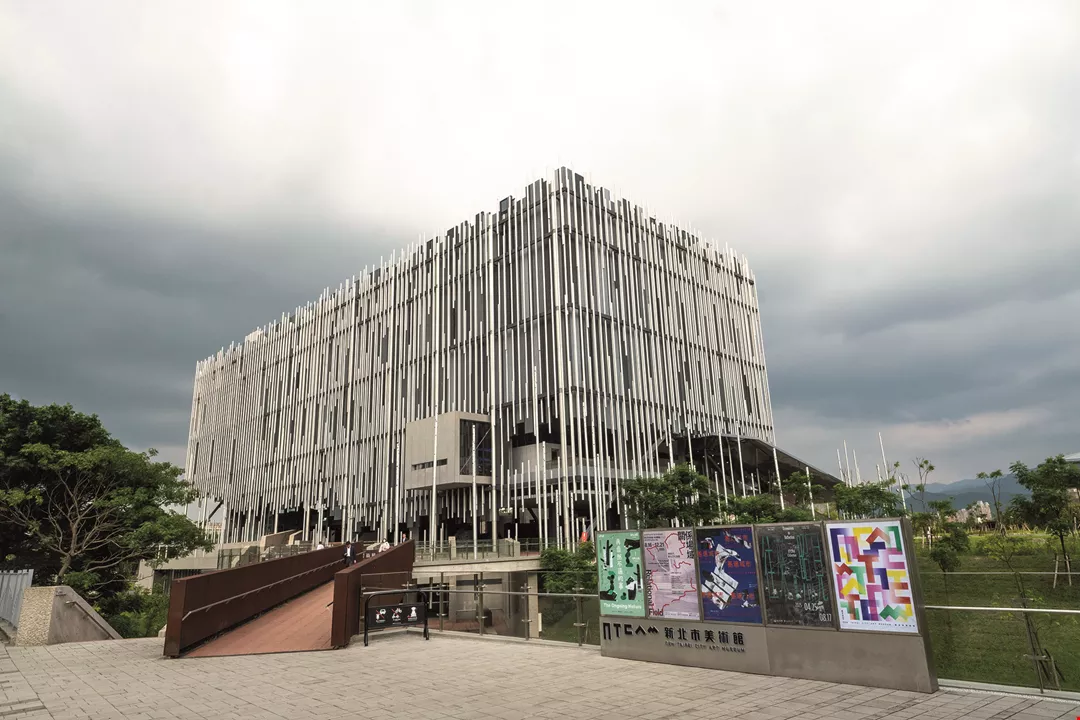
The recently launched “Summer Trip to Neiwan” event takes into account that not all passengers are full-fledged train buffs. The train stops for an hour at Yingge, where visitors can explore the New Taipei City Art Museum or the town’s old quarter. At Shanjia Station, there is a Railway Park. The Neiwan line itself was originally developed to support industries such as camphor, lumber, and coal mining. Although the coal and cement industries declined in the 1980s, the rise of tourism brought new opportunities for passenger transport. Visitors to Neiwan’s old quarter can enjoy a variety of local specialties and delicious snacks.
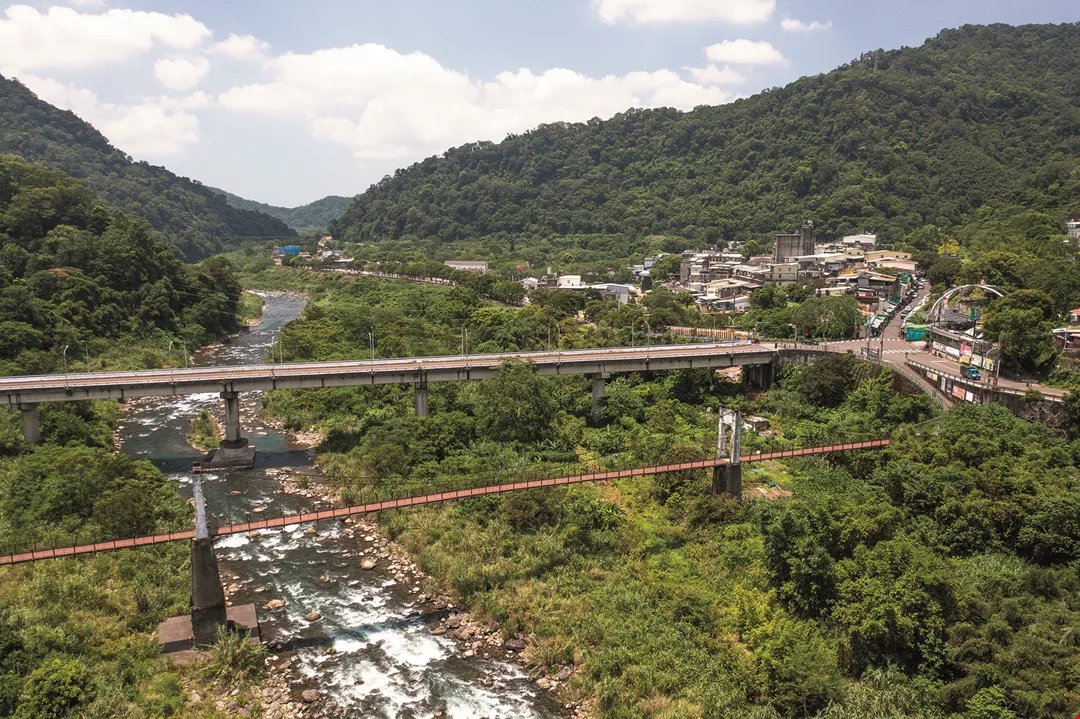
In February and March, when the mountain cherry trees are in full bloom, tourists can take the small train to explore attractions such as the Neiwan Grand Bridge wooden walkway and the Neiwan Suspension Bridge, as well as the historic Muma Trail, where porters used to drag loads on wooden sleds over log tracks.

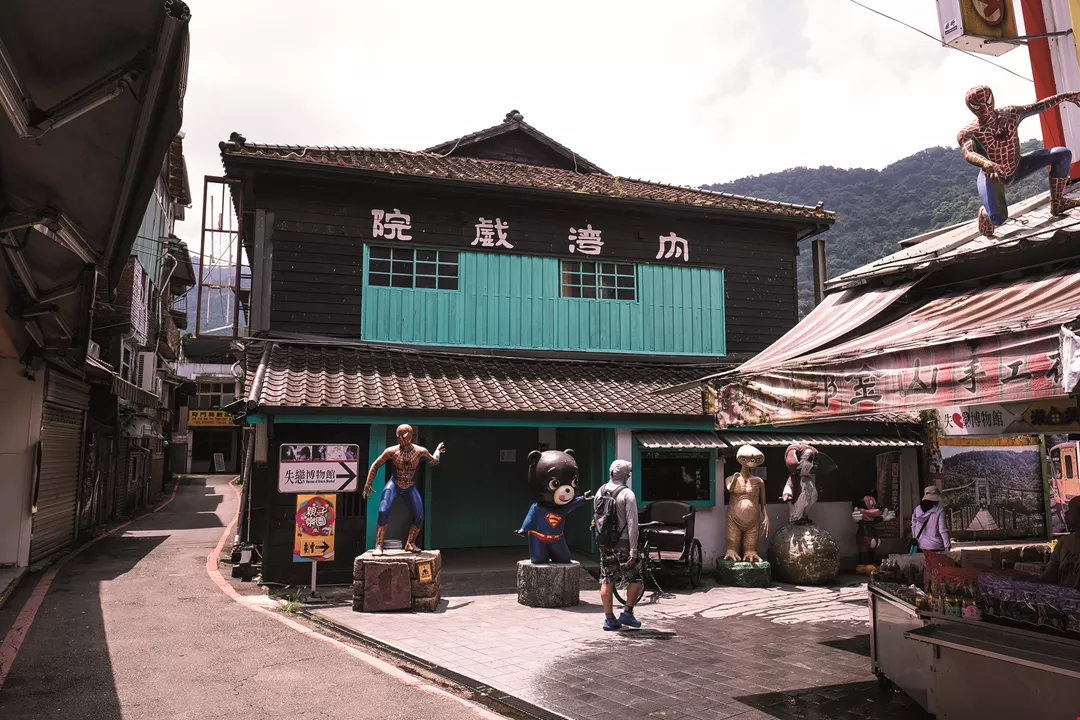
The Neiwan Theater is one of only a few fully preserved wooden theaters left in Taiwan.

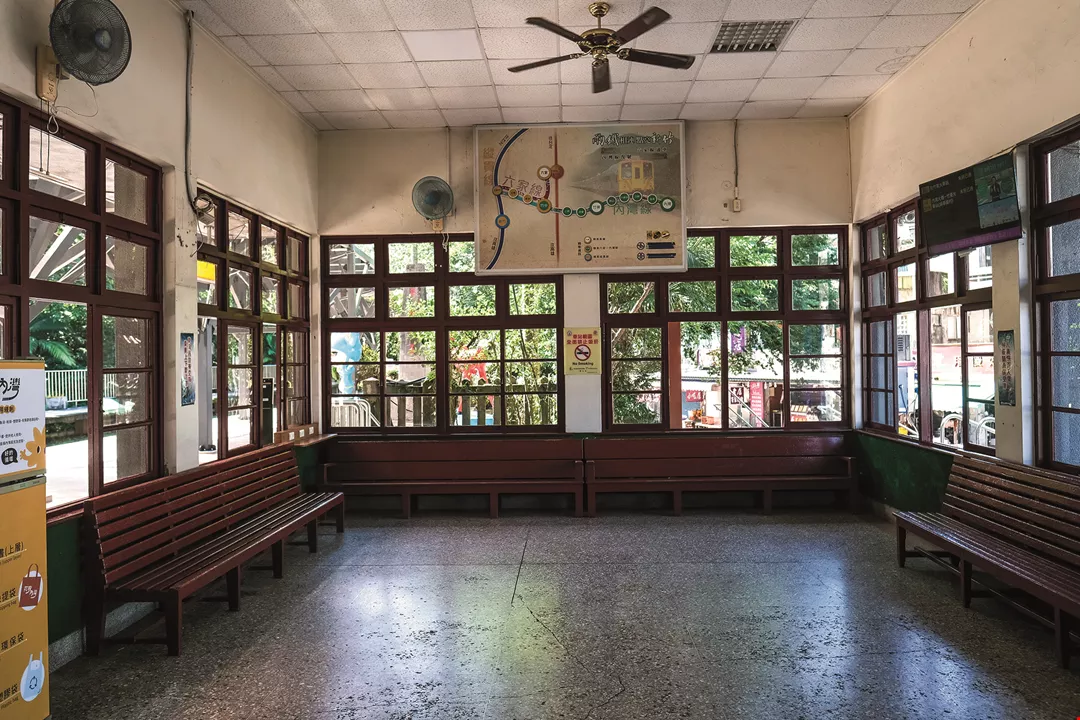
Largely unchanged since the 1950s and 1960s, Neiwan Station evokes the charms of a bygone era.

The chartered Chu-Kuang Express train made a special stop at Yingge Station, allowing its passengers to visit the New Taipei City Art Museum.
By turn a stage and a classroom
In 2024, TR began accepting applications for 319 chartered train services. A variety of trains can be rented, ranging from the EMU3000 series new Tze-Chiang Limited Express to the Puyuma Express, which can even be chartered for round-the-island itineraries. Chu-Kuang Express trains are operated on the popular Neiwan branch line.
In addition to railway clubs and corporations, government agencies also charter trains for special events. For example, when a group of local governments organized this year’s Summer Theatre Festival, they chartered a train to serve as a mobile theater running from Xinying in Tainan City to Douliu in Yunlin County. Passengers experienced performances inside the moving train carriages. The downside was that once you boarded, you couldn’t leave your seat until the train reached its destination.
The National Science and Technology Council has sponsored the Taiwan Science Train for ten years now. The train departs from Taipei and travels counterclockwise around the island, with each carriage serving as a mobile science classroom.

From the Neiwan Suspension Bridge, you can enjoy the beautiful verdant scenery of the Youluo River.
Direct to tourist destinations
In addition to charter trains rented by public and private groups, TR also occasionally organizes “cruise-style” trains for railway enthusiasts. These branch line mini-tours, such as the “Diesel Railfan Journey,” depart from Taipei and go directly to destinations like Houtong and Shifen. Emphasizing “direct service with no transfers,” these special trains allow train buffs to explore the charms of local branch lines.
Since 2014, the “Midsummer Formosa” cruise train has run annually. The “Queen of Steam Locomotives,” CT273, built in Japan in 1943, pulls six Chu-Kuang-class carriages and operates between Yuli and Taitung. When the whistle blows and smoke billows skyward, train buffs fill with excitement. It has become a major railway event every summer vacation.
In 2013, Taiwan Railway’s CK124 locomotive (built in Japan in 1936) and Japan’s JR Hokkaido C11 171 (built in 1940) were officially celebrated as sister locomotives. Sharing the same designer and built at the same locomotive works, both are highly popular and symbolize the deep friendship between the railways of Taiwan and Japan.
Since 2014, TR has employed the CT273 steam locomotive under the name “Midsummer Formosa.” Each year during July and August, the train operates on three selected weekends along the Hualien‡Taitung line, fulfilling the dreams of train buffs by stopping at various special destinations including what writer Liu Kexiang called the “legendary and unreachable” Shanli Station, known for its mystical charm and the little white chapel that stands nearby.
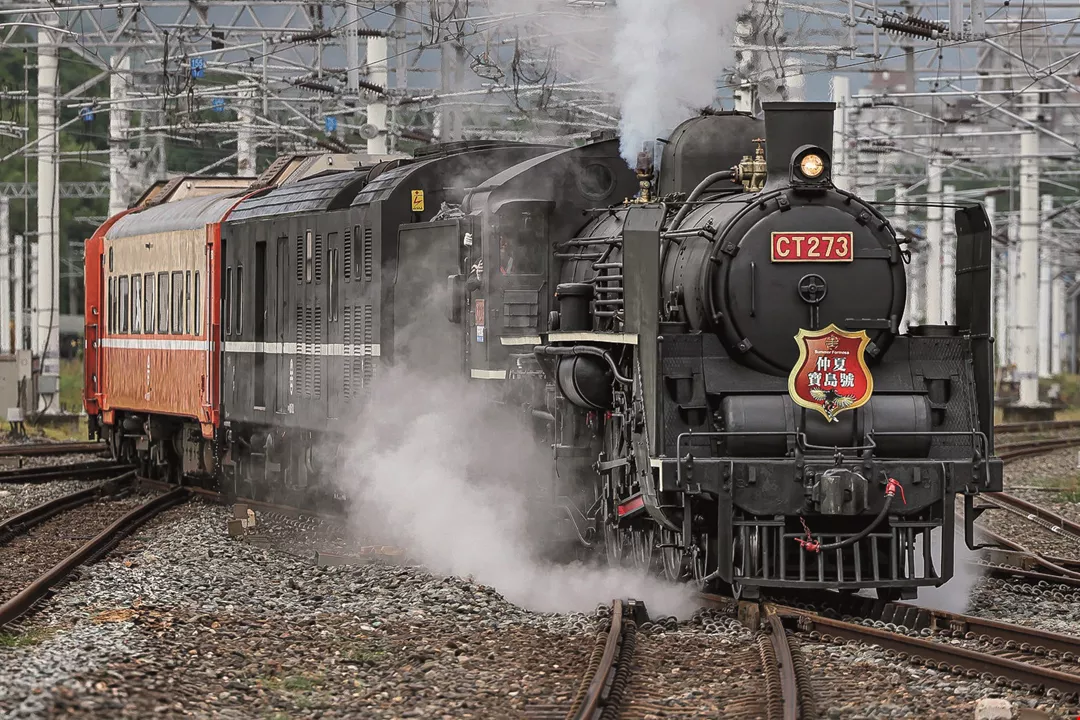
The “Midsummer Formosa” train, which runs between Hualien and Taitung in July and August, exudes a powerful aura. (courtesy of TR)
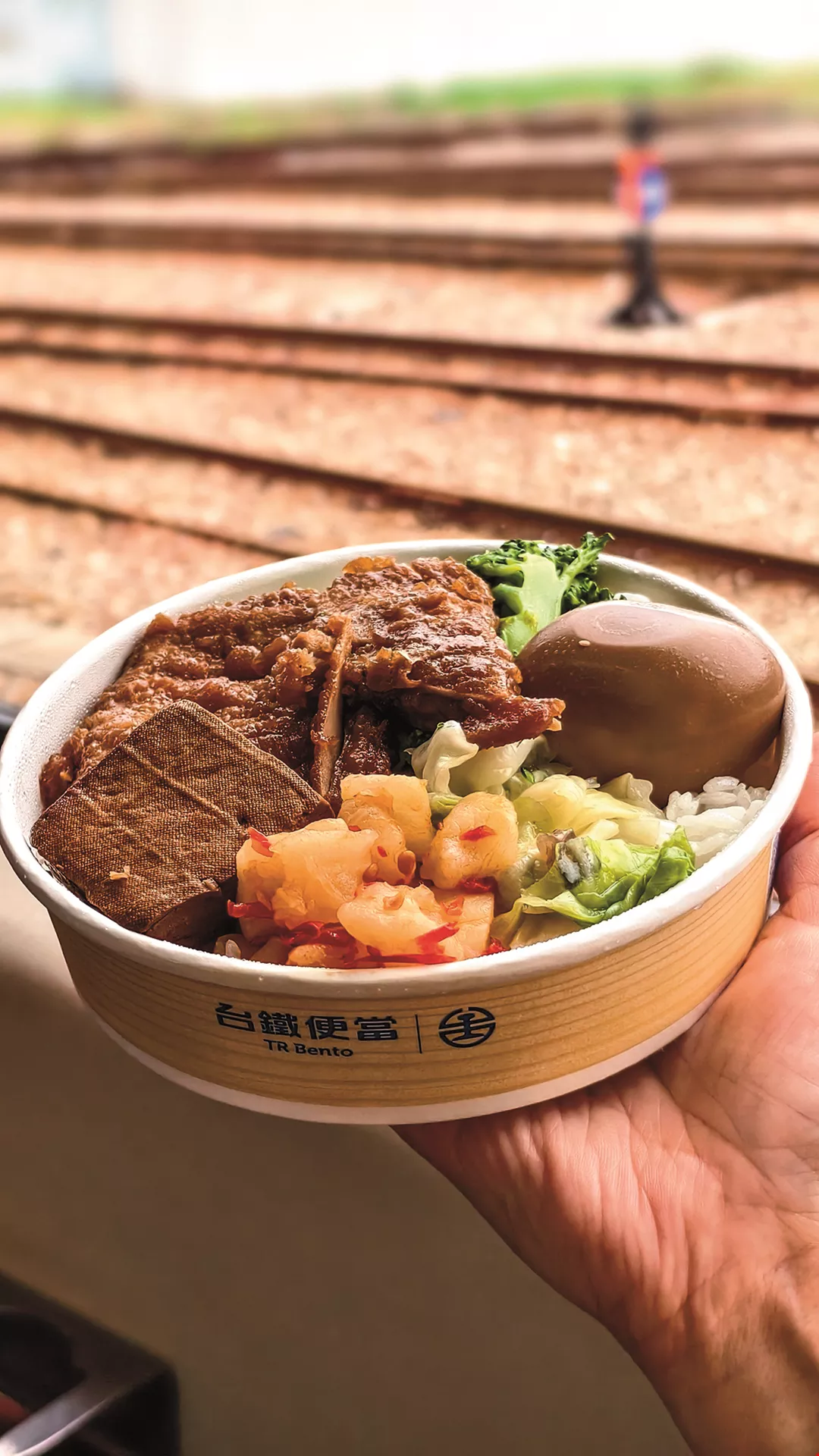
For many, eating a TR pork-chop bento is a ritual highlight of any railway journey in Taiwan. (photo by Tony Wang)

Chasing trains, finding oneself
Taiwan Railway has started this year to occasionally run cruise trains using DR2400 diesel railcars. Many remember the blue-and-white exteriors and the gently spinning ceiling fans from their student days or early on in their careers. As these trains once again race along the rails, older passengers may feel as if they have traveled through time to meet their younger selves.
Benjamin Zheng holds a grand aspiration: to visit every small and remote train station across Taiwan, in the hope of finding the unexpected. At the next stop, he reckons, he might just discover a new side of himself.
Train buffs are deeply moved by witnessing the return of retired trains. Boarding a specially chartered limited-run train, experiencing the feeling of nostalgia engendered by an old steam locomotive chugging down the tracks, enjoying a classic Taiwan Railway bento, and collecting limited-edition tickets—all can become parts of a journey through rail history.

The charming Neiwan Line, blending beautiful natural scenery with rich Hakka culture, engenders much nostalgia in visitors. (photo by Jimmy Lin)