Seventy-eight-year-old Li Tiao-lun has spent the greater part of his nonprofessional life diligently and selflessly advancing photography on Taiwan. His activity in local photographic exhibitions and associations spans three generations, from youth to old age. And all of it has been "purely for interest's sake," as Lee says, a man indifferent to fame or fortune. Fitting testimony to his achievement are the words inscribed on the silver plaque the YMCA awarded him this year in appreciation for his 28 years of work with the YMCA Photography Association: "The Doyen of Taiwan Photography."
Li Tiao-lun was born in 1908 in Taipei to a family of doctors--his grandfather, father, and uncle were all practicing physicians. That he grew up in relative affluence can be seen by the fancy little suit he wore in his portrait as a three-year-old.
As an enthusiastic 18-year-old high school senior, Li actually built his own camera out of wood, glue, nails, a lens, a magnifying glass, and some black cloth, which served as a shutter. He learned exposure speeds by trial and error. Although he only used his homemade camera to take 4.5×6 inch portraits, this early experience of direct "participation" in photography is no doubt one of the reasons for the care and attention he later devoted to his craft.
After high school, rather than going into medicine, he followed a friend's recommendation and started working at a farmers' cooperative, handling agricultural purchases, sales, and loans right up until his retirement at age 68. His spare time was dedicated to music, exercise, and his chief passion, photography.
During the Japanese Occupation few Taiwanese possessed cameras, and photography associations were largely Japanese affairs. Under the Japanese influence, photography was supposed to be purely "artistic," with the result that most styles hovered rather indecisively around the ideals of classicism, naturalism, aestheticism, and symbolism. Of course the poor quality of lenses, film, and developing techniques also had something to do with the rather vague effect of the pictures of the time.
Progressing from a little Kodak to a Eastman Kodak Spring Camera to a Rollei-Flex, Li Tiao-lun eagerly took part in all the contests and activities he could. He was one of the 86 finalists in the Japanese colonial government's island-wide photo contest of 1943. The list of the 22 Chinese finalists reads like an honor roll of later Taiwan photography.
After Retrocession in 1945, as the departing Japanese sold off their cameras or left them behind, more and more Chinese began taking pictures. But the colonial heritage had left Taiwan photography derivative and conceptually sterile. Photography played a subordinate role after the war to literature, music, and painting in terms of both artistic creativity and public acceptance. It was looked on more as an amateur hobby than a serious art form.
When the China Photographic Society was founded in 1953, Li joined immediately. The next year he got together with Teng Nan-kuang and Chan Ping-k'un to form the Liberty Photography Exhibition. Their goals were a kind of moderate realism: to break away from the portraits and landscapes of the salon school and try to capture real life, while at the same time still expressing a sense of the beautiful.
At least twice a month, Li would head for the countryside and snap realistic shots of daily life and customs. Clean, direct, and simple in composition and expression, these realistic sketches have with the years become photographic records more precious than Li himself ever imagined at the time.
Taken in 1956, the picture of the little boy on Sanhsia Bridge carrying his sleeping baby brother on his back reflects the simple, frugal, and independent spirit of the post-war years. The off-center positioning of the figures against the geometric structure of the bridge, a composition which violates conventional concepts of balance, adds to the photo's vitality and imagination.
Another picture which deserves a close reading is Li's eerie 1956 shot of a troupe of street performers in Chiufen. The expressions of the performers, the faces in the crowd, even the lowered gaze of the hunched-over stuffed "old man," all work together to create a haunting study in alienation and dislocation.
When Li Tiao-lun saw me pick out this photo, one he had never paid much attention to, he smiled and said, "Oh, you like this kind of picture, do you? You don't find it too messy, too painful?"
We each have our own tastes, of course. Li did not, in fact, long continue taking such powerful, emotional pictures. Instead he turned to cleaner, pleasanter studies of scenes and objects, like water droplets on tree branches, sections of buildings, and contrasts in light and shadow. The subjective, artistic flavor grew stronger at the expense of the human element.
Li's association with the Liberty Picture Exhibition lasted 10 years. During his later years there he worked on thematic series like "Tamshui Shore," "Female," and "Creed," which emphasized form over feeling. Yet his pictures of female models contain some excellent work. Li sought to bring out a soft, restrained beauty in his models, and his composition and lighting have a lasting appeal even today.
During his later years Li began to advocate what he calls "self-expression composite photography." He believes that with the complexities of the modern world a single photograph lacks sufficient expressive power and that a series of photographs is required. And he has systematized his concepts into a grammar of photography, from which students can learn the fundamentals of composition and arrangement. The theory, he admits, is only a means to an end, not to be confused with the end itself.
Well into his seventies now, Li Tiaolun, a man who has owned over 100 cameras in his life, now aims at cultivating his character and coaching the younger generation. His unassuming frankness and modesty are far removed from the frantic clambering after fame and recognition characteristic of all too many photographers today. Why do we live? he asks. For our interests. If we have an interest to concentrate on, our lives will gain power and color. Photography has given Li Tiao-lun a lot of power to live, and the realistic pictures of his early years are a proof of that power.
[Picture Caption]
(Above) Li Tiao-lun at age three, 1911.
(Below) Li at 77, 1985.
Sanhsia, 1956.
Chiufen, 1956.
Shihting, 1958.
Shihting, 1958.
Hsinpu, 1960.
Chiufen, 1963.
Shihting Back Street, 1956.
Yuant'ung Temple, 1962.
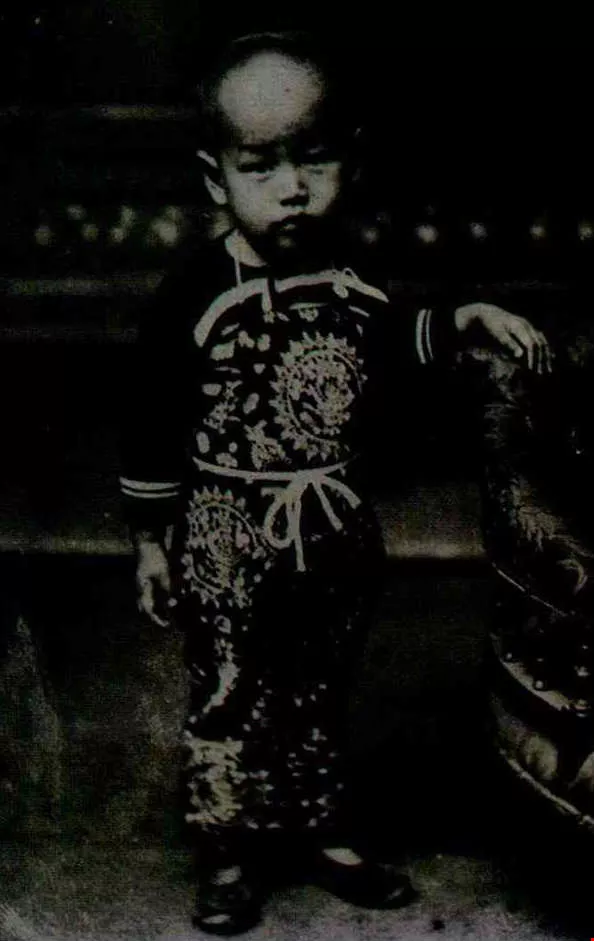
(Above) Li Tiao-lun at age three, 1911.
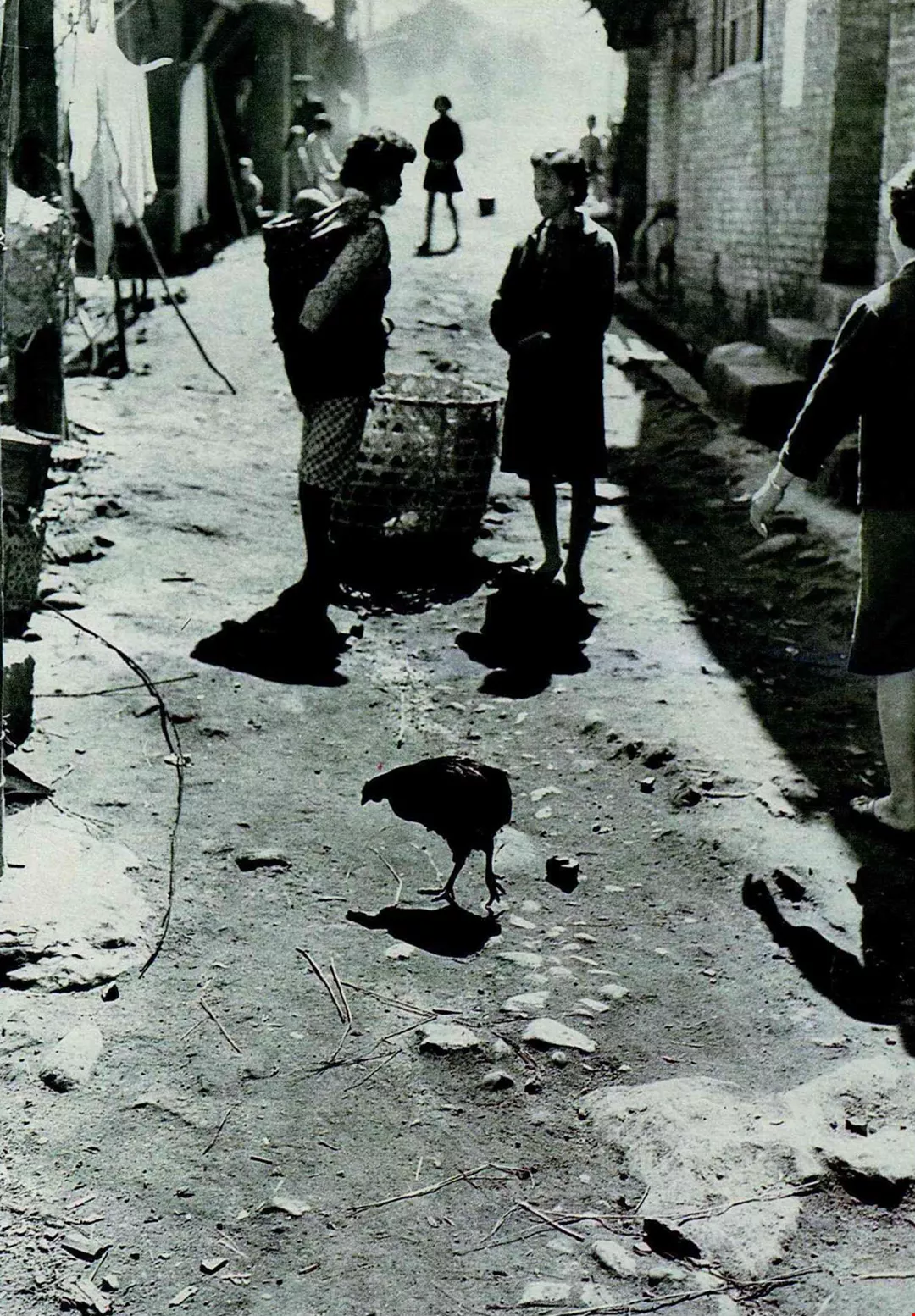
Shihting Back Street, 1956.




@List.jpg?w=522&h=410&mode=crop&format=webp&quality=80)


@List.jpg?w=522&h=410&mode=crop&format=webp&quality=80)
@List.jpg?w=522&h=410&mode=crop&format=webp&quality=80)