When we try to recall the stages of our life, the most affecting and touching memories, besides those of love, have to be those evoked by pictures of our childhood. Even plain and ordinary childhood pictures have something captivating about them, let alone those full of energy and feeling.
The black-and-white photos that Huang Po-chi took between 1965 and 1969 portraying childhood and family affection contain just this kind of emotional power. A self-trained amateur, Huang has captured for us with fondness and humor many glimpses of childhood's gratitude and laughter.
Huang Po-chi was born in 1931 in Tungkang, Pingtung County, in southern Taiwan, and graduated from high school in Kaohsiung, where his family moved when he was nine. In 1950 he entered National Taiwan University, where he studied medicine for seven years. After completing his military service on Quemoy, he returned to Taipei to practice medicine at National Taiwan University Hospital. He later opened his own pediatric clinic on Taipei's Nanking East Road.
Huang bought his first camera in 1964, rather late in life to get started as a photographer, spending NT$10,000, or about US$250 (a not inconsiderable sum at the time) for a Nikon F to take pictures of his children. Telling him it was a pity to use such a fine piece of equipment for nothing but family snapshots, his friend and photographic mentor Chang Kuang-t'ai guided him in turning his lens to other subjects and introduced him to Chang Shih-hsien, a noted camera enthusiast of the time. Between his two masters, Huang gradually developed a "camera eye," without which a photo is just a photo, and not a true work of art.
With fervor and enthusiasm, Huang began to take pictures in earnest, using the early morning hours from five to seven and his lunch break at noon to wander about in search of shots.
Stimulated by the guidance he gained from his teachers, the knowledge he absorbed from photography books in Japanese and English, and the encouragement he received from having his pictures accepted by Nippon Camera Monthly, Huang was richest in creativity between 1965 and 1969, when he produced a number of photo series--"Children of the City," "I- Kuang Foster Home," "Little Ryukyus," "Sketches of Hsimenting," "Round Forms," and others--which, although not all completed, each have a firmly convincing viewpoint and direction.
The reason Huang was not overwhelmed by the vogue of the time for pictorial salon photography was because he had a clear idea of photography's essential nature. He believes that photography should express what painting and drawing can't--the direct, intimate, and vivid force of the instant.
From the works of the Japanese photographer Domon Ken, Huang learned to face squarely the pressing imperatives of real life, without embellishment or decoration. In "Gratitude" (1967) the intense expressions and gestures of the children saying grace at the I-Kuang Foster Home convince us with their heartfelt sincerity. With the same understatement and light touch Huang's "Holiday" (1968) and "Rooftop Lovers" (1967) express the warm affection between three generations of a family on their way home from an outing, and the happiness and contentment of a pair of young lovers.
And from the French photographer Henri Cartier-Bresson Huang learned the importance of "split-second decision-making." In "Father and Son" (1965) Huang captures a vivid moment of a father playing with his baby son. The rays of the setting sun slanting in from the right, the gaze of the actress in the rear, and the matching positioning of father and child form a striking composition.
"Swordsmen" (1965) was taken from a bridge in Sanchungpu. The two boys duelling with bamboo swords form an interesting contrast with the poster on the dilapidated building behind them.
"Storytime" (1965) offers a study in action and calm, setting off the animated features of the storyteller engaged in his tale with the quiet faces of his intent audience.
In other works, Huang emphasizes "focal points of expression." In "Miner" (1967) the expressive points are the sweat and grime on the miner's bare back, brought out by lateral lighting and bold cropping.
In "Boatman" (1968) Huang's lens focuses on the horny, blackened feet of a fisherman set off against rippling waves and fleeting clouds to reveal the tough endurance of the waterman's way of life. The restricted viewpoint adds directness and freshness to the sketch.
Huang's photographs generally show the robust and sunny side of life. He says that he has seen enough sad and troubled faces in his clinic, and so he seeks the happy and healthy outside for balance.
Accompanied with his camera like a hunter with his hound, Huang can walk for five or six hours without feeling tired. He says that because of photography, he has made many friends, enriched his life, and come to understand human nature more deeply.
In the 1970s Huang, like many photographers of his generation, changed from black-and-white film to color. And as his reputation grew, he participated less in contests and exhibitions--for fear of criticism and misunderstanding, he says. He then turned for a while to contests overseas, but his interest there cooled off later as well.
Huang agrees with Chang Shih-hsien's remark that photography is made up of three factors--enthusiasm, time, and money--and says that time is what he has lacked the most. In the future he hopes to have more free time to devote to completing his unfinished series like "Children of the City" and "Sketches of Hsimenting." And he wants to go back to black and white because he feels it has more flavor and staying power.
Only, after two decades, how much have the faces of the city and of children changed? And don't a photographer's judgment and eye develop with the years? Huang Po-chi will surely think twice before he opens the shutter.
[Picture Caption]
Laughing Children, 1965.
Father and Son, 1965.
Huang Po-chi at age 44, 1975.
(Above) Gratitude, 1967.
(Below left) Swordsmen, 1965.
(Below right) Making Up, 1968.
Storytime, 1965.
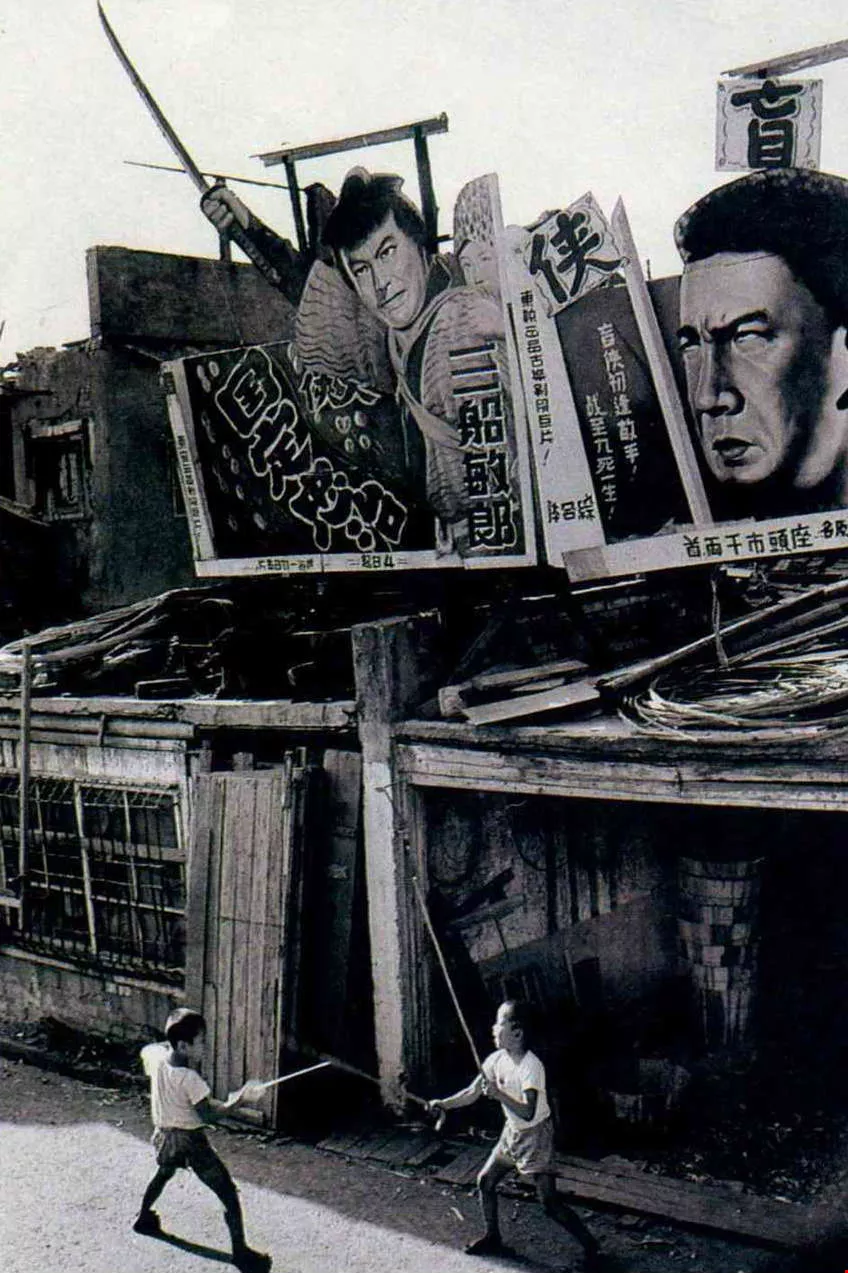
(Below left) Swordsmen, 1965.
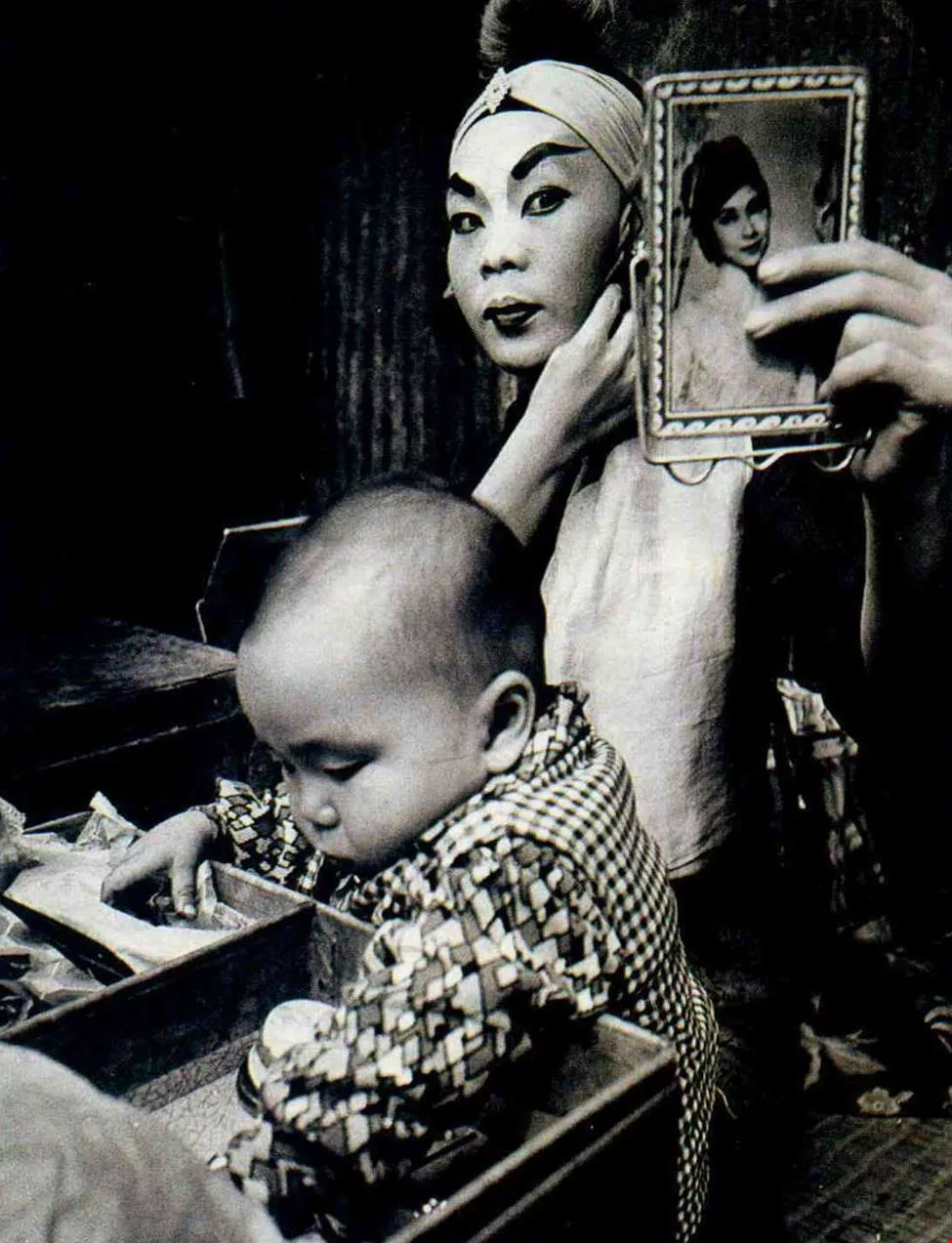
Below right) Making Up, 1968.




@List.jpg?w=522&h=410&mode=crop&format=webp&quality=80)


