In their heyday, Taiwan’s sugar railways formed one of the world’s most extraordinary narrow-gauge industrial railway systems. Their tracks crisscrossed southern and central Taiwan, stretching more than 3,000 kilometers—longer than the national railway network itself.
At a time when sugar was Taiwan’s largest export, these railways played a vital role in the island’s economic development, carrying sugarcane from fields to mills and finished sugar products onward to the ports. Yet their work extended far beyond sugar. They transported a remarkably diverse range of freight and operated a 600-kilometer passenger network, complete with limited-stop express trains.
This book focuses on the twilight years of Taiwan’s sugar railways in the 1990s, when the still-extensive system was entering a period of rapid closure. Through a collection of previously unpublished photographs, along with extensive interviews with retired sugar railway workers, it tells not only the story of an extraordinary railway network, but also the human stories behind it.
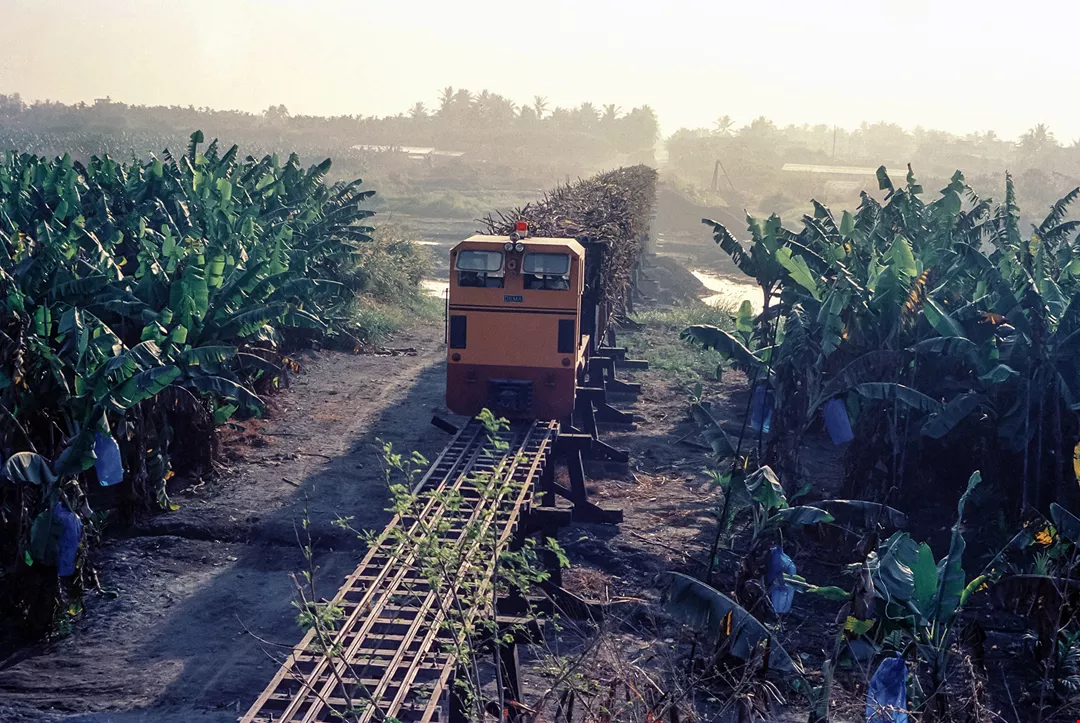
On a hazy morning, a Nanzhou Diema locomotive crosses the temporary Zhulin Bridge over the Linbian River. Due to Taiwan’s fluctuating river levels and typhoon seasons, these wooden bridges were traditionally assembled for the harvest and dismantled in the spring. The loaded cane trucks, flanked by typical Pingtung banana trees, highlight the unique intersection of local agriculture and railway engineering.
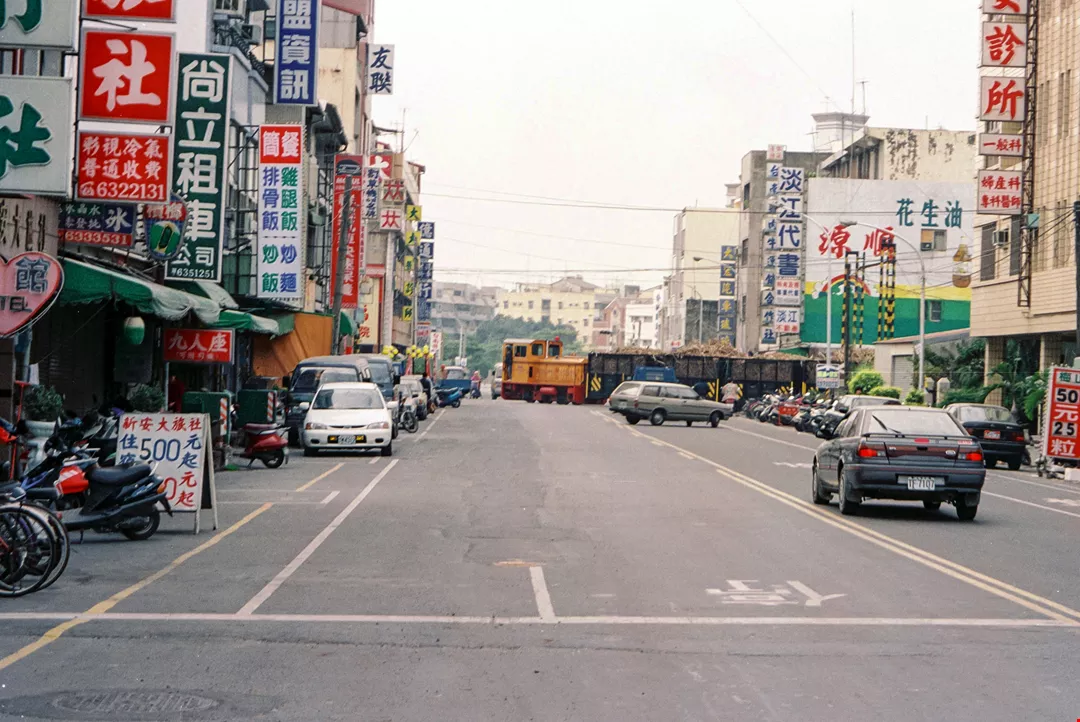
A Diema locomotive hauling loaded cane wagons navigates the Xinjin Road level crossing, capturing a vibrant 1990s Xinying street scene. Xinying was once a bustling administrative center where the sugar mill employed thousands of seasonal workers, deeply influencing the local economy and businesses. The mill’s eventual closure in 2001 profoundly changed the town’s socio-economic landscape.
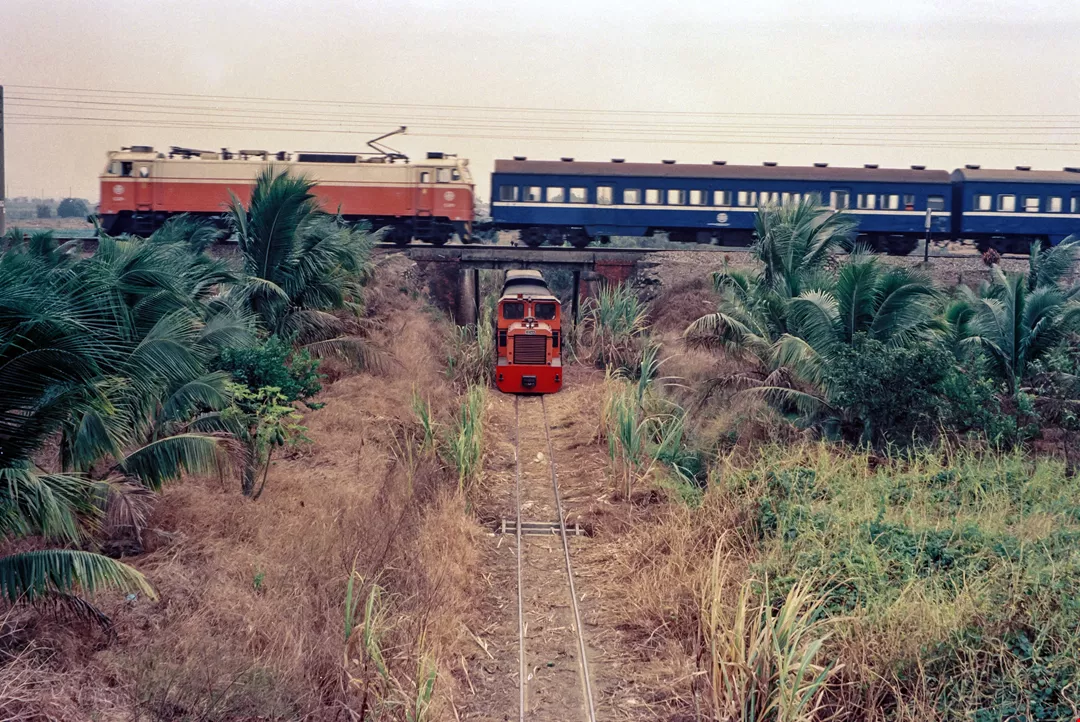
A rare capture of an orange Diema locomotive passing under the main line just as a blue TRA (Taiwan Railways Administration) passenger train crosses overhead. In the railway’s 1950s peak, such intersections were common, but by the 1990s, capturing both systems functioning together required immense patience. It beautifully symbolizes the intersection of local industry and national infrastructure.
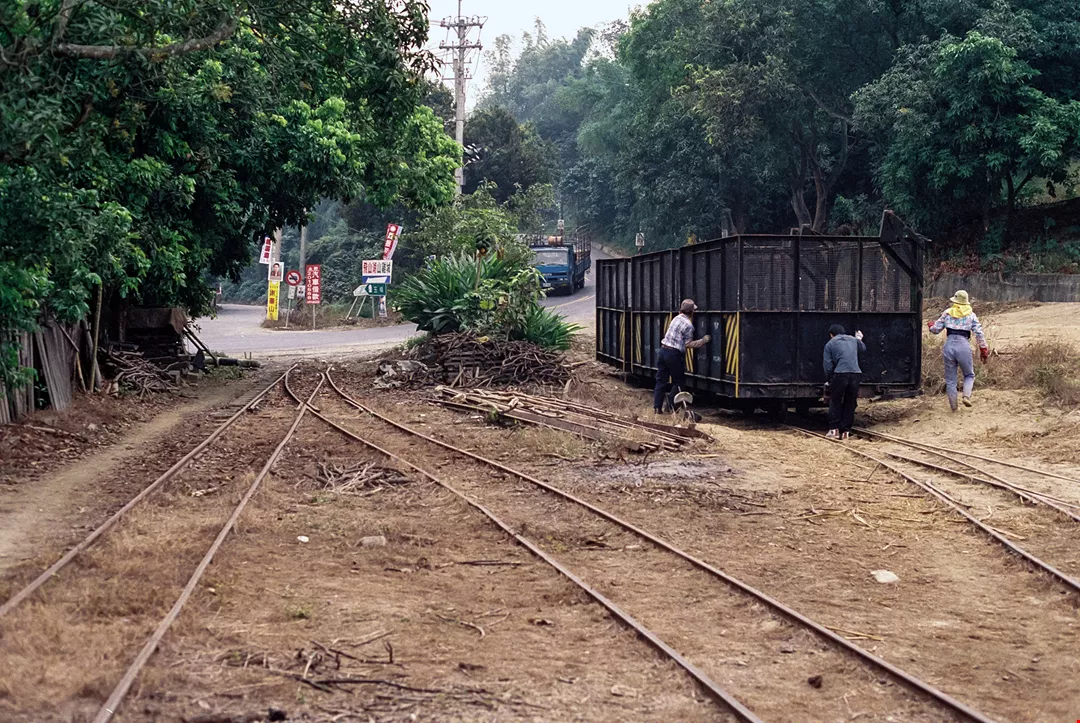
Workers perform manual shunting at the final loading point on the Zuozhen Line during the 1997‡1998 season. Completed in 1952 through mountainous terrain, this line was a major engineering feat and even offered passenger services until 1973. This scene intimately captures the physical human labor that sustained the railway network in its twilight years.
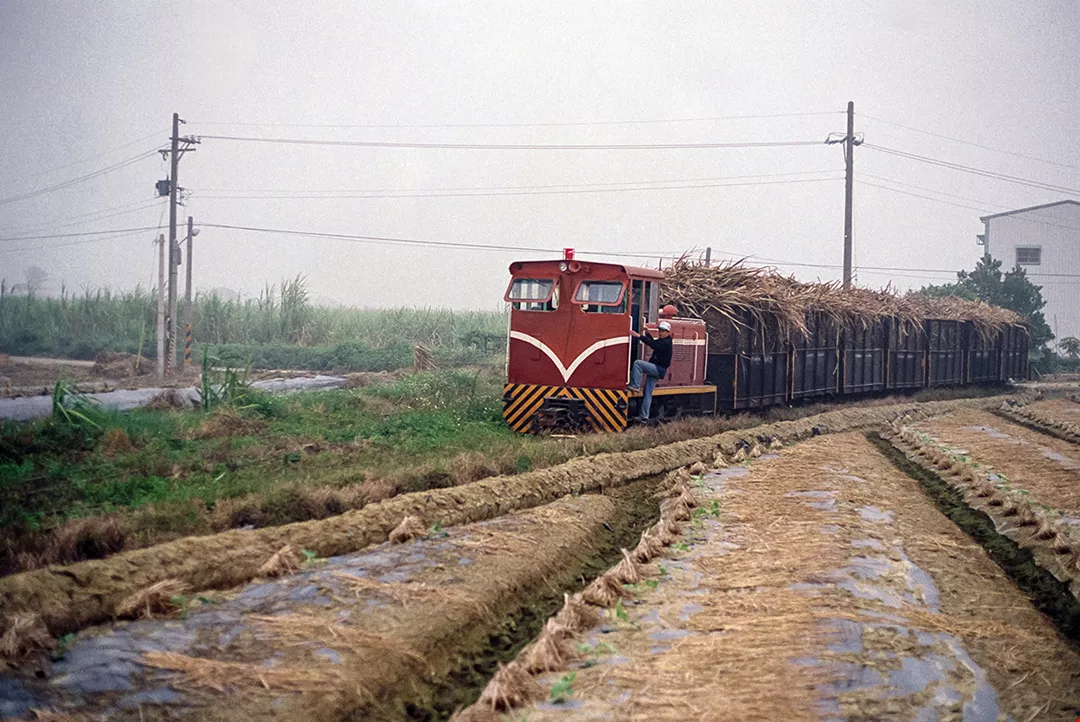
On a misty morning, Rende Hitachi No. 839 hauls loaded cane on the Daling Line. In the 1970s, this area’s railways transported massive quantities of excavated sand to build the Sun Yat-Sen Freeway. Ironically, the sugar railways directly aided the construction of the very motorway system that would ultimately undermine their competitiveness and lead to their decline.



@List.jpg?w=522&h=410&mode=crop&format=webp&quality=80)
