A Synchronic Resonance of Kindred Spirits
Yeh Wei-li’s Shueinandong
Shen Bo-yi / photos Yeh Wei-li / tr. by Brandon Yen
January 2020


How does a contemporary artist initiate an encounter with a deceased predecessor? And how do we define the relationship and the dialogue that arise from such an encounter? The artist Yeh Wei-li, who works mainly in photography, was invited by the curator Johnson Chang in 2015 to breathe new life into the derelict houses of the late artist Yeh Shih-chiang (1926‡2012). Despite differences in their ages and backgrounds, the two artists’ emotional responses to space have much in common. In addition, as a creator of art, Yeh shares with his predecessor a reclusive world view: he maintains a distance from the criteria that govern contemporary mainstream art, deliberately keeping a low profile and seeking to transform his everyday life into art.
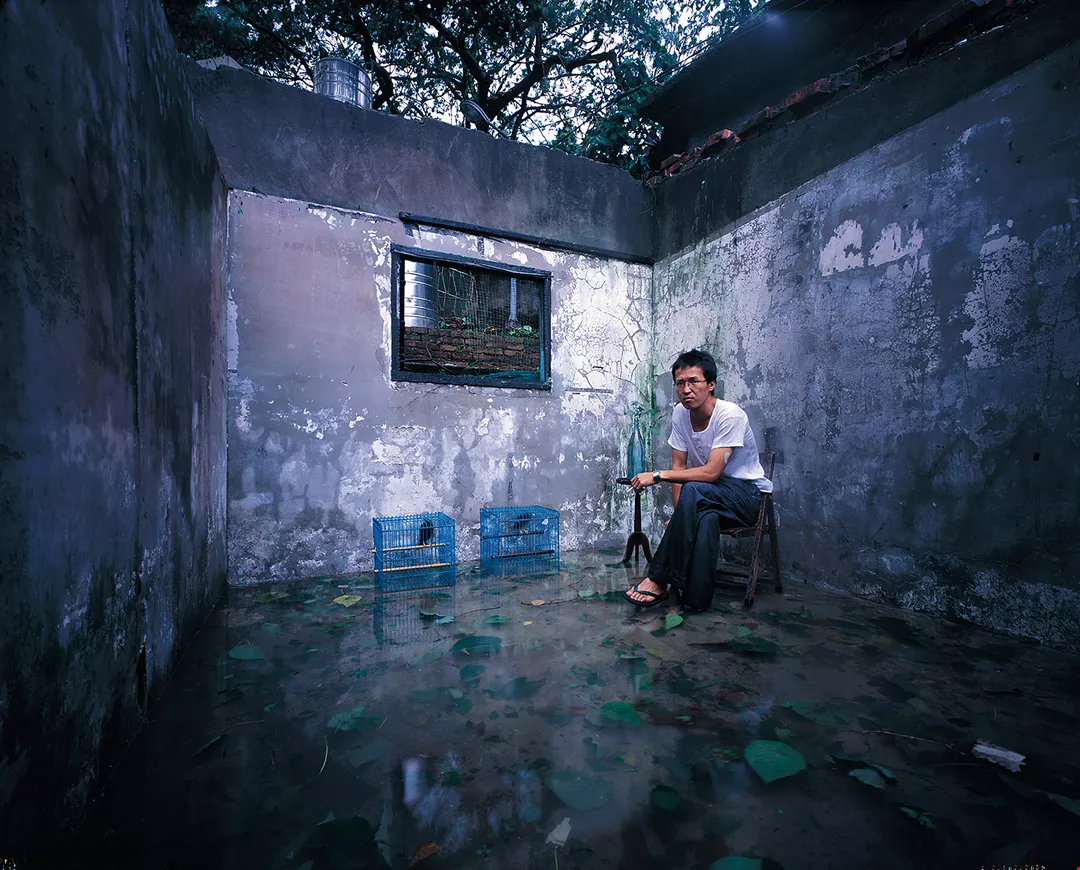
Yeh Wei-li, Treasure Hill, Taipei City, 2005
A pure life of art
Like his predecessor, Yeh Wei-li does not attempt to produce large quantities of work to satisfy the requirements of the art establishment; neither does he go after fame and riches. Rather, in an idiosyncratic manner, he has opted for a tranquil—and we might say ritualistic—life of leisurely pursuits. In other words, he turns his back on utilitarianism, bravely confronting his own life and art without extraneous considerations.
Yeh Shih-chiang also brought his artistic interests in the guqin (a seven-stringed Chinese musical instrument), candelabras, traditional Chinese painting, and music to bear upon his daily life, rather than producing art for the sake of exhibiting and publishing it. Additionally, he chose to lead a life in seclusion, settling in remote areas of the then Taipei County (today’s New Taipei City): Wantan in Xindian and then Shuinandong in Ruifang. To put it simply, Yeh never wanted to abide by the rules that defined the world of mainstream art; rather, like a recluse, he was preoccupied with slowly constructing his own spiritual cosmos.
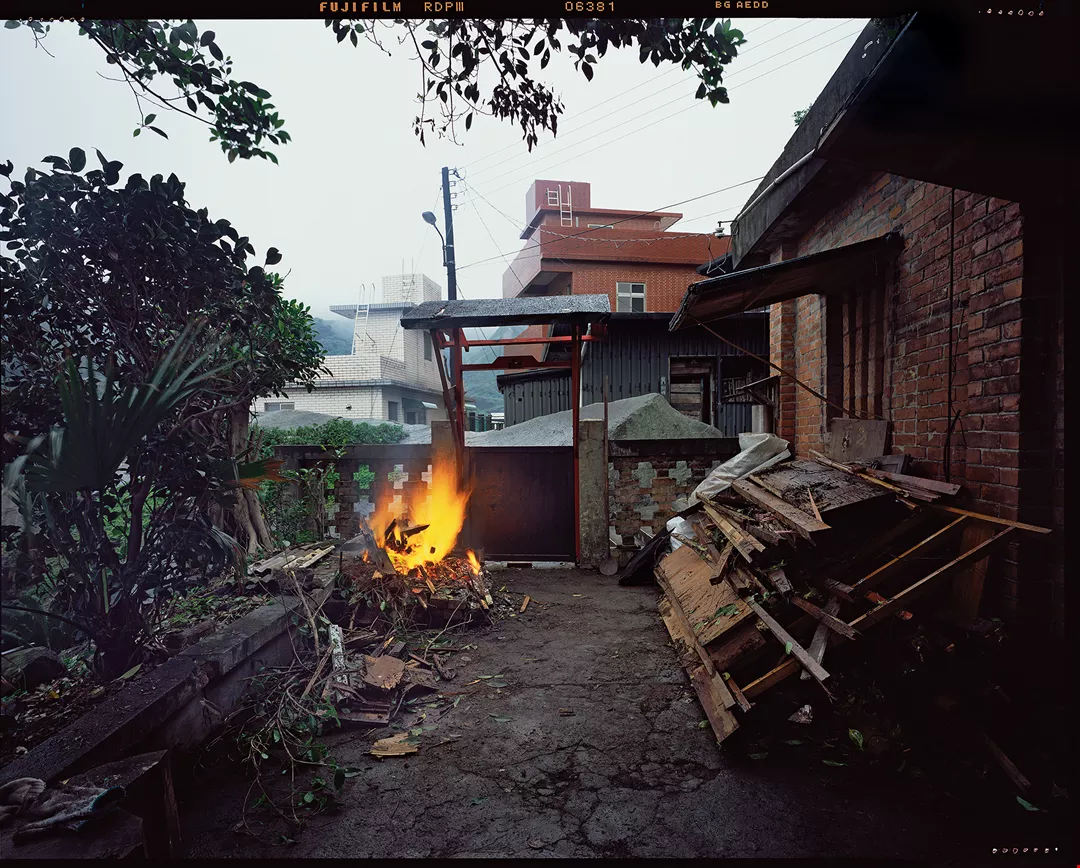
Fire in the Front Yard, YSC Shuinandong Residence 2016 Giclée print on Canson Baryta Prestige 340 gsm paper, ironwood and mineral pigment stained frame 94 x 124 x 5 cm
Physical action latent in imagery
On the other hand, Yeh Wei-li’s work has always explored changes in space and in the values of things. In all his photographic projects to date, he has set great store by physical participation; his integration into any particular space, far from being merely a brief immersion, is typically long, repetitive and profoundly ritualistic. If we only look at the images he has produced, we are likely to be attracted by the succinct elegance of his characteristic style and of the atmosphere he creates. However, apart from these formal features, the qualities that make his art truly charming tend to be invisible.
The invisible activities latent in Yeh Wei-li’s images can be summarized in three ways. Firstly, Yeh has spent substantial time and energy putting Yeh Shih-chiang’s dilapidated residences into good order. Secondly, whilst taking his photographs, Yeh Wei-li has sought to empathize with his predecessor in the same environment, slowly shaping his images in the midst of the ruins, in a way that resembles filming. Finally, he has plunged himself into the technical complications of using a large-format camera; each photograph requires an exposure time of as long as six minutes. Yeh’s creative method offers us an alternative approach to thinking about artistic creation itself.
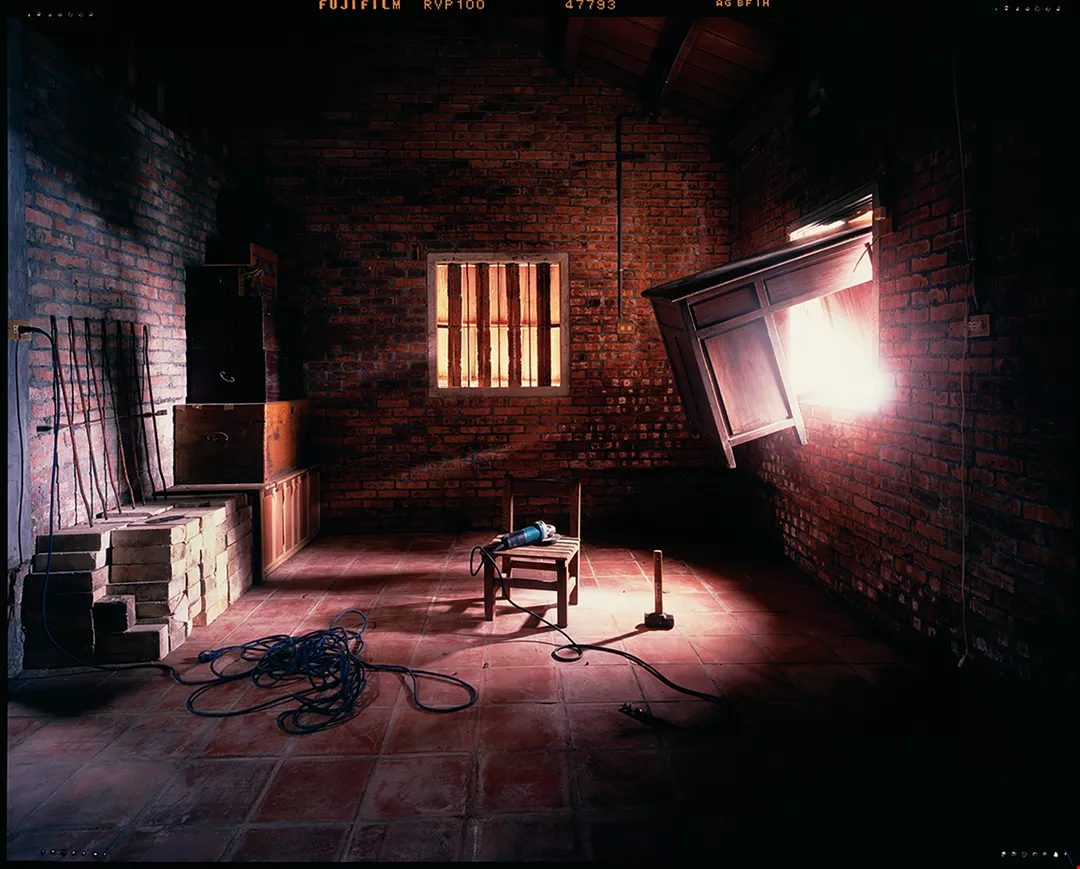
The Hammer, YSC Shuinandong Residence 2016 Giclée print on Canson Baryta Prestige 340 gsm paper, ironwood and mineral pigment stained frame 94 x 124 x 5 cm
The interweaving of life and space
Not only has Yeh Wei-li recorded places with his camera, but he has also had to integrate himself into his surroundings, devoting much time to the repeated adjustment, arrangement and development of particular spaces. This is also what differentiates him from documentary photographers. Namely, aside from the perfection of the images themselves, physical participation is a vital element of his work, and these physical processes are featured in his documentary film Illuminated Presence. Importantly, far from simply aiming to represent the external world, he repeatedly explores the same spaces from various new perspectives over long periods of time, opening up an internal timeframe within a space that has long been intermeshed with himself.
Yeh Wei-li’s creative method also resonates with the spirit of Yeh Shih-chiang’s work. He moved to Shuinandong for a long stay in order to investigate and absorb his predecessor’s former residence. Imagining how the older artist lived in that space, Yeh re-enacts his quotidian routines, such as weeding, making fires, repairing the pond, and listening to the wind rustling the bamboos in the run-down garden. At the same time, he wonders what will happen if he, like his predecessor, is to live there for six years. The lives of two artists from different eras have thus become intertwined through the “daily rituals” embedded in that particular environment.
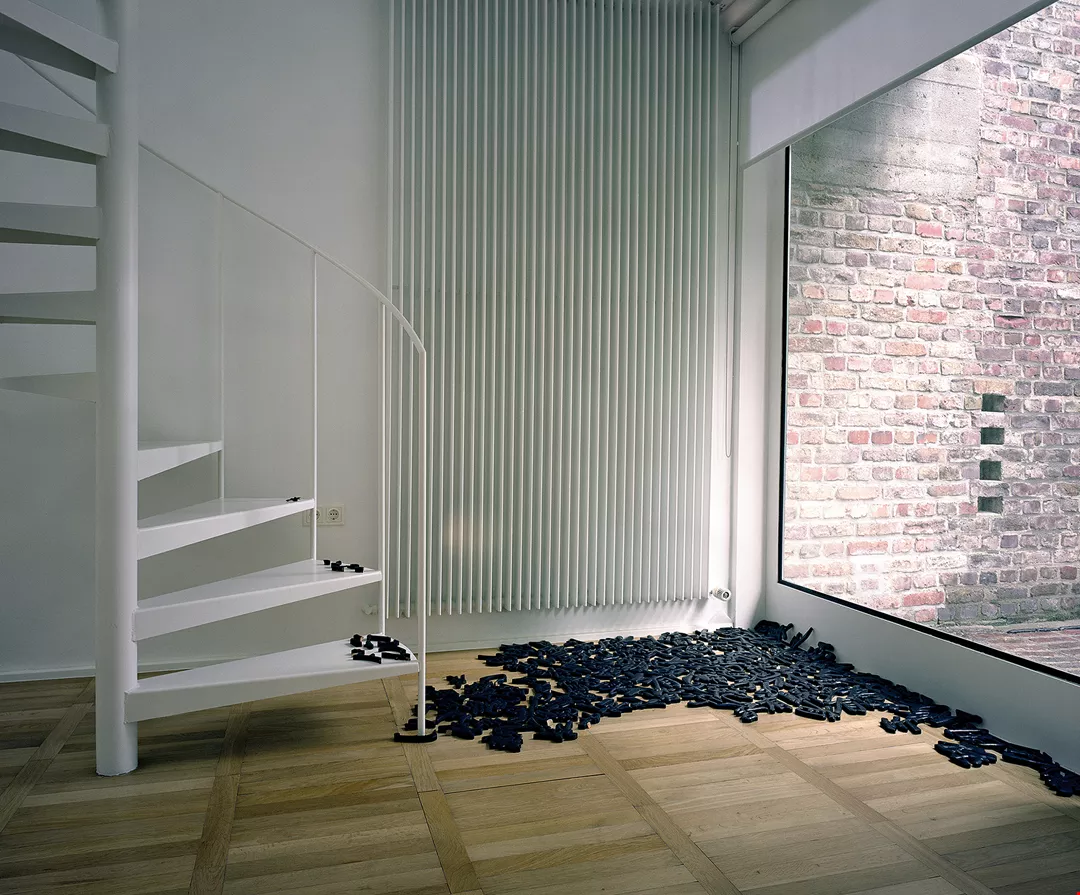
The World of Da-Tong in Cologne #2 2012 Color photograph, acrylic face mount 130 x 107 cm
A life force shaped slowly
The daily rituals cherished by both artists go against the insistence upon efficiency and the fast-moving, fragmented and ever-flowing sense of time fostered by capitalism. By cultivating a slow, leisurely and contemplative way of life, they enable us to maintain a distance from the age of speed we live in. Interestingly, in contrast to the current consumer trend toward dynamic video images and snapshots, Yeh Wei-li decided to work with the medium of photography and to use a large-format camera precisely because he wants to engage with the age we live in in a more tranquil and introspective way, thus reviving a sense of spirituality that has been neglected in this era of fragmentation. Like Yeh Shih-chiang before him, through the slowness and repetitiveness of both his medium and his tool Yeh Wei-li further aims to revive our life force and to ensure our mental stability, both of which are being forfeited in our consumer society.
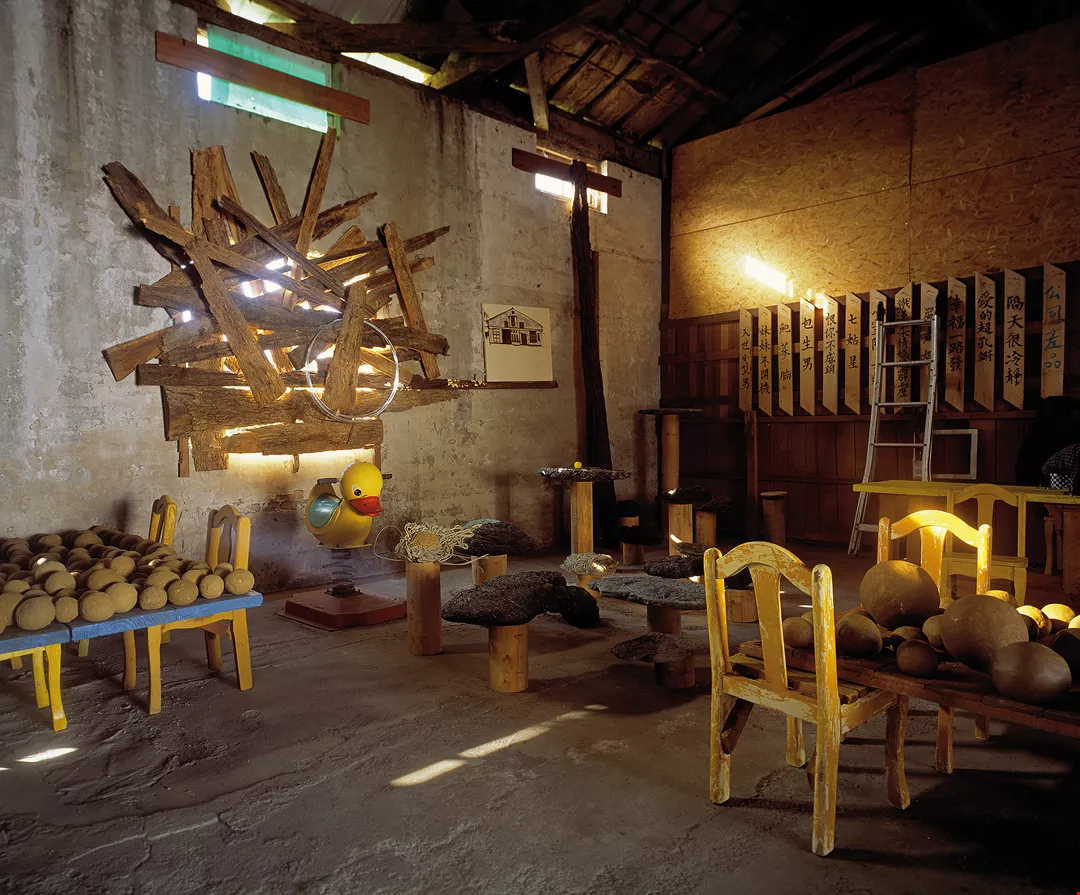
Antiquity-like Rubbish Research & Development Syndicate at Miaoli 2011 Kodak Duraclear transparency, wood and metal lightbox 85 x 105 x 14 cm
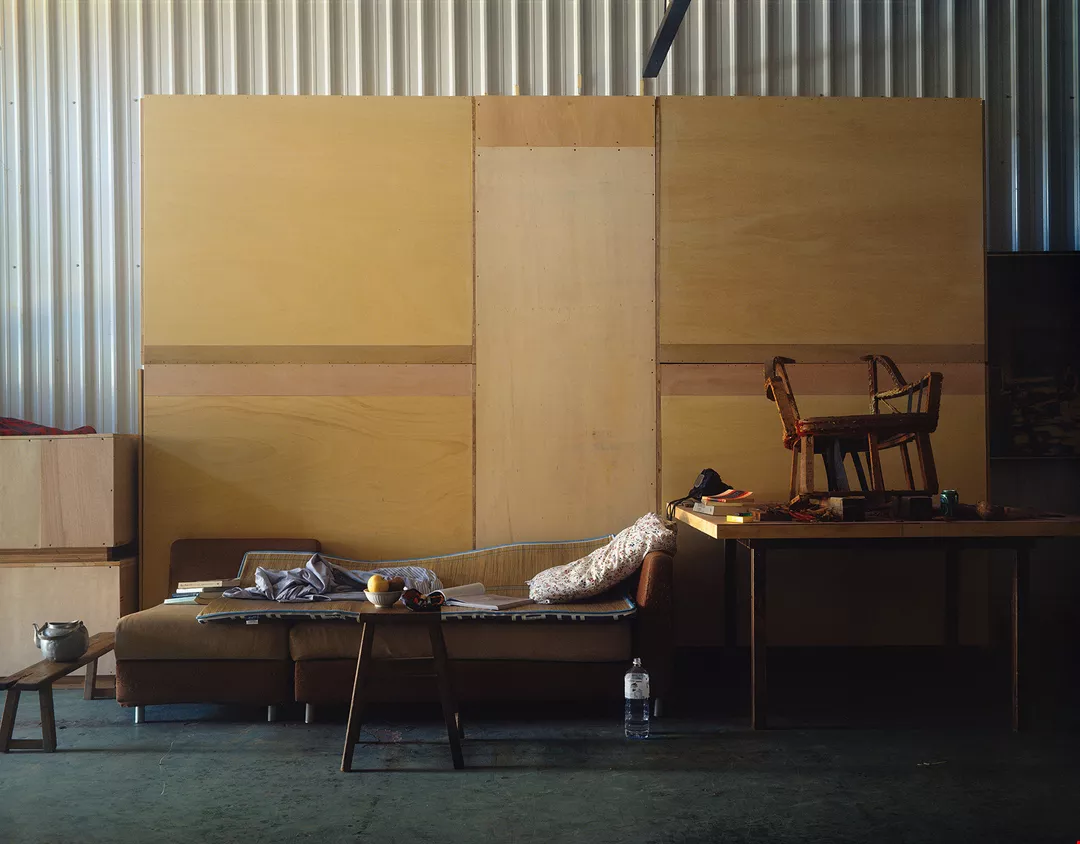
Divinity Trace: Puxin 2009 Inkjet on canvas, wood, 156 x 196 x 6 cm
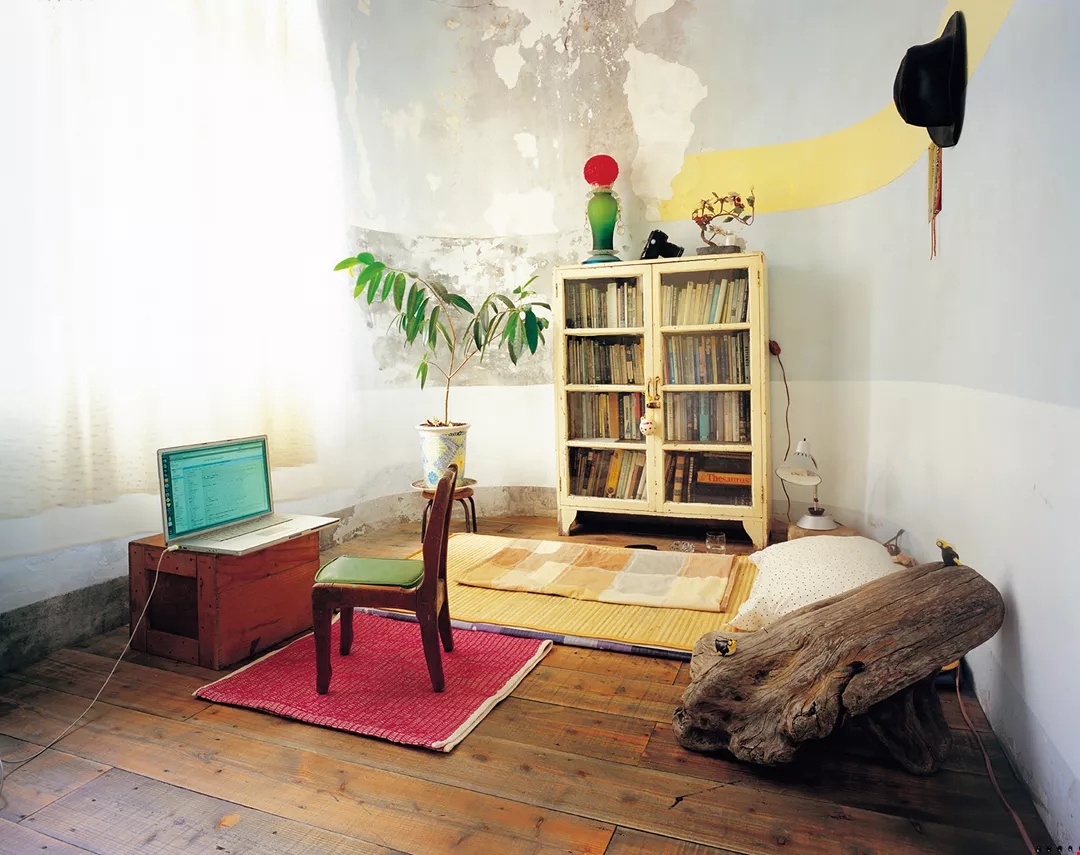
New Day Street, The Bed Room 2010 Giclée print on Canson Baryta Prestige 340 gsm paper, ironwood and mineral pigment stained frame 94 x 124 x 5 cm
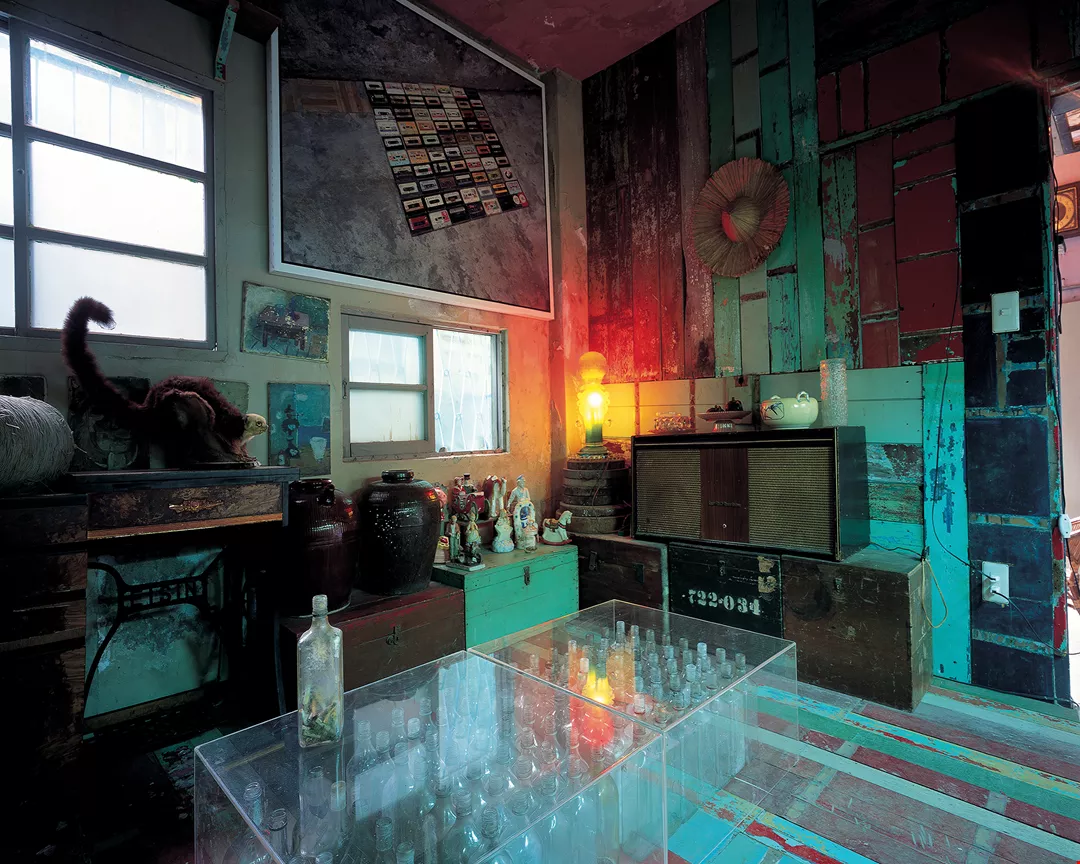
THTP Archive: Room B 2006
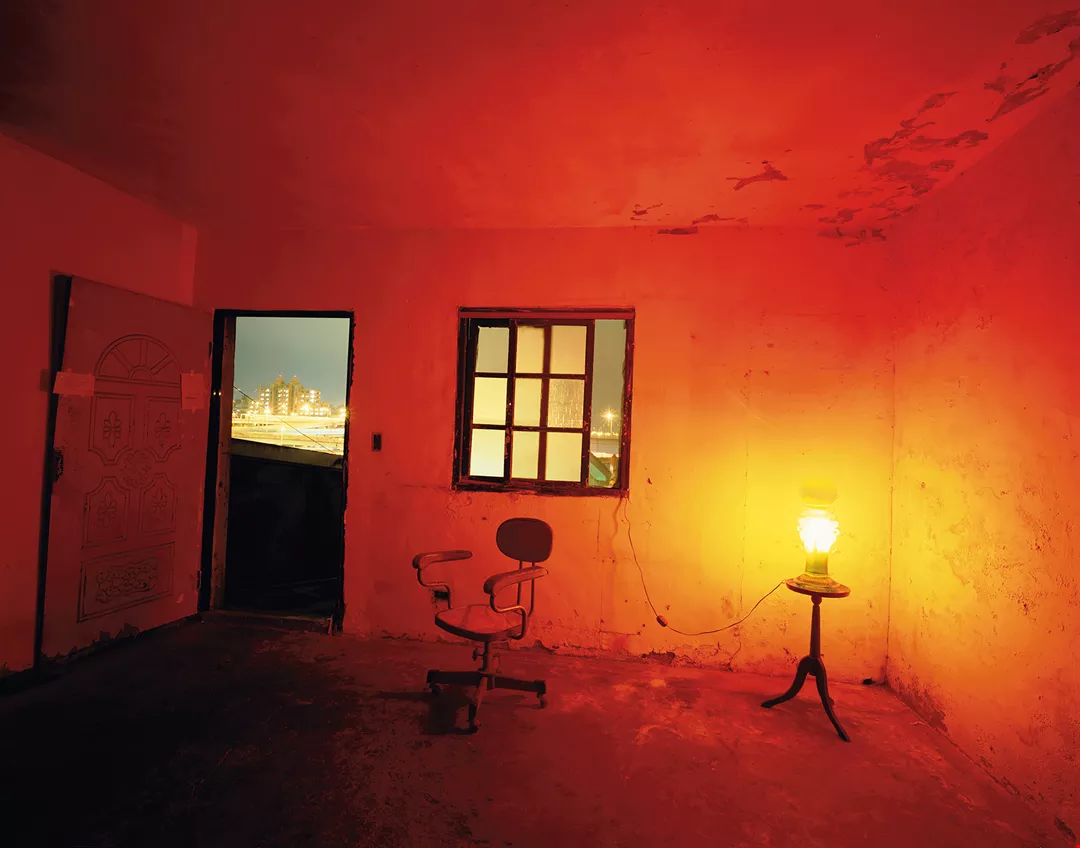
Lin Family Residence 2006
定稿-1@List.jpg?w=522&h=410&mode=crop&format=webp&quality=80)


