This is a book of images, another one of my works that combines efforts in traveling, photography and writing. Its backdrop is India-but not the India of famous historic sites and relics. Rather, it describes my feelings and sentiments while traveling. But it's not entirely a travel journal. It collects the most essential images of India that I have gathered over many years, but it definitely is not a photo book.
In the realm of form, among Buddhism's three realms, "Brahma" is the sky, and Brahma danced with the images that I chased in the human world. "Brahma" is also the Hindu god of creation, who manipulates the many human forms of his creation.
When I first visited Nepal in 1988, I became captivated by the rich culture and religious atmosphere of the South Asian subcontinent. Over the next 20 years I made 12 trips to northern India, as well as the small kingdoms at the southern edge of the Himalayas. One after another, my travelogues and photographs were published in Business Today and other periodicals, and they were quite well received.
Most of these photographs were taken in Rajasthan, which has a unique cultural landscape. Beginning in 1990, I visited frequently, traveling lightly and scurrying between its big cities and villages. The hardships of travel there brought me much suffering. Often late at night, while I was staying at some hole in the wall in the middle of nowhere, I'd shiver under a dusty and mildewed quilt, helpless and distressed. On one particularly miserable occasion, when photographing Pushkar's camel festival, I was staying in a room no larger in area than a tatami. Because it was windowless, I opened the door in the middle of the night to let in some fresh air. I ended up catching cold and suffering a splitting headache. It took a full day to get back to New Delhi-a day I spent lying in the back of a jolting bus, alternately feverish and suffering chills. I so longed for home that I didn't hesitate at paying the extra expense for a business-class ticket to take me back two days early. Returning home worn out and sickly, I swore I'd never go back.
Ironically, although the environment was tough, splendid images were commonplace. Wherever the eye turned, there was something worth photographing. I only chided myself for not having been diligent enough in my study of photography to know how best to capture the essence of what I beheld. By the time my conceptual skills had matured, India had undergone a transformation. Its economy had taken off, and the highway system's beastly tentacles had extended even to previously untainted Rajasthan, replacing the spiderweb of country lanes. Five-star accommodations held nothing for me as a photographer. To the contrary, they quashed my inspiration.
In 2007 I returned to Rajasthan during the Chinese New Year. I discovered that I had already lost much of my passion and feelings for the place. As my direct flight back to Taipei left New Delhi, I saw the city's lights flickering in the night, and I softly bid adieu to that photographic paradise to which I had devoted so many years. It was time to organize my photographs into a book!
"Time is a long dream of the Lord Brahma." I have come to the end of chasing Brahma's images; now it is the readers' turn to view them. I hope that each image here proves to be excellent and irreplaceable, a dance that can keep memories and sensations alive for a long time. Your sympathetic response to them and their ability to move you form the biggest motivation I have for "dancing" with them once again.
Kai Hsiao's Bio:
Born 1951. BS in electrical engineering, Cheng Kung University. MBA from National Taiwan University.
Currently general manager of purchasing for Hewlett Packard, Asia, and executive director of the Society for Photography Education of Chinese. The works in this photo essay are taken from his book Dances with Brahma.
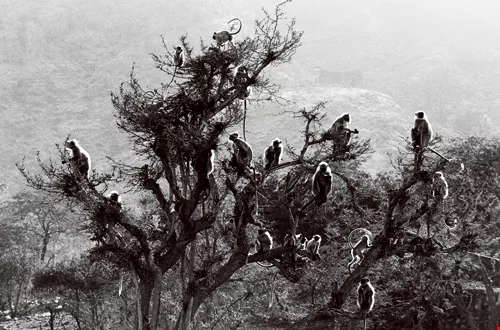
Seize the Moment from Eternity, Ajmer, 2004
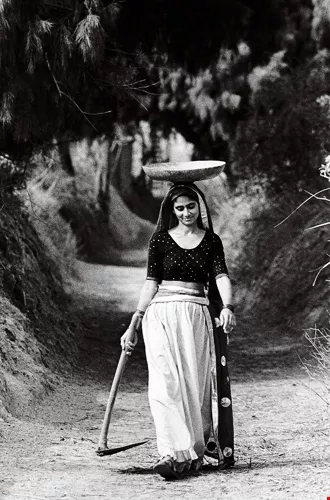
Indian Mona Lisa, Shanpura, 1992
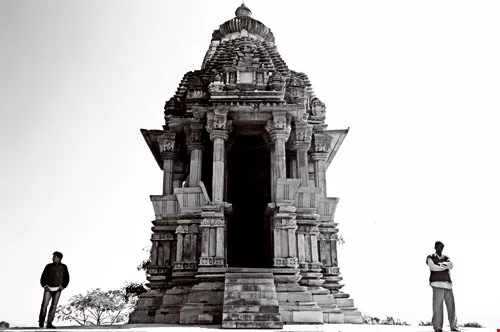
The Patrons, Khajuraho, 2006
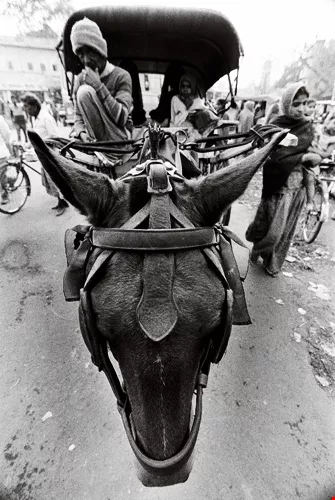
A Contrasting Attitude, Jaipur, 1992




@List.jpg?w=522&h=410&mode=crop&format=webp&quality=80)


