No Longer Just an Academic Question: Educational Alternatives Cometo Taiwan
Jackie Chen and Teng Sue-feng / photos Vincent Chang / tr. by Phil Newell
February 1995


Forty-four percent of Asian-Americans have graduated from college, as compared to only 25% of the general adult population of the US.
Not only do Asian-American have high academic credentials, they perform well at all levels. There are frequently reports in the media of Asian-American children winning honors like the Westinghouse Science Prize.
Many people argue that the fine performance of Asian-American students is due to the emphasis their parents place on education. Some go back further, and ascribe it to the Confucian beliefs that "all things are beneath contempt, only education is to be esteemed," or "you must study well to rise to be an official."
Nesbitt, the American scholar of trends, argues that the competitive advantage of the Asian nations lies in education. Lee Yuan-tseh, president of Taiwan's Academia Sinica, declares that the secret of Taiwan's success is that Chinese parents place great stress on the education of their children.
But there is a dilemma. The emphasis parents place on education is indeed an element in success. But the "excessive expectations" parents have create intense pressure on children to advance in school.
Today the influence of neo-Confucian thought can be seen in Taiwan, mainland China, Korea and Japan, and the "literati" concept is as powerful as ever. In these places, the pressures to advance in school have similarly become world famous.
But in Taiwan, with liberalization and pluralization in society, there has been some quiet change in the way many parents look at the schooling of their kids. This change is having a direct impact on educational reform both through and around the existing system, and will greatly affect the quality of the education of the next generation.
It seems that parents always have mixed feelings. According to statistics, one of the reasons people from Taiwan emigrate is that they are dissatisfied with an educational system that places the greatest importance on promotion to the next level through rote memorization examinations, creating an "examination hell" for their kids. But when the government prohibited schools from holding extra classes outside the normal school day, it was parents who quietly invited teachers to do "supplementary" classes outside of school grounds. And when the Ministry of Education banned corporal punishment in schools, it was parents who gave the teachers sticks as gifts.
What's different these days is that more and more people who grew up under the unified entrance examination system and who have not opted to emigrate are not requiring their children to "lead from the starting gun," but are taking a more open attitude.
Is primary education in Taiwan really much more open than in the past? Compared to ten years ago, the answer is clearly in the affirmative. The openness is because of the greater variety of choices.
Currently in Taiwan the conditions in primary education range from the strict and demanding public and private "star schools" to the Forest School and the Caterpillar School, which give almost no homework at all.
The Forest School, established by a private education reform group called the Humanistic Education Foundation, began accepting students in 1990. In February of last year a group of parents demanding the right to educate their own children established the Caterpillar School. On April 10, more than 200 groups concerned about education staged the "April 10 Demonstration." More than 30,000 people, mainly parents of children currently in school, hit the streets demanding concrete implementation of small schools and small class sizes.
Moreover, in the past few years the government has also adopted some reforms. Nearly 60 primary schools in the greater Taipei area have begun a dazzling variety of trial programs including "open classrooms," "kindergarten-primary school linkage," "experimental classes in modern education," "innovative evaluation methods," and "outdoor education." Parents can choose the school that best suits their child.
Schools are changing, and parents are dividing into two camps. On one side are those who "don't want the children to fall behind right from the start." They are stopping at nothing to get their kids into "star schools" where the pupils are rigorously prepared for one goal-entrance exams to higher levels. On the other side are parents who hope their children can enjoy a "happy childhood." They don't want to force their children into the pressures of competition too early, and are enrolling their kids in alternative, experimental classes.
In the middle are the majority of parents, who want their children to be happy, but who are afraid the kids will "overdo it" and that their classwork will suffer.
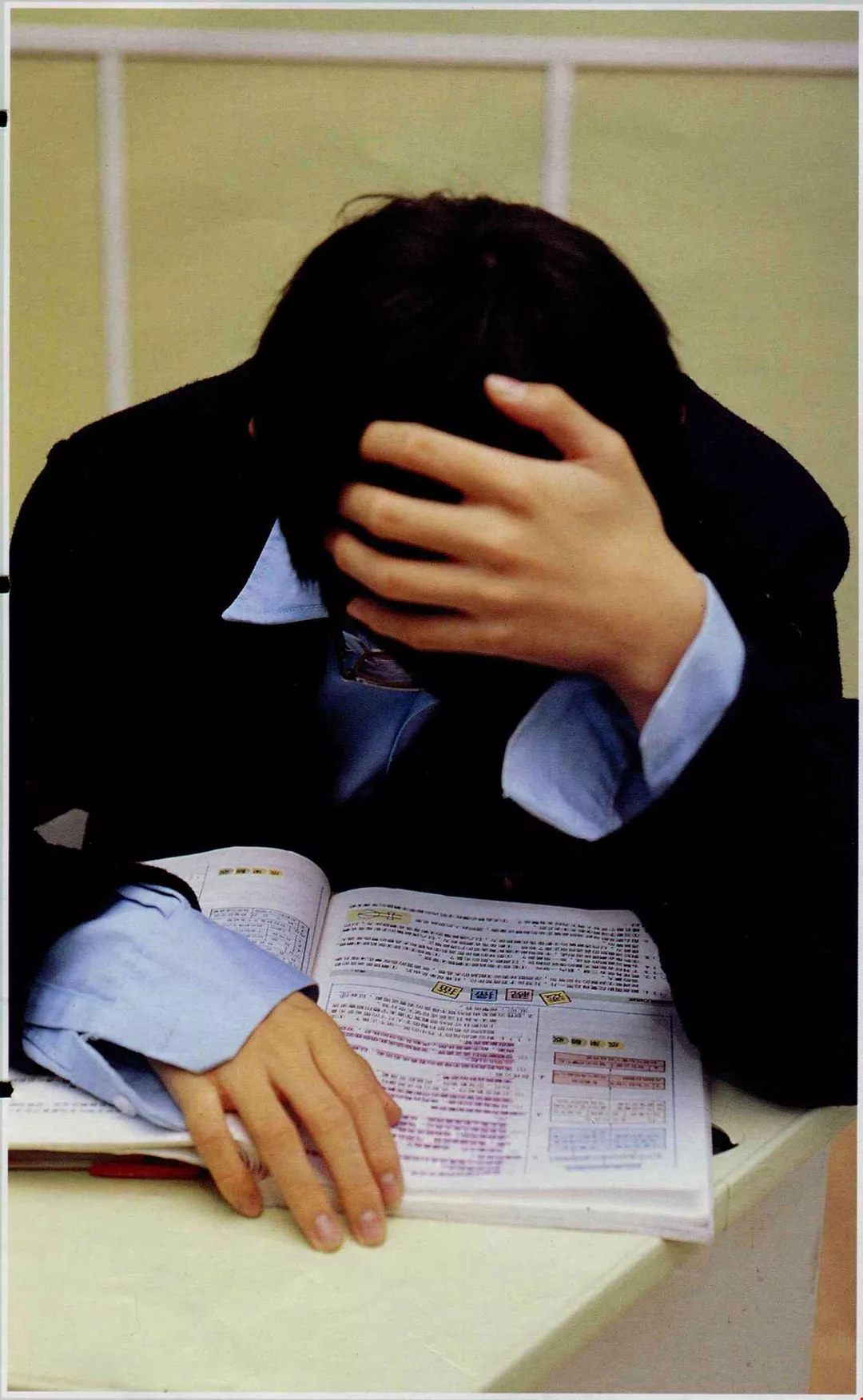
The ancients "tied their hair to the beams and poked themselves with sticks" to keep from falling asleep while studying, so that they could pass the imperial examinations and become officials. Today's children bury their heads in a sea of books to pass the examinations to enter the next level of education.
Come together
The current generation of parents is leaving no stone unturned to educate their children. If the children's schoolwork is poor, if they don't have the right attitude for studying, if they don't get along with their teachers or classmates.... these are all problems that make parents anxious. The mass media is continually emphasizing that good academic work is not enough, and that a complete education should give equal emphasis to ethics, physical education, group consciousness, and fine arts as well. Parents feel under tremendous pressure.
One mother wrote to the advice column of a newspaper. Her daughter is about to start primary school. "What am I going to do? She's six years old and still can't swing on the swingset."
With such concern for their children, parents don't balk at investing money or effort. When it comes to putting up for their children's education, Chinese parents usually do so without a word of complaint.
The Caterpillar School is located next to Lake Yantzu in Hsintien, well outside of Taipei City. There are no buses that go directly there, so parents must drive their children to school, or get them a lift with someone else.
Han Shu-fang lives in Panchiao, and her husband drives an hour four days a week to take the child to school. Sometimes she tells her child that it is very hard work for Daddy to drive so far every day. But her husband, who grew up studying in rigorous private schools for the wealthy, reminds her not to say such things, because they are in fact quite happy to be able to send their child to the Caterpillar School.
The children at the Forest School live on the grounds. Liu Ching-hsien works in the insurance industry in Kaohsiung. Her child, who started at the school in first grade, has been flying back and forth from Taipei to Kaohsiung every weekend for the past three years. When you add the NT$5000 a month in travel costs to the NT$25,000 per month in fees, that's a rather heavy burden. "But this is something we are more than willing to spend the money on," she affirms.
One dad with three children in the Caterpillar school says that if you stop to think about it, the expense comes to about NT$100,000 a year, which is NT$600,000 over six years. "But if their characters are not changed for the worse, and if their desire to learn is not cut short, which is what happens to them in public schools, then it's worth it."
The Tatun Primary School, located on Yangming Mountain, is renowned for its outdoor education. Because the school is in beautiful natural surroundings, and there are few students, the students have more space; this has attracted many parents who live in the city proper. One student comes from as far away as Jenai Road, in the southern part of Taipei, a three hour round trip (Yangming Mountain is out in the northern suburbs). Because tangled traffic often makes traveling up and down the mountain difficult, some parents just stay around the school after dropping their kids off; they participate in school affairs and keep an eye on the child's progress. Moreover, some of these full time moms even have MA or PhD degrees.
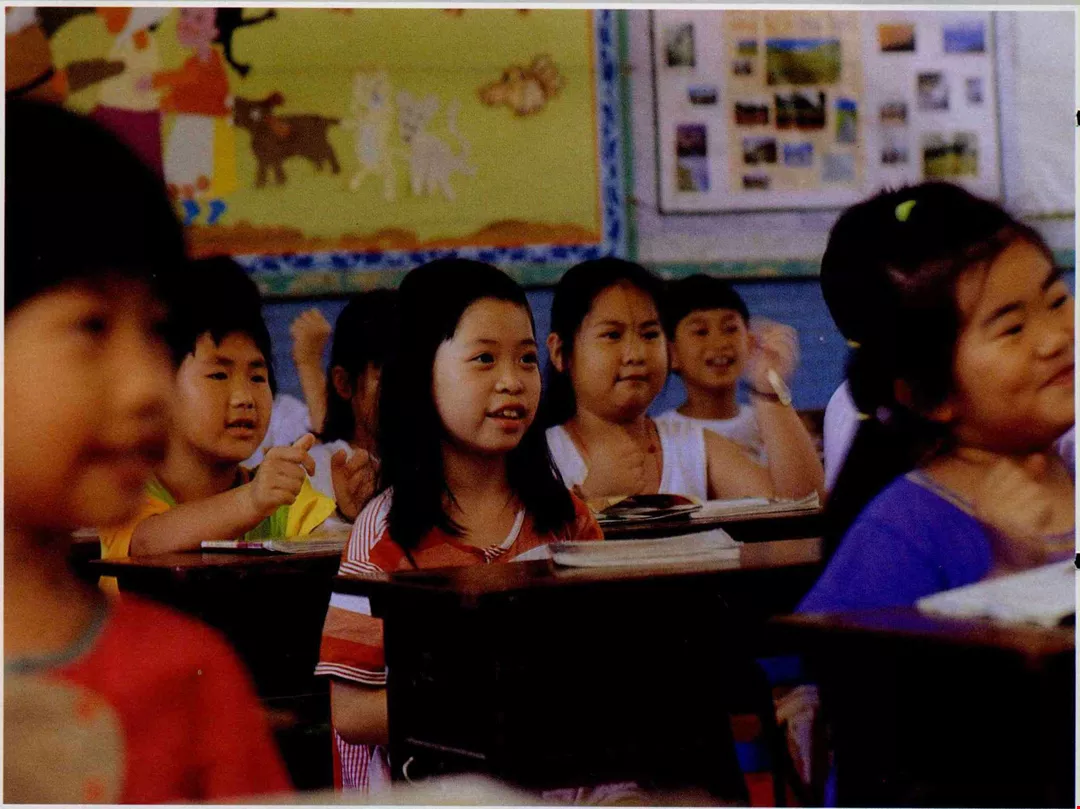
One of the major demands ot today's education reform is smaller classes in smaller schools.
Those amazing Chinese parents
"All things are beneath contempt, only education is to be esteemed." "Only if you suffer can you surpass others." The ancient sages have left many a pithy phrase to inspire us to greater heights. They articulate the line of thinking in Chinese culture which argues that learning is the only path to respectable success. Most Chinese parents, affected by the traditional pressure to "stand out," are determined that their children will do better than others. But today many parents are beginning to reassess the meaning of forcing children to compete so early.
The competitive spirit embodied in such slogans as "don't let your children fall behind right from the starting line" is widespread, but many parents now feel that "it is not necessary to try to out-compete others right from the start, and it will be OK to wait a while."
Shen Hsiu-mei has a child studying in the experimental class at the Yungho Primary School. The class emphasizes a lively, upbeat education. The instructors aren't too worried about teaching the children a huge amount of new characters, nor do they use standardized test papers. Compared to the parents of children in the regular classes, Shen is not suffering anxiety over whether or not her child is learning too slowly.
"In first grade the most important things are whether the child sees learning as being fun, gets along with classmates, and is happy to go to school every day," she avers.
Many parents have their kids studying English from an early age, but Lin Jung-shu, whose child attends the Tatun Primary School, preferred not to. She feels that "it' s a waste of time for them to study English in primary school. lt's not as valuable as taking them to see some exciting cultural or artistic event." What happened when this child entered middle school, where most of his classmates had some foundation in English?
"He got a 96 on the exam the first month, whereas the other kids mostly got 100. So he wasn't overwhelmed," says Lin. "My son has confidence in himself. Because he has studied music since he was small, he has a good ear. And his Chinese is just fine. So even though he skipped being force-fed English as a small child, he won't fall behind."
"There are many ways to compete. It's like physical exercise. Some people go to the gym, where it's 'no pain, no gain,' but others find their own paths," says Tien Kuang-fu, parent of a student in the fifth grade of the experimental class at Lung An Primary School. "Competition can be fun," he concludes.
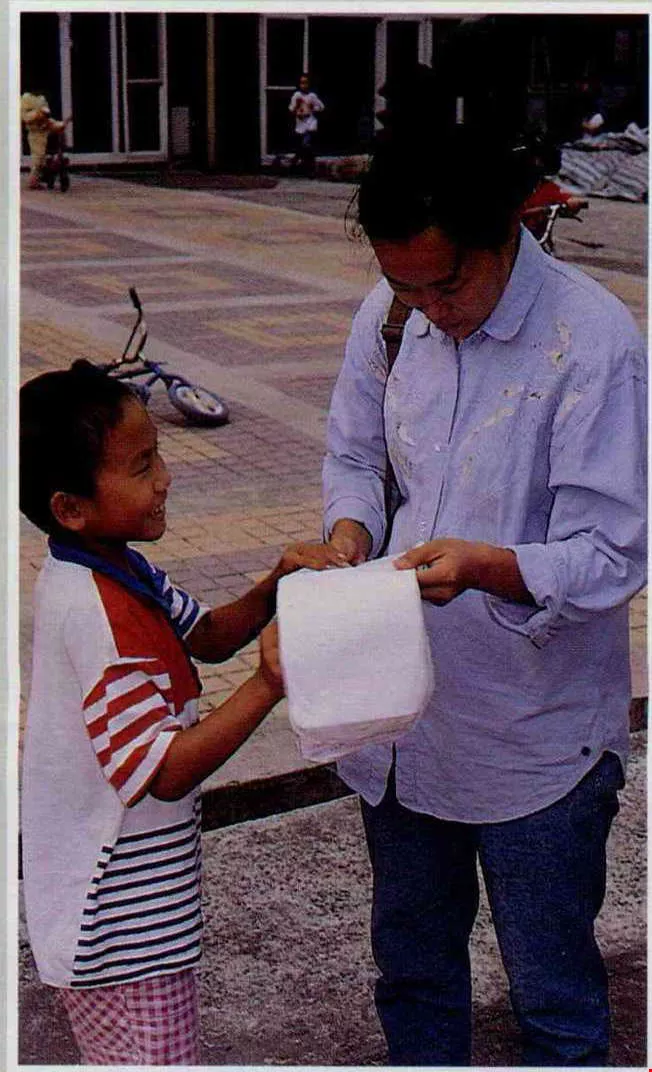
With efforts by a group of parents, the Caterpillar School finally opened its doors. Some parents here might be teachers,or administrators, or even volunteers.
Challenging traditional education
These parents haven't abandoned competition. It's just that they have realized that the traditional pedagogic method-in which "the teacher lectures, the students listen"-needs to change.
Tien Kuang-fu, a mathematics professor at National Taiwan University, also helps out as a teacher's aide in his child's classroom. He encourages the kids to "learn by doing," which is to say to understand mathematical principles through daily life.
For example, to prove that the three angles in a triangle always add up to 180 degrees, he had his children cut out different sized and shaped triangles from colored paper at home, as well as use a string to make a triangle as big as an exercise field, and then measure the angles. In order to understand the use of triangles in daily life, the teachers and class took a trip to the triangulation point on Hsien Chih Rock in Shihlin to prove the principle that "if you have three fixed points then you can calculate the distance between them."
"This type of learning is realistic, and leaves a deep impression," he says. And, of course, it's a lot more fun.
Yet many parents are dubious: Do students who learn under such experimental pedagogy end up with less overall knowledge?
"That all depends on how you look at it. Quantity is not the most important thing in learning," says Tien. "What's important is whether the students learn realistically and deeply, and whether they have any blind spots." For example, he feels that the nature and science classes in primary schools lack an "ethical" component teaching the children how to coexist with nature. "The whole curriculum is geared to how to exploit nature or how to overcome nature," he says. It is not surprising that under such a system Taiwan has serious environmental problems.
Huang Yi-chuo chose to send his child to the Tien Yuan Primary School because the local school is surrounded on all sides by the steel and concrete urban jungle, and "you can't even see out of the exercise field." Every day when sending the child to school he wants the child to look at the scenery, the shapes of the grass and flowers, and how the trees change with the seasons. "This is training for the eyes," he says. Only in this way will the child be acutely observant in the future.
Although studying is a matter for the individual, he says, adults have the responsibility to set an example for their children. "I tell my child that some things are not up for discussion. He has to jog every day to be strong and healthy. He has to be familiar with the nuances of the Chinese language and literature, because that's the only way he will be a true Chinese, and it's the only way he will be able to express himself and communicate freely and accurately. He has to practice calligraphy, because it can contribute to inner peace and tranquility." Huang sees life as a long and complex challenge, and one does not necessarily build up competitiveness by cramming and taking exams every day. "It's not quantity, but understanding how to do things, that really counts," he concludes.
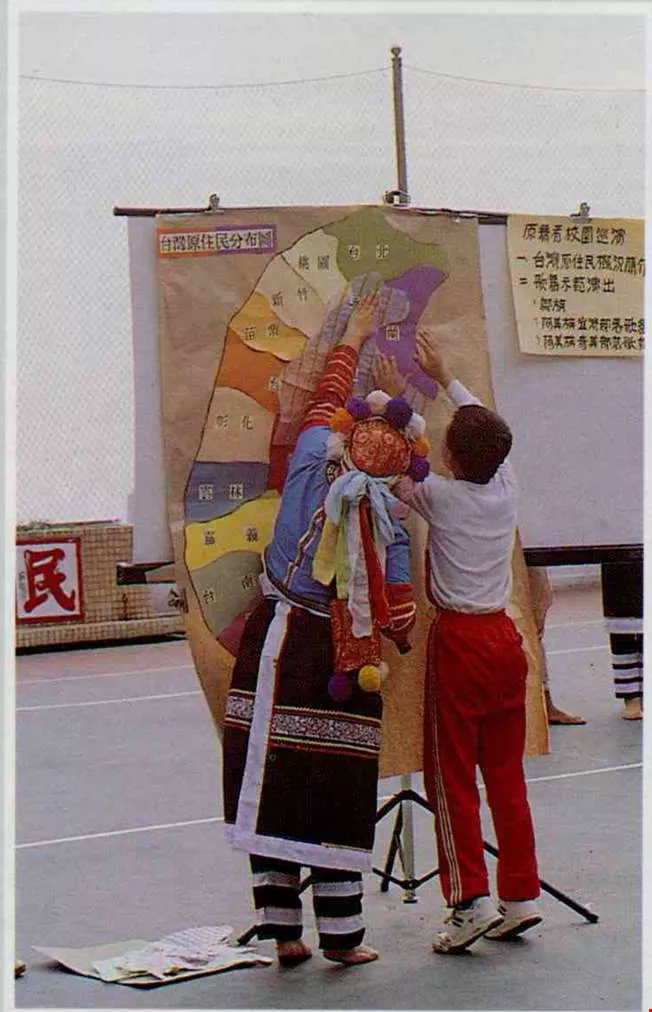
(left) What happened to the home of the Ami people? During extracurricular activity period, the children of the Tatun Primary School are taken on a journey in time by the Formosan Aboriginal Dance Troupe.
Hope and fear
However, even though some of the parents whose kids are in experimental education can be so relaxed, the great silent majority feel ambivalent about the new style.
Lin Pei-hsuan, a teacher at the Yu Min Primary School in Hsinchuang, allows her students as much time to think in class as possible, while reducing rote exercises like copying essays. Once, as the end of the school day approached, she noticed several of her students writing away furiously. It turned out they were finishing up assignments for after-school cram classes. (Many parents who work put their children in after-school classes.) The odd thing is that these are parents who voluntarily placed their children in the experimental class. "So you see, though they want a lively and open education for the kids," the parents also fear that the kids don't learn as much as in traditional rote learning, and that "experimental education isn't enough."
One-half of a semester after implementing "open classrooms," the Fu Hsing Primary School in Chungho surveyed parents about the results thus far. Many of the parents responded that "the children learn more, are more lively, and like going to school" under the new style. But they also said, "please give more homework and push the children a little harder."
Parents thus have mixed feelings, and are uncertain about whether they have done the right thing in choosing experimental education for their children.
"My child is less well-behaved and doesn't obey me," says one parent at the school. "Before she would come home after school and do her homework. But now, whether I plead with her or hit her, she still just says that she hasn't brought any school books home." This parent once tested her child's mathematical calculation ability, and found that she couldn't do it at all. When the parent asked the teacher about it, the teacher replied that the mother was clearly giving the child problems that were beyond her level, but the mom refuses to accept this. "Because of this, I often think about having my child transferred to another class," she says. This parent informs her child that she will be sent back to a regular class if she doesn' t buckle down and study.
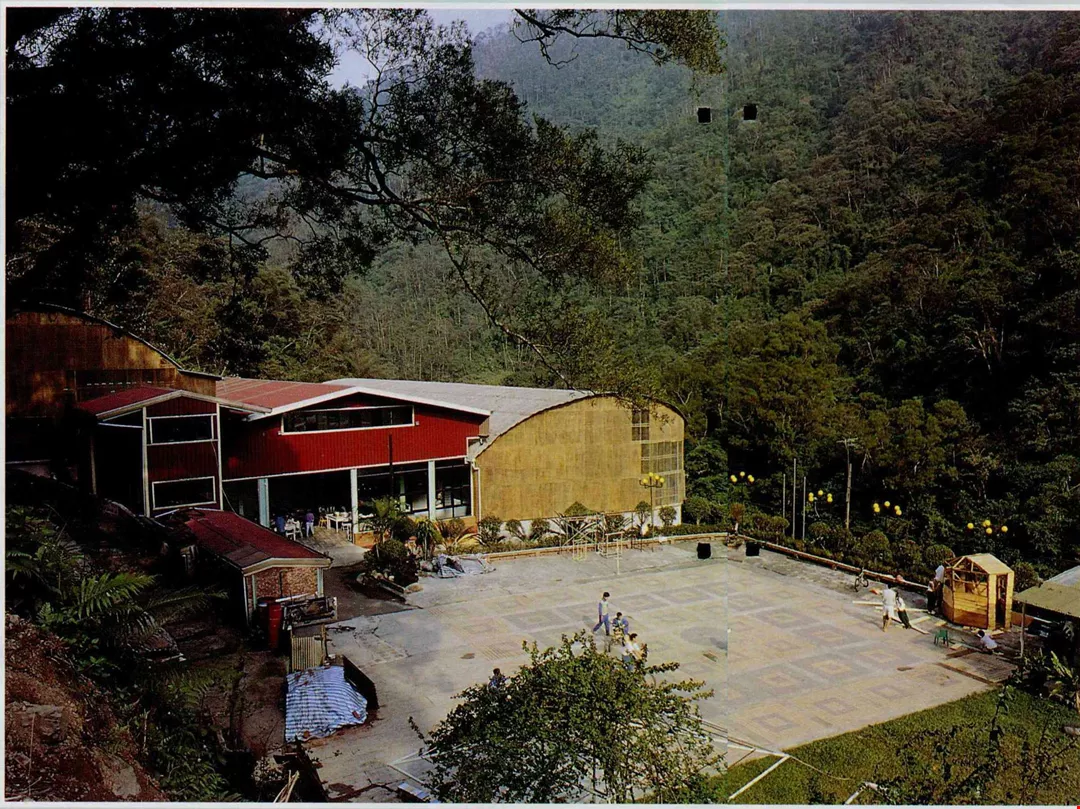
(right) Both the Caterpillar and Forest schools are located far outside the big city. They enjoy beautiful scenery, though travel is somewhat inconvenient. The photo shows the Caterpillar campus, near Yentzu Lake in Hsintien.
I never promised you a rose garden
Nor can the most "progressive schools," the Forest School and the Caterpillar School, provide a solution that satisfies everybody.
Take the Caterpillar School, for example. It was originally set up by ten families, but some of these left after the first year because of differences of opinion. Some of those attracted by the school's reputation came to feel that the administrators had too little experience, and that the school was "somewhat chaotic," and they too transferred their kids elsewhere.
"It's always difficult when you are just starting out," agree two moms who took their children out of the Caterpillar School. Perhaps parents can understand that inevitably a new school will be somewhat disorganized, "but the child must learn every day, and every day the school must provide the sustenance she needs. So, when my daughter's reactions were that 'this school is more boring than my old school,' and 'I'm not learning anything,' I had little choice but to take her out."
Another mother, who teaches in a middle school, says that she pulled out because she felt "the school was elitist," and she "didn't want it to be a dream world." But she also emphasizes that it is too early to judge the Caterpillar School, and that reform is a long and complex process.
"This school is not necessarily suitable for everyone," declares Chiu Hsiu-jung, director of experimental design at Caterpillar and also a professor of mathematics at Changhua Teachers' College. It is simply impossible to have a school that is right for every child.
Chao Ching-chung, who teaches in the children's philosophy class at the Caterpillar Children's Philosophy Foundation, says that it is normal that some families would withdraw their children along the way, because each parent has a different understanding of what education should be. The Caterpillar School was founded on a very simple premise: "To escape from the distorted value system of the examination hell and return to a normal environment of joyful learning," says Chao.
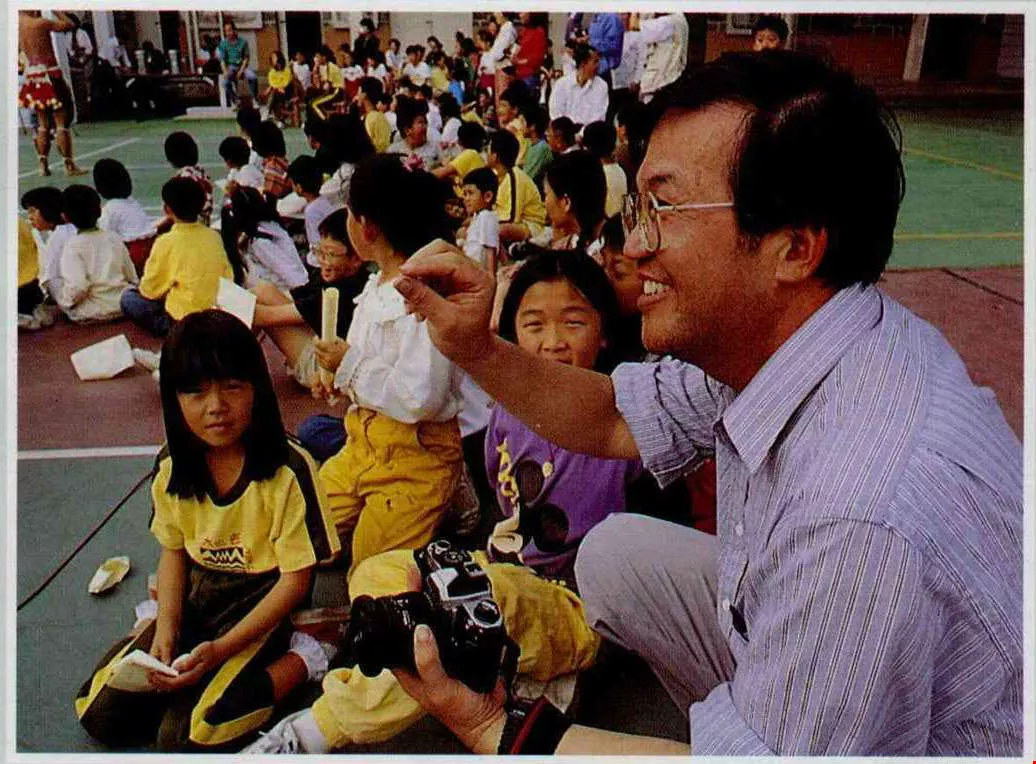
Extracurricular activities are exciting; the kids are happy, and so are the teachers.
A basketful of worries
The worries of the parents increase in direct correspondence to the age of the child. The older the child gets, the more the parents waver. Every year one or two of the students about to enter the fifth or sixth grade at Tatun transfers out.
The biggest worry is about the how the students will make the link to middle school education (since their experimental classes do not continue beyond elementary school).
"Right now we are teaching the children that 'the process is more important than the answer,' and 'think first before you give an answer.' But in middle school, where they are tested on every detail in their textbooks, and there is only one correct answer, what will they do?" worries Chiu Kuei-lan, a teacher at the Lung An Primary School. It is possible that these children, not accustomed to the standard educational system and just hitting that rebellious stage, will come to hate school and have other adjustment problems.
Yet Tien Kuang-fu remains optimistic. "The examination system still emphasizes answering from memory, and the kids that we raise will still have plenty of time to catch up in the second or third year of middle school."
If parents have doubts about the implementation of experimental classes in regular primary schools, then it is no wonder that many people raise serious questions about the even more unorthodox formats used at the Forest and Caterpillar schools. They wonder whether the children, so used to having freedom, can adapt to a life of demanding homework assignments in middle school.
The Forest School began accepting students in 1990, and has graduated 28 pupils in the last five years. Of these, two went abroad, while the others intered local middle schools.
Asked whether their children are adapting to middle school life, Forest School parents answer with a query of their own: Why would a self-reliant and independent child be unable to adapt? Anyway, the point of education is not to "adapt" if that just means to conform.
Chen Kuei-yun, who works at the Humanistic Education Foundation, had her son in the Forest School for two years. Now he is in his second year of middle school. His mother, who sees herself as a relatively progressive thinker, says: "Sometimes I ask myself if we really want our kids to adapt to such an insipid society." She points out that in 1990, when the Forest School had not even had its credentials approved, already parents were sending their children there. If they weren't worried about accreditation then, do you think they are worried about adaptation today?
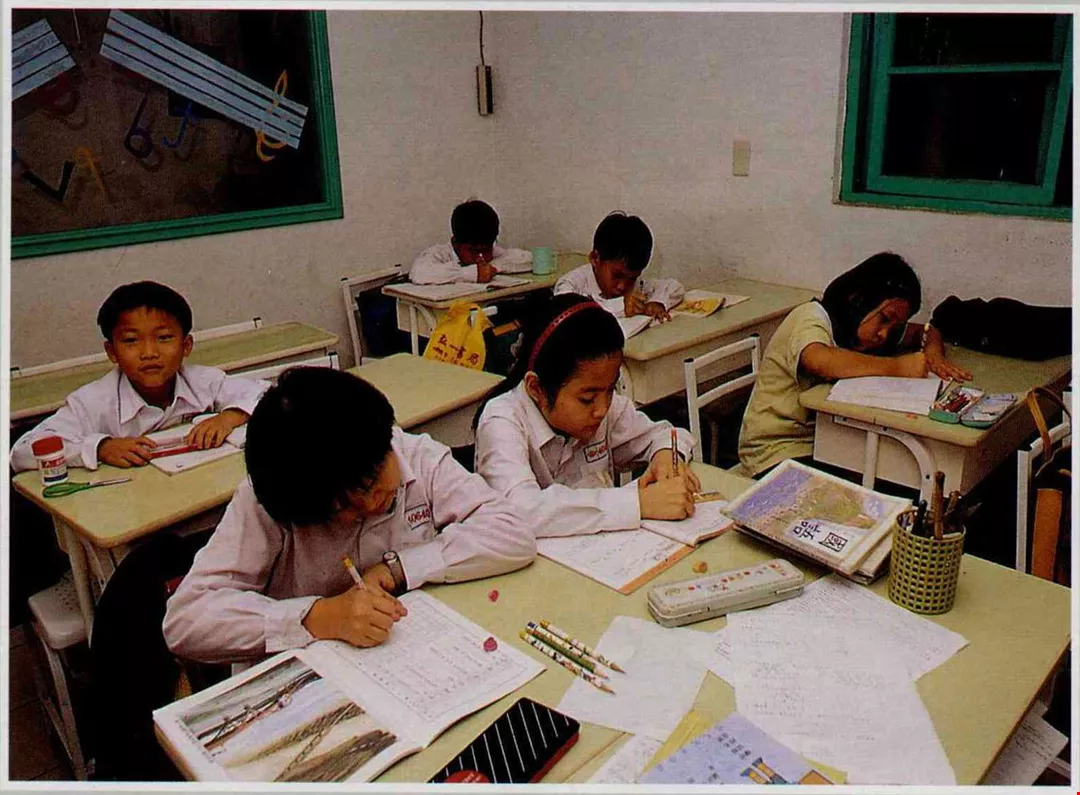
Kids of two-income households are often sent to after-school classes. They do homework, read, and experience another period of learning.
It's the adults that can't adapt
"In fact, it's the adults who can't adapt," says Kao Shu-luan, who works in a bank. She was "amazed" by her son's performance in middle school. For example, when he was in the Forest School he didn't like to wear a lot of clothes, and often went wearing the bare minimum. So she worried that he wouldn't be able to accept the dress code when he got to middle school. To her surprise, the first morning he set his own alarm clock, got up, and got himself nattily attired in his full school uniform.
The Caterpillar School got started only last February, and is in its second academic semester, so it has not yet graduated any students. But the parents still discuss the issue of making the transition to middle school.
Chang Hsien-jen, whose family runs a factory, has enrolled all three of her kids at Caterpillar. Her oldest son, a fifth grader, will enter middle school in a year. Faced with this issue, her response is: "I don't want to frighten my son or tell him what kinds of problems he might face. Because maybe none of the problems we imagine will actually exist, but there will be other ones instead!" She feels that the best thing to do is to wait for the problems to arise and then face them one by one together with her son.
Many parents feel that any problems adapting to middle school are not caused by the child, but by the whole educational system. Shouldn't it be possible to offer some other future than the "examination hell" of the existing system?
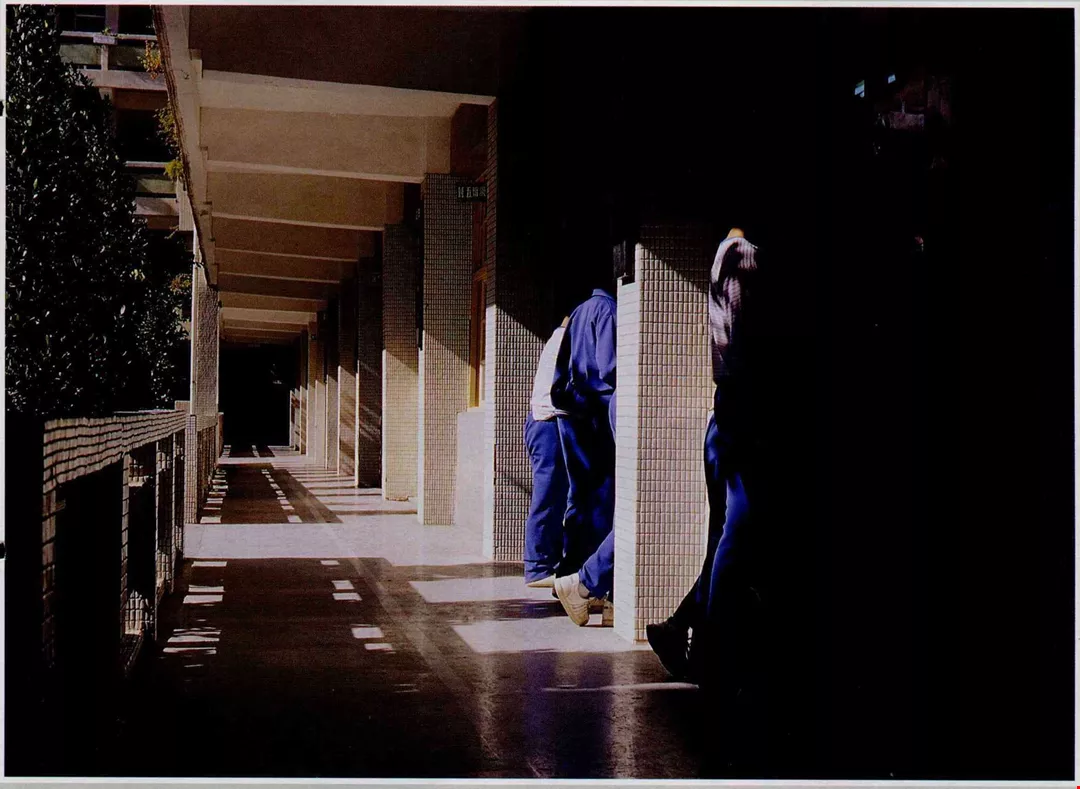
What exactly is the best way to manage the children? This is a hot topic in the educational community. Does being sent into the hall for talking in class count as corporal punishment?
Everything to advance?
These parents grew up themselves under the system of uniform nationwide exams for entry into each successive level of higher education. They were inculcated with the lesson that "success only comes with hard work, and failure in school means failure for life." Therefore, even though they remind themselves to remain "open-minded" when it comes to their children's education, when the time comes to apply their life experience to their kids, they still are thorough and careful when it comes to preparing for the exams, which will determine the whole course of the student's life.
Tang Pi-yu feels that her character is very suited to teaching. But because she was in frail health in middle school, and her family was not well-off, she went to vocational high school, cutting her off from the path of advancement and putting an end to her dream of becoming a teacher. She often tells her children that schoolwork is not the most important thing in life, and that "life will only go smoothly if you can get along with others and are able to get things done." Still, when it comes to her child's future, she can't help but want her child to follow the traditional path. "It would be best if she can pass the exam and enter university," she says.
Lin Jung-shu has always encouraged her children to get involved in arts activities. Yet, proud as she is of her child's improving artistic skills, she is worried that a career as a painter or a musician is "a rough road to follow." She hopes her child will see the arts as a pastime, but she "certainly wouldn't mind" if he tested into university and decided to make a living as a doctor like his dad.
Compared to those parents who think that "a bad outcome on the joint entrance exams is the end of the world," the parents described above are already very relaxed and liberal. But there are other parents who are even more unconcerned about the exams.
Forest School parent Tsao Hui-ling has a son in the first year at the Yen Ping Evening School (a high school level institution), and she too hopes that he can attend university. Based on his current grades, even if he doesn't pass the exam the first year, "the worst that can happen is he'll have to go back and study for another year," she says.
"Sure, sometimes I get worried. Obviously he would do better in school if he studied a little more. But I don't want to put that much pressure on him, because it's more important to grow up right," argues Tsao. She asked her son what he wants to do in the future. Her son answered very firmly that the chances are 40% he will draw comics, 30% he will study math, and 20% he will do theoretical physics.
"Studying is a lifelong activity." says Chen Kuei-yun, adding that she never thought that her children should follow any particular path. She is more worried about making her children healthier. As for her oldest son, who tested into junior college but found the subject matter uninteresting, and who is now at home on a leave of absence from school, she simply says that even if he's 40 before he finds himself, there's no harm done.
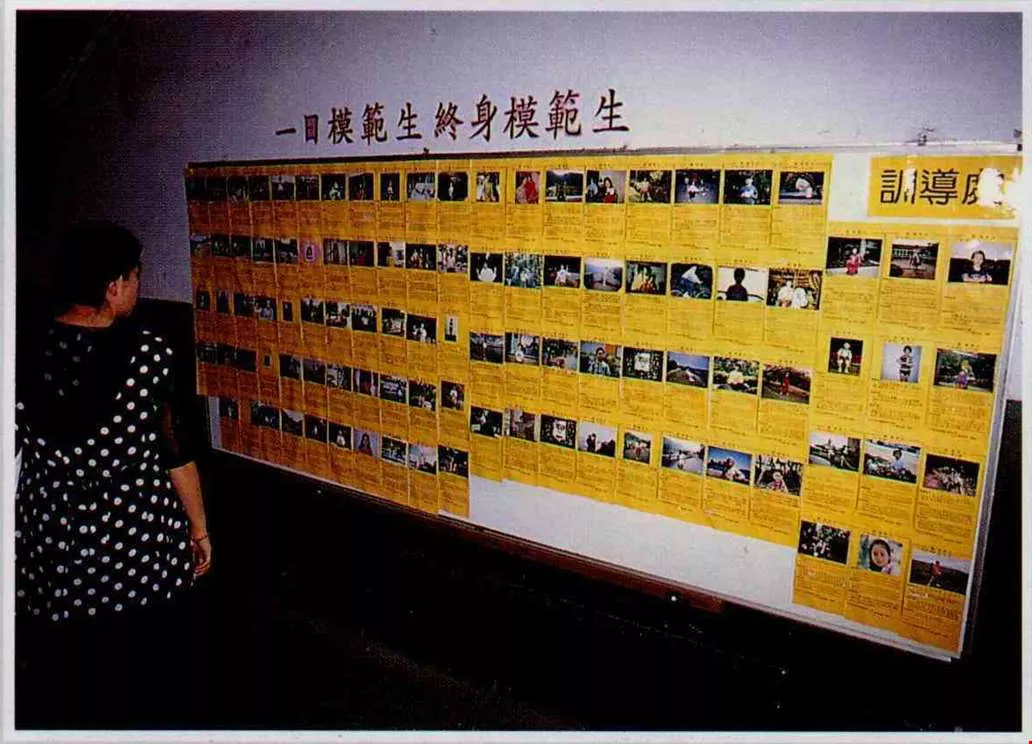
Experimental classes don't stress grades, much less class rankings.
Change yourself, not your child
If you ask parents what kind of person they hope their child will grow up to be, today most would say they want him or her to be self-confident, capable of independent reasoning, and interested in learning new things on his or her own initiative. This seems a little "abstract," seeing as how it is not the children who need to change, but the attitude of the parents.
Han Shu-fang has a child in the first grade at the Caterpillar School. She says that before she sent her son there, her most frequent sentence to her child was "hurry up, hurry up."
When her child was in nursery school, relations between the mother and son were tense. Her son, who is left-handed, drew out his characters laboriously, while his mother looked over his shoulder with anxiety. "Eventually it got to the point where he couldn't even write a character if I was standing next to him."
"In the past I thought he was a burden to me, and couldn't live up to my standards. Now he is my mirror," says Han.
"Of course I originally wanted him to be a good student, to be well-mannered, and to be considerate to his parents," but the more demands that were made on him, the more extreme the reaction. "If I didn't change myself, what else could I do?" says one Forest School mom.
"If you want your kids to grow up to meet your expectations, the children will feel frustrated. If you let them develop on their own, and help them along, even if they turn out differently from you, isn't that good too?" asks Shen Hsiu-mei. Adds another mom, "the worst situation is one in which the parents simply don't know what to do and just waffle back and forth."
Parents, caught between liberality and conservatism, are wracked by inner struggles, conflicts, and anxiety. Chang Hsiao-hung, an associate professor at Taipei Teachers' College, has done a study of how parents of primary school students and primary school teachers understand education. He found the biggest gap between the two groups is in the area of "expectations of examination grades." Most teachers think expectations should be geared to the abilities of the student, while most parents just think "the higher the better."
Compared to the past, parents' attitudes are indeed changing. But it will be a long time before most of them thoroughly abandon the hope that their children will become nearly superhuman, as reflected in the Chinese saying, "may my child become a dragon."
[Picture Caption]
p.6
In recent years there have been a number of educational experiments in Taiwan, With the growing number of choices, emigration is no longer the only alternative for parents disaffected with the traditional system. (photo by ChienYung-pin)
p.9
The ancients "tied their hair to the beams and poked themselves with sticks" to keep from falling asleep while studying, so that they could pass the imperial examinations and become officials. Today's children bury their heads in a sea of books to pass the examinations to enter the next level of education.
p.10
One of the major demands ot today's education reform is smaller classes in smaller schools.
p.11
With efforts by a group of parents, the Caterpillar School finally opened its doors. Some parents here might be teachers,or administrators, or even volunteers.
p.12
(left) What happened to the home of the Ami people? During extracurricular activity period, the children of the Tatun Primary School are taken on a journey in time by the Formosan Aboriginal Dance Troupe.
p.12
(right) Both the Caterpillar and Forest schools are located far outside the big city. They enjoy beautiful scenery, though travel is somewhat inconvenient. The photo shows the Caterpillar campus, near Yentzu Lake in Hsintien.
p.13
Extracurricular activities are exciting; the kids are happy, and so are the teachers.
p.14
Kids of two-income households are often sent to after-school classes. They do homework, read, and experience another period of learning.
p.15
What exactly is the best way to manage the children? This is a hot topic in the educational community. Does being sent into the hall for talking in class count as corporal punishment?
p.16
Experimental classes don't stress grades, much less class rankings.
p.16
Primary school children have stacks of home work. Is the load too heavy? This is a key question.
P.17
Implementing education that respects children needs more than a concept, it requires concrete methods as well. This is where training of teachers for experimental classes comes in.
p.18
Children need time and space to grow. What kind of person do you want your child to become?
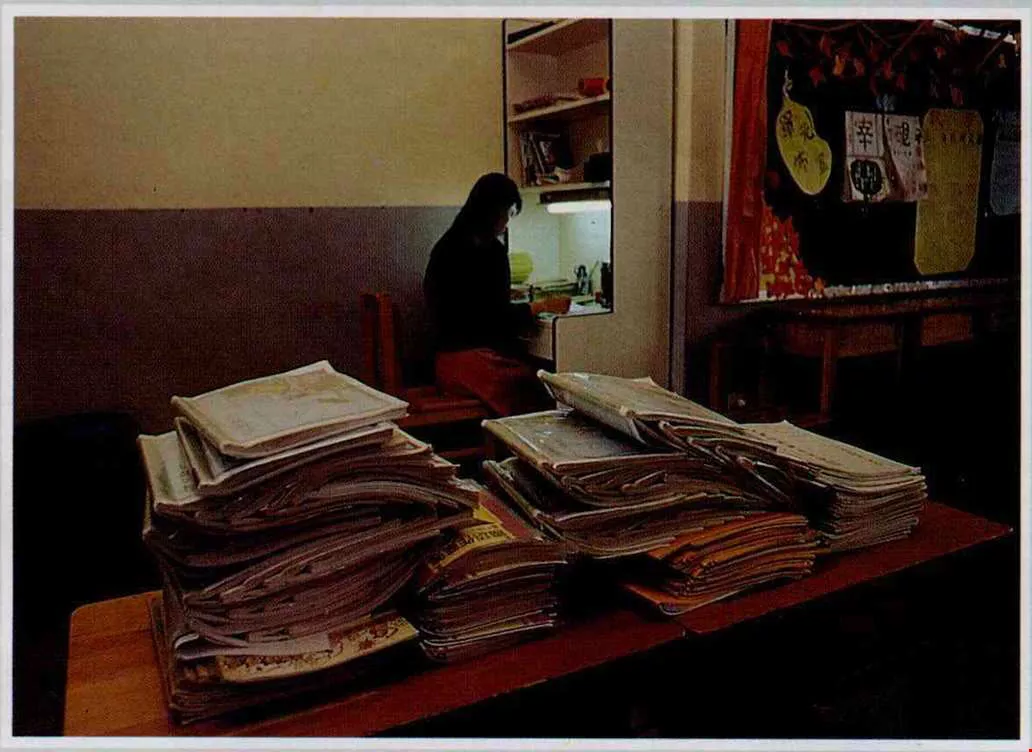
Primary school children have stacks of home work. Is the load too heavy? This is a key question.
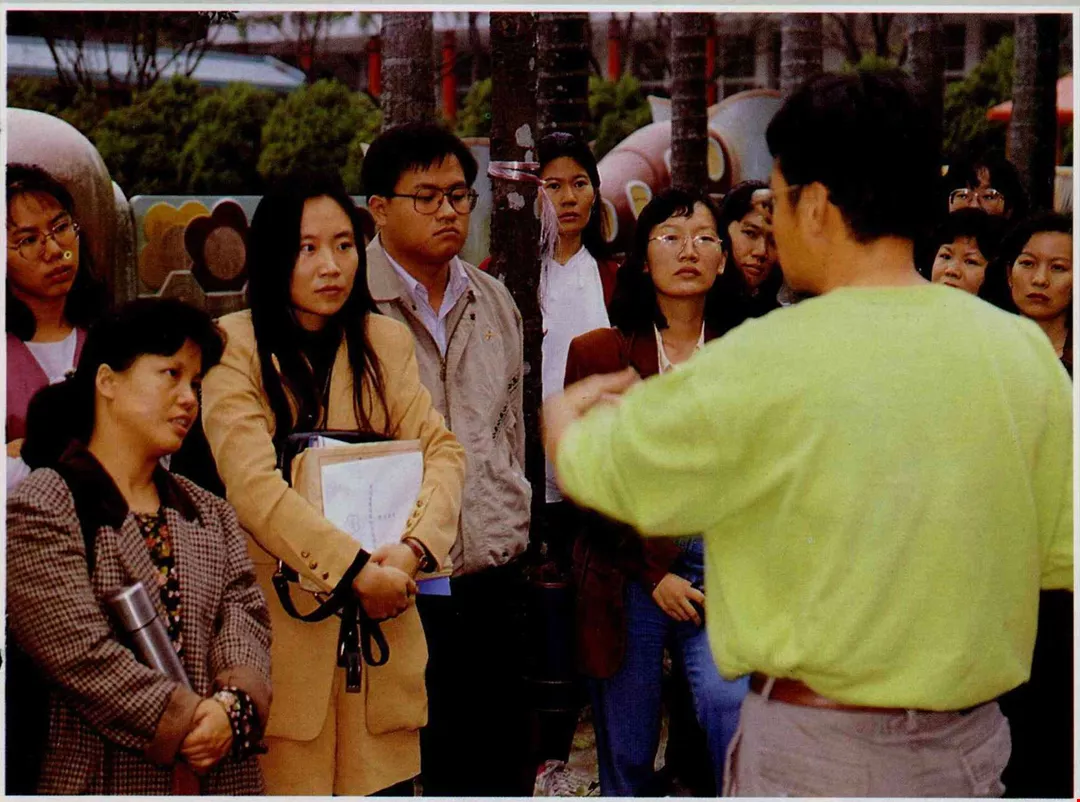
Implementing education that respects children needs more than a concept, it requires concrete methods as well. This is where training of teachers for experimental classes comes in.
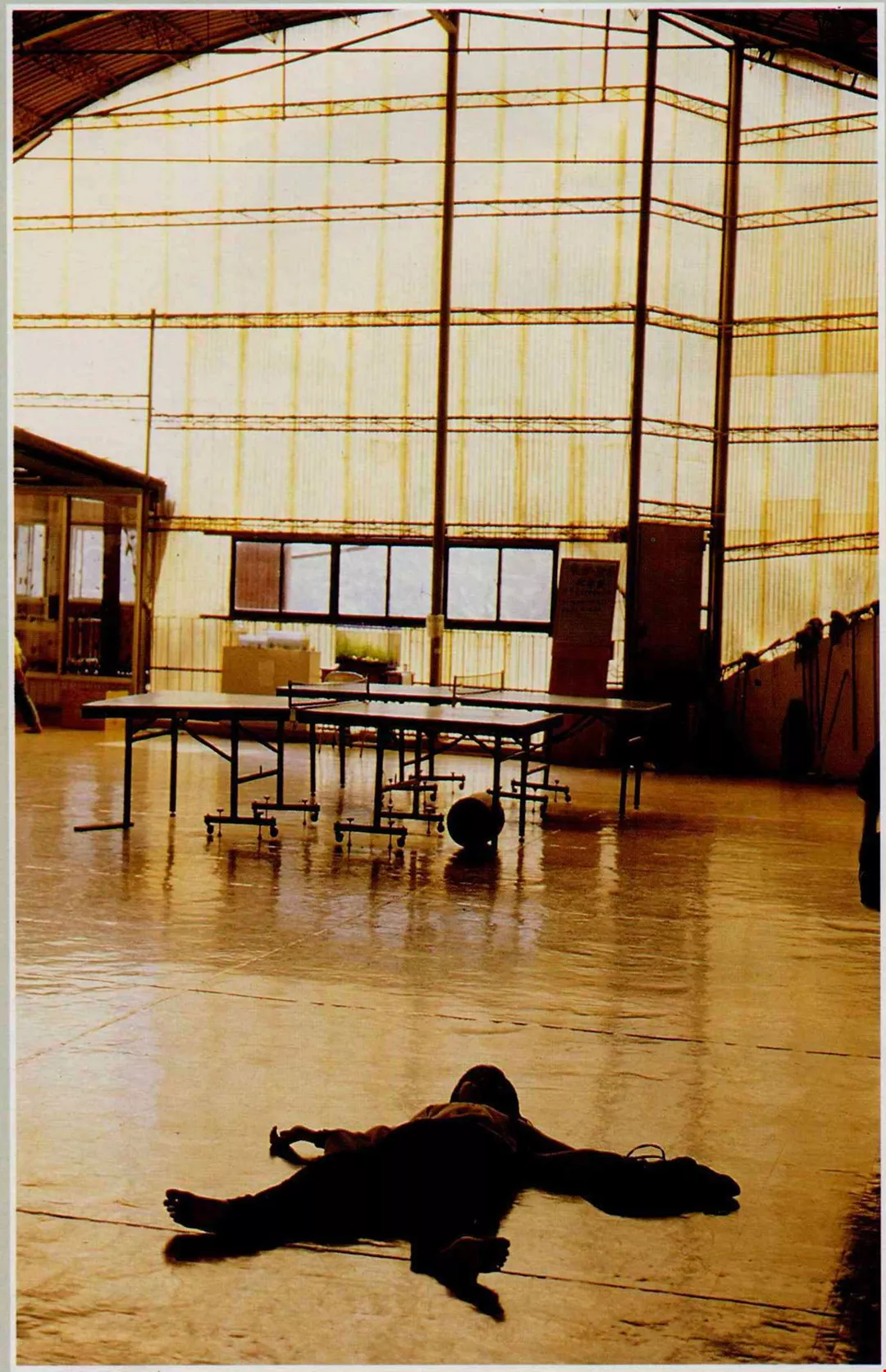
Children need time and space to grow. What kind of person do you want your child to become?


@List.jpg?w=522&h=410&mode=crop&format=webp&quality=80)


