Taiwan's Aborigines in Fact and Legend
Arthur Jeng / photos Arthur Jeng / tr. by Peter Eberly
October 1986


Foreigners who came to China in the past used to consider the photographs they took of women's bound feet, pigtails, and rickshaws as representing the real China.
Today, the impressions that most people have of Taiwan's aborigines probably don't extend much beyond their harvest festivals, good voices, fleet runners, alcoholism, and dances at Ali Mountain and Sun Moon Lake. These vague, stereotyped images may well represent something less than the whole truth, just as did the impressions that foreigners once had of China.
To give its readers a clearer picture of Taiwan's aboriginal peoples, Sinorama, after a year's planning and on-site research, is presenting a series of reports on the aborigines, beginning with three articles this issue.
"If I had to give a grade to an aborigine child based on the mathematical and verbal knowledge found in textbooks, it might be just 20 points.
"On the other hand, if I had to grade an urban child on survival skills and knowledge about setting traps and gathering wild plants, it might well also be just 20 points."
This comparison was made by an aboriginal teacher trained in the lowlands who returned to the mountains to teach in an aborigine school.
The two grades are obviously not equivalent.
According to the criteria of so-called "civilization"--such as educational level and living standards--the aborigines are clearly in an inferior position.
But they will always hold the lead in at least one respect--they are the earliest known people to have lived on Taiwan.
According to anthropologists, the aborigines came to Taiwan around 2,000 years ago, about 1,700 years before the Han Chinese arrived from the southeast coast of the mainland. So the designation "aborigine" is actually something of a misnomer, since the aborigines are not really indigenous to Taiwan but were only the first to arrive. In Chinese, they are commonly called "the mountain people" or "our mountain compatriots," yet this is inaccurate too since it would exclude the Amis, who live in the lowlands, and the Yamis, who live on Orchid Island.
According to Utsurizawa Nenojou, Miyamoto Nobuto, and Mabuchi Touichi, who were professors of anthropology at the forerunner of National Taiwan University, the aborigines of Taiwan can be classified into nine different peoples. Other scholars would add the Shao of Sun Moon Lake as a tenth.
After the retrocession of Taiwan to China in 1945, the government classified the aborigines into "mountain aborigines" and "lowland aborigines." The administrative areas allotted to each group make up 44 percent of the island's land area, and the aboriginal population is currently 320,000.
Light brown skin; large, bright eyes; folded eyelids (like Westerners); and a short stature are the aborigines' common physical characteristics. Their languages belong to the Malay-Polynesian linguistic system, but are each quite different. Not until they were forced to learn Japanese under the Japanese Occupation did they have a common vehicle of communication. Now, because of the spread of universal education, the younger and middle-aged generations can speak fluent Mandarin.
Where did these distinctive peoples come from?
Ch'en Ch'i-lu, chairman of the Council for Cultural Planning and Development, says that most anthropologists agree, based on their physical, linguistic, and cultural similarities with the Polynesian peoples of Southeast Asia, that the aborigines came to Taiwan at different times and in different groups from southern China or roundabout via the islands of Southeast Asia. An exception is the Yami people of Orchid Island, whose culture has been shown to have close ties with the peoples of the Philippines.
How they crossed the sea and why remain mysteries.
While anthropologists believe that they came from over the sea, the legends of the aborigines themselves almost all hold the opposite view--that they originated in the mountains of Taiwan.
The Taiyas, for example, relate that in primeval times there was a giant rock on Greater Nanhu Mountain. One day a bird flew by and tipped the rock into the water. The rock then split, producing a man and a woman, the ancestors of their people.
The legends of most of the aborigines do not point to a precise point of origin for their people, but 900 meters above sea level on the upper reaches of Peikang Stream in Nantou County is a rock three meters high and two meters across which the Taiyas hold to be their birthplace and which they still preserve in good condition.
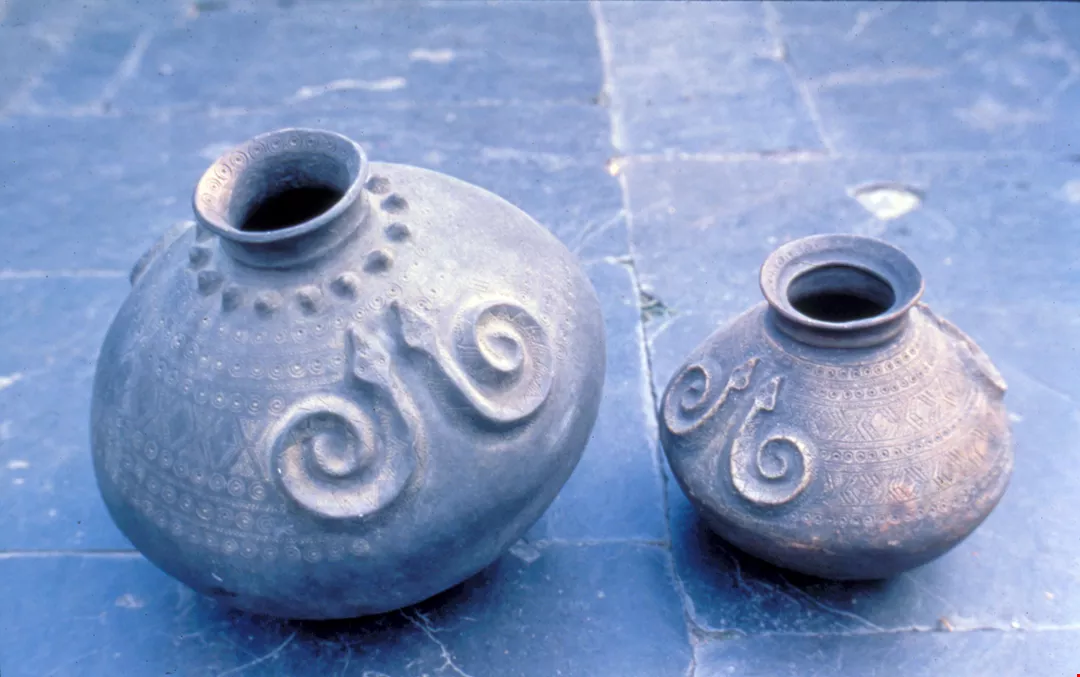
Besides the legends of mountain origins, there are also ones about creation from a snake, from a jug, from the sun, and from bamboo. Curiously, some of the legends resemble those of the ancient Chinese.
The Paiwans, for example, tell how a man from the Taokanivung family propped up the sky with a pestle, reminding as of the Chinese myth about Pan Ku separating the heavens from the earth.
And a legend of the Taiyas resembles the Chinese myth about Hou Yi shooting down the nine suns. The Taiyas say that in ancient times there were two suns in the sky, which dried up the plants and streams, making life for people very difficult. Three brave men volunteered to remove one of the suns, but since the distance was so great they each set out with an infant son to continue the journey after the men died. Finally, the sons did indeed shoot down one of the suns, which became the moon.
Other legends tell of the relations between people and plants and people and animals.
The Paiwans, for example, tell how, in the beginning, just one grain of rice was enough to feed a whole family and everyone lived together happily. But later a family named Ketilavan tried using more grains, and ended up filling their home with rice. Thereafter, the grains no longer multiplied as before and people had to work the fields, forcing them to scatter to different places and live as they live now.
A similar legend tells how in ancient times animals let people pluck off a strand of their fur, which would then change into meat. But one greedy man, wanting to eat more, cut off some flesh from a deer with a knife. The wounded deer then told him, "If people want to eat meat now, they'll have to go into the mountains and hunt." This was the origin of hunting.
Because the aborigines had no writing, their history and cultural evolution largely remain riddles, to which legends provide a few clues.
Another key to the puzzle lies in their traditional customs and way of life.
[Picture Caption]
These children from Tawu Village came to Taipei in March to run in the marathon. McDonald's bags, new shoes, the big city--what effect will it have on them?
Tall green mountains, rushing blue streams--this is our home.
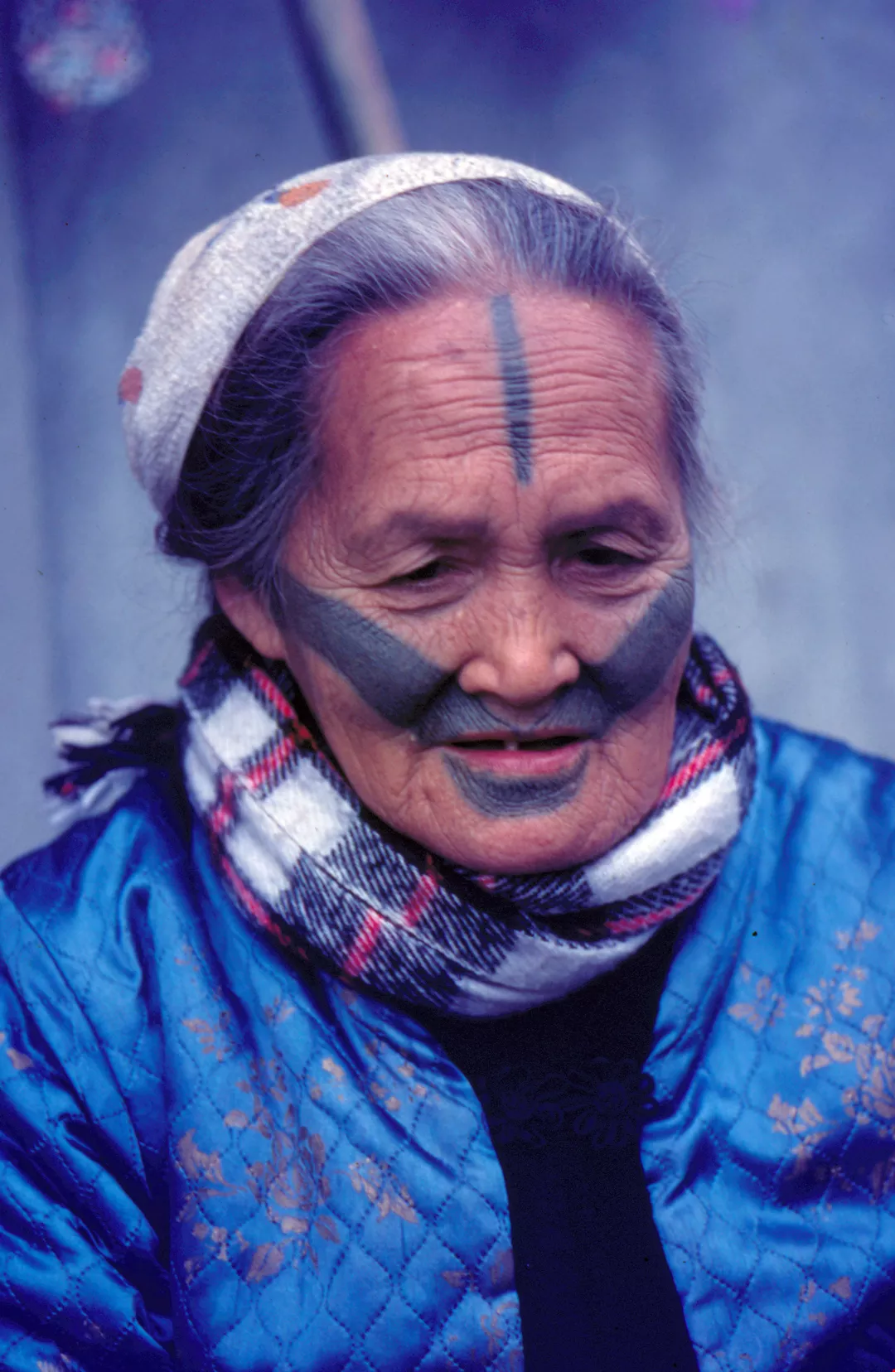
Tattooing is a characteristic custom of many aborigines. (photo by Vincent Chang)
(Above) The Paiwan people have legends about creation from a jug and from a snake; they say that when their ancestors return for a visit, they stay in ceramic jugs. (photo by Vincent Chang)
(Below) The ancestors of the Taiya people were said to have arisen from this rock.
Tourist: " # * ○ +............" Yami aborigine: "+ ○ * #............
A union of past and future. (photo by Vincent Chang)
Click! I can take a good picture, too.
Distribution of Taiwan's Aboriginal Peoples
[Picture]
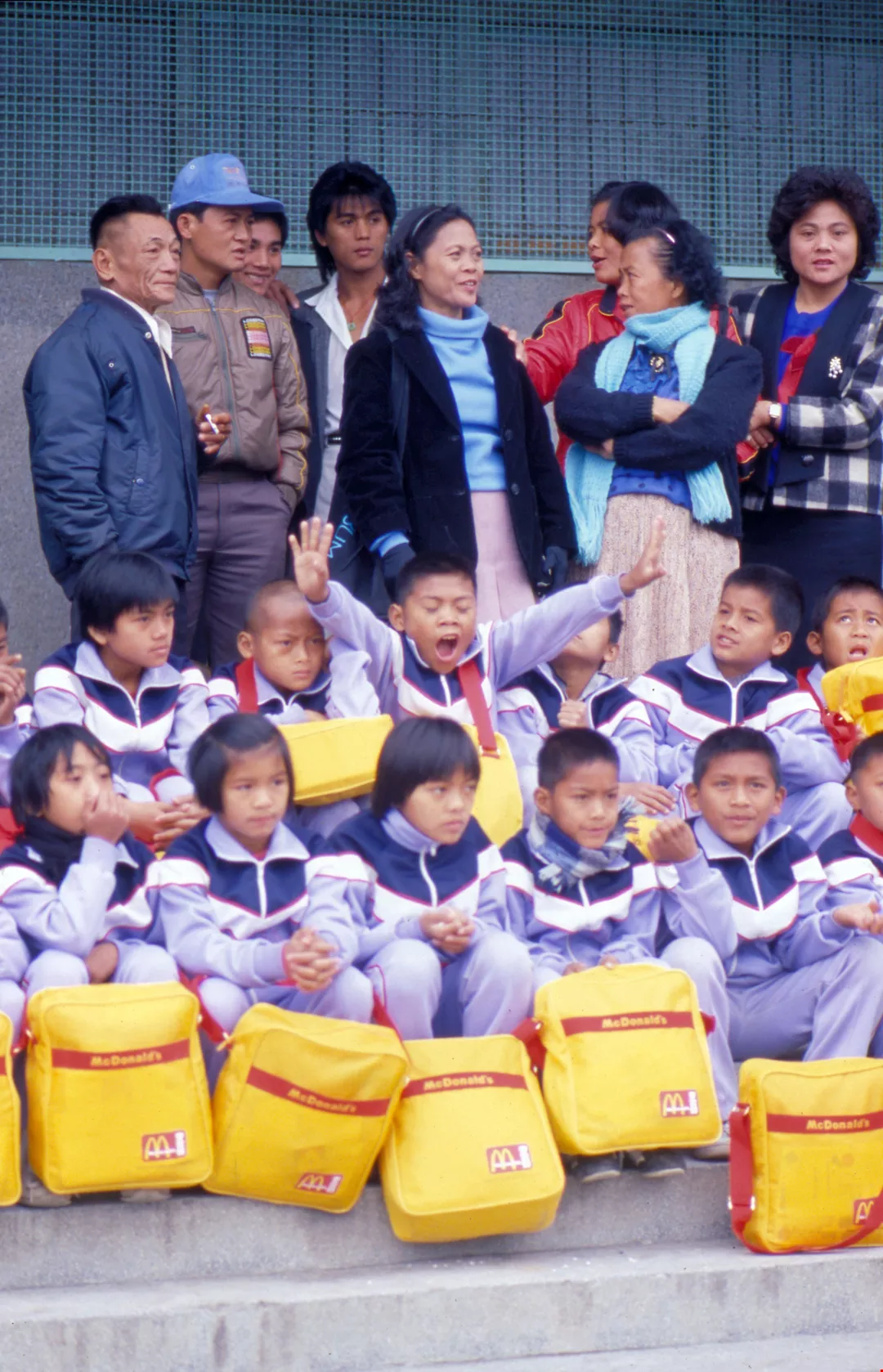
These children from Tawu Village came to Taipei in March to run in the marathon. McDonald's bags, new shoes, the big city--what effect will it have on them?
Tattooing is a characteristic custom of many aborigines. (photo by Vincent Chang)
(Above) The Paiwan people have legends about creation from a jug and from a snake; they say that when their ancestors return for a visit, they stay in ceramic jugs. (photo by Vincent Chang)
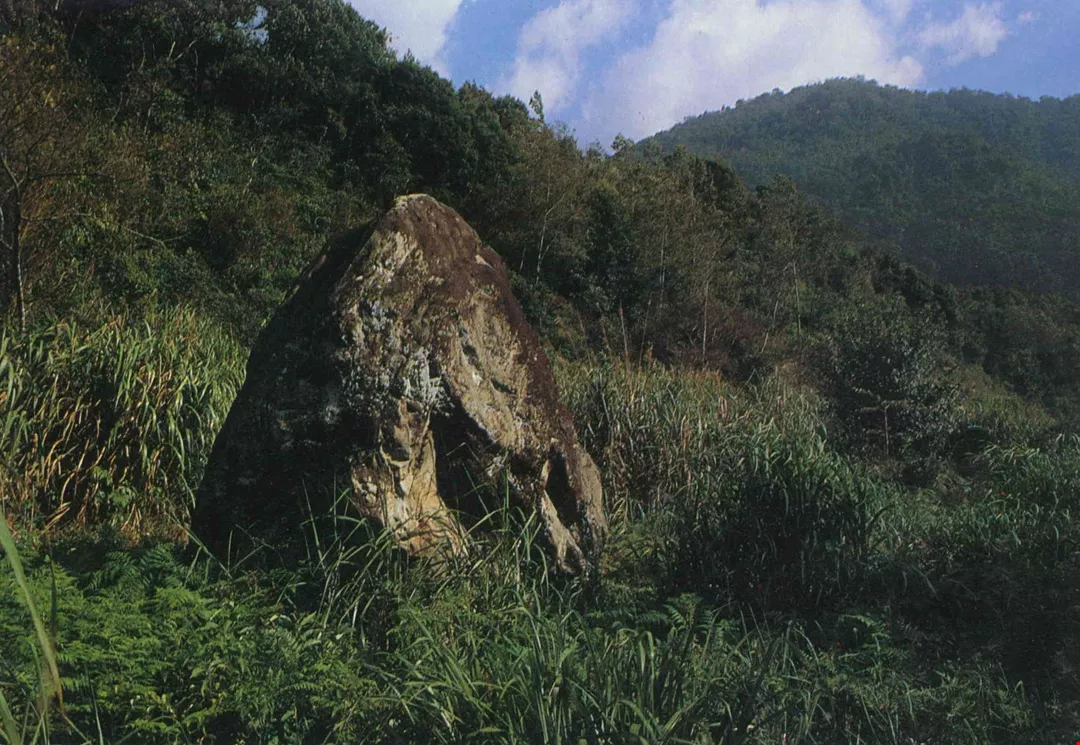
(Below) The ancestors of the Taiya people were said to have arisen from this rock.
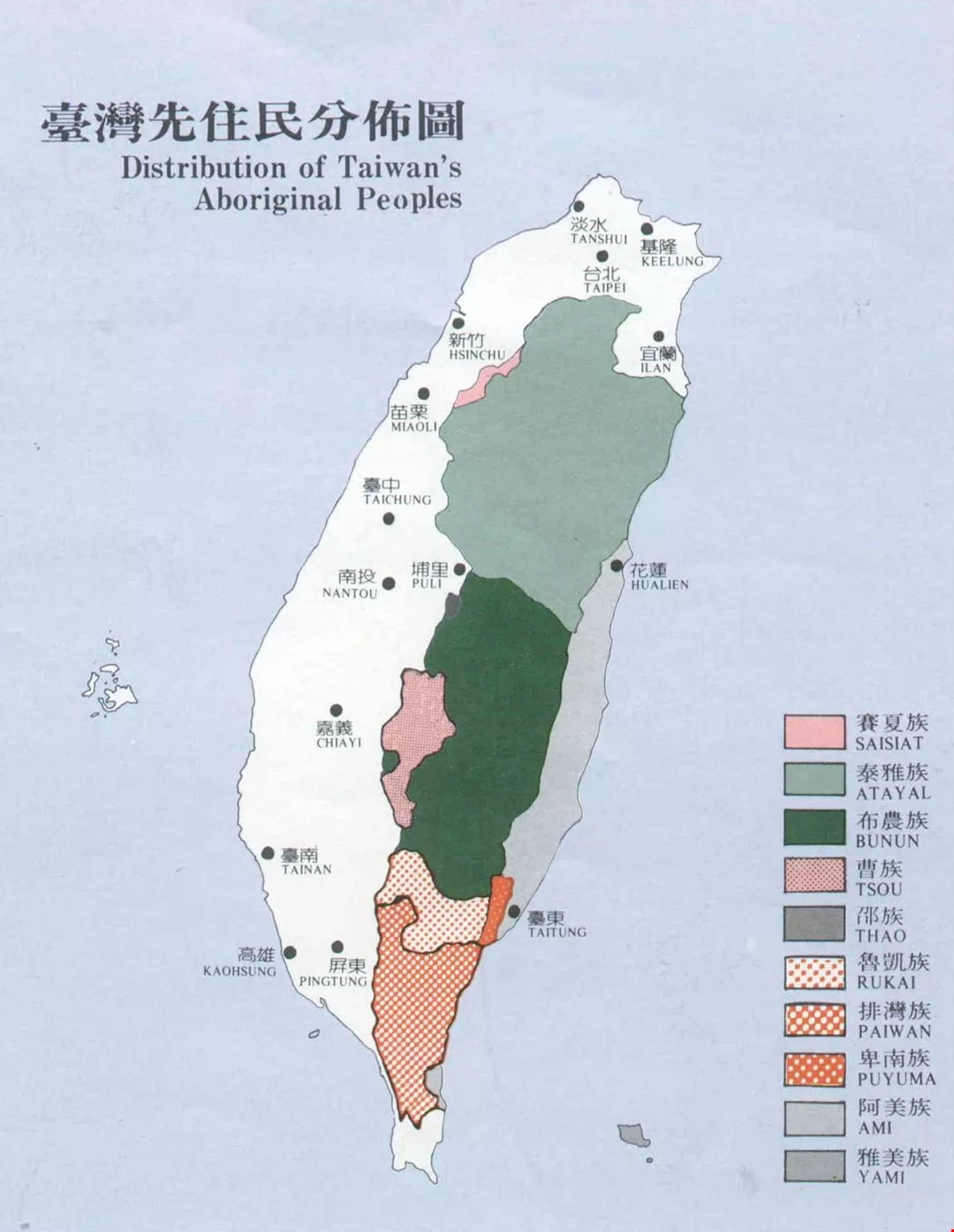
Distribution of Taiwan's Aboriginal Peoples.
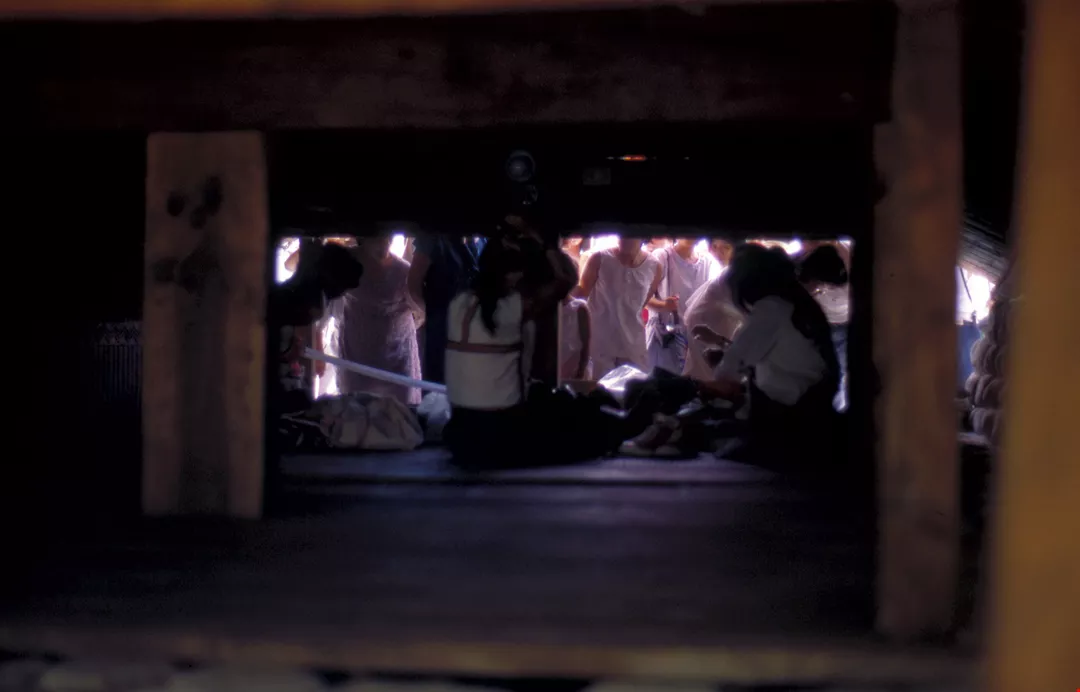
Tourist: " # * ○ +............" Yami aborigine: "+ ○ * #............


@List.jpg?w=522&h=410&mode=crop&format=webp&quality=80)


