

With married couples having fewer children and medical advances ensuring longer lifespans, Taiwan finds itself shifting with astonishing speed toward a much more aged society. According to figures released by the Directorate-General of Budget, Accounting and Statistics, the number of persons aged 65 or older in 2008 rose to a new high of 2,402,220, or over 10.4% of the total population.
With senior citizens accounting for a growing share of the total population, the question of how to provide them with a good living environment has become one of the most nettlesome social issues facing governments around the world, and the public and private sectors have come up with a wide variety of solutions.
Way off the beaten track in the hills of Danshui Township in northern Taipei County there lies a community called Caijia Village, a collection of elderly residents said to be "the happiest anywhere in all of Taiwan." The old folks there do gardening together, eat together, and study together. There are not enough hours in a day to attend all the courses at the old folks' community college, where the offerings include Japanese conversation, beiguan percussion music, and much more. Life is busy and full of fascination for everyone in the community. If elderly people cooped up in tiny urban apartments knew about life in Caijia Village, it would surely strike them as some sort of Shangri-La.
To get to Caijia Village, I hop on Bus No. 3 at the bustling Danshui metro station. As the bus wends its way through the crowded streets of urban Danshui, youthful passengers in shorts and sandals gradually reach their destinations and depart before the bus trundles off into the countryside and the scenery turns to rice paddies, vegetable patches, fruit orchards, and overgrown fields. Along the way, I see lots of white-haired old folks chatting and looking after little children.
After about a half hour of meandering through the countryside, the bus reaches a narrow lane with a sign pointing the way to Qifu Baosheng Shrine. The road grows steep, and the bus struggles its way uphill for a kilometer or so before stopping at last at Caijia Village, which has gained fame as "northern Taiwan's Shangri-La for old folks."
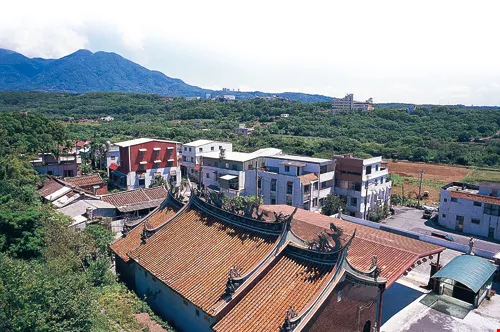
At Caijia Village, in an out-of-the-way part of Danshui Township, Taipei County, the old folks have built fulfilling lives around the idea of "eating together, gardening together, and studying together." The village has earned a reputation as "the happiest place for retired living in all of Taiwan."
Eating right
A clanging dinner bell marks the arrival of noon, and 20 or more elderly men and women from Caijia Village, located right next door to Qifu Baosheng Shrine, walk single file into a dining hall, where they pick up stainless steel eating utensils labeled with their names, then wait in an orderly line to get their meals.
The food is every bit as good as what you're likely to find at a restaurant in town-cabbage (sliced into thin strips and fried), pumpkin (steamed to a nice, soft texture), milkfish soup (with the bones carefully picked out), and stewed dried tofu and braised pork (cubed and stewed). The meals are designed by Auntie Luo, a volunteer with a class C chef's license. She is careful to make sure that the food is both nutritious and easy to eat, even for folks with bad teeth and weak digestive systems.
Sixty-nine-year-old Cai Huixiong and his wife Cai-Chen Mei have been taking their meals here for five years now. "Our children go off to work during the day, leaving just the two of us at home. If we fix too much for lunch, we can't finish it, but if we make too little, then there's not much variety. That's not a problem here. There's lots of variety, and you can chat with your friends. It sure beats just sitting around by ourselves at home."
In addition to the dining hall, the Caijia Village lunch program also delivers meals to homebound people in the nearby boroughs of Yishan, Zhongshan, and Xingren. The price of each meal is a very reasonable NT$30.
"It makes a lot more sense than spending half the day buying groceries and cooking for yourself," says 72-year-old Li-Yang Xue, whose husband had a stroke five years ago that left him bedridden and without any appetite. The task of caring for her husband left her with little extra energy to juggle meals, so it came as a huge relief this past May when the lunch program started delivering meals to their home. "My husband really likes the food, and I enjoy the break. And now both my aunt, who lives by herself, and my uncle, who runs a business, have started having lunch delivered here, so they come over to eat with us. It's a great way to stay in close touch."
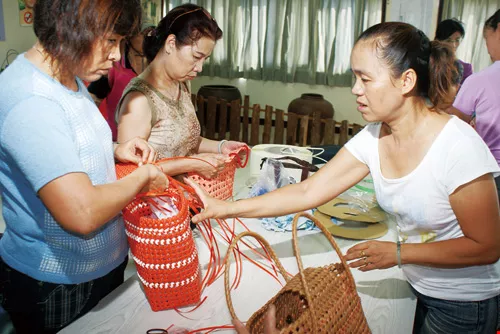
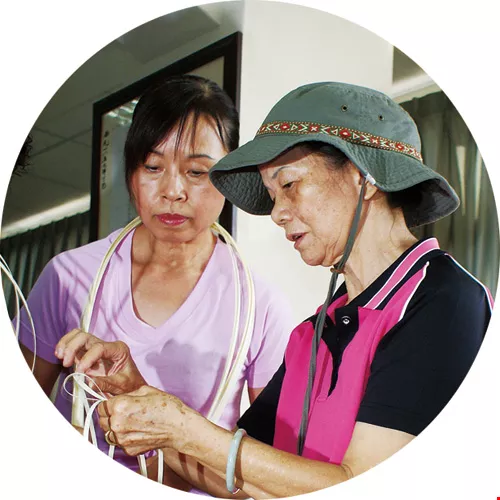
The old folks' junior college program at Caijia Village offers courses in basket weaving (left), Japanese (right), and many other interesting subjects.
All for one and one for all
The lunch program, which runs five days a week, rain or shine, is just one of many thoughtful services provided by Caijia Village.
To give the old folks a chance to keep active, village residents this year cleared about 2.4 acres of unused farmland so that local senior citizens could use it for gardening. Since the oldsters may not be in shape to withstand the sweltering heat of summer, the garden won't formally open until the ninth lunar month arrives (in October). Users are likely to grow carrots, mustard, cabbage, pumpkins, and a lot of other fruits and vegetables, and should be able to harvest their produce in time for the lunar new year.
In addition to eating and gardening together, Caijia Village also encourages local oldies to go to school together. Last fall, the village applied to the Taipei County Social Affairs Bureau for permission to set up an old people's community college and offer classes in Japanese conversation, weaving, baking, and beiguan percussion music for anyone aged 58 or older living in Caijia Village or the surrounding boroughs. The courses have been very popular thanks to the low tuition-only NT$800 per academic year-and already nearly 90 seniors have enrolled, including some who come all the way from the town of Danshui to attend classes.
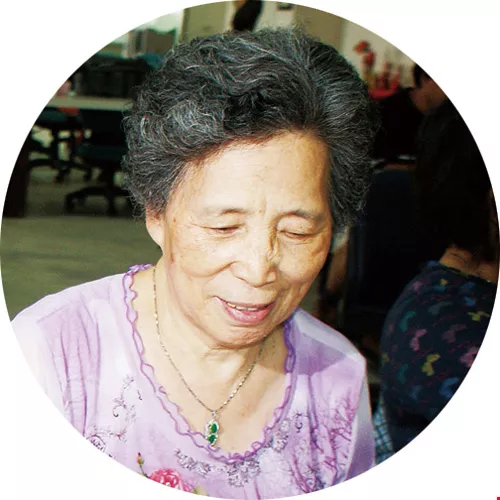
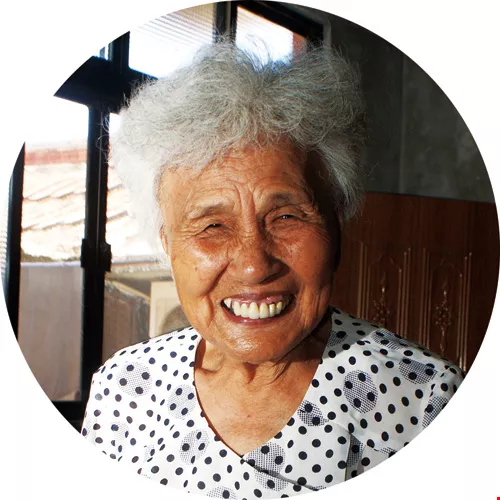
Seventy-five-year-old Lu-Zhang Taoli, otherwise known affectionately as "Auntie Black Cat," gushes with enthusiasm: "There's all sorts of things to take part in. I'm busy all day every day from the time I get up at 6 a.m. until I go to bed at 10 p.m. I go to classes, make confections, weave bags and baskets out of nylon, or go places with classmates. This summer I've been to Guguan in Taichung and Cihu in Taoyuan. Before the Mid-Autumn Festival arrives we're going to learn how to do hand-made mooncakes. My son says I'm the busiest granny anywhere!" Auntie lives together with her family in a four-generation household, and perhaps it's because her life is so good that she looks more like she's in her early 60s.
For local senior citizens, the "eat together, garden together, study together" approach has made their "golden years" gold indeed. Credit for this outstanding achievement goes first and foremost to Cai Ying, head of Qifu Baosheng Shrine.
At Caijia Village, in an out-of-the-way part of Danshui Township, Taipei County, the old folks have built fulfilling lives around the idea of "eating together, gardening together, and studying together." The village has earned a reputation as "the happiest place for retired living in all of Taiwan."
Monotonous no more
Caijia Village is located on Lower Guirou Mountain, and its history stretches back over 180 years. Originally inhabited by the indigenous Ketagalan tribe, the mountain is named after the guirou plant (Zelkova) which grows in abundance there and is the source of an excellent mosquito repellent. In the waning years of the Qing Dynasty a large farming clan by the surname of Cai, originally from Qionglin in Kinmen, moved into the area. Because of their presence, Caijia Village ("the Cai family village") gradually caught on as a new place name. Some 30 families and 200 people live there today, and over 90% of them are surnamed Cai.
The focal point of local religious worship, Qifu Baosheng Shrine, was established during the reign of the Guangxu Emperor (1871-1908) as an offshoot of Bao'an Shrine in Taipei.
Though Caijia Village is way off the beaten path, it nevertheless played a key historical role once upon a time. After China lost the First Sino-Japanese War in 1895 and the Qing court ceded Taiwan to Japan, Cai Bai and his son Cai Chi of Caijia Village joined forces with Liu Yongfu, an army general who had scored celebrated victories with his Black Flag Army during the Sino-French War some 10 years before, to form a volunteer resistance force. Though they did not succeed in keeping the Japanese out, the father and son nevertheless managed to help Tang Jingsong, president of the short-lived Republic of Taiwan, to escape via the Danshui River to mainland China.
From the late Qing Dynasty and continuing through Japanese rule and beyond, most of the residents of Caijia Village engaged in farming, but rapid economic growth in the latter half of the last century led a generation of youth to abandon the countryside throughout Taiwan, and Caijia Village was no exception. Persons aged 65 and over currently account for a very high 13% of the residents of Caijia Village.
Fortunately, however, traditions have deep, strong roots here. Clan members look out for each other. Local residents are also fortunate to own their own land and homes, so they are comfortably off and usually able to keep at least one child around the homestead to care for them in their old age. If all the children in a family were to leave the local area, family and friends would criticize them for abandoning their parents, which is why it is so common to see three, four, and even five generations living under a single roof in Caijia Village.
Even so, working-age adults have always been gone during the day at their jobs, leaving the old folks behind to nap, watch TV, look after the grandchildren, and visit with neighbors. Apart from that, there was hardly anything meaningful for them to do with their time.
The situation began changing five years ago when Cai Ying left his job at the Taichung office of the Commons Daily newspaper and returned to Caijia Village to take over as head administrator of Qifu Baosheng Shrine. At age 58, senior citizen status was beginning to appear on the horizon for Cai, so he began thinking of ways to arrange for senior care so that he might someday avoid becoming yet another old geezer complaining of boredom.
As Cai Ying himself laughingly admits, "All this work I've been doing is also a way of preparing for my own old age!"
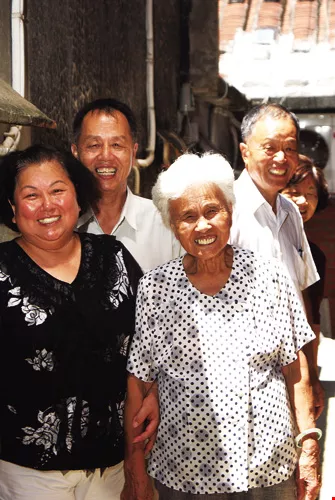
Eighty-seven-year-old Wu-Li Man (front right) graduated this July from the Caijia Village junior college program along with six other family members. She is shown here with a daughter, two sons, and a daughter-in-law. The beaming smiles speak volumes about their happy family.
How to deal with the elderly
Remembering back to his youth, when he used to hear all the neighbors calling their families in for dinner each day, a lightbulb turned on in Cai's head: Why not have everyone take their meals together? The new head of the borough, Gao Mulin, was very supportive of the idea, and worked together with Cai to bring it to fruition. Cai raised donations of NT$600,000 and NT$1.5 million respectively from the Baosheng Shrine administrative committee and a charitable foundation run by Taipei Fubon Bank, and used the funds to build a kitchen and dining hall next door to the shrine. In the meantime, Gao applied for a monthly subsidy of NT$25,000 from the Danshui Town Hall, and also took charge of recruiting volunteers and arranging a schedule for them to make grocery purchases, wash vegetables, cook, deliver meals, and keep the grounds cleaned up.
The concept seemed great, but the meal program attracted few comers. After three months of offering free meals, virtually no seniors were showing up, so they started asking around to find out why, and were told that coming in for free meals would seem to imply that their sons and daughters weren't looking after them properly, otherwise why would they have to eat for free at the "soup kitchen?" "Neighbors would have criticized them," says Cai, "so naturally they didn't dare come."
To avoid the loss of face associated with a giveaway, the program started charging NT$30 per meal, and local residents gradually started coming in.
Cai Ying has found the old folks to be rather childlike, simple yet stubborn in their ways. To deal with them successfully, in his experience, you have to get a feel for the likes, dislikes, and disposition of each person, then use the power of group cohesion to overcome the resistance of individuals. "Once someone has taken a meal and been favorably impressed, others will look at the program in a more positive light, and word of mouth will bring more people in. That's how we've won the support and trust of old folks in the community-bit by bit."
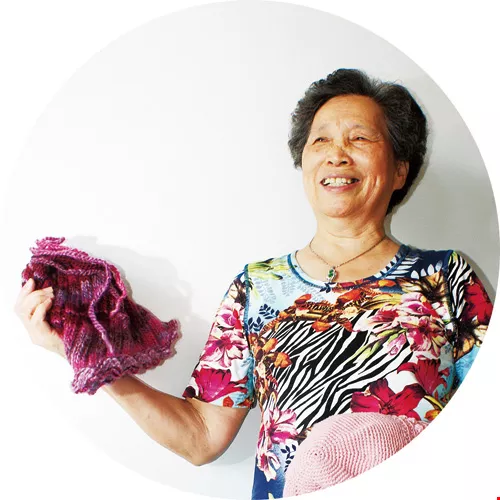
At Caijia Village, in an out-of-the-way part of Danshui Township, Taipei County, the old folks have built fulfilling lives around the idea of "eating together, gardening together, and studying together." The village has earned a reputation as "the happiest place for retired living in all of Taiwan."
Healing power
The many programs developed at Caijia Village over the past five years have enabled senior citizens in the village and nearby communities to live much more fulfilling lives. Indeed, old folks have started coming in all the way from the town of Danshui to take part.
Seventy-year-old Mr. Wang is one such person. Upon retiring five years ago from his managerial position at an insurance company, he had been looking forward to enjoying life in the slow lane, but in the event found it very difficult to get along with his wife, who was very much into the task of managing the family finances. Conflict over money was corrosive, and the couple ended up getting divorced this past May.
Returning to bachelorhood at such an advanced age came as a blow to Mr. Wang. While his children were happy to support him in his old age, he was lonely and hurting. Then one day he happened to see an article about Caijia Village and decided to check it out. Little did he know that he would fall in love with the place and become a regular visitor.
"The air in the hills is great, and they have so many activities. I come out here whenever I have time to eat with everybody, go to Japanese class, and just chat. I feel so much happier now!" Mr. Wang says that although he is a mainlander, he nevertheless speaks Minnan fairly well, so communication is no problem, and he has never felt unwelcome or out of place.
"I've made lots of good friends here, and found a new direction for my life. Later this year I plan to get involved in a building materials business that an old classmate of mine is running in mainland China. It'll be a second career for me!" Mr. Wang says that his ability to regain his self-confidence is all thanks to the warmth and acceptance that he has found at Caijia Village.
Jin Deguchi, who teaches the Japanese class, has also been deeply impressed by the down-home hospitality of Caijia Village.
"When my wife gave birth to a child in February, the old folks all made a special chicken soup for her to eat during her recovery. When my birthday rolled around, they bought me a surprise birthday cake, and they also made pig's-knuckle noodles, the traditional Chinese birthday treat." Deguchi teaches Japanese at many different places, and chuckles that the old folks are more serious about the class than younger people who are still in the workforce. The seniors take copious notes, and remind each other not to miss class. He often sees women coming to class together with a daughter or daughter-in-law, and is touched at the happiness he has observed.
Says Deguchi: "You don't very often see a community as caring as this one, not even in rural Japan. I feel really lucky to be teaching here."
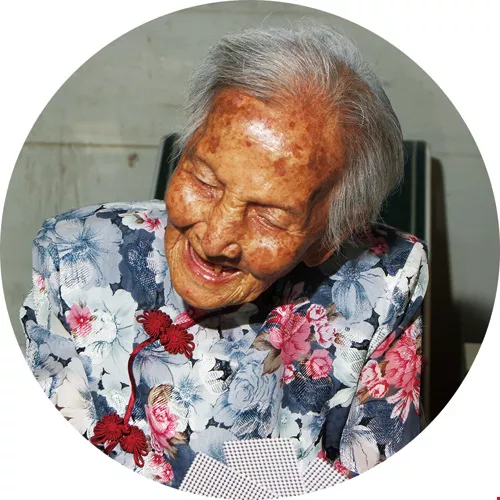
At Caijia Village, in an out-of-the-way part of Danshui Township, Taipei County, the old folks have built fulfilling lives around the idea of "eating together, gardening together, and studying together." The village has earned a reputation as "the happiest place for retired living in all of Taiwan."
Inspiring others
Caijia Village was designated a model retirement community by the Taipei County Government in 2009, and local governments and community groups have come from as far away as Hualien, Yilan, Kaohsiung, and Pingtung to learn how things are done here. In addition, the Danshui Town Hall plans to replicate the success of Caijia Village in other locations around the township.
The mayor of Danshui Township, Cai Yewei, is a big believer: "When old folks eat well every day, it puts them in the mood to take part in various activities. If you're open and engaged, making new friends, and interacting with other people, you will naturally become healthier." Senior citizens account for an especially high percentage of the population in the communities of Tunshan and Shalun, so by the end of this year the town hall will be replicating the Caijia Village model there. They'll start, as they did in Caijia Village, by subsidizing a senior citizens' dining hall, and then go from there. The eventual hope is to turn Danshui into a paradise for old folks.
A news organization once described Caijia Village as "a happy people's commune," but that didn't sit well with the locals, since the communist idea of "share and share alike" is quite foreign to their cultural background. They feel that by eating together, gardening together, and studying together, they are doing nothing more than continuing the mutual support that has always been a part of traditional agricultural society.
Local residents may not think what they're doing is any big deal, but little do they know that the fame of their "old folks' Shangri-La" has spread to distant places, and is providing inspiration to many.
At Caijia Village, in an out-of-the-way part of Danshui Township, Taipei County, the old folks have built fulfilling lives around the idea of "eating together, gardening together, and studying together." The village has earned a reputation as "the happiest place for retired living in all of Taiwan."
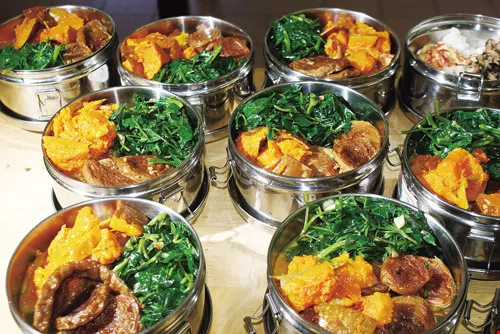
The lunches provided by Caijia Village are quite a feast (left). Those who take their lunch at the cafeteria where it is prepared (right) also get hot soup, a plate of fruits, and dessert. The whole meal costs only NT$30.
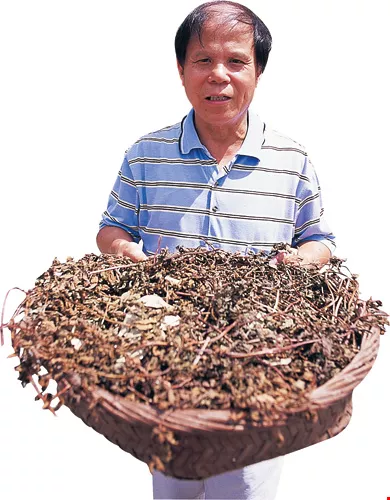
Cai Ying, the head of Qifu Baosheng Shrine in Caijia Village, is the unsung hero who came up with and executed the idea for how to look after the needs of local senior citizens. He is shown here holding a basketful of freshly picked wild fishwort (Houttuynia), which is great for making herbal tea and spicing up chicken soup.
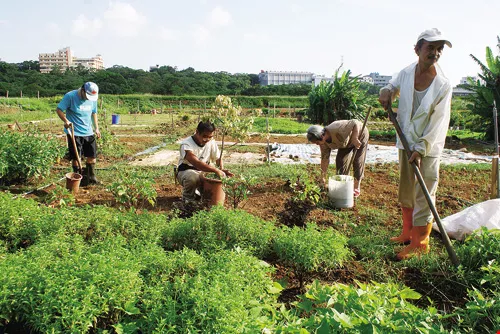
(left) The womenfolk at Caijia Village generally get together and make special treats with a red-bean filling to mark holidays, festivals, big events, or the arrival of visitors from out of town. (right) Caijia Village is now working to clear an area of about 2.4 acres that local senior citizens can use free of charge for organic gardening.
At Caijia Village, in an out-of-the-way part of Danshui Township, Taipei County, the old folks have built fulfilling lives around the idea of "eating together, gardening together, and studying together." The village has earned a reputation as "the happiest place for retired living in all of Taiwan."
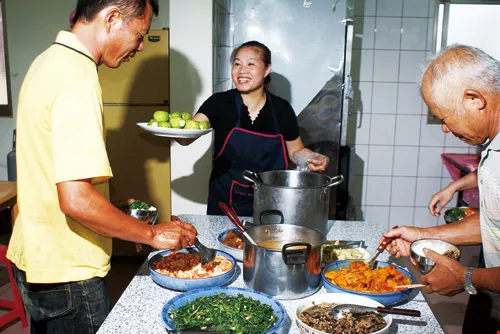
The lunches provided by Caijia Village are quite a feast (left). Those who take their lunch at the cafeteria where it is prepared (right) also get hot soup, a plate of fruits, and dessert. The whole meal costs only NT$30.
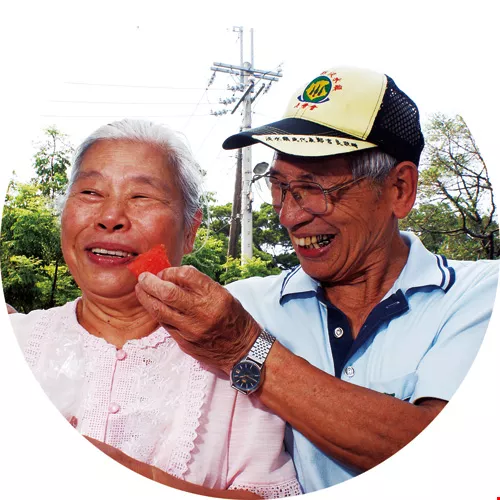
At Caijia Village, in an out-of-the-way part of Danshui Township, Taipei County, the old folks have built fulfilling lives around the idea of "eating together, gardening together, and studying together." The village has earned a reputation as "the happiest place for retired living in all of Taiwan."
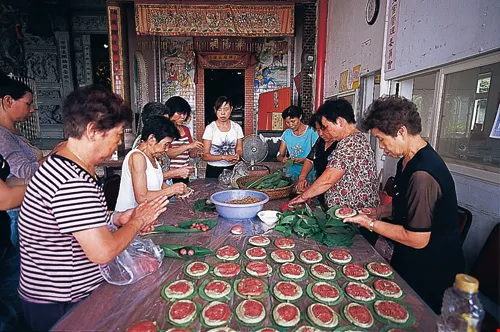
(left) The womenfolk at Caijia Village generally get together and make special treats with a red-bean filling to mark holidays, festivals, big events, or the arrival of visitors from out of town. (right) Caijia Village is now working to clear an area of about 2.4 acres that local senior citizens can use free of charge for organic gardening.
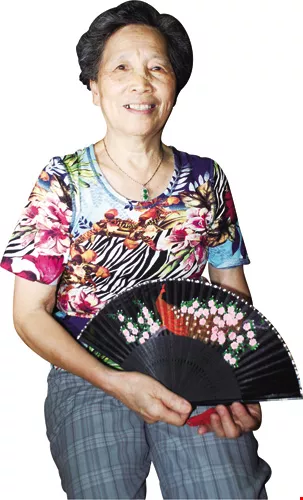
75-year-old Lu-Zhang Tao-li, a.k.a. "Auntie Black Cat," is universally acknowledged as the "class president" for the tremendous dedication she shows toward her school work. She's never missed a class, and explains that she is making up for a checkered childhood education that was constantly interrupted by mad dashes to the air raid shelter. She treasures the opportunity to take Japanese classes in her golden years, and is making the most of it.
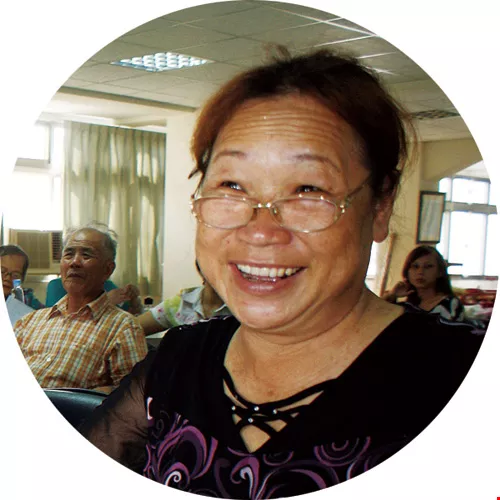
At Caijia Village, in an out-of-the-way part of Danshui Township, Taipei County, the old folks have built fulfilling lives around the idea of "eating together, gardening together, and studying together." The village has earned a reputation as "the happiest place for retired living in all of Taiwan."


@List.jpg?w=522&h=410&mode=crop&format=webp&quality=80)


