Thai Businessman Vikrom Kromadit: A Plan for Taiwan to Build Soft Power in ASEAN
Coral Lee / photos Jimmy Lin / tr. by Jonathan Barnard
December 2009


While most people in Taiwan tend to look at ASEAN purely from the standpoint of trade, one man urges the ROC to focus on culture and education instead. He holds that such a focus would achieve a deeper and more lasting impact and keep Taiwan from being marginalized.
Vikrom Kromadit, the ethnic Chinese Thai who makes this suggestion, is chairman of Amata, Thailand's largest developer of industrial parks. In 2007 Kromadit was listed among the 30 richest Thais with personal wealth estimated at US$170 million. Having earned a BS in mechanical engineering at National Taiwan University in the 1970s, he identifies with Taiwan and holds a special place in his heart for it.
Kromadit believes that at a time when ASEAN is increasingly looking toward China, there is a great need for Chinese-language instruction, as well as various kinds of technical and specialized education, within ASEAN member nations. Why can't Taiwan employ the soft power of education to enter the ASEAN market? Toward this end, he wants to expand the Amata Nakorn Industrial Estate, turning it into a "perfect city" that combines a "university city" with a "science city." He hopes to be able to work with ROC government and educational institutions to build a cradle for developing well-trained personnel, as well as for technological R&D.
In Chonburi Province, more than 100 kilometers southeast of Bangkok, the Amata Nakorn Industrial Estate contains famous international companies, such as Toyota, Mitsubishi and Pepsi-Cola, as well as big Taiwan companies including Tatung and Delta Electronics. Built in 1989, this industrial area has extensive infrastructure, including power, natural gas, and water distribution systems. More than five times as large as the Hsinchu Science Park, the estate covers an area of more than 30 square kilometers. Within its confines are elementary and secondary schools, hospitals, training centers, residential districts, golf courses and so forth. It is known as the best industrial park in Thailand. Its wide boulevards and lush green landscaping have attracted 400 companies and 120,000 workers.
Apart from Amata Nakorn in Chonburi, Amata Corporation also has industrial parks in Rayong Province in southern Thailand and outside of Ho Chi Minh City in Vietnam. All told, more than 600 firms have factories in its three locations, making Amata Thailand's largest developer of industrial zones.
Kromadit, the CEO and soul of Amata, is a self-made man with an acute business sense. He became wealthy by adroitly grasping opportunities to invest in industrial zones during Thailand's period of rapid economic growth. In 1996 he sold 90% of his personally owned stock to establish the Amata Foundation, which has become famous for its long-term commitment to supporting artists on the Indochina peninsula. His autobiography-Be a Better Man-broke records to sell more than 1 million copies.
Born in the countryside, the son of a sugarcane farmer, Vikrom Kromadit had nine younger brothers and sisters, and another 13 half-brothers and -sisters from his father's other wives. With so many mouths to feed, Virkom, as the oldest child, had to help with farm chores from a young age. When he was in fourth grade his mother told him to leave school to pick up agricultural goods that were being unloaded from a train. He used a pushcart to bring home several dozen burlap bags full of them. Then he had to sort, clean and weigh them. When he was a little older, his father sent him to sugarcane fields more than 20 kilometers from home to supervise 300 workers and to handle the accounts there. To set a good example, he'd join the workers sowing seeds. He'd go to the fields and turn up the earth, lug water, and spread fertilizer. He'd do every kind of rough work-rain or shine. No matter how blistered his hands, he wouldn't stop working.
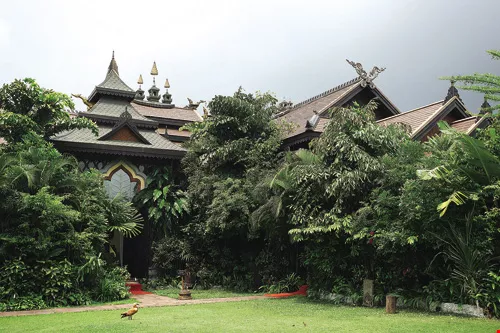
Kromadit's private residence is set amid lushly wooded grounds where precious wild animals wander. His autobiography explains that because he grew up in the countryside, his spirit is deeply at one with nature. Consequently, his grounds are landscaped as if they were a forest.
An entrepreneur by nature
Conditioned from a young age to work hard, and "possessing an innate love of money," Kromadit's childhood was almost entirely filled with working and earning. He is proudest of how he started to make money when he was just five: One day, after his aunt had finished hawking some roasted beans on the street, he saw her give a little money to his cousins for helping her, so he begged his aunt to let him help sell the beans the next time there was an alfresco film screening. For each bag he sold, his aunt gave him a cut of five satang (0.05 baht), and when his cousins stopped to watch the movie, he still continued to sell, not feeling tired in the least.
When he was eight, his aunt's family moved to Bangkok, and young Vikrom asked her for the tools she had used to roast the beans. He also bought some seeds and candy for resale. He set up a stand in front of his grandmother's house and became a "little shopkeeper." When he was in class during the day, he'd get his grandma to roast peanuts and "mind the store." Then, in the evening, after he'd finished his household chores, he'd open up himself.
"When I was little, the thing I loved most was to sit under a mosquito net, open my money box and touch all my quarter- and half-baht coins. Then I could go to sleep contented!" Between the ages of eight and 14, he saved B10,000 (at a time when a jeep cost B40,000).
In the 1970s Kromadit came to Taiwan to attend NTU, and every time he went back to Thailand for summer and winter vacation, he'd bring goods to sell both ways. On weekends he'd visit trade fairs to find products to bring back to Thailand. And in Thailand he'd go to pawn shops to look for rings and bracelets, which he'd clean up and resell to his classmates in Taiwan for a tidy profit. He'd even take the bicycles that graduating students had abandoned, fix them up, and then repaint them for sale.
Apart from his natural tendencies and habits, one reason he worked so hard to make money was that he had become estranged from his father. By cutting off all support, his father had forced him to scrape to make ends meet.
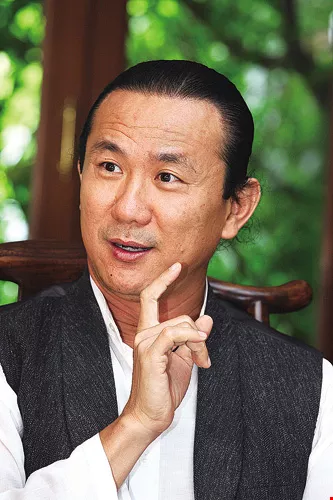
Vikrom Kromadit earned his BS at National Taiwan University in the 1970s and holds a special place in his heart for Taiwan. A self-made man, Kromadit has thrown himself and his riches into cultural endeavors and projects for the public benefit. His is a dramatic story.
Garbage to gold
Though busy making money during winter and summer vacation, Kromadit still did well in courses at NTU. In order to keep the scholarship money that the Ministry of Education provided to overseas Chinese students, he worked hard at his studies. He also was a top athlete, excelling at various ball sports, as well as track and field, weightlifting, and swimming. He was also active in several clubs, and was well known among Thai student groups throughout Taiwan. He'd frequently serve as an interpreter when Thai officials came to look at Taiwan's agricultural advances.
After graduating, Kromadit planned to go to Canada for graduate school, but as he lacked sufficient funds, he decided first to return to Thailand to make some money. In 1975 he formally founded his company, which first exported cassava. Quickly turning a profit, he considered expanding into different fields.
Whenever he'd walk to village factories, he would often see grain hulls, cornhusks, sugarcane roots, and other agricultural byproducts discarded by farmers. He thought it was a shame they were going to waste, so he began to research how to find some use for these waste products. After experimenting for a year, he discovered that discarded sugarcane stalks and leaves still had enough nutritional value to be used to make feed. He then actively began researching how to create feed from sugarcane stalks and looked for suitable production machinery. What's more, he found some big Japanese customers and got financing from a bank.
As he was attending to all the details regarding the opening of a plant, his father, who was in the sugarcane business, decided he wanted in. His father had a violent temper and was constantly having affairs, and had consequently had poor relations with his children ever since they were young. Vikrom was reluctant to let him join. But out of a sense of family obligation and because an elder that he respected implored him to let his father participate, he eventually relented. At first everything went smoothly. But after a fire destroyed a factory and that respected elder suddenly died, conflicts between his father and him once again came to the fore. Kromadit ended up painfully closing the feed company after devoting several years of his life to it.
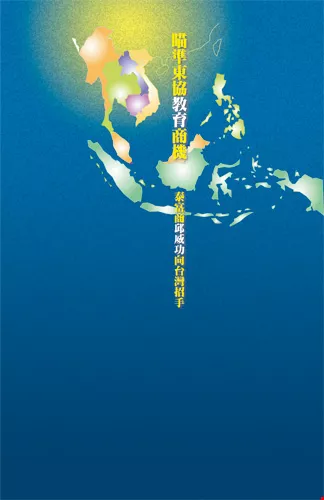
When ASEAN+1 (the "1" being China) abolishes internal tariffs in 2010, there will be a great demand for Chinese-language educational resources in Southeast Asia. Vikrom Kromadit suggests that Taiwan take the "soft-power" route of "exporting education" to combat its marginalization.
Strength from setbacks
Kromadit was 27, and he returned to import-export, at which he excelled. By 1982, when he was just 30, his company was Thailand's largest food exporter. Just at the point when he had plenty of money and was preparing to go abroad again to finish his studies, his business hit a rough patch. When his supplier suddenly increased the price on a large shipment of starch, Kromadit-ever trustworthy and true to his word-was forced to buy and sell at a loss. Then a consignment of tuna he had shipped to Canada was rejected because it was the wrong type of tuna. These two events caused him to lose B8 million. Not only did it wipe out many years of savings, but it caused him to fall B3 million into debt. His dream of continuing his studies was gone in a puff of smoke. But with a hardworking and persevering character, he managed over the next six years both to pay off his debts and to save B30 million. In 1987 he led a Thai group to tour Taiwan's industrial parks, and that inspired him to return to Thailand and open industrial parks himself.
Kromadit began investing in his Amata industrial estates at the end of the 1980s, just as foreign investors, including Taiwan companies, started to pour money into Thailand to develop the electronics and auto industries there. Major electronics firms from around the world came to invest one after another. Industrial parks were growing by leaps and bounds, and he was constantly buying land to expand.
However, after the Asian financial crisis erupted in 1997, some 30,000 Thai firms went bust, and land in industrial parks wouldn't sell. With heavy interest payments, the debts that Amata carried rose to as high as B500-600 million. The company almost went under and survived only by selling off shares it owned in a power plant. It wasn't until Thailand started to experience rapid growth in 2002 and was attracting investment from large international manufacturers that Amata was able to right its ship and progress to its current scale.
Kromadit's private residence is set amid lushly wooded grounds where precious wild animals wander. His autobiography explains that because he grew up in the countryside, his spirit is deeply at one with nature. Consequently, his grounds are landscaped as if they were a forest.
A long-term plan
Dissatisfied with things as they stand, Kromadit wants to turn Amata Nakorn into a "perfect city." Observing the increasingly mature ASEAN market and the long-term development prospects for Taiwan businesses there, he also has a nascent vision for an "education and science city."
In pursuit of this dream, Kromadit, who has recently been cloistered in the mountains writing, specially invited Taiwan Panorama to interview him.
He notes that companies from Taiwan have had a success rate of 95% with their investments in Thailand. Because the Thai people are easygoing and friendly and the pace of life is leisurely, businesspeople from Taiwan who invest there frequently become so charmed by the way of life that they put down roots. As part of a long-term plan for businesses from Taiwan, he wants them to extend an educational helping hand so that the people of Thailand and neighboring countries can study Chinese at Amata and learn about Taiwan's culture and way of thinking. If Taiwanese businesses in Thailand can acquire a stable workforce with an understanding of Taiwan's culture so that they can provide smooth channels of communication, then those businesses will surely enjoy long-term success in Thailand.
From ASEAN's standpoint, there's a flight arriving or taking off in Bangkok every eight minutes, and the United Nations has its Asian office there. These facts offer ample evidence of Thailand's role as a hub. And the excellent goal of the Amata "educational city" is to attract people from ASEAN countries to come to Thailand and study Chinese. This will allow students of limited financial means to save on travel expenses.
Under Kromadit's blueprint, this educational city of 320 hectares will offer technical and commercial curriculums in addition to language courses. It will welcome universities from Taiwan, China and all Southeast Asian nations to set up branch campuses there. It will also try to establish collaboration between academia and industry along the lines of the ROC's China Productivity Center. "The Chinese language is just a means of communication. What's most important is creating a multiskilled workforce that understands Chinese."
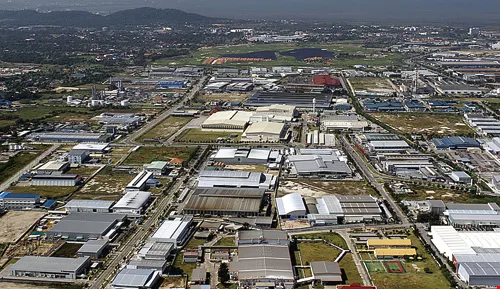
The Amata Nakorn Industrial Estate that Kromadit established in Chonburi Province contains 400 different firms from 23 nations. Japanese firms comprise 60% of them. With complete medical, educational and leisure facilities, the industrial park is Thailand's largest.
Entering ASEAN via soft power
Once this educational platform is established, ethnic Chinese businesses from Taiwan or elsewhere that plan to set up in Vietnam, Myanmar or Cambodia can go there to find students who are natives of those places. What's more, if companies from ASEAN nations wish to enter the greater China economic sphere, then they can go there to find personnel. Even ASEAN bureaucrats who are interested in Chinese people or Chinese affairs will be able to find suitable courses.
"Take me, for instance. Since I was educated in Taiwan, I naturally have feelings for it and a sense of connection to it. Even after graduating, I've often had reason to stay in touch. If Taiwan can establish schools at Amata and thus build up its influence, it will be able to break its long-suffered isolation."
Kromadit separately discussed a cooperative model with his alma mater NTU and Peking University. He offered to contribute land and to be responsible for obtaining permits, as well as installing water and electric distribution systems. The partnering educational institutions would be responsible for investing in building the dorms and classroom buildings, and providing teachers and educational equipment. But NTU president Lee Si-chen thought the plan was too big and would require government funding. Peking University also declined to get involved.
"Both sides of the strait should learn from the British," Kromadit says. More than 300 years ago the British started widely building schools with English-language curriculums, which they kept running for the long term. An "education in English" has become an established part of the experiences of the third-world elite, and British values have, to a significant degree, become global values.
"This kind of investment only requires a couple of hundred million NT dollars, but its benefits-including the advantages it offers businesses and the cultural influence it will reap-is so enormous as to be incalculable," Kromadit stresses. "But apparently there's not this vision on either side of the Taiwan Strait!"
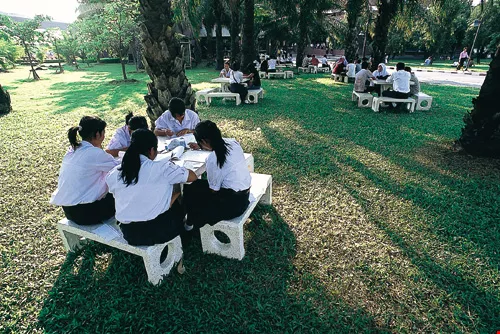
The ASEAN market holds potentially enormous demand for education. Can Taiwan take a hold of this business opportunity and expand its political and cultural influence in the process? That's something its citizens should consider. The photo shows a corner of Huachiew Chalermprakiet University, whose strong suit is Chinese-language instruction.
Staff that knows Taiwan
In recent years National Taichung University (NTCU) has been striving to internationalize, and in 2009 it established a master's program for Chinese-language teachers in Bangkok. NTCU president Yang Ssu-wei holds that Taiwan has an excellent opportunity to enter ASEAN via education.
An enthusiastic supporter of Kromadit's vision of an "educational city," Yang has abundant international experience and was responsible for setting up programs in 2002 offered jointly by National Taiwan Normal University and various Thai universities. He holds that Taiwan should take a two-pronged approach toward the ASEAN educational market: First, it should try to meet the needs of Taiwanese businesses abroad for international personnel. Second, it should take advantage of the growing emphasis on education among Southeast Asians to cultivate trained professionals in various fields with an intimate knowledge of Taiwan.
For instance, in 2009 the Vietnamese government selected 500 elite students to go abroad to enroll in master's and doctoral programs. Originally several universities in Taiwan were willing to provide scholarships for these students. Yet, similar to what NTCU discovered with its master's program in Bangkok, the universities found it difficult to admit students because many applicants had studied at mainland Chinese universities, and universities in Taiwan still don't recognize qualifications from mainland institutions. And although Taiwan universities may soon be allowed to recognize degrees from 41 "key universities" in mainland China, that won't help students from ASEAN countries who attended some other mainland institution.
To put it another way, refusing to recognize degrees from mainland universities not only impinges on the educational rights of students on both sides of the strait; it also places obstacles in the path of Taiwan's plan to internationalize its educational system.
Loosening regulations
"When universities try to internationalize, whether by accepting international students themselves or creating joint programs with universities abroad, the aim is to extend the university's tentacles and attract foreigners. The government ought to clear away legal restrictions and give universities bold enough to try new approaches more opportunities."
Kromadit's idea of NTU or Peking University establishing a branch campus at Amata would be something akin to the various American universities, including MIT and NYU, which have established campuses in Asia. It's a type of "educational invasion" and part of a trend toward greater competition in higher education.
Yang Ssu-wei believes that the most feasible model is for the government to provide funding and hire an interested and capable university to manage the program. That's because with the investment in campus buildings and dorms and with the massive investment in human resources, it will take five to 10 years before there will be visible results and a return on the investment. Without government support, it would be very difficult for a university to succeed on its own.
In Be a Better Man, Kromadit repeatedly stresses that ethnic Chinese are taught to show gratitude for the source of their advantages. He cultivated this cultural recognition when he was a student in Taiwan.
"The Taiwan of that era gave me an educational opportunity that many local students would have liked to have had for themselves," Kromadit says. "It's only appropriate that I now give something back." Whether by helping businesses from Taiwan or by constructing a city for Taiwan universities, both endeavors make him happy. There are no strings attached to his efforts, and he's not hoping to be awarded some kind of prize-he simply wants his educational dream to meet with a sympathetic hearing in Taiwan and be realized.


