All About the Trouble the Copyright Laws Are Stirring Up
Elaine Chen / photos Chien Yung-pin and Hu Yu-hao / tr. by Mark Halperin
August 1986


Last July the ROC revised its copyright law, strengthening many provisions, and public reaction has been swift. These days over two lawsuits a day concern copyright law.
For example, last December, a 73- year-old man took three bank managers to court for refusing to use the copyrights to his works as a loan pledge. He cited article 16 of the law, which says that copyrights can be used as a mortgage, but the bank would hear nothing of it. The judge was willing to help, but could only point out that using copyrights as mortgages required the assent of both parties. The ruling meant victory for the bank, but it still had to endure charges of "backward" and "old-fashioned."
Part of the problem concerns form. A copyright is an invisible claim on property. Once a work is released to the public, it can be printed, photographed, and recorded by anyone with the necessary equipment, and the author is powerless to stop it. To protect this intellectual property, society erects copyright laws to regulate the sale, transfer, and use of such works.
The first copyright law in Chinese history came in 1928, but with light fines and little enforcement, the law was ignored by pirates and the public alike. Not until last July, when fines and penalties were made much stricter and enforcement carried out much more vigorously, did the copyright law begin to have teeth. The Ministry of Interior reports that in the five month period extending from last November through March of this year, there were 272 cases of confiscated pirated materials, with many more being brought to court.
Literary figures in China have traditionally sought fame more than fortune, but the revisions in the copyright law seem to have changed this pattern a bit. The fiction writer Huang Chun-ming previously took a lenient attitude toward counterfeiters, but this April sued a publishing house for pirating his work. The revised law, said Huang, had emboldened many heretofore unworldly authors to demand their rights in the marketplace.
Many associations have formed to strike against pirates. Translations are protected under the new law, and translators, who sometimes saw their works published without their name on the book and were paid as little as NT$80-200 (US$2-5) per thousand words, have organized for better pay. Their move may well result in changing a situation which found a surfeit of mediocre, sloppy works to one where publishers enjoy higher profits and consumers enjoy superior translations.
The new law, which carries fines as high as 500 times the price of the goods in question, is clearly a potent weapon in the hands of these new associations. Pirated music tapes used to outnumber those of legitimate makers by a thirty to-one margin, according to a survey done two years ago, but today in the record stack counterfeit goods have shrunk to but five percent of the records sold in Taiwan. And even in night markets, long a haven for counterfeiters, their numbers have declined considerably.
Some underground record companies, who saw the handwriting on the wall as early as two years ago and began to conduct legal, above-ground business, have negotiated agreements with foreign record companies to be their Taiwan sales agents and local manufacturers. The move has kept them in business and has made their fate far happier than many booksellers (see accompanying "The International Copyright Dispute").
Yet many find it difficult to adapt so smoothly. Some pirates continue to take the money and run, while others, seeing their businesses turn illegal overnight, seek a two-year grace period to change their ways. On the other side, many legal operators are aggressively searching for the legal documents of their competitors for possible legal action.
Such activity is the mark of a transition period. But legal experts worry that some businessmen may use the copyright law as a means to monopolize their markets, which could end up in being a big loss for the consumer.
The struggle over Hu Shih's works provides one such example. Since the beginning of the year, the Hu Shih Memorial Hall and the Far East Book Co. have been fighting over the rights to Hu's works. The former, as heirs to his estate, claim to be the rightful owners, but the latter, to the surprise of many, managed to show a note written indisputably in Hu Shih's hand giving the book firm copyrights. The dispute has dragged on for five months, and some worry that if the two sides are unable to reach an agreement, many of the works of China's most seminal modern thinker will go unpublished and possibly out of print.
Another problem concerns musical performances. According to article 21 of the copyright law, those who use music in their business, such as TV and radio stations, coffee shops, and nightclubs, must pay copyright holders a user's fee, to be determined by the number and length of the works played. Many have plans to form music copyright organizations, some to protect copyright holders and others with more of an interest in the money to be made from such possibilities. The Ministry of Interior in May held a meeting with the parties concerned, but has yet to make a final decision on which is the legitimate copyright organization.
To meet the press of many disputes, the Ministry of Interior plans to set up a special committee to handle copyright conflicts, divided into the 16 different areas as defined by the law. The committee members will have their hands full, for in several places the law is ambiguous and open to many apparently reasonable interpretations.
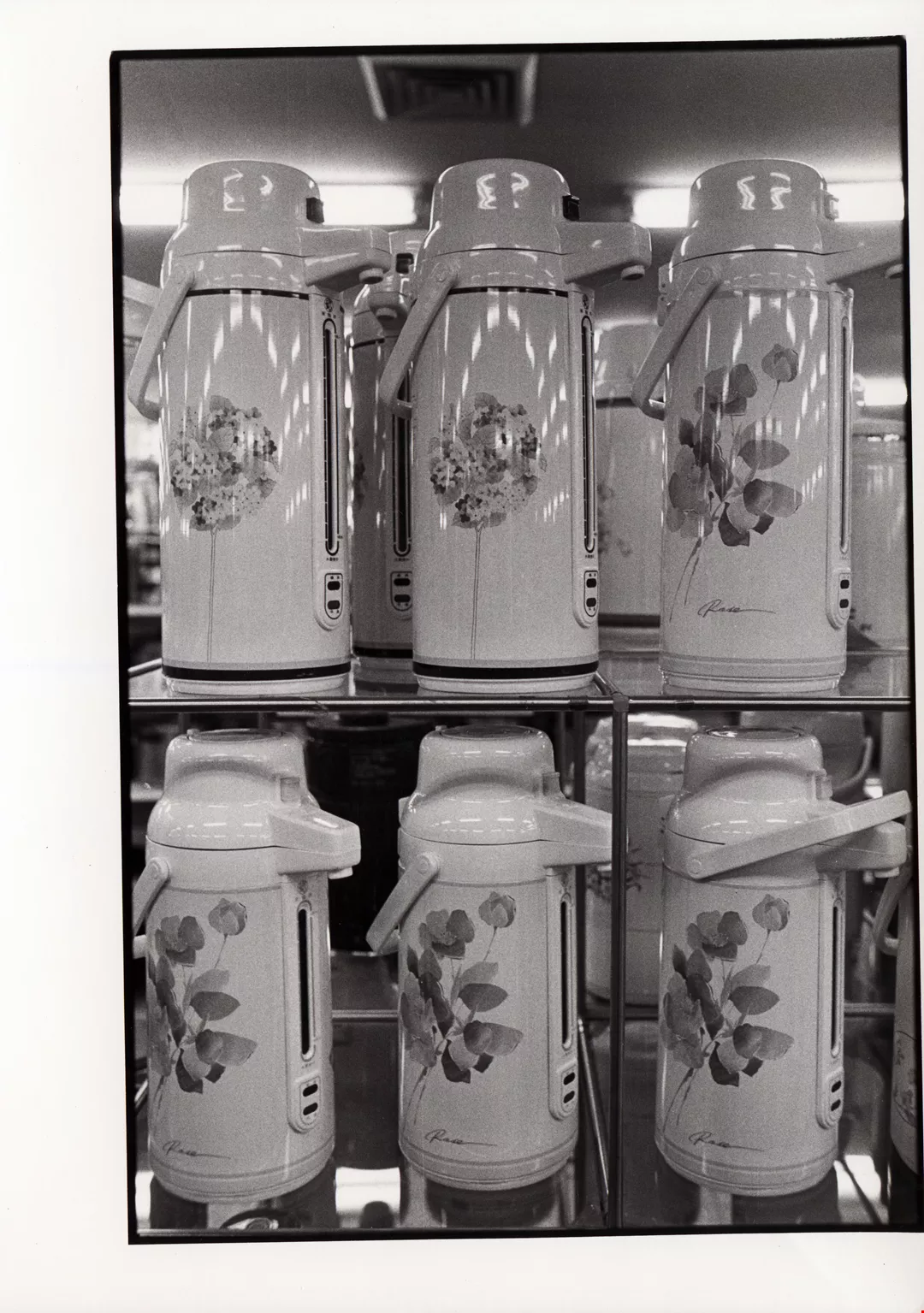
For example, Toutien Metal (Taiwan) Co. and First Enamel Industrial Co. have already gone to court twice over the copyrights to a print for cooking pots. In the first round, Toutien triumphed, with the court impounding over NT$10 million (US$250,000) of First Enamel's products. But smiles turned to frowns in the second round, as Toutien lost its copyright, with the ruling calling the print not subject to the copyright law.
According to the Ministry of Interior, only the picture itself falls under the copy right law. The pot, as a manufactured good, belongs to the category of patents, which are difficult to obtain. Allowing firms to use the copyright law to stop the sale of their competitors' goods was determined to be unreasonable.
The major loophole in the copyright law, according to one Taipei judge, lies in the ambiguity of the "reasonable use" and "compulsory licensing" clauses. As the law stands now, there are no provisions for reproduction rights, making every home video cassette owner a lawbreaker. Some hope the law can be spelled out in the enforcement procedures or that an adequate legal precedent can be set.
The first alternative looks dubious, since enforcement procedures cannot enlargen or contradict the original law. The second route has its problems too, for ROC law is based on continental law, relying generally on the letter of the law instead of precedents. In addition, only cases handled by the Supreme Court can serve as precedents, and few expect copyright disputes to advance that far in the judicial system.
Revision of the law may be the only solution. With communication technology progressing so quickly, the ROC cannot afford to leave such gaps in its legal system, lest it fall behind in international telecommunications. At present, though, the main problem is to find the best way to enforce what is basically an adequate law.
This March in Taichung, a record company had four pirates beaten up within two weeks for counterfeiting their tapes. The news quickly spread among the counterfeiting ranks, prompting many other pirates to voluntarily compensate the firm. As one can see, copyright law still requires more teeth to be truly effective.
[Picture Caption]
Choreography is also protected by the copyright law.
Books are the oldest members of the copy right family.
(Above) More than thirty pirated copies of "We Are The World" were sold for every legitimate one, which hurt efforts to provide relief to Ethiopian refugees.
(Below) Settling on a reasonable way to settle the videotape problem still bedevils many countries.
Ho Te-fen, professor at the Law Department of National Taiwan University, is a prominent figure in the debate on copyright law.
Karaoke club owners will have to pay a reasonable copyright fee. (Photo by Hou Ts'un-hui)
Courts have decided that prints on industrial products are not protected by the copyright law.
The works of Hu Shih are currently enmeshed in copyright lawsuits.
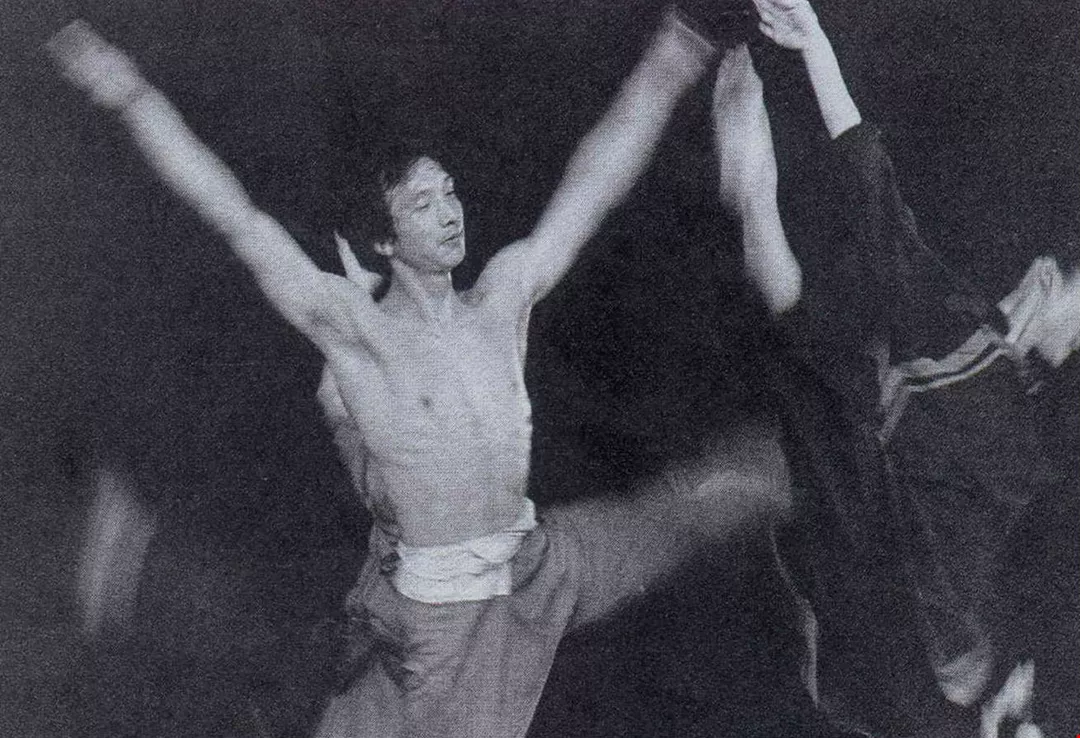
Choreography is also protected by the copyright law.

(Above) More than thirty pirated copies of "We Are The World" were sold for every legitimate one, which hurt efforts to provide relief to Ethiopian refugees.
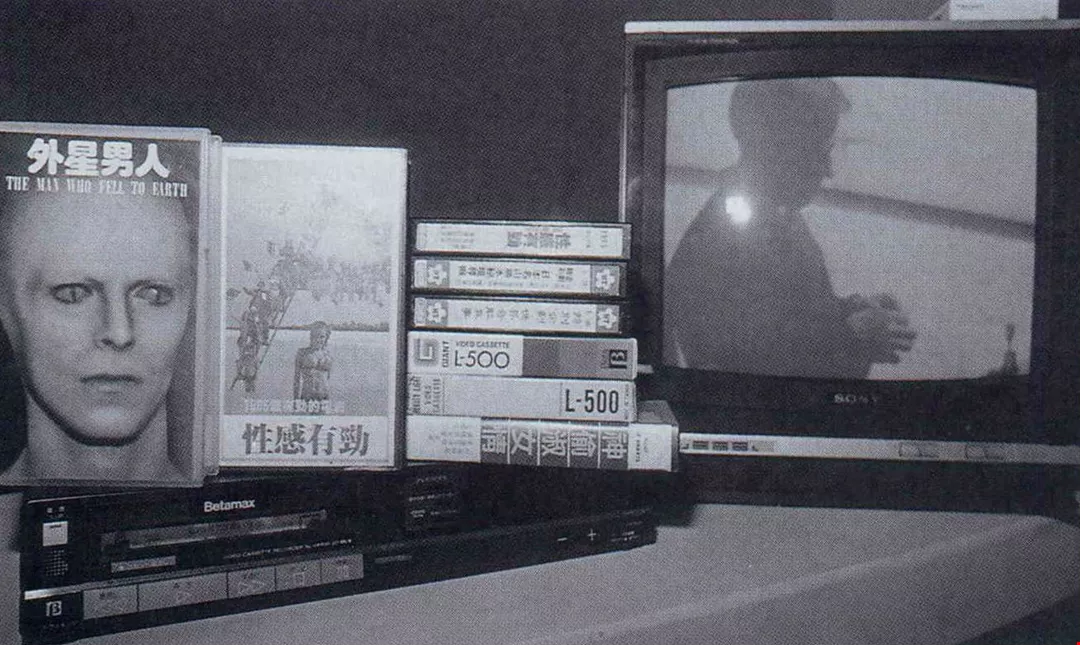
(Below) Settling on a reasonable way to settle the videotape problem still bedevils many countries.

Ho Te-fen, professor at the Law Department of National Taiwan University, is a prominent figure in the debate on copyright law.
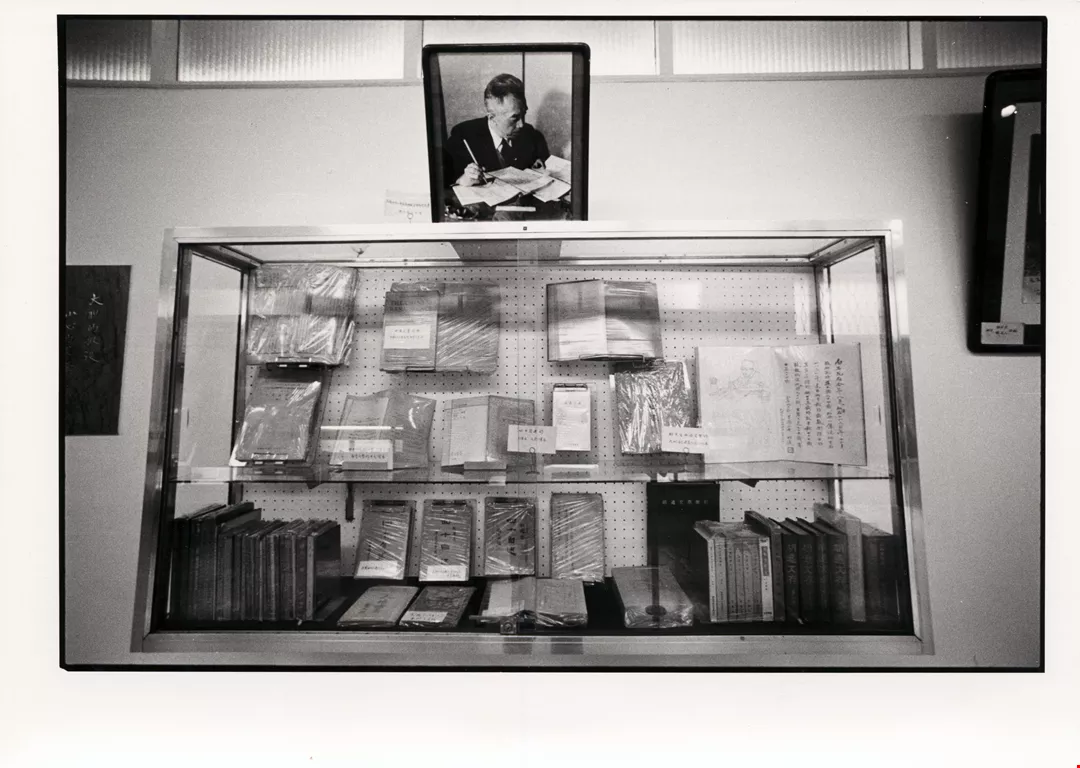
The works of Hu Shih are currently enmeshed in copyright lawsuits.
Karaoke club owners will have to pay a reasonable copyright fee. (Photo by Hou Ts'un-hui)

Courts have decided that prints on industrial products are not protected by the copyright law.


@List.jpg?w=522&h=410&mode=crop&format=webp&quality=80)


