Why Do They Do It? A Look at the Problem of Suicide
Sunny Hsiao / photos Chien Yung-pin / tr. by Frederick T. Tsutsumi
November 1986


It is often said, "To live in adversity is better than dying in comfort," or no matter how difficult or rough life may be, as long as one is alive, there is hope.
But, in today's twentieth century, suicide is already one of the ten leading causes of death in countries around the world, including the ROC
In all places and during all eras "crying, nagging, and hanging" has always been a woman's "psychological weapon" used to slowly realize a long-cherished wish, but it is really just an intentional "act of a spoiled child."
If the technique of "acting like a spoiled child" is convincing, the actor will break out laughing while still crying like the conclusion of a comedy.
This pretense to committing suicide is no laughing matter, so why do people so casually joke about their own lives?
"We just don't understand it," the sociologists, psychologists, and psychiatrists all say.
In comparison with other causes of human death, the causes of suicide are vague and uncertain. Although many are deeply researching the subject it is still a difficult riddle to solve.
In 1983, suicide made its way into the top ten causes of death list in Taiwan with high incidences in large cities like Taipei and Kaohsiung.
Some feel that the rise in suicide as a leading cause of death is due not so much to an increase in numbers as to improved medical treatment for other previously high-frequency causes of death, such as tuberculosis. The declining rate of these diseases makes it seem that suicide is moving ahead.
Between 1975 and 1984, there were more than 18,000 suicides on Taiwan. In Taipei alone there were exactly 201 people who took their own lives last year.
Are there really that many suicides?
"This is a low estimate," many professionals point out.
"The tip of the iceberg situation" is the same throughout the world. National Taiwan University professor Lin Hsien indicates that although mental illness outbreak studies have looked into the suicide problem, the number of suicides has not been entered into the sphere of research.
A society's particular attitude to suicide can influence the number of suicides that occur. Some societies believe that suicide is a hushed-up matter, something to be ashamed of. Others feel that it is a form of bravery worthy of exaltation. The former type of society prefers to hush up the matter of suicide, without showing it on a death certificate.
In the case of Irish Catholics and Egyptian Moslems, because their religions prohibit suicide, the faithful probably avoid reporting it.
"But, in many investigations of suicide there is great difficulty in separating any accidental factors," Professor Lin interjects.
The scant details at the scene of a suicide such as location and motive make it difficult for investigators to unravel clues and most likely it will be classified as an accidental death.
Recently, the use of public transportation facilities by suicide victims has drawn the public's attention. The U.S. government once probed into the locations and vehicles involved in fatal traffic accidents. Their research and analysis unexpectedly revealed that 15 percent of all traffic fatalities were premeditated suicides.
If a suicide victim's family and friends are unaware of any reasons, the death is frequently labeled accidental. Because of this, suicide has become a confusing and ambiguous issue.
Based on a study by E. Stengel, ROC scholars have classified countries into three categories according to their suicide rates.
Countries in the low suicide distribution range include Spain, Italy, Holland, Scotland, Ireland, Israel, and Egypt.
Countries with a medium suicide rate include the ROC, Belgium, France, Britain, Portugal, the U.S., New Zealand, South Africa, and Australia.
West Germany, Switzerland, Austria, Hungary, Denmark, Finland, and Japan are in the highest suicide rate category.
Why is it that Switzerland, a country called a "worldly paradise," has such a high frequency of suicides while a conservative and belligerent Israel's rate is so low? Very few scholars are able to explain conclusively.
Although there are not less than 5,000 interpretations on suicide, "Generally speaking, these can be divided into three sub-areas: individual psychological factors, the influence of the society's cultural environment, and mental illness," Professor Lin adds.
Most people commit suicide over some sort of basic human conflict. Those with suicidal tendencies are essentially unhappy and harbor misanthropic thoughts.
"Suicidal behavior is a kind of method for handling human situations; it is also a kind of desperate communication," Soochow University psychological counselor Chang Pen-sheng states.
"Oftentimes their goal is to avoid or relieve psychological pressure, hoping to 'end their anguish by death.'"
Some suicide victims wish to punish someone, hoping that their death will haunt that person with feelings of guilt and shame.
In the U.S. there are many teenage suicides due to their unsuccessful attempts to pull their parents' wavering marriages together. These American teenagers are not really seeking death but wish for parental concern and understanding.
If a person loses a person, affair, or thing that is extremely meaningful such as physical health, a loved one, wealth, profession, self-respect, or feelings of success he can become permanently pessimistic about everything.
Moreover, societal confusion and disintegration easily creates problems of maladjustment. This lowers everyone's "immunity" to suicides, especially the young and idealistic youth who often succumb in vain to the pressure of the real world. For whatever reason it occurs, suicide is a problem which should be faced rather than swept under a rug. Cloaked in such secrecy--no experts can concretely explain it--suicide may be robbing society of its most creative albeit overly sensitive element.
[Picture Caption]
Teenagers, if sunk in long-term depression, are apt to look to suicide. Problems in love and marriage have always been prime causes of suicide.
Those contemplating suicide will often reveal signs of their intentions. Is something troubling these young men shambling aimlessly on the bridge?
Hospital emergency rooms can perhaps save a suicide victim's life, but they can scarcely mend a shattered heart.
The Suicide Prevention Center at Mackay Memorial Hospital offers those in need of help a chance to talk things out.
The elderly have the highest suicide rate among every country's population. Religious belief can indirectly lower the rate by providing comfort.
Do you know what today's "punks" are thinking? Are they trying to say something through their appearance?
SUICIDE RATES BY SEX, TAIWAN AREA
[Picture]
Source: R.O.C. National Health Administration.
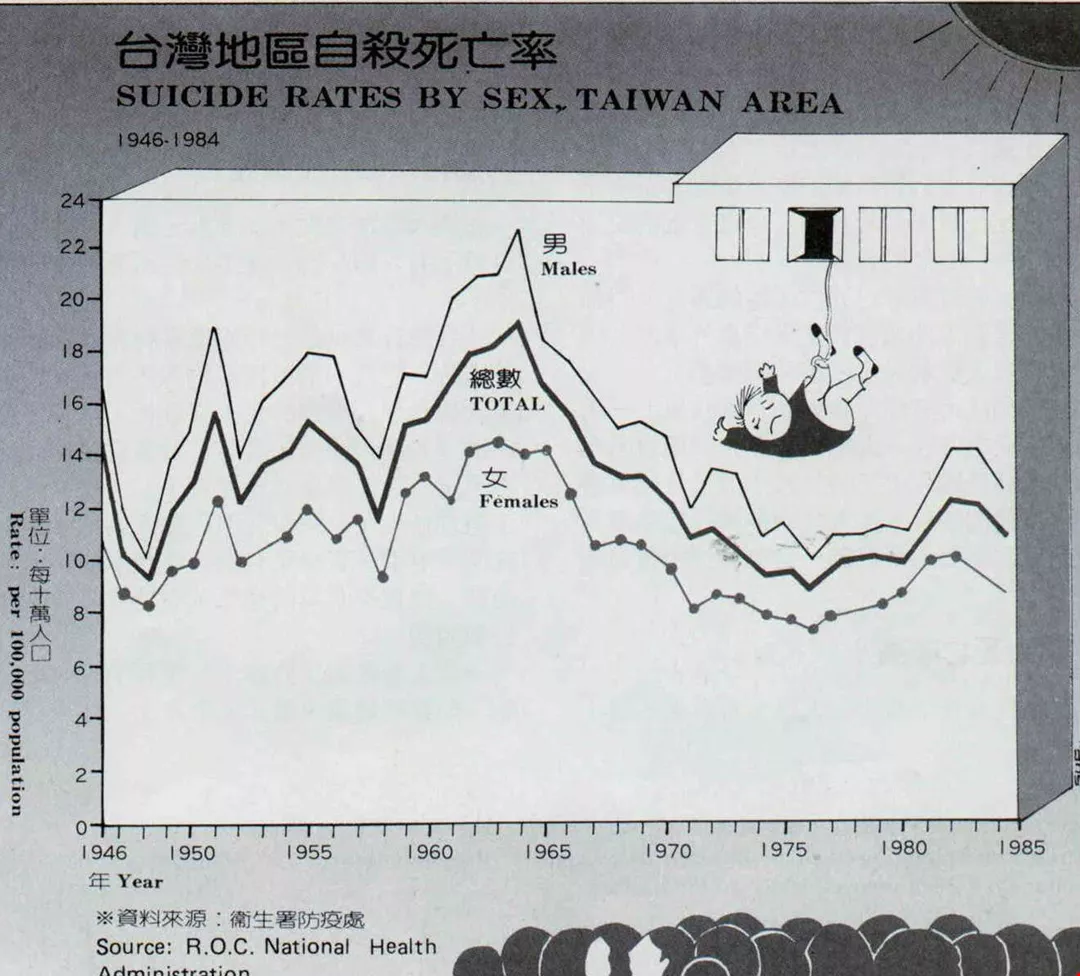
Source: R.O.C. National Health Administration.
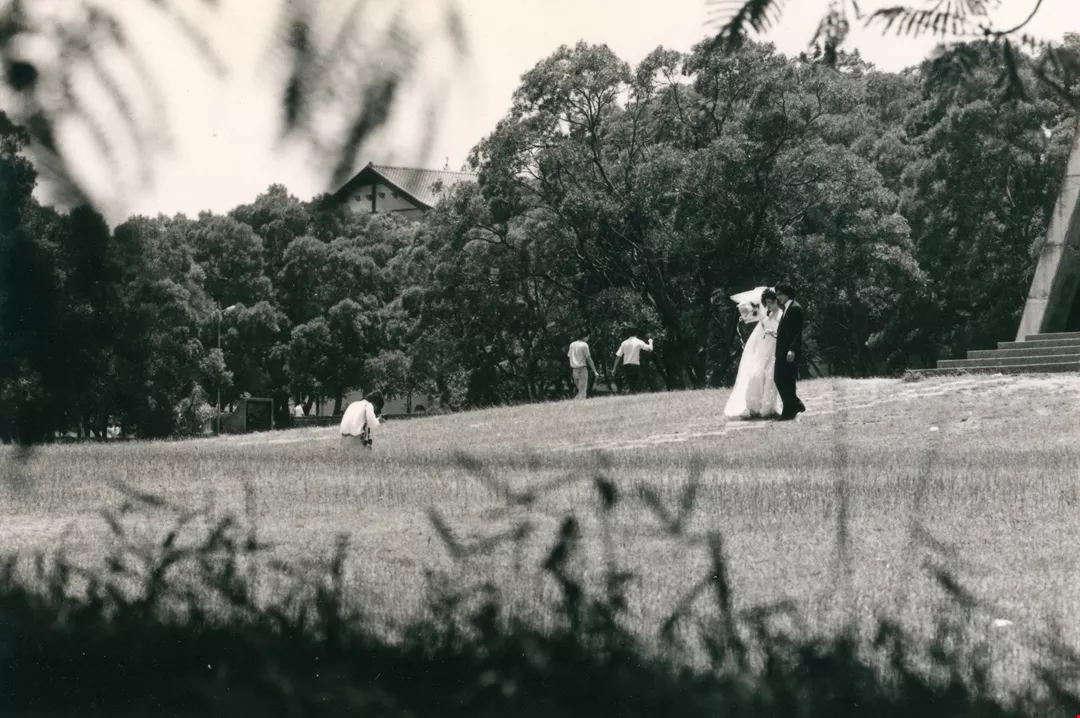
Problems in love and marriage have always been prime causes of suicide.

Those contemplating suicide will often reveal signs of their intentions. Is something troubling these young men shambling aimlessly on the bridge?
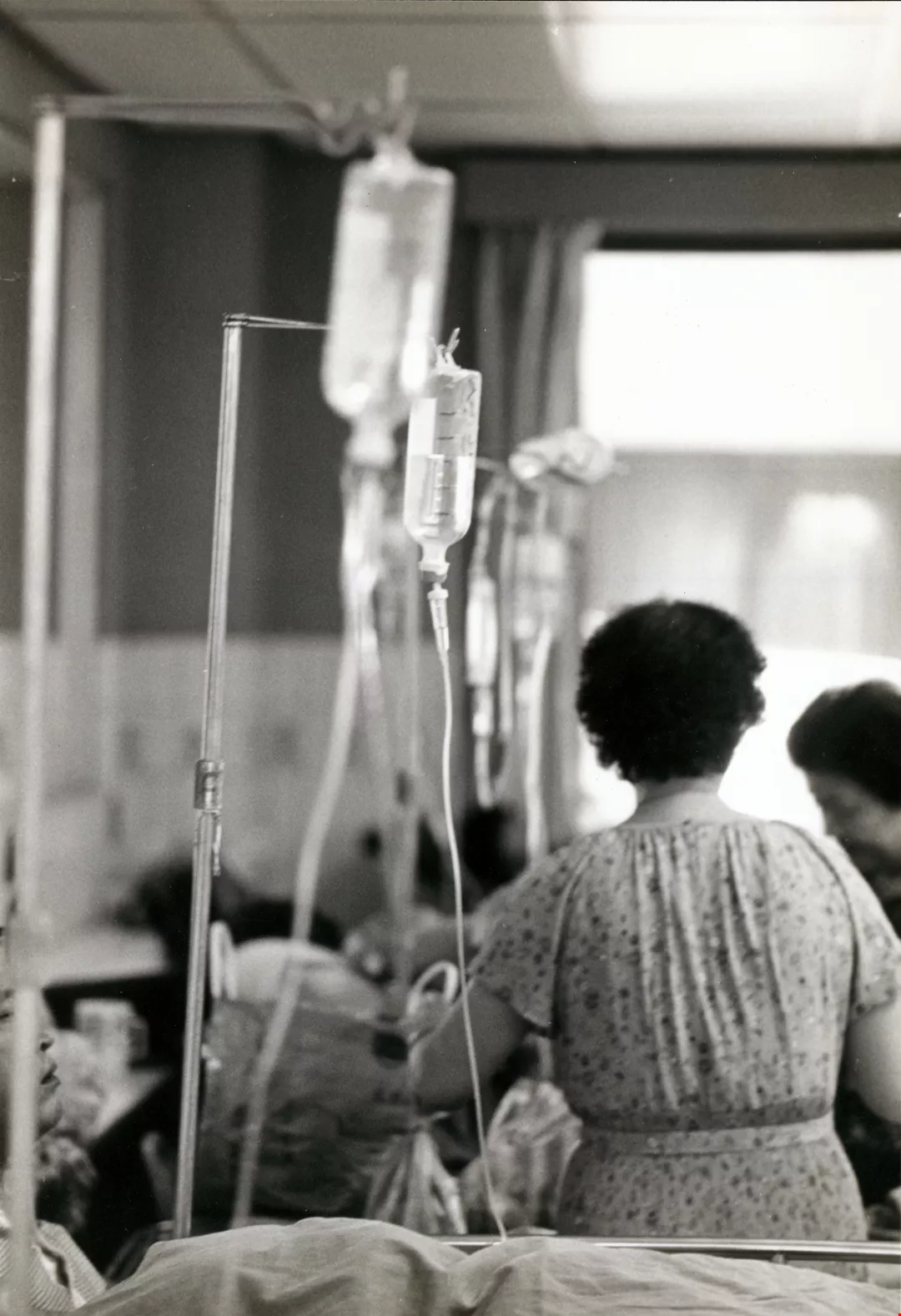
Hospital emergency rooms can perhaps save a suicide victim's life, but they can scarcely mend a shattered heart.
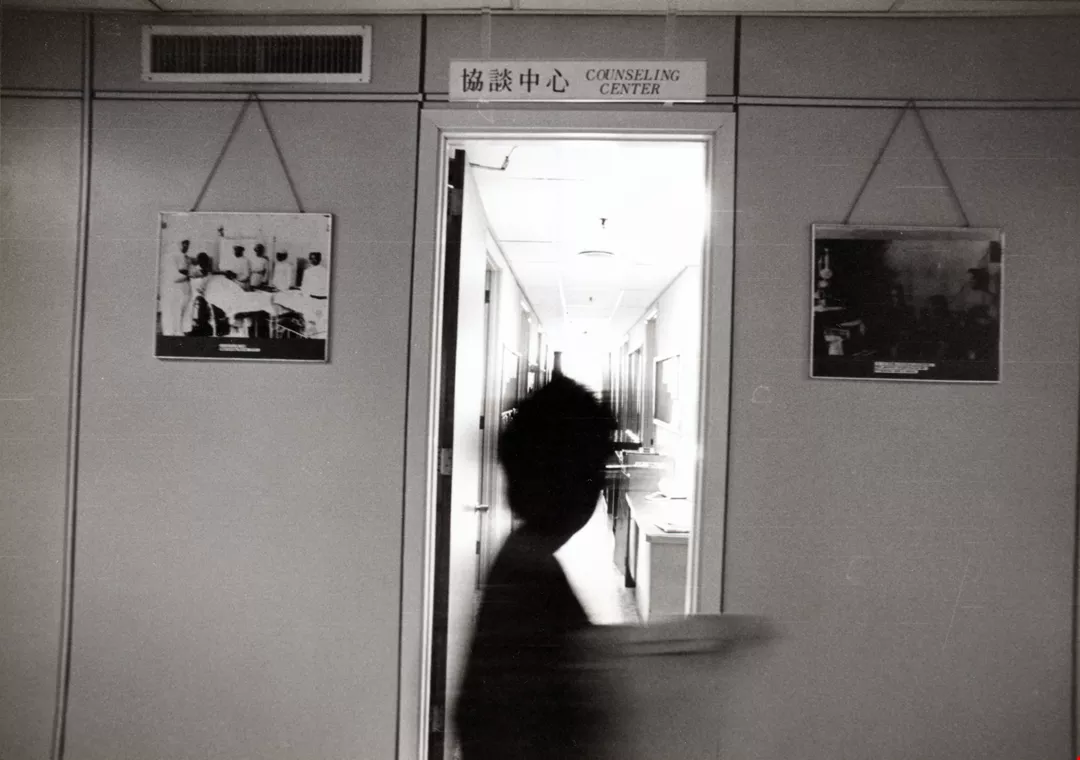
The Suicide Prevention Center at Mackay Memorial Hospital offers those in need of help a chance to talk things out.


@List.jpg?w=522&h=410&mode=crop&format=webp&quality=80)


