

In the Republic of China on Taiwan, the oldest city has less than 300 years behind it. Other metropolises like Shanghai, Amsterdam, and Berlin, though old, still just count their years in hundreds. But recently, in Shandong in mainland China, the oldest city yet uncovered in China was found at an old archaeological site.
Give your imagination a little room to roam: What does a 4000-year-old Chinese city look like today? Fragmented walls and collapsed buildings? An empty wasteland? An even more accurate guess would be: little mounds of dirt.
Little mounds of dirt!? That's right. There they are, in a wheat field, a parade of little lumps. An archaeologist walked around in a circle, and on a piece of paper drew out the western part of the city, the south gate, the northern part of the city, and said with complete confidence that this might be the site of the largest city of the Hsia dynasty.
Measurements show that it was an irregularly shaped rectangle, about 430 meters wide east to west and 540 meters long north to south. The area of the city was about 200,000 square meters. Archaeologists have even discovered remnants of city walls built to a height of six or seven meters. This dirt wall is from 4000 years before our time.
These are all scenes from the field at the most sacred and famous archaeological site in Shandong - the Chengziya dig.
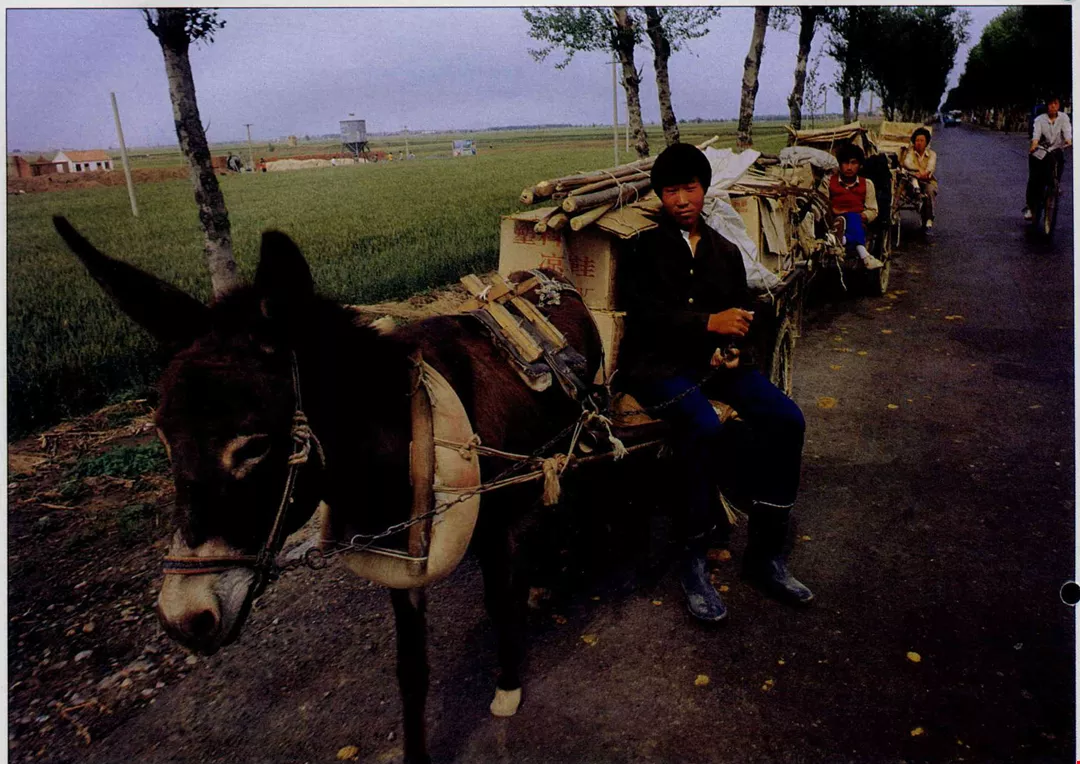
The town of Lungshan, where Chengziya is located, lies on the main road toward Jinan. The construction site at left is for a new museum on which ground has only recently been broken.
Digging up the first city of the Hsia:
The Chengziya site is located on the road that runs straight from Jinan to Qingdao - the Jiqing Highway. This became a focus of international attention as early as the 1930s after the discovery of a piece of black eggshell pottery. Now, 60 years later, it has become renowned for the unearthing of what seems to be the first city of the Hsia dynasty.
The Chengziya site is one of the small number of "common assets" of archaeologists on both sides of the Taiwan Strait. Digging had already begun here in the 1930s, when archaeology was just beginning to bud in China. The central figures who participated in that work, like Li Chi, Tung Tsuo-pin, and others, were mostly the same crew who set up the Institute of History and Philology at the Academia Sinica in Taiwan. Many of the artifacts they dug up at that time are still in the specimen room of the Institute today.
As a result, "Taiwan scholars have a special feeling as soon as they get to Chengziya, " says Liu I-chang, an associate researcher at the institute of History and Philology. Chengziya is also known as a "sacred site of Chinese archaeology " because it was "the first time that a dig was conducted using our own people and experience, and because there were important findings."
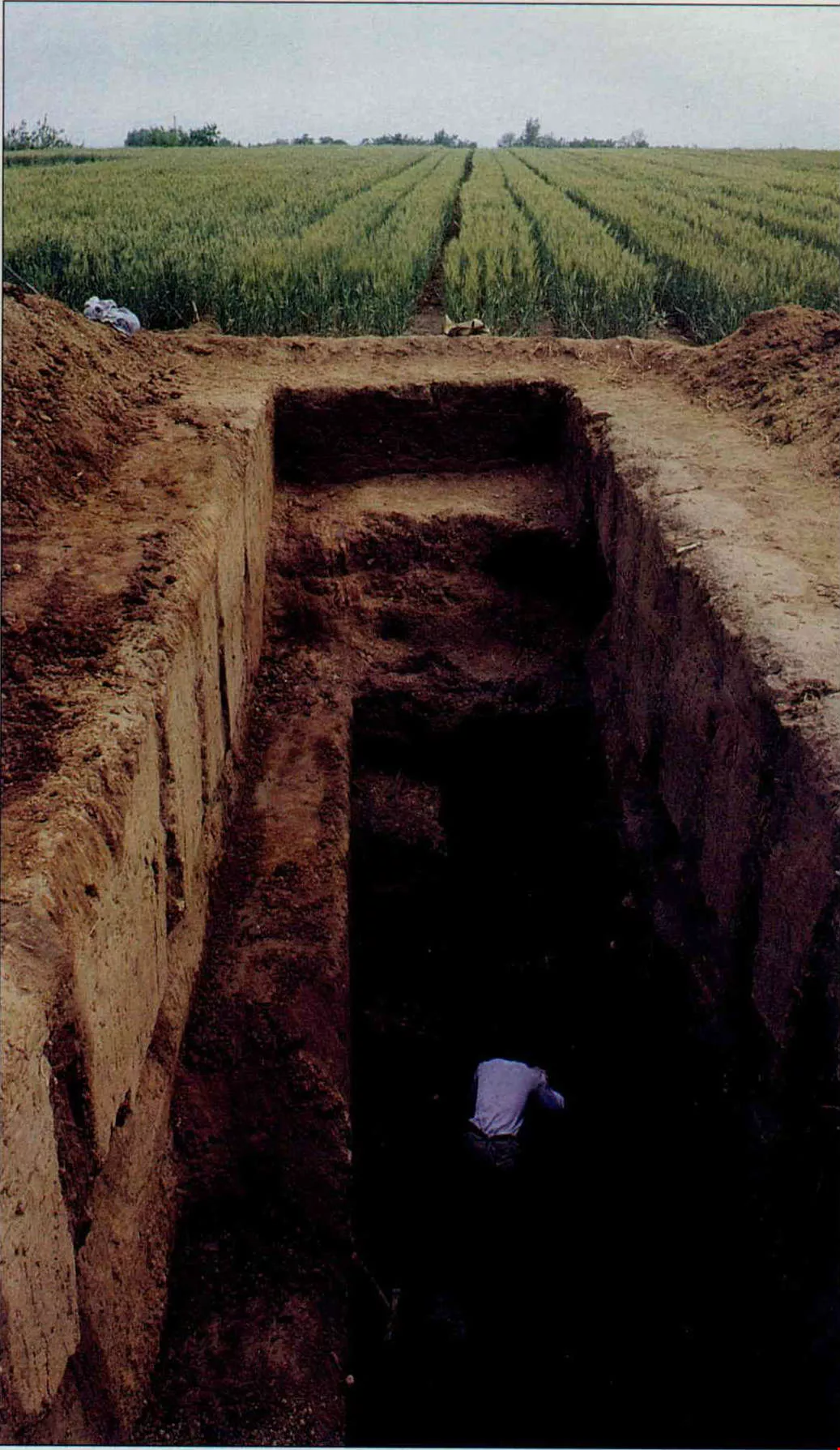
There is a work station at chengziya, and work is still ongoing. The ditch in the picture keeps getting deeper, so you can see how far down the layers of culture run.
Common "archaeological assets" for both sides of the Taiwan Strait:
The Chengziya site may be important, but unfortunately the residents there left behind no instructions or signposts. So how do you go about uncovering a 4000-year-old city?
"When Wu Chin-ting, one of the last generation of archaeologists, came to Shandong, originally to the site of an old city from the Spring and Autumn period. He saw a little mound on a distant hill and speculated that it might also be a site. After careful exploration, he uncovered important artifacts," explains Zhang Xuehai, director of the Shandong Institute of Archaeology.
Visitors to Chengziya today, besides getting a feeling for history from the potsherds littering the ground, can also see discoveries from the Lungshan period at locations like the Shandong Provincial Museum and the institute of Archaeology.
A concrete building has been put up at the Chengziya site to preserve the pieces of city wall that have been unearthed. Personnel are waiting for the financial go-ahead to build a museum of prehistory like the one at Xian.
In the "preparatory museum, " Zhang repeatedly explains how to appreciate the ancient wall.
"Look! There are holes for individual pillars hammered out with stones and sticks, and then the walls are made of mud between two wooden boards.. . . Traditional Chinese construction methods had already achieved quite a level 4000 years ago," he says, waving his finger like a pointer.
Sixty years down the road, the land at Chengziya is again being overturned, and with it many previous ideas. Why is it being excavated? And what is being repudiated?
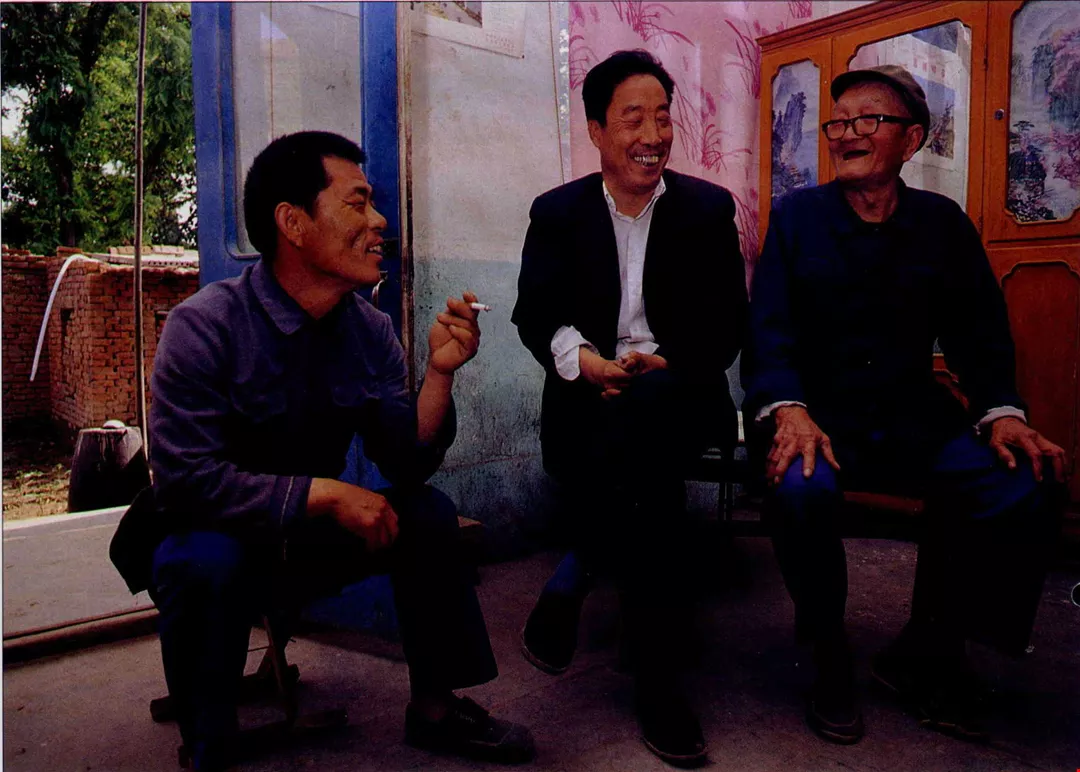
This family living next to Chengziya "unfortunately" was in the way and had to move immediately. The head of the family says, "We 'take into account the overall situation.' I just hope we don't lose too much in the process.".
Rejecting the theory that the Chinese people came from the West:
It says in history texts that Lungshan is often mentioned in the same breath with Yangshao, discovered in Guichi County in Henan. Pottery was discovered at both sites-black at one, colored at the other - immediately bringing ancient Chinese people out of the "grass eating and blood drinking" hunter-gatherer period into "the beginning of civilization" with agriculture.
The special features of the colored pottery discovered at Yangshao is that it is very lustrous, while the exterior is beautifully sketched with red, black, and white in the shape of subjects found in nature. The black pottery discovered at Lungshan was polished even more meticulously, while the ebony exterior gleams. The pottery walls are as thin as an eggshell, and they are considered the height of ancient workmanship.
Naturally, people capable of manufacturing such vessels could not have been at too low a level culturally.
For Chinese, the discovery of Lungshan culture has meaning on yet another level. Because the shape and decoration on colored pottery is similar to that of west Asian civilizations, after the discoveries at Yangshao it was suspected for a time that Chinese culture derived from the west. But the appearance of the black pottery of Lungshan, markedly different in form and style from the west, thoroughly smashes that theory.
The digging in the 1930s, besides uncovering important neolithic cultural artifacts, also proved that the people who once lived there had built a city wall and had a settlement.
The dig report from that time pointed out that there were two cultural levels at the site. The pottery discovered in the upper layer had writing, and brass implements had also been unearthed, so that layer seems to be from the Chou dynasty. But the lower layer was entirely from a stone tool culture. The black and light yellow pottery that was found was innovative in shape and of very high quality in technique, meaning that it must have been "an important stage in high antiquity."
At that time scholars had already raised the idea that this city wall might be of the Lungshan era, but many people were opposed to this view, and felt that such a conclusion was too bold. It was considered impossible that Chinese culture could have achieved such a level of technology at such an "ancient" era.
Over the last sixty year, there has still not been any definitive conclusion about precisely from when the city wall in the lower layer dates. It is generally agreed that it is later than the Yangshao period (4000-6000 years ago).
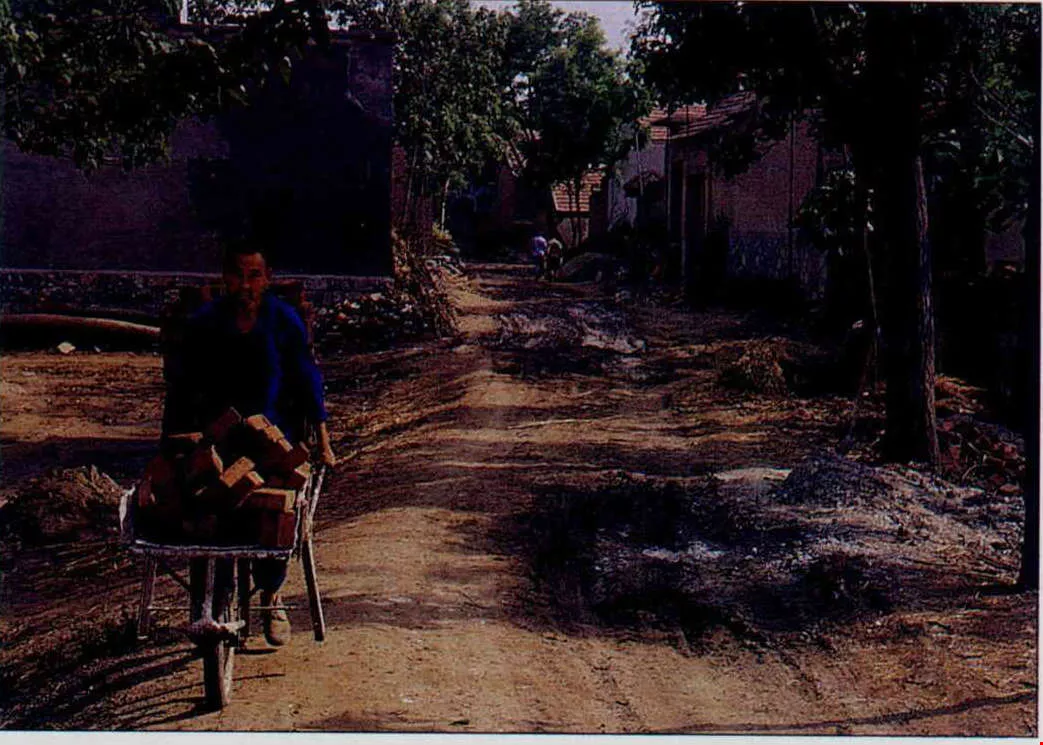
Feeling the effects of the economic tide, building and road construction have been going on continuously these past few years.
A sixty-year unsolved mystery:
Results from digging since 1989 confirm that there were in fact three periods of residents at Chengziya. To wit, during the neolithic age, from 4000-4600 years ago (the people of Lungshan culture); during the Hsia dynasty (called the Yueshi era in Shandong archaeological circles) after Lungshan; and then from the late Western Chou straight up to the Spring and Autumn (2800-2500 years ago). What's most significant in all this is the Yueshi city wall, recognized as being from the Hsia dynasty.
The discovery of a Yueshi era city wall is highly significant for tracing the origins of the history of antiquity. "This is the first Hsia era site uncovered in the Yellow or Yangtze River basins. Given that the scale of the city was so large, and the objects discovered so attractive, this was clearly an important settlement of that time, " posits Zhang Xuehai.
Zhang points out that the Lungshan era wall uncovered in the 1930s was not in fact Lungshan, but was a wall of the later Yueshi period. The Lungshan city was buried under the Yueshi layer, and on top of that there's a Western Chou city wall Thus the Chengziya dig not only confirms the 1930s theory that "there already existed a Lungshan city," it brings the theory farther forward and proves that there are also traces of people of the Hsia dynasty at the Chengziya locale. "This made Chengziya into the only ancient city in the mainland that extends from the Lungshan era to the Hsia and up through the Chou," concludes Zhang.
There seems to be something mysterious about the findings of Zhang and others, which overturn previous theories. In fact. it's not all that hard to comprehend. To make a simple analogy, they originally thought they had dug up a site from the grandfather's era (the Lungshan period), then discovered that it was the work of the father's era (the Yueshi period), and not only that, the son's things (Chou) can be found here as well.
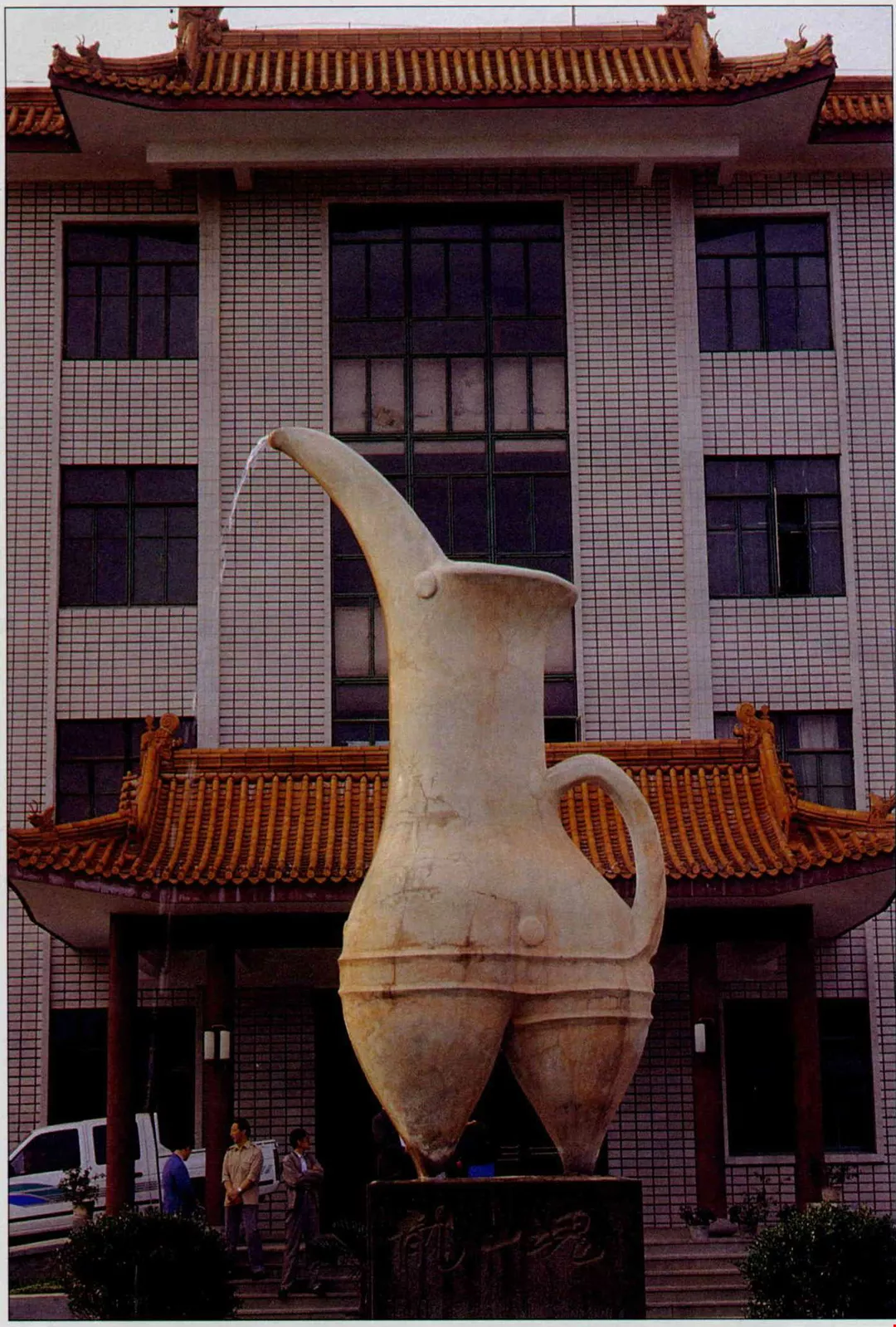
There is a kuei set up in front of the Lungshan government offices, serving as the town's symbol.
The Hsia again comes to see the light of day:
The discovery of Shang mounds at Anyang in Henan meant that Chinese history could reliably be traced back to the Shang dynasty. But ancient writings, like the Historical Records, still had references to the Three Emperors and Five Kings as well as the Three Dynasties. Did Lungshan culture have any connection to these remote rulers? If there was some relationship, to which period does it apply?
Zhang Xuehai states that an ancient city was discovered in Jiangzhai in shanxi (belonging to Yangshao culture, more than 6000 years ago), but the area of the city was only about 20,000 square meters. It is estimated that the city could hold no more than 500 persons. The area of the city at Chengziya is nearly ten times that of Jiangzhai. Inferring from the size of the city and the contents of the culture, the population of Chengziya was probably no less than 5000 persons, so you can see that culture had reached a rather progressive point at that time.
Of course this is nothing compared to modern cities of millions or tens of millions. Still, in an era without running water, electricity, transport, garbage collection, or water treatment plants, it was no mean feat to have so many people living in one place. National Taiwan University's Huang Shih-chiang guesses based on this that "the royal authority at that time had reached a very developed level."
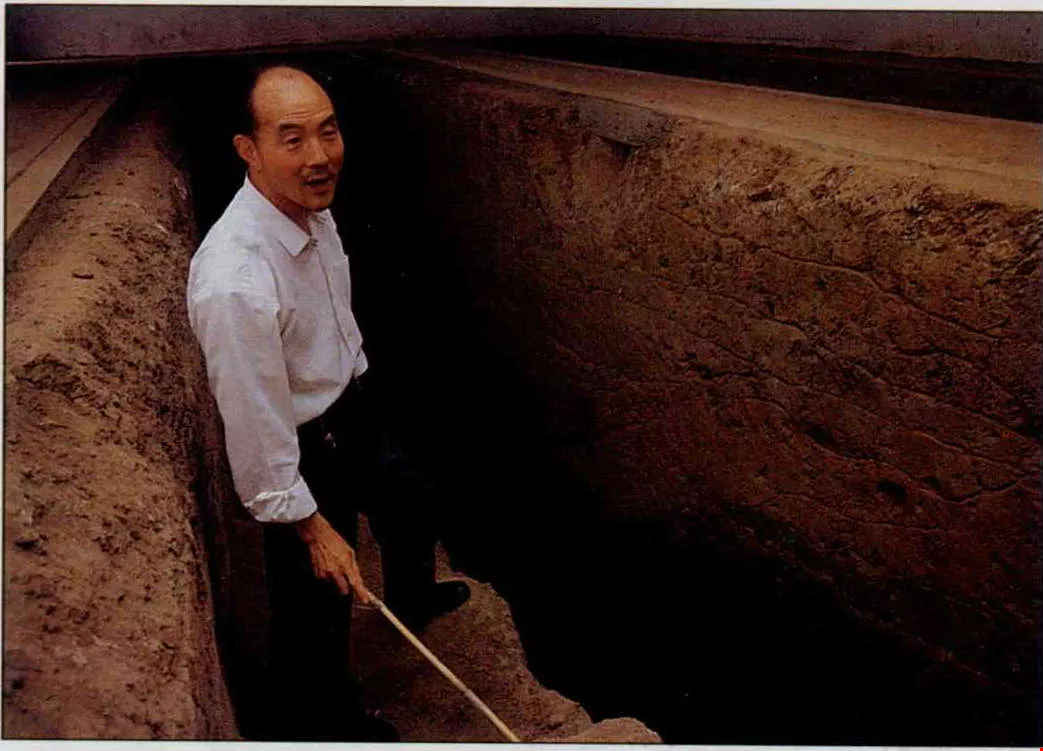
Zhang Xuehai, a graduate of the Department of Archaeology at Peking University, is originally from Zhejiang. After half a lifetime in Shandong, he is already known as " the king of Shandong.".
Ancestors of the Shang?
What was this Hsia era, 4000 years ago, like? Did cities exist? Were there countries? How did cities and countries of that time differ from our understanding of those concepts today?
Over the last 40 years, mainland scholars have been laboring to find the relationship between the Hsia period and the neolithic period which preceded it and the Shang-Chou period that followed. From the existing data, people are still pretty much in the dark about the Hsia dynasty in the "Three Dynasties."
Anthropologist Chang Kwang-chih has pointed out that from the materials thus far unearthed, the beginnings of Chinese culture are not those in the traditionally believed "Hua Hsia Central Theory. " That is the theory that says that a collectivity (the Hsia people) based in what is now Henan expanded outward and conquered the barbarians in all directions, amalgamating into a single people.
Chang contends that the " Central Plains" people were in fact like all the surrounding peoples, and of roughly equal strength. It's just that later, the more geographically advantageous Central Plains became coveted by all, working like a "magnet" and absorbing other peoples into it, eventually forming an integrated whole; thus was the process of the amalgamation of peoples.
As a result, from the point of view of eras rather than dynasties, in the Hsia era there was in fact the period of the beginning of the embryo of a nation. Legend has it that the ancestors of the Shang lived in the area of (today's) Henan and Shandong. Some contend that the culture of the people of the late Lungshan culture in Shandong - recorded in ancient documents as the Dong Yi (Eastern Barbarian) people - can be linked to early Shang culture. So it is very possible that the foundation for Shang culture was laid here.
"There was teeth pulling in both Shandong Lungshan culture and in Shang skulls unearthed in Anyang. This custom might have been connected to the religious life of the rulers, and suggests that the Shang rulers very possibly came from a political force from the east, " proposes Chang Kuang-chih.
Zhang Xuehai, nicknamed "the King of Shandong," argues on the other hand that, judging from the artifacts dug up at Chengziya, there was not much of a relationship with Hsia culture. Unless the Hsia rulers moved the capital, it was probably one of the parts in the feudal territory of the Hsia era, and is very possibly the origin of the ancestors of the leaders of the Shang dynasty. "This is an important question that needs to be explained, " he says.
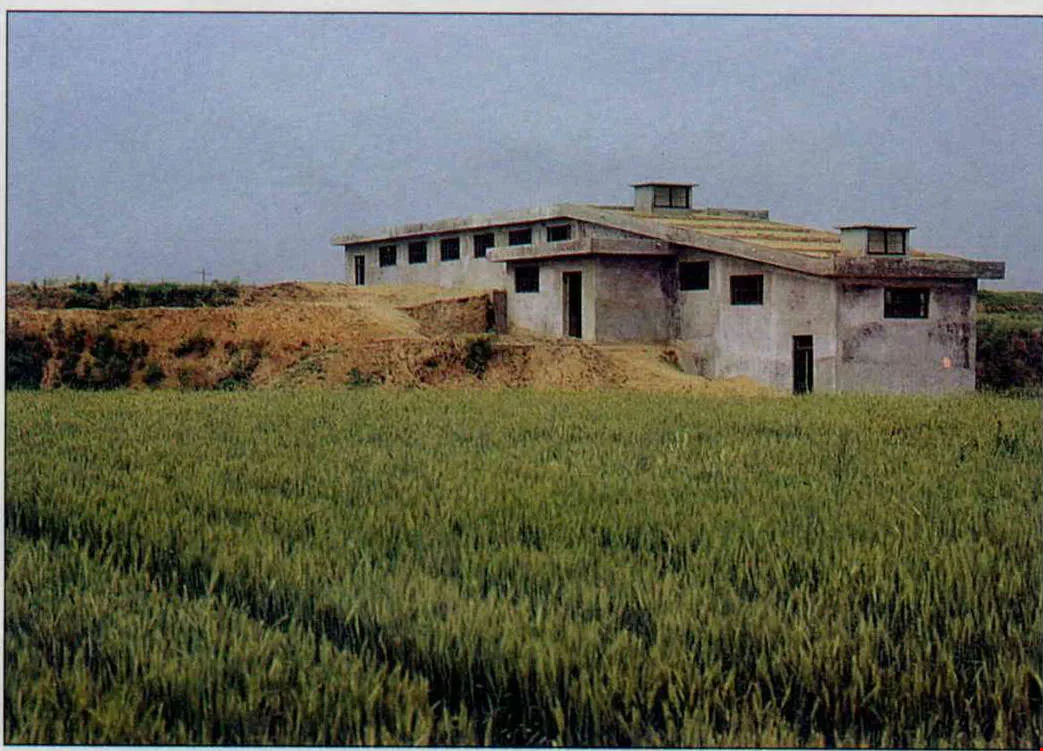
The building rising up in the wheat field is the skeleton of the planned museum; now they just need the financing to put it into operation.
From a mud fortress to a city:
Zhang Xuehai believes that from the Lungshan period through the Yueshi era and up to the Chou dynasty, the city at Chengziya was maintained for 1000 years. "If we can link these periods together, and figure out how the people in the city lived, then we could resolve a lot of problems about Chinese prehistory."
Besides Chengziya, mainland archaeologists have discovered a number of cities from the Lung-shan to the Yueshi periods, such as the Dinggong and Tianwang sites in Shandong.
Compared to these sites, Chengziya is much larger, and many more large artifacts have been discovered. "In fact, it already transcends the traditional 'fortress' type compound, which was mainly for defense, and is a 'city' in the sense of a political, economic, and cultural center. This is another stage altogether culturally speaking," says Zhang Xuehai. The re-excavation of Chengziya has answered many questions for us. But there are still many questions for which there is no answer. For example, whose city was this after all? If there was only one feudal kingdom, which one was it? What's the connection to the early Shang dynasty?
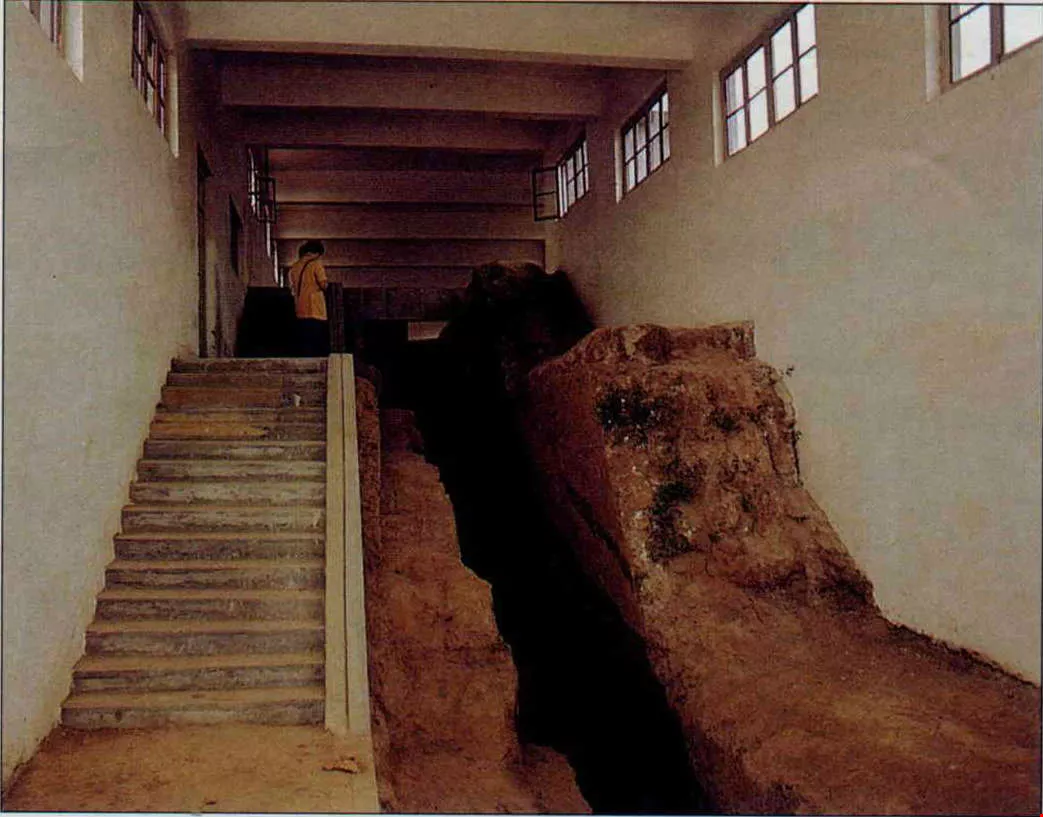
In the "preparatory museum," city wall sections uncovered in the 1930s and 1990s are fully preserved. Following the staircase in the picture and examining the remnants of city walls high and low, you can begin to appreciate the cultural layer of each era.
Why did Chinese build cities so late?
In addition, from the point of view of comparative world history, 6000-7000 year-old city sites have been discovered in Egypt, Central Asia, and India, but most of these were mud-brick cities or stone cities. There are few cases of city walls built using mud as a construction material. Of course this is related to local materials at hand, but why did Chinese cities appear so late? Are there still many even older cities waiting to be discovered? This is perhaps the most interesting question.
The unearthing of black pottery and the digging up of a city wall can convince most that this is "the location of a very ancient city where many people lived." But in fact, understanding of Chengziya - the biggest city from the Hsia era yet found- is still very shallow.
"If it really was an urban area, we haven't found the palace area yet, and we haven't begun to dig in the place where people lived their lives. We don't even know if there is a cemetery, or a place for ritual or worship," declares Zhang Xuehai. The Shandong Archaeology Team is moving quickly to try to figure out the true nature of the site. "Come back after a few more years, and we can give you some more answers, " says one of the team members.
Besides the visitors from afar and the mute historical evidence stored beneath the ground, perhaps in the future some even more brilliant people will come along to reveal the secrets of antiquity!
[Picture Caption]
p.108
The town of Lungshan, where Chengziya is located, lies on the main road toward Jinan. The construction site at left is for a new museum on which ground has only recently been broken.
p.109
There is a work station at Chengziya, and work is still ongoing. The ditch in the picture keeps getting deeper, so you can see how far down the layers of culture run.
p.110
This family living next to Chengziya "unfortunately" was in the way and had to move immediately. The head of the family says, "We 'take into account the overall situation.' I just hope we don't lose too much in the process."
p.111
Feeling the effects of the economic tide, building and road construction have been going on continuously these past few years.
p.112
There is a kuei set up in front of the Lungshan government offices, serving as the town's symbol.
p.113
Zhang Xuehai, a graduate of the Department of Archaeology at Peking University, is originally from Zhejiang. After half a lifetime in Shandong, he is already known as " the King of Shandong."
p.115
The building rising up in the wheat field is the skeleton of the planned museum; now they just need the financing to put it into operation.
p.115
In the "preparatory museum," city wall sections uncovered in the 1930s and 1990s are fully preserved. Following the staircase in the picture and examining the remnants of city walls high and low, you can begin to appreciate the cultural layer of each era.
p.116
Chengziya under a setting sun is no lonely place, with countless people waiting to uncover its secrets.


@List.jpg?w=522&h=410&mode=crop&format=webp&quality=80)
