Indigenous Reporters: That's News to Me
Jackie Chen / photos Cheng Jun-hua / tr. by Brent Heinrich
November 1994


Gali Galahei, born in Miaoli's Nanchuang,is a member of the Saisiyat people. He used to serve as a cook at a Taoyuan youth rehabilitation center. It was not a very high position, but because it was government work, he was ensured of sufficient material well-being in his later life. Recently, he resigned his job and came to Taipei to take part in an enterprise which many indigenous people view as something almost sacred.
"The Indigenous People's Journalism Training Class" is a multi-ethnic family made up of many different indigenous groups. Its members come from 11 minority peoples of Taiwan, including the largely assimilated coastal groups commonly referred to as the "Pingpu," as well as the Taroko subgroup of the Atayal tribe. The class's 24 trainees "come from every ethnic minority except the Shao tribe," says Sylvia Feng, a researcher and writer for the Public Television Organizing Committee's news department.
Recruiting and training reporters from among the indigenous peoples is one of the major aims of Taiwan's new public television station, which is itself at an organizational stage. From purchasing new equipment, recruiting trainees, and the three-month-long training program from September to November of this year, every move has been the center of considerable attention, for no other reason than that this is a brand-new idea.
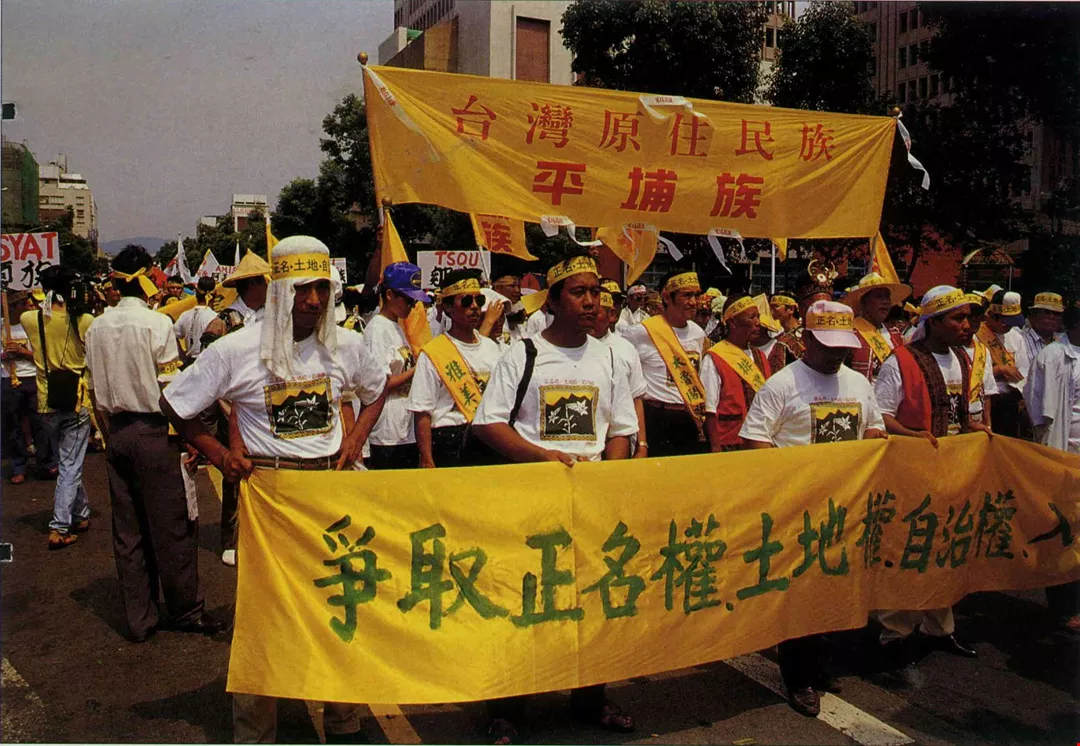
Will indigenous reporters be more in-depth when covering issues of interest to indigenous people? This is one of the great challenges they face. (photo by Hsueh Chi-kuang)
The disadvantaged of the disadvantaged
Australia's public television has a regular program displaying government-sponsored documentaries which are filmed by their indigenous peoples. In the United States, many reservations have community programs produced and hosted by native Americans. But Taiwan's public television news department is recruiting reporters whose aboriginal identity is a prerequisite. This is a rarity not only in Taiwan; throughout the whole world it would be hard to find a comparable experience.
Yang Sen Hong, deputy director of the Public Television Organizing Committee, points out that ever since the committee was established, what it has aimed to provide is "a new alternative." That the indigenous people also have a right to use the media falls in synch with this ideal. "Indigenous people are the disadvantaged of the disadvantaged," says Yang. Furthermore, they also face various problems such as the disintegration of their ethnic groups, the progressive disappearance of their culture and the destruction of their indigenous environments; these are all worthy of people's special concern.
Although Taiwan is not large in area, it has a dynamic topography. Transportation and communication flow conveniently from north to south, yet spreading the news to the indigenous people, many of whom live in the mountains or by the sea, required some extra effort. Independent filmmaker Chiang Kuan-ming, who is leading the training project, states that not only did the organizing committee put ads in newspapers, they also put up notices at every town hall and church in the mountain areas. The news was released in the arts and leisure section of one newspaper. Later on, it was found that many recruits got to know about the news from this source, which seems to be a big draw in remote areas.
According to Sylvia Feng, after the Public Television Organizing Committee publicized their intention to recruit new personnel, 115 indigenous people signed up for the examination. After two tests, 24 were picked out.
Those 24 trainees come from divergent backgrounds. Some used to work as civil servants like Gali Galahei. Others were school teachers, legislative assistants, construction machinists or traditional craftsmen, such as wood carvers and dancers. There are also participants who were reporters to begin with. Their motives for joining were all different, too, but "searching out a new possibility in life and contributing something to themselves and their peoples" was a common driving force.
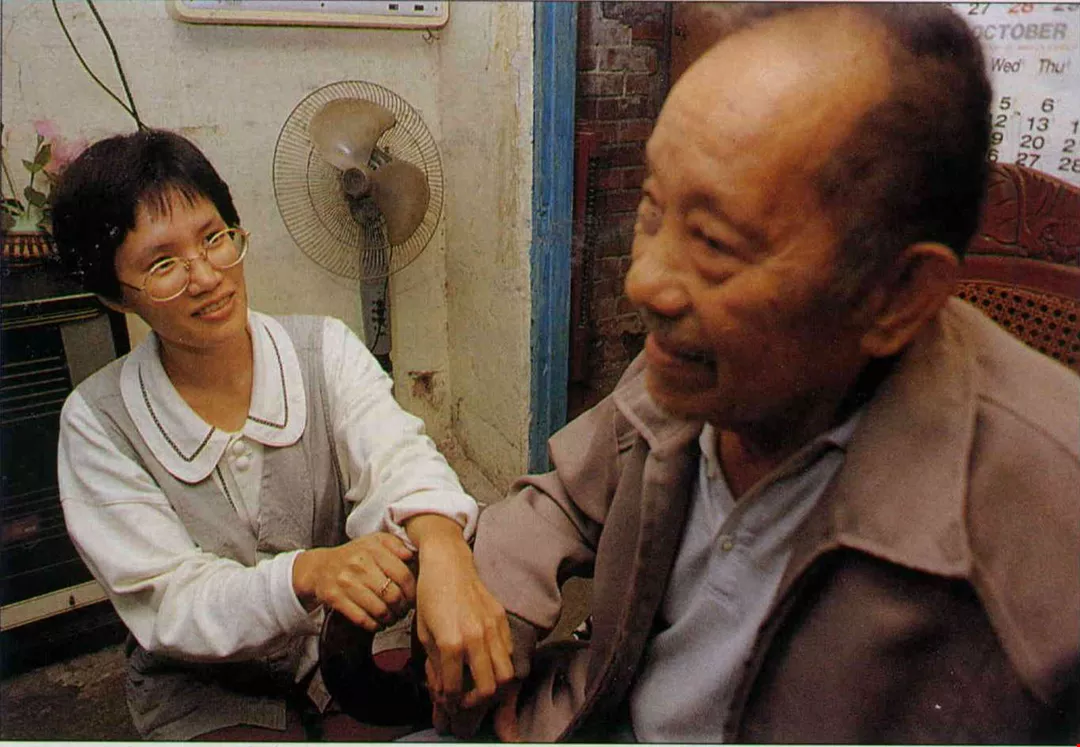
Being able to communicate in the native language is one of the advantages the indigenous reporters enjoy. In an Atayal village in Wulai, an indigenous reporter-in-training is interviewing an Atayal senior.
A new dawn rising
Gali Galahei, who lives in Miaoli's Nanchuang, returned to his ancestral home in Hsinchu and heard tell of this project. He also heard that the trainee recruits had already been tested, and none of them represented the Saisiyat tribe. "How could this be?" he thought. After soliciting advice from his elders and making sure that none of the other young Saisiyats intended to apply for the examinations, he signed up himself. The organizing committee felt that his performance was not bad and accepted this late arrival.
"At that time, I had a very strong will. I wanted to go back and do something in my home town in Hsinchu," he says, but he had not arrived at a set plan on how to go back. When he first heard the news of becoming a reporter, he felt that it did not run counter to his life's goal. "The work of a television reporter could be a much greater help to my people; it could be more direct." He determined to make the move to Taipei first.
After the lifting of martial law in the 1980s, many different forces in Taiwan's society began to energetically exert themselves. Among these were a number of aboriginal movements, seeking to uncover their "true spirit." Those young indigenous people who signed up for journalistic education to some extent have all been affected by his new wave of social activism. Sun Ta-chuan, lecturer at Fujen University's department of philosophy and also an indigenous person, believes that the training of indigenous reporters is just one facet of the growing indigenous movement of the 1990s. Other examples of this trend are the establishment of Taiwan Indigenous Voice bimonthly magazine, a general interest periodical focussing on indigenous issues, with an aboriginal editorial staff, and the general acceptance of the Mandarin term "yuanchumin" ("original inhabitants"). These milestones signify a brand-new start. "The whole group of tribes will not necessarily be 'on the verge of death.' There may even be a new dawn rising," he says.

Native language education has been one of the focal points of the media when covering indigenous affairs. This has given many aboriginal youngsters the chance to reacquaint themselves with the tribe. (photo by Vincent Chang)
Taiwan's mountain forest watchmen
Those young aborigines who are concerned with the fate of all the indigenous people place high hopes in the entire plan. The Public Television Organizing Committee in turn endows the indigenous reporters with lofty expectations. One of the motivations behind the examination was even a reflection on the current state of the media.
Yang Sen Hong believes that currently the media's treatment of indigenous people is concentrated on "festival events," much in the same way that Western journalists focus on "carnival news" when reporting on South America, mimicking the spirit of what South American writer Gabriel Garcia Marquez called "magical realism." Viewers have long been under the impression that the people of Brazil, Chile and neighboring countries hold carnivals every day of their lives, when in fact carnival happens once a year.
The media have brought in a new curiosity, reporting aborigine festivals with fascination, but they have neglected the everyday life of indigenous people. What food do they eat? What crops do they plant, and at what seasons? "I' ve seen the villages of Tungmen and Hungtsai disappear in an instant during floods. I've also seen the planting of betelnut and high mountain tea in the Hualien and Taitung areas. I feel these problems were certainly not created overnight. If we had had reporters stationed long term there and genuinely concerned about the aboriginal settlements, we might have been able to take precautions earlier," says Yang Sen Hong. He hopes that all the indigenous reporters can become "Taiwan's mountain forest watchmen."
Everyone cherishes high hopes for this project, but when it comes to the stage of implementation, there is no denying that some troubles will crop up.
None of the aborigine reporters undergoing training have a background in broadcasting. The whole educational program is divided into three sections: practical news production, such as basic operation of equipment and news writing; broadcast theory; and discussion of indigenous peoples' affairs, in particular land and labor.
The degree to which the students can absorb the material varies. Take indigenous peoples' affairs for example. Some trainees, before they joined in the program, had devoted a lot of time to indigenous activism, like Danav, who used to be the assistant to legislator Hua Chia-chih. "Several decades of aborigines' problems are revolving in my head," he says, even to the extent that he could engage the lecturer in dialogue. He feels the classes are "too superficial." But there are some students who had never come into contact with these issues before. Various criticisms against ethnic Chinese society made them feel refreshed. "I even began to suspect myself of being Han Chinese," says Ah-fen, a Puyuma who used to serve as a radio hostess.
Some who had previously been involved with television work or journalism were more able to get on track with the equipment operation or news writing sections. "But the biggest headache for most people is still not being able to properly handle the different perspectives of interviewing, not grasping the question of newsworthiness," says Chiang Kuan-ming.

Listening, discussion, dialogue with lecturers, or even debates all happen in this downtown Taipei classroom. These indigenous reporters-to-be are making good use of every second to enrich themselves with professional news expertise.
The troubles of "Taibalang"
Prior to one outdoor shooting session, Ba Chak, a Paiwan, sparked an in-class discussion. He chose to interview an aborigine living in Taipei who runs a chain of three soybean milk stores. Teacher Chiang Kuan-ming asked the students, what is the newsworthiness of this subject?
"In indigenous people's society and culture, there is no such thing as soybean milk. Being able to open three soybean milk stores in a row in the big city is something almost mythical. It is incredible news," answered Danav, a Paiwan. His reply triggered howls of laughter.
"In the city, what most aborigines get engaged in are menial labor and high risk jobs, such as pouring concrete in construction. This indigenous compatriot successfully runs soybean milk stores. He can serve as a role model to others of his kind who venture into the cities to make a living," says Ba Chak.
The combination of indigenous peoples' perspective and news expertise gives rise to constant conceptual conflicts during the training process. The students also incessantly proposed their criticism of the contents of current media stories on indigenous people.
Peifu Elementary School in Kuangfu Rural Township, Hualien County, changed its name recently to a phrase in the Ami language, "Taibalang" Elementary School. One news anchor, after finishing the whole news piece, particularly added one more sentence, "In the Ami language, Taibalang means 'the white crab in the river!'"
This statement triggered a heated discussion among the trainees. Masa Agi, hailing from Chienshih Rural Township in Hsinchu, expressed that any aborigine with experience in the settlements would know that Taibalang refers to white crabs on the dry land, not in the river. Those white crabs would risk their lives crawling onto the shore when their holes are filled with water. He thinks the reason the TV anchor made a mistake was because of "insufficient time and difficulty in verifying," but to indigenous people, behind the mistake lies the media's mentality of cultural dominance. The difference between land and river crabs can never be passed over.
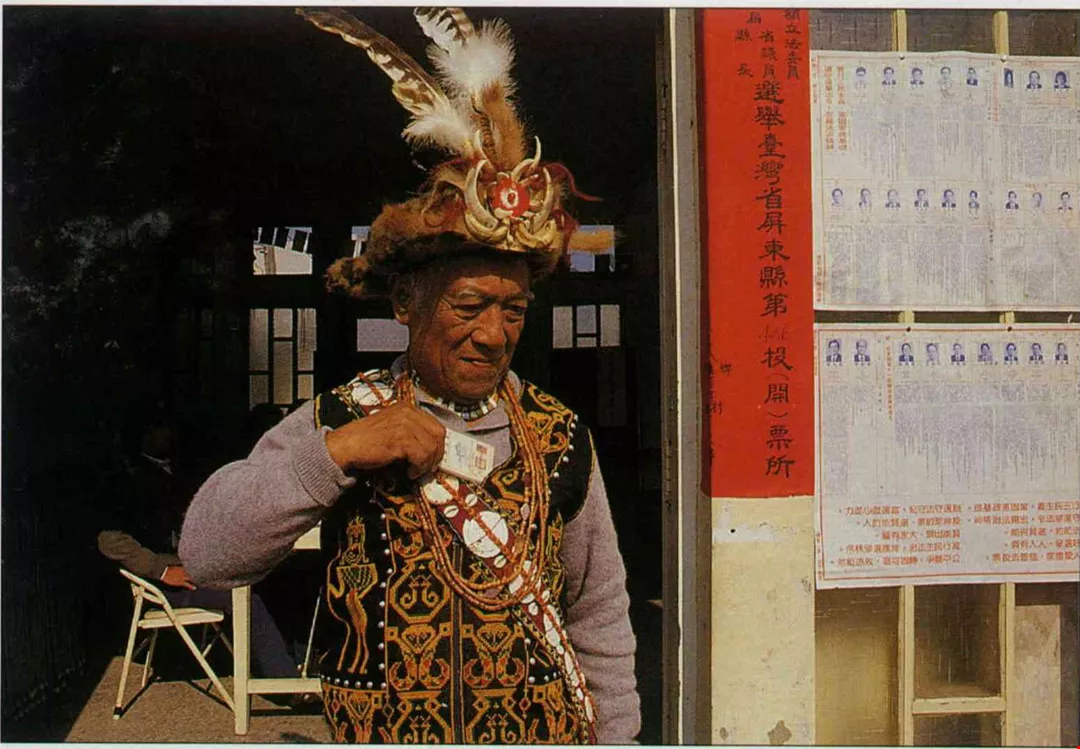
There are many conflicts and struggles in the process of indigenous people's accepting the influence of Han Chinese culture. What kind of effect does an election have on them? This might be another angle. (photo by Vincent Chang)
Gold watches and houses made of sand
The indigenous residents of Orchid Island recently discovered that their houses were constructed of concrete made with sea sand, and this caused quite a media uproar. Watan Baser, of the Taroko tribe, noted after watching a story that the proportion focussing on aborigines was too small. There wasn't even the voice of an indigenous person talking, only the constant narration from the reporter.
What baffles him the most is that while one reporter from a certain TV station was narrating, the camera swept over indigenous seniors. The sequence showed closeups of their traditional outfits and decorative knives and even of a gold watch hanging on one man's wrist. "May I ask what the connection is between watches and houses made of sea sand? What was the intention of the reporter? This is obviously 'discrimination of the lens,'" said he.
Si Jala Muo, a Yami from Orchid Island, recalls that one program producer from a TV station asked him to make arrangements for Orchid Island's Flying Fish Festival. Out of friendship, he did his best. To his surprise, later on when the footage was shown on TV screen, they had cut out what in Yami people's minds is the main spiritual symbol of the festival--praying to the tree before cutting it down. this simply made it hard for him face his own people.
OLo'h, an Ami from Chimei in Hualien, states that one time he read in the newspaper that women of Taitung's Chihpen began to wear clothing showing their backs to keep pace with modern fashion. He was dumbfounded, because according to his knowledge, the clothing of Chihpen settlement's Puyuma women serves to symbolize their marital status. Those who wear one kind of shawl with an open back are single, while those who cover their whole bodies are married.
Paiwan Ba Chak also observes that according to the media's presentation, "good things never happen to indigenous people, but all the bad things are blamed on them." If a Han Chinese drinks, he is said to be "drinking." But if an aborigine drinks, he is an alcoholic. If someone in a certain village is drunk and gets hit by a car, it must be an aborigine. One councillor in Keelung was shot dead, and why did the suspect "have an aborigine accent"? More than a few indigenous people have succeeded admirably, such as professional baseball pitcher Chen Yi-hsin and Sun Ta-chuan, who earned a doctorate in philosophy. Why didn't the media dub them with the title "aborigine"?
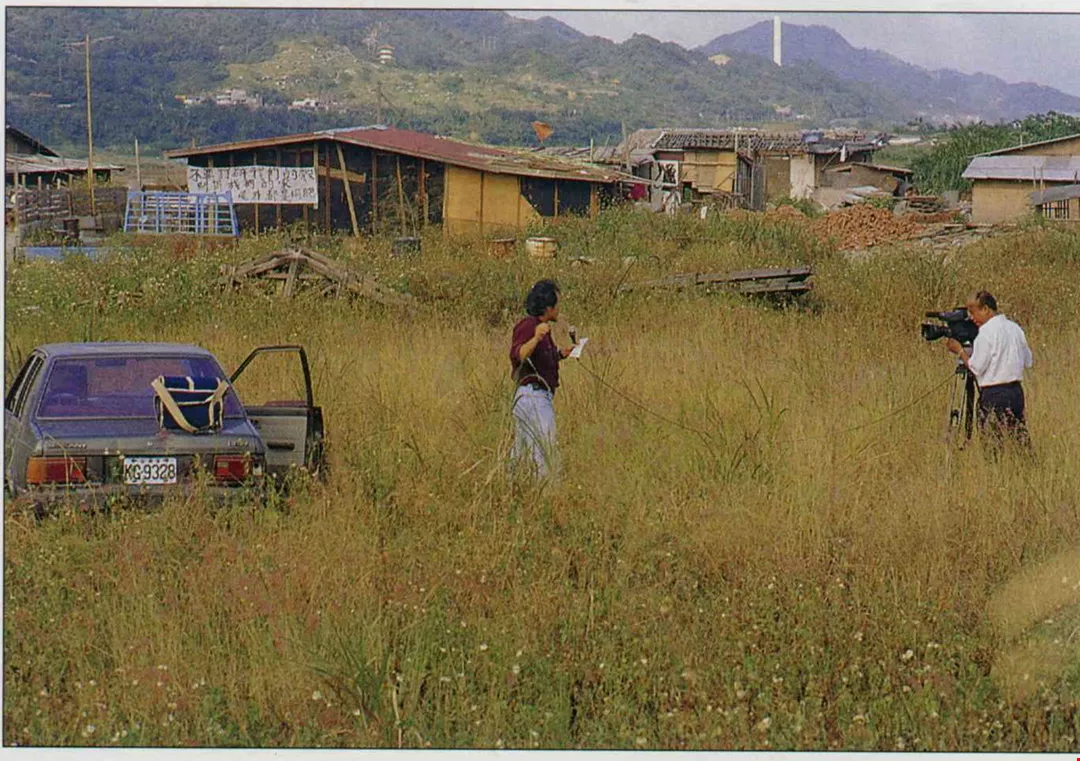
Many indigenous people inhabit the illegal dwellings near the Tahan bridge on the outskirts of Taipei. One group of trainees, using them as their subject, report on the living conditions of urban aborigines.
When aborigines hold a microphone
Criticisms of the current media are lectured in classroom every day, and they are continued incessantly in private conversations. Many students believe that even if they took charge of the TV reports, coverage of indigenous peoples might still not be miraculously cured overnight. But "as long as they insist on reflecting on it," the extent of cultural distortion will be lessened dramatically.
Will indigenous affairs get a more clear-cut, fairer presentation when indigenous people are allowed to produce stories about their own groups? This in fact is the biggest doubt the general public has toward indigenous reporters.
Indigenous people come from different areas. Conflicts occasionally occur due to differences in language and culture even among various indigenous groups.
Gali Galahei has had such an experience. At times, some participants call each other by their dibal name. Owing to language differences, disputes might arise. For example, one Kavalan trainee's tribal name is Vaki. Galahei is very reluctant to address him as such, because in the Saisiyat language "Vaki" means "grandpa."
Chen Chao-ju of the Independence Morning Post questions whether reporting on indigenous peoples will really be significantly different if control of the camera is shifted from a Han Chinese to an aborigine.
"If we suspect that the microphone held in the hand of a Han Chinese represents the uneven power relationship between the Han and indigenous peoples, then when the indigenous peoples are holding microphones and conducting reports in the settlements, will such an uneven relationship be changed?" she wonders. In the future, those indigenous people who may become journalists will probably come from an intellectual elite who have received a higher education in Han society. Their Sinicization will be quite thorough, and most will have long ago moved away from their ancestral homes. They won't necessarily understand the current problems in the aboriginal villages. "Can we conclude that when reporting on indigenous people their stories will be more real and accurate than those of the Han Chinese, just because of the 'purity' of their blood?" she asks.
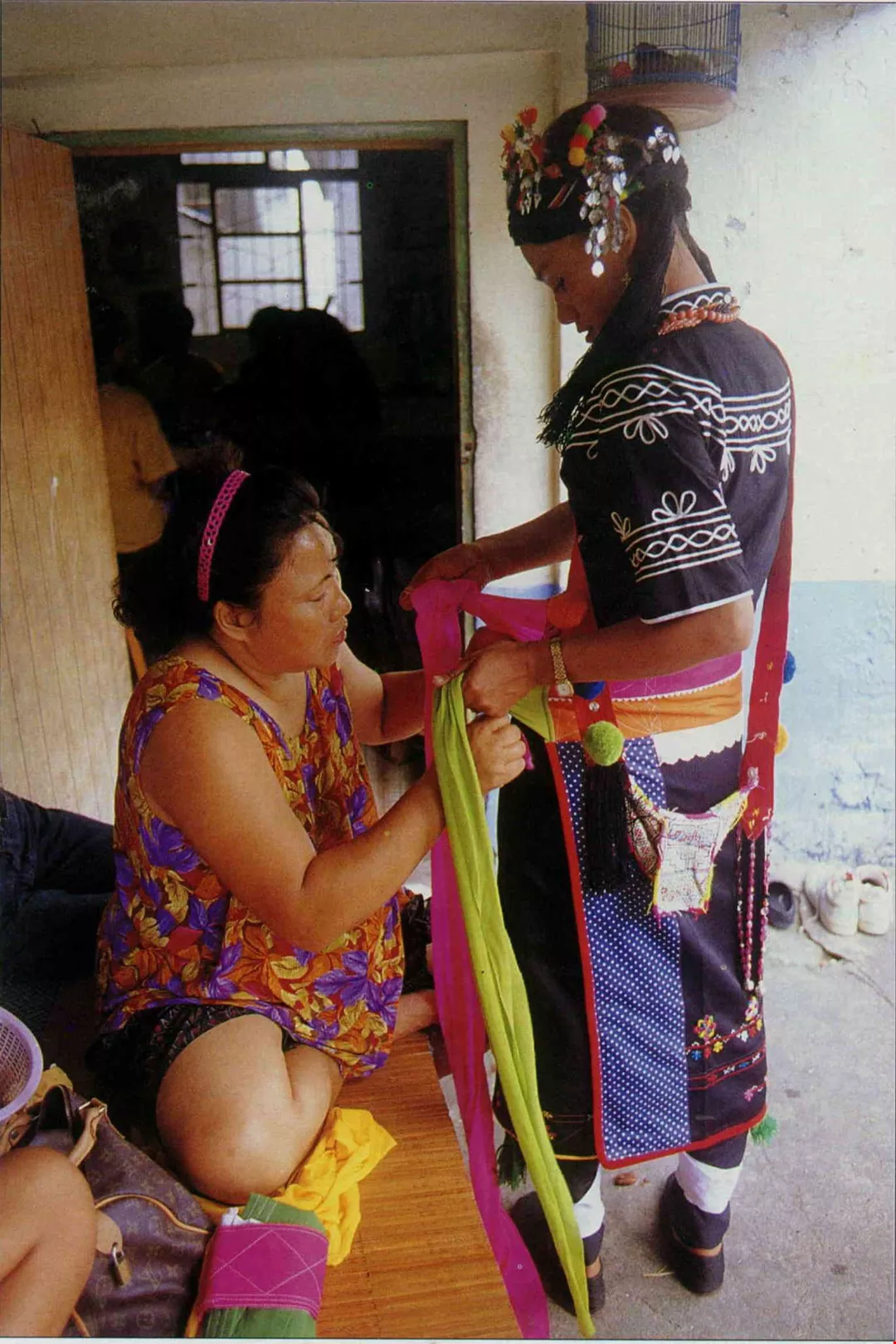
The issue of the indigenous peoples' cultural heritage has always been a focus of media reports. (photo by Pu Hua-chih)
Back to the starting point
Sun Ta-chuan, who is participating in the entire training project, responds that such criticism arises from a misunderstanding of the whole process. It would be absolutely wrong to accuse the organizing committee of paying attention only to "blood" when they were recruiting indigenous journalists. Even more vital criteria were the extent of concern and understanding the trainees demonstrated toward indigenous affairs, the amount of experience they had in the settlements, and whether they were fluent in their traditional languages.
"Actually, we've been asking ourselves, beyond be issues of race and blood, as individuals, as media personnel, what qualifications we must have to fulfill the job of being a reporter," says Mijiang, a Puyuma hailing from Taitung, and who used to be a wood carver. She thinks familiarity with language, along with an understanding of indigenous affairs and culture have laid a foundation for doing stories about indigenous people. Other than that, it will depend on individual character and professional grounding. Some of these prerequisites are innate, while others can be gained by learning. "It takes time," she observes.
By the time Taiwan's Public Television begins formal broadcasts, eleven or so of the aboriginal students will be accepted as reporters. "But it depends upon their achievements during training. We don't necessarily have any specific quotas," notes Sylvia Feng.
All of the journalists will engage in Public Television's planned news program Indigenous Peoples' News Magazine. They will be dispatched to various mountainous areas in northern, central and southern Taiwan. Some aboriginal settlements are rather remote and cannot receive broadcast signals, and this may have an effect on the interaction between indigenous reporters and the audience. Bearing this in mind, "perhaps in the beginning, we might consider distributing the programs by video cassette," says Yang Sen Hong.
According to the organizing committee's conception, each segment of the Indigenous Peoples' News Magazine will be one and a half hours long, broadcast weekly. The program will be divided into two sections: news reports and special features. The indigenous reporters accepted this time will become the front-line reporters who supply news stories, while their colleagues working in the city's news center will take charge of production and broadcasting.
Even though indigenous journalists have an advantage in terms of their background, indigenous news won't all fall exclusively in their hands. Yang Sen Hong says that at least in his designs, metropolitan aboriginal news will still be covered by the colleagues in their department. And, of course, news workers from other ethnic backgrounds can take part in the news reports if they are interested in indigenous affairs.
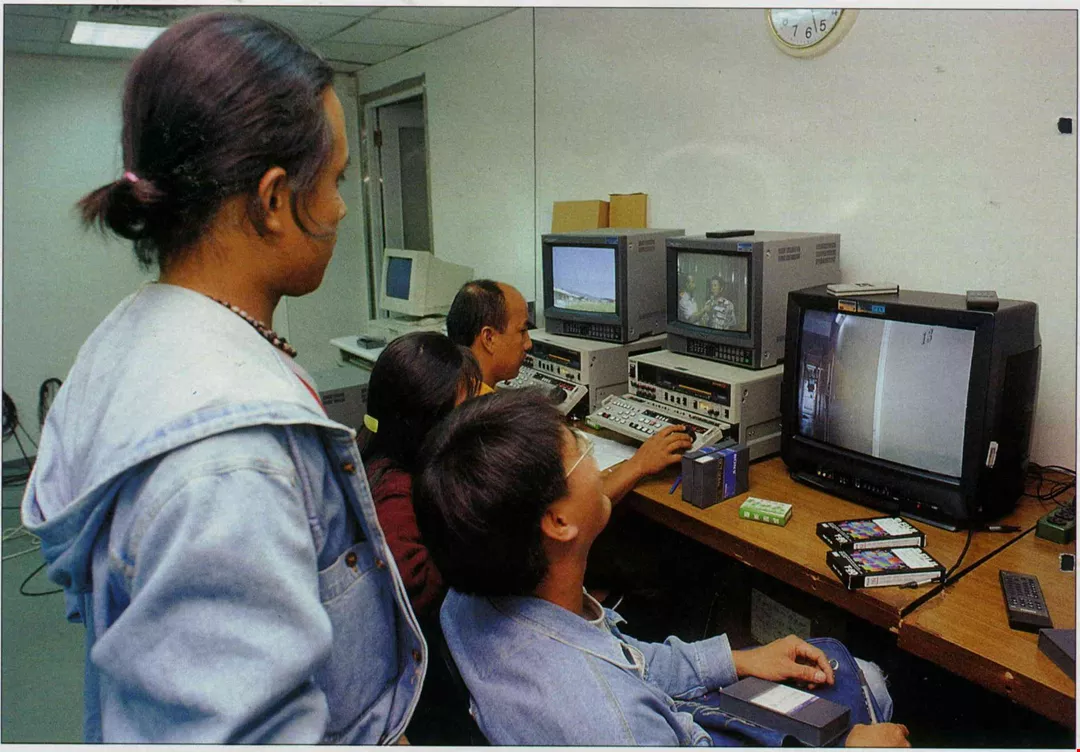
They are novices standing at the leading edge, but in producing special features, they dare not become too lax. Sitting for hours in the editing room is not unusual.
"Reporters-to-be" start their journey
The journalists-in-training are naturally anxious as to the future performance of Public Television, which hasn't hit the airwaves yet, and how they will be put to use. But what concerns them more is what they will have learned after three months of training.
Sylvia Feng points out that after several outdoor practice shoots, the trainees are gradually internalizing the core of professional news expertise. Challenges have arisen one after another. For example, when confronted with conflicts, should they or should they not conceal their identity and the purpose of their interviews? Or how should they choose between ethnic camaraderie and the principles of journalistic fairness and impartial reporting?
"I'll never forget one time in an outdoor practice shoot, we went to the construction sites in the city where indigenous people gathered. We interviewed the aboriginal women living there. When they talked about their housing, children's education, transferring schools and their lives, their faces and worries were all deeply imprinted in my mind. It was just like they were my own mother or sister. They are my compatriots whom I care for. Their pathetic fate in the city is like my own fate...," says Masa Agi. On the road back, he quietly shed tears.
But Masa Agi didn't remain at his starting point. On the next outdoor shoot he was confronted with another group of indigenous people who were facing an even more pessimistic, miserable fate than the city's construction site aborigines. They live in illegal buildings which are soon to be torn down. This time, he put aside his natural feelings of sympathy for his compatriots, and conducted his story carefully with a cool heart. Although still in a terrible mood, he shed no more tears. "If I didn't become strong, I wouldn't have a chance to do my story well, would I?" he asked.
A reporter first, and an indigenous person second? In the realm of professional news, perhaps these indigenous journalists-to-be have already settled their hearts and started their journey.
[Picture Caption]
p.118
Operating the equipment is the first step to becoming an indigenous reporter. Without images, the ideas and news content of the television medium would amount to nothing.
p.119
Will indigenous reporters be more in-depth when covering issues of interest to indigenous people? This is one of the great challenges they face. (photo by Hsueh Chi-kuang)
p.120
Being able to communicate in the native language is one of the advantages the indigenous reporters enjoy. In an Atayal village in Wulai, an indigenous reporter-in-training is interviewing an Atayal senior.
p.121
Native language education has been one of the focal points of the media when covering indigenous affairs. This has given many aboriginal youngsters the chance to reacquaint themselves with the tribe. (photo by Vincent Chang)
p.122
Listening, discussion, dialogue with lecturers, or even debates all happen in this downtown Taipei classroom. These indigenous reporters-to-be are making good use of every second to enrich themselves with professional news expertise.
p.123
There are many conflicts and struggles in the process of indigenous people's accepting the influence of Han Chinese culture. What kind of effect does an election have on them? This might be another angle. (photo by Vincent Chang)
p.124
Many indigenous people inhabit the illegal dwellings near the Tahan bridge on the outskirts of Taipei. One group of trainees, using them as their subject, report on the living conditions of urban aborigines.
p.125
The issue of the indigenous peoples' cultural heritage has always been a focus of media reports. (photo by Pu Hua-chih)
p.126
They are novices standing at the leading edge, but in producing special features, they dare not become too lax. Sitting for hours in the editing room is not unusual.
p.127
Western religion's entrance into the settlements has changed the culture and lifestyles of many indigenous people. (photo by Vincent Chang)
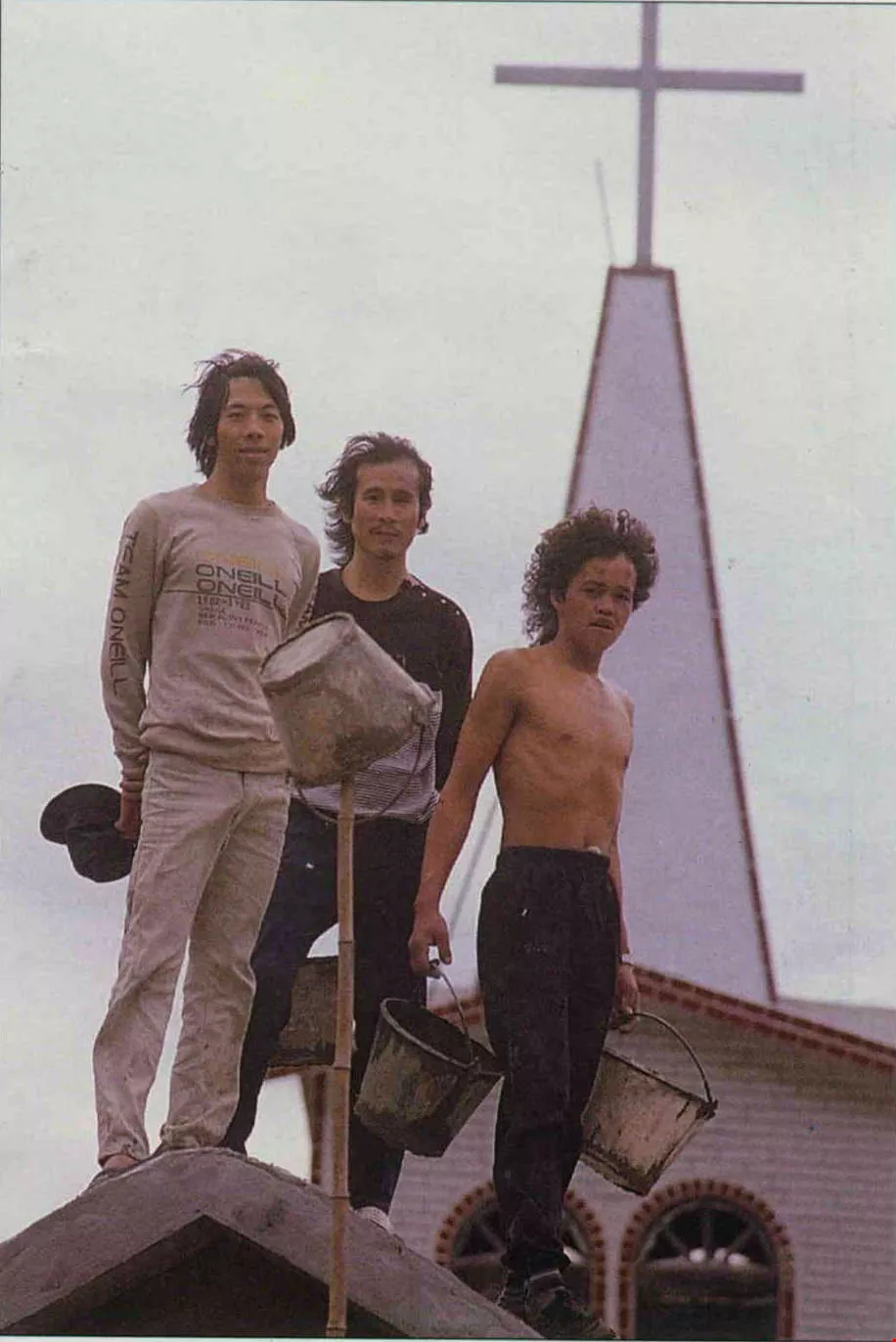
Western religion's entrance into the settlements has changed the culture and lifestyles of many indigenous people. (photo by Vincent Chang)


@List.jpg?w=522&h=410&mode=crop&format=webp&quality=80)


