Jacqueline Whang-Peng-Cancer Research Pioneer
Chang Chiung-fang / photos courtesy of Jacqueline Whang-Peng / tr. by Chris Nelson
April 2008


Since 1982, cancer has consistently been one of the ten leading causes of death in Taiwan, a top killer dreaded by the populace.
Though the number of cancer patients has steadily risen, there are things that can be done to combat this great foe of our age.
"Five fruits and veg a day keeps the cancer far away." From cancer prevention work, specialist training and founding clinical research teams to developing new drugs and treatments, Academia Sinica scholar Jacqueline Whang-Peng has built a firm standing in cancer education, treatment and research in Taiwan.
What makes this top Taiwanese woman scientist, renowned domestically and internationally, such a phenomenon?
Mention the topic of female scientists, and images of the French scientist Marie Curie are likely to form in most people's minds. What they may not realize is that there's a celebrated female scientist in Taiwan today.
Before Chinese New Year, Academia Sinica scholar Jacqueline Whang-Peng was awarded the first L'Oreal Taiwan Outstanding Woman Scientist Award for her cutting-edge research in chromosomal inheritance in tumor cells and for her superb contributions to cancer treatment in Taiwan. In June, she is due to go to Paris to attend events following on from the L'Oreal-UNESCO Awards for Women in Science, jointly sponsored by the United Nations and the cosmetics giant, and which are seen as equivalent to Nobel Prizes for women. In this event, five female scientists are selected, one from each of five continents.
Since Taiwan is not a member of the UN, Whang-Peng has not been eligible as a contender for Asia since the awards' 1998 founding. This year, L'Oreal Taiwan created the Outstanding Woman Scientist Award to compensate for the years of disregard. It is unfortunate that, due to political factors, Whang-Peng was unable to attend the official Women in Science award ceremony in Paris in March; however, her accomplishments have drawn the interest of the international medical community.

Taiwan's first female surgeon
On Wednesday morning, quick-paced, crisp footsteps echo through the central hall of the old National Taiwan University Hospital building. The slightly wiry yet spry Whang-Peng has just arrived from a meeting at Veterans General Hospital to do clinic duty at NTUH. Her face shows no trace of fatigue from the all-nighter she pulled last night.
"Seeing patients improve is uplifting to me," says 75-year-old Whang-Peng, adhering to her long-time custom of visiting with patients twice a week, serving clinic duty in the cancer centers at NTUH and Wanfang Hospital. Direct contact with patients in the clinic, besides giving her a sense of joy and accomplishment, is also helpful in her research. "By actually seeing patients, you learn where the problems are and can better find ways to solve them," she says. Clinic duty and research complement each other.
Whang-Peng is a member of the first class to complete the NTU Department of Medicine's seven-year medical training program, and she is also the first female doctor in Taiwan to choose the surgical field. Surgery is work that takes time, physical effort and mental capacity; it also involves seeing blood. The majority of women keep their distance from such work, but Whang-Peng, with her orderly, forthright personality, has a special fondness for it. "I like the straightforwardness of surgical work: the success of an operation is clear right away. In contrast, medical work is long and drawn out. You see the patient today, then tomorrow, and the progress is slow and seemingly endless. It's quite a bother," she laughs.
Her graduating class includes such figures as former Cathay General Hospital director Chen Kai-mo, Shin Kong Wu Ho-Su Memorial Hospital director Hung Chi-jen, former Taipei Medical College president Chen An-chun and former Mackay Memorial Hospital director Lan Chung-chi. Though the majority of these venerable personages in Taiwan's medical community have stepped down from their posts, the sole woman from that era, Whang-Peng, remains ever busy, shunning retirement.
At the end of December 2007, she left her position as director of the Institute of Cancer Research, a branch of the National Health Research Institutes (NHRI), but remains an honorary researcher. In January 2008 she became vice-superintendent of Taipei Municipal Wanfang Hospital and director of its Cancer Center. Despite changing locations and methods, Whang-Peng still continues her fight against cancer. "I should be able to do this for a few more years," says Whang-Peng, steadfast in her noble sentiments.
"I've been given some special privileges," says Whang-Peng. In most public institutions, those over 65 can't serve as administrators, and those over 70 have to retire. How can she still be working beyond age 75? Despite officially leaving her public position and serving in honorary consultant positions, her workload hasn't decreased: she leaves home around seven in the morning and works until night. There's never enough time, not even to become old.

In 1994, Jacqueline Whang-Peng returned to Taiwan to provide cancer treatment and conduct cancer research, becoming a leading figure in the fight against cancer in Taiwan. She is one of two female academicians at Academia Sinica to come back to Taiwan from overseas to work (the other is Wu Yan-hwa, president of National Yang Ming University).
Pioneering chromosomal research
Whang-Peng served a year-long internship in Taiwan after graduating from NTU. Then, in 1957, she went to New England Hospital in Boston to serve as an intern. But due to her twin obstacles of being a woman and a foreigner, compounded by her imminent wedding, Whang-Peng's applications for full posts at hospitals were rejected, and her dreams of going into surgery were dashed, leading to a period of dejection. Instead she took on a position as a research assistant to Dr. Joe Hin Tjio, entering the field of oncological medical research. Little did she know that this convergence of events would propel her toward her greatest achievement in cancer research: proving that cancer was caused by mutations within chromosomes.
In 1958, after chromosome assay methods became available, people were well aware that congenital diseases such as Down's syndrome were linked to chromosomal aberrations, but at the time nobody made the connection that cancer, with its numerous forms and symptoms, also involved chromosomes.
In 1960, Whang-Peng and Dr. Tjio (who with Dr. Albert Levan discovered in 1958 that people normally have 46 chromosomes) were conducting research into cell inheritance at the National Cancer Institute, part of the US National Institutes of Health (NIH). She discovered chromosomal aberrations in the bone marrow and peripheral blood of leukemia patients: some chromosomes were broken, some had shifted position or proliferated, and some had even disappeared.
This major discovery in the cancer field opened up the way for future gene therapy research around the world to treat major illnesses, and won Whang-Peng the 1972 Arthur S. Flemming Award (whose purpose is to honor outstanding public employees). She was one of the first two women, and the first person not born in the US, to win the award in the 24 years since its founding.
Whang-Peng lived in the US for 33 years, advancing from resident physician to medical director of the Public Health Section and chief of the Cytogenetic Oncology Section at the National Cancer Institute. But with her four children grown, she turned her attention to her homeland of Taiwan where cancer was becoming a top killer but which lacked drugs, information and even qualified specialists.
She saw a new opportunity. For years, her compatriots from Taiwan had to come to the US to seek cancer treatment, a situation that saddened Whang-Peng. First of all, they incurred a considerable financial, mental and physical expense by crossing the ocean for medical treatment. Secondly, there was inadequate research in the US into the forms of cancer most common in Taiwan-nasopharyngeal, liver and stomach cancer-so the outcomes of treatment were poor. This gave Whang-Peng the idea of bringing her expertise back with her to Taiwan. Thus, she stepped down from her position and devoted two years to obtaining her oncologist's license.
On New Year's Day, 1994, Whang-Peng left her family and her comfortable life in the US, and, at the invitation of former Academia Sinica president Wu Ta-you and Institute of Biomedical Sciences director Wu Cheng-wen, became director of the institute's Cancer Clinical Research Center, with the mission to revitalize the field of cancer treatment in Taiwan.
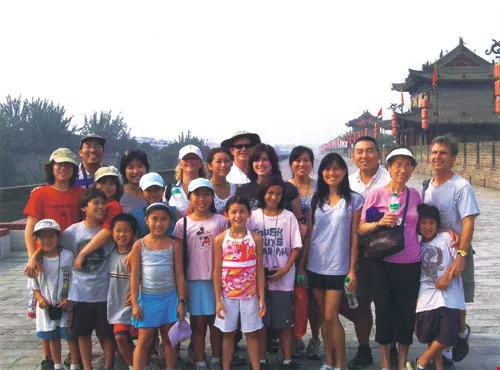
her family remains filled with pride forthis woman scientist.
Sowing seeds
Whang-Peng started out by enlisting her good friend Dr. Paul Carbone, director of the University of Wisconsin Comprehensive Cancer Center, to come to Taiwan to help train oncology specialists. Among the cancer experts she fostered are well-known figures like Cheng An-li, current director of NTUH's Department of Oncology; Hsieh Jui-kun, director of the oncology department at Mackay Memorial Hospital; Su Wu-chou, director of National Cheng Kung University Hospital's oncology department; Chi Kuang-hua, director of the radiology department at Shin Kong Wu Ho-Su Memorial Hospital; Chang Chun-yen, director of the NHRI's Institute of Cancer Research; and ICR ward director Chen Li-tzong.
Furthermore, to speed up testing of new drugs for the sake of saving more lives, Whang-Peng vigorously promoted clinical trials in Taiwan. Under her direction, the capabilities of numerous hospitals were integrated by forming Taiwan's first inter-hospital organization-the Taiwan Cooperative Oncology Group (TCOG)-which is recognized by the US Food and Drug Administration as the most comprehensive and advanced cancer clinical research organization in Asia.
When NHRI was founded in 1996, Whang-Peng was appointed director of the institute's Cancer Research Division, delving into the then-burgeoning field of gene therapy research with Yang Wen-kuang (currently a professor in the Graduate Institute of Clinical Medical Science at China Medical University) and other researchers. Regrettably, at the time a reliable system for approving human trials in Taiwan was not in place, and gene therapy research remained stalled at the animal testing stage. And then, following two deaths in the US, gene therapy research was suspended in country after country.
Of these two failed American gene therapy cases, one involved a patient suffering from the so-called "boy in the bubble" immunodeficiency disease, in which immunity genes were introduced using retroviruses. But the researchers didn't realize that the genes would spread around. The genes entered the 11th chromosome, activating the adjacent leukemia gene, leading to leukemia. For the other case, a child suffering from an inherited disease, adenoviruses were used to introduce a healthy gene, but because the researchers didn't control the amount of adenovirus introduced, the virus proliferated wildly, leading to death.
Whang-Peng notes that after many years, gene therapy for cancer faces three intractable hurdles: one is how to introduce genes into human cells; the next is how to control the positioning of the gene once introduced, and the third is how to control the gene's function-there is still no reliable way to enable or inhibit their expression.
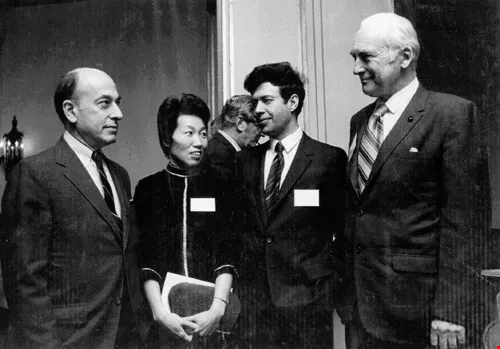
With the major discovery that chromosomal aberrations occurred in cancer patients, Whang-Peng won the Arthur S. Flemming Award in 1972, becoming the first female scientist born outside of the US to receive this honor.
No longer incurable
Although gene therapy, upon which the world's medical community once placed great expectations, remains at an impasse, the results of cancer treatment in recent years are impressive indeed. Under the stewardship of Whang-Peng, cancer treatment in Taiwan has made marked advancements.
"Cancer treatment in Taiwan is close to being on a par with that in advanced countries," says Whang-Peng, citing childhood leukemia as an example: in Taiwan, the five-year survival rate for childhood leukemia is as high as 90-95%. But the cure rate for leukemia in adults is only 20-30% due to limited cell regeneration capacity. Furthermore, the cure rate for testicular cancer is as much as 80-85%; the cure rate for placental tumors in women is up to 95%; and that for lymphoma exceeds 50%.
Even with liver, pancreatic and lung cancers, which are more problematic to diagnose and treat, life expectancy after diagnosis has been extended from between three and six months to about two years.
Following the problems of gene therapy, cancer treatment in Taiwan has embarked on another path. As an alternative to traditional surgery, chemotherapy, radiation treatment and physiotherapy, there are now newer immunotherapies and targeted therapies undergoing clinical trials.

Whang-Peng so often burned the midnight oil working on her experiments that her occasional days off prompted her children to ask, "Ma, are you feeling OK?" Pictured here is Whang-Peng in a genetics lab at the US National Institutes of Health.
Immunotherapy
Whang-Peng comments that cancer research in Taiwan is mainly being conducted on forms of cancer with a greater number of sufferers and which have special characteristics. Clinical trials for colorectal cancer at NTUH and Taipei Veterans General Hospital as well as those for lung cancer at Taichung Veterans General Hospital have been underway for four to five years, and have already entered the second phase of human trials.
A lung cancer vaccine currently being researched is in fact a form of immunotherapy.
Since tumors are formed of mutated cells, the lymphatic system, responsible for patrolling the body and attacking pathogens, is unable to discern them, much less eliminate them. But the technique used for this lung cancer vaccine is to grind up lung cancer cells and combine them with a culture of dendritic cells of peripheral blood, thus allowing the dendritic cells to carry tumor cell antigens. This is then injected into the body, enabling T cells to recognize and destroy tumor cells.
"In America there have been examples of full recovery from treating kidney cancer and melanoma with immunotherapy, but this has yet to be seen in Taiwan," says Whang-Peng. Right now in Taiwan, the results of immunotherapy remain uncertain: "At this stage we can stabilize the patients' condition, but we haven't had any effective cures yet."
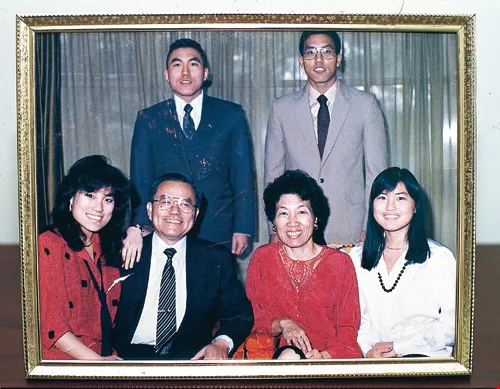
Whang-Peng is blessed in her family life: her husband fully supports her, and her four children are following in their parents' footsteps. Her daughters are in the medical field, and her sons, like their father, are engineers.
Targeted therapy
Besides seeking breakthroughs in immunotherapy, Taiwan has not missed out on the latest cancer treatment method-targeted therapy. Like immunotherapy, targeted therapy requires first detecting genetic variations or characteristics of cancer cells before an attack can be launched.
For example, in the case of chronic leukemia, when the genes abl and bcr are together they produce a special protein, and a drug has been developed (Gleevec) which can suppress this protein, leading to full recovery from leukemia in patients for whom it is effective.
In lung cancer, a mutation on the gene EGFR has been found. The incidence of this mutation among non-smoking female Han Chinese lung cancer patients in Southeast Asia is 60% or higher, whereas in Western countries it is only about 15%. The oral medication Iressa is very effective at treating lung cancer linked to this mutation. Whang-Peng points out that production of this drug was scheduled to cease in the US due to poor sales; but luckily, it was found to be very effective for Japanese patients as well as for Chinese patients from China, Hong Kong and Taiwan. But because of the costliness of the drug (about NT$2000 a day), in Taiwan it's considered a second-line drug, not to be used unless absolutely necessary.
Whang-Peng's current research at Wanfang Hospital is aimed chiefly at brain tumors. She remarks that, at present, brain tumor treatment involves chemotherapy combined with targeted therapy, applying a drug that inhibits blood vessel formation; this approach is more effective than past therapies. With different teams conducting research on different forms of cancer, it's like a jigsaw puzzle: Whang-Peng believes that as the picture of cancer becomes clearer, the puzzle will be pieced together faster and more effectively. Perhaps before the century is half over, humanity will have solved the cancer riddle, rendering cancer no longer a dreaded killer.
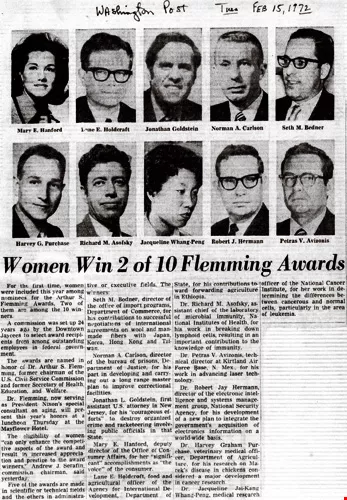
With the major discovery that chromosomal aberrations occurred in cancer patients, Whang-Peng won the Arthur S. Flemming Award in 1972, becoming the first female scientist born outside of the US to receive this honor.
Prevention is better than cure
However, despite the advancements in cancer treatments, prevention is still a far more effective method.
Besides her research and treatment work, in 1997, Whang-Peng, together with a number of experts, founded the Formosa Cancer Foundation, vigorously promoting cancer prevention concepts such as "five fruits and veg a day" and doing other educational work. As current vice-chair, she repeatedly stresses the important idea that an ounce of prevention is worth a pound of cure.
"Only 5% of cancer is inherited; the rest is caused by acquired factors such as the environment, diet, smoking, drinking, chewing betel nut and so forth," says Whang-Peng. Tumors come from chromosomal mutations, but chromosomal mutations are mostly caused by acquired factors.
"Some chromosomal mutations appear at early stages of stem cell differentiation, leading to problems at later stages not confined to one area, but appearing in multiple areas," Whang-Peng reminds us. Before adulthood, because the various bodily tissues have not yet matured, damage from the environment can be far-reaching. She points out that after the atomic bombing of Japan at the end of World War II, the first illness to appear in great quantity was acute childhood leukemia, with chronic leukemia next, and breast cancer thereafter (because breasts only start developing in females during adolescence).
The harm caused by smoking, drinking and betel nut chewing is also more serious at younger and younger ages. For example, those who start smoking before age 18 cannot fully recover their health even if they later give it up.
Whang-Peng deserves great credit in Taiwan's cancer successes, but she also bears a great deal of gratitude.
"I had a lot of help. Nothing is accomplished by one person alone," she says, pointing out her background in both clinical work and research. Cancer treatment in Taiwan has reached international standards, and the later stages of human clinical trials have been carried out diligently. The only bugbear is that the government places too many restrictions on new cancer drugs.
Whang-Peng states that cancer is the world's leading killer. Considering the urgency of saving lives, most countries are quite lenient about approving new cancer drugs, but Taiwan is very strict. In addition to local clinical trials, clinical trials in two Southeast Asian countries must be completed before they can be released into Taiwan's market, eliciting criticism that it's too slow given the urgency of the situation.
Whang-Peng's greatest wish after her return to Taiwan was that Taiwan could have a national-level cancer research center and cancer hospital. Whang-Peng's wish is soon to be fulfilled-under the Department of Health's Biomedical Technology Island Program, NTUH will open a national-level cancer center in its Kungkuan branch within the next three years. And now Whang-Peng is busy helping Wanfang Hospital set up the Shuang He Hospital in Chungho, expected to open its doors this July, complete with a fully equipped 100-bed cancer center.
In addition to this, as the number of cancer patients increases (one out of four deaths in Taiwan is now due to cancer), it is impractical to distribute treatment among different hospital departments. For this reason, Whang-Peng is actively promoting licensing of oncology specialists to boost the appropriateness and professional level of cancer treatment. She notes that Japan last year started classifying oncology as an independent discipline to be licensed, and in Korea there are already nationally licensed oncology specialists. But in Taiwan, oncology specialist licensing is carried out by the Chinese Oncology Society, lacking the public trust and status given by national accreditation.

(facing page) "If I can do it, so can you!" says Whang-Peng, encouraging students at Taipei First Girls' High School who aim to go into science. Success comes though hard work.
Recognition through work
"If you devote yourself to your research, you'll be recognized for your work," Whang-Peng said in encouragement to aspiring researchers when she received the L'Oreal Taiwan Outstanding Woman Scientist Award.
"No-one in Taiwan's scientific community has made greater contributions to the oncology field than Whang-Peng," says Lin Ming-juey, professor of physics at National Taiwan Normal University and chief executive of the Wu Chien Shiung Education Foundation, which is a partner in the award consortium.
However, as a married woman concentrating on both work and family, it is not easy to follow the lonely path of research. Whang-Peng credits her achievements to her husband's full support, allowing her to concentrate fully on her work without worrying about problems at home.
"I chose a husband who could tolerate me and support me," says Whang-Peng. The ability to pick out a diamond in the rough is important.
"I can still work a few more years," says Whang-Peng. Her children have built lives for themselves in the US-her two daughters are following in her footsteps, one a surgeon and the other a dermatologist; her two sons are like their father, working as engineers. Whang-Peng, a grandmother in a growing family, will eventually return to the US after retirement to be with her husband, children and grandchildren, relishing the joy of reuniting with her family after a long separation.
Profile: Jacqueline Whang-Peng
Born: 1932 in Jiangsu, China
Education: School of Medicine, National Taiwan University
Current positions:
Academician and member of the Academia Sinica Council, Academia Sinica
Distinguished investigator, National Health Research Institutes
Deputy director, Taipei Municipal Wanfang Hospital; director of the hospital's cancer center
Deputy Chair, Formosa Cancer Foundation
Lecturing professor, Taipei Medical University
Awards:
ROC Ten Distinguished Young Women, 1968
Arthur S. Flemming Award, 1972
Academia Sinica Academician, 1984
First L'Oreal Taiwan Outstanding Woman Scientist Award, 2008


