

Eighteen years ago, a retired civil servant decided to dedicate his remaining years to shining a light into those corners where the sunlight of society refused to shine. To that end, he established the Creation Social Welfare Foundation, which is still Taiwan's sole provider of care services to people in persistent vegetative states.
Since its inception, CSWF has continually worked to expand its services from caring for patents in persistent vegetative states (PVS) into helping the homeless and then to providing care for elderly people with Alzheimer's or who have no-one else to look after them. CSWF has given birth to sister organizations like the Jen-an and Hua-shan Foundations, and has grown from an original staff of less than five people to a total of 280 and volunteer numbers as high as 4000. They have gone from having annual expenses of under NT$1 million to spending nearly NT$2 million per day.
Not only is CSWF well known for its services, it is also renowned as a "master fundraiser" and admired by other social welfare organizations for operating at a surplus year after year. How do they do it? What are their future plans for the organization? To find out, we must first retrace the steps of Cao Ching, the foundation's president, on this journey, and take another look at the magnificent 18-year story of the Creation Social Welfare Foundation.
Our journey begins after meeting CSWF public relations officer Wang Huei-chen, who leads us through the winding alleys of Peiping East Road, near Taipei Railway Station, to the office of Cao Ching. After meeting Cao, we move on to where everyone else has relocated while the building is under maintenance-the nearby CSWF PVS hospice.
Along the way, 80-year-old Cao Ching leads us through second-hand trading posts, the rooms where volunteers sort through donated till receipts, and other such things run by CSWF volunteers. The whole neighborhood seems like a "social welfare kingdom" of sorts, virtually all of which was created by Cao.
"At the start, I just wanted to take on four or five PVS patients and help a few families breathe a little easier," says Cao. "Who'd have thought that by building up a little more each day, things would end up on the scale they are today?"
We finally reach the PVS hospice, where it all began for CSWF, and see the patients lying in their beds, seemingly asleep. Cao tells of how he keeps these patients company through every step of their journey. In the old man's voice is the sound of hope; in his eyes, a kind of brilliance; even just looking at his face is inspiring.
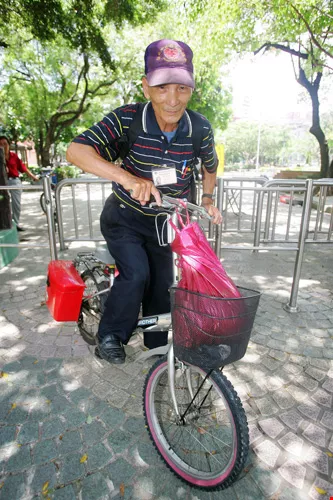
After wandering the streets for over 20 years, this old vagrant has been able to gain new direction in his life thanks to working with Jen-An Foundation. Now he cycles all over the city, working to help fellow homeless people.
If not us, then who?
"I help out three groups of people society overlooks-the elderly, the impoverished, and the incurably ill," explains Cao. "When I say 'the elderly,' I particularly mean those who have been abandoned or face the loss of their faculties. The impoverished are the homeless with nothing to their names, and of the 'incurably ill' the particular ones I care for are those in persistent vegetative states."
Caring for PVS patients was the ideal that spurred Cao to found CSWF. In 1980, after receiving his over NT$1 million retirement pay from TaiSugar, he bade farewell to his wife and daughters, and began dedicating himself entirely to serving the community, something he had always wanted to do. Then as now, society was largely opposed to withdrawing care from PVS patients to allow them to die, and so Cao began working to establish a hospice to provide care for them.
Efforts like those of CSWF, focusing on PVS patients, are rare. Cao chose to model his hospice on ones in Japan's Chiba and Sendai prefectures. As he points out, the biggest difference between his hospice and the Japanese ones is that the latter operate on government funding by way of the health system, which they are considered part of, while CSWF's operates under the auspices of the Ministry of the Interior's Bureau of Social Welfare.
The hospice in Chiba is designed around things patients would be familiar with from everyday life, in the hopes that this will "awaken" them. Sendai's hospice is run by the neurology department of Tohoku University School of Medicine, and uses specialist equipment to monitor and record neurological changes in the patients. They also actively work to promote recovery in any patients that show positive responses.
The costs, in terms both of money and manpower, of the Japanese model are huge-monthly care for the average patient costs roughly NT$380,000, a world apart from the NT$50,000 spent by CSWF. As the majority of PVS patients in Japan entered their states through automobile accidents, much of the funding for their care comes from fees levied on vehicles for that very purpose. CSWF, on the other hand, receives only 10% of its funding from the government, with the remaining 90% coming from public donations.
After starting initial work on the hospice in 1980, Cao was finally able to open the hospice six years later, taking on patients from poorer families free of charge. To date, CSWF has cared for nearly 500 such patients.
Patients in vegetative states are cared for by professional caregivers at CSWF, with nurses providing care 24 hours a day over three shifts. Every two hours the patients are rolled over, patted on the back to help clear their airways, and have their linen changed, and they are fed once every four hours. They are washed every two days, to help maintain their cleanliness and hygiene, as well as their dignity.
Over the past 18 years, CSWF has opened branch hospices around the country. The goal is to have 23 locations in cities and counties throughout Taiwan, Cao says. Thus far they have completed 13, with another four in the planning stage, and the organization hopes to meet its goal within the next five years.
Some doubt the necessity of CSWF's opening branch hospices. But the foundation's general secretary Kuo Huei-ming, who has worked with Cao for over a decade, explains that these branches are based on a belief in providing "local service." CSWF hopes that all families of PVS patients throughout Taiwan will someday have ready access to care for their loved ones. So as to not break the bonds between the patients and their families, says Kuo, CSWF requires that the families come visit the patients for at least three eight-hour days of monitoring and care a month. Some families even come every day, which can be a huge strain if the hospice is far away.
Having seen the unwillingness of so many families to see their loved ones moved to hospices, CSWF has developed an in-home care system, whereby social workers and volunteers are dispatched to patients' homes to provide the care they need there and help lessen the burden on family members.
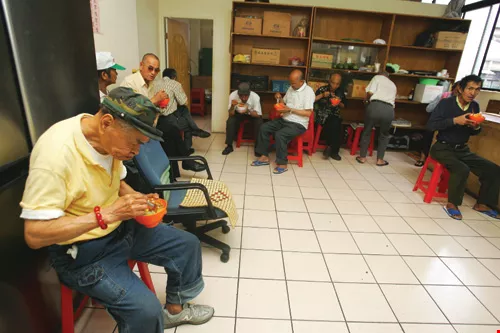
The Ping-an shelter in Wanhua starts serving lunch at 11:30 a.m. every day. The local vagrants take their meals and quietly find a corner to sit and eat.
Night moves
Taking care of people in vegetative states is hard, draining work, but to Cao, a devout Christian, it is both a labor of love and a calling. After establishing care facilities for those PVS patients, Cao then moved to expand their services, extending a hand to a group that so many people fear and avoid-the homeless.
Kuo Huei-ming joined CSWF in 1991, and that same year she and Cao began to see how feasible offering services to the homeless would be.
After midnight, they would head out with about a dozen volunteers to the places where Taipei's homeless gather-the underpass in front of Wanhua Train Station, parks, and breezeways, looking for signs of vagrants. Whenever they found them, sleeping on benches, covering themselves with newspapers or plastic bags, the volunteers would set down bread, milk, and leaflets explaining who they were next to the figures.
After a little over a month, these homeless people had gone from suspicion and distrust of the volunteers to looking forward to their arrival. They then started to make known what they wanted: hot water to wash themselves with, and clean clothes to change into.
And so CSWF made an agreement with businesses in Wanhua, using the electricity and water from those businesses to power the "Homeless People's Sauna and Clean-up Car" after closing time. They also collected used clothing and contacted hairdressers to provide their services to local vagrants free of charge, along with several other services the organization offered to the area's homeless population.
In 1993, CSWF launched "Mama's Hot Meals," providing 100 boxed meals to homeless people each day. Additionally, during each of the three major festivals in the Chinese calendar the organization provided them with special meals, including throwing a banquet for Chinese New Year. In the first year they were held, these meals took up only ten tables, but by last year they had expanded to a lively 300 tables, and when the meals put on in Taoyuan, Hsinchu, Taichung, and Kaohsiung cities are taken into account, the number climbs to 400 tables.
But such special banquets aren't enough to help the homeless population over the long term. In 1994 CSWF established a shelter on Shantou St. in Taipei which provided the basics of life to the long-term homeless, giving them a place to assuage their hunger, shelter from the cold, and escape the specter of sickness. However, some of the vagrants, with their tatty clothing and muddled minds, aroused the opposition of local residents, and the landlord canceled the lease on the shelter, forcing CSWF to relocate after purchasing space on Tali St.
Over time, the shelter started implementing a system of "vagrants helping vagrants," in which the homeless people using the shelter would cook meals for everyone there. As says Lai Tsu-chieh, community resources and PR team member in CSWF's homeless care subsidiary Jen-an Social Welfare Foundation, the shelter is well known for the basic concept behind their system-"I cook, you eat; you cook, I eat; if neither cooks, neither eats." The visitors to the shelter take turns cooking for and helping their fellow homeless people.
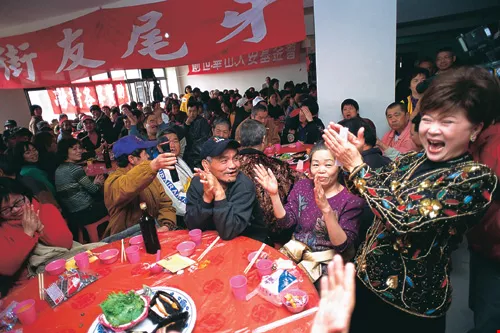
Shortly before every Chinese New Year CSWF sets up banquets for the homeless. Last year the banquets around Taiwan totaled 400 tables, a scale which is totally unprecedented.
Vagrants serving vagrants
CSWF's shelter provides meals, washing facilities, and a place to sleep overnight. To avoid having the homeless freeze outside in the winter, when the temperature can drop below 15 degrees, says Lai, the shelter opens up and lets them come in and sleep on the floors.
No-one likes to fall ill, but for the homeless, who have nothing to their names whatsoever, illness is something to be genuinely feared. Yen San-tsai, head of CSWF's shelter in Sanchung, says the biggest difficulties in working with the homeless are medical problems. Most vagrants aren't enrolled in the National Health Insurance scheme, so when they get sick, they can't organize a visit to the doctor.
It's a sad truth that society at large is much less tolerant of the homeless than of those in vegetative states or elderly people without carers or with Alzheimer's.
The Jen-an Foundation has gone to great lengths to maintain good relations with their neighbors, doing things like having the vagrants sweep the streets and join in neighborhood watch teams. The goal is to change the image of the homeless that is prevalent in Taiwan and close the gap between the homeless and the community. Thanks to Jen-an's hard work, people are becoming more tolerant of the homeless, and more and more people are offering their support.
Some people have donated rice and clothing, says Lai, and some bakeries deliver their leftovers at the end of day. One local clinic has even contacted CSWF to offer their services for free. The clinic's doctor, who wishes to remain anonymous, explains that vagrants that hold a "homeless passport" from Jen-an are able to visit his clinic at any time to get a checkup. Jen-an also brings in people on occasions. He says that even if having these homeless people visiting the clinic puts some people off using his services, it will still be worth it.
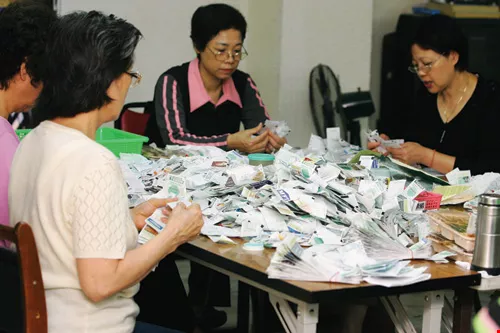
"One receipt, one meal." CSWF's volunteers sort through the mountain of till receipts the organization has collected. But the odds of hitting the jackpot in the receipt lottery have been reduced, which in turn reduces the income available to CSWF, making meals harder to provide.
Elderly and infirm
An old man himself, Cao Ching fully appreciates the problems facing Taiwan's elderly population.
After seeing tale after tale in the media of housebound elderly people dying and not being discovered for days, or even having their bodies gnawed at by dogs, Cao decided to branch out into offering services to the elderly.
In May 1999, CSWF launched their "Elderly Checkup Phone Service," through which volunteers call housebound elderly people at a prearranged time each afternoon and check how things are going. At present, 200-300 people around Taiwan are making use of this service, which is run by another CSWF subsidiary, the Hua-shan Foundation.
"Our goal is to keep the elderly integrated with the rest of the community," says Cao. Growing old while staying in the community, rather than in retirement homes, is the future direction for care of the elderly, and is something toward which Hua-shan works vigorously. They plan to eventually have service centers-Community Angel Stations, as they call them-operating in all of Taiwan's 369 townships.
The services Hua-shan offers the elderly are of two varieties; first, there are at-home services, such as delivering meals and offering medical help. Second is organizing a kind of "artificial family" for them.
This "artificial family" concept unfortunately doesn't fit well with current regulations on care of the elderly, and as such has been hard to develop. At present, there are only two such places, located in Fengshan, Kaohsiung, running as trials.
Cao points out that elderly people like to live together in groups so that they will always have company. Japan's regulations on this were relaxed recently, and since then "homes" of over 6000 elderly people have appeared. With Taiwan's population aging at an astonishing rate, the relevant government departments in Taiwan need to adapt their regulations similarly to meet the changing requirements this will bring.
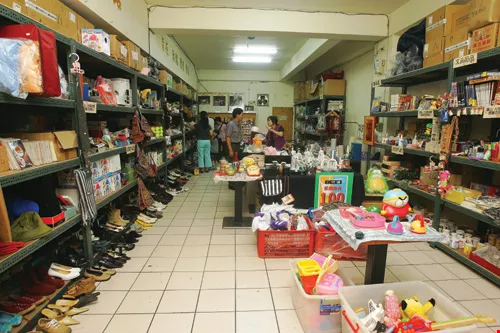
CSWF's second-hand goods center stands as a reminder to passersby that their old, once-cherished things have the potential to act as fundraisers as well.
Touching the heart
Seeing the breadth of services offered by CSWF, one has to wonder: where do they get such amazing funding?
"God provides us with more than enough money to meet our needs," says Cao. CSWF has never stumbled over financial problems nor had any difficulty reimbursing staff since its inception.
Even more amazingly, every month CSWF ends up receiving a bit more than they need to spend, and has done ever since the organization was founded 18 years ago. In their first month, they paid expenses of NT$130,000, and brought in donations of a little over NT$130,000. In their second month, they paid out NT$180,000, and made a little over NT$180,000, and so on down the line. It really does seem that Cao has been blessed, having never had to worry about financial problems throughout that time.
"Mr. Cao's attitude is clear-he's always ready to forge a new path, isn't afraid of failure, and gives everything a shot first-hand," says Kuo. Picking up a book Cao recently asked everyone to read, An Introduction to Successful Goal-Oriented Management, she notes that CSWF has been working toward a more businesslike management style, because in order to be successful in their goals, the organization first needs to be capable in terms of manpower, resources, and finance.
"One receipt, one meal." "Donate a receipt and help a PVS patient." In every major supermarket you can find donation boxes from CSWF with slogans like these. The boxes have been being used for 12 years, and in their first year took in 100,000 till receipts, which has risen to a total of 70 million last year. The winnings from Taiwan's receipt lottery are one of the larger sources of income for CSWF.
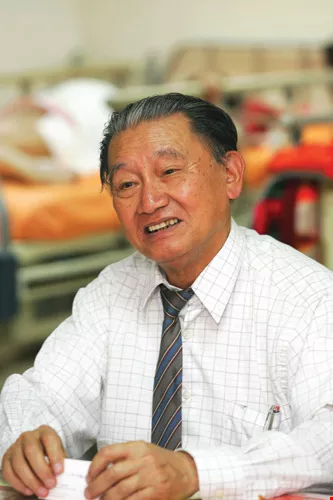
Cao Ching, already 80 years old, has not only single-handedly established CSWF, but also continues to pursue other, unrealized dreams.
One receipt, one meal
The request for receipt donations has successfully helped raise awareness of CSWF's work, but the organization continues to take a conservative approach to fundraising in general.
CSWF's fundraising strategy can be summed up as "getting the word out without door-knocking." Cao has forbidden CSWF's people to directly ask for donations. "All we do is tell people what we do and how we do it, nothing more," says Cao, who refers to this approach as "touching the heart" of the public. This is a particularly crafty fundraising method, notes Cao, because once people have been genuinely touched by what the organization does, they don't just donate once, they do so virtually for the rest of their lives.
The number of people who have been so "touched" and donate regularly currently stands at 530,000. "Good things really can come in small packages," says Cao. Larger organizations have trouble maintaining that sort of level of donation month on month, but support for this ragtag bunch is rock solid.
Cao has also had constant guidance and support from various consultants, including respected scholars in the field of social welfare, such as Professors Lin Wan-i, Michael Hsiao, and Joyce Feng of National Taiwan University's Department of Social Work. Whenever CSWF has needed them, they have been ready and willing to offer their assistance.
It hasn't all been easy going: government regulations and finding partners to work with have frequently been a source of problems for Cao.
"Legislation is always lagging behind the requirements of the real world and regulations are frequently too strict, so it's hard to work in with them, but there's no way we can not work in with them either." Cao cites caring for the elderly as an example. According to government regulations, any place accommodating five or more people must be registered. "It's not that we're afraid to register, it's just that after registration, there are a whole raft of other conditions that follow on that are above and beyond our requirements and our abilities." The organization's building would need large-scale alterations; the floor layout would need changing, the stairways would need changing, the fire safety facilities would need changing, the ventilation system would need changing, the plumbing would need changing, and on and on. It would be far too big a project to be able to carry out properly.
Finding staff has also continued to be a hassle for Cao. Despite the fact that CSWF's wage and benefit structure are as good as or even better than those civil servants get, they've constantly struggled with staff shortages. At present they have 280 staff, far short of their required 360. "People aren't fools, by and large," says Cao. "Social work looks to be a dead-end job-if they can't see any prospects for promotion or pay rises, it's only natural that there won't be many people keen on the idea."
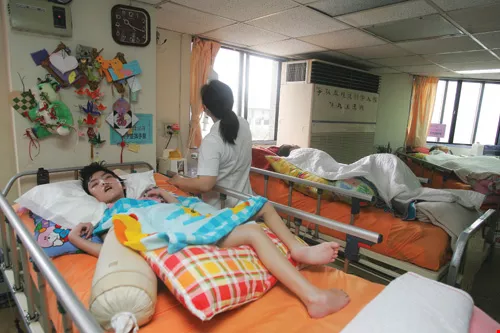
CSWF's work taking care of PVS patients is hard going and results in little in the way of response. All they can really hope for is to lift the heavy burden of care from the shoulders of the patients' families.
I have a dream
There certainly are few "fools" like Cao, willing to forge ahead toward their goals and never look back. So is he lonely on this path he treads? Does he regret anything?
"Yes, I leapt into this job, but not haphazardly-I gave it a lot of serious thought," says Cao. "This was my choice, and I have no regrets about the path I've chosen, although I do owe my family a great debt."
CSWF is like family to Cao, and every evening he sleeps in a small room near the PVS patients. He has done this throughout the past 18 years. Sunday nights, seven o'clock until nine, are Cao's "home" time, when he goes back to see his family. Somewhat ashamed, Cao tells of how his two daughters were in the fifth and third grades when he started CSWF, leaving them to essentially make their own way. Now one is married and has a family of her own, while the other is soon to complete her postgraduate studies.
Despite not really having his family's support him, Cao forged ahead with his plan, even into his old age, carrying on with the same dedication he has always had to pursuing his dream.
Cao plans to set up lifestyle blocks in northern, central, and southern Taiwan, where homeless people will be able to farm vegetables and chickens, people with spinal injuries can ride horses to help them recuperate, and older folks can enjoy their twilight years in a relaxed setting.
One such lifestyle block has already been running in Miaoli for two years now, and CSWF is actively looking for suitable hillside locations in Taipei and Kaohsiung Counties. One of Cao's dreams seems to be gradually becoming reality.
But he has another dream-to open a school and give people the skills needed to help overcome the shortage of people in social work over the long term.
For example, says Cao, the Hawaii campus of Brigham Young University of the US focuses on helping educate students from poor areas in Southeast Asia in social work. Students work while they study, and the school doesn't charge tuition. Cao is currently in touch with BYU-Hawaii to try and talk them into opening a satellite campus in Taiwan.
"Whether or not this particular dream can come true remains to be seen," says Cao. "Before the sun goes down on my life, I want to plant the seeds of Taiwan's future social work situation. I'm 80 years old-how many more years am I likely to have? I have to give this my all!"
Cao's dreams may well seem like pie in the sky to some, but 18 years ago, CSWF was another such dream in the mind of an old retiree.


@List.jpg?w=522&h=410&mode=crop&format=webp&quality=80)


@List.jpg?w=522&h=410&mode=crop&format=webp&quality=80)
