You Can't Take It With You--But You Can Have It Sent Along Later
Ventine Tsai / photos Vincent Chang / tr. by Andrew Morton
September 1990


The common saying "With money you can even put demons to work for you" implies that the ghostly denizens of the underworld are every bit as hooked on money as we humans. When old grannies worship at the temple they speak of it as "burning gold," so it seems not just petty demons but even the deities of the popular pantheon allow themselves to be swayed by pecuniary favors and will condescend to accept gifts of cash.
Most ordinary Chinese believe that demons and deities alike were human once. Naturally enough they conclude that since human beings love money, so must demons and deities. Thus any act of temple worship or ancestral veneration, along with offerings of chicken and other foods, invariably entails lighting incense and burning gold-colored spirit money. How much spirit money you burn depends on the scale of the occasion. So the manufacture and sale of spirit money is one age-old trade that is in no danger of dying out.
Temple worship and ancestor veneration always seem to be connected with the burning of paper money, although spirit money is purely a Chinese folk invention and has no connection with Buddhism as such. Buddhists even consider it a sin to burn paper printed with Sutra verses.
How did spirit money originate? One popular, if somewhat fantastic, theory is that it was invented in the Eastern Han dynasty by a man called Ts'ai Lun.
According to the story, Ts'ai Lun had found a method of making paper. But far from bringing him riches, his home was stacked with piles of the unwanted stuff. Acting on a sudden inspiration, Ts'ai Lun one day bought himself a coffin, lay down in it and pretended to be dead. His wife spread news of his death throughout the neighborhood, then cut the paper into equal rectangles and burnt it before Ts'ai's coffin, lamenting: "In life he was a pauper and is sure to need funds in the underworld, so let me burn some paper money for him to spend there."
On the seventh day of mourning, just as his wife was burning paper money before the grieving mourners, Ts'ai calmly opened the lid of his coffin and explained that he had been restored to life. The paper his wife had burnt had turned to money in the underworld, and his pecuniary gifts to Yama, king of hell, had convinced him of Ts'ai's virtue and persuaded him to grant Ts'ai a new lease of life.
News of Ts'ai Lun's miraculous return to the land of the living caused a stampede of people wanting to buy paper money, and thereafter of course Ts'ai simply sat back and watched the profits roll in.
You might wonder why Ts'ai's ruse wasn't tumbled when people burned his paper money and failed to bring their loved ones back from the dead, but such was the commercial success of his idea that the popular spirit money industry honors Ts'ai Lun as its guardian deity.
Spirit money is an offering presented during worship. Veneration of deities can be traced back to a primitive fear of demons and spirits, as well as to our ideas about what we imagine the next world must be like. The Chinese have always believed that the human soul does not simply vanish at death, but continues to exist as a spirit in another world--the ghostly underworld.
Since ghosts were human once there must be certain similarities between the two, and this is why items of food and other useful articles were buried alongside the dead. It was also customary to bury sums of cash, clearly indicating the idea that money was necessary in the afterlife as well.
The Buddhist doctrines of karma and transmigration of the soul brought to China a new concept of the afterlife, shattering the age-old convention that the dead invariably turn into ghosts. Buddhism teaches that for a period of 49 days after death, the soul waits in limbo before being reborn in a new condition of existence. Those who have lived virtuous lives may be reborn into either the Realm of Bliss, the human realm or the Spirit World, while those who have acquired evil karma are reborn either as animals, as ghosts or as denizens of Hell. Under this system becoming a ghost is only one possibility among six.
But folk belief in the value of burning spirit money was too firmly entrenched to give way so easily. It not only continued as before, but took on board the idea of burning "afterlife money" printed with a Sanskrit prayer for the dead.
Afterlife money is a kind of "ticket to the Western Paradise" which is normally folded in the shape of an ingot or a lotus. It is burnt for a deceased relative in order to help their soul in its progress towards nirvana in the Western Paradise and to obtain release from the cycle of rebirth and sentient existence.
Yet Buddhism preaches that salvation can be obtained by all living things through goodness and piety. If the soul's own qualities are sufficient, what benefit can come of burning sheets of paper by the thousand?
This concept also exists in Taoism. Visitors to the popular Hsing T'ien Temple in Taipei, for example, are sure to notice that no spirit money is burnt on the premises.
Lin Chao-ming, secretary of the Hsing T'ien Temple library, explains: "From the outset our temple was built without an incinerator for spirit money, since the spirit world is supreme over the mortal world. Even if we can communicate with the spirits, what need have they of wealth? And even if they did need wealth, how could mortal men like us provide it?" To judge from the constant traffic of worshippers at the Hsing T'ien Temple, ordinary people do seem able to accept the idea that pious prayer can be a viable alternative to offerings of spirit money.
Regrettably, the Hsing T'ien Temple is rather a special case. The vast majority of temples and worshippers combine prayers and spirit money together just to be on the safe side. And spirit money is offered for a whole range of secondary reasons besides sustaining deceased parents in the afterlife.
Juan Ch'ang-jui, head of Taiwan Provincial Museum's anthropology section, confirms that the Chinese have been burning spirit money for centuries with the aim of currying favor with ghosts and deities. "At bottom, it's simple bribery!
But bribing ghosts and dons is a tricky business. Unless you get the amount just right, you risk sending them away unsatisfied. Just what are the principles and minutiae involved?
The Chinese concept of spirits and ghosts is rather humanistic, as Academia Sinica's Li I-yuan points out in a study entitled "Sacrificial Offerings and Belief." Relations with the spirit world are viewed very much along the lines of one's social relations in this world, as may be seen from the gradations in people's offerings. For the supreme celestial deities, nothing less than the largest "denomination" of gold-foil spirit money will do, while lesser deities and spirits are content to receive smaller "denominations" of the same. Deceased ancestors don't count as spirits and so are venerated with the larger "denomination" of silver-foil spirit money, whereas petty demons are expected to get by on the "small change." Thus strict demarcation lines are observed, with gold-foil money being reserved for deities and silver-foil money for ancestral ghosts and minor demons.
Bribery apart, "Burning paper money also serves to banish evil spirits," adds Liu Chih-wan, formerly of Academia Sinica's Institute of Ethnology and an authority on Chinese folk religion. Fire is bright, and so it has the power to prevent ghosts coming near, The stronger the flame, the stronger your good fortune will be. Thus setting spirit money ablaze can ward off evil and change your luck for the better.
But surely the goals of bribing spirits and warding them off are mutually contradictory, aren't they? "Folk religion needn't be strictly logical; just a catch-all explanation, even something quite inexplicable or contradictory, will do," indicates Liu.
It may be true that "you can't take it with you when you die," but who wants their deceased parents to proceed bereft and unsupported into the Yellow Springs? Most mourners make sure they burn a good quantity of spirit money, together with other sacrificial items made of wood and paper. Besides the customary paper houses, cars and refrigerators, people are now turning to paper computers, karaoke amplifiers, luxury yachts and personal jets. These reflect the mourners' concern to do well by their parents in the afterlife, and to keep them in accustomed style at the very least.
From an anthropological perspective burning spirit money is not only an act of nurturing deceased parents but "serves to comfort the hearts of those who remain," says Lu Li-cheng. When a relative has recently died, any family is thrown into enormous distress. A task such as folding spirit money into ingots helps the surviving family gather together and work off their sad thoughts through a routine ritual. Furthermore, by performing a last helpful action for the loved one the survivors are eased of the painful feeling of not having done enough for them while there was still time.
"These days burning spirit money is more popular in Taiwan than ever before." Lu Li-cheng points to two reasons for this, firstly that rising incomes have meant more widespread affluence, so people can afford to be more generous about buying spirit money to burn; second is the speculative mania for gambling on lotteries, racing and other money-spinning games, which is encouraging more and more people to consult the gods and ask them to pass on lucky tips.
Spirit money is far cheaper than its face value in actual currency; for example 1,000 spirit money "US$100 bills" costs only NT$35, a small price to pay for so much.
Venerating the deities and worshipping the Buddha used to be acts of piety by those sincerely seeking the blessings of a peaceful life. But if our current craze for gambling and our obsession with big bucks pursue us into the afterlife itself, how will the Celestial Beings and the Lords of the Underworld look upon such slaves to the power of money?
[Picture Caption]
Huge quantities of spirit money are burned during July, traditionally "ghost month." (photo from Sinorama files)
On the day before Ghost Festival, when homeless spirits circulate among and bedevil the living, little flotillas are dispatched to meet the souls of those lost at sea. The boats carry spirit money, meant to appease the ghosts. (photo by Arthur Cheng)
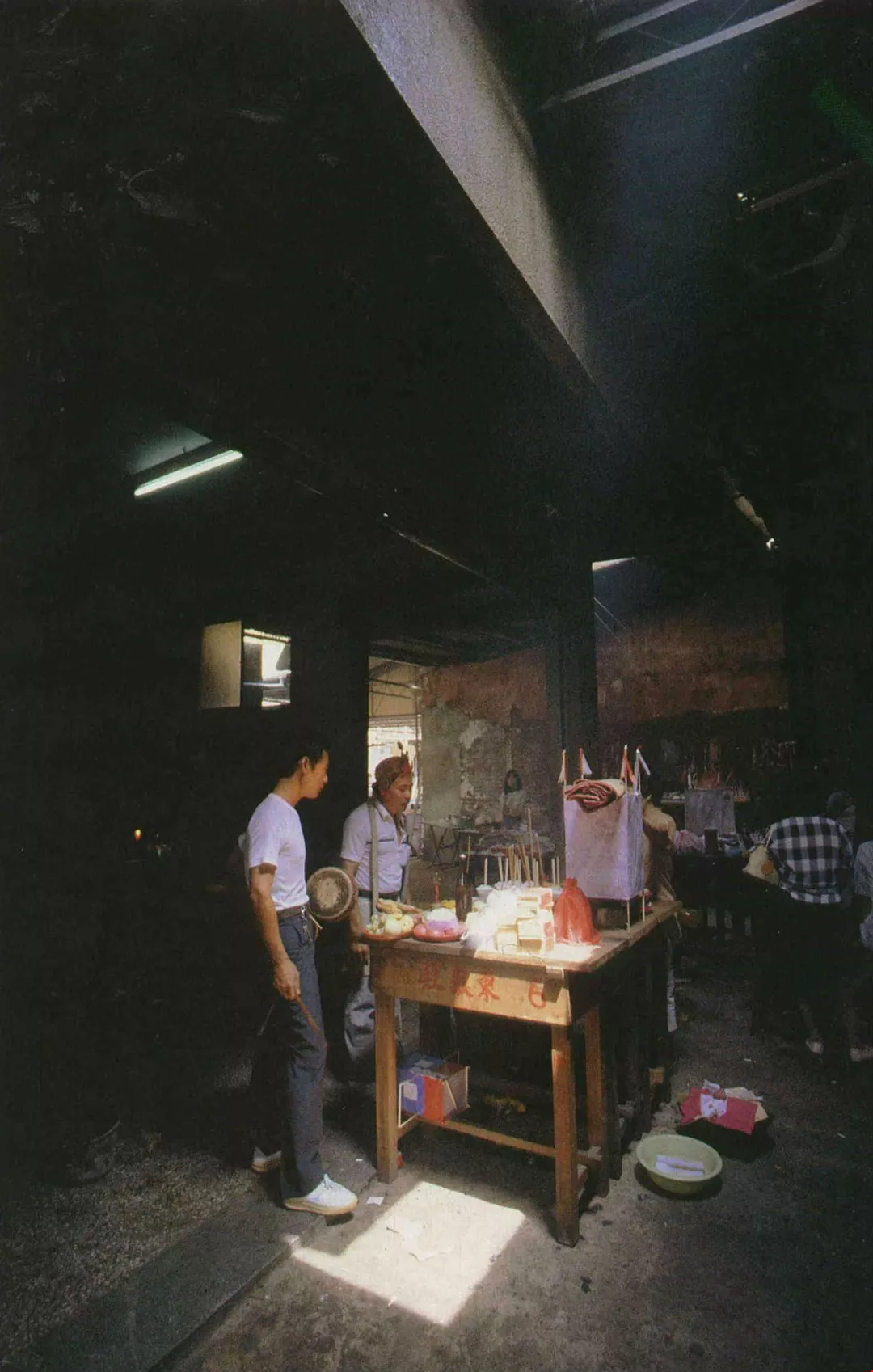
In folk belief, worship and burning spirit money are inseparably intertwined. (photo by Huang Lili)
Proper distinctions are observed in the realm of spirit money, with gold foil reserved for deities, while silver foil is strictly for ghosts and spirits. (photo by Huang Lili)
Burning gold-foil spirit money for souls of the dead? Watch out you don't bring down the wrath of petty demons.
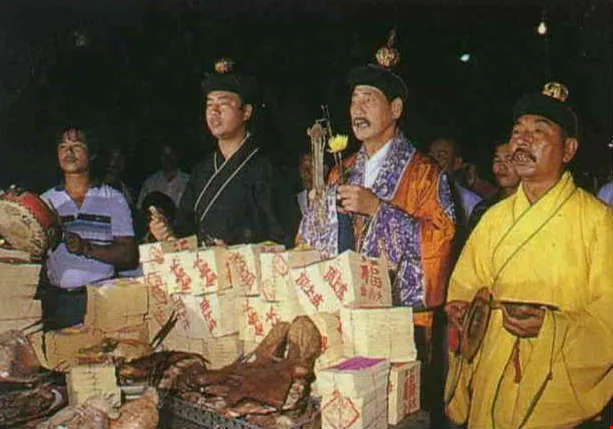
Taoist priests always burn some spirit money to "bribe" the gods.
Paper talismans to ward off evil are burnt with specific recipients in mind.
After burning paper money, a paper safe is burned as well to keep it all in. (photo by Huang Lili)
When the doors of Hell are opened at the start of the 7th lunar month, each household burns spirit money to ward off harm and to mollify the souls of the dead.
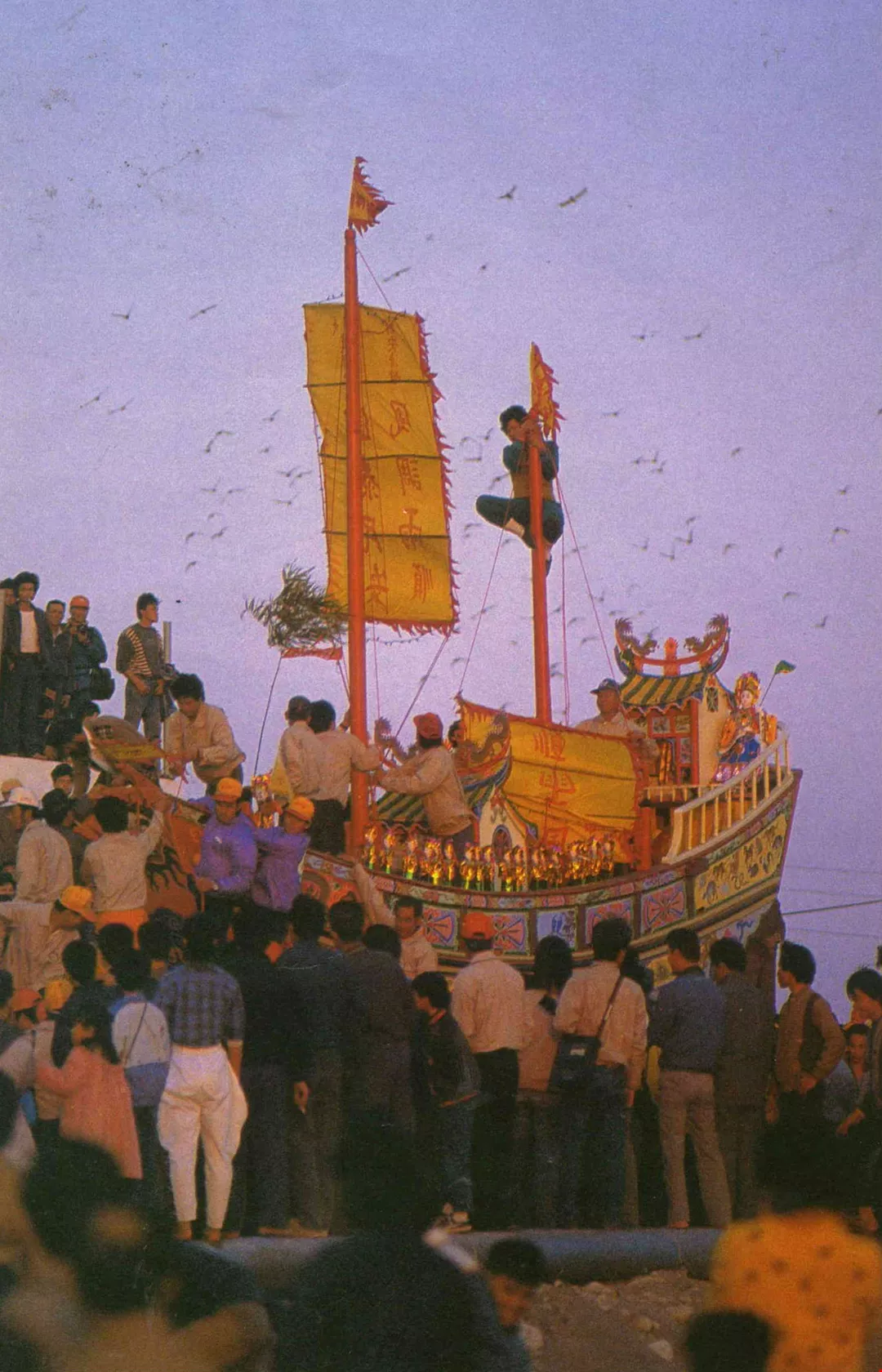
On the day before Ghost Festival, when homeless spirits circulate among and bedevil the living, little flotillas are dispatched to meet the souls of those lost at sea. The boats carry spirit money, meant to appease the ghosts. (photo by Arthur Cheng)
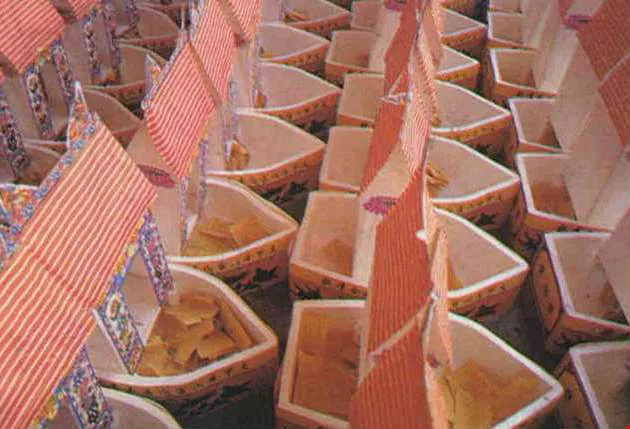
The boats carry spirit money, meant to appease the ghosts. (photo by Arthur Cheng)
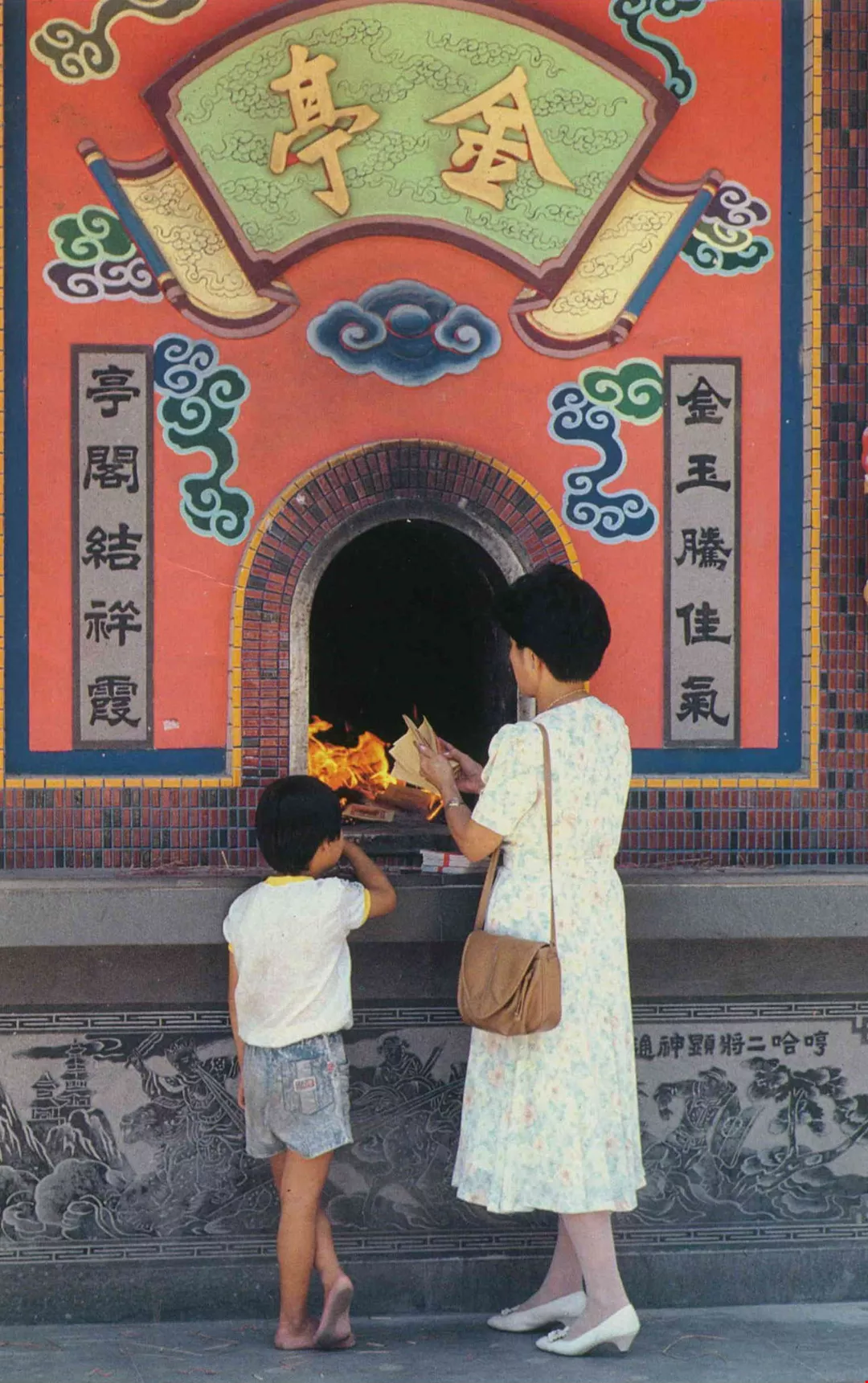
In folk belief, worship and burning spirit money are inseparably intertwined. (photo by Huang Lili)
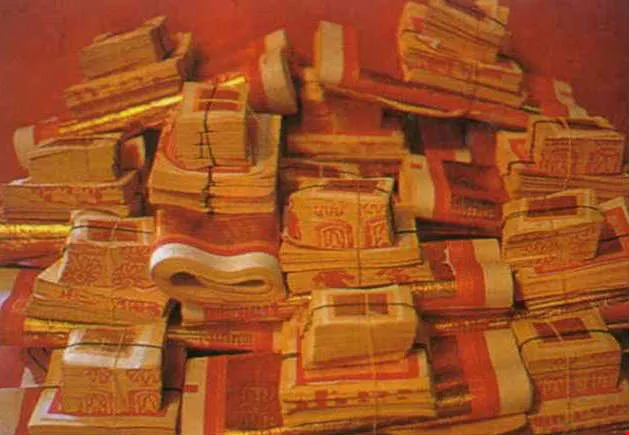
Burning gold-foil spirit money for souls of the dead? Watch out you don't bring down the wrath of petty demons.
Proper distinctions are observed in the realm of spirit money, with gold foil reserved for deities, while silver foil is strictly for ghosts and spirits. (photo by Huang Lili)
Taoist priests always burn some spirit money to "bribe" the gods.
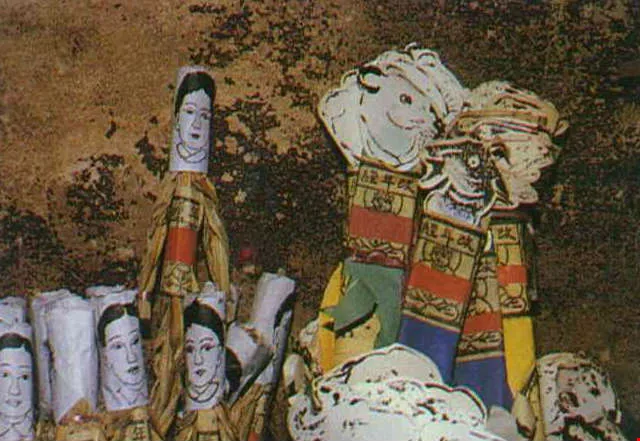
Paper talismans to ward off evil are burnt with specific recipients in mind.
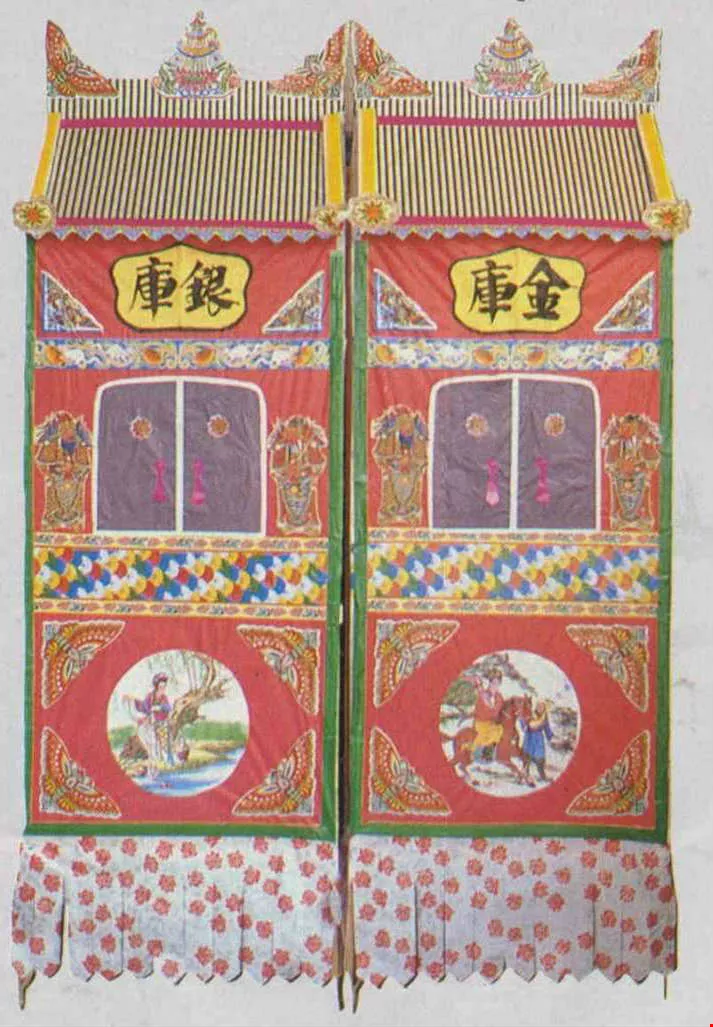
After burning paper money, a paper safe is burned as well to keep it all in. (photo by Huang Lili)
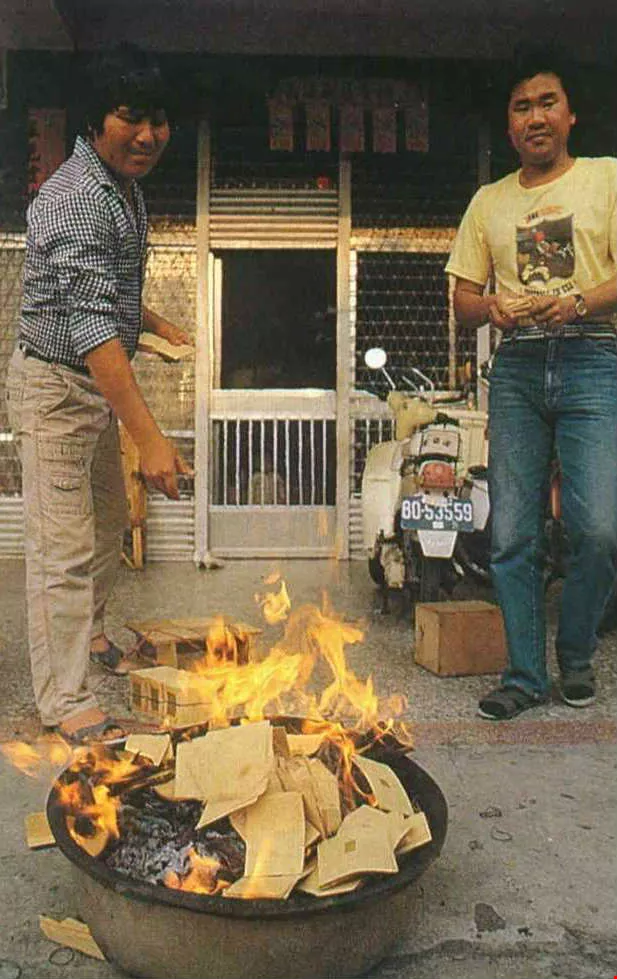
When the doors of Hell are opened at the start of the 7th lunar month, each household burns spirit money to ward off harm and to mollify the souls of the dead.


@List.jpg?w=522&h=410&mode=crop&format=webp&quality=80)


