They Were Little Overseas Students, Too
Jackie Chen / photos China's First Hundred / tr. by Peter Eberly
February 1986


From 1872 to 1874, the Chinese Educational Mission of the Ching dynasty imperial government selected 120 outstanding young scholars to study in the United States. These overseas students, genuinely "little" (their ages ranged from 10 to 15), were the first batch of Chinese students publicly funded to study overseas. According to plan, they were supposed to remain in the U.S. for 15 years and study subjects related to military science.
The plan, conceived by Dr. Yung Wing, who was appointed deputy commissioner of the mission, and supported by Viceroys Li Hung-chang and Tseng Kuo- fan, was bold. Two critical questions were in doubt: Could the students learn all they were expected to? And, young as they were, could they remain faithful to their Confucian upbringing under the influence of Western civilization?
The Ching court approached this unprecedented experiment rather cautiously. While no distinctions were made between Manchu children and Han Chinese, there were clear stipulations. Students had first to complete satisfactorily six months of preparatory study at the mission's school in Shanghai before going abroad. And once overseas, they had, along with Western courses, to continue to study Chinese subjects, such as the Classic of Filial Piety, the Five Classics, and Imperial Rescripts, in order to "cultivate their respect for the sovereign and their attachment to their superiors."
But actual developments were beyond the control of the Ching court.
According to Thomas Lafargue's China's First Hundred, a history of the first Chinese students to study abroad, the young children changed greatly in both appearance and behavior within a few months of their arrival in the West.
Their Americanization was surprisingly rapid. Their silk gowns, satin shoes, skullcaps, and pigtails, which had prompted their American classmates to taunt them as "Chinese girls" and had led to bloody noses and black eyes, were replaced by more Western dress.
The minds under the skullcaps were changing, too.
The children had nothing of the disdain of the traditional Chinese gentleman for physical exertion. They were active in sports--in rowing and in playing baseball. One was remembered by his American classmates as a first-class pitcher. "When he threw the ball, his pigtail would fly up in the air in a perfect arc," a classmate recalled.
Since they lived with American families, their English was fluent. One was even an accomplished debater. Some cut off their pigtails or became Christians. A few borrowed money and got into debt.
All these things made the Manchu court very nervous. Who could guarantee that the students might not wind up the same as foreigners?
The Foreign Affairs Ministry rebuked the Chinese Educational Mission in a memorial which stated, "Customs and etiquette in the foreign country are vicious and improper. Confucian creed is lacking all the young students. They could not resist the temptations."
The mission was closed in 1882, and the 120 students returned to their homeland 10 years after the first of them had left. But it was not to a warm welcome. The Ching government was full of suspicion for these "foreignized" Chinese and sent them off to translate and teach beginners' English.
Only later were their talents recognized and put to use in China's drive to modernize, building railroads, opening mines, and laying telegraph lines. Many rose high in the government, including T'ang Shao-yi, who served as the first Pre mier of the Republic of China.
Their achievements well repaid their country's hopes in them but, from another standpoint, what effect did their American education have on the students themselves? Lafargue met some of them in Shanghai in 1940 and described them this way: "Although they were very old and wore traditional Chinese gowns, they still called one another by their English nicknames and used American slang. . . . Their lifestyle was completely different from that of the Chinese around them. All their lives they were strangers in their own land."
After this first experiment, students were sent overseas at an older age. The next group went after 1909, supported by the American portions of the Boxer indemnity payments, which the U.S. had decided to return.
"At that time, Chinese students were a novelty in the U.S.," recalls Hu Kuang- piao, now 90, who studied at M.I.T. "People were curious. And since we had already received a fairly complete Chinese education before we came and could talk about Chinese culture, it made the Americans think, 'Oh, so Chinese can do more than just open restaurants and run laundries!'"
After the founding of the Republic in 1912, overseas students increased and the social climate at home was more open. Returned students moved up quickly in the government and in academic circles. Historians assert that many of the social enlightenment movements of the first part of the 20th century--such as the New Culture Movement and those for scientific education and social reform--were initiated by these returned scholars.
From 1909 to 1928, when the program ended, over 3000 students were sent overseas on public or private funds. Government scholarships were generous. In addition to tuition, students received US$80 a month for living expenses, "Really a great deal," one old gentleman, a former student, recalls. Besides paying for food and housing, this money enabled the students to pursue cultural interests and reflect on the differences they encountered. Dr. Hu Shih conceived of the vernacular literature movement in a dormitory at Columbia University, while contacts by students with the pragmatic philosophy of John Dewey and with free and universal education, formed the foundation for later reform.
But while the students of this period were Western in their thinking, they remained thoroughly Chinese in behavior. Hu Shih, for example, who was not unsought after by young ladies while in the U.S., returned to marry the woman his parents had betrothed him to, even though she was culturally illiterate and never understood the importance of his work. Dr. Hu studied in the U.S. for eight years, but he never lost the traditional morality of a Confucian gentleman or was infected by the values of Western society.
The number of Chinese students going abroad ebbed and flowed during the tumultuous 1930s and '40s, with the recent wave beginning in the 1970s.
Over those 100 years, China had changed, and so had the little overseas students.
[Picture Caption]
The man who first advocated sending Chinese students overseas--Dr. Yung Wing (1828-1912).
The Chinese Educational Mission's building in Hartford, Connecticut, built in 1877.
The "Orientals," the baseball team formed in Hartford by the first group of Chinese students sent abroad. Front row, second from the right, is Liang Tun-yen, the pitcher with the flying pigtail.
Hu Kuang-piao (rear, second from right) had been back in China for 14 years when he posed in this family portrait. Of the seven Hu brothers, five studied overseas. (photo courtesy of Hu Kuang-piao)
Hu Kuang-piao was a "little overseas student" on a Boxer indemnity scholarship. The plaque was awarded to him by National Tsing Hua University on the 70th anniversary of his trip. (Photo by Chang Liang-kang.)
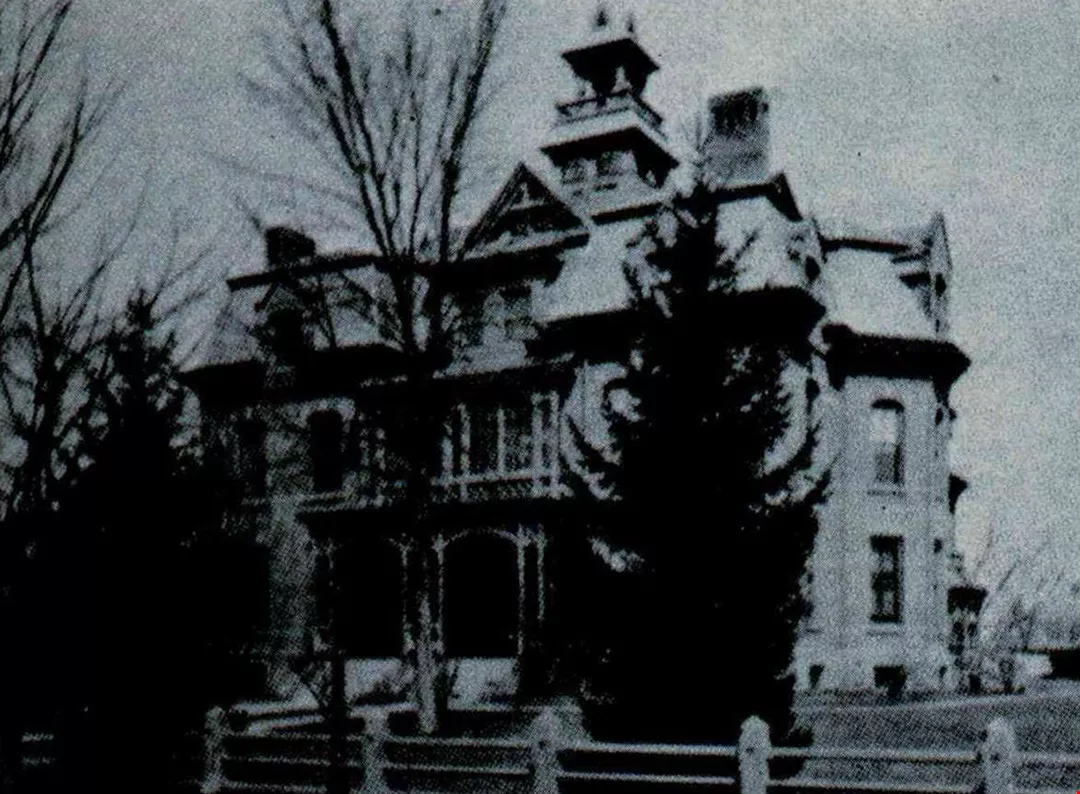
The Chinese Educational Mission's building in Hartford, Connecticut, built in 1877.
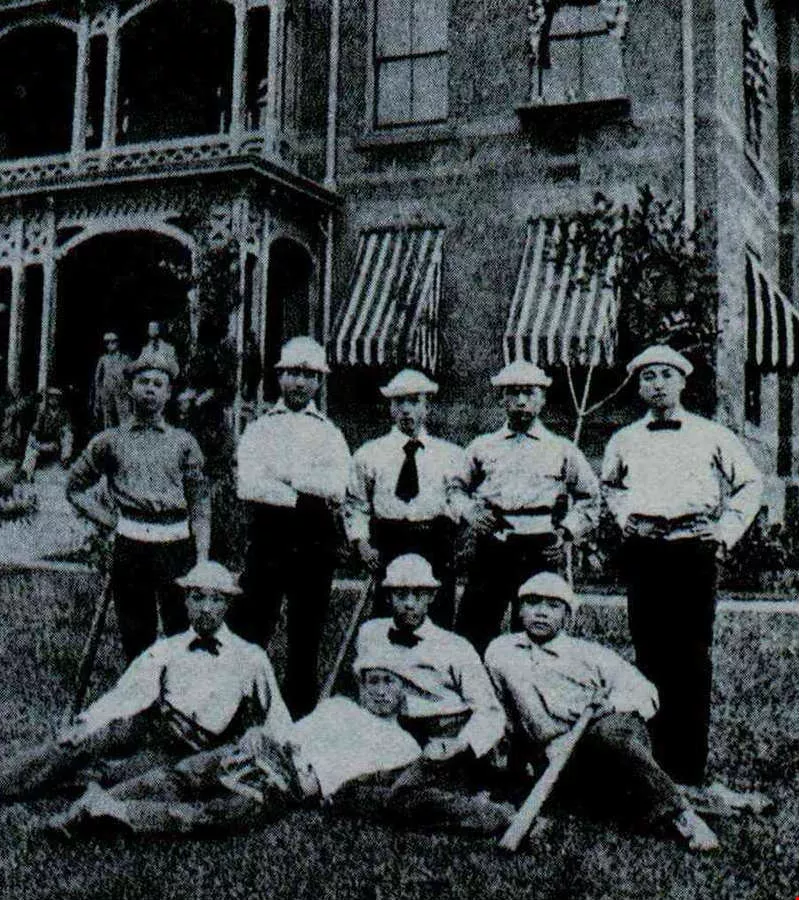
The "Orientals," the baseball team formed in Hartford by the first group of Chinese students sent abroad. Front row, second from the right, is Liang Tun-yen, the pitcher with the flying pigtail. Hu Kuang-piao (rear, second from right) had been back in China for 14 years when he posed in this family portrait. Of the seven Hu brothers, five studied overseas. (photo courtesy of Hu Kuang-piao)
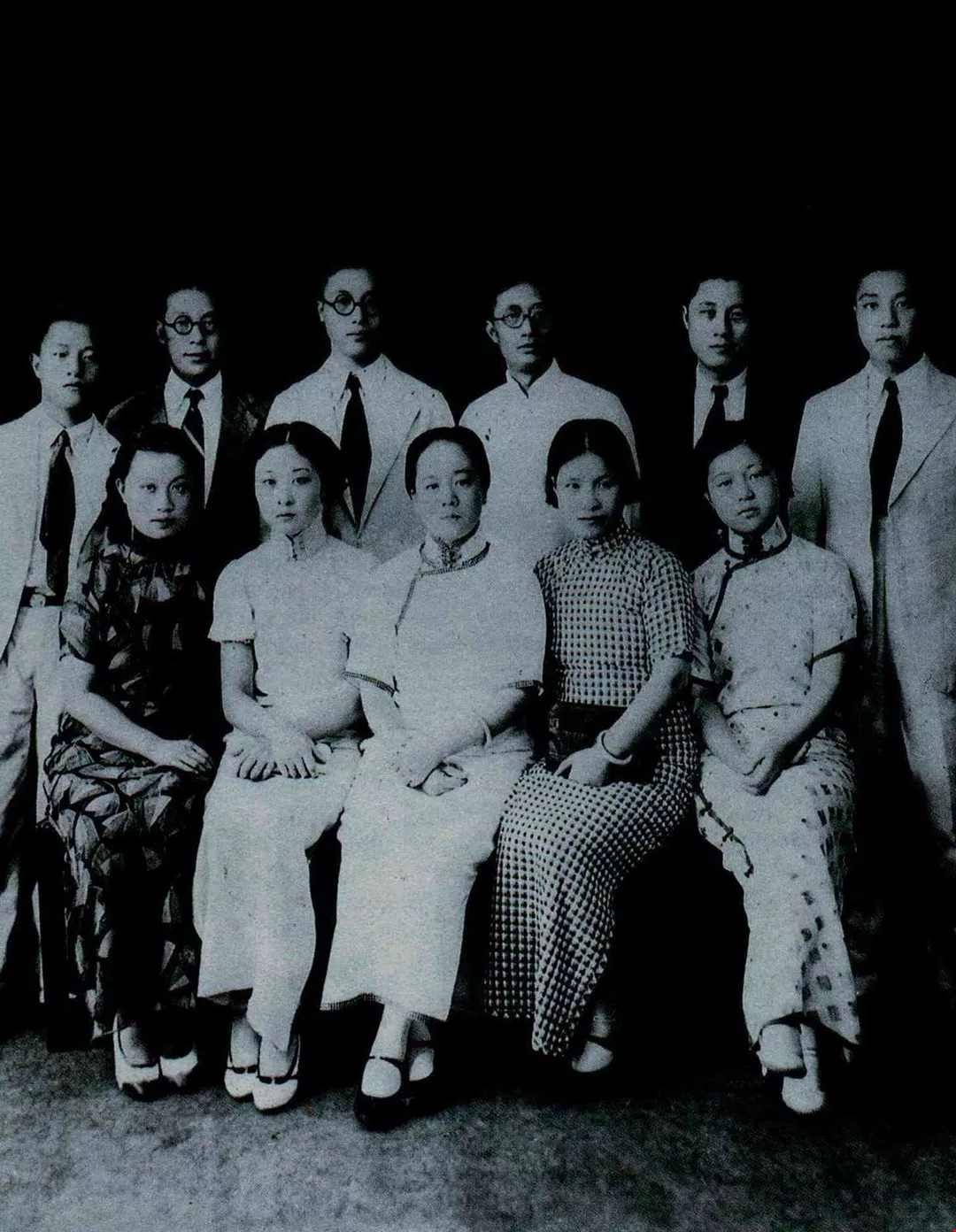
Hu Kuang-piao (rear, second from right) had been back in China for 14 years when he posed in this family portrait. Of the seven Hu brothers, five studied overseas. (photo courtesy of Hu Kuang-piao)
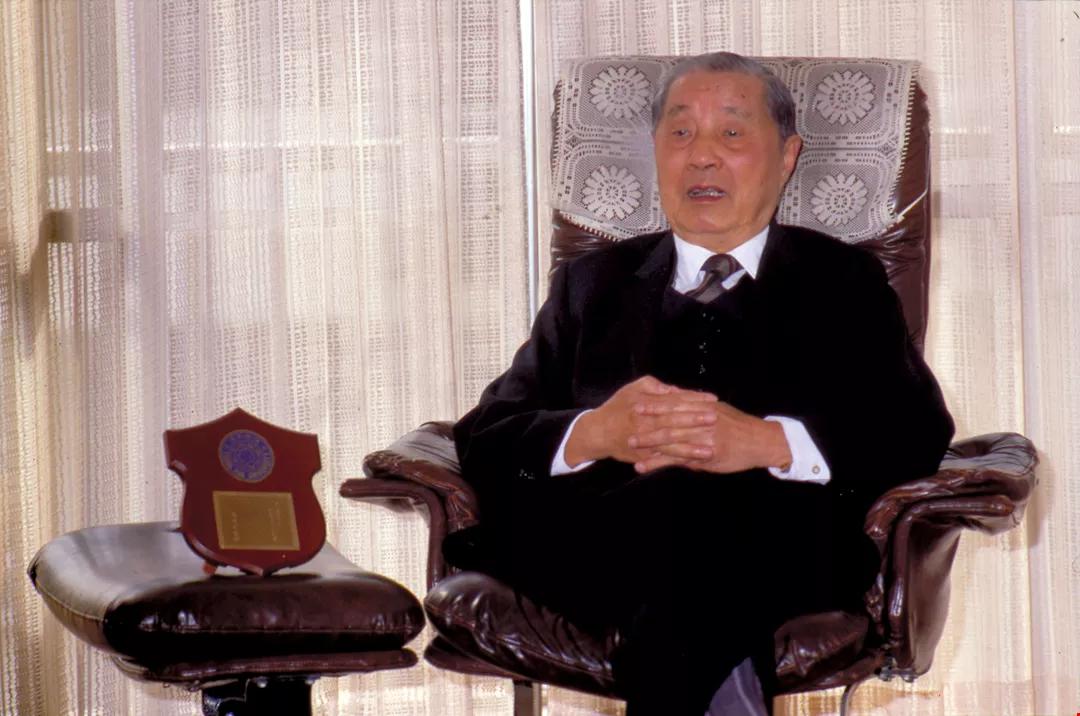
Hu Kuang-piao was a "little overseas student" on a Boxer indemnity scholarship. The plaque was awarded to him by National Tsing Hua University on the 70th anniversary of his trip. (Photo by Chang Liang-kang.)


@List.jpg?w=522&h=410&mode=crop&format=webp&quality=80)


