Of War and Remembrance: Taiwan's Japanese Military Veterans
Jackie Chen / photos Vincent Chang / tr. by Jonathan Barnard
June 1993


At the end of World WarII, many young Taiwanese men were drafted to fight in the Japanese military where they were called Japanese soldiers from Taiwan. According to Japanese statistics there were about 220,000 such soldiers. Though many were killed, many more survived. In mid April of this year a group of these survivors organized the Kaochih Friendship Society in Changhua. When they were all gathered together, what do you think they talked about?
One day, a group of men in their sixties and seventies with robust physiques despite their greying hair, came into a six-story house on Changhua's Changfa Street. Upon seeing them now, you couldn't help but imagine how valiant they must have looked way back when.
Whether strangers or friends, they mocked each other. One who had dyed his hair became an immediate target for derision: "Ah, you really know the secret of eternal youth--your hair doesn't turn white?!" Making a play on words, when they first meet each other, they would say that each other looked like charbroiled pig heads. The word for "being cooked enough" and "looking familiar" are the same in Chinese.] Someone said that he was next to so-and-so's bed in the army, and then fifty years later they ended up working at the same place. And what do you know? Their desks were right next to each other.
They are all members of a newly established group in Changhua, the Kaochih Friendship Society. Most of them were 17-and 18-year-old young men when forced to join the Japanese military during World War II.
The society originally hoped to get its members mainly from the navy, and the name Kaochih was selected because the Japanese navy's Taiwan headquarters was in Kaohsiung. But Yang Chun-cheng, the founder and chairman of the society, points out that Kaochih met with an enthusiastic response, and quite a few Taiwanese veterans who were not in the navy wanted to join. Now membership is not restricted to navy veterans. The more than 200 members hail from all over the province.
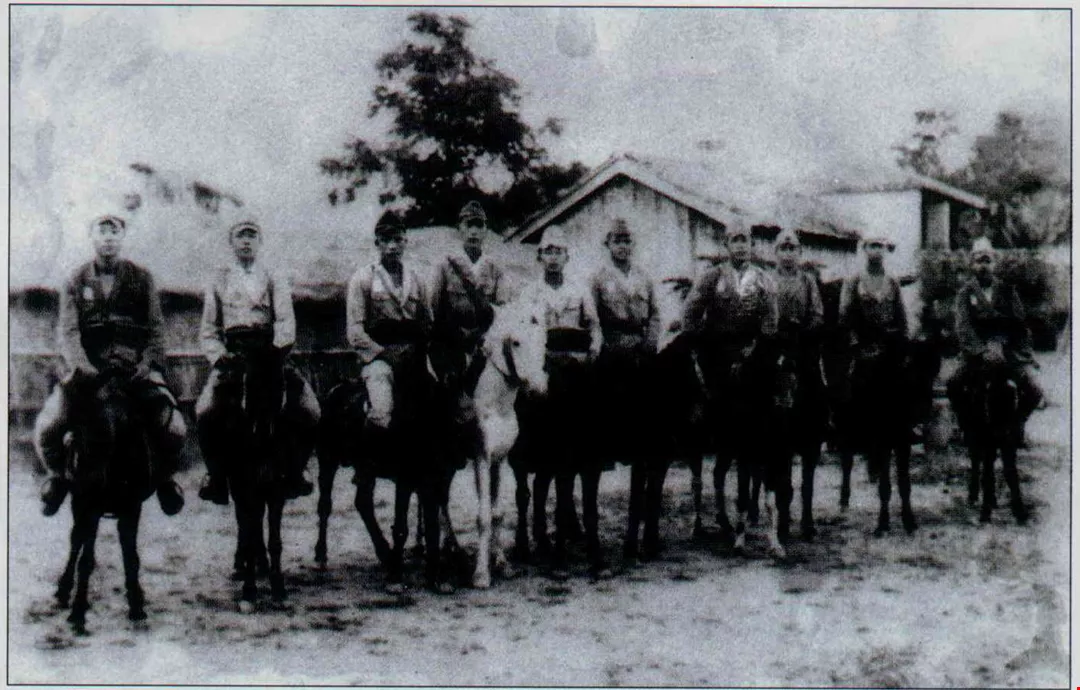
During the war, Wu Chin-mu served in the police force of Hainan Island. The force was described as for "preserving order" but in reality they still had to fight in the war. (photo courtesy of Wu Chin-mu)
The whole story:
They all have their fair share of stories to tell. Let's listen:
"Thinking back to that year, I remember how lots of five-colored flags were flying in front of the Temple of the Goddess of the Sea," recalls Hsiao Wen-che, who is of good health despite his seventy years of age. "Those of us who were going off to fight in the 'holy war' were being publicly praised. Just then, there was loud thunder clap and rain, and everyone said that it was a bad omen. We walked to Wangtien and slept in a stable that night. How it stunk!"
"We were posted in Hainan Island, and when the war was over, the Japanese were taken away first," recalls Wu Chin-mu, who has made the trip from Tachia. "We were waiting for boats to bring us back home. I can still remember rummaging in the garbage heaps for food. Sometimes, using a tin can as a container, I'd collect people's left over rice, or we might steal corn from the fields."
"During a battle on Hainan Island, I got malaria," says Lai Yao-sung, who is a man of stocky build wearing shorts. Marching along, I felt my legs and arms getting weak, but I went on marching and halting, marching and halting with everyone else. Suddenly I looked up and there was no one in front of me. In the deep and wild mountains, with lots of poisonous snakes and wild animals, I felt at a loss but just kept following their footprints. While walking I got covered with bug bites but I didn't dare stop. When it got light, the troops up ahead made a roll call and sent men back for me. They found me stranded by a stream." If he hadn't been in good shape to begin with, he says, he would have died.
"In 1945 when I was posted at Hsinshe, it was already at the end of the war. The Japanese drill sergeants were extremely strict. At night, before it was time to sleep, they would often whack us on the behind with their batons. It was called 'punishment,' but in reality they were just training us to be obedient," says Hsu Tsung-chien.
"At that time there were frequent air-raids, which made it difficult to sleep, but during the day, you still had to dig air-raid ditches and defense shelters and do other work as usual. The food wasn't any good either: a pot of greens and rice congee, and not a drop of oil. Some people couldn't take the double torture--to spirit and body--and committed suicide." Here his eyes get teary.
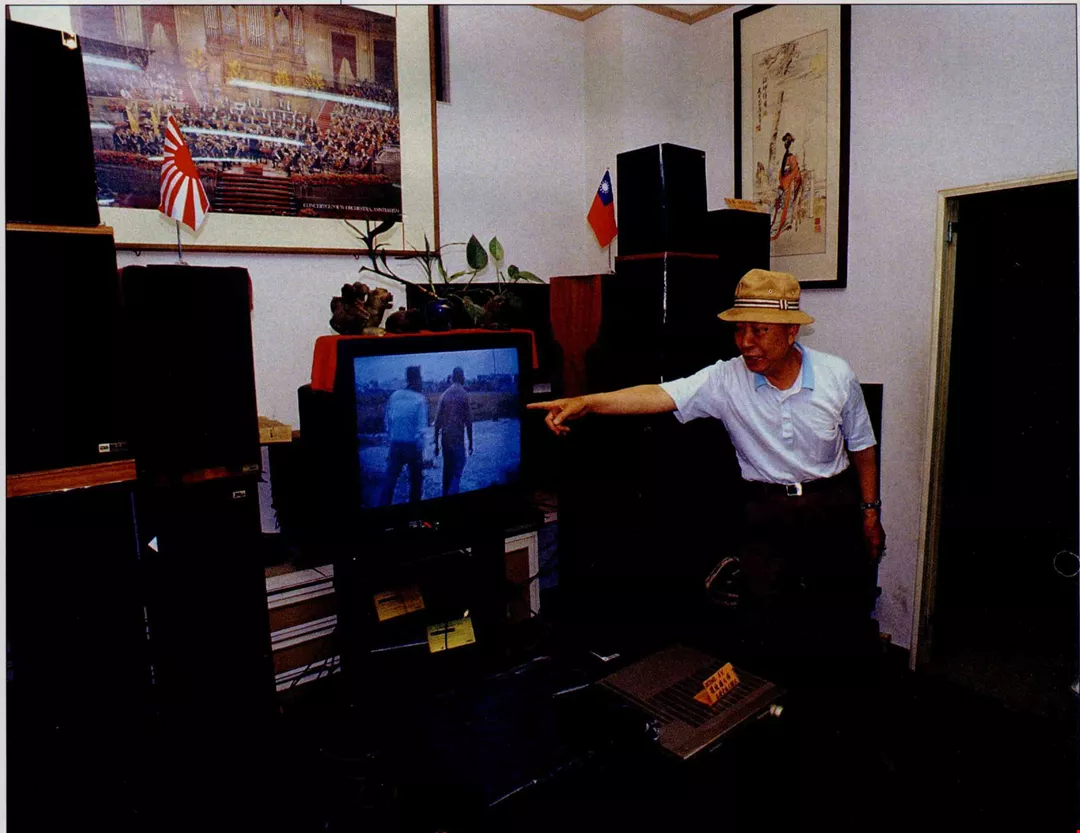
In Director Yang's son's electrical appliance store, Wang Chin-chung screens for everyone his films about the current conditions of lonely and helpless former soldiers, who were their brothers in difficult times.
Unhappy with governments:
"On the train coming home, I suddenly felt uncomfortable all over. I didn't find out until I got home that my mother had died. Could that response on the train have been my mother's tears?" says society president Yang Chun-cheng with tears streaming down his face.
"At home I was the only child, and my mother worried to death over me. I had never thought that going to war for just a year and some would separate Mother and me forever."
This is not the first such society for "old folks" to have been organized, but it is of an unusual nature. And so on April 17 of this year, when the first full meeting of the society was held at the Changhua scenic spot of Mt.Pakua, it attracted a great deal of media attention.
Like many social groups, "Kaochih" puts the social function of people connecting with each other as its goal. It says it provides the following services: "matchmaking for members' unwed children, employment introductions and commercial recommendations" and "providing members with support in time of distress." But the clauses about "helping veterans find information about others with whom they have lost contact" and "fighting for the rights of World WarII veterans" point to the special features of the society.
As witnesses to the age--or perhaps sacrifices of the political environment--the members of the society are extremely sensitive about political topics. Even if the society's charter explicitly states, "This society doesn't participate in any political activity," in reality its members like to talk about political parties and current events and even make political analysis.
Mentioning politics to these old soldiers uncovers a well of dissatisfaction. Hsieh Chun-yi from Tachia says if Taiwan hadn't become a colony, they wouldn't have been forced to serve as cannon fodder. He says that many people didn't understand them then and still don't now.
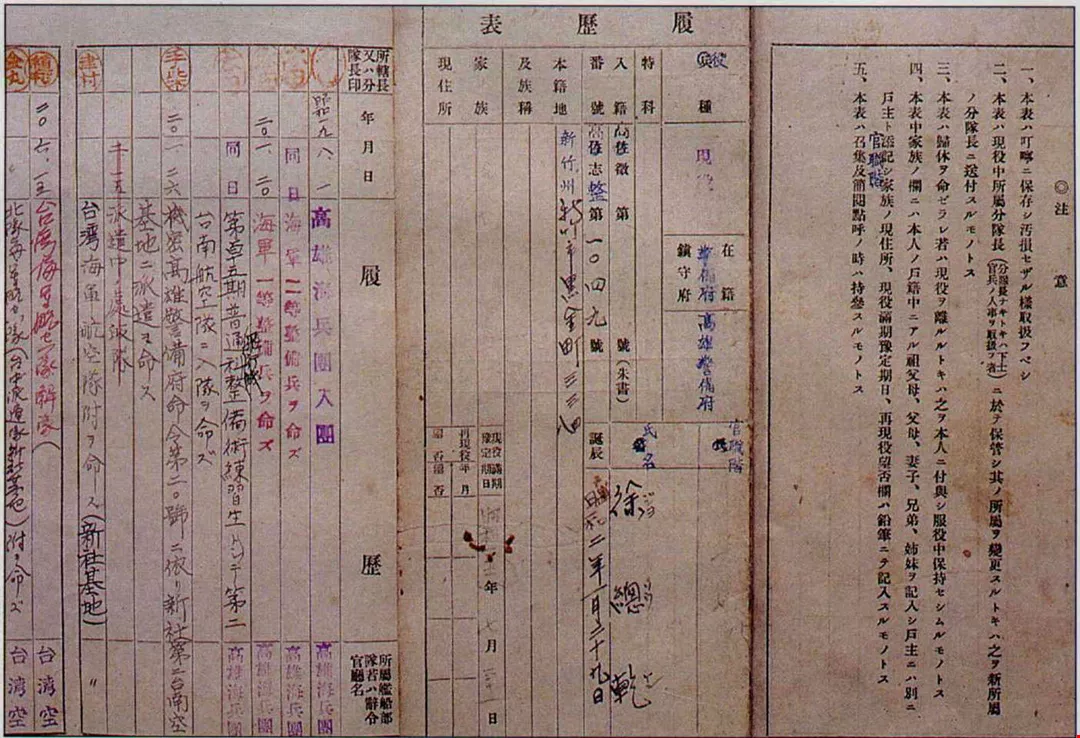
This document lists virtually all of the military information about agiven soldier. Virtually all members of "Kaochih" have one.
Not worthy of death?!
"One member of the Legislative Yuan said, 'these people took up arms against our ancestors. Why should we have sympathy for them? Death is too good for them!'" says Hsieh Chun-yi. This kind of talk really gets under their skin. "They should know that we were drafted against our wills and that protesting it would have meant death."
Changhua resident Wang Chin-chung mentions that when the United Nations sent them back to Taiwan from Rangoon, they passed by Singapore, where overseas Chinese pelted them with rocks and called them "traitors." The experience made them extremely unhappy.
This experience of "fighting for the enemy" even affected the employment prospects of "Kaochih" members when they got home. For example, before Wang Chin-chung went to war, he worked in a municipal Public Service Bureau, but when he returned home he couldn't find any work and went to the fields as a farmer. Lai Yao-sung even feels that when he returned home old veterans would intentionally act as if they didn't know each other in public so people wouldn't get the wrong idea that they were plotting against the government.
Some are deeply resentful about the way the R.O.C. returned them to civilian life in Taiwan.
"Returning to the port of Keelung to welcoming cannon blasts and banners flapping in the breeze, I thought 'how fortunate I am to return," recalls Wang Chin-chung. "Hungry and thirsty, I looked at the food they were preparing by the banks to give to the returning soldiers. An old oil drum was being used for a pot of rice congee, and some scallions were floating on top. 'This is the big welcoming dinner?' I was piqued. 'Food for pigs!' A few people got very upset and turned over the congee."
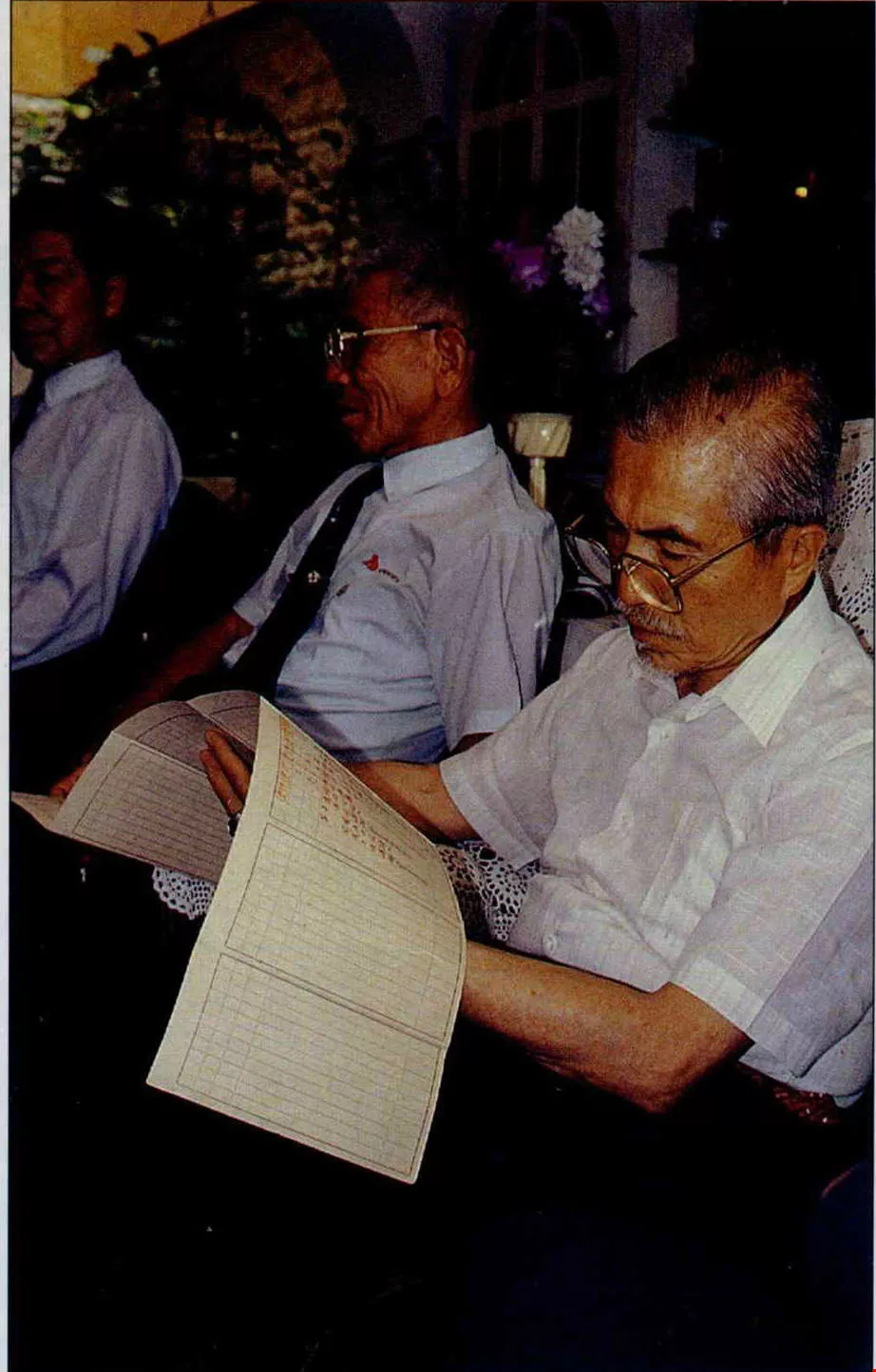
Regarding the Buddhist metaphor "building, living, falling and emptiness," Hsiao Wen-che says that he has already passed through the first three stages. Only by successfully entering the fourth will his life not have been a waste.
The tyrannical Japanese:
"At that time on Hainan Island, the Japanese had all returned, and only us soldiers from Taiwan were left," says Wu Chin-mu. "Lonely and away from home, we were bullied by 'the Chinese soldiers.' We were told that food had been shipped, and when we went to pick it up, they'd only give us two cups of rice, saying this was two months of food."
Waiting for the boats in the port of Yulin, we had no food and no money and so we had to think of ways to help ourselves. At the time, I was serving as a cook for a Chinese lieutenant. He lived and ate well and had three wives. Besides cooking, I also had to wash the wives' clothing. After working there for three days, I ran away," says Lai Yao-sung, recalling as vividly as if it had happened yesterday and still boiling over with anger about the corruption of the army.
Many "Kaochih" members are also full of bitterness toward the Japanese, not only for colonizing Taiwan but for holding prejudices against and oppressing the Taiwanese.
Wang Chin-chung believes that they, like the Japanese soldiers, risked their lives for the Japanese government, and he is disgruntled about the Japanese government's giving compensation only to Japanese soldiers and not to the Taiwanese they forced to serve. While he says that most of the members of Kaochih have good household incomes, many of the old soldiers have no one to depend on, and these are the real sacrificial lambs of the age.
Hoping to make the most of the rest of his life, he wants to work on behalf of his less fortunate fellow veterans. He has a fondness for electronic gadgets, and he's gotten good with a video camera. As soon as he hears of veterans in difficulty, whether they're in the mountains or by the beach, he goes to their homes and films their situation, sending these tapes to such media as NHK television or relevant R.O.C. or Japanese government agencies, asking them to formally look into the problem and offer assistance.
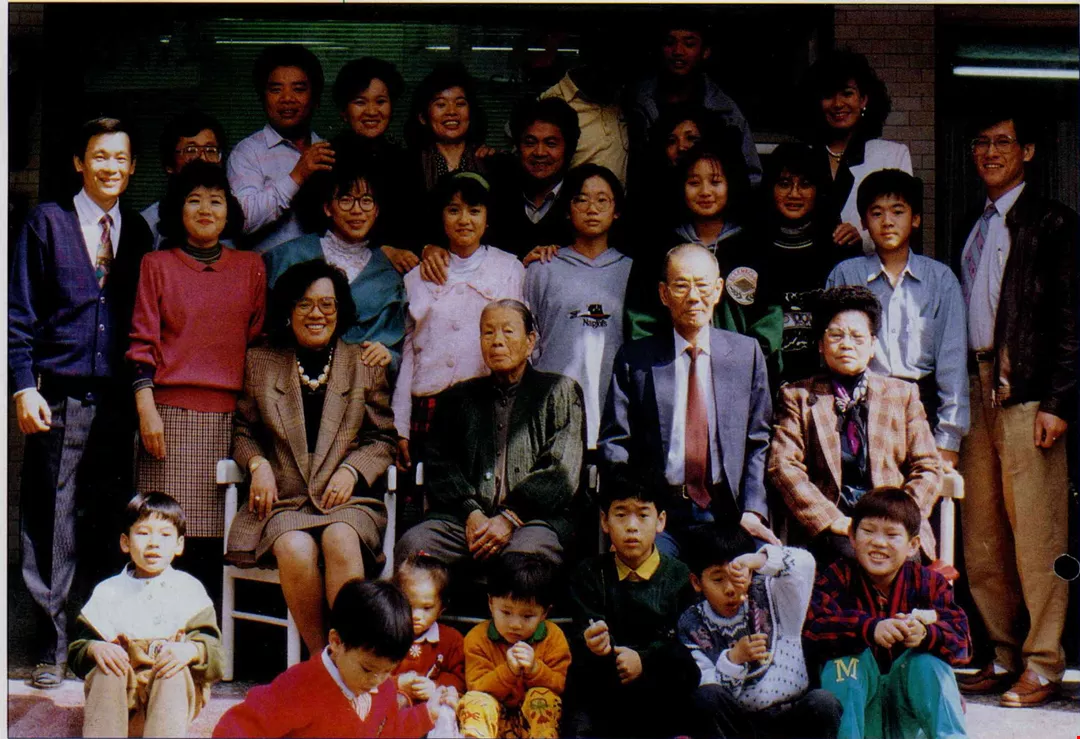
Surviving war to end up with some 30 children and grandchildren, Director Yang is a lucky man indeed. (photo courtesy of Yang Chun-cheng)
The important thing is that we're still alive:
Chairman Yang Chun-cheng says that Kaochih members have experienced two governments. For the government of their motherland--the R.O.C.--they can't help but have strange emotions, wanting "their mother to love its children." But he holds that this kind of feeling about past matters, whether in reminiscing or discussions, is of no actual help. "What's important is that we're still alive. These friends who went through difficult times together, who should have died but didn't, can still make a difference."
Hsiao Wen-che, the vice president of the society, seems to see things even more clearly. He says that Buddhists have a saying, "building, living, falling and emptiness." Living to their golden age, they have all had the experience of "building, living and falling." All that is left for them is "emptiness."
"Now I'm seventy. My mother lived until she was 90. Doing a little math, I figure I've got at least 4,000 more days to go. I want my remaining days to be happy and full of hope!" says this senior, who opened a successful fabric store when young. "I was fortunate to live, and later I fathered three sons and three daughters. My children and grandchildren total more than 30 in all. My good fortune ought to be pretty obvious," says Yang Chun-cheng.
Experiencing the chaos of war, history and hatred was bad luck, but surviving these twists of fate to experience life and have a house full of children and grandchildren is good fortune indeed. Is Kaochih our age in miniature? It could very well be.
[Picture Caption]
p.110
In Director Yang's fancy European-style living room,"Kaochih" members talk freely about their feelings about the war. Sitting, from right to left, are Hsiao Wen-che, Yang Chun-cheng, Hsu Tsung-chien. Standing, from right to left, are Hsieh Chun-yi, Wu Chin-mu and Lai Yao-sung.
p.111
During the war, Wu Chin-mu served in the police force of Hainan Island. The force was described as for "preserving order" but in reality they still had to fight in the war. (photo courtesy of Wu Chin-mu)
p.112
In Director Yang's son's electrical appliance store, Wang Chin-chung screens for everyone his films about the current conditions of lonely and helpless former soldiers, who were their brothers in difficult times.
p.113
This document lists virtually all of the military information about a given soldier. Virtually all members of "Kaochih" have one.
p.114
Regarding the Buddhist metaphor "building, living, falling and emptiness," Hsiao Wen-che says that he has already passed through the first three stages. Only by successfully entering the fourth will his life not have been a waste.
p.115
Surviving war to end up with some 30 children and grandchildren, Director Yang is a lucky man indeed. (photo courtesy of Yang Chun-cheng)


@List.jpg?w=522&h=410&mode=crop&format=webp&quality=80)


@List.jpg?w=522&h=410&mode=crop&format=webp&quality=80)
