

Forty-six years ago, Wen Jung-kun "escaped" on his own to Nanchuang Rural Township in Miaoli County. From youth to middle age, he has passed thirty years of poverty and hardship. Several times on the verge of collapse, he has sought nothing but a warm place to live and food enough for his whole family to pass their days peacefully.
Perhaps only those who have been through poverty can understand what it means. Twenty years ago, when he had barely enough food for himself, and even had a problem finding shelter from the elements, Wen Jung-kun even then had begun lending a helping hand to the poor. From giving one bowl of rice to one person to assisting more than 100 poor households today, he has left his mark all over the Nanchuang mountain area. Those who know him call him "Uncle Ah Kun," while those who don't know his name just call him "a kindhearted man." Some say he is simply the township's "underground mayor"!
In Miaoli County, one of the poorest in Taiwan, Nanchuang Rural Township is the poorest district.
With its mountainous terrain, it offers little arable land. In the old days forestry and mining brought some prosperity. But these days the mines are exhausted and coal mining doesn't return enough of a profit to make it viable, and the mines have closed, while strict new limitations on tree cutting have caused the lumber industry to wither. Aquaculture; cultivation of seedlings, mushrooms, orchids, and tea-seed oil plants; and raising chickens and ducks all used to be sideline industries. but today they have become the main source of income. Falling tax revenues tell the story of an area in decline.
With chances of making a living in these mountains evaporating, people have moved out to urban areas. Over the past 20 years, the population of the rural township has fallen from 20,000 in 1975 to 13,800 in 1994, a loss of more than one-fourth. While there are many cases of whole families pulling up stakes, it has been even more common for young people to go off on their own to seek their fortunes. For Nanchuang, which is said to preserve the most primeval and natural appearance and way of life in all of Miaoli County, what some see as rustic simplicity is in reality a harsh living environment, with dilapidated brick houses and people doing hard labor to stay fed and sheltered, plus some lonely and isolated old people left forgotten in the embrace of the mountain.
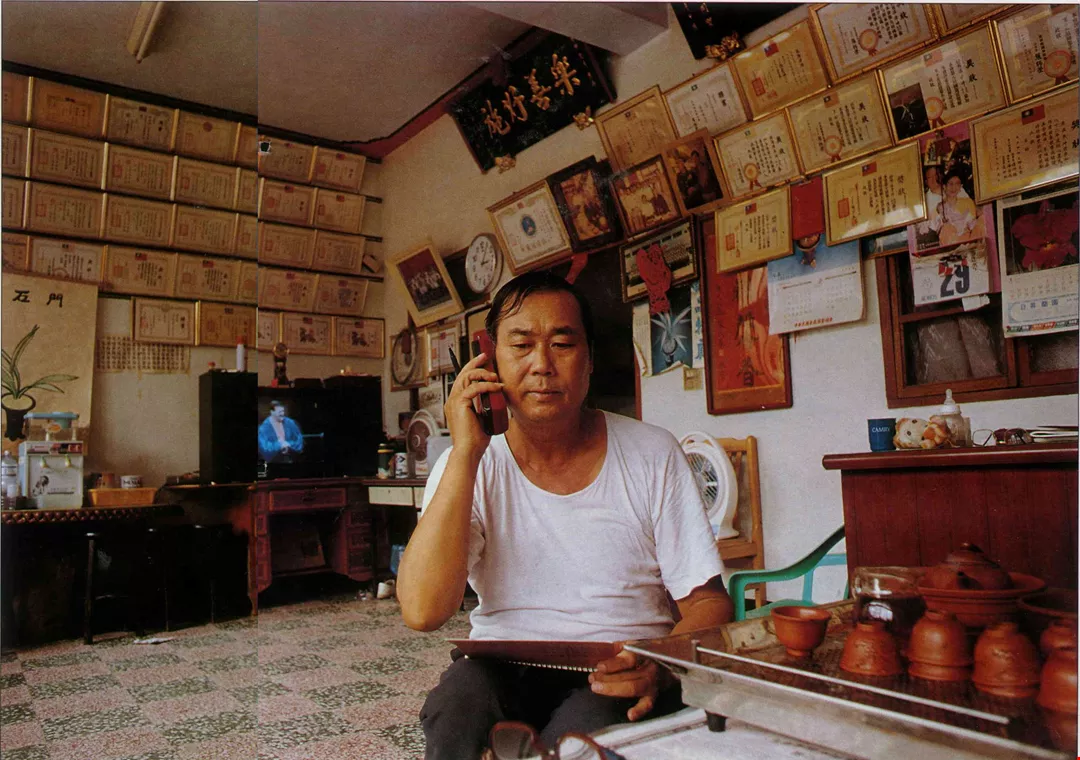
(right) Most of Wen Jung-kun's life has been very hard, giving him a deep understanding of the pain of the poverty-stricken and inspiring his generosity. The awards on the wall are for his orchid cultivation.
Anonymous rice
Many worshippers make the trip to Lion's Head Mountain, with its monasteries and temples, on Sundays and holidays. Kao Shih-jung, who heads a class 3 poor household in a narrow alleyway at the foot of the mountain, heads up the mountain at 6:00 am. Small and dark, the 82-year-old still looks healthy and alert, except for a furrowed brow. At home are a mentally retarded wife and a ten-year-old daughter. His NT$8000 a month pension plus the NT$1400 a month in public assistance are just enough to keep food in their mouths. Therefore, Kao relies on collecting discarded bottles and begging from weekend visitors as important sources of income. He complains, "You can get NT$2 for each bottle, but I don't know what's been happening lately, they are getting harder and harder to find. I'm ashamed to ask travellers for money, but I have no choice. But anyway, they don't give very much." Then his tone changes" "Fortunately Mr. Wen brings rice and money and looks in on us. That helps a lot." Kao Shih-jung doesn't know "Mr. Wen's" full name, though he's been receiving help from him for nearly four years.
Peng Huang Lin-mei is an 83-year-old woman who lives next door to Kao Shih-jung. Two months ago, with the help of a nephew, she moved from a crumbling coal industry dormitory deep in the mountains to the brick house she occupies now. Her two sons have left home: One drives a taxi in Taipei and is a volunteer traffic policeman, and the other has gone to Thailand to start a business. "I don't know how many years it's been since they came home," she says tilting her head, unable to recall when she last saw her sons. "They haven't come back, and they haven't sent any money back, either." Having lived for many years alone without an income, she is considered a class 2 poor household, receiving NT$3800 per month. But she still has to pay for trips to the doctor and medication. For many years now, someone has been regularly bringing her rice and money. "I don't know who it is."
Neither Kao nor Peng are aware that they have made "Ah Kun's List" of poor households.
If you throw out the name Wen Jung-kun in Nanchuang, not many people will know who you mean. But when you say, "Tractor Kun," lights of recognition flash. Many Nanchuang residents share the memory of Wen Jung-kun driving a tractor and moving gravel, bamboo, and bricks all over the place ten or twenty years ago. In the last few years, stories of his assistance to poor households have circulated around the district byways.
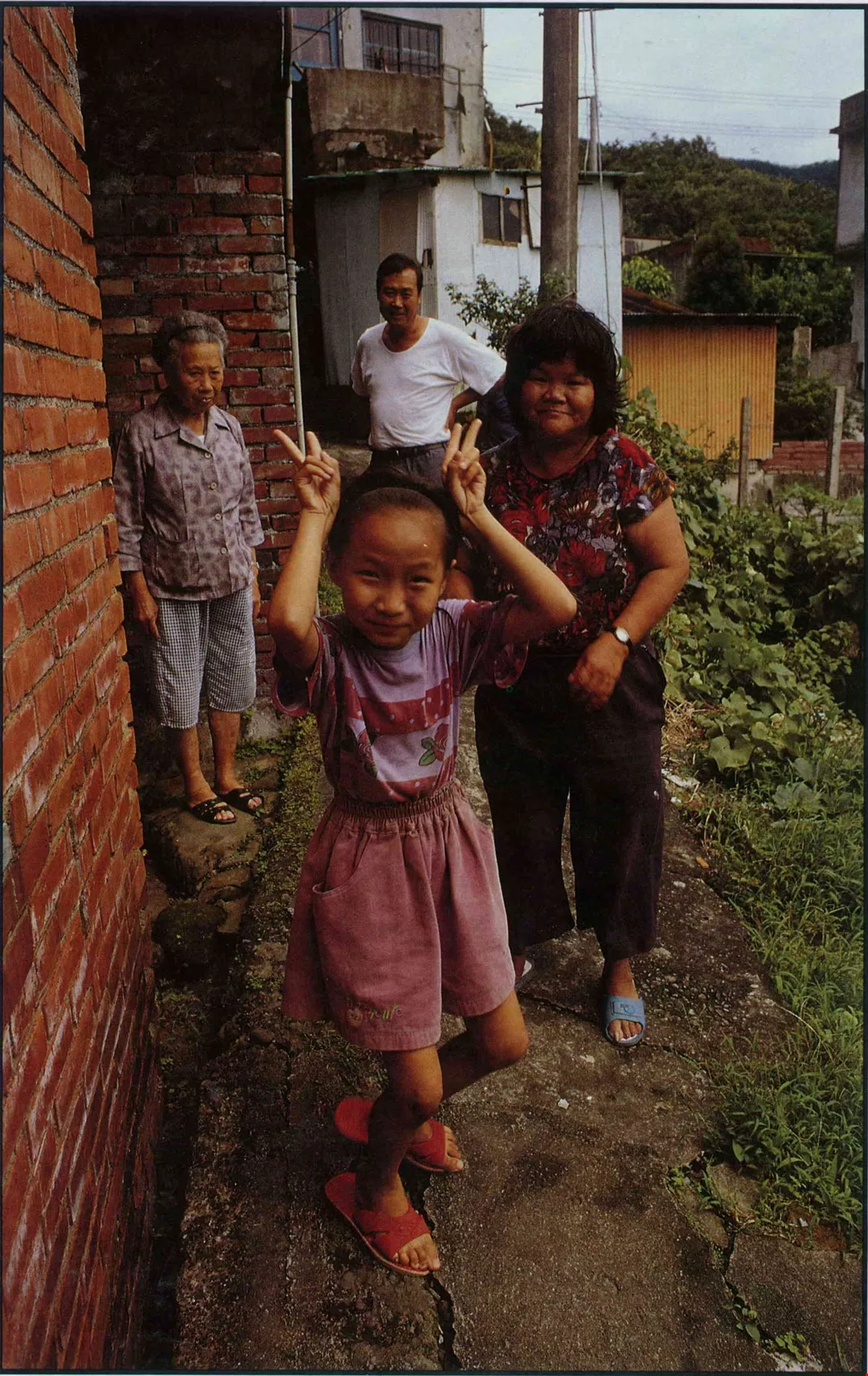
Kao Shih-jung: Though Kahas a son in his twenties, no one knows where the son is now. The only ones left at home are his mentally retarded wife, in her 50s, and a bright and lively little daughter, Kao Huei-chu. Little Huei-chu likes going to school, where she is the class discipline leader. "When I grow up I won't be like my older brother," she says, hanging by her mother's side. When "Father Wen" comes, mother and daughter are delighted, and follow him around making funny faces. The elderly lady next door, Peng Huang Lin-mei, often makes a respectful bow to the person who brings the rice, wishing him longevity.
Uncle Ah Kun's notebook
Tcactor Kun, who did hard physical labor as a young man, is now 59 years old. Everybody call shim "Orchid-raising Uncle Ah Kun." There is an ordinary little house, pieced together from sheet metal, brick, and concrete, on the mountain path on the bank of the Tatung River near the upstream portion of the Chungkang River: This is Wen Jung-kun's home.
With his broad and sincere smile, solid and healthy physique, old white shirt and long pants, and his heels habitually sticking out of his shoes, "Uncle Ah Kun" looks like a typical rural old-guy-next-door. In the morning someone had come to report to him that a certain poor family had an emergency. He and three women neighbors paid a visit to the home. After returning to his own residence, as he was boiling water to make tea he took up his notebook and his spectacles, and carefully and painstakingly recorded this new information amongst his cases.
"I've known him for decades. He is straightforward and never lies. He is warmhearted, and is an incredibly good man," says Chang Yun-mei, a neighboring housewife. Her husband works in the rural township government, and the family is well off, so when she heard Wen talking about the condition of the poor households in her township three years ago, she asked if she could join him in his work. There are in fact many enthusiastic people like her. "At that time I was raising two hundred geese. At the New Year I was going to slaughter them and sell them, but Ah Kun told me that I should do loving work, and not kill anything anymore. In the end, I just kept them until they died of old age."
In fact, Uncle Ah Kun has been helping the needy for 20 years now. He takes a stack of notebooks out of his briefcase; having never been to school to formally learn to read and write, he has his own system for keeping records. Like a primary school student keeping a journal, he recorded the things he did and the situations of the people he has helped:
"Peng Feng-chiao, three years old, fell into the water. As soon as I saw I jumped into the water and pulled her out. Her mother said, thank you Ah Kun."
"Li Tu-chi's child was riding a motorcycle and struck Luo Shan-hsiung's younger brother. He was in shock, so as soon as I saw I rushed him to the Chang Gung Hospital. After he got better his mother and older brother came to my house to thank me."
"Chen Kuei-shun, Nanchiang Village, District 2, #20: two bags of rice, two cans of oil, two packages of soap powder, NT$1000."
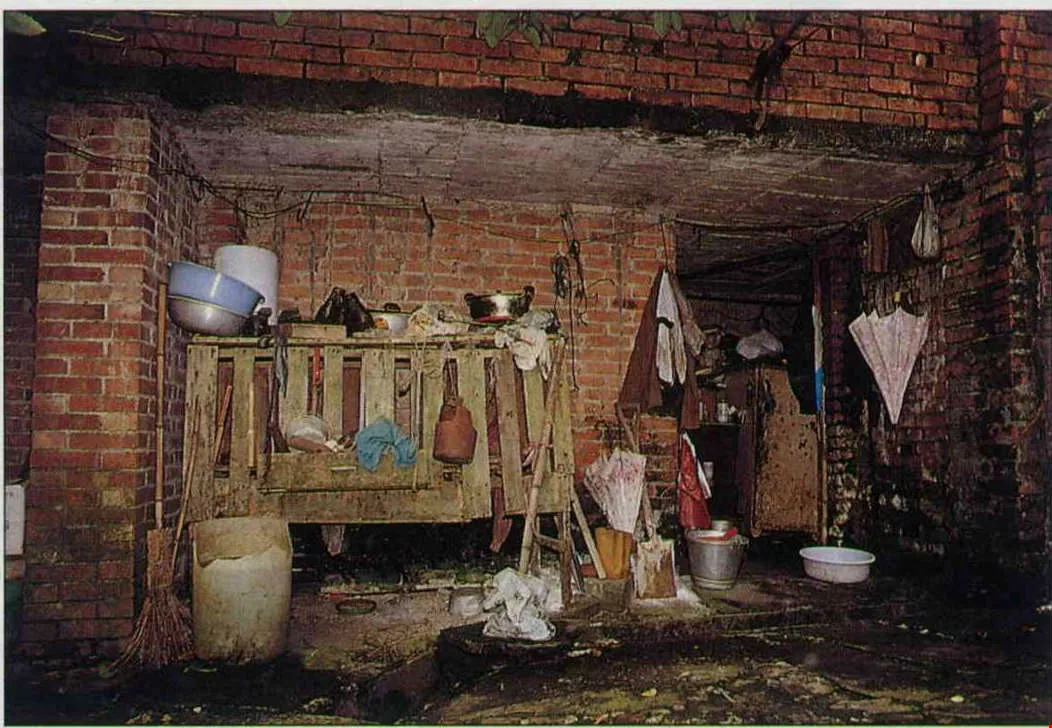
This rundown old brick structure used to be for animals; it is now where Kao Shih-jung and his family take refuge from the elements.
Out of poverty
Wen breaks the mold that people who help the poor either belong to some religious group or are wealthy persons. Wen is not eloquent, as his journal, with its many incorrectly written characters,testifies. "I used to be one of the 'poorest of the poor' myself. I know what poverty and hard luck feel like."
Wen was born the oldest son of a poor worker in Sanwan Rural Township, at the foot of the Nanchuang Mountains. Tragedy struck his family when he was 13. "Within four and a half months, my grandfather, grandmother, and mother all died. The whole house reeked of death. Everyone said that our house was cursed, so in order to protect myself I decided to 'run for my life' and leave home." Just 13 years old, he had nothing to his name but a pair of short pants. He walked five hours through the dust, and began to depend on his uncle, who ran a contract construction company in Nanchuang Rural Township.
During the day he hauled building materials for roads and bridges, and went back to the work camp, exhausted, each night. His coworkers were all Sasaiyat and Atayal aborigines, and he didn't see another Han Chinese for a year. During cold and lonely nights, he would cry thinking about the grandfather, grandmother, and mother who had cared for him so attentively.
Depending upon his uncle, Ah Kun did not receive any salary but merely got his room and board. He was often beaten and scolded by his aunt, and he had nothing to eat except rice and dried turnip. It was a harsh three years before he was able to transfer to a rice-husking mill as a clerk.
After entering the rice-husking mill, his annual salary was 600 chin of unhusked rice. During the day he slaughtered pigs, husked rice, and carried bags on his shoulders. At night, because his boss' home had no extra beds, he slept under the family altar. In winter, frigid winds blew in through the cracks in the wooden wall, cutting right through him; even today he still cannot forget those days.
When Ah Kun turned 18, and his boss recognized that he was hardworking and reliable, he turned the factory over to Ah Kun to manage. At this time Ah Kun began to teach himself basic math and writing. Business kept improving at the mill, and his salary rose to 1,200 chin of rice a year, all of which he brought down the mountain and gave to his father. When one customer saw his dedication and honesty, he took the initiative to arrange a marriage between Ah Kun and his daughter. In preparation, Ah Kun put up a few boards as walls beneath a big tree, and put banana leaves on top, giving him the first room of his own. Unable to rent a palanquin, Ah Kun walked with his bride from his in-laws house to his shack. He and his wife did not even have a blanket on their bed, nailed together from boards, and they slept covered by a raincoat for warmth. It was only when their first child was born that his father gave them an old blanket.
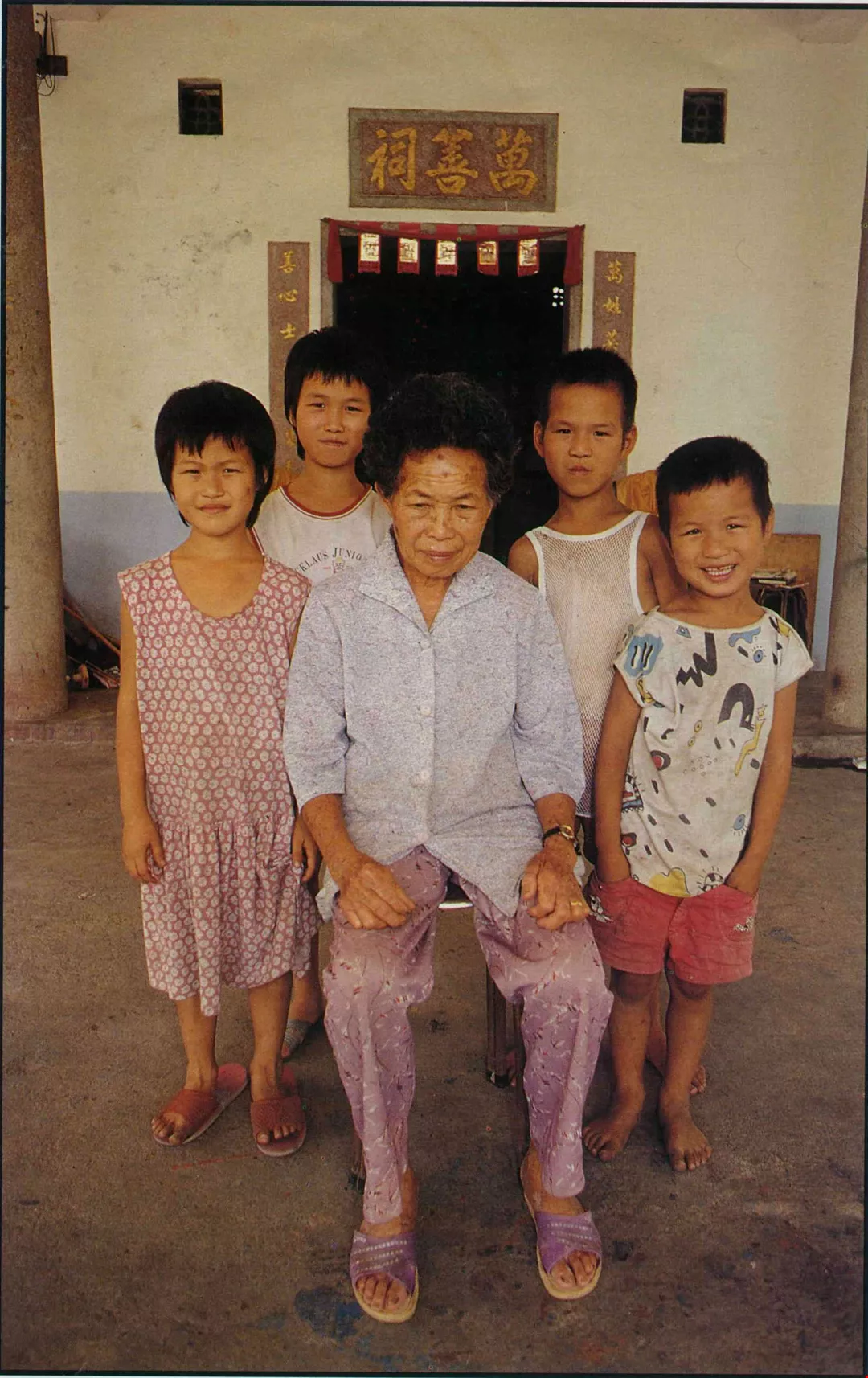
Liao Luo Yue-wei: Now 82, she has taken shelter with four of her grandchildren in a small temple. The day Uncle Ah Kun delivered her rice, her daughter had not come around for four weeks. The grandmother had less than NT$70 (US$3) left in her pocket. The rural township government has agreed to let her stay in the temple; in return she must sweep it out daily. Grandma lights incense and makes offerings of cups of tea, while the grandchildren burn "ghost money." Watching her innocent little charges, Grandmother says that her only wish now is to live a little longer to prevent her daughter from selling the children.
Keep my wife and children alive
To make money, Ah Kun took a job pushing a coal cart in the mines, and built their " second home"in the mud flats outside the shaft. It was similarly pieced together from bamboo and wood, and the floor allowed water in when it rained. The August 7 flood of 1959 was the first natural disaster for the Wen family. There was a landslide on the mountain in the middle of the night, and Wen and his wife fled in a panic clutching their three children. Afterwards, Ah Kun gave his wife and children the yams that the water had washed up on the river bank, while for sixteen days he filled his stomach with nothing but a few green vegetables.
In the first ten years after marriage six children were born into the world. Ah Kun hectically tried to feed the hungry mouths. His family had barely enough food and shelter until he was 40. When the government wanted to acquire his land to build a road, he and his family got NT$10,000 to leave the mine. He bought a tent and set up a new home beneath a longan tree. At the same time he borrowed money from the farmers' association and went into partnership with his brother-in-law to buy a tractor. They went all over doing strenuous labor helping people to transport their bamboo, gravel, or bricks.
They lived beneath the longan tree for two years, until a downpour destroyed their home. As a result, Ah Kun brought his whole family to where he currently lives and put up a sheet metal house. He continued driving his tractor for more than a decade. When his after-work orchid raising activities began to achieve success, he built a brick house with the proceeds. The children grew up one after another and established their own families, and the family financial situation stabilized. Ten years ago they added a concrete structure, making up the residence he still lives in today.
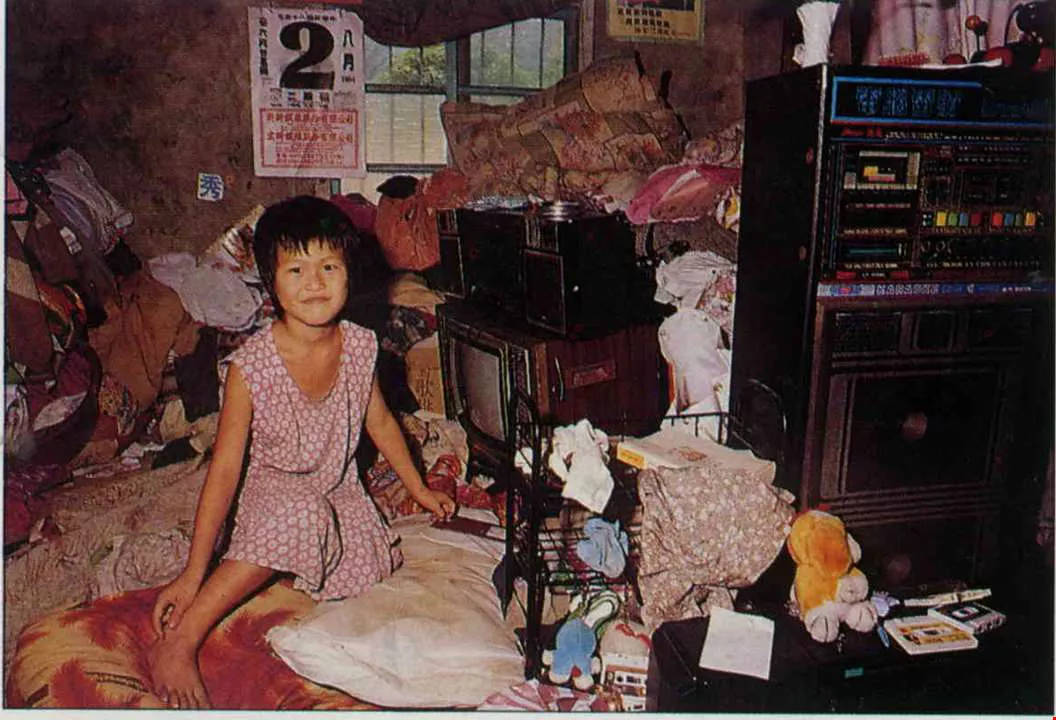
The room is filled with the detritus of life--a broken TV, a useless karaoke machine. This is where the grandmother and her grandchildren sleep.
Minding other people's business
"When I see poor families, I think back on the hard times I faced, and I want to protect them and help the family get on its feet." Ah Kun's motivation is just that pure and simple--it comes straight from the heart. And his wife has supported him with neither regret nor complaint.
In 1978, when Ah Kun still lived at the mine, someone froze to death in a neighboring hovel which had no walls, but was just a roof on top of four posts. Ah Kun came forward and raised money to put walls up. This was the first time that he "stuck his nose in somebody else's business."
Most people in the mining district were very poor. At the New Year he and his wife would make some cakes and give them away, and sometimes they would buy rice or meat and pay a visit to a family even more destitute than themselves. One elderly man, alone without any family, saw Ah Kun's generous character and often came to plead for help. Finally Ah Kun simply brought the old man into the household and ended up supporting him for five years.
Going through the notebooks, the earliest entry is from 1978. A 16-year-old girl looking to try some root beer drank lye instead, and began bleeding profusely in her throat. Ah Kun and seven friends donated money to buy blood. In the end the girl died anyway, but from that point on Ah Kun's notebooks filled from one page to the next.
Ah Kun found himself with enough money for food and clothes; the NT$50,000 per month he earned from his orchid business, after deducting expenses for him and his wife, left him with about NT$30,000 to help others. "The children had grown up and could support themselves, and the more I thought about it the less afraid I was." He decided to make helping indigent households his main profession. He even went to the township government offices to ask for a list of low income families, and went to each and every family to see their circumstances for himself. Last year his wife had two strokes. Twice the doctor declared that she could not survive, yet both times she miraculously recovered. This unusual event gave husband and wife even more confidence about their charitable activities.
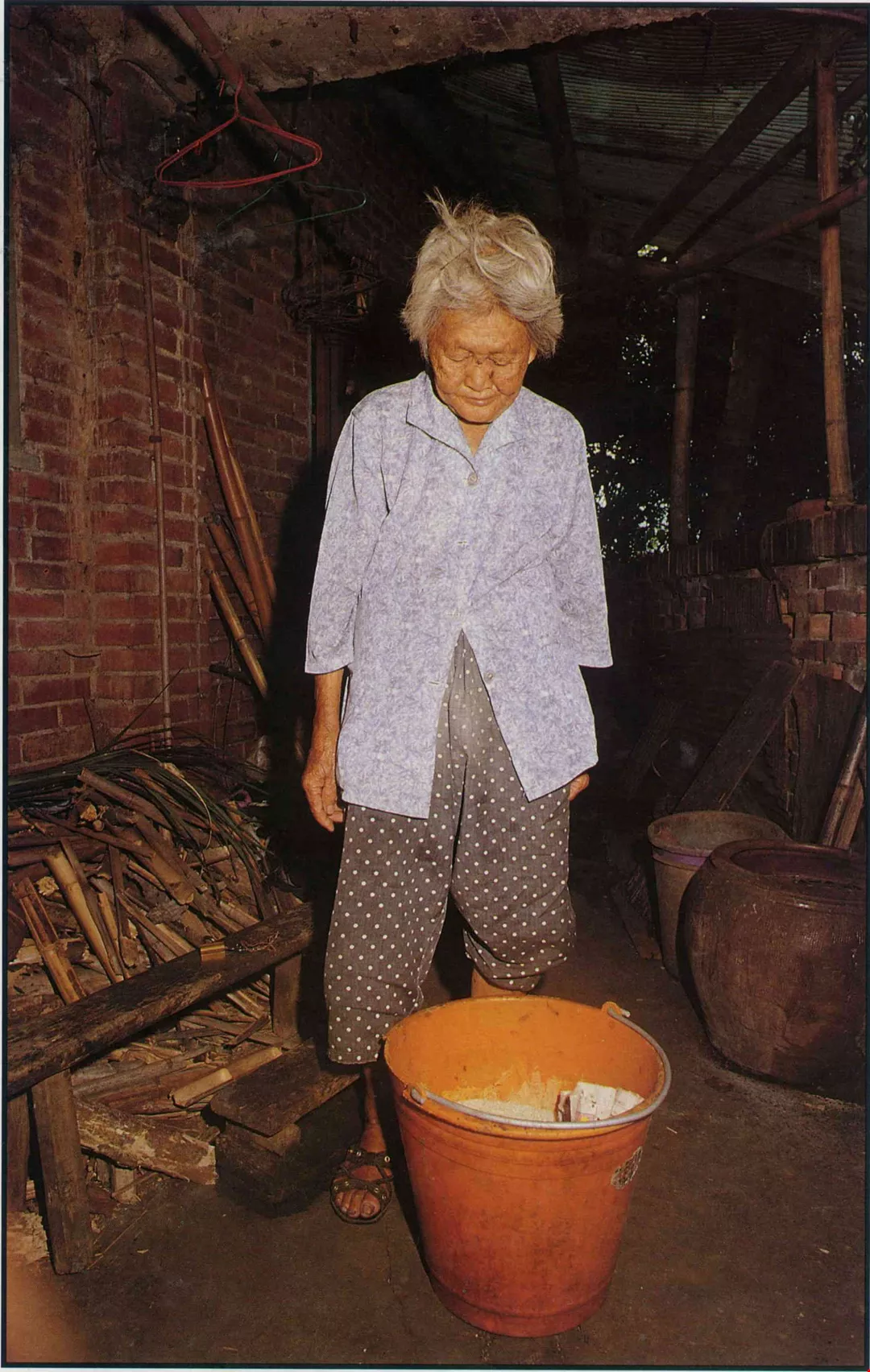
Huang ChangChiu-mei: Abandoned by her husband, and with her son already deceased, 81 -year-old Huang has lived alone in this old brick house for more than 20 years. Because legally speaking she is still married, she is ineligible for public assistance. This day she is picking bugs out of her rice barrel; the rancid water in the jug next to the barrel has cockroaches floating in it. On a winter day two years ago, she was raped by a man who came through her window while she slept. As a result, Ah Kun helped her nail some wood up over the window.
Father to the impoverished
Today there are 106 households on Ah Kun's list, of which 81 receive government assistance for low-income households and the other twenty-plus have pitiable domestic circumstances, but either do not meet government criteria for public assistance or do not understand how to apply for it.
Mu Kuo-min, who lives near the Wen home, is a 39-year-old with poor vision who suffered a serious head injury; his wife is moderately retarded. The two of them scavenge through garbage for a living, making only about NT$1000 (US$40) per month. He sought out the village mayor to ask him to arrange for assistance as stipulated in the handbook for the disabled, but the mayor responded, "I don't know how to do it, I never did it before." Only recently did he discover at the rural township government that he had to go to the Miaoli Provincial Hospital and get a certification of disability. But his wife was about to give birth, and he had to work every day, so he didn't know what to do.
"I have known Mr. Wen since I was small. he drove the tractor," says Mu Kuo-min, who often has gone to Wen to borrow money, which he never repaid because he could not do so. Over the years Ah Kun has brought rice and daily necessities to them, and each month gives them about NT$4000 in assistance. "If we're frugal, we can get by, thanks to Mr. Wen."
When impoverished families finish off their rice, they will call Ah Kun; husbands and wives will ask him to adjudicate disputes; the sick and lonely want him to visit.... But Ah Kun's many affairs are not limited to these. By following the township's list of low-income families, he occasionally discovers fake "poor households," which he reports to the local government. And when he finds people in trouble, he seeks out the village mayor to have him issue a low-income certification to apply for assistance.
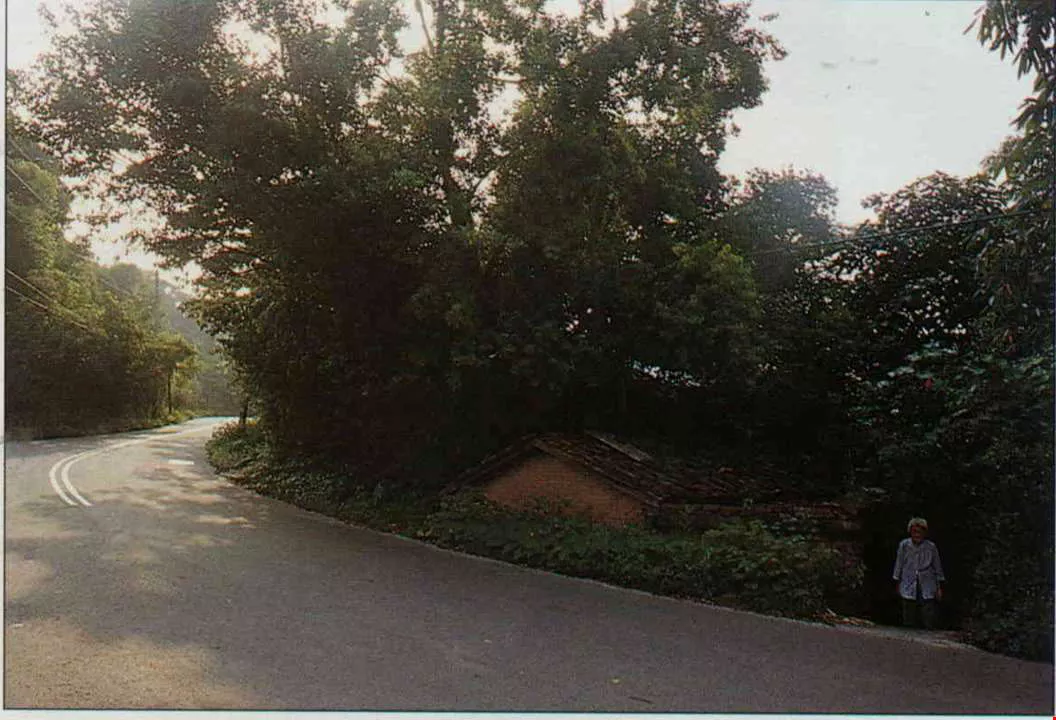
How many marginal people on the fringes of our prosperous society are concealed in these forested hills?
A beat-up car and a water bottle
Wen Jung-kun gets up each day at 4:00 am. He takes his wife to the mountains for physical therapy. After returning home and eating breakfast, he drives his "beat-up tin can" --a ten year old Yue Loong--and, equipped with a bottle of water, makes his routine rounds of the impoverished households. Some people have advised him to get a new car, but he says, "How many families could you help for the price of a new car? After thinking about it, I decided against the idea." The bottle of water is to battle thirst and hunger along the way; by saving the money others might spend on snack food, he can buy another bag of rice. He also often carries a broom and plastic bags to clean up garbage along the way.
More than 100 households rely on Wen Jung-kun's emergency assistance. Uncle Ah Kun keeps his timetable in his mind: He completes the rounds at least once every two weeks. There is one guy who receives his help who was a gambling addict. When he saw Ah Kun approaching from afar, he hid under a truck. Ah Kun threatened to cut off help if the man did not stop gambling, and only then did he gradually reform.
Over the past ten-plus years, Wen has seen much of poverty. "For a person to become so poor that they have trouble finding even food and a place to sleep... if it's not because they didn't work hard in their youth then it's because they have truly had hard luck, suffering disasters or being abandoned by their own children, all beyond their control." For instance, the former head of the rice-husking factory was one of the wealthiest men in Nanchuang, but he loved patronizing prostitutes, and was violent and abusive to his family. Today, old and worn out, he lives the life of a beggar in Chungli. Sometimes he makes his way to the Wen home, where Ah Kun helps him out. "We don't assess blame for the past. We just look in front of us and see what we can do to help people survive."
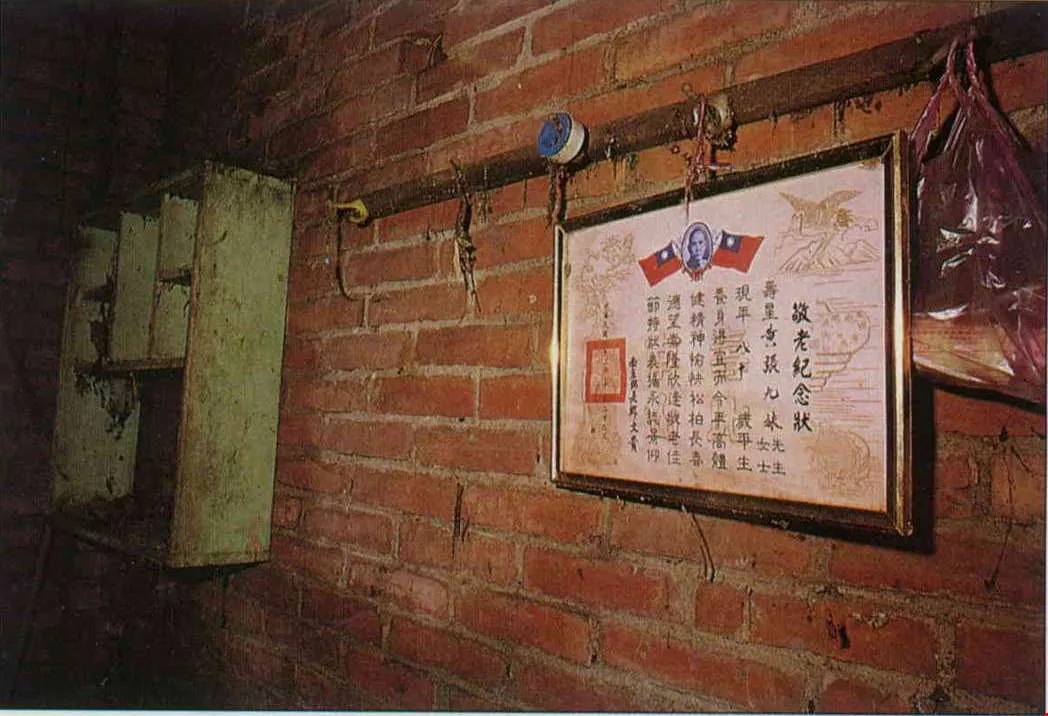
The shining plaque for respect for the elderly is the brightest object in the room; it is given the loftiest position.
Respect life, show gratitude
Because Ah Kun has been very concerned about the hardships of the common people for so long, Wang Pao-chu, who lives in Toufen and follows along in assisting the poor, has strongly encouraged Wen to run for rural township mayor. "He would truly be a mayor who could bring good fortune to the residents, because he has a compassionate heart. If you take into account his reputation among the ordinary people, he would definitely be elected." Also, lately some have proposed nominating him for the "Good People, Good Deeds" awards list. But he always refuses.
"The local political factional infighting is troublesome. And there's nothing good about becoming well-known. I simply want to do those things I feel are worth doing." What could be more revealing of Ah Kun's unsullied character?
After a typhoon made the mountain roads slippery, a motorcycle and a compact car got into an accident; Ah Kun, who was driving a group of elderly ladies to the doctor, stopped to help settle the dispute. Recently, he has extended his compassion to animals as well. Indigenous people who live in the mountains still hunt. When he has nothing else to do, Wen goes running in the mountains, releasing animals he finds in traps. "The sense of pain is universal in all life." he attests.
Yang Li-tsao, chairman of Chinpaoshan Enterprises in Taipei, heard about Wen Jung-kun. She made a special trip into the mountains to visit him and followed him on his rounds to destitute homes; she was not able to bear what she saw.
Wen simply gives people from the prosperous city a gentle smile: "All of you who don't know how well off you are, let me take you on a trip."
[Picture Caption]
p.46
Ah Kun's notebook has clear listings for dates and items that have been distributed, everything from toothbrushes and soap powder to rice and noodles.
p.47
(right) Most of Wen Jung-kun's life has been very hard, giving him a deep understanding of the pain of the poverty-stricken and inspiring his generosity. The awards on the wall are for his orchid cultivation.
p.48
Kao Shih-jung: Though Kao has a son in his twenties, no one knows where the son is now. The only ones left at home are his mentally retarded wife, in her 50s, and a bright and lively little daughter, Kao Huei-chu. Little Huei-chu likes going to school, where she is the class discipline leader. "When I grow up I won't be like my older brother," she says, hanging by her mother's side. When "Father Wen" comes, mother and daughter are delighted, and follow him around making funny faces. The elderly lady next door, Peng Huang Lin-mei, often makes a respectful bow to the person who brings the rice, wishing him longevity.
p.49
This rundown old brick structure used to be for animals; it is now where Kao Shih-jung and his family take refuge from the elements.
p.50
Liao Luo Yue-wei: Now 82, she has taken shelter with four of her grandchildren in a small temple. The day Uncle Ah Kun delivered her rice, her daughter had not come around for four weeks. The grandmother had less than NT$70 (US$3) left in her pocket. The rural township government has agreed to let her stay in the temple; in return she must sweep it out daily. Grandma lights incense and makes offerings of cups of tea, while the grandchildren burn "ghost money." Watching her innocent little charges, Grandmother says that her only wish now is to live a little longer to prevent her daughter from selling the children.
p.51
The room is filled with the detritus of life--a broken TV, a useless karaoke machine. This is where the grandmother and her grandchildren sleep.
p.52
Huang ChangChiu-mei: Abandoned by her husband, and with her son already deceased, 81-year-old Huang has lived alone in this old brick house for more than 20 years. Because legally speaking she is still married, she is ineligible for public assistance. This day she is picking bugs out of her rice barrel; the rancid water in the jug next to the barrel has cockroaches floating in it. On a winter day two years ago, she was raped by a man who came through her window while she slept. As a result, Ah Kun helped her nail some wood up over the window.
p.53
How many marginal people on the fringes of our prosperous society are concealed in these forested hills?
p.53
The shining plaque for respect for the elderly is the brightest object in the room; it is given the loftiest position.
p.54
Mu Kuo-min: Already suffering from poor vision due to meningitis, two years ago Mu was struck by a car while scavenging; he required 80 stiches in his head and now gets dizzy in the sunlight. Four years ago, when he declared his intention to marry a woman who was left slightly retarded by a childhood fever, his family strongly opposed the idea. But Mu insisted: "I want to be married. I want to have my own descendants." Today his wife is nearly to term, and his monthly income is less than US$100. How will they get by after the baby is born? "Take things one step at a time," says Mu with resignation.
p.55
The yard in front of the house is filled with scrap metal that the husband and wife have scavenged. Though their lives are difficult, these people still have hope.
p.56
There are many poor households on Ah Kun's List along the Nanchuang mountain road; he knows their stories and circumstances like the back of his hand.
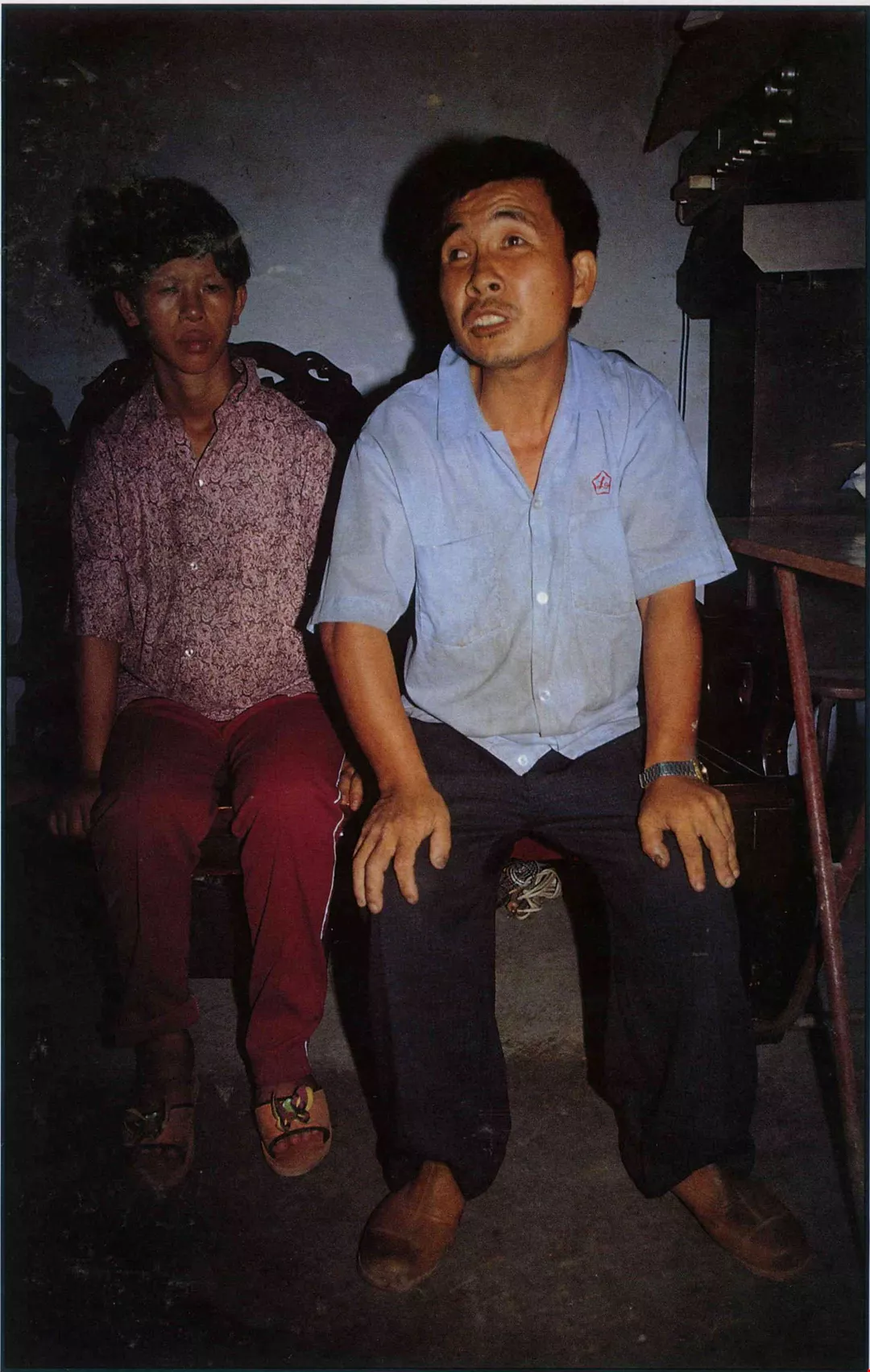
Mu Kuo-min: Already suffering from poor vision due to meningitis, two years ago Mu was struck by a car while scavenging; he required 80 stiches in his head and now gets dizzy in the sunlight. Four years ago, when he declared his intention to marry a woman who was left slightly retarded by a childhood fever, his family strongly opposed the idea. But Mu insisted: "I want to be married. I want to have my own descendants." Today his wife is nearly to term, and his monthly income is less than US$100. How will they get by after the baby is born? "Take things one step at a time," says Mu with resignation.
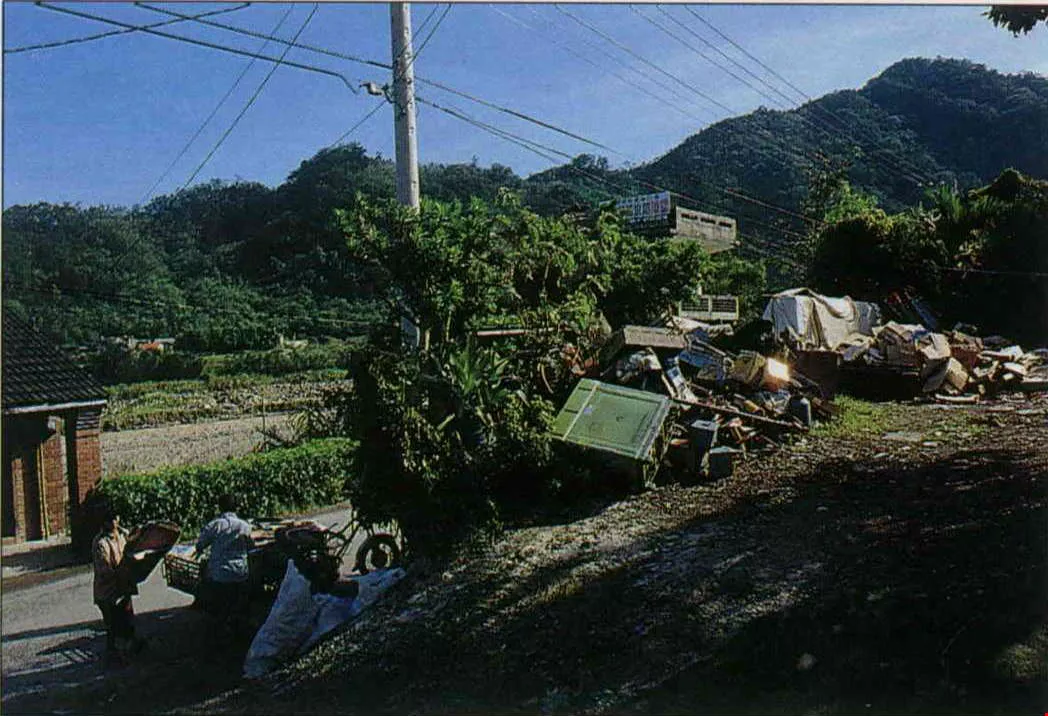
The yard in front of the house is filled with scrap metal that the husband and wife have scavenged. Though their lives are difficult, these people still have hope.
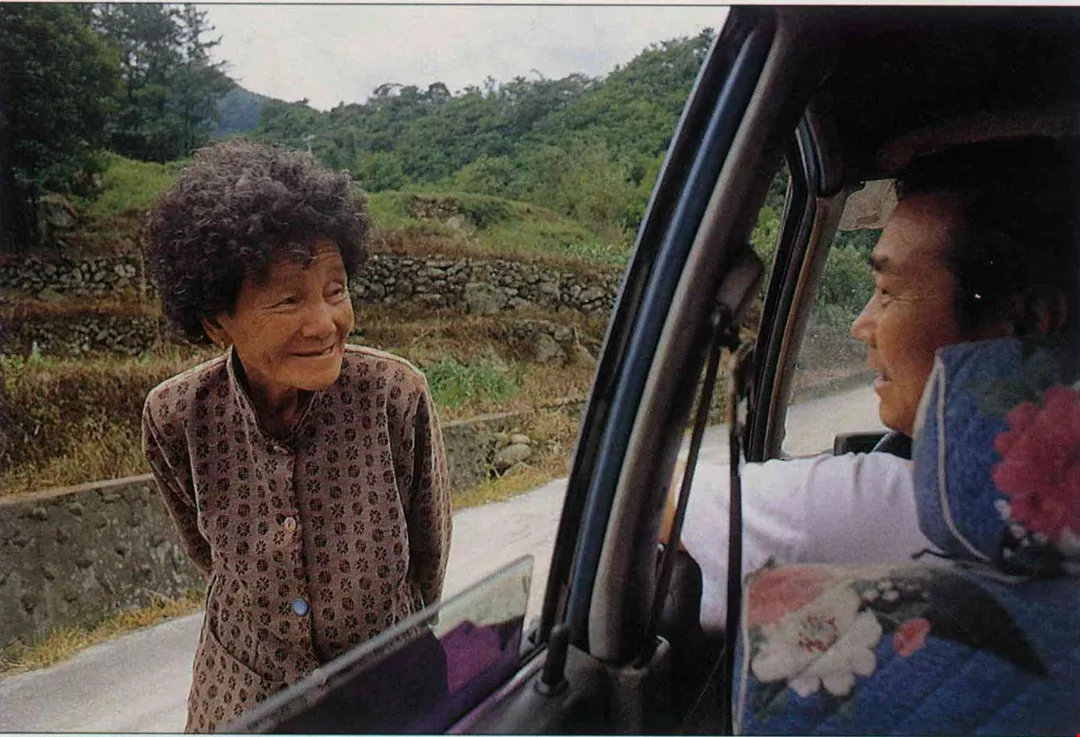
There are many poor households on Ah Kun's List along the Nanchuang mountain road; he knows their stories and circumstances like the back of his hand.


