Nutritionists Take to the Campus
Coral Lee / photos Hsueh Chi-kuang / tr. by Christopher J. Findler
December 2006


Busy parents out there, are you sure the "nutritious" lunches served at your children's schools every day are genuinely nutritious?
Ministry of Education statistics show that 2.4 million primary and secondary school students around Taiwan eat school lunches. Over 1,600 of our 3,400 elementary and middle-school kitchens are publicly owned and managed. Another 400-plus are privately run as schools outsource the operation of their kitchens to professional caterers. How do they operate these huge school kitchens? Who makes sure that nutritious meals are dished out? When can the ideal of a nutritionist on every campus be realized?
It's 07:00. The day is just dawning. The central kitchen at Shenkeng Elementary School is kicking into gear to prepare lunch for the school's 1,900 students. The six women staff all sport white uniforms, hairnets, and gauze masks. After weighing and recording the day's food deliveries, including ten cases of vegetables and 250 kilos of meat, they man their posts--three each in the cleaning and cooking areas.
First eat, then run
In the cleaning section, bottle gourds are briskly peeled and julienned. One lady paring and dicing yams has to put up with the viscous, itchy juice on her skin. Chinese cabbages are cut in half and placed in three huge sinks to remove pesticide residues.
"We require vegetables to first be rinsed in three sinks of running water for at least ten minutes," nutritionist Chiang Hsiao-min explains. "It uses more water, but we divert the wastewater to the bathrooms for flushing." On one end of a counter, small dried shrimp are soaked in hot water a number of times. "Sulfur dioxide is added to dried shrimp and tiger lily buds so they can keep longer, and it can only be removed by steeping them in hot water," Chiang continues.
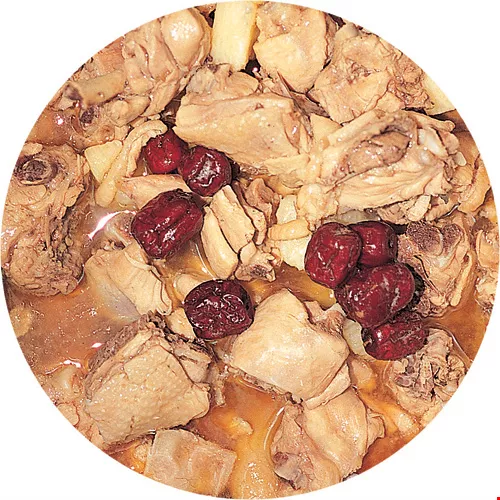
In the cooking area, behind a separating wall, the other three ladies are also hard at work--one washes rice and transfers pot after pot of it into a large rice cooker; others boil water, prepare eating utensils, and cook one dish after another as ingredients arrive from the cleaning area. The first dish, bottle gourd and fish soup, is finished at 9:30. The next three dishes, diced chicken and yam, "ants-on-a-tree" (pea-starch noodles with ground beef and garlic) and stir-fried kidney beans, are ready at 10:00, 10:30, and 11:00, respectively.
While the head cook stirs food in a rotating steamer with an oversized spatula, another woman adeptly scoops cooked food into more than 50 deep stainless-steel pans. She covers the pans to keep the food inside warm and then transports them to the cafeteria by pushcart. The six women work together like a well-oiled machine as they churn out meals for 1,900.
Lunch served by Shenkeng Elementary has received a universal thumbs up for a number of years. At the request of parents, lunches are even provided on Wednesdays and Fridays, which are half days, before students head off to after-school classes.
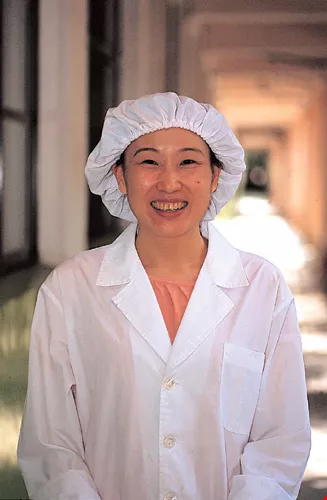
Over 100 professional nutritionists are currently deployed in the central kitchens of school campuses around Taiwan to safeguard children's health. More than 300 more are to be hired by local governments over the next five years. Chiang Hsiao-min, pictured here, is senior nutritionist at Taipei County's Shenkeng Elementary.
Wearing two hats
Over 400 large-scale central kitchens of this type exist in schools in cities and counties around Taiwan, mainly in schools with at least 40 classes and over 1000 students. Due to the large numbers of meals they supply, these kitchens are markedly different from their small and medium-sized counterparts in that food inspection, cooking, equipment, and unexpected situations are all managed by a professional nutritionist, at least in theory. The 2002 School Health Act requires schools with 40 or more classes to hire at least one nutritionist to oversee the provision of school meals; local education bureaus must also hire nutritionists. But due to a variety of factors, such as budget problems, the reality is that local governments have as yet to comprehensively implement the law. Seventy-five of the 100-plus school nutritionists currently employed in Taiwan are concentrated in Kaohsiung City. Only a quarter of all large schools have, like Shenkeng Elementary, actually hired nutritionists; the rest have elected to appoint teachers to take on the onerous responsibilities of this job in addition to their own.
"Although instructors in charge of lunches have much lighter class loads, the tremendous stress of the job has resulted in a high turnover rate," confides Taipei County Nutritionist Association director Yang Jui-ping. In the course of teaching these teachers about nutrition and hygiene, the association has discovered that whenever schools hire a new teacher, the person originally in charge of lunches tends to slough off this unwanted chore onto the unsuspecting rookie. As a result, the association's work is all but in vain as they have to train new people every year.
The TCNA has fought for many years for laws requiring schools to hire professional nutritionists. With environmentalism and children's health in mind, the Homemakers' Union has been calling on the government to require that schools hire nutrition specialists to assure school lunch quality. After these two powers joined forces, the Ministry of Education finally announced in September 2006 that NT$200 million of the NT$800 million allocated by the central government for county and city school lunch programs will be set aside for hiring nutritionists starting in 2007.
As they optimistically await the realization of these policies, nutritionists have gone on to call upon the government to require that smaller schools with fewer than 40 classes also be included, especially resource-scant grade schools in remote areas, as more often than not school lunches are the only chance many of the children there have to consume a nutritious meal each day. Hence, they need special attention from the government.
To relieve financial pressures, nutritionists suggest Taiwan adopt methods used in other countries, such as one nutritionist taking turns overseeing kitchens in more than one school in a given district.
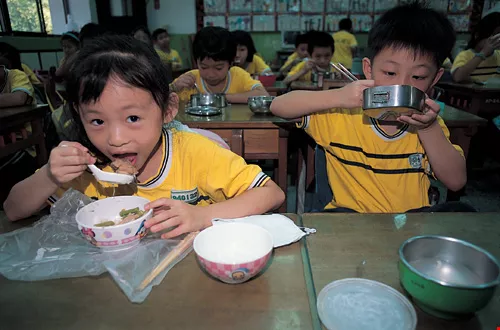
Some say that school lunches are like an unloved child in that they are totally ignored by educational authorities. The problem is that children cannot be asked to go back and grow up all over again. All quarters of society are calling on the government to attach more importance to this issue. The photos show lunch served at Shenkeng Elementary School.
The art of designing menus
Most people think nutritionists only design menus and calculate nutritional content and calories. Little do they realize that this is just one of their many responsibilities. There is a great deal involved in ensuring that meals served to large groups are nutritious, hygienic and safe.
For example, when designing menus for children, accounting for their disparate needs is an art. Most children in urban areas, for instance, are accustomed to eating food that is more delicately prepared. Their teeth aren't as strong and they don't like to spend a lot of time chewing their food. Schools could serve coarse rice and foods high in fiber and calcium, but what if children turn their noses up at their lunches? Some children don't eat green vegetables and others won't touch fish because they're afraid of the bones or don't like the taste. Issues like these are real tests of nutritionists' menu designs and cooking methods.
What about the malnourished children of underprivileged families in remote areas? Ideally, you want to add needed nutrients to their food, but you also have to take into account the higher costs and lack of resources in remote areas.
Transportation costs for food sent out to the outlying Penghu Islands, for example, are very high, so sometimes a three-dish school lunch will star eggs in all the dishes--scrambled eggs with shredded carrots, eggs with daikon, and egg-drop soup with seaweed. The same is sometimes true of pork balls, because the prices of these two ingredients tend to stay low. Teachers have no choice but to turn a deaf ear to questions like what the pork balls are made from, and whether the meat is from diseased pigs. Local schools explain that this less-than-ideal situation could be improved if the county government could hire nutritionists who could then meticulously design menus with low-cost seasonal fruit, vegetables, and seafood in mind.

Investigate
In addition to menu design, another major challenge for nutritionists is to be the school's dietary watchdog, scrutinizing everything from freshness to prices and testing for food additives. Every nutritionist has a bucket load of stories they could tell.
"You can't determine the quality of ingredients once they are cooked, so you have to keep your eyes peeled before you start," points out Su Hui-ju, senior nutritionist at Kaohsiung Municipal Youchang Junior High School.
If the color of a load of pork delivered by a contracted supplier, for example, appears pinker than normal, it may be due to ditrite preservatives having been added, but the supplier might brush off questions by saying that this is a "new breed of pig with lighter colored flesh." Or the menu might call for chicken wings, but the supplier delivers diced chicken at the last moment, because "prices have gone up due to the Mid-Autumn Festival." Or again, you order spareribs, but you find cheaper, fattier shoulder cuts slipped in. If a teacher from the school or a volunteer parent were supervising, suppliers would be able to pull off these or any number of other tricks they have up their sleeves. Because nutritionists are skilled at judging food and are equipped with information from other suppliers with which to compare, they can demand that below-standard food products be taken back or they can change them with those of other suppliers, crushing any hope that unscrupulous suppliers might have of pulling the wool over your eyes.
Su explains, "We demand 'grade A' vegetables, that is, fresh picked from the field and delivered directly to us in refrigerated vehicles. Our vegetables are still breathing when they arrive!" Most vegetables sold on the market are not placed on ice to keep them fresh and are already seriously dehydrated after five to six hours at room temperature. Vegetables traded by wholesalers are considered 'grade B.' The fresher foods are, the more nutritious and tasty they are. "This is why lunches prepared by school kitchens can tone down the spices so much in their dishes--the food is fresh, so there's no need to cover the taste with sauces or spices," Su points out with pride.
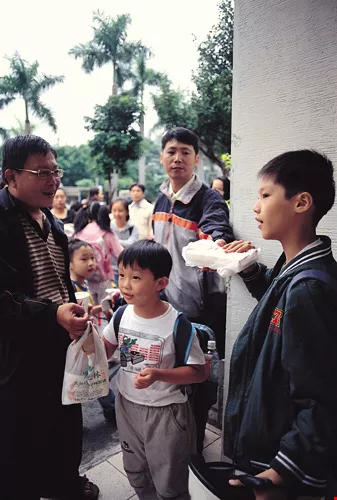
Lunch boxes with food made fresh by mom taste the best, but in today's busy world, a boxed lunch is more than one can ask for.
Watch for chronic poisoning
Furthermore, unlike freshness, the naked eye can't determine whether inappropriate additives have been added to food, further necessitating the nutritionist's professional know-how.
Many nutritionists say that it is possible for vendors to use additives to push back the freshness expiration dates on foods as well as improve color and texture in everything from fruits and vegetables to grain products, fish, and meats. Copper sulfate, for example, can be added to green vegetables to keep them looking fresh. Fluorescent whitening agents whiten daikon and mushrooms. Soybean products become sour when left at room temperature too long, so hydrogen peroxide is added to make them keep longer. Hydrogen peroxide is also a bleaching agent, so it is frequently added to udon noodles and dried white beancurd. Sodium dehydroacetate is added to improve the elasticity and al dente texture of flour products like noodles, rice cakes, mantou (steamed buns), glutinous-rice soup balls, and tapioca balls.
It is even more common to see preservatives added to dishes. Nutritionists lament that many private contractors that prepare food for a large number of schools from a central location ignore regulations stating that foods are not to be prepared before 9 a.m. (because food begins to spoil after four hours at room temperature). They do this because they need to supply large quantities of food to several schools at once. Doing so also enables them to trim costs and manpower. Whether they do so out of concern for speed or convenience, starting too early greatly increases the likelihood that preservatives will be added.
Chiang Hsiao-min, senior nutritionist at Shenkeng Elementary, explains that you won't feel ill if you consume these additives and you won't experience bouts of vomiting and diarrhea like victims of acute food poisoning. It is even more important that we be vigilant, however, because inappropriate additives put a strain on the liver and kidneys, and consuming them over long periods may cause chronic poisoning, or even lead to cancer.
In recent years, because the use of additives has become epidemic, health bureaus around Taiwan have been providing schools of all levels with materials to test for commonly used additives. With so many additives already available and new ones being introduced all the time, it is important to rely on the accumulated experience and specialized training of nutritionists for effective protection against them.
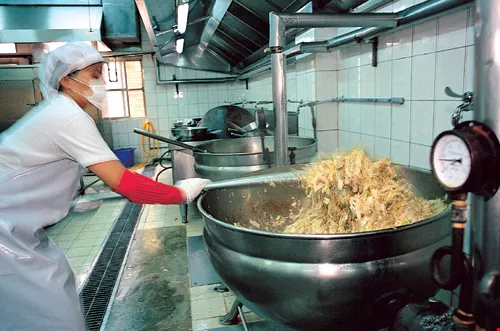
A kitchen worker is working hard to turn over ingredients in a rotating steamer which holds enough to feed about 500.
Danger within?
The methods used to process and cook food are also major keys to health.
"One tip for retaining nutrients: vegetables should be washed quickly, cut quickly, and cooked quickly," Chiang says. For convenience, some large contractors will cut vegetables before washing them, washing nutrients away in the process.
It is even more important to be careful about the spices and sauces added to dishes during cooking. Adding mirin, chicken bouillon cubes, or various chemical seasonings may make dishes look and taste scrumptious, but the small molecules that they contain are highly polarized (high polarization means that the electric charge within a molecule is distributed unevenly, making the molecule unstable and causing it to combine easily with other molecules) and as such, absorb large quantities of water molecules within the body. They are also very difficult to metabolize and are very harmful to children's livers and kidneys. The majority of school nutritionists, therefore, only use three seasonings--salt, sugar, and soy sauce.
Foods high in salt, sugar or oil, or foods that use a lot of spices, are anathema to nutritionists. What kind of oil do they use on the rare occasion that they deep-fry something? What temperatures do you use to prevent the oil from breaking down and producing carcinogenic toxins? These and other questions are the nutritionist's field of expertise.
Sometimes their years of schooling are not enough to help them deal with situations in real-life kitchens. Chang Hsin-chin, nutritionist at Taipei's Ximen Elementary, has her share of stories to tell. Many of the older workers at a catering company she used to work for in Taipei County thought they knew everything and ignored her instructions, sometimes using their own little tricks to finish the massive quantities faster. For example, to avoid the extended time needed to make pork stewed in brown sauce, they would add specially made sauces (using illegal food colorings) to get the meat to the right color quicker. Some ignore hygienic practices such as keeping fingernails short and washing hands with soap after using the restroom. Many problems like this require the nutritionist to bond with coworkers, employing both carrots and sticks, to ensure positive interaction with kitchen workers.
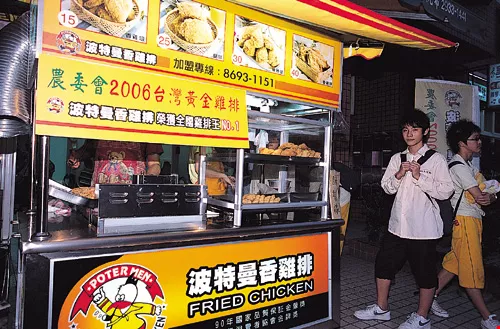
What could taste better than fried chicken and pearl milk tea after class? But from the perspective of nutrition, these are nothing short of committing slow suicide.
Firm foundation in nutrition
At the end of the day, the fact of the matter is that no matter how nutritious the meals we provide, students only eat lunch at school five times a week. "We are more concerned about children's nutritional education," Yang Jui-ping points out. There are many misconceptions out there that need to be corrected. Many slimming ads, for instance, tout ballyhoo like, "If you want to stay trim, avoid grains and tubers." The fact is that children are growing and those that don't eat enough starches during regular meals tend to snack more on breads, crackers, and cookies between meals, because they were never full in the first place. As a result, they tend to get fatter. Also, the secret to a balanced diet is "more fruit and vegetables than meat," but many parents think that meat is where it's at. The amount of meat provided in one chicken-drumstick or pork-chop box lunch alone often exceeds the recommended calorie allowance for the entire day.
And don't get us started on bad nutritional habits. In November 2006, the Department of Health issued a survey pointing out that 65% of young people quench their thirst with sweetened drinks and 53% eat snacks instead of meals. In addition to eating too much junk food, 98% of our youth don't drink enough milk--many even believe that drinking "milk tea" is a substitute for drinking milk, sadly ignorant of the fact that the "milk" used in milk tea is actually a nondairy chemical compound. It's just fat and has absolutely no nutritional value. Furthermore, more than 80% of children eat less than three helpings of vegetables and two of fruit each day.
Yang Jui-ping says that society today is rife with a plethora of chronic illnesses and everybody knows of the close link between health and diet. If, however, we don't take action by teaching our young correct dietary knowledge and practices, by the time they are adults it will be too late.
Nutritionists have been hard at work in a number of schools around Taiwan for many years watching out for our children's health. This summer, the Taipei City Government held exams and hired 20-plus nutritionists who officially started working on campuses in early September. Over the next few years, more will be added in schools in counties and cities around Taiwan where they will take on the heavy responsibility of improving our children's nutritional intake. More importance needs to be attached to this task, because although we cannot see immediate results, their work is indeed far-reaching in its impact.

A lot of know-how goes into the running of a school's central kitchen, from the quality control, cleaning, and cooking to apportioning and transportation of food. If a problem arises in any one of these stages, many people could be impacted.
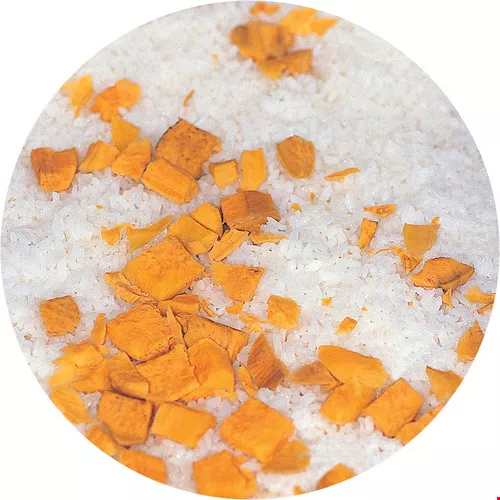
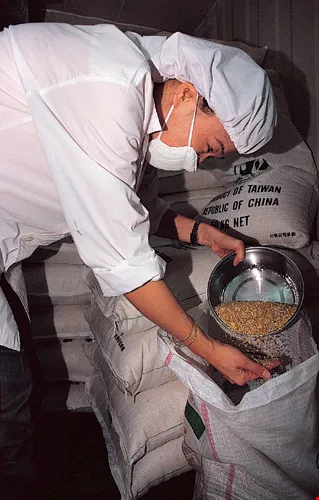
White and unpolished rice are placed into cold storage to prevent the growth of aflatoxin mold.
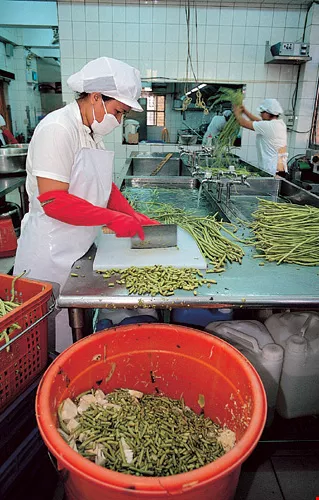
Circulating water in three sinks cleans vegetables while removing pesticide residues.
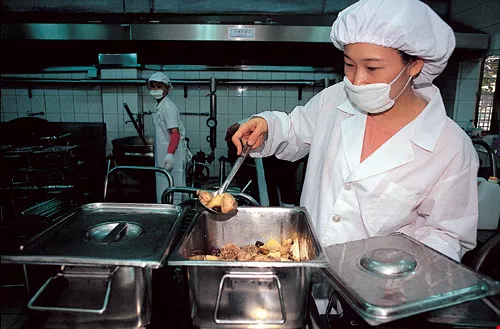
Finished food is divided up into containers and checked visually by the nutritionist.


@List.jpg?w=522&h=410&mode=crop&format=webp&quality=80)


