Boom Days for the political Biography
Laura Li / photos Vincent Chang / tr. by Robert Taylor
January 1994


Did you know that when Sun Yun-hsuen, a presidential political advisor honored for his services to party and country, accepted an invitation to go to Nigeria to build a power station while in his fifties, one of the factors he considered was that "being paid in US dollars would improve the family finances"? Did you know how current DPP Chairman Shih Ming-teh passed his 25 years in prison, and how he developed his "prisoner's philosophy"? And do you know who is smoothing his own path for future presidential elections?
All these revelations are things that in the past would never have been disclosed lightly. But now, political figures' life experiences and innermost thoughts--bitter, sweet, controversial--are being laid before the general public in large numbers of biographies of every description which are flooding the bookshops. What does this phenomenon reveal?
"I'd never have thought there could be so much freedom of speech here, "says one scholar who returned to the ROC recently, and whose bookshelves are full of the memoirs and critical biographies of contemporary political figures. He can-not forget how, when he first arrived in the USA nine years ago, the news had just broken of the murder of Chinese-American journalist Henry Liu, and how older members of his family earnestly warned him: "For heaven's sake don't get yourself into trouble by writing any foolish articles!"
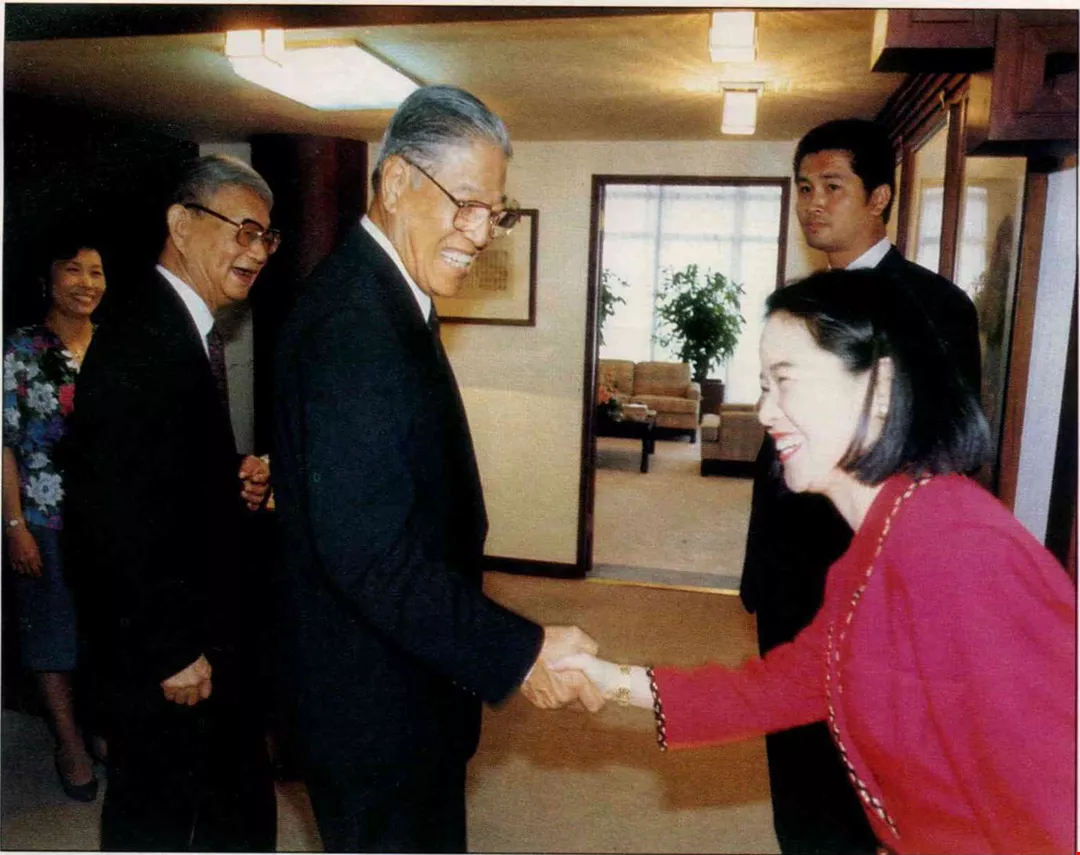
When experienced reporters write about politicians, they rely on their many years of contacts with and understanding of people in political circles. Pictured here with President Lee Teng-hui is Chou Yu kou, then assignment editor at United Daily News, in a photo taken when Lee visited the paper. (photo courtesy of Chou Yu-Kou)
How did the trend start?
"In the past, if you wanted to write about politicians or political incidents, not only were these subjects sensitive, but material was also very hard to gather, because nobody dared to be interviewed about such things, let alone to put anything down in black and white," says Su Shih-ping, manager of Rye Field Publishing Company, which published The 1000 Days of president Lee. Su points out that because of this, political biographies tended in the past to be "polarized" towards two extremes: on the one hand, official biographies of the great and good and collections of edifying quotations intended to guide and educate; and on the other, underground publications filled with rumor and speculation bordering on the defamatory. But neither those which "deified" nor those which "vilified" had much power to arouse readers' sympathy.
But happily, since the lifting of martial law, the shackles of censorship have been removed from the written word, and politicians too have escaped the extremes of "deification" and "vilification," to be brought back down to the plane of humanity and the ordinary citizen. And as it is no longer taboo to talk freely about politics, many people are happy to speak and readers are happy to read, and this has generated the current wave of political biographies. In other words, the biographies of political figures now being published are no different from biographies of business people or entertainment stars. "Absolutely nobody puts us under any kind of political pressure or raises any objections," Su Shih-ping emphasizes.
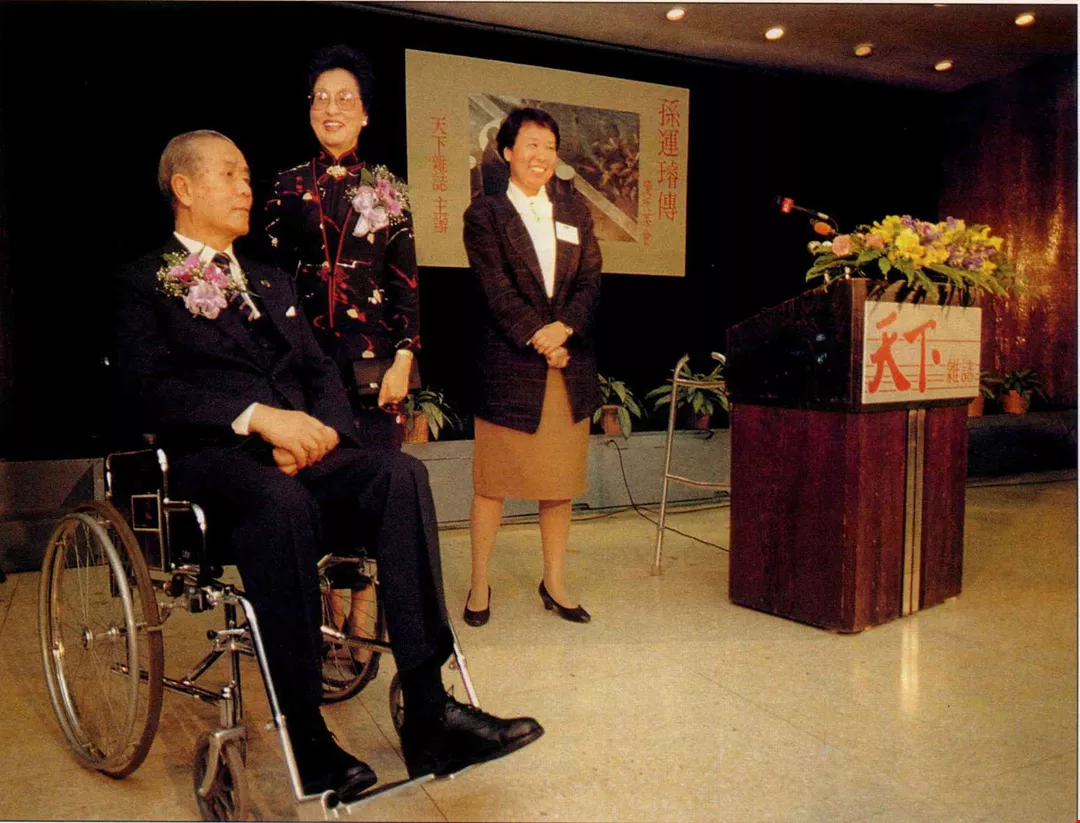
Four years ago, presidential advisor Sun Yun-hsuen published an autobiography with the purpose of encouraging and inspiring young people, never thinking that it would cause a sensation. Pictured here is Sun speaking at the book's launching cere held by Commonwealth magazine.
Witnesses to a generation change
Chin Wei-chun, publisher of Business Weekly magazine, who three years ago gave a big boost to the fashion for political biographies by publishing the memoirs of former vice-minister for economic affairs Wang Yi-ting, sees it all from a rather different angle: "ROC politics has been going through a major generational change over the last few years, with people who had shouldered heavy responsibilities for Taiwan's development over the last 40 years retiring one after another. They now have a chance to clarify all sorts of political details and mysteries which in the past they could not easily speak about, or had no opportunity to speak a bout. At the same time, people may be unfamiliar with the new generation of politicians, and readers will be interested in their development and experience."
In his memoirs Strenuous Life of Rare Opportunities, retired Executive Yuan minister Li Mo describes very openly the way in which major programs were pushed through during his time at the ministries of Justice, Finance, Education and Economic Affairs, and the obstacles those programs encountered. After his book appeared he was deeply moved by the large number of letters he received from readers, many of them complete strangers.
Of course, many of the older generation of politicians are still burdened by the idea that "it is an official's duty to keep silent," and by an ethical culture in official circles which stresses discretion and magnanimity. "The Chinese have always had very complex interpersonal relations, and taken debts of gratitude very seriously, especially in traditional officialdom. Once people entered public service, they usually spent their whole lives there, with very few able to free themselves from its embrace. Even after people have retired, all kinds of constraints prevent them from being completely frank in what they write," says Chin Wei-chun with some frustration.
One example is Peng Ming-min, a political scholar who went to live in exile in the USA 20 years ago. After fleeing the ROC in hardship and danger, he was immediately approached by foreign publishers, and in 1972, wishing simply to "bear witness to my own past," he published his English language book A Taste of Freedom, which uses the style of oral history to give a profound description of the psychological twists and turns suffered by the people of Taiwan as political power passed from the Japanese colonial occupiers to the Nationalist Government.
Today, Peng Ming-min has returned to live in the ROC. But while he is pleased by the trend towards political openness here, he has also begun to worry at the complex nature of political relationships in the ROC. Having always maintained the habit of collecting materials to help him write his memoirs, he says: "I still mean to write, but if I really write what I think, some people may be offended!" In his position as a veteran of the opposition movement, Peng Ming-min is vexed by the question of how to "avoid causing unnecessary misunderstandings and disputes."
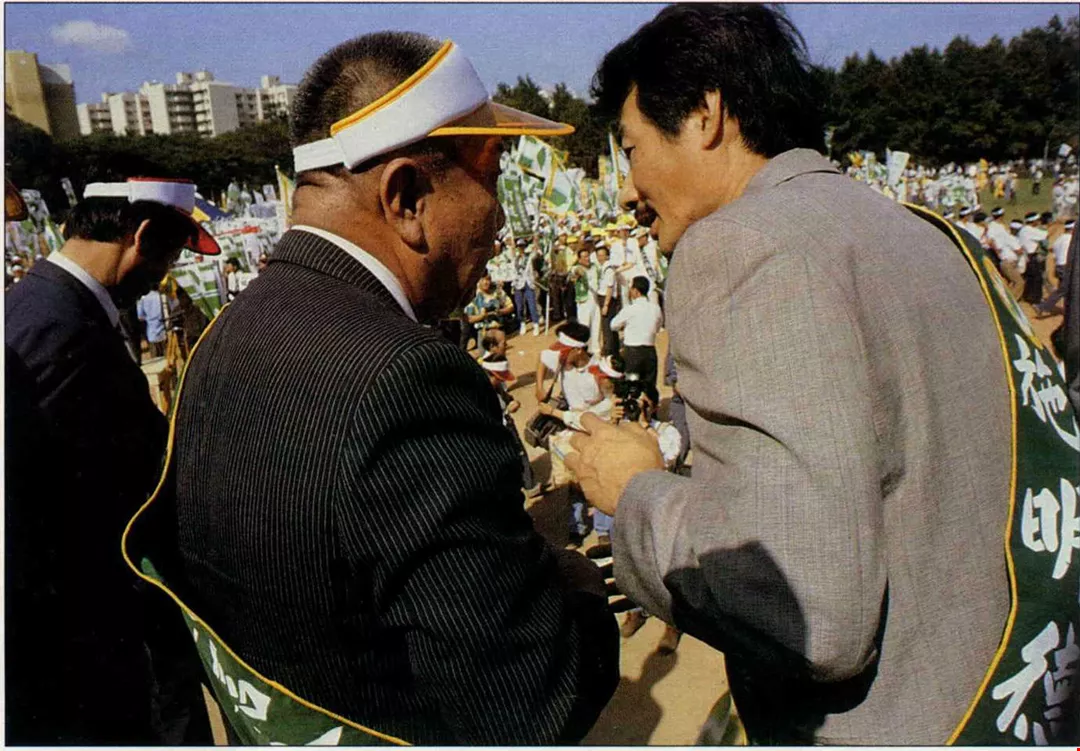
Since the lifting of martial law, the political ideals of opposition party figures and the spiritual path they trod while in prison may all be revealed in their biographies. (photo by Hsueh Chi-kuang)
Scared of getting hurt?
In contrast to the older generation now fading from the political scene, who wish to bear witness to history for their own sake and for the sake of posterity, those in the prime of their political lives or just entering the arena have a different motive for writing biographical works.
Legislative Yuan member Li Ching-hua's autobiographical Any Way the Wind Blows was published not long after he entered politics. He frankly acknowledges that however one interprets his decision to publish the book during the campaign for the Legislative Yuan elections the year before last--whether one sees it as unabashed self-promotion or simply as publicizing his views--for a new comer to the political arena, "I'm sure a book like this was helpful in getting me elected."
As Chin Wei-chun says, in the past political power came from one's superiors, and it was necessary to speak and act with caution to avoid attracting gossip or offending against taboos. But nowadays public opinion is paramount; public support is the basis of all power, and the popular press is the best medium through which to address the public. Thus "as the decisive ingredients for political success have changed, it is natural for political figures to adjust their behavior accordingly," says Chin Wei-chun.
Of course, since biographies have come into vogue, many politicians attracted by the idea of writing are also afraid of getting their fingers burnt. One senior civil servant reveals that his superior harbors ambitions to "rise higher," and also has "plenty to say." But he fears that if he writes under his own name, he may been seen as overestimating his own importance and trying to make a name for himself, which would offend against the accepted mores of officialdom; on the other hand he worries that if he asks someone to ghost for him, who knows how his treasured opinions will turn out under another's pen? What's more, how well a book sells also seems to deliver a public verdict on the writer's performance in office, so that not making the bestseller list can be taken as a slap in the face. In the face of all these worries, the politician in question finally dropped the idea.
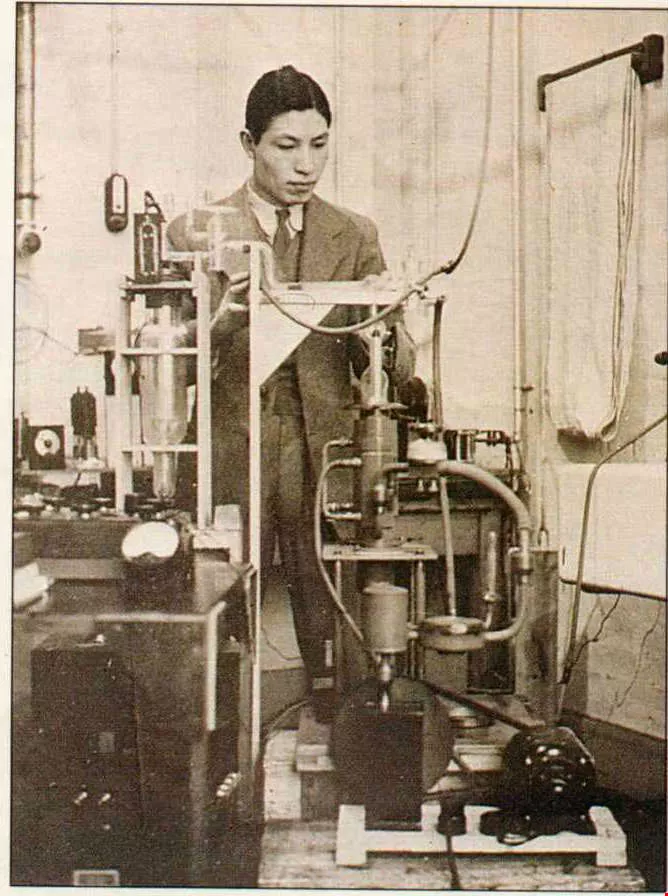
Presidential advisor Li Kuo-ting's oral history was written down by Harvard University scholar Sophia Wang. The charm of Li's days overseas as a student in Cambridge (above), and his role in planning Taiwan's economic development after his return (right), are all described in great detail in the book.
History, news or fiction?
If one writes memoirs or oral history under one's own name, then responsibility for what is written is quite clearly one's own, regardless of how it is received by readers. But beside the autobiographies of political figures now in the bookshops, there are many biographies of the "docu-novel" type. These apparently vivid and lifelike works, which use the devices of fiction to lay bare in great detail all of a politician's inner thoughts, struggles and grievances, can be relied upon to arouse readers' curiosity, but how much of what is written in them is really believable?
A biography of presidential advisor Sun Yunhsuen, which caused a sensation when it first appeared in 1989, recently celebrated its hundredth printing. The book, which was written with Sun's formal authorization, is in the style lf an "oral history," backed up by diaries and letters kept by Sun over many years; but his biographer Yang Ai-li, now assistant editor-in-chief of the monthly magazine Commonwealth, also treated the work as a piece of news reporting, and therefore interviewed many people involved in the events described in order to provide a more authentic and detailed perspective. This combination of Sun's own words with journalistic evidence to provide both subjective and objective views was extremely well received.
But in fact there are very few examples of objectively critical authorized biographies of "big league" politicians. Most authors wishing to write about political figures adopt the second-best approach of collecting material indirectly in a round-about "covert operation." Veteran political reporter Keng Jung-shui (who writes under the pseudonym Hsu Tse) reveals that when he was writing Striding Towards the Presidency--Lin Yang-kang, he relied completely on his friendships with people in the political arena and on his understanding of politics, built up over more than 20 years as a reporter. For fear of making Judicial Yuan President Lin "chary" during interviews, while writing the book Keng never revealed to Lin that he was doing so. Only when the manuscript was finalized did he asked Lin for a few file photos to "make it more authoritative." But Lin Yang-kang told him bluntly: "Don't you go causing me trouble!" and refused to provide any photographs.
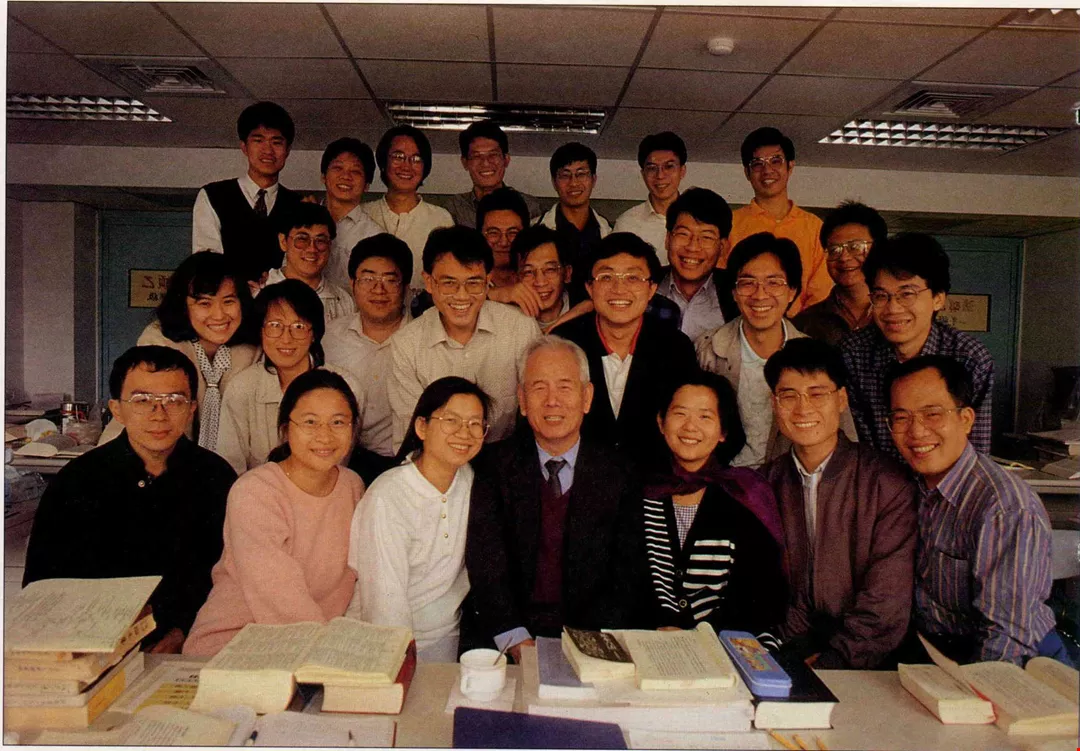
Strenuous Life of Rare Opportunities, the memoirs of national policy advisor Li Mo, recently appeared on the bestseller list. Li, who set up and now directs Soochow University Law School's Special Master Progran, is pictured here with program students.
Reporters used, readers abused?
Because senior reporters in the media have the greatest access to political figures, are experienced in reading people's facial expressions and also have well-honed writing skills, both here and overseas veteran reporters number heavily among the writers of critical biographies of politicians. But after many years of censorship in the ROC, the news media have still to rebuild an image of professionalism and authority, and ethical principals of neutrality and careful confirmation of facts have not yet become established among biographers.
Keng Jung-shui, who does not hide the fact that he "intended to boost my subject's image," admits that when prominent politicians mix with reporters, buy them a few drinks, shake their hands or exchange a few intimate secrets, this may easily lead some reporters to "think that they are the prominent person's friend," and feel a debt of gratitude which influences what they write to a greater or lesser degree. Therefore, "feelings aside, one should always remind oneself that a journalist must not lose his or her professionalism and independence, and in particular one shouldn't seek to gain fame or personal advantage from what one is writing," Keng Jung-shui emphasizes.
But veteran reporter Chou Yu-kou, known for writing The 1000 Days of President Lee, which revolves around the political struggles which President Lee Teng-hui faced after taking office, observes that when writing critical biographies of this kind it is extremely important to first fully understand the background, standpoint, and approach to issues of all one's sources, and to apply the principles of "independent confirmation and balanced reporting."
However, Chou Yu-kou says she had no wish to take on the solemn mission of the "biographer of a historical figure," but rather that as a news reporter she simply wished to make discussion of political topics more free and information more open. Also, by writing in a style "closer to real life and to ordinary people," she hoped to give the general public a closer understanding of politicians' joys and sorrows and the way they think.
The pen is mightier then the sword: handle with care!
Although reporters may be referred to as "uncrowned kings," Chou Yu-kou observes that "actually when you are writing, you have to give some consideration to the current political climate, and also consider whether society is able to digest the revelations you wish to make. " For instance, her first book Chiang Ching-kuo and Chang Ya-jo was written one year after President Chiang Ching-kuo's death. At that time some things were still taboo, and so she deliberately omitted details of Chang Ya-jo's sudden death. It was only after the political climate opened still further that she finally wrote that part of the story in her book Who Killed Chang Ya-jo? which was published just six months ago.
By the same token, when Chou Yu-kou published The 1000 Days of President Lee in January last year, the Hau Pei-tsun cabinet was still in power, and with the calls for "solidarity and harmony" which were prevalent in the politics of the time, she was reticent in what she wrote at many points in the book, and deliberately stressed the bonds of lasting gratitude and goodwill between political figures. But by the end of last year when she wrote Lee Teng-hui in 1993, Lee had already broken with Hau, the "non-mainstream" middle-aged KMT members had split off to form their own new party, and yet these convulsions had not affected social stability. Chou Yu-kou says that now that she need not worry about these aspects, she "can write much more forcefully and can tell the whole story."
Keng Jung-shui goes further to point out that for political figures, whether senior reporters write about them little or much and in a good or bad light can sometimes affect their whole future career. "A word of condemnation may fall heavier than the executioner's axe"; this places writers under a good deal of pressure. For instance, in Striding Towards the Presidency, Keng boldly predicted several possible choices for vice president. After the book appeared, one politician complained to him only half jokingly: "How come you forgot to mention me?" and there were others who on hearing that he was planning a sequel came of their own accord to "offer information."
A storm in a teacup?
With politicians' biographies and autobiographies flooding onto the market, some people cannot help complain: "Politics is enough of a mess already. How come there are so many people who want to stir things up even more?" Others worry that the hitherto uncomplicated publishing industry may become another arena for politicians' rumor mongering and trials of strength.
But the eminent historian and political commentator Bo Yang believes that this worry is unfounded. The days of old-style power politics when "the emperor's mood was beyond prediction, and it was safe neither to praise nor criticize" are gone. In today's democratic society, every trade or profession has to market itself to win public support. Moreover, before major elections in Western countries, similar biographical works also appear in large numbers, and when politicians retire from the political arena they see publishing their memoirs as a prime duty; everyone looks upon this as something perfectly normal and nothing to be surprised about.
"When you write about politicians, readers can judge for themselves whether it is propaganda, adulation or muckraking," says Bo Yang, who was once imprisoned for what he wrote. He feels strongly: "I'd rather writing was a competitive activity, where it's up to me what I write and up to you whether you believe; that has to be better than thought control, violence or dirty elections!"
But how should generally undiscerning and politically insensitive readers regard the current plethora of political biographies?
Look at the trees to know the forest
"In fact, reading a biography is no different from reading any other kind of book: you can't accept everything in it at face value," says Bo Yang, remarking that it is nothing more than human nature if most writers of autobiographies or memoirs "play down the bad and emphasize the good" or tend to exaggerate somewhat. It is almost inevitable that elderly politicians' recollections of their early years will be full of mistakes, omissions, subjectivity and bias, or even attempts to gloss over past mistakes and deliberately mislead.
Su Shih-ping suggests to readers that in today's pluralist society with its pluralist values, there is no place for official histories containing black-and-white judgements of right and wrong, written to conform with the views of respected elders. To put it another way, each person has their own perspective and their own point of view, just as in the Japanese film Rashomon, or the assassination of former US president John F. Kennedy, where everyone can insist that what they saw is the real "truth." But whether there really is a simple and complete "truth" will probably always be an unprovable mystery.
"Absolute truth" is hard to find, but by comparison and cross-checking, one can arrive at "relative truth." One historian refers to biographies of particular political figures as trees in the forest of historical truth. By looking at the "trees," one may not necessarily be able to see the "forest," but if one puts together a number of people's versions of the same event, one may still arrive at a picture more or less approaching the truth. For instance, many books of memoirs record snippets of information about the "February 28" incident of 1947, and naturally these are a great aid to readers' understanding.
A symptom of burgeoning democracy
The more records there are of a particular event the better, and the more people write about a particular politician, the better this is too. Chou Yu-kou likens this to "the more facets are cut on a diamond, the better one can see its true worth." This is particularly so as every person has multiple identities. A father in the eyes of his daughter, a high official in the eyes of his subordinates, or a politician in the eyes of his opponents, though all the same person, will naturally appear with different faces from these different perspectives, and only if all are described will the reader be helped to a full picture of the political figure concerned.
"When Hu Shih was alive, he strongly recommended that everyone should write their autobiography," say Peng Ming-min, who was once Hu's protege, and who is an avid proponent of Hu's concept that "everyone should leave their own testimony to history." Bo Yang, on the other hand, believes that if everyone were skilled at wielding their pen, it would help towards turning around the political climate, "for then if you wanted to push people around, you would first have to think hard about whether they might some day reveal your evil-doings in their memoirs!" This is what was implied when an official who was recently threatened with impeachment announced after resigning from office that he intended to write his memoirs.
"In fact, the great thing about democracy is that everyone is equal, from the president down to the street sweeper. There are many experiences in everyone's life which others could learn from," observes Bo Yang. And in view of the fact that "a high position does not necessarily mean that some-one's biography will sell better," one need only write with substance, frankness and a down-to-earth style, and readers will naturally appreciate it. If everyone can write biographies, why leave it just to the politicians?
[Picture Caption]
p.92
The old publishing house Chung Hwa Book Company recently decked out its bookshop as "The Home of Biography," showing the strength of the current vogue for biographical works.
p.94
When experienced reporters write about politicians, they rely on their many years of contacts with and understanding of people in political circles. Pictured here with President Lee Teng-hui is Chou Yukou, then assignment editor at United Daily News, in a photo taken when Lee visited the paper. (photo courtesy of Chou Yu-Kou)
p.96
Four years ago, presidential advisor Sun Yun-hsuen published an autobiography with the purpose of encouraging and inspiring young people, never thinking that it would cause a sensation. Pictured here is Sun speaking at the book's launching ceremony held by Commonwealth magazine.
p.97
Since the lifting of martial law, the political ideals of opposition party figures and the spiritual path they trod while in prison may all be revealed in their biographies. (photo by Hsueh Chi-kuang)
p.98
Presidential advisor Li Kuo-ting's oral history was written down by Harvard University scholar Sophia Wang. The charm of Li's days overseas as a student in Cambridge (above), and his role in planning Taiwan's economic development after his return (right), are all described in great detail in the book.
p.100
Strenuous Life of Rare Opportunities, the memoirs of national policy advisor Li Mo, recently appeared on the bestseller list. Li, who set up and now directs Soochow University Law School's Special Master Progran, is pictured here with program students.


@List.jpg?w=522&h=410&mode=crop&format=webp&quality=80)


