Sex Slaves Speak Out Against Injustice
Jackie Chen / photos Hsueh Chi-kuang / tr. by David Mayer
December 1999


At this cave in Hualien County (eastern Taiwan), Japanese soldiers forced local aborigine women to provide sex during World War II. Used for storing weapons, ammunition, food, and other supplies, caves like this have haunted the dreams of many women for a lifetime. (courtesy of Taipei Women's Rescue Foundation)
Accompanied by their lawyer Wang Ching-feng, former Taiwanese comfort women "Ah-tao" and "Hsiao-lan" departed on November 2 for Tokyo, where a group of Taiwanese women forced by the Japanese military to work as sex slaves during World War II have filed a lawsuit seeking compensation from the Japanese government. The day before the case was scheduled to open, these two women went public to fight the case using their real names. As they told the Japanese lawyers who were helping with the case, it is the Japanese government, not the victims, who should feel ashamed for what happened to them during World War II.
On more than one occasion they have stressed to the news media that they have decided to devote their remaining years to this battle not merely to obtain compensation but, just as importantly, to fight for justice on behalf of the thousands of fellow victims who did not survive their ordeal.
The time-August 1992. The scene-a very unusual press conference. Three former Taiwanese comfort women sit behind a black curtain showing three spider-veined pairs of calves to the public. They're too ashamed to show their faces. After a half-century of humiliated silence, these women have come forward to tell the world of the shocking mistreatment they suffered at the hands of their Japanese captors. In a trembling voice, one recounts her story: "I was just an innocent girl from a good home before the Japanese got their hands on me. I survived and made it back to Taiwan, but I came back sterile. I kept it a secret from my mother all my life and refused to get married. I want the Japanese government to make up for what they did to me. . . ."
Much has changed since 1993. In 1999 they no longer hide their faces. Now they hold their heads high, and there's a look of fierce determination in their eyes. Standing in front of the Tokyo District Court in early November, the old women spoke to the international news media about what happened to them during the war, and they declared that they were willing to use their real names in bringing a lawsuit against the Japanese government. Says Ah-tao, who comes from Kaohsiung, "They better not think that we won't be able to last out a protracted court case just because we're old. Even if we die, there will be younger people to carry on the fight."
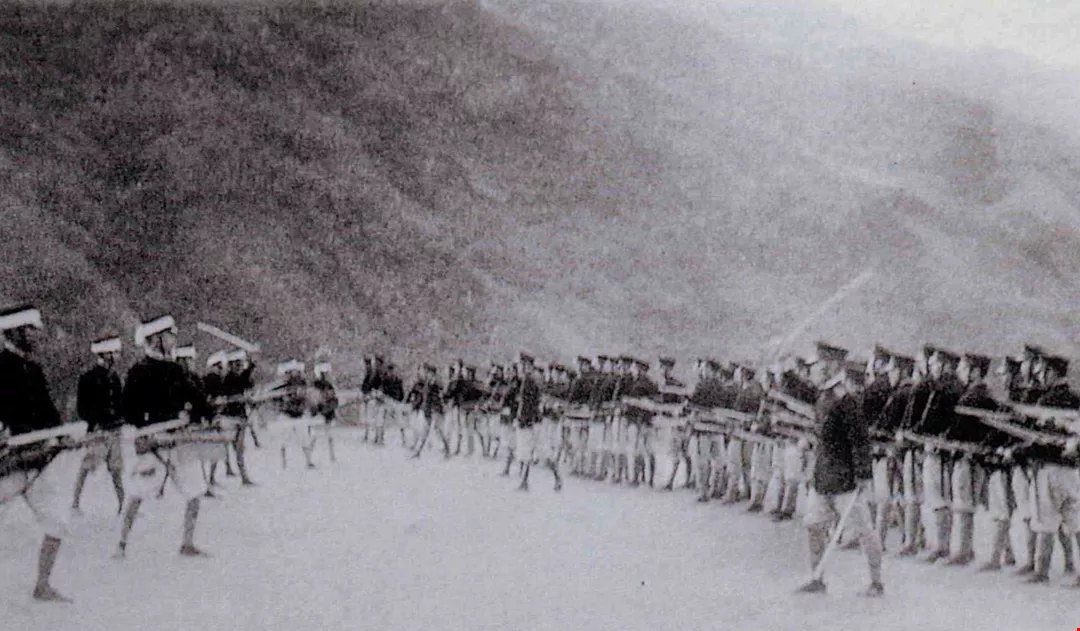
Japan started a war that embroiled a huge swath of the planet for many years, causing untold suffering. In Taiwan, men were forced off to war, while some women were forced into prostitution. Shown here is a Japanese Wushe forcing aborigines to take part in military training. (from A History of Colonial Rule in Taiwan, edited by Lin Jung-tai)
Witnesses to history
The comfort women issue is living history, for the story continues to unfold even as you read this article. For Taiwanese comfort women, the road from secret shame to public indignation has been a rocky one. According to Wang Ching-feng, who has been closely involved with the issue for many years, "They would never have gotten to where they are today without a lot of public support and encouragement."
Beginning with its conquest of Manchuria in 1931 and continuing through the end of World War II in 1945, Japan systematically drafted women from its colonies and occupied territories to work as sex slaves. The issue first burst into the spotlight in 1991 when victims from South Korea, the Philippines, and the Netherlands came forward to tell their story publicly and file a lawsuit in Japan demanding that the Japanese government make an official apology and pay compensation. Former comfort women from Taiwan also filed suit against the Japanese government this past July in Tokyo District Court, and the case opened on November 2.
As Wang Ching-feng acknowledges, "We have been slower to act on this in Taiwan than they've been in some other countries." For one thing, the Japanese have deliberately destroyed historical documents from the war. In addition, says Chu Te-lan, an assistant researcher at Academia Sinica's Sun Yat-Sen Institute for Social Sciences and Philosophy, "Taiwanese comfort women have a much deeper feeling of shame about this than their Korean counterparts." According to Chu, the details of this tragic episode in Taiwan's colonial history have not been fully brought to light.
A Record of Japanese Atrocities, published by the Museum of National History in 1985, includes a chapter on the establishment of "comfort stations" by the Japanese military in Northeast China, Shanghai, Yunnan Province, and elsewhere. The book describes how the Japanese forced Korean and Chinese women to serve as comfort women. As for Taiwanese women, it mentions that "Taiwanese prostitutes" also worked in the comfort stations, but does not go into any further detail.
The issue of Taiwanese comfort women did not erupt into the open until the 1990s. In August 1991, Kim Hak-sun of South Korea publicly denounced the Japanese military for forcing her to work as a comfort woman during World War II. Debunking the Japanese government's repeated contention that the comfort women "were prostitutes who took the positions voluntarily," she affirmed that the Japanese had systematically forced Korean women into service against their will. She offered detailed proof of her statements, and in so doing delivered a sharp slap to the face of a Japanese government that has time and again denied any need to apologize to Korean comfort women, erect a memorial in their honor, or pay compensation. In the ensuing international uproar, many turned their attention to Taiwan, another Japanese colony, and wondered whether a similar fate might not have befallen women here.
In February 1992, Japanese parliamentarian Ito Hideko discovered in the library of the Japanese Defense Agency three telegrams connected with the recruitment of Taiwanese comfort women. This discovery triggered an urgent effort to determine the facts regarding the history of Taiwanese comfort women. The Taipei Women's Rescue Foundation (TWRF) established a comfort women's hotline in 1992. In seven years over 400 calls have been received; 43 of the women who have come to the foundation to tell their stories are still alive today.
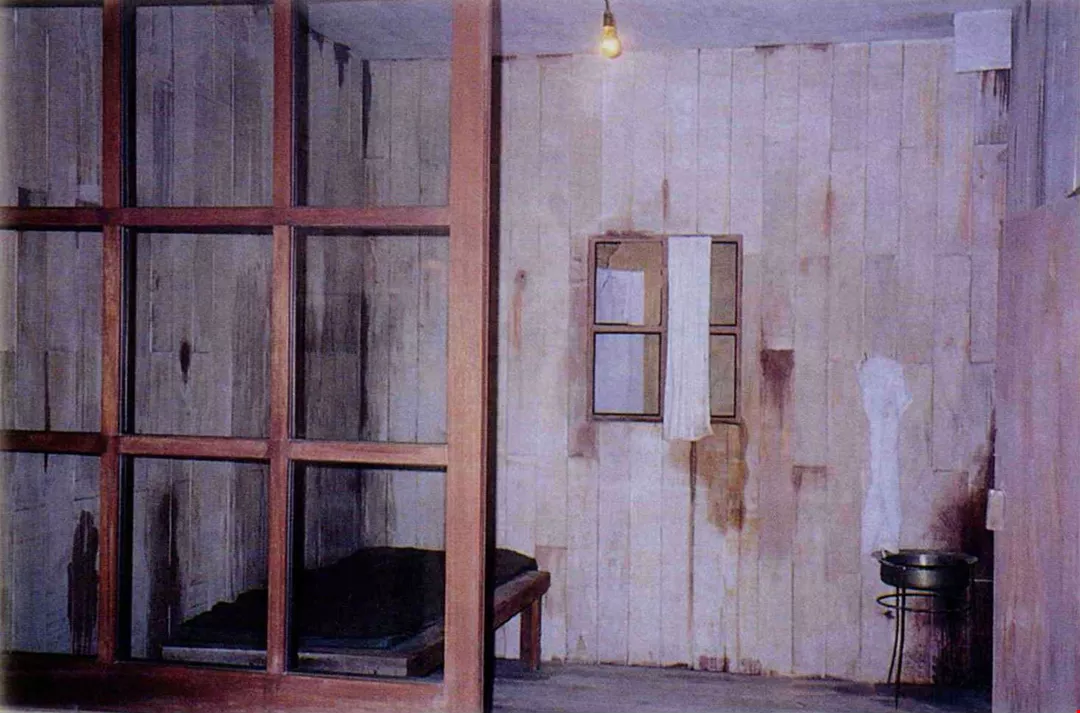
In the 1990s, Korean women's groups were the first to publicly accuse the Japanese military of forcing woman into sexual slavery. The ensuing controversy attracted the shocked attention of the world. Shown here is an exhibit at a comfort woman museum in South Korea. (courtesy of Taipei Women's Rescue Foundation)
Brutality of war
As the century reaches a close and the nations of East Asia reflect upon the lessons of World War II, we find ourselves confronted by the living survivors of incidents that many of us have prematurely consigned to the history books. Sometimes these witnesses to history guide the research of historians, and sometimes their experiences flatly contradict what has been written about the past. The comfort women are one case in point.
Many historians have characterized the comfort women as prostitutes who happened to serve the military. What are the facts? In his Master's thesis entitled War and the Taiwanese, Li Kuo-sheng states that the system first appeared after the January 28th Incident of 1932, when the Japanese attempted unsuccessfully to invade the lower Yangtze valley from their concession in Shanghai. Okamura Yasuji, chief of staff of the Japanese Imperial Army, was anxious to bring an end to the endless patronizing of local prostitutes by Japanese soldiers. To this end he ordered the establishment of military "comfort stations" where the soldiers could take care of their sexual needs. At first the military recruited Japanese prostitutes and barmaids to work in the comfort stations.
It is not yet known when the Japanese began to bring in women from the colonies of Korea and Taiwan, but Chu Te-lan believes that the Japanese military first began using large numbers of Taiwanese comfort women after the attack upon Pearl Harbor brought the United States to war against Japan.
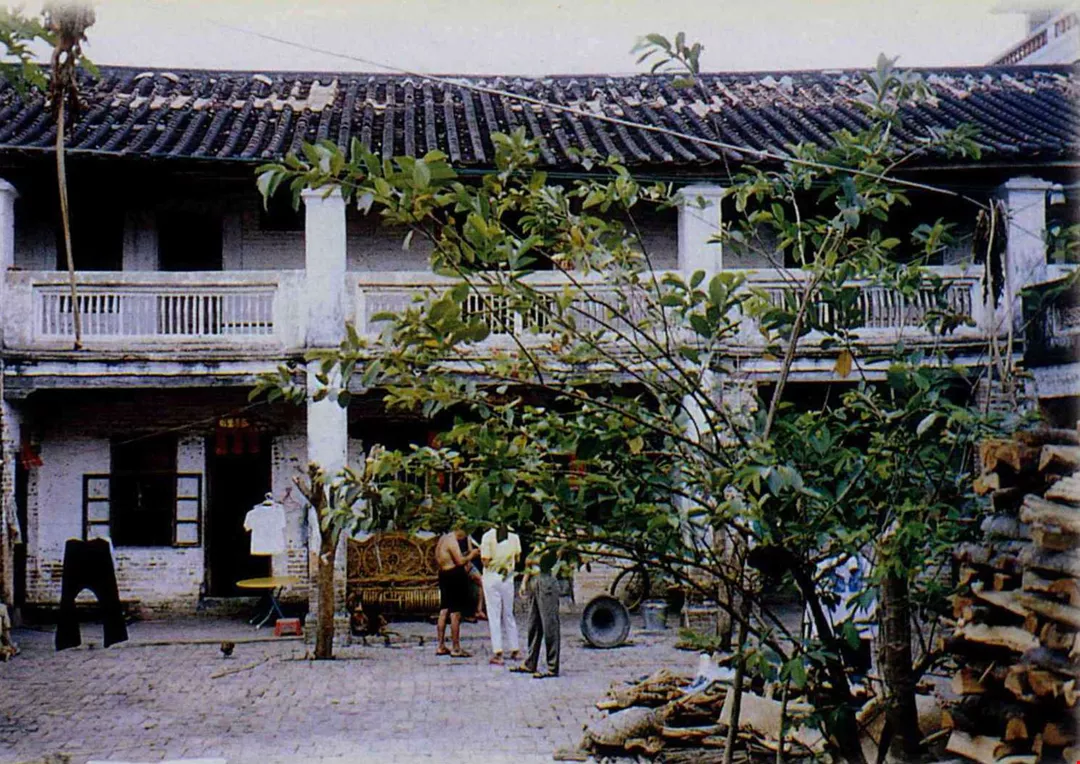
Many Taiwanese comfort women were taken to Hainan Island during World War II. According to files from the former Taiwan Development Company, this farm home in Lingshui, Hainan served as a 'comfort station.' (courtesy of Chu Te-lan)
The savage side of humanity
"By the time I got to Kaohsiung it was already turning to daylight. Then I spent over a week on a ship with a dozen girls from Okinawa. After we disembarked, we got in a truck and they took us to a big building made of coconut trees. They assigned each of us an individual room. Back home they had told us we would be working in the commissary, but we realized then that they had lied to us." (Ms. A, interviewed by Taipei Women's Rescue Foundation [TWRF])
"We just closed our eyes. The thought of going to bed with those soldiers was repulsive, and there was absolutely no love interest for any of us at any time. An old prostitute told us, 'You're here to cheer up the soldiers, to comfort them. You're here to serve your country.' Some of the Japanese soldiers felt bad for us, but others would beat us. We were afraid." (Ms. B, interviewed by TWRF)
"Some of the Japanese soldiers were real bastards. They would kill you like you were nothing more than an ant. We were totally at their mercy. Once I said 'Good afternoon' to a Japanese man. He was drunk, and he slapped me hard across the face. I ran to my room and locked the door, but he came after me. When he put his knife through my door I ran out another door and hid in the bathroom. Later the boss made me go and apologize to him. I've been deaf in one ear ever since then." (Ms. C, interviewed by TWRF)
TWRF has found that Taiwanese comfort women on average "comforted" from three to 20 or more men every day, and some even serviced as many as 60. They were not allowed any time off for sickness, menstrual periods, or even pregnancy or post-partum. Some women were forced to provide sex at knife point.
Most of the women were conscripted between the ages of 16 and 25. The youngest was 14, and the oldest was 40. They generally came from poor families and had not received any schooling. Although many of them had worked in tea houses, geisha houses, bars, and hotels before being sent abroad, a third of them had only done household chores or farm work.
Most of the women did not realize before leaving Taiwan that they would be providing sexual services. According to a report prepared by Chiang Mei-fen for TWRF, "When they were recruited, the women were told that they would be expected to serve as waitresses, drink with the soldiers, cook and wash clothes, take part in theatrical performances, work as nurses, and the like."
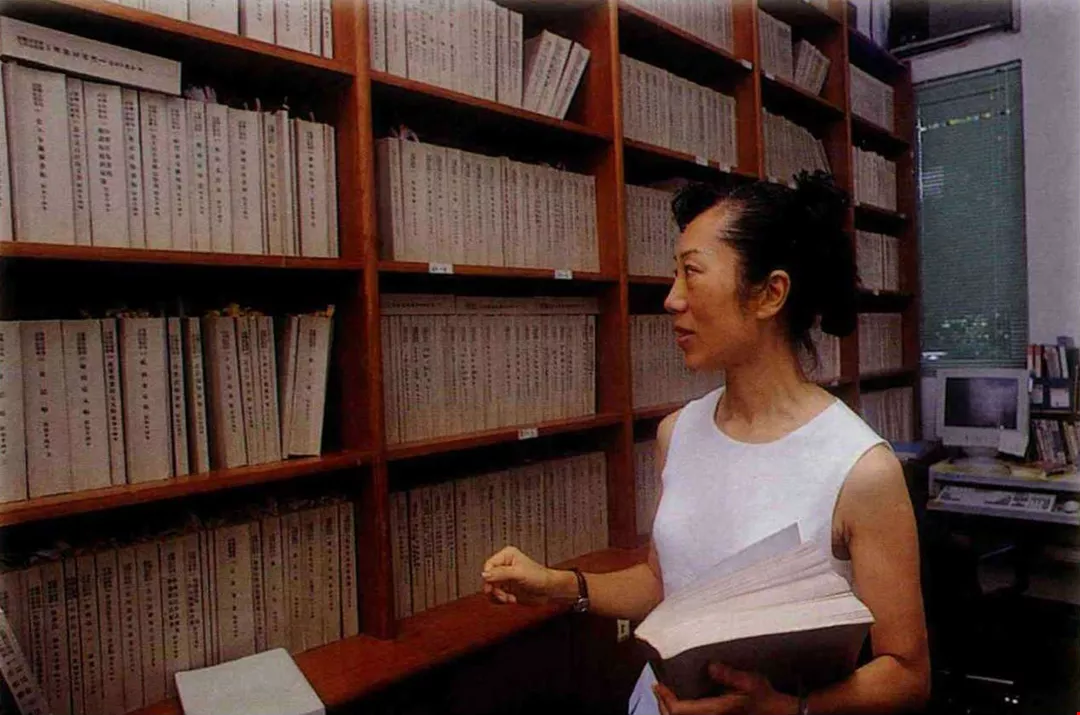
Embarrassed by the comfort women issue, the Japanese have intentionally destroyed historical materials related to the subject, but the past cannot be kept hidden forever. Chu Te-lan, of Academia Sinica's Sun Yat-Sen Institute for Social Sciences and Philosophy, has discovered files from the former Taiwan Development Company that detail the company's involvement.
Stonewalling
According to Li Kuo-sheng, the comfort women issue was one of the most despicable episodes of World War II. In mainland China, Hainan Island, Hong Kong, the Philippines, Indonesia, Burma, Okinawa, Korea, and Taiwan, "Wherever the Japanese army went, they took comfort women with them."
During the war in the Pacific, Japan sent 3.5 million soldiers overseas, and women from mainland China, Korea, and Taiwan were forced to go along. Chu Te-lan and others estimate that over 100,000 Koreans, 20,000 Japanese, at least 1,200 Taiwanese, and over 200,000 mainland Chinese women were forced by the Japanese to serve as comfort women during World War II.
In an effort to enhance their military capabilities and achieve victory in war, the Japanese used the power of the state to coerce women into military prostitution. They exploited women who happened to find themselves in relatively disadvantageous circumstances. This, more than anything else, is what has brought such furious condemnation upon the Japanese in connection with the comfort women issue. Li Kuo-sheng writes, "They used the official apparatus of state to establish a system of legalized rape. " Says Chu Te-lan, "Probably no other country in history had ever done such a thing before." What really irks people is that the Japanese government has never once made a sincere apology.
Chu points out that some academics and government officials in Japan argue that the former Taiwanese and Korean comfort women who have spoken out in the 1990s on their wartime experiences have been lying about forced prostitution. Tokyo University professor Fujioka Nobukatsu, for example, has stated, "The comfort women were not sex slaves. They were just prostitutes whose pimps took them to the war front. In Korea almost all the pimps were Korean." He has also said, "All those stories about Japanese wartime atrocities are pure fabrications."
Women's groups in Asia have gone on the offensive to counter these ideas. Since 1992, groups in South Korea, the Philippines, Japan, and Taiwan have worked with victims from throughout Asia to hold five joint conferences on the comfort women issue. Large numbers of former comfort women have come forward on each of these occasions to tell their stories. Ho Pi-chen, chief executive officer of TWRF, strongly contests the contention of the Japanese government that the comfort women were engaged in private prostitution. In talking with former comfort women from many different countries, Ho has learned: "Most of these women were transported to the front on naval vessels. The comfort stations were built by the military, and the military determined how they were to be run. When the women got sick, they were attended to by military doctors. The brokers who recruited the women and the mama-sans who watched over the comfort stations all had close ties with the Japanese military."
A small number of right-minded Japanese scholars have published studies that contradict the stand of their government. In 1992, Chuo University history professor Yoshimi Yoshiaki published the first paper documenting the participation of the Japanese military in the comfort women scheme. The public airing of military documents concerning the recruitment and transport of comfort women during World War II forced the Japanese government to publicly acknowledge military involvement in the establishment of comfort stations. In 1993, Chief Cabinet Secretary Kono Yohei apologized to the victims, and Prime Minister Murayama Tomiichi followed suit in 1994. These apologies represented a positive signal by the Japanese government, but they were made under duress.
A positive signal, however, is only a signal. Just as in the case of Taiwanese soldiers who fought for Japan, the Japanese government has not yielded any ground on the issue of compensation. Japan's Ministry of Foreign Affairs contends that the issue of compensation for wartime misdeeds was put to rest with the signing of the San Francisco Peace Treaty. The Japanese government is only willing to use privately collected donations to compensate former comfort women for their suffering. In the view of Ho Pi-chen, "In other words, it means the government doesn't want to have anything to do with the payment of compensation."
To angry Taiwanese victims, the Japanese government's attitude translates to this: "They don't admit any wrongdoing." That is what motivated the lawsuit filed this past July in Tokyo District Court.

Wang Ching-feng, a lawyer and former chairwoman of the Taipei Women's Rescue Foundation, has worked for many years on behalf of Taiwan's former comfort women. She hopes to use this issue to warn against further such wartime savagery.
Taiwanese tycoons in cahoots?
In the meantime, scholars have also been looking at how the comfort women system was carried out here in Taiwan. In July, Chu Te-lan published related documents that she found in the records of the Taiwan Development Company.
Taiwan Development was a semi-public corporation established by Japan to support its strategic aim of southward expansion into Southeast Asia and the Pacific islands. Chu notes in her research that after they captured the city of Haikou on Hainan Island in 1939, the Japanese military (operating through the Government-General of Taiwan) ordered Taiwan Development to carry out economic development on the island. The company was given a wide range of tasks, and construction of buildings urgently needed by the occupying forces received top priority. Facilities built included administrative quarters, a mess hall, barracks, and a naval comfort station.
Not only do the Taiwan Development files show that the Japanese government built a comfort station on Hainan Island, they also prove that the military was involved in running them. In 1939, a certain Mr. Kihara in the Government-General's department of investigation asked Chairman Takayama of Taiwan Development to dispatch 90 geisha and prostitutes to Hainan, and lent him ¥30,000 for operating capital. "However," says Chu as she quotes from the Taiwan Development files, "the company asked Kihara if it could fund the station through an affiliate called Fukudai Company instead, noting that any involvement on the part of Taiwan Development in such a matter 'might prove sensitive for various reasons.'"
Explains Chu, "Fukudai was Taiwan Development's general agent in Fujian Province." In an attachment to the Taiwan Development file, Chu discovered a list of Fukudai shareholders as well as attendance records from the company's general shareholders meetings. To her surprise, some very familiar names showed up, including members of powerful families headed by Koo Hsien-jung, Lin Hsiung-cheng, Chen Chi-feng, and Yen Chin-hsien. The sons and grandsons of these men continue to be among the elite in Taiwan's business circles today. Although these families only held minor stakes in Fukudai, a major media frenzy was triggered when their connection to Fukudai became public knowledge. Attention-grabbing headlines played up the link between the four families and the comfort stations.
A historian has pointed out that the four families' ownership of shares in Fukudai was no different from the stock purchases made by any small-time investor today. Once you've bought stock, your name will appear on a company's list of shareholders. As such, it would be unfair to claim that these families were involved in war-related activities just because the names of some of their members appeared on a shareholders list. Chu Te-lan explains that she has not found anything in the Taiwan Development files to prove that the four families were involved in running comfort stations. Nevertheless, she adds, "It is a well-established fact that the four big families cooperated with Japan's war effort." In the complex political climate of that time, these wealthy families found themselves in a very delicate position.
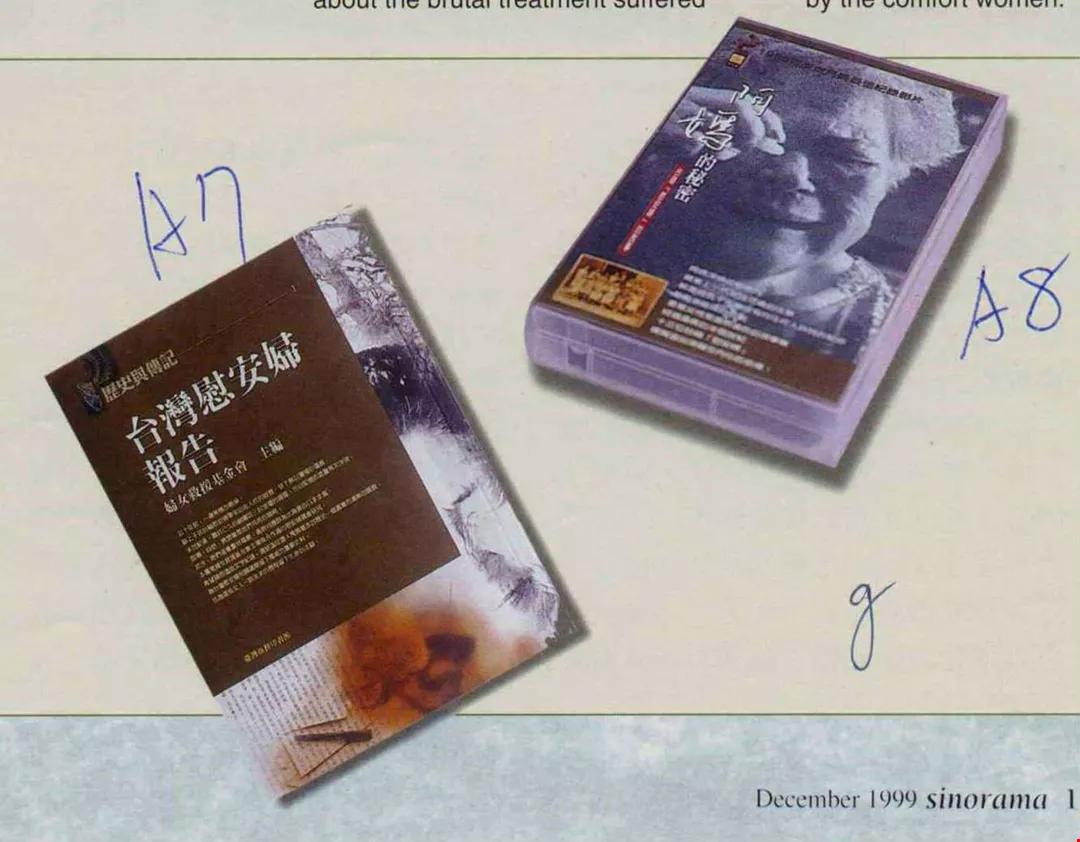
The Taipei Women's Rescue Foundation has published a report (Taiwan's Comfort Women) and a videotape (Grandma's Secret) to make known the truth about the brutal treatment suffered by the comfort women.
Destroyed lives
The comfort women story is about history, and it's also about women's rights. For the victims, the episode left physical and psychological scars that have lasted a lifetime. Besides being abused by men, these women also had to deal with all the hazards of war-hunger, cold, and flight from danger. By the time the war ended many families were scattered to the four winds, and those who returned faced an uncertain future. Some aborigine comfort women suffered an even worse fate than those sent overseas. Forced into prostitution in their hometowns, they had to endure the scorn of unforgiving friends and relatives. Says Chiang Mei-fen, a professional social worker at TWRF, "Those who are still alive today are extremely hardy individuals."
"After coming back to Taiwan I often had trouble getting to sleep. I would sit in the living room smoking like a chimney. My mother would say, 'Just put it out of your mind.' That would get me started crying, and she would say, 'What's the point in thinking about such things any longer? It's all in the past now.' But I couldn't stop crying. I had been such a pretty girl, but after they put me through that hell my body wasn't worth any more than a head of cabbage. My life was ruined. . . ." (Ms. D, interviewed by TWRF)
The horrors of their slavery left most comfort women with serious health problems. According to a study by TWRF, after the war ended some women had gastrointestinal disorders due to the poor food in the comfort stations. Others had hearing problems due to physical abuse, or suffered from back pains. Problems with the ovaries or uterus were especially common, and some six out of ten came back unable to bear children. In the words of Wang Ching-feng, "The experience robbed them of their youth and left them isolated, impoverished, and ill."
Their physical ailments, however, are not as serious a problem as the psychological trauma has been. Ho Pi-chen notes that when these women come to TWRF, most blame themselves for what happened, as is typical of sex-crime victims. According to Chiang Mei-fen, many comfort women have never gotten married because they hate men or couldn't have children. Even among those who have married or cohabited, family life for most has not been happy. The burden of their secret has put them on pins and needles all their lives, wondering who might know about their past. Says Chiang, "According to the traditional way of Chinese thinking, these women came back as 'used goods.' They bear the taint of prostitution. This cultural baggage has weighed heavily upon them."
Wang Ching-feng comments that the comfort women issue is a manifestation of the savage state of mind into which Japanese soldiers descended during the war. She emphasizes that the most important thing now is for everyone to realize that we must not allow ourselves to regard the brutality of wartime as natural or inevitable. Says Wang, "The same kind of tragedy has been repeated again and again. Just look at what happened to women during the wars in Yugoslavia and Rwanda, and during the race riots against the Chinese in Indonesia."
Thanks to the efforts of women's groups around the world, the UN Commission on Human Rights has determined that Japan's comfort woman scheme was "a system of military sex slavery" that violated human rights as well as international laws prohibiting trafficking in women and children. The UN has classified the comfort women system as a war crime, and has demanded that Japan officially compensate the victims. The Japanese government has not yet given a clear response to this demand, but as Wang Ching-feng points out, "The Rome Statute of the International Criminal Court, which was adopted last year, proposes treating sexual torture of non-combatants as a war crime. It is thus clear that our pursuit of the comfort women question has been a step forward in the fight to protect women's rights."
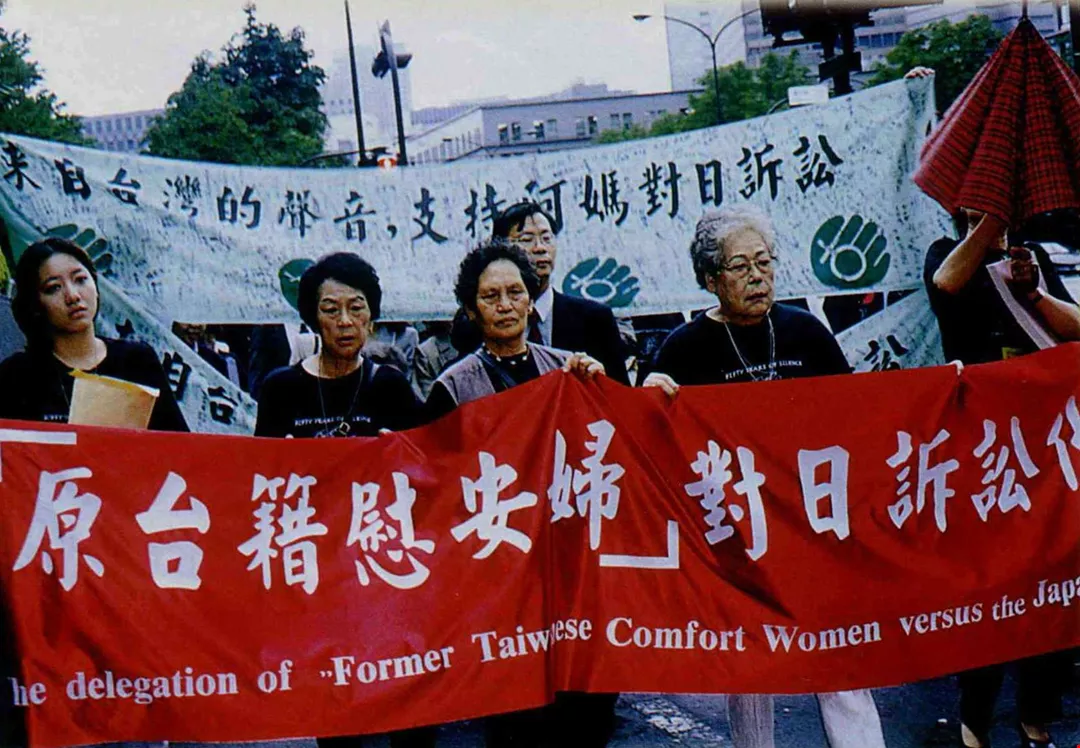
Former Taiwanese comfort women filed a lawsuit against the Japanese government this past July in Tokyo District Court. Before the case opened they unfurled a banner outside the courthouse and told their story to the (courtesy of Taipei Women's Rescue Foundation)
Not just for retribution
It has taken these aged women a lot of courage to deal with the horrors they experienced a half-century ago. "They come a long way in the support groups," says Ho Pi-chen. "At the beginning they fret and sigh about their hard lot in life, smoke cigarettes non-stop, cry, and pour out their heart-rending tales. By the end, though, they're chatting about family and friends, and even singing together." According to Ho, the change in these women shows how much society can do by offering its support. "These women no longer blame themselves for what happened to them. They realize that they are not the ones who have anything to feel ashamed about."
Taiwanese comfort women have received much more support from society than have their counterparts in Korea or the Philippines. Noted author Li Ao auctioned off 100 items from his personal art collection and used the proceeds to provide former comfort women with NT$500,000 each. The government has also provided a matching amount to afford them a measure of security in their old age, and county and local governments provide monthly welfare benefits of NT$15,000. Thanks to this support, Taiwan's former comfort women no longer face grave financial difficulties.
There is one remaining issue, however, that they can't quite put behind them. Their burning sense of indignation will never begin to be assuaged until Japan truly admits to its wrongdoing, gives an official apology, and provides compensation. Says Wang Ching-feng, "We're not demanding compensation just for the sake of the money. The point is to get the apparatus of state to come clean on this once and for all." Only by fully reflecting on the savagery of wartime and rejecting it as unacceptable can we move forward as a civilization.
In the final analysis, the comfort women issue is not only about the comfort women. It's about women's rights in general. Women (and girls) continue to be victimized all the time-rape, child prostitution, domestic sexual violence, sexual harassment-yet we don't necessarily show them the compassion they deserve. Ho Pi-chen asks, "Can you be sure you don't have a 'compassion deficit' too? After all, it's tempting to look skeptically at a victim and think, 'Maybe she brought it on herself.'"
Says Wang, "We would like to use the comfort women issue to lend strength and support to all women who have been victimized in one way or another. The first thing we have to do is wipe the smug and suspecting looks off the faces of all those people out there who think the victim is the guilty one!"
If we can achieve this goal, the struggle on behalf of the comfort women will have been for more than mere retribution.


@List.jpg?w=522&h=410&mode=crop&format=webp&quality=80)