The Time Merchant:Chang Shi-kuo
interview by Teng Sue-feng / photos courtesy of Chang Shi-kuo / tr. by Josh Aguiar
November 2004


It's been rumored that Chang Shi-kuo wants to design a kind of mobile phone that buys and sells time, and his plan has caught the eyes and ears of the media. Eager to take advantage of Dr. Chang's return to Taiwan to serve as project director for the Industrial Technology Research Institute's Innovative Advanced Technology Research Program, reporters stampeded off to Hsinchu to get the scoop.
Chinese readers know Chang Shi-kuo as a novelist of bristling creativity and fecund imagination. Even before reaching his 30th year, he won the adulation of the literary world with his works The Chess King and The Anger of Yesterday. The Chess King, in fact, was selected by Asia Weekly as one of the 100 greatest Chinese novels of the 20th century. It is also the book that has found the greatest popularity with readers, and the work that the author himself finds most satisfying. The story revolves around a young chess wizard with psychic powers, revealing in the process a glimpse of the crass materialism and get-rich-quick mentality so pervasive amongst Taiwanese urbanites during the economic boom of the 1970s and beyond.
"Some people create to satisfy their muse, but I want to write things that reach people," Chang says candidly. Despite the many years he has lived in the US, much of his inspiration is rooted in his love for his homeland. Many of his earlier works are based on contemporary happenings within Taiwanese society. Earth, for example, examines the relationship between people and the earth in a time of economic transition, as well as the confusion and forlornness experienced by students studying abroad. Another book, The Anger of Yesterday, portrays the movement amongst overseas Chinese in the 1970s to defend Taiwan's sovereignty over the Tiaoyutai islands.
After a while, the bent of his writing gradually turned towards science fiction, philosophy, and the exploration of the human psyche. A self-proclaimed eclectic, Chang isn't content to stay within established genres, but instead casts a wide literary net that encompasses history, philosophy, movies, and politics.
In Tales of Male Chauvinist Pigs, Chang uses satire and witticism to counter feminism's more strident exponents. The Star Cloud Suite depicts man's role in the future universe. In V-Topia-his first work to deal with politics-he offers his own solution to the cross-strait stalemate.
"Perhaps the best path for Taiwan to take is a fuzzy one between East and West, in a virtual China," Chang says, suggesting that Taiwan, a place that combines East and West, take a cue from the development of the European Union. He refers to "a common market for Greater China," a "Chinese integrated community," and a "confederation of Chinese states," as possibilities that could be realized gradually, not according to a rigid timetable. He stresses that there needn't be a final, unequivocal "yes or no" answer to the question of Taiwanese independence.
From early on, Chang expressed an affinity for literature, history, and philosophy. As a young man, he made stabs at a number of different literary genres, and was a trailblazer in the development of Chinese sci-fi in the 1960s. In 1969, as an already practiced author, he wrote his first science fiction work, An Unofficial Biography of the Overman, and since that time he has been steadily involved with the genre. Later, in 1989, he founded a magazine, The Mirage, to serve as the foundation for a thriving Taiwanese sci-fi community. He would also make regular trips back to Taiwan to judge sci-fi competitions, which is, of course, a great way to harvest new talent. Chang is widely regarded as the patriarch of Taiwanese science fiction.
For 40 years, the multifaceted Chang Shi-kuo has had one foot in science and the other in literature. Due to the fact that he has been unusually prolific as a writer, readers tend to overlook his role as a scientist. The reality is, though, that his professional training was in electrical engineering, and that in his day job he is an academic researcher.
Chang was born in 1944 in mainland China's Sichuan Province, and grew up in Hsinchu after his parents relocated to Taiwan. After graduating from the electrical engineering department at National Taiwan University, he went to study in the US in 1966, earning a doctorate in computer science from the University of California, Berkeley. He has held numerous teaching posts in his many years overseas at such schools as Cornell University, the University of Illinois, and the Illinois Institute of Technology. Currently, he teaches at the University of Pittsburgh. Over the years he has delivered over 240 research papers and advised over 200 doctoral candidates.
Although as a professor of electrical engineering he studies information technology, Chang constantly reminds himself that he doesn't want to be overly reliant on computers. He used to disdain using one when writing, wanting to clearly demarcate the boundary between his work and his interests. He jokes that more recently, as communications become increasingly intertwined with computers, he has had to compromise his principles somewhat, what with all the e-mails in Chinese he receives nowadays.
The homepage of Chang's University of Pittsburgh website sports a picture of his five-year-old grandson wearing a Superman outfit and impish demeanor. Chang's written instructions tell us to click on the image of his progeny to reveal his, Chang's, true identity: none other than sagacious Master Yoda of Star Wars fame. Obviously, Chang Shi-kuo hasn't lost his youthful playfulness.
His novels chronicle the twists and turns Taiwan has experienced in each generation, offering historical commentary and analysis. Reading between the lines of his novels often subtly reveals the author's deep concern for the future welfare of his country.
In 1978, he founded the Knowledge Systems Institute in Chicago. Boasting an old-fashioned small classroom environment with a low student-to-faculty ratio reminiscent of a traditional Chinese academy, the school emphasizes close interaction between students and teachers. Chang specifically targeted seasoned pedagogues who were at or close to retirement age, reasoning that it would be the best way to attract true lovers of the teaching profession. Such individuals would be teaching primarily for the sheer pleasure of it rather than merely for profit. The teachers' essentially altruistic persuasion along with their experience and dedication would combine to create an academic atmosphere high in quality but low in expense.
Now 60 years old, Chang has returned to Taiwan at the behest of the Industrial Technology Research Institute (ITRI). Since his May arrival, he and his group of young engineers have been working on the Chronobot Project, racking their brains daily to breathe life into the fanciful ideas described in one of his novels. In describing the process of "superimposing the technology of tomorrow onto the world of today," the story begins with the love-smitten girl from Nocturne, who stands waiting for love on Taipei's Chingtien Street, holding her chronobot, the device that stores time....
Q: Could you please discuss the origins of your Chronobot Project plan and its stage of implementation?
A: The director of the Computer and Communications Research Labs at ITRI, Dr. Paul Lin, was the second doctoral candidate I advised in the US. Dr. Ke Jyh-sheng, president of the Institute for Information Industry, was the third. So, we're all close. They both knew I was taking a year's sabbatical, and they asked me to come back to Taiwan and present a research proposal. It turned out that ITRI had a project called the Innovative Advanced Technology Research Program that aspired to produce competitive, cutting-edge research that would set the pace for others. They told me I should come up with something really wacky for my proposal, which wasn't a problem, since my head is packed with wacky ideas. So what I did was expand on the concept of borrowing and returning time in my story Nocturne, which is actually a love story. Relationships really amount to lending a portion of your time to someone else.
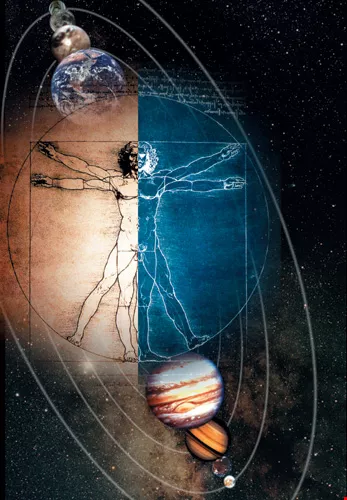
Chang believes that science fiction is not only able to describe a glowing future world, but can also point out the problems of our contemporary world. His works are often philosophical in nature, creating a vivid imaginary world filled with sympathetic characters that expose human complacency and ignorance.
for sale?
The story has its roots in an experience I had more than 20 years ago. I was on Hoping East Road when I saw a girl standing by the roadside. It was raining, and the girl just standing there in the rain was a pretty bleak picture. Before that I remember seeing from a cab an ad for pedigree dogs and thinking, "What if they were selling time instead?"
This particular short story has resonated with people since the day it was released. It's even been translated into English. I borrowed "chronos," which means time, from the Greek and combined it with "robot" to create "chronobot," the name of the machine that can manipulate time. A lot of people ask me, "How can time be moved about?" In agrarian societies, it's common for people to hire additional farmhands at busy times. For example, even now in places like Mexico or Southeast Asia you can see people waiting around at a bus stop. A truck will come by and the driver will hold out a number of fingers-let's say three or five-and then three or five people will hop on board to go work. This is really the most basic kind of buying and selling of time.
Contemporary corporations make use of the same idea when they outsource. People occasionally feel like they have a few extra hours on their hands, a few extra fragments of time. We're envisioning a mechanism-either via the Internet or cellphones-through which people can buy, sell, or store time. You can buy with money, or you can offer your labor, be it manual or intellectual. The basic prototype of this mechanism is a cellphone, like today's smart phones, which are like miniature computers.
Elderly people will probably be the first to make use of it. Seniors are reliant on a whole plethora of machines, like those measuring blood pressure and pulse. In the future we could integrate all of these devices so that someone with diabetes could use a single machine composed of microscopic nanodetectors to both measure their blood sugar level and then inject the proper amount of insulin when needed.
This is a two-year plan. We hope to start promoting it this year, and next year the technology will be available to transfer. Accessibility is a major consideration; since we're targeting senior citizens mostly, the devices shouldn't be overly complicated. They need to be extremely user-friendly.
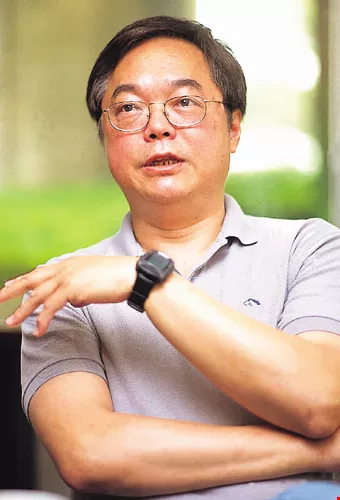
"Myths are all stories. Jesus, Buddha, and political figures all like to tell stories. On the one hand, stories can embody a meaning that is very clear, on the other hand, they can project tremendous nuance. Both qualities are indispensable." (from The Drifting Soul)
A product for the Internet Age
Q: Has it been difficult expanding a concept from a short story into a bona fide consumer product?
A: Things have been going pretty smoothly so far. The biggest risk is that there may not be a market for it when the product is finished. This is a social product in the Internet Age, and there has to be a market for it in order for it to succeed. ITRI is a research and development organization, however, and won't actually be involved in the marketing effort.
If just one elderly person uses it, there is no commercial benefit. If the product is used by a community, we have achieved a degree of success. We need to find a group of people to use the product. We're in the process of developing a prototype. There's a bit of jargon that we use to describe the multi-stepped process of research and development: the spiral technique. The first step is creating the product, which is followed by evaluation, hunting for weaknesses, and finally risk assessment. Each one of those steps is likened to a single whorl on the spiral. At present, we're still at the first whorl.
Q: You said that the timeframe for the project was two years. Is it possible that after the technology is made available, Taiwan's manufacturers will be slow on the uptake, allowing foreign conglomerates to make off with the developed product?
A: Technology always takes the lead. After the technology has been developed, then you need someone with the business acumen of a Bill Gates in order to properly promote it-to this day, I still haven't seen a product whose market potential was fully exploited by its original developers. I really hope that somebody from either ITRI or the Institute for Information Industry will set up a company and make a fortune on this product, because there aren't too many people out there who are adept at both product development and marketing.
All technological inventions make money by being ahead of the competition. At the most, it's possible to be a couple years ahead, but usually it comes down to a mere few months. Your ideas can get picked up on by others quickly, and they might beat you to the punch.
Q: You are such a prolific and diverse author. How do you manage to maintain such a breathtaking level of creative output?
A: The most important ingredient in creativity is the ability to make associations between things. For instance, a scientist sees a bird flying in the sky and then gets to wondering whether mankind could do the same. Poetry, novels-any kind of artistic or literary endeavor-relies on association.
My field is knowledge engineering, which is the study of how people acquire knowledge and make deductions based on what knowledge they have already acquired. Loosely speaking, this is one component in studying artificial intelligence. As a result of this study, I've come to understand a bit about how deduction, association, and reasoning work. In my opinion, creativity is not innate, but something that can be cultivated. There's a lot of evidence that suggests the neurons in our brains aren't interconnected from the very beginning, but rather that the connections are formed in response to chemical stimuli. This is a kind of non-linear thinking. So, we see that associative thinking isn't random because it eventually forms a pattern.
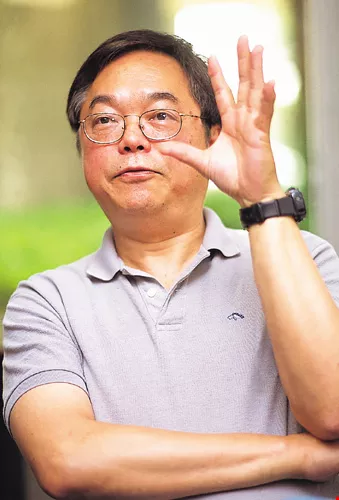
"Utopia is a Western cultural symbol for the pursuit of a perfect society. The process or journey of searching, no matter whether viewed from an individual or societal perspective, involves profound change. That change is always painful, and the journey is burdensome. But that is the only way for mankind to attain a higher level of existence." (from V-topia)
Man or machine?
Q: Science fiction is a kind of imagining of the future. Do you think that any of the circumstances depicted in your books will come to pass in the foreseeable future, such as the genetic modification in Designer Baby, or the robots in A Doll's House?
A: Robots taking over the world won't happen. I asked a number of people if they would be willing to spend NT$30,000 on a robot that looked just like them and could reason independently. Everybody said no.
The more developed robots become, the less people will be willing to buy them. That's why robot manufacturers have been so unsuccessful in marketing them-robots are threatening to people. But people are willing to buy "smart" vacuum cleaners and washing machines. Artificial intelligence will pop up in any number of everyday household appliances. From a manufacturing perspective, robots just aren't commercially viable.
Robotics will be tremendously helpful to paraplegics. A friend of mine who studies neural networks tells me that there is nothing wrong with a paraplegic's brain, and that it should be able to transmit signals to the lower half of the body. In theory it isn't difficult: when we see someone walking, it isn't only their lower body that moves. Their upper torso moves as well. For example, when the left leg moves, the left arm will move with it. So, theoretically you could transmit the signal from the upper body to the lower body robotic devices, and you could have somebody walk, even though it wouldn't be the most picturesque gait in the world.
This theory wouldn't be applicable to someone like Christopher Reeve, the actor in Superman, who is paralyzed from the neck down-for Reeve to be able to walk again would require something much more advanced. [Editor's note: Reeve died in October of heart failure.] Perhaps you could attach a robotic apparatus to his body, like an insect's exoskeleton or those modularly constructed beasts in the Japanese cartoon God Mars. I think that something like that might be feasible in another five to ten years. Integrating robotics and human anatomy might very well be a goal for scientists in the future.
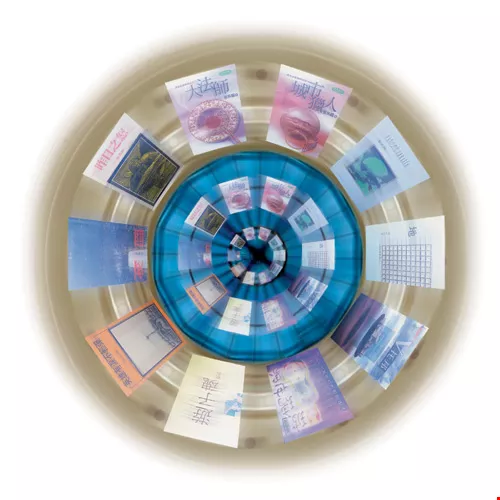
"Time is money." The idea of time as a commodity is something that Chang and his team at the Industrial Technology Research Institute want to build upon to design "the chronobot," enabling people to borrow and return time.
Observations and concerns
Q: You've had a rather extended trip back to Taiwan this time around. Have you observed any changes in Taiwanese society?
A: I'm most concerned by what I see happening with education in Taiwan. Now that schools all over Taiwan are becoming universities, college students have sunk to the level of high school students, and these sub-par students head off to begin advanced studies. The whole education system seems to have slid back a notch. Taiwan's education reforms are ruining the vocational schools. The vocational system might not be completely fair, but it was designed that way for a purpose. Take Germany for example. The professionals that come out of their vocational schools are highly respected individuals of rank and status. The graduates of Taiwan's 5-year vocational schools were extremely capable-the students who are currently helping me maintain the facilities at Knowledge Systems Institute are all graduates of the old vocational system who came to get a Master's. I like having their assistance because they really know what they're doing. Now all the 5-year vocational schools have been "upgraded" to 4-year universities, and the teachers only care for conducting their own research rather than teaching. The quality of the students is suffering as a result.
All the students I'm currently advising in the US come from mainland China. There aren't any Taiwanese students, since Taiwanese hardly study abroad anymore.
A decade or so ago I observed some of the differences between Taiwanese and mainland students. At the time I remember noticing that the mainland students were older and seemed a bit more serious-perhaps they or their families had gone through the Cultural Revolution, and had witnessed the darker side of human nature. Taiwanese, on the other hand, looked a lot more energetic and innocent.
Now more and more of the mainland students are only children and come off as pampered. It used to be that only Taiwanese would take vacations, but now mainlanders head home for the summer breaks, too. I guess mainlanders are becoming more and more like young people in other countries, more and more colorful and vivacious. There's an appreciable difference from generation to generation.
You could say that mainland students today resemble the Taiwanese students of ten years ago, and Taiwanese students today are more like Hong Kong students used to be. There's nothing wrong with any of this. To be truthful, we used to look down our noses at Hong Kong students because their culture was so hybridized: their Chinese was bad, and their English wasn't good either. But Taiwanese culture today is similarly mixed, and I'm more accepting of that now. 30 years ago, I came to believe that Taiwanese were like the Phoenician merchants of old, traveling to all corners of the world and exploring new possibilities.
Although I've lived in the US for so long, my feeling is that living anywhere is fine, as long as you can observe and absorb some of the local culture. Of course, I'd like best to live in my home country, Taiwan. Either that or Italy. Italians are a lot like Chinese in the sense that they highly regard friendship, loyalty, and family. For them, selling out friends is the worst possible offense.
Since coming back to Taiwan, I've had the opportunity to travel around on my vacations to Chiufen and Neiwan, and it occurred to me that Taiwan has a lot of truly beautiful places. Going about to all these small, inconspicuous towns and seeing the familiar old sights has really been a blessing.
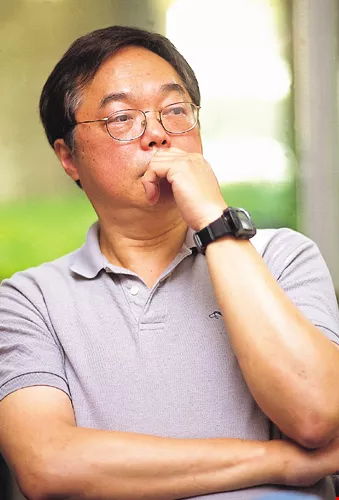
"When we look at the stars, we may be viewing beams of light that were emitted eons ago. ... It's as though the infinite stars are calling us, leading us back through time. They make us believe that the world of the past still exists today-the stars are the witnesses to the world of the past." (from Nocturne)
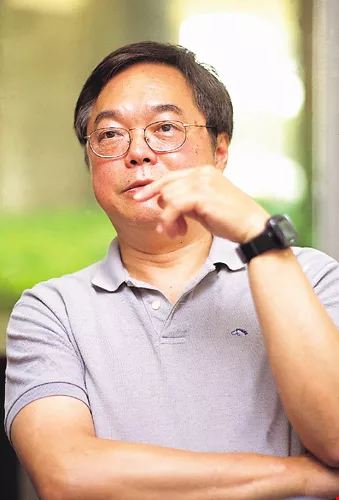
"As an artform, novels will never die out, because art is lasting. Art doesn't die." (from the preface to the People's Livelihood series)
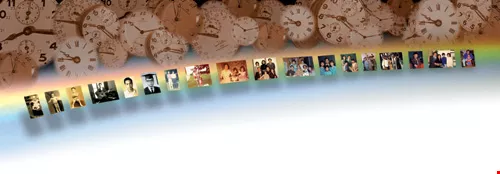
Chang grew up in Hsinchu and later left to study in the US. Despite having lived abroad for many years, his writing most often is devoted to expressing his care and concern for his countrymen.


@List.jpg?w=522&h=410&mode=crop&format=webp&quality=80)


@List.jpg?w=522&h=410&mode=crop&format=webp&quality=80)
