

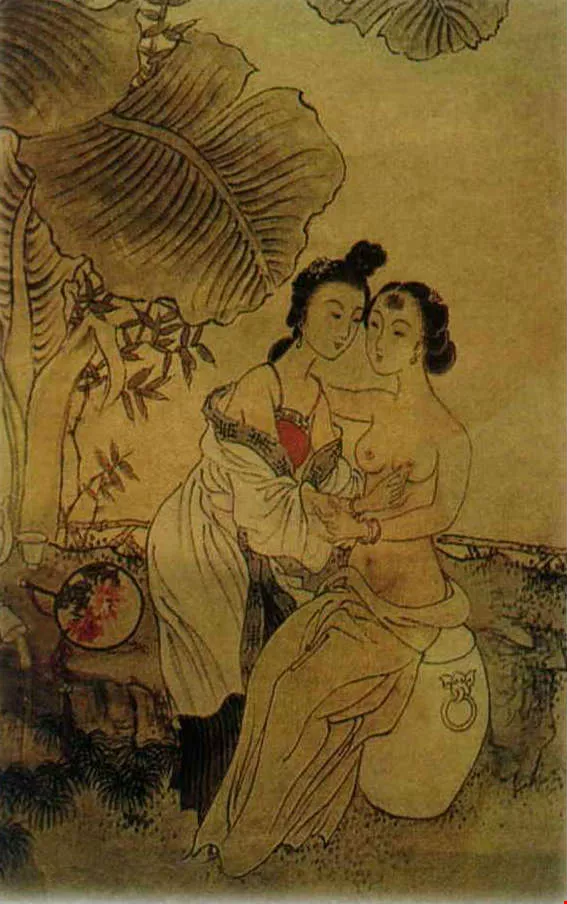
Writers and artists have been describing and praising homosexual love since ancient times.
Perhaps you are an outsider, visiting Taipei for the first time. Perhaps you're a Taipei resident, but are so busy working that you have not had time to understand the people around you. Perhaps you are a man, perhaps a woman. You may be gay, straight, bisexual, or undecided. At this point, you make a decision: For one week you will act gay, to understand what gay life is like and the difficulties faced by homosexuals in Taipei.
It is summer in Taipei and boiling hot. From the moment the sun's rays become visible, the temperature begins to rise. By afternoon, the surface of the roads is literally steaming as water evaporates off the top. Walking on the street under the intense sun, your skin is so hot you want to cry out. However, suddenly, the intense heat turns into a thunder shower, and the world becomes a cool place.
It is a Sunday evening, and outside the rain drops are pattering on the awning. On this cool summer evening, air conditioners are still churning away. It seems that the people of the city are more and more habituated to enjoying air conditioning indoors, though this pushes up the heat outside. Suddenly, you have an inspiration, sparked by these thoughts: When people mindlessly adhere to their own opinions, and when they extend their prejudices outward, it is like turning on an air conditioner in their hearts. It makes them feel comfortable, but other people must bear the burden of the heat generated by these prejudices!
You yawn, stretch, and lift your head, and you see that on TV they are broadcasting the film The Wedding Banquet by Ang Lee, which deals with homosexual subjects. You like this film, which is filled with understanding and concern, and you have seen it many times. But then you think: On such a beautiful summer night, it's better to do a little reading!
You turn off the air conditioner, and open the windows, and the feel of the night floods into the room, cool and comfortable. You pour yourself a drink, take a book from the shelves, and open randomly to a page. On it is a poem from the Zheng Feng chapter of the Chinese classic the Book of Odes: "You are like a crafty little boy, because you won't talk to me/ Thanks to you, I cannot eat/ You are like a crafty little boy/ Thanks to you, I cannot rest!"
You are a little bit surprised. It turns out that it is not only modern films that depict gay love and friendship. Thousands of years ago, the Book of Odes already had descriptions of homosexuality.
From ancient times to the present, writers and artists have been depicting and praising homosexuality. You, born into this same world, have never understood or been concerned with this group. Indeed, if it were not for appearances in literature and art, you might even feel a certain enmity toward them: "Hey, they can live however they want, I just don't want them doing it around me!" How subjective and arrogant that is!
A cool breeze comes in through the window. If you had not experienced the heat of day, it would be difficult to feel the coolness of the night. If you had never experienced raw cold, how could you understand burning heat? Heat and cold are both part of the world. One would never try to deny the existence of cold by pointing to the presence of heat, or to declare heat "wrong" by pointing to the phenomenon of cold. They are simply differences in temperature!
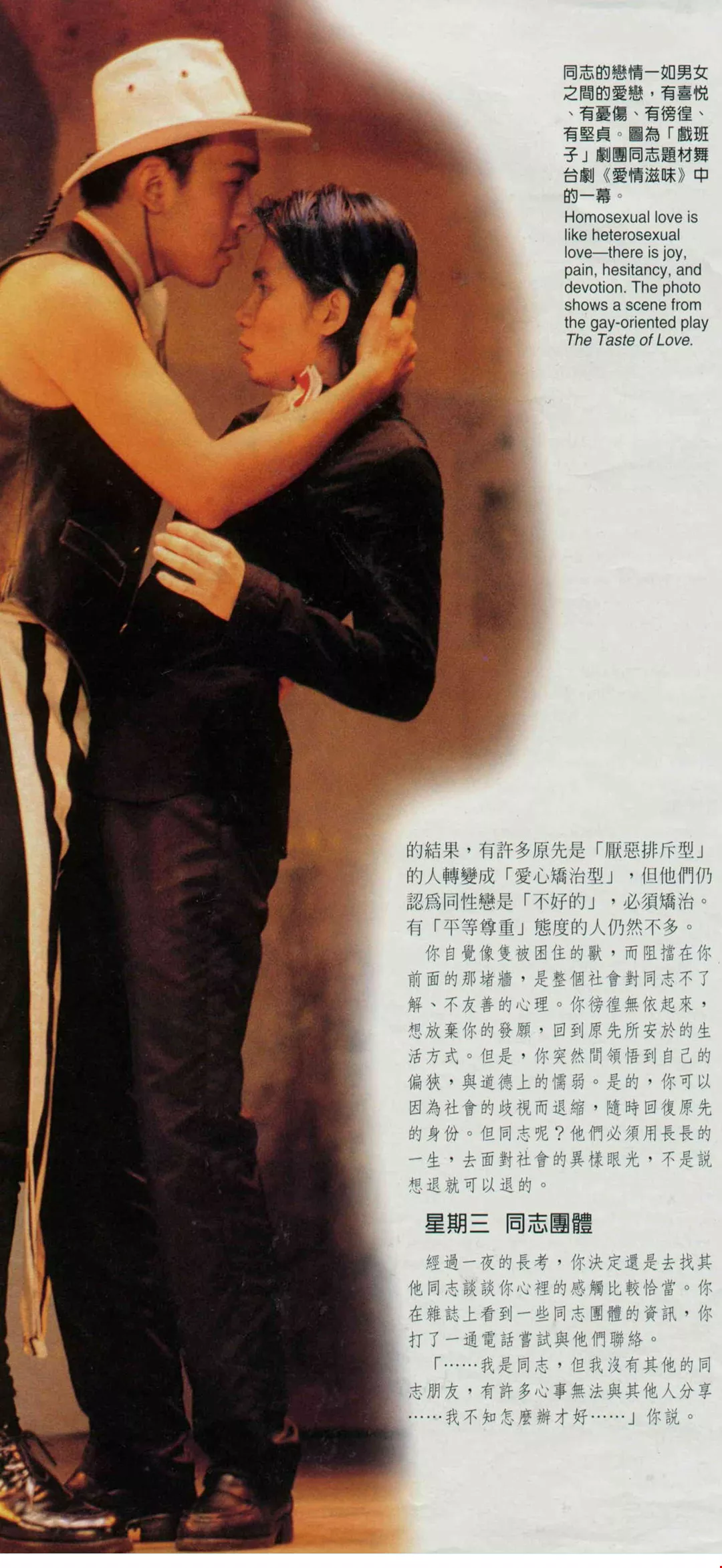
Homosexual love is like heterosexual love--there is joy, pain, hesitancy, and devotion. The photo shows a scene from the gay-oriented play The Taste of Love.
You do not wish to be limited in your own feelings of heat or coolness. You think: OK, I will use one week of my time, and live the life of a gay person in Taipei. Perhaps only after this will you really understand the world.Monday: Gay literature and publishing
You have discovered a problem: In beginning your week as a homosexual, you don't know where to begin to find relevant information, and you don't know a single gay person. You have just begun your gay lifestyle, and immediately you run into a brick wall.
Films about gay life, including The Wedding Banquet, Wong Kaiwai's Happy Together, and Lin Cheng-sheng's Murmur of Youth, are relatively easy channels through which to get some information about homosexuality. Indeed, films have had a particular importance for the gay rights movement and the development of homosexual life in Taiwan. In 1993, Hong Kong drama and film artist Edward Lam came to Taiwan to do the planning work for the first "Homosexual Film Festival" to be held as one part of the Golden Horse Awards International Film Festival. Lam brought the word tongzhi ("comrade," now a metaphor for a gay person) into Taiwan.
Lam relates that he got the idea for using the term "comrade" from the famous deathbed statement by Sun Yat-sen encouraging his "comrades" to continue to work for the revolution. He thought it would be a suitable replacement for the term "homosexual" for two reasons: On the one hand he hoped to express that there was a future that gays could work for. On the other, he also hoped that he could bring discussion on sexual orientation, which had always been commonly seen as an issue of "sexual morality," under the more general subject of gender issues. Lam argues that "comrade issues" are broader than "homosexual issues." Homosexuality became an issue in society mainly because of the ossification of gender concepts. The term comrades could encompass homosexuality, bisexuality, and other gender related issues. These issues could be thoroughly discussed and reformed from a gender perspective.
Where can you begin in trying to understand homosexual life?
Coming into contact with gay literature has always been a place to start for many homosexuals. Cheng Mei-li, who has done field research into the history of gay life in Taiwan, notes that there were books about homosexual life as early as the 1970s, or even earlier. These were considered an element of "modern literature." They included Pai Hsien-yun's Taipei People and Lonely 17, Lin Huai-min's Cicada, Hsuan Hsiao-fo's Outside the Circle, and others. In addition, the collection The Letters of Hsi Teh-chin (a famous painter) was an important work in the history of gay life in Taiwan.
Works of importance in the 1980s included Pai Hsien-yung's Sinful Child, Chen Juo-yi's Paper Marriage, and Kuo Liang-hui's The Third Sex. Sinful Child was even made into a film. Nevertheless, it was only in the 1990s that homosexual writing really became prominent in literary circles in Taiwan and became a fad.
G&L Magazine founder James An points out that in recent years there has been a flurry of Chinese-language homosexual literature. Works of gay literaure have won lucrative prizes in all categories-novels, novellas, and short stories. It is impossible to deny the achievements of this body of work.
Nevertheless, suggests James An, all mainstream literary prizes have commercial considerations and therefore tend to favor what's trendy. After a few years, he thinks, gay literature will fade in popularity. Thus, gay literary circles should not harbor excessive expectations toward the mainstream literary world, and there is a need to establish a separate prize for gay literature.
Entering a bookstore, you make a surprising discovery: Besides literary works, Taiwan already has its own gay discourse, and even gay magazines and publishing houses.
In 1990, the publishers of Living Psychology released a book called Chinese Homosexuality. This was the first locally produced non-fiction discussion of homosexuality in Taiwan. In 1995, Taiwan's first gay specialist publisher, Gay Sunshine, was established. Founder Yang Tsaung-run states that he created the publishing house in order to publicize gay issues and bring gays to the attention of the general public.
You buy a few books: Chinese Homosexuality, Daughters' Circle, Gay Women Leaving Home, and Looking at Homosexuality, as well as the latest issues of G&L, Together, and Girlfriend magazines. Your book bag is weighed down, and you are happy, having discovered that Taiwan has a rich selection of gay-related writings available.
G&L was the first Chinese-language commercial magazine for homosexuals in the world. Michael Chiao, the editor-in-chief, states that G&L first focused on helping society to understand gay issues and take them seriously. Now however, the emphasis is on providing information on popular culture. For example, in the April issue this year, G&L introduced cross-dressing. In the May issue there was a story about the "15th Annual World Cross-Dressing Empress Beauty Pageant"; the two contestants representing Taiwan won not only the top prize, but virtually every prize in the competition.
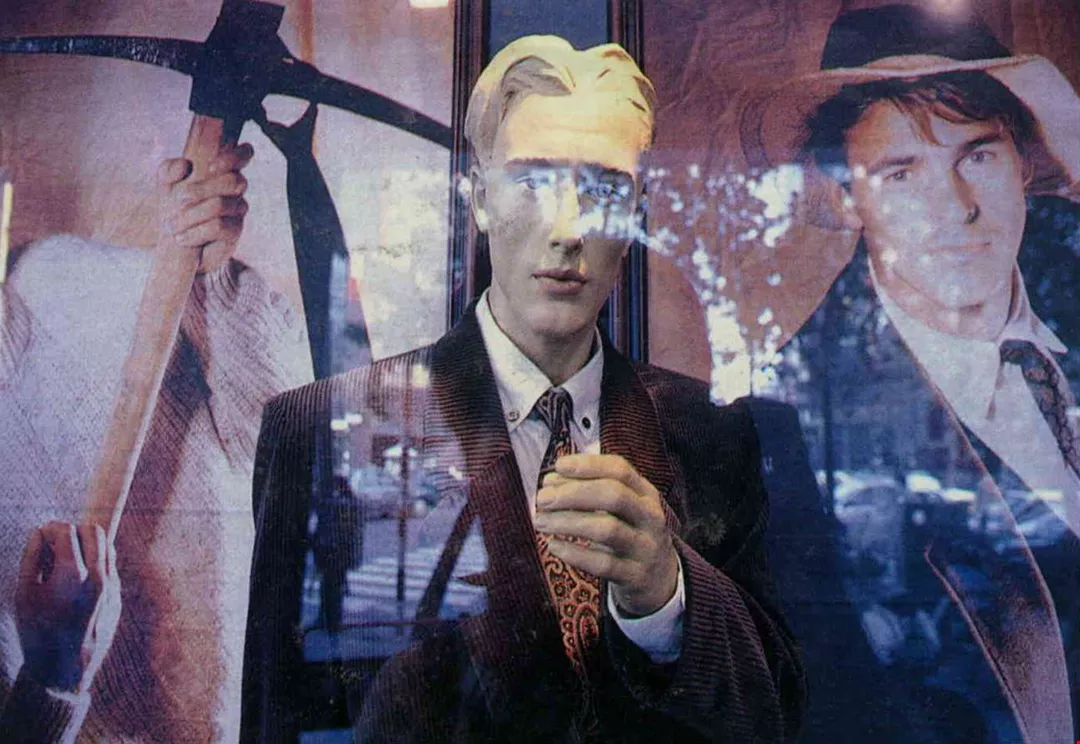
The gay rights movement has had to devote a lot of effort just to convincing society that "the existence of homosexuality is an undeniable fact!" Gay issues can only g et attention if the public takes notice of homosexuals.
Another gay magazine, Together, founded at the beginning of this year, puts more emphasis on the discussion of gender issues. Publisher and editor-in-chief Ham Chia-ju says that previously the strategy of gay rights movements in the West was to win general acceptance and support in society. But most people have the impression that the gay rights movement in the West is mainly composed of middle-class males, while excluding lesbians, bisexuals, feminine males, masculine women, and other groups with gender orientations different from the mainstream. She feels that Taiwan has the same situation to a certain degree. Therefore, Together emphasizes gender issues.Tuesday: The attitudes of the public
After a night of reading, you have learned something about homosexuals, and have a more concrete understanding of their situation. You understand the complicated feelings of many homosexuals. You wish to discuss and share this information with someone, but you feel inhibited, and you don't know what they will think.
Several years ago, Living Psychology magazine did a survey of attitudes toward homosexuality. The survey report divided respondents into three types: those who "detest and exclude" gays, those who would "lovingly correct" homosexuals, and those who would "give equal respect." The survey discovered that those who "detest and exclude" gays were most likely to refer to homosexuals using irrational labels like "perverts" or "sissies." On the other hand, the more contact people had with gays, the more likely they were to be open and tolerant. Chuang Huei-chiu, the assistant editor-in-chief at Living Psychology, says that this reveals something very important: The attitudes of most people toward homosexuality are based on an emotional response, not an intellectual one.
What about the past few years? Chuang suggests that as a result of social pluralization, many people who were formerly in the "detest" category would now choose to "lovingly correct" homosexual behavior. While this is an improvement, most people still believe that homosexuality is bad and needs to be "corrected." There are still not very many people in the "equal respect" category.
You feel like a trapped animal. The wall that blocks your way is the lack of understanding in society. You hesitate, not knowing what to do. You contemplate abandoning your initial project, and returning to your safe lifestyle. However, you suddenly reconize your own narrowness and moral weakness. Yes, you could shrink because of social prejudice, and return to your original identity at any time. But what about gays? They must face society's disapproving eye throughout their lives, and they cannot escape it just because they would like to.Wednesday: Gay organizations
After a night of intense consideration, you decide that it would better to seek out some gays to talk about your feelings. You have seen some information about gay organizations in the magazines, and you make a phone call to try to get in touch with one: "I am gay, but I have no gay friends. There are a lot of things that I cannot share with other people, and I don't know what to do," you say. Your counterpart is very friendly: "Don't be afraid, we understand."
Gay organizations in Taiwan can be roughly divided into three types-social groups, religious groups, and campus groups. Social organizations include Between Us (an activist and social group for lesbians), Formosa Gay Group (mainly for males, periodically sponsoring lectures and social activities), a group composed of gay teachers, the Gay Workshop, the Asian Lesbians Network in Taiwan, and so on.
Meanwhile, Christian and Buddhist homosexuals have their own organizations, and Buddhists also offer the Guanyin Help Line, an information hotline for lesbians.
Let's take the Formosa Gay Group as an example. Since its founding in the 1995, more than 200 members have joined, most of them working people. The members of the group meet regularly twice a week. Their activities include lectures, films, and sharing of experiences. Most of the lectures are devoted to gay issues, such as sexual orientation and employment bias, safe sex, and gay literature appreciation.
On the campus front, Tim Lee, a guidance counselor at Soochow University, says that campus gay organizations have sprung up in vast numbers for a couple of reasons. On the one hand, the guidance counseling community in Taiwan lacks experience and academic research with regard to guidance of gay students, so gay students cannot turn to them. Also, today's students are more independent and are more accustomed to seeking help from their peers. However, currently campus gay organizations are mainly at colleges and universities, with virtually none at the high school level.Thursday: The gay rights movement
You make an appointment to meet a volunteer from a gay organization at a gay coffee shop in Kungkuan.
According to Cheng Mei-li, author of the book Daughters' Circle, 1994 was the most critical year in the history of homosexuality in Taiwan. Worldwide, activists held activities commemorating the 25th anniversary of New York's Stonewall Rebellion (a fistfight between gays and police who harassed them), which was the initial impetus for the gay rights movement. Media outlets devoted considerable space to reports about these activities and gay life in general. Also, Eslite bookstore held a series of gay-related activities, and Eslite and Fembooks became major outlets for gay books and publications, as well as points where gays could concentrate for leisure and information. In addition, campus organizations were established in large numbers, and linked up with one another. Campus computer bulletin boards blossomed, providing a new channel for homosexual organization. Many graduate students devoted themselves to research into gay life, producing studies on homosexual issues.
The developments sparked the flourishing of a gay movement. Among the most important events were the fair held in February of 1996 at New Park, sponsored by the "Gay Space Action Front," which sought space for gay activities and gay history commemoration at the park; the efforts in November of 1996 by the "Homosexual Citizens Action Front" to win civil rights (especially the right to marry) for gays; and the September 1997 "Chengteh Road Incident," in which gay groups, responding to harassment of innocent gays walking around the Chengteh Road area, demanded the same freedom as heterosexuals to walk around at night.
Ni Chia-chen, former secretary-general of the Awakening Foundation, a women's rights group, notes that the gay movement in Taiwan exhibits several unique features different from other social movements. The biggest difference is that the gay movement has had to invest a great deal of effort in demonstrating to society that "homosexual existence is a fact." That is to say, gays had to first be seen in order to become a social issue. From this point of view, homosexuals acting through organized groups have certainly achieved a considerable impact in terms of putting gays and gay issues before the public.Friday: "Coming out"-the gay dilemma
What you feared has come to pass! Family members have discovered that you have bought gay publications, and you ran into a friend as you were leaving the gay coffee shop. There is the danger that your homosexual identity will become public!
Friends and family ask directly: "What? Have you become a fag or something?" You are surprised and disappointed at their attitude. It turns out that your friends and family, who are so liberal with regard to other issues, have a serious bias against gays.
When gays allow their friends, family, and even society as a whole to know their sexual orientation, this is called "coming out" or "coming out of the closet." Chuang Huei-chiu says that the stresses of coming out are the greatest dilemma faced by homosexuals in Taiwan.
In Taiwan society, the family still plays a critical role in the life of the individual. In addition, most workplaces do not give sufficient respect to individual privacy. If one wants to "come out," it is necessary to face dual pressures at home and in the workplace. Gays who want to go public must think very carefully, and if they decide to really do it, it is necessary to lay the groundwork. For example, they must pay attention to the best way to come out, what tactics to use, and how to psychologically adjust to the fallout.
As for the problem of gays coming out, Edward Lam has a different perspective. He asserts that coming out is something each person must do. This applies whether one is prejudiced, or prejudiced against, and whether one is gay, heterosexual, bisexual, or uncertain of one's sexual orientation. Only when everyone knows his or her own and other people's blind spots can gender issues be discussed and resolved.
Individuals may differ on the question of whether or not to "come out." But, as Yi-fan, a volunteer at Between Us, says: "At the least, everyone must come out to him- or herself, and honestly face their own identity."Saturday: Diverse gay leisure activities
After deciding your attitude toward coming out, you want to go out and enjoy your weekend.
Leisure activities for gays in Taiwan have become diversified in the wake of the boom in gay literature, publications, organization, activism, and self consciousness. There is a great deal of choice. You can stay at home in the air conditioning, have a cold drink, and chat with friends on the Internet, learning the latest information of concern to gays. You can participate in weekend activities sponsored by gay organizations, including out-of-town trips, lectures, dinners, and social events. You can go to a gay bar to drink, dance, and relax in a stimulating and fun environment (just remember: if you drink, don't drive). Or you can go to the theatre, as recently a large number of plays featuring homosexual or gender themes have been staged. Gay social life in Taiwan is really lively and diverse.
So has the gay movement in Taiwan achieved complete success? Yuhsuan A-chi says: "Of course not. Taiwan's homosexuals can survive, but this is only one step forward." According to Ni Chia-chen, it has been the dramatic change in the overall social environment since the lifting of martial law-rather then the gay rights movement itself-that has enabled gays to have space and has created the present atmosphere.
However, as post-martial law society searches for equilibrium, will there still be possibilities for gays in Taiwan to develop greater space? Chang Chuan-fen, who writes on feminist and gay issues, states that although it appears, as a result of social pluralization in recent years, that the gay movement is vibrant, there has not really been any great improvement in social prejudice and misunderstanding about homosexuality. Moreover, the gay movement has not done enough to deepen its roots. There are still many tasks for the future. Among the feasible directions for the gay movement would be establishing an information hotline especially for gay issues, making the homosexual movement broader and more in touch with the grass roots level, coordinating groups at various levels, and developing social commentary with a uniquely gay perspective.Sunday: Reflection and looking forward
After this week-long experience, it is time to return to your usual life, and you breathe a sigh of relief. This is because you have discovered that, although there has been broad improvement in gay life in Taiwan in recent years, there is still a great deal of prejudice and misunderstanding in society. But you know that the environment can be changed, and that the democratic society in which you live is full of potential and flexibility. You know that one day if you become a member of a disadvantaged group, society will allow you room to struggle.
Chuang Huei-chiu: "The nature of democratic society is mutual toleration of different opinions and lifestyles. Taiwan is progressing in democracy, and respect for minorities should also increase."
Yang Tsaung-run: "Most of the progress in homosexual life in Taiwan has been in Taipei, among the middle class. Gays in other areas in Taiwan, and blue-collar gays, should be the objects of greater concern in the future."
Edward Lam: "Having won some small amount of space, some people are satisfied with the status quo, and their political idealism has correspondingly weakened. But the space for gay life should not be limited to what exists at present. We have to think deeply about this."
Ham Chia-ju: "I'm not sure where to go next. That is something about which we must continually put forward ideas for discussion."
You have already extended a hand of friendship.


