The New Woman: Daring to Be Less than Perfect
Eric Lin / photos Hsueh Chi-kuang / tr. by Phil Newell
March 1999

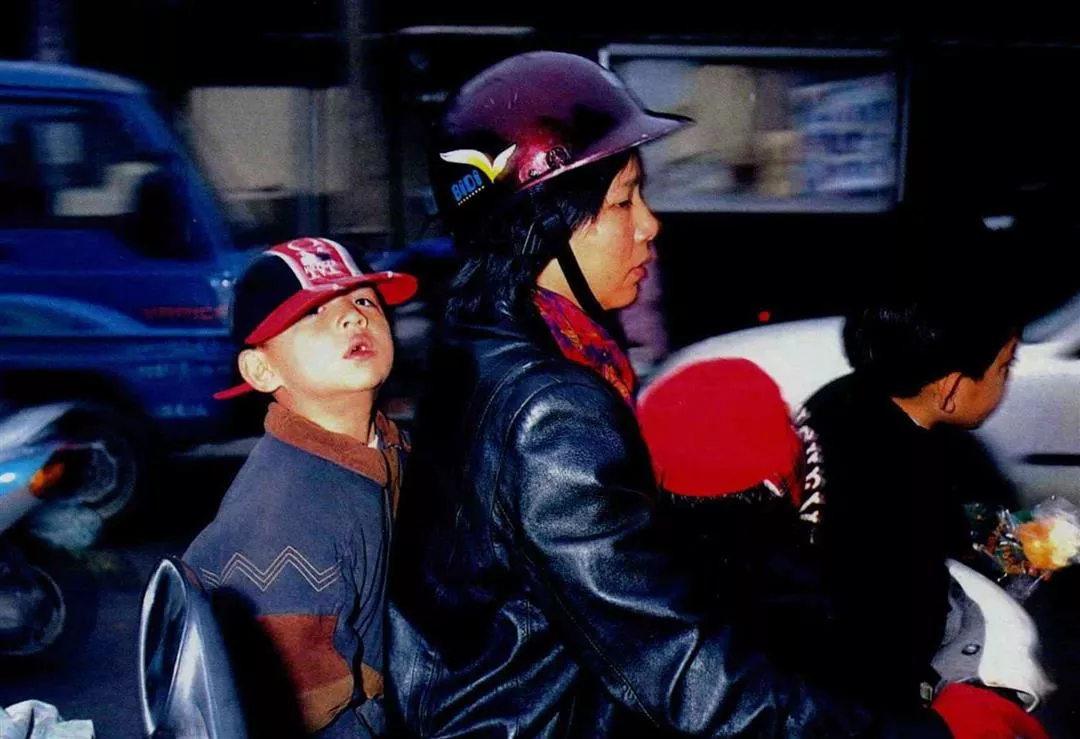
A Taiwanese proverb says: "Rather a beggar mother than an emperor father." It means that a woman, however poor, will naturally lavish more care on a child than a man, however rich and powerful. Even when a cold spell hits, Mom is still out there taking the kids to school.
Over these past few years there has been much talk about the "new good man." But, in contrast, there's been little discussion of a corresponding "new good woman." Indeed, many modern women aspire to, or at least talk about, "the beautiful bad girl." What's going on? Does being a "good woman" mean that one must be traditional, self-sacrificing, and unhappy? Is it so difficult to be the perfect "new good woman"-combining traditional homemaker with modern career woman-that no one is interested in pursuing that "honored" status? Is there a type of new woman who is autonomous, happy, and confident about herself, her family, and her job? Is there a secret to being a "new woman"?
Yes
We have been unable to escape the net of marriage
After numerous rounds of negotiations
We are leaving out the "till death do us part" stuff
We seek independent equality
We will treasure the time that we spend together
And give each other personal space
Old wine in new bottles
The new era of legal cohabitation has arrived!
October 20, at the Yellow Peacock Restaurant
You are welcome to attend
Chuang Hsueh-hua
Liu Han-chin
This is the wedding invitation given out by Chuang Hsueh-hua, an English teacher in the city of Kaohsiung. Talk about this manifesto of the "new era of legal cohabitation" spread like wildfire among her friends and co-workers. The teachers of Kao-hsiung, who are relatively conservative, saw this challenge to the entrenched marriage system as being rather bizarre.
The controversy even carried over to the wedding banquet.
At one table, a guest-a teacher named Wu-says: "You'd never expect that a woman like Hsueh-hua would choose marriage. But she may change. After marriage comes taking care of all the routine daily tasks, and the pre-marriage atmosphere is worn away."
A Dr. Chang declares: "You don't know what kind of person the mother-in-law's going to be. This kind of 'equality of the sexes' manifesto might be fine with the husband, but that doesn't mean it's going to go over very well with the mother-in-law."
Finally, a business owner named Lin warns, in a tone of voice rich with implication, "The bride is very lucky to have found a 'new man.' The thing is, whatever may be said before the marriage, men only really show their true character after they get married."
The groom, Liu Han-chin, says that he is very willing to accept a marriage which is really more closely akin to cohabitation, in which his wife does not have to bear any of the traditional responsibilities of a marriage. He is doing it because the woman he loves is an advocate of equality between the sexes. Even if his wife's friends like to poke fun at him by calling him "Mr. Chuang," he doesn't really care.
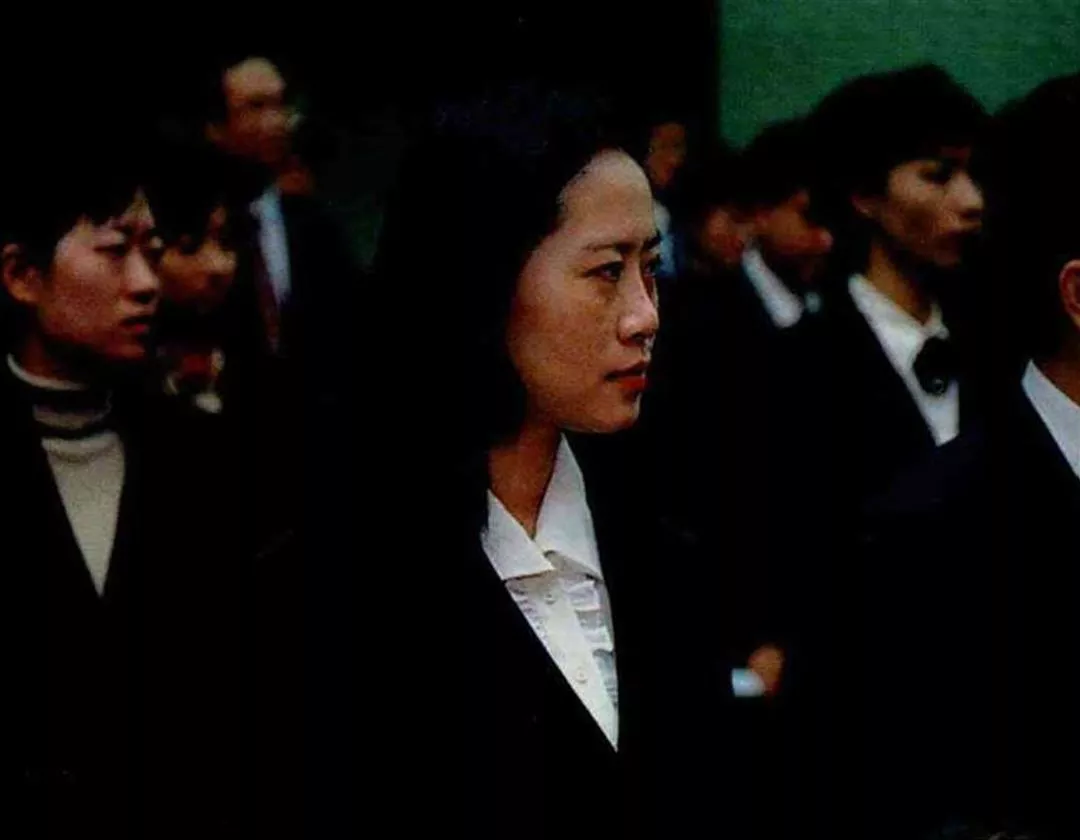
The image of women prosecutors is that they are as tough as any guy. But what is expected of them at home? The picture, taken in December 1996, shows the graduation ceremony for a judicial training class. (photo by Pu Hua-chih)
The so-called good woman
"In fact our married life is really more like students living together. Hsueh-hua doesn't have to wait on me hand and foot, but we support each other spiritually and emotionally, and greatly appreciate the fact that we can rely on and learn from each other. As for the details of housework, whoever thinks that something needs to be done goes ahead and takes care of it. Of course," Liu laughs, "I'm more meticulous about cleanliness, so I take care of most of the housework."
In Liu's eyes, a "good woman" is intelligent and independent. But he is unusual. At present, most of the men in Taiwan do not feel this way about gender roles; many still have traditional views. Huang Li-chang, who runs an auto repair shop in Yungho, is a case in point.
He says that he only made one requirement of his wife: "I am responsible for outside the house [earning money], she is responsible for inside." The most important thing for him is that she take good care of his parents and children. He only married his wife after she was "run by" his mom, and his mom declared herself very satisfied.
"Even though now my wife helps out sometimes in the shop-because the economy is not so good and the pressures of being responsible for an extended family are great, I had to lay off some workers-still her main responsibility is the family. Jeez! What kind of a man would I be if I couldn't support my own family?" says Huang.
However, the overall economic structure of society is changing. Psychiatrist Wang Hao-wei notes that the costs of daily life in Taiwan are rising, and it is no longer so easy for a man to support a household relying simply on his own economic productivity. For example, the average salary of a university graduate fresh in the job market, about NT$30,000, is only enough for about 1.5 persons. It has been necessary for women to enter the workforce, and inevitably, there have been adjustments in relations between the sexes.
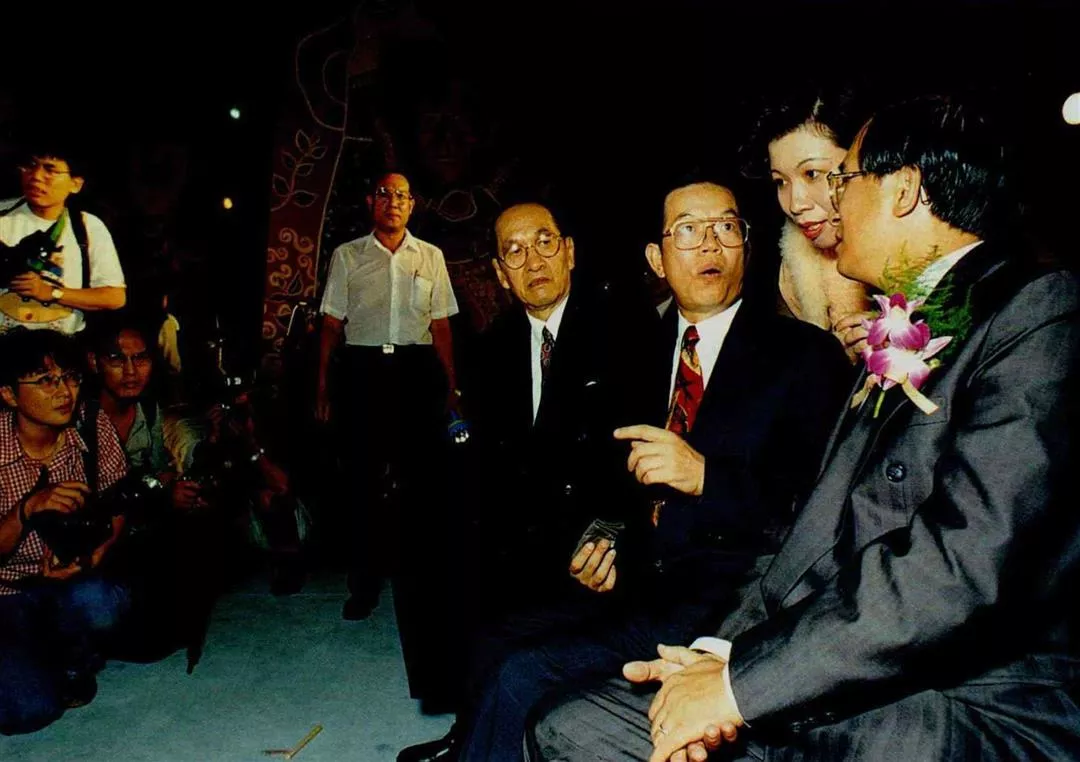
Low-cut clothes, open-toed sandals, and her languorous manner of speaking set former DPP spokeswoman Sisy Chen apart in Taiwan's male dominated political world, and she has come to represent a new, in-the-know, independent Taiwan woman.
Luo Hsiao-hsin, who works in an engineering consulting firm, says he urged his wife to pursue the career she wanted, and not stay home lagging behind the times. As for the housework, this is divided up according to the basic natures of men and women. For example, bathing children and cooking are things women are good at, so his wife does them. Meanwhile, he takes care of moving heavy objects or picking the children up from the babysitter's. He doesn't want his wife to be economically dependent, but he still wants her to put him at the center of her life. For example, if they go out or return to his parents' home, he hopes his wife will "pretend" awhile and make it look like he's in charge and she follows.The new double standard
Faced with these conflicting demands from men, Sony Hu of the Millennium Cultural and Educational Foundation states: Though many men in two-income households know that they cannot do without their wife's salaries, in conversation they treat their wife's work as supplementary, and do not credit them with any autonomy. This is because most Taiwan men, as always, think that it is good for society if women follow the traditional "three obediences and four virtues."
"In terms of social life, although most men believe that their wives can have their own friends, they do not think women should be out socializing at business-related functions the way men do," says Sony Hu. From this you can see that men have contradictory and selective views towards the status of women.
Women's career experiences and economic contributions are causing the self-sacrificing and obedient traditional type to disappear, and women now know how to fight for their rights. But there is still a double standard, even for men who accept equality in principle.
Chen Cheng-hsien, an engineer, says that he is proud of his wife, who is a high-level manager in her firm. However, he doesn't take much to the idea that a wife should be equal in everything. For example, when they return to his parents' home, it is hard to have male-female equality.
"My family is a traditional Taiwanese family. Although we don't live with my parents, sometimes we go back. My parents still expect their son to be filial and their daughter-in-law to be 'virtuous.' At these times, I ask my wife to be as traditional as she can, such as getting up early, making formal greetings to my parents, and doing housework. In our own home, we usually share the housework, but in front of the parents a woman should play the role of the traditional wife," he says. His parents are old, he says, and unlikely to change their attitudes. At times like these people have to be understanding, and make adjustments.
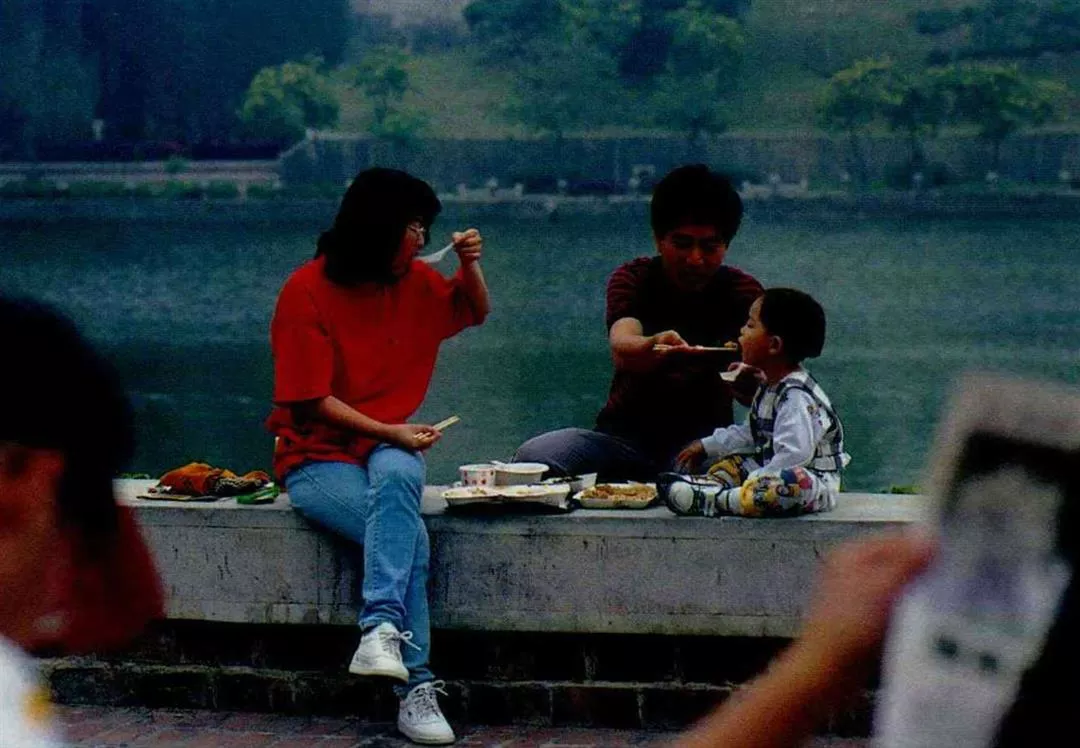
There are few players in a nuclear family, so dividing up the housework and the childcare responsibilities usually doesn't create big problems.
Super woman
Cheng Cheng-hsien says that the social structure is beginning to change, but traditional values persist. Under the circumstances, the two sexes are still learning how to get along with each other. As his wife Chen Ya-li says, men want their wives to be independent and to perform competitively in the workplace, but at home they want them to be genteel and lady-like. In their own nuclear families, they divide up the housework, but when returning to the extended family, they expect women to put up with doing all the housework by themselves. Men have different standards for different circumstances, and women find it hard to know what to do.
Not only are individual men like this, but society as a whole has a double standard for women, which puts women in a difficult position. Wang Wen-fang, a founder of Awakening Kaohsiung, is a case in point.
Wang comes from Taichung, but very early on she married into a family in Kaohsiung. Her mother-in-law was very pleased, saying "she has the face of someone who will make a good helpmate" for her husband. Because of her hard work and her character she was able to do many things for her family: Besides taking care of every detail in the home, she also ran a second-hand car dealership. Her income was much greater than her husband's, and she became the main economic pillar of the family. Fearing that her husband was under too much pressure, she even opened a supermarket for him to manage.
Wang's mother-in-law was very proud of herself for being right on target in her early judgment of her daughter-in-law, and everybody was always giving Wang's husband the big thumbs up. But early this year came the news that Wang was going to be divorced. The reason was like something out of a soap opera: Her husband was unable to deal with the pressure of his wife being so successful, had an affair, and insisted on divorce. Suddenly, the praise that had long surrounded Wang turned to criticism that she was unable to keep her family harmonious. It was said that she was too dominating, "no wonder the guy couldn't stand it anymore."
Sadly, she herself felt ashamed on this point. "Although my husband was wrong to have an affair, a woman still must bear most of the responsibility for the failure to manage the family well," she says.
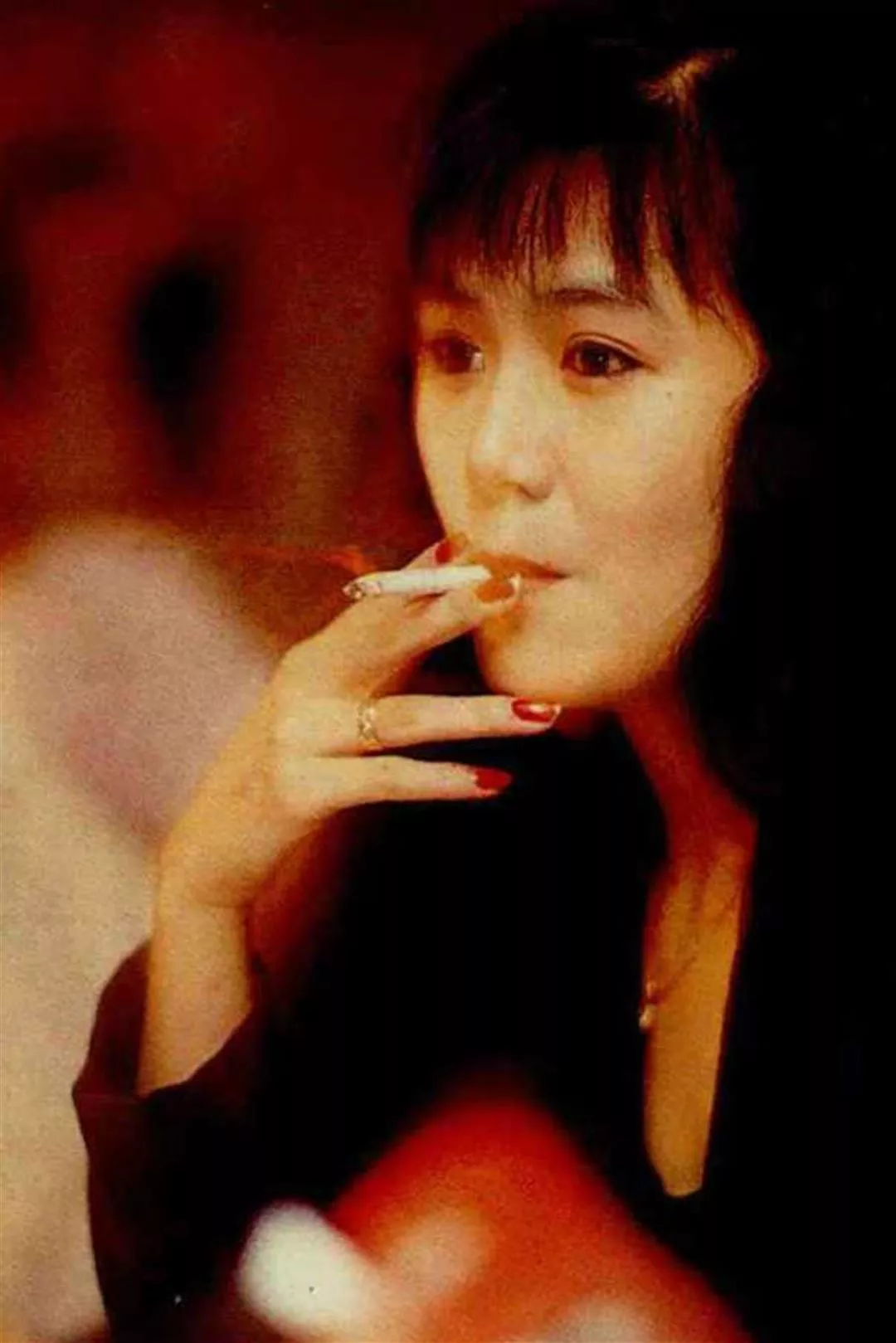
For a long time, smoking was seen by many women as a challenge to tradition, but now there are concerns about its effect on health.
New Women in the public sphere
Shane Wang, as associate professor in the Department of Social Work at Soochow University, states that although many women have more influence at home than their husbands, they are still accustomed to giving the man pride of place. Indeed, they acquire power under the very rubric of "being a good helpmate." Under the circumstances, the man is like a king who reigns but does not rule. However, Wang explains, this situation by no means suggests that women and men are on an equal footing, because in most cases women still believe that it is "more clever" to pretend to observe traditional virtues. Accumulating power in that way does not challenge entrenched views, and is less likely to be suppressed.
In the public sphere, however, women cannot use this method to achieve a quiet revolution.
In recent years, with advocacy by women's groups and changing social and economic relations, the social participation and status of Taiwan women has begun to change. The legislature has passed a number of measures to make men and women more equal. However, Tang Wen-hui, an assistant professor in the graduate institute of political economy at National Chengkung University, believes that the public role of women in Taiwan is still limited by traditional family values, and that there has not been as much change as many might think.
"According to statistics I've compiled, over half of women in politics in Taiwan are single. This indicates that women actually have greater room to show their skills if they are unmarried," says Tang. Gender attitudes in Taiwan's political scene are still extremely conservative. It is taken for granted that a wife should help her husband's political career. But if the shoe is on the other foot, a man would find it difficult to accept the way the outside world looks at him if his wife is more successful. As a result, women in politics have difficulty finding an ideal marriage partner and often remain single.
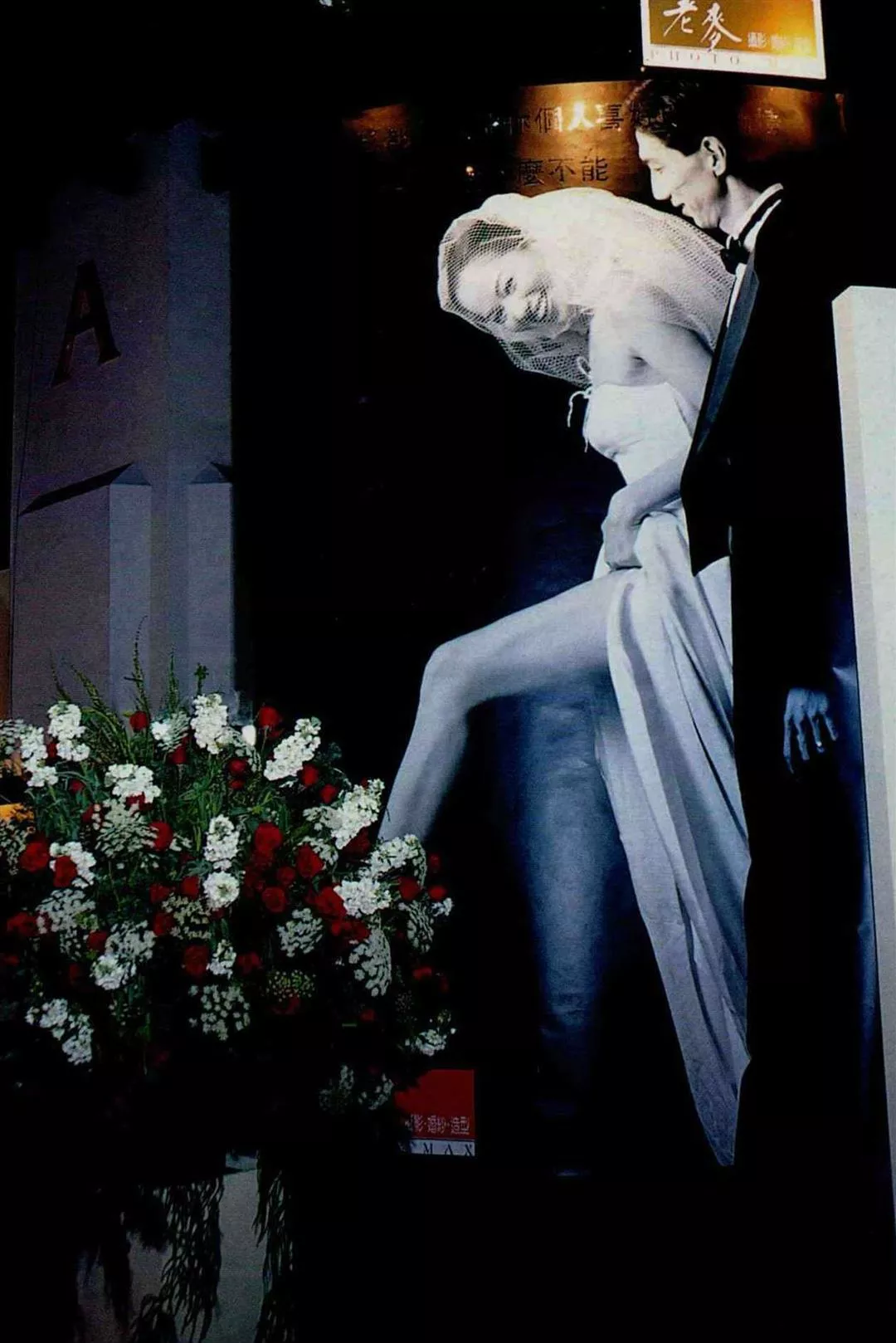
The social institution of marriage may not change, but men and women are changing all the time.
Wake up, sister!
The modern man's idea of what constitutes a "new good woman" is one who observes traditional virtues at home but is economically productive in the workplace. The problem is: Who can pull that off?
Su Chien-ling, owner of Fembooks, says that most married working women in Taiwan are "two-career women." That is, besides having a full-time job, upon returning home they must play the role of the traditional homemaker.
Su makes an interesting point with regard to the standard of a good woman: The current unequal distribution of labor in society can be illustrated by setting men and women at two extremes on a continuum, with men (who do less) at point zero and women (who do more) at 100, with 50 each being a perfect balance of labor. The man only needs to do a little and he "gets points," whereas if the woman seeks equality then she is considered to "lose points." Men are praised for any change (thus the appearance of the "new good man"), while women are blamed for the same thing (thus no talk of a "new good woman").
Cultural critic Ping Lu suggests another reason why there has been little discussion of the "new woman." For a long time, women have been seen as the "long suffering" side of the gender relationship; they do not have some negative image they need to overturn.
Of course this does not mean that women should not demand that men change. "Males were the beneficiaries of the patriarchal structure, so it would be impossible to expect men to wake up to its inequalities first. Equality between the sexes has to begin with women's consciousness, and women then demand that men change," says Ping Lu.
She says that women do not have to try to be "100% new women" incorporating the expectations of traditional as well as modern society. A real new woman should set her own standards.
In fact, many women would prefer not to be considered "good" if that means bearing too many burdens. Some have deliberately gone in the other direction, and discussion of "bad" women has been increasing. About ten years ago, Shih Chi-ching, director of the Warm Life Association for Women, hoping to encourage abused wives to dare to leave their marriages and to be independent self-confident women, raised the slogan of the "beautiful bad woman." And five years ago, Ho Chun-jui, an associate professor of Anglo-American literature at National Central University, challenged the "good girl" mold by raising high the banner of sexual liberation under the slogan "orgasms, not sexual harassment" (the terms rhyme in Chinese).
Why marriage? Why children?
Ho says that, whereas the new man is getting all the media attention, in fact the sexually liberated woman represents a much more fundamental gender reconstruction.
She says that sexual liberation is beginning to undermine gender attitudes in Taiwan. Traditionally a "good woman" was expected to be "lady-like" in behavior, speech, appearance and skills (especially embroidery). Social expectations were internalized in women as repression and limitation of their own sexual activities. But now women are aware that they should have autonomy over their own bodies.
Examples can be seen in both the public and private spheres. In shops are clothes that show off women's shoulders or midriffs, and young women are increasingly unafraid to display their bodies. In the public sphere, women politicians like Sisy Chen have gotten a lot of attention and even envy for their casual, natural look-like wearing open-toed shoes. Explicitly or implicitly, popular culture has begun to challenge traditional gender viewpoints.
Ho Chun-jui continues: "There are other aspects as well, such as smashing 'the virgin complex,' resisting domestic violence, and gay activism. Everywhere you can see that gender self-awareness doesn't have to be taught, that it is flowing through society. A future in which everyone is conscious of gender issues is not only inevitable, it is to be looked forward to."
There is one interesting point in which Taiwan differs from the West. In the early years of feminism in the West, many women deliberately promoted loosening the bonds of "beauty"-for instance, by removing their bras-and pursuing a gender-neutral look. This has not occurred in Taiwan. Ping Lu says that this is because feminism was already mature by the time it arrived in Taiwan. Taiwan has not experienced any of the step-by-step process of advancement or a backlash from men. Be that as it may, many people still equate the feminist movement with the stereotype of "no make-up, no marriage, no children."
Chuang Hsueh-hua rejects this stereotype: "In fact what we really care most about is: Why make up? Who are we getting married for? Why should we have children? We ask: Facing the major events of human life, do you as a woman have the right to make your own choices? It you decide to wear make-up, it should be because you want to, not because it pleases your male boss. If you choose marriage, it should be because you know that if things don't work out, you are clear-headed enough and have the ability to leave and still be a complete person. If you have children, it should be because you have the maturity to raise and educate the next generation."
Chuang emphasizes that every woman must make the key that unlocks her own life, and opens her own door of hope. A woman cannot sit passively waiting and checking her horoscope or reading the tea leaves, waiting for her future to appear by magic.
To rebel is justified
Currently women in different parts of Taiwan face dissimilar circumstances and levels of resistance.
Chou Fen-tzu, director of Awakening Kaohsiung, states that because of the greater financial pressures of living in urban areas, women have to work more, and this creates a situation in which men cannot but make concessions. Moreover, in cities, interpersonal relations are often fluid and remote, and an untraditional woman is not likely to meet as much outside pressure.
However, on the margins of the city or in the countryside, because interpersonal relations are so close, the conservativeness of couples, in-laws, neighbors, and colleagues creates a dense net. There will be tremendous resistance to any change in a marital relationship. Women in rural areas need to resolve these issues. That is why Awakening Kao-hsiung has constantly worked with local governments to hold seminars or activities on gender topics. One example is the "women's study group," co-sponsored with the Kaohsiung Municipal Government, which is in its sixth session this year. It has gotten an excellent response to its promotion of gender equality. The class being held on January 15 at the Nantzu Youth Welfare Services Center was the last one of the most recent session.
Tables in the lecture hall are arranged in a semi-circle. The students have prepared snacks and placed them on the tables for all to share. Because this is the last class, everyone is anxious to talk about what they've gotten out of the course.
"My husband thinks that I'm coming every week to some 'mama's class' like cooking or flower arranging. If he knew I was coming to this place to 'rebel,' he would go nuts," says Mrs. Lin, who can't hold back a smile, adding that she will still come to the next session.
Chou Fen-tzu, who participated in the course design, says that attendance at class definitely plants the seed of self-awareness in those who come, but it is just a seed. She frankly admits that the woman must put in a great deal of effort to face up to the tests of interaction with her husband and various other problems after this seed sprouts and blooms.
Su Chien-ling states that even she herself as a practitioner of feminism-much less women who have just had an initial sprouting of self-awareness-faces a continuous series of challenges in life, such as family responsibilities, and children's education.
She wrote a book called My Maternal Duties in which she notes that the greatest gap between the feminist ideal and reality is the fear that most career women have about "not being model mothers." Her solution has been to rethink the terms of the problem: Why does "not model" have to mean "selfish"? Why is it that if a woman wishes to loosen the restraints of her maternal duties, then her children must automatically be "abandoned"? Are there no other possibilities?
Her thinking runs along these lines: When children still cannot fend for themselves, it is absolutely the responsibility of adults to care for them. But "adults" does not mean only the mother, but can also include the father, relatives, and friends. Most importantly, it may include social resources, such as better neighborhood planning or child day-care centers.
Therefore, she feels that there is no harm at this stage in mothers investing 50% of their energy in the children, 30% in educating the father to do his share, and the other 20% in supporting women's organizations in their proposals for day-care and other services in the workplace and community. As the children get bigger, the mother should allow them to take care of themselves. This will save the mother from exhaustion with the added bonus of teaching the children to be more independent. One day when the children say to you, "don't help me, I can do it myself," then you'll know what it means to say "it was worth it."
Su says that of course implementation is always very difficult. But in any case rational thinking should replace complaining; this is the best psychological "vitamin."
Future trends in the lives of women
Recently the international women's magazine Elle published the results of a survey conducted last May and June in 30 countries on global trends in women's lives. The expectations that young single working women in Taiwan have for themselves are already very different from the past. Most of the 3,600 respondents from Taiwan were young single women with middle- to high-level jobs. Asked to list their most important concerns, 45% said work, followed by "themselves" (31%), children (14%), and love (10%). Women in Taiwan showed less concerned about love than women in other countries. Also, 54% said that they were unwilling to sacrifice for their partner, while 72% said that they felt divorce was the best solution for problem marriages.
As Ping Lu says, Taiwan is at the intersection of old and new value systems: The old traditions have not yet completely disappeared, but the new trends have become clear. Movement toward equality between the sexes is inevitable. Men cannot always stay at point zero, and women cannot always stay at 100. The new woman is beginning to dare to put herself first, and to receive a less-than-perfect grade.


@List.jpg?w=522&h=410&mode=crop&format=webp&quality=80)
