Success Story of a Self-Made Timber King
Liu Li Chen / photos Huang Li-li / tr. by Andrew Morton
May 1990


On March 10 Indonesia's "timber king" Burhan Uray and his wife, Betty, accompanied by the Malaysian ambassador to Indonesia, flew to eastern Malaysia to receive the Order of Nadu First Class, symbolizing the highest royal honor, from the Sultan of Terengganu. This marked the first time this signal distinction had ever been awarded to an overseas Chinese.
Why was Burhan Uray accorded this honor? For this issue our reporter in Indonesia visited Burhan Uray and his wife Betty, both prominent persons in Indonesia, to find out a little more about them.
It's six o'clock in the morning, just after dawn, and a black limousine draws up in front of the doors of the Djajanti Group's head office in Jakarta. From the rear door emerges a man of medium height with a small paunch and a firm, healthy stride, who walks quickly into his office.
It is said that unless some important meeting or appointment crops up, he will not emerge from his office again till after nightfall.
This man is none other than Burhan Uray, the "timber king" of Indonesia.
Burhan Uray shuns publicity. If he encounters the media by chance at a meeting he keeps up his mystery-man image, ignoring references to his past and deflecting questions about his future plans with a smile. So this was a rare opportunity to interview him and visit his company headquarters.
The main reason why Burhan Uray was awarded the Order of Nadu First Class was because of his unstinting efforts to promote a workers' welfare system, which have made him a model industrialist. At the same time he is also admired as a self-made successful businessman.
The Djajanti Group's head office occupies a modest site and is housed in an unpretentious five-story building.
At the far end of the ground floor office you come to Burhan Uray's "den."
His office is spacious but has poor lighting and only a simple decor. The brown leather sofas look well worn.
In short, whether from the outside or on the inside, Burhan Uray's head office doesn't have at all the atmosphere one might have imagined. Kuan Ching-cheng, who once served in Indonesia for five years and is now head of the Government Information Office's Motion Picture Affairs Department, says that the longer overseas Chinese live in Indonesia, the more they appreciate the importance of keeping a low profile.
Naturally a self-made businessman like Burhan Uray would be expected not to overlook such a point.
After two or three years in the timber industry Burhan Uray began to ponder his future. At first he toyed with the idea of changing to another line of business, but he reasoned, "Indonesia has such rich resources and abundant cheap labor, there must be a future for the timber business." So he stayed put in his timber plant, waiting for his opportunity.
In 1957, at the age of 26, Burhan Uray sank all his personal savings into founding the Djajanti Company. No one imagined that this modest timber firm with just a dozen employees would expand into the 30-company group it is today, employing over 30,000 people.
Of course it wasn't always smooth sailing. Initially Burhan Uray's company grew rapidly because he had entered the market at just the right time, when international oil prices were rising and Indonesia with its rich oil reserves enjoyed a natural advantage. From the original sawmill and logging operations, he soon branched out into furniture and plyboard manufacture as well, setting up regional operations on the islands of Java and Kalimantan. But a glut in the Indonesian plyboard market in the early 1980's brought a price slump which dealt the industry a serious blow. Burhan Uray was no exception, and his group suffered a severe liquidity problem.
Eventually, though, he weathered the crisis. "It was all thanks to my employees," he says. The company was facing disaster, and there was no choice but to tell his work-force the truth. Surprisingly enough they readily expressed a willingness to go on half pay until the company was out of the red. In the event this took three years to happen. "Everybody pitched in together! The work-force really took the company's bad straits to heart." Burhan Uray attributes his company's success to personnel togetherness.
But achieving togetherness is easier said than done. "I have always treated my staff as if they were my own family," Burhan Uray reveals. Workers' welfare has always been a high priority for him. TV director Ku Ying-che, who visited Indonesia to make a short film about Burhan Uray last year, said his workers' dormitory accommodation was the finest and best-equipped he had observed in many different countries.
Last year the Indonesian government gave Burhan Uray an "outstanding workers' welfare" award in recognition of this very fact.
Harmonious business operation involves not only management practices within the company but also good relations with people outside.
As Burhan Uray is a rather reserved and socially awkward person, "Normally I take care of everything when we invite friends home for dinner or arrange get-to-know-you social gatherings." Betty Uray is an excellent helpmeet who really lives up to the name.
Betty, whose Chinese name is Pai Chia-li, used to be a stunningly attractive TV-show hostess in Taiwan. Since marrying and moving to Indonesia 13 years ago, news about her doings is still reported in the Taiwan media.
Betty Uray's past experience as an actress has made her aware of the importance of being tactful. So although she never asks Burhan too much about his business, she does play a behind-the-scenes role in helping things run smoothly.
"He's a very tolerant sort of man," Betty says. "He often tells me not to take offence at little irritations. I think he's very easy-going. He pays no attention to tittle-tattle, and neither does he brag about the good things he does."
Betty describes how once at a reception she was approached by the wife of Indonesia's finance minister, who asked her to express her appreciation to Burhan for his regular contributions in support of fund-raising events. "I only learn about this side of him from other people."
"I suppose it's because I grew up so poor myself that I can appreciate the hardship poverty entails." Under his shy and sober exterior Burhan Uray possesses a warm and understanding heart.
Despite the well-off circumstances Burhan Uray now enjoys, his prudent habits remain intact. His four sons, all of whom are studying abroad, have to earn their own spending money once vacation time comes round.
"In this world there's no such thing as a free lunch," Burhan Uray's impassive face betrays a trace of a smile. "You only appreciate the true value of things once you've earned them the hard way."
[Picture Caption]
Together for 13 years, Betty and Burhan make the perfect team in work and social life.
The most precious ornament in Burhan Uray's office is his wife Betty's photograph.
In January 1987 Burhan Uray took Betty by private plane to survey his timber kingdom. (photo courtesy of Betty Uray)
Burhan and Betty photographed in the dining room aboard the QE2. (photo courtesy of Betty Uray)
A TV personality of long standing, Betty Uray is still remembered in Taiwan as an outstandingly attractive program presenter.
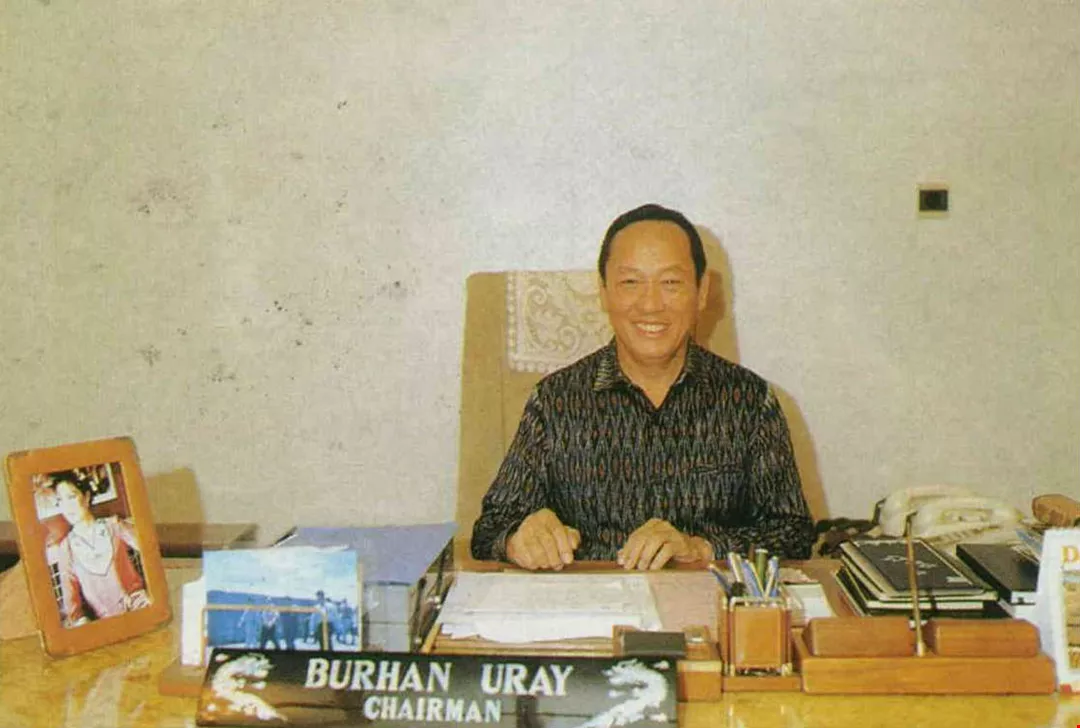
The most precious ornament in Burhan Uray's office is his wife Betty's photograph.
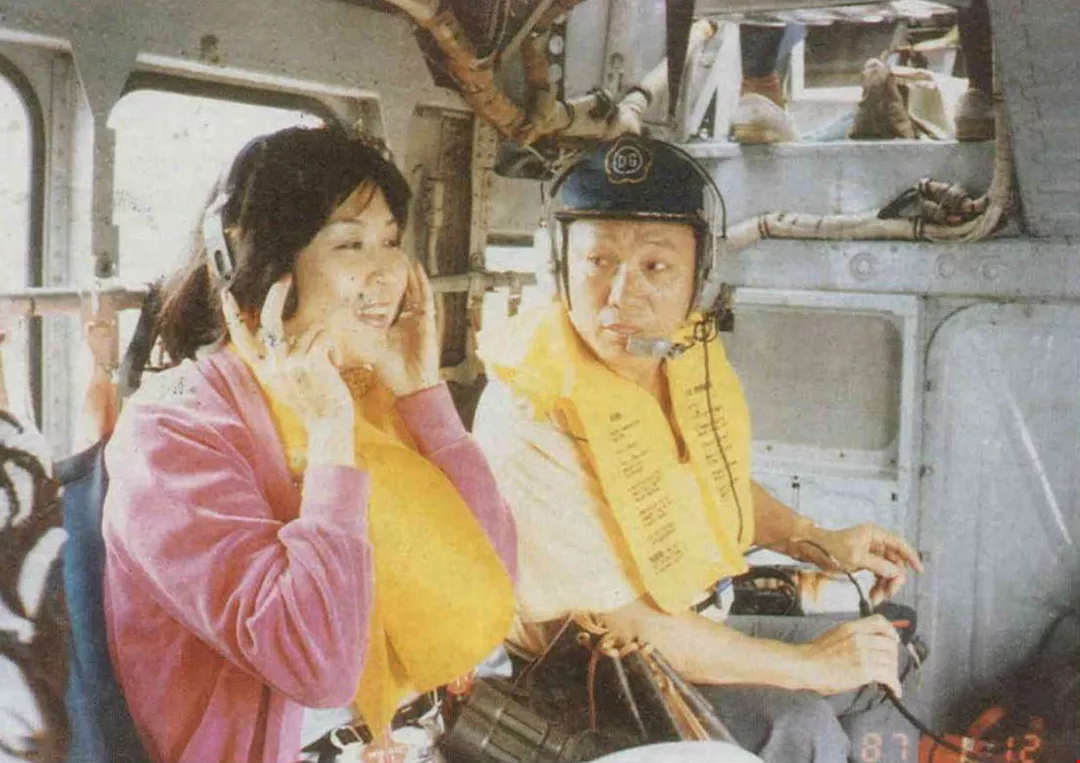
In January 1987 Burhan Uray took Betty by private plane to survey his timber kingdom. (photo courtesy of Betty Uray)
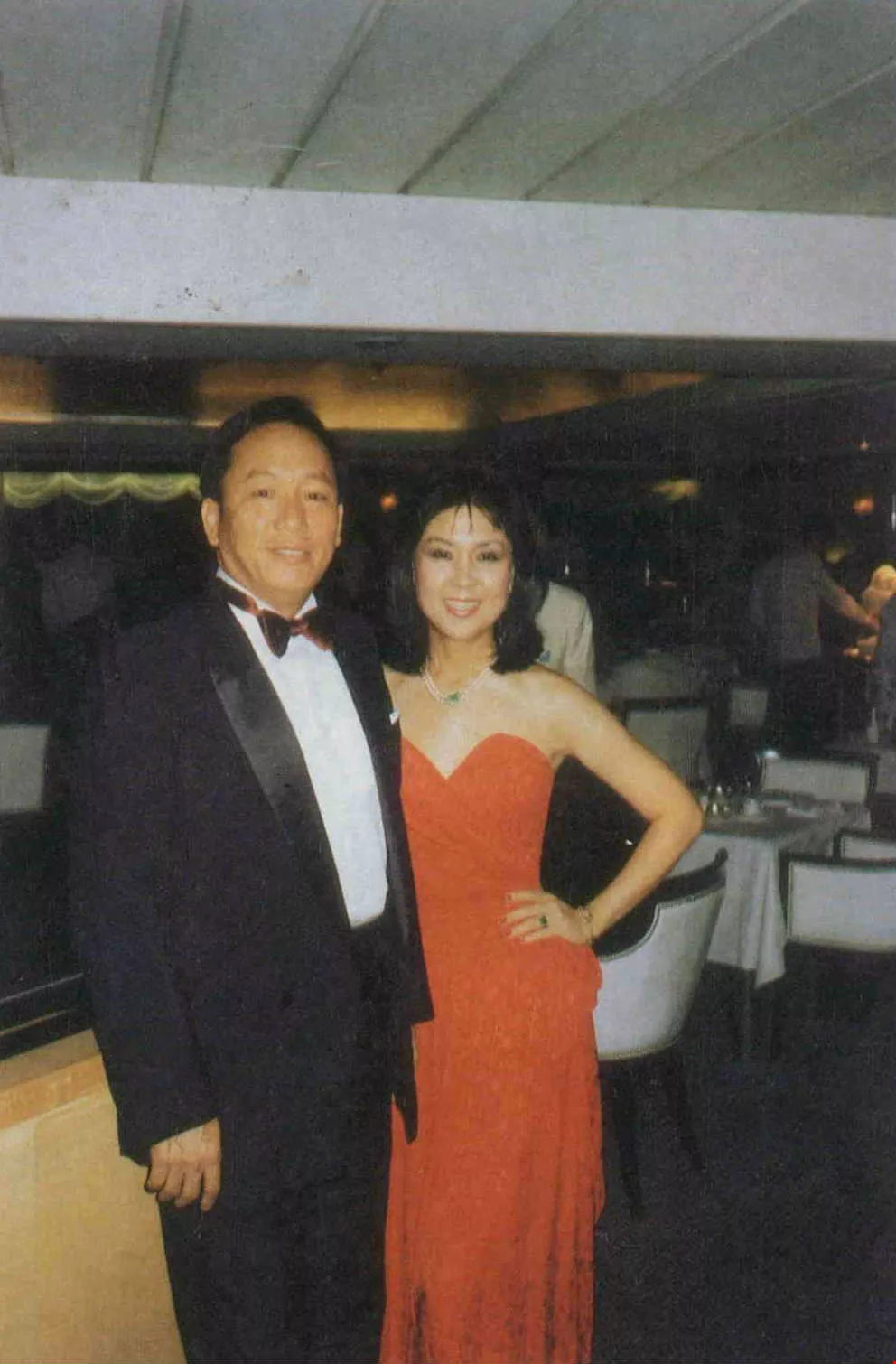
Burhan and Betty photographed in the dining room aboard the QE2. (photo courtesy of Betty Uray)
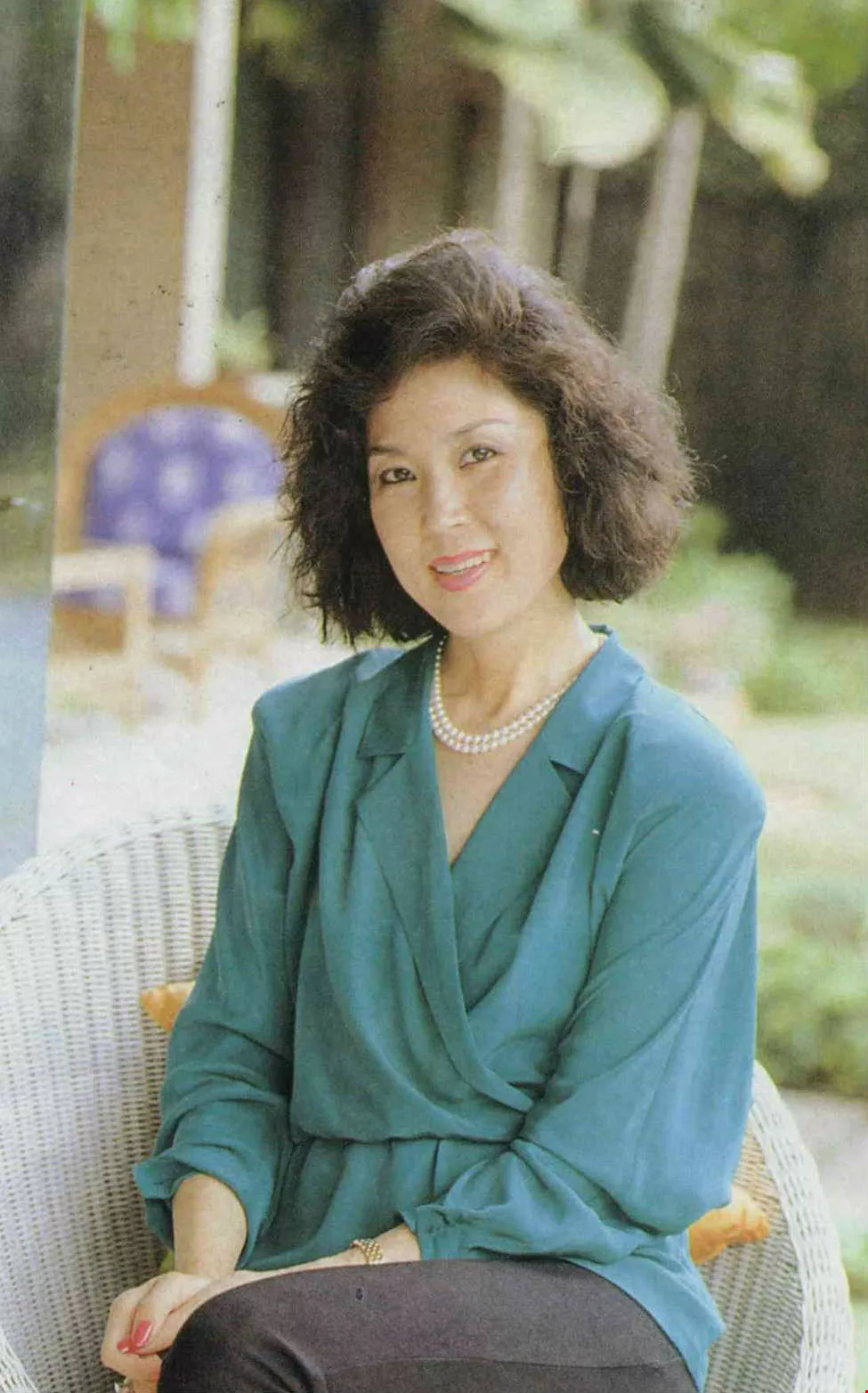
A TV personality of long standing, Betty Uray is still remembered in Taiwan as an outstandingly attractive program presenter.


@List.jpg?w=522&h=410&mode=crop&format=webp&quality=80)


