Selling Rice Dumplings with One Hand, Doing Good with the Other--Chen Chou's Dumplings of Love
Hsueh Wen-yu / photos Vincent Chang / tr. by christopher Hughes
December 1993


Taiwan's Puli is a place of beautiful mountain scenery and good air. At four or five in the morning, from the temple in Puli village there drifts the fragrance of glutinous rice dumplings wrapped in bamboo leaves. What are more than ten women doing in the temple, not sleeping but deftly tying the dumplings?
To pay off a debt of NT$1 million to a cooperative loan club, these women sell rice dumplings and give the proceeds to the club; this money is then used to do good deeds. The club was started up and is led by Chen Chou, head of Yuching Temple's Lianghsien Hall.
Mention Chen Chou in Puli village and people will call her "Mother Chen," or "Old Ma Chou." Just about any long-term resident of Puli can tell you her story. In general, her deeds include establishing the Holy Eagle Mountain Rescue Brigade, the Chen Chou Merit Foundation Scholarship, and donating more than NT$1.3 million for the building of the Nantou Domestic Aid Center's children's home. The conclusion is always, "She it a woman of great kindness."
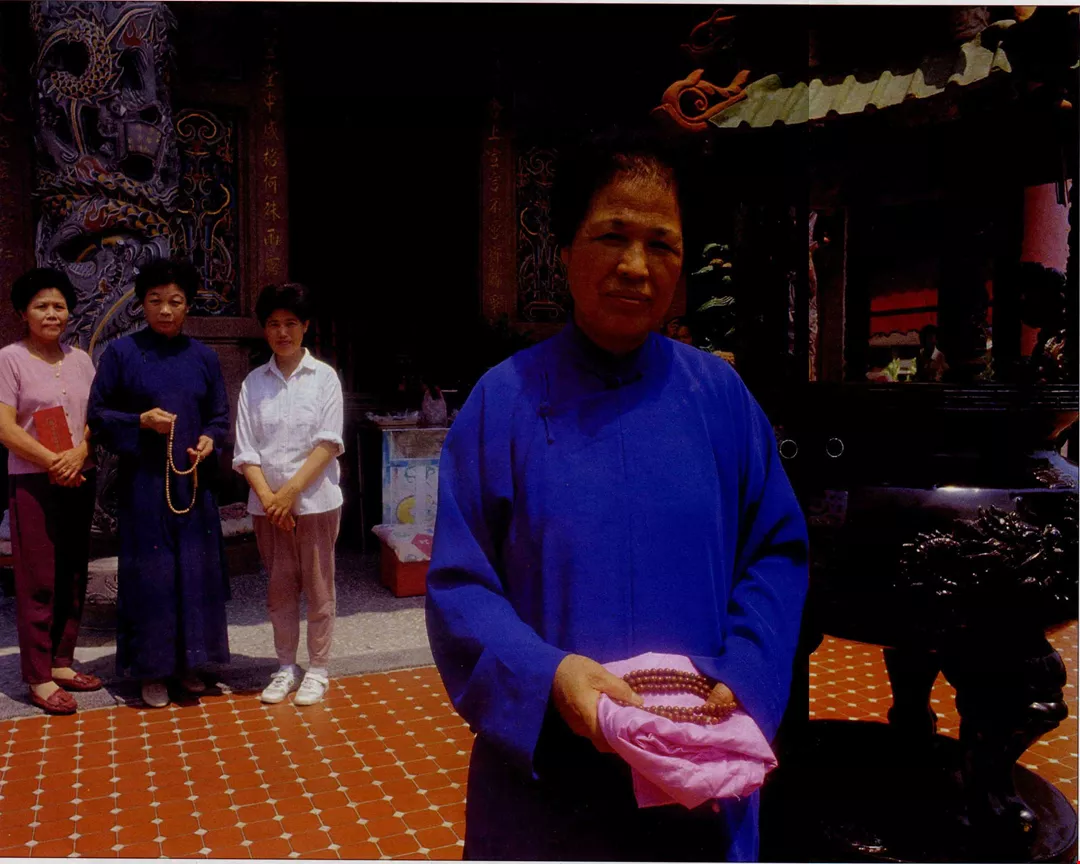
Yuching Temple's Lianghsien Hall established by Mother Chen is Puli's main base camp for doing charitable deeds.
The masses lend a hand in good works:
When you first see Mother Chen, if nobody draws your attention to her, you would never think that this dark-skinned, aproned woman with broken shoes and hands coarse from hard work, something like an old peasant woman, could be the respected "Bodhisattva" of Puli, famous for her good work.
More than ten years ago, Mother Chen Chou used the method of the cooperative loan club to do good deeds. It does not charge any interest but just circulates capital. "If there was the desire for interest, that would be greedy," she says.
Around 120 people take part in this club. How much money Mother Chen has collected in this way is beyond calculation. "All the good achievements must rely on the support of the masses," she points out.
So even when making rice cakes and rice dumplings, no matter whether it is mushrooms, peanuts, taro, redish, wrapping leaves or glutinous rice, if these are not given by the devotees, then they are taken from what is grown by Lianghsien Hall. The head of the Nantou Domestic Aid Center, Lin Pinghung, points out that Lianghsien Hall's good works and chivalrous acts are widely known, so even the gas has been supplied for a long period by the gas company free of charge. And labor, the most difficult thing to obtain is all supplied by a group of women volunteers from Pulivillage who lend a hand.
These women are all Mother Chen's "phoenixes," a name given to the devotees of folk Taoism. They must take an oath to do good deeds, and at fixed services or times of alleviating disaster and warding off danger, they go to the temple chant.
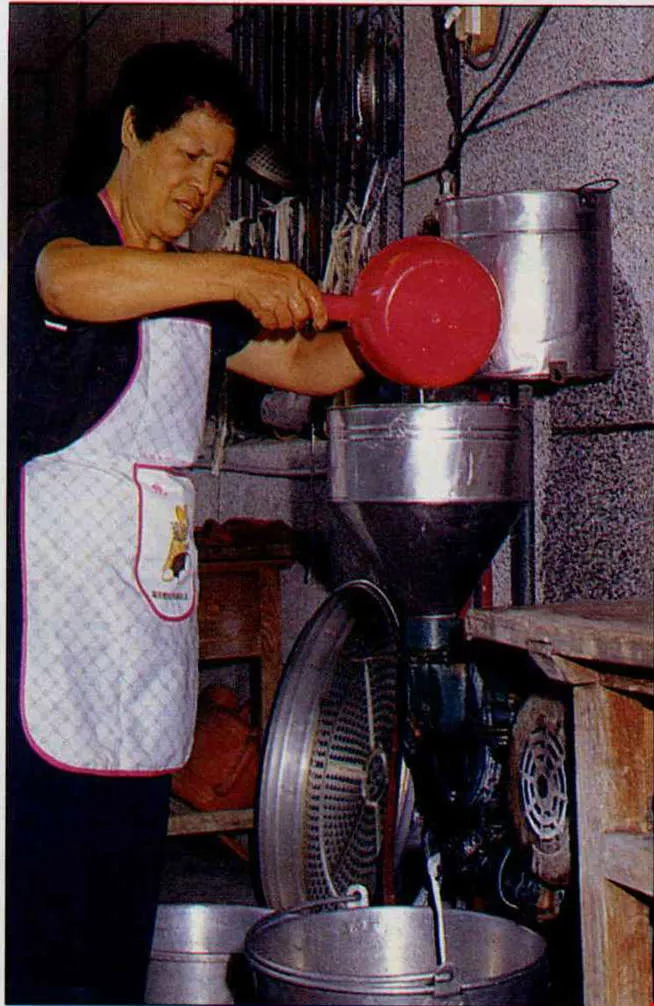
The mechanization of its rice-milling equipment has made Lianghsien Hall's good intentions even more efficacious.
Why divide religions to do good deeds?
It is just because Mother Chen is so good and capable, in addition to Lianghsien Hall's concern with hygiene and the good ingredients of the rice cakes and rice dumplings that are sold, that they are so widely acclaimed in Puli. There is no need to go out to peddle the wares. Fixed quantities are made when special orders are received. The monthly income varies between NT$20,000 and NT$200,000. This year, customers ordered as much as NT$82,000 worth of rice cakes and rice dumplings for the Ghost Festival in the seventh lunar month. Only with volunteers from the neighborhood doing two night shifts could the goods be delivered on time.
When paying a visit, Mother Chen did not forget to exhort the volunteers: "Wrap them big, it does not matter. Do not wrap them too small," and "Put plenty of filling in the rice dumplings, it tastes better . . . . Do not put too much filling in the rice cakes or they will be too salty."
Although Yuching Temple's Lianghsien Hall is a Taoist temple, most of the chanting there is done from Buddhist sutras. The Buddha Sakyamuni and Bodhisattva Kuanyin, as well as a host of Taoist immortals, are all displayed. On Confucius' birthday, and even on Christian festivals, the temple will hold chanting ceremonies. "I feel that religions should not be separated. So long as their leaders are sages, they deserve respect. They go by, and when we follow in their footsteps, that is called practicing moral teachings," laughs Chen Chou.
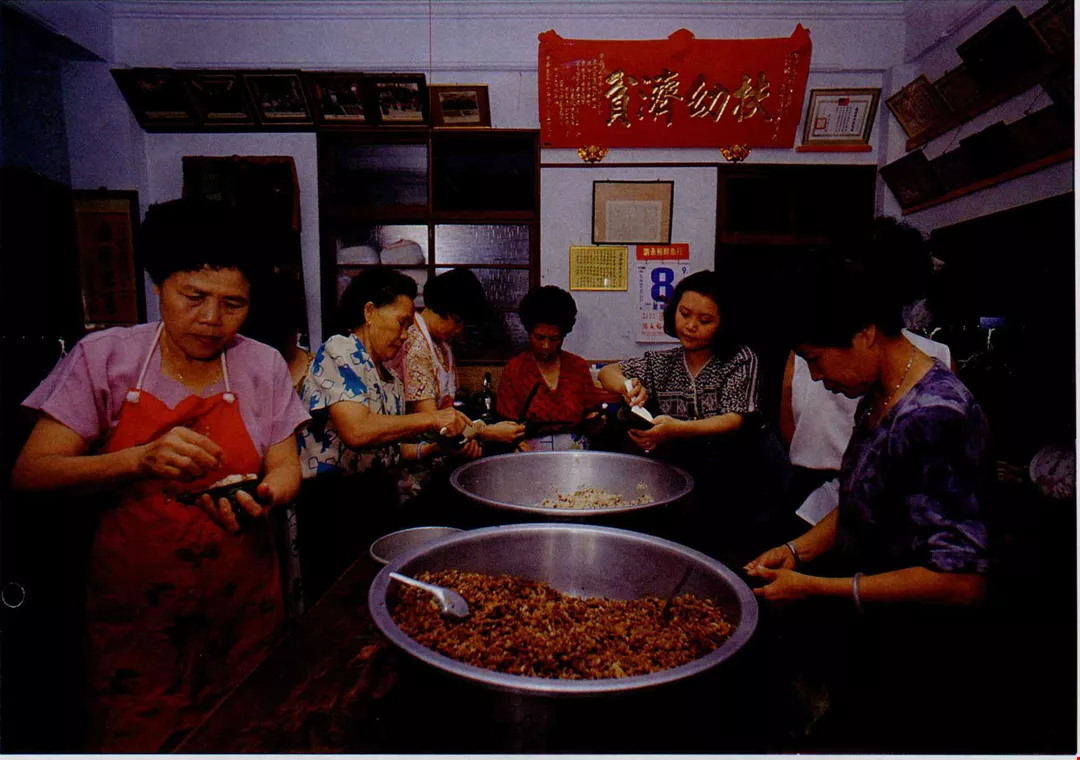
The success of the rice cakes and dumplings is due to the congregation's rising early and sacrificing sleep to help Mother Chen with her good deeds.
More than 50 "children":
Mother Chen was adopted when she was very young. At the age of seven she had to look after Japanese children to make a living, so she could not study. It was only when she got to the age of 50 that she learned to read by chanting sutras, and she deeply understands how bitter it is to have not been able to study. In earlier years she gathered wild plants and bracken, picked pomegranates and helped the farmers strip the bark from sugar cane to make money and subsidize students who could not study because of poverty.
The students who have received her assistance are countless. At one time there was the son of a local gentry official could not finish his education because his father had run into financial trouble. When Mother Chen heard this, she spontaneously offered a helping hand. The object of her charity has reluctant to accept, so Mother Chen spilt a glass or water in front of him and made a promise: "What happens today is as hard to recover as a spilt glass of water: only you and me know about it."
When Dr. Tung Mu-sheng of Puli heard of Mother Chen's generous assistance for the student, he came forward of his own accord to pay the young man's fees for one academic year. Later, when this student had finished his education, he went into trade and became Chen's godson. At the beginning of the year, on finding out that Mother Chen had admitted that the donation of NT$500,000 for the purchase of books for Yu-ying Elementary School had to be spread over periods, he himself donated NT$400,000. This money was originally the capital to buy his house, and he had to extend his mortgage from ten to fifteen years to support this generous action.
Mother Chen's goddaughter is much the same. Lai Shan-shan, at present teaching at Taichung's Lingtung business school, thinks, "My godmother has done many good things, and those who have benefited will all give something back later." Kindness and charity thus make an unbroken thread.
Because of this, Mother Chen has more than 50 godsons and goddaughters, and near on 200 followers.
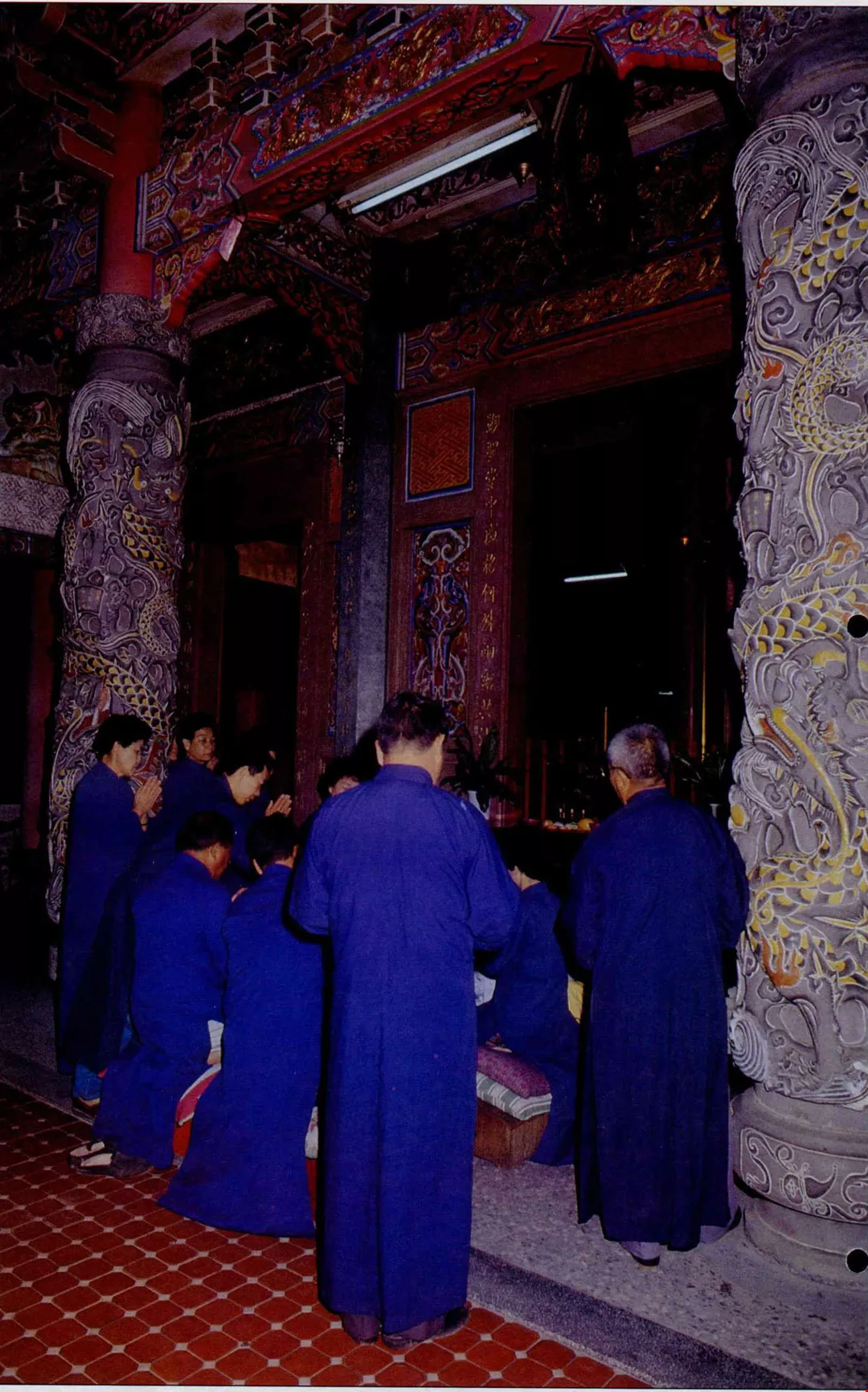
A service is held at Lianghsien Hall on the 25th day of the seventh lunar month, the birthday of the legendary Monkey King.
Do not let problems of the mountain become problems of home:
Puli's Divine Eagle Mountain Rescue Brigade was organized by Mother Chen's godsons and goddaughters. Originally, some of them organized the rescue brigade because devotees were getting lost when they went to pray on Kuantao mountain. But the first objective is to serve society at large. What the people of Puli talk about most is how the team found two lost girls near the Kuan-yin waterfall at the beginning of the sixth lunar month.
The people taking part in the rescue brigade are all volunteers who get involved in their spare time. Not only are they unpaid, they also need to give an NT$1,500 subscription to provide the brigade with a budget. Mother Chen tells her adoptive children, "One aspect of mountain rescue work is helping and saving people. Another aspect is that it also keeps you fit and healthy. Why not do it with pleasure?"
With willingness and sincerity, the brigade members often have to go to the mountains to train at weekends. When incidents occur, they have to sacrifice work or family time. Mother Chen often reminds them: "Do not let problems of the mountain become problems if home."
Donations to build a children's home:
This large group of "children" is Mother Chen's greatest resource for doing good deeds. On her birthday and the three major festivals of every year, the "children" give Mother Chen customary red packets of money. She gets as much as NT$100,000 or NT$200,000, which she always distributes among the masses. "This money comes from society and should be used for society." she says.
When Lin Ping-hung, manager of the Nantou Domestic Aid Center, was having headaches about how to raise funds to found a children's home to shelter maltreated and neglected children from the central towns and counties, Mother Chen immediately announced a NT$1 million cooperative loan club. With the addition of the gifts of money from her "children" and followers, the selling of rice cakes and rice dumplings, she gathered a total of NT$1.3 million.
Lin Ping-hung points out that the center's fixed monthly outgoings for emergency aid and general expenses amount to NT$4 million, and there is often not enough money coming in. Faced with an outlay of more than NT$40 million for the children's home, he just couldn't make it. But with the encouragement and assistance of Mother Chen, donations kept coming in. At present there is still a shortfall of between NT$18 million and NT$20 million, but he now has much more confidence than before.
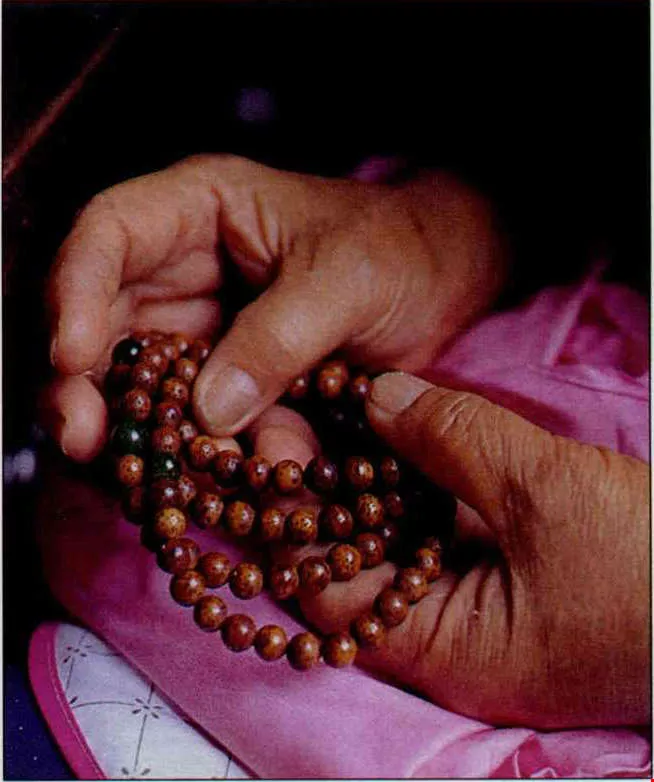
The prayer beads held by Mother Chen were given to her by the monk Kuang Chin. Another devotee once offered her NT$1 million for them, but Mother Chen just replied: "When the Fifth Patriarch gave his robes and bowl to the Sixth Patriarch, Hui Neng, I do not think he wanted money!".
Selling her property for society:
Mother Chen calls her own work "sowing seeds and planting the field of fortune." Every time anybody needs assistance, after holding out a helping hand, Chen always says, "Today I am lending you NT$5,000, later you can return NT$10,000. But you do not need to give it to me, just put it into work in society."
It is this kind of loving, selfless heart, that made the Nantou county councillor and former chairwoman of the Nantou Women's Association, Chuang Yen Chin-ying, at her last meeting as chairwoman, put forward Mother Chen as this year's model philanthropist. But Chen declined. Councillor Chuang says, "There are a lot of rich people in society today, but few who have a good heart and do good deeds. Mother Chen has done so many good things that if she does not accept the award soon, then I don't know how I will explain it to the people of the county."
Mother Chen attributes all the achievements to her family, especially her husband. Apart from three hours sleeping, Mother Chen spends the rest of the day helping out in society.
Despite this, Mr. Chen still gives his wife full support. "If I sold the property to help somebody else, he would not object," says his wife. Mother Chen frankly admits that she has prepared herself, though: if the children's home has no way to raise what it has planned, she will sell their one and only house.
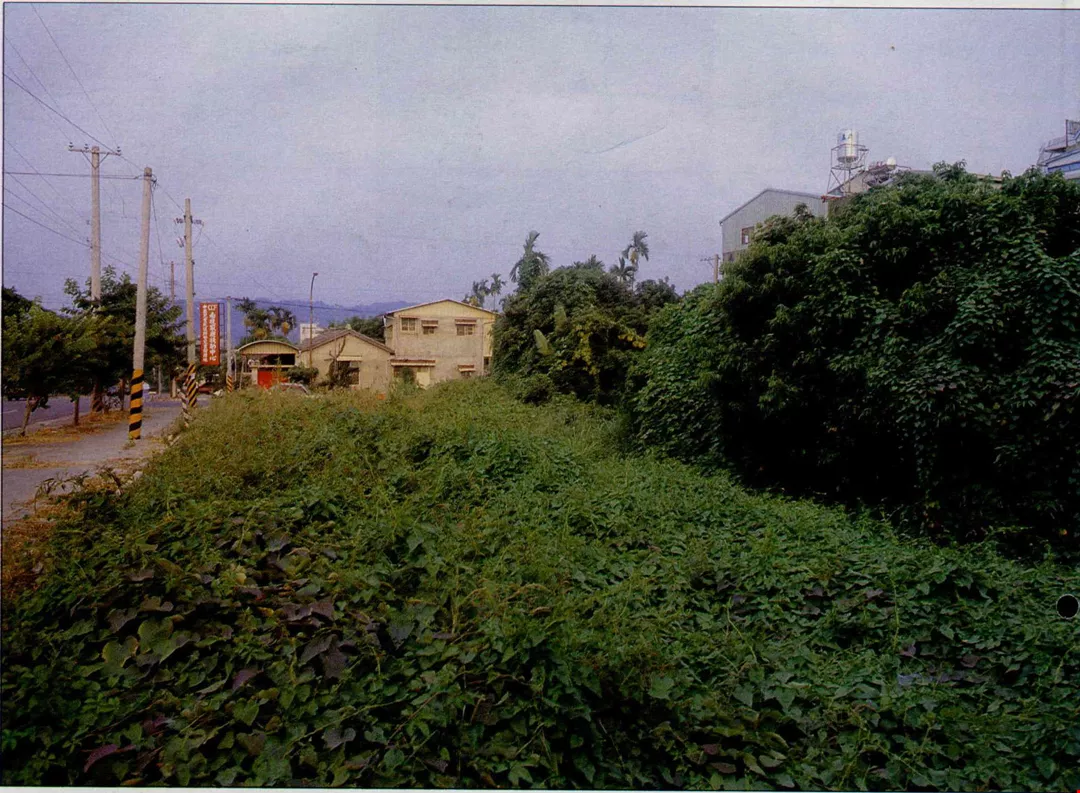
It is planned that in eighteen months this piece of wasteland will become a children's home with four stories and a basement.
Giving her grandchild to a childless couple:
In her view, good deeds are a matter of "doing now, earning now." Material property can be lost or stolen, but the virtue you build up through kindness, the field of fortune you plant, will forever protect your descendants. This is the greatest kind of wealth.
To save the marriage of a childless couple from breaking up, Mother Chen gave them her barely nine-month-old first granddaughter to raise. She says" "Attend well to the affairs of the masses, and as for the family, let providence protect it."
The owner of Puli's Taiyi Farm, Lin Feng-tien, is a devout Buddhist. In his eyes, although Mother Chen it not an orthodox Buddhist, her actions follow the way of a Bodhisattva. Because they are all done for the benefit of others, she wins people's admiration.
To become a nun and go into the mountains to quietly meditate is Mother Chen's dream for the life she would like to lead in her later years. "One day I will shave my head and become a nun, but I do not know if I can really take that step," she says, explaining, "I owe too much money to the loan club. I do not dare leave home if I have not paid it all back."
Richer than Wang Yung-ching:
It is much rumored among the people of Puli that Mother Chen has supernatural powers. For example, in predicting the fate of a 70-year-old man a week after he disappeared, or the gains d losses of investments made by the children of her followers, the results have always corresponded to actuality. So it is always best to discuss things with Mother Chen in troubled times. "I feel that it is some kind of sense of foresight, a kind of coincidence, that is all," is her reply. But it only increases the faith in her held by the people of the town.
With so many friends, Mother Chen was once able to tour Taiwan on only NT$1. One follower jokes that Mother Chen is richer than the head of Formosa Plastics, Wang Yung-ching, because, "When Wang Yung-ching goes out he has to take money--Mother Chen does not."
With no secretary, accounts or computer, no business organization, and not even bookkeeping or financial management, all that Lianghsien Hall has it equipment for making rice cakes and a group of devotees for whom giving is happiness. There is also the big boss, Mother Chen. The fragrance of rice dumplings wafting out of the Lianghsien Hill at dawn, and Mother Chen's kind heart, all make the beautiful scenery of Puli even more moving.
[Picture Caption]
p.124
Yuching Temple's Lianghsien Hall established by Mother Chen is Puli's main base camp for doing charitable deeds.
p.126
The mechanization of its rice-milling equipment has made Lianghsien Hall's good intentions even more efficacious.
p.127
The success of the rice cakes and dumplings is due to the congregation's rising early and sacrificing sleep to help Mother Chen with her good deeds.
p.128
A service is held at Lianghsien Hall on the 25th day of the seventh lunar month, the birthday of the legendary Monkey King.
p.129
The prayer beads held by Mother Chen were given to her by the monk Kuang Chin. Another devotee once offered her NT$1 million for them, but Mother Chen just replied: "When the Fifth Patriarch gave his robes and bowl to the Sixth Patriarch, Hui Neng, I do not think he wanted money!"
p.130
It is planned that in eighteen months this piece of wasteland will become a children's home with four stories and a basement.


@List.jpg?w=522&h=410&mode=crop&format=webp&quality=80)


