Homeward Bound: The Return of the Overseas Chinese (3)Refugees in Their Own Homeland
Laura Li / photos Diago Chiu / tr. by Sophie S.F. Tuan
July 1994


Following the 30 million overseas Chinese all over the world has always been one of the principal focuses of our magazine. This time we are looking in the opposite direction. We go to the two provinces of Fujian and Guangdong in mainland China, proceeding on our journey "homeward bound." Through the format of this mini-series, we hope to offer a faithful presentation, from every different angle, of the blood, tears and laughter, of the hardship and change, that these overseas Chinese hometowns have experienced in t he last 40 years.
During mid April, in the Mien Lan district of Sumentala in Indonesia,what started off as purely a dispute between labor and management turned into a labor uprising and an anti-Chinese riot: A Chinese shop owner was killed, Chinese shops were looted or burned, children were afraid to go to school, and others decamped to Singapore to escape the violence....
Anti-Chinese prejudice and discrimination seems to be a recurrent nightmare, especially in Southeast Asia. In the aftermath of anti-Chinese discrimination in Indonesia in 1962 and Vietnam in 1978, many Chinese chose to return to the China mainland. Although these displaced Chinese have found a haven, they are divided in mind and heart, confronted by the problem of split loyalties.
"Money is really easy to earn overseas. How many go never to return? Oppressed by poverty at home, they go abroad to tide over their financial straits."
The history of Chinese emigration is tantamount to the history of the blood and tears shed by overseas Chinese when oppressed by prejudice in every corner of the globe.
After the first wave of returnees during the 1950s, when over 300,000 young overseas Chinese returned to the motherland, during the sixties and seventies, two batches of Chinese residents abroad returned to the China mainland. However they did not sport the slogans and ideals of the arrogant; they brought only a long tale of suffering and oppression. They are the displaced Chinese who have been forcibly evicted by their countries of residence.
Let us take Indonesia first.
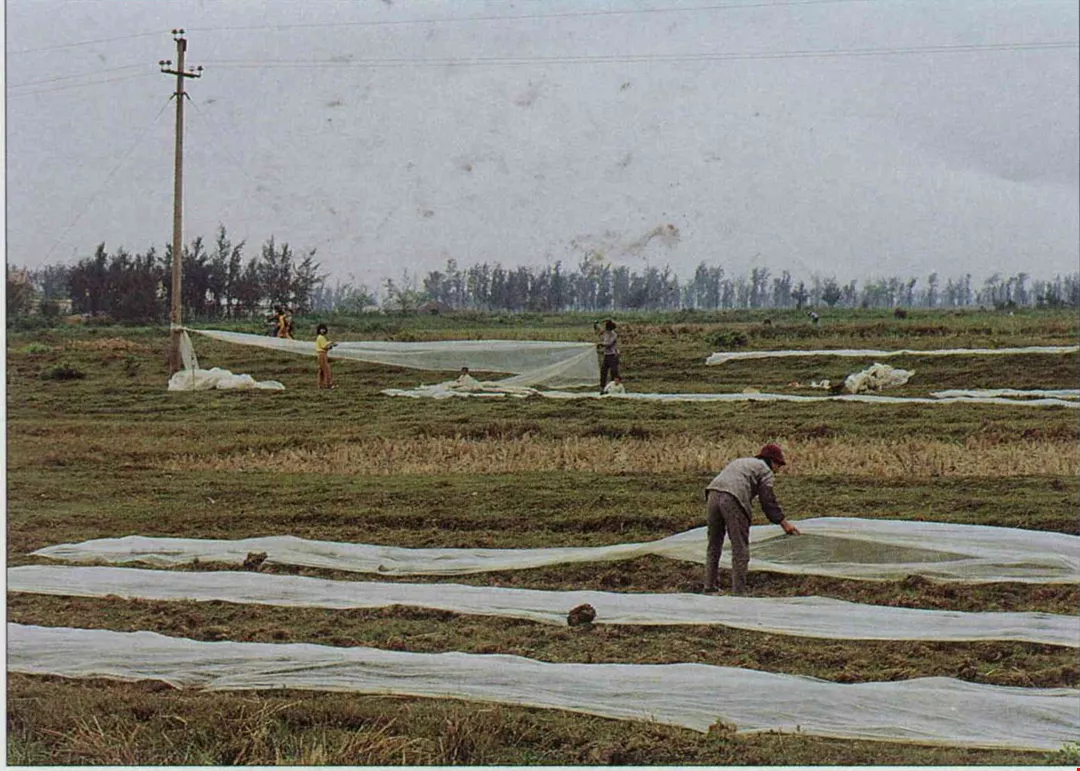
Overseas Chinese farms offer a peaceful if somewhat monotonous existence to over 100,000 returnees from Indonesia and Vietnam. Shown is the Hai Yen Farm in Taishan, Guangdong Province.
Regrouping and self-sufficiency
"After President Sukarno took over power during the 1950s in Indonesia, he adopted a stance of antagonism towards overseas Chinese," points out Mr. Chen Yi-ming, deputy director of the Amoy Overseas Chinese Museum. Apart from racial friction and envy aroused by the affluence of the Chinese, at that time the Chinese Communists were vigorously promoting their policy of exporting revolution, assisting Southeast Asian Communist guerrillas to wrest political power, which meant that resident Chinese found it difficult to escape the suspicion that they were subversives.
In order to prevent Chinese influence from expanding, the Indonesian government imposed a good many restrictions on the Chinese. For example, Indonesian business enterprises were forbidden to employ Chinese, and the Chinese were not permitted to carry on commerce or to reside outside the administrative zone of the capital. This was tantamount to cutting off the lifeline of the Chinese.
Around 1962, the flames of hatred were fanned in every district of Indonesia. Burning, killing, and looting were rampant, so that the Chinese were very much afraid. Peng Han-hua, general manager of the Overseas Chinese Enterprise Company of Xiamen who was himself a returnee in the fifties and whose parents returned after being evicted by the Indonesian anti-Chinese policy, has this to say: "The expulsion measures came like a gust of wind, so swift that no one had the time to sell their property or transfer their goods." Many people could bring only the barest of necessities, such as clothes and toilet articles.
At this juncture, the Chinese Communists shouldered the responsibility for the withdrawal of the Chinese. Around 1962, over 100,000 Indonesian Overseas Chinese registered to return home. However only over 40,000 were actually allowed back.
Why did they interrupt this policy of receiving these overseas Chinese?
As a matter of fact it is difficult to say whether this policy was justified or not. Chen Yi-ming has explained the difficulties encountered by the Chinese Communists at that time. In the first instance, the internal structure of Chinese communism was shaky, and it was extremely difficult to support such a multitude of overseas Chinese when they lacked both money and food. In the second instance, the great majority of these returnees were sent to farms, and as it just so happened this batch was totally unused to a farming life since they had previously earned their livelihood through industry and commerce. Even more important still, they were suspected of being agents of American imperialism as the Chinese Communists dared not completely believe the reasons given for this mass return. These are some of the reasons why the work of receiving returned overseas Chinese was interrupted.
Regardless of the reason, what must be deplored is the fact that over twenty years afterwards, from 1986 to the early nineties, over 800,000 Chinese were gradually discovered as being secreted away in hidden concentration camps along the sea coast of Sumentala in Indonesia. They barely had enough clothes to cover themselves, and the younger generation had no opportunities for any kind of education. This is the result of staying behind in Indonesia, where they were driven by the Indonesian government into the jungle,"with no work to do and the threat of an increasing rise in population."
On the other hand, the returnees were also confronted with a difficult situation: The very Chinese who had been suspected by their host country of being "Red Chinese subversives" were likewise distrusted by their mother country after their return, because they sported "foreign connections," which were seen as being connected with foreign power and capitalism. And under the planned economy of the Chinese Communists, the returnees were hard put to eke out a living on their own. Hence, under the Chinese Communist policy of "group settlement and productive self-sufficiency," the majority of the returnees were sent to overseas Chinese farms, and a minority were resettled in urban returnee factories.
The Overseas Chinese Enterprise Company in Xiamen, Fujian Province, which was established by three returnees in 1958 and later incorporated within the Chinese Communist Overseas Chinese Affairs system, can serve as a model of the returnee factory.The general manager, Peng Han-hua, explains, "prior to the Cultural Revolution, we produced monosodium glutamate and soy sauce, and out of ten employees at least eight or nine were displaced overseas Chinese, returnees reassigned to us from other units."
The factory equipment was far from ideal, but these returnees were grateful to the mother country for their resettlement. They set to work with a will and a way. The same fate shared by all displaced persons constituted a bond of great strength. During the upheaval of the Cultural Revolution, these returnees who were originally simple and unfamiliar with the inner workings of China's political structure, in the wake of the Chinese Communist power struggle, divided themselves into two sides. Both outer and inner struggles took place, which in turn "affected adversely the production of goods." In order to dilute the bad element in overseas Chinese enterprises, a good many staff workers were reassigned here from other regions by the factory management. This process was called mixing the goats with the sheep.
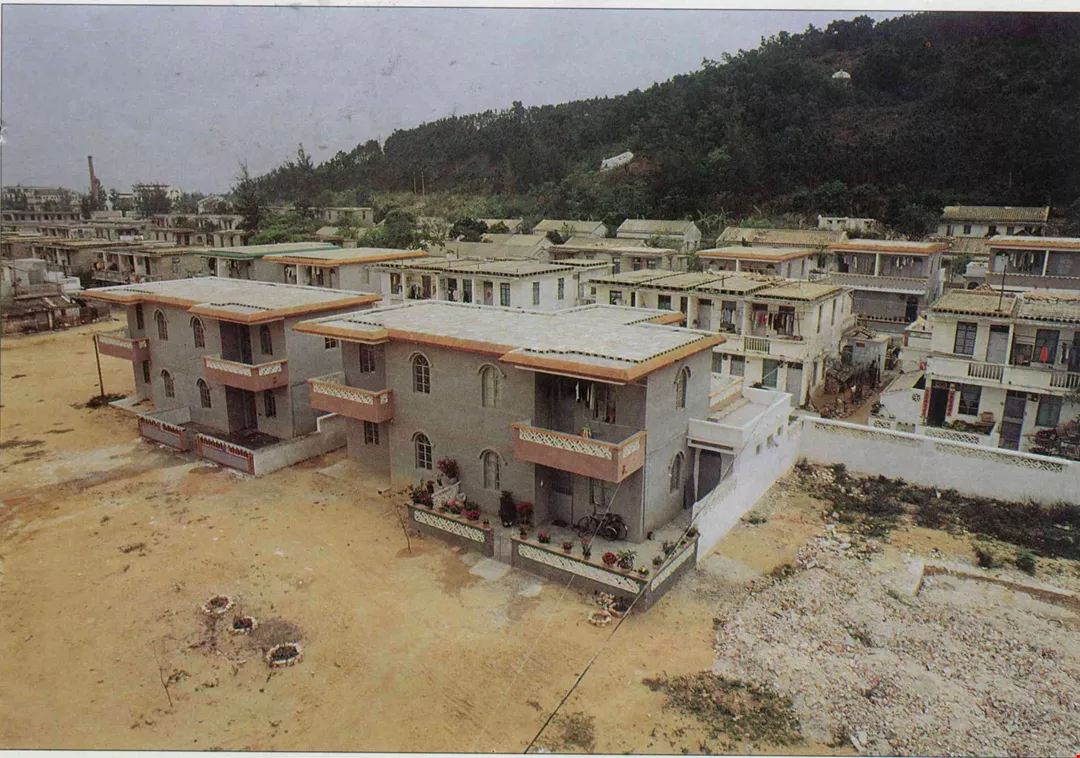
Economic reform on the mainland is bearing fruit. The old jerry-built dormitories of the returnees have gradually assumed a facelift. And row upon row of two-storey Western-style houses are taking their place.
Are the overseas Chinese to blame?
In 1978, just when everything had returned to normal after the Cultural Revolution, the Vietnamese Communist regime suddenly launched an anti-Chinese attack, which threw into turmoil the overseas Chinese enterprises responsible for resettling displaced Chinese.
"This action by the Vietnamese Communists was totally unjustified." A Chinese refugee from Vietnam was highly indignant when he recalled the recent past. During the Vietnamese war, the Chinese Communists aided the Vietnamese Communists with supplies of all sorts, from guns, cannons, and clothing to food, so it was unexpected that the Vietnamese would turn a cold shoulder to their former brothers in arms once they had won the Vietnam war and go so far as to expel Chinese from northern Vietnam.
Fifteen years have elapsed, but the horrific circumstances attendant upon this deportation are still fresh in the minds of those who participated.
"When they just came back, the refugee Chinese were empty-handed, and the children went naked since they couldn't afford clothes," describes Chuang Hsiang-lung, who was serving as deputy director of the Hai Yen Overseas Chinese Farm of Guangdong Province and working at the reception center for returnees at the time. However, Peng Han-hua points out that because of total mobilization during the Vietnamese war, the men wore a uniform, topped off with a pointed canvas cap known as an overseas Chinese cap. As for the women, they wore loose and baggy black trousers, reportedly because this facilitated the jump over air raid shelter ditches.
The shadows cast by war are also reflected in the daily behavior of Chinese refugees from Vietnam. For example, they are used to life in the mountainous wilds, and even when a regular cooking range has been set up in their new billets, they simply leave it unused, for they prefer to pile up several slabs of stone for their cooking fire. And when food is distributed, they are not above snatching or hoarding for they are deadly afraid of not getting another meal.
These roughly 100,000 Chinese refugees from Vietnam are for the most part farmers or miners from the mountainous zone of north Vietnam. And the Chinese Communists are accustomed to say "their cultural standards are quite low." Furthermore, because some had settled in Vietnam for four or five generations, the children know only how to speak Vietnamese and a smattering of provincial patois, which adds to the difficulties of communication.
Maladjustment for these refugees is attenuated once they reach the Overseas Chinese farm.
Chuang Hsiang-lung, who has dedicated thirty years of his life to the Guangdong Hai Yen Farm, points out, "at present the farm contains over four thousand of these returned refugees, among whom there are over 530 families from Vietnam or in other words over 2200 people. In the beginning, the Hai Yen Farm was established to accommodate Indonesian refugees, but now these people have either retired or left the farm for other work. And the Vietnamese refugees have become in turn the mainstay of the settlement.
Bordering the boundless expanse of the South China Sea, with a land mass of 270,000 hectares (half of which is forested mountains), the Hai Yen Farm at the southern tip of Taishan County of Guangdong Province, far removed from the noise and clamor of the cities, is truly a good place for these weary travelers to lick their wounds and convalesce. Comparable overseas Chinese farms exist in other areas, including 17 in Fujian and 24 others scattered throughout Guangdong. Together with tens of overseas Chinese factories distributed over Fujian and Guangdong in the big cities, these farms shoulder the responsibility for the peaceful resettlement of refugee returnees.
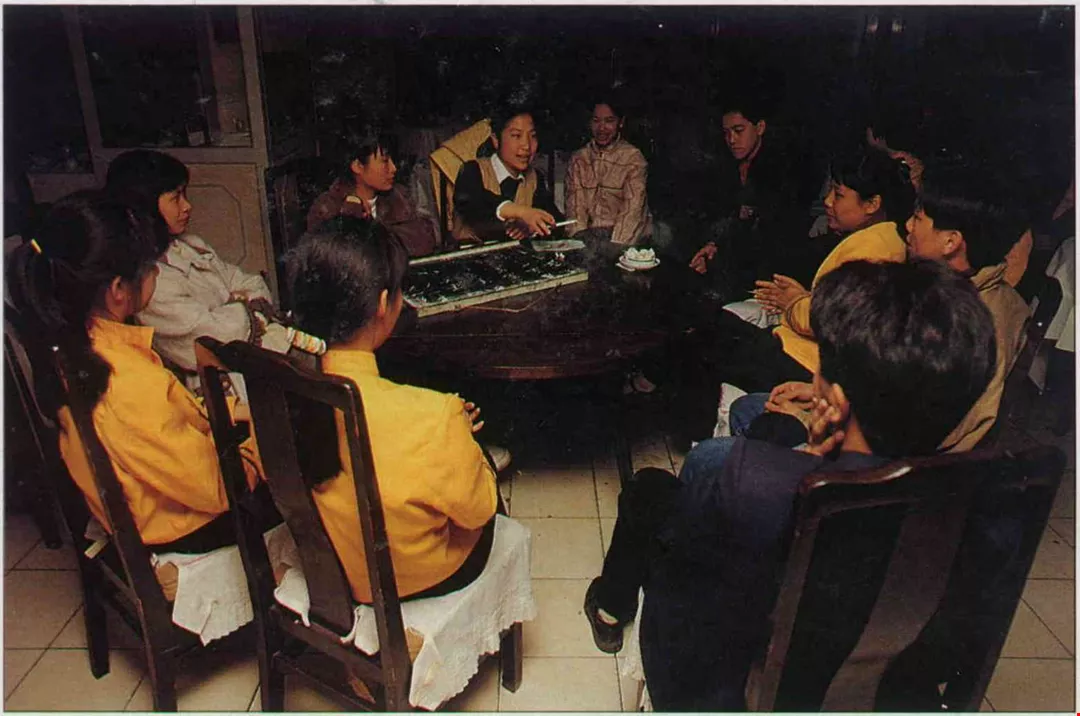
Returnee workers discussing where to go for their recreation activities at the hotel for Cantonese returnees in Guangzhou. The young offspring of the returnees are barely tolerant of hardship at the farm, and they hope to transfer to urban areas and work in the enterprises operated by returnees, where salaries are higher and life more exciting.
Eating from one big bowl
At the present time, the main product of the Hai Yen Farm is sugar cane. Within its precincts, there is a sugar mill which extracts five hundred tons of sugar daily, as well as a fertilizer factory which caters to the farm's needs. As for the fodder factory, which uses up sugar cane leaves and sediment, its output is exported to Japan. The United Nations' High Commissioner for Refugees also donates money periodically to the amount of several hundred thousand US dollars, and investigation tours are arranged at fixed periods annually.
As for the income derived by the farm, according to statistics for the year 1993, the refugee workers sell their yearly harvest to the farm management, and after deducting monthly living expenses, each person can enter into his personal account an income of 700 renminbi. As for those refugee workers who employ their spare time to go to sea in order to catch fish, shrimp, and crab, or who raise pigs, chicken, and ducks on their own, they are permitted to go and sell them at nearby markets.
Chuang Hsiang-lung states that "judging by statistics only, the income earned at an overseas Chinese farm seems comparatively meager, but their low income is offset by high social welfare benefits, and this is a magnetic source of attraction." Because the farm management foots the bill for the purchase of fertilizers, farming equipment, and accommodation at farm dormitories, the cost of living for the refugee worker is very low. Once you have accumulated some savings, you can even buy a Western style two-story house, otherwise known as 'fringe benefit housing,' which costs no more than five thousand renminbi. This paints a picture of domestic contentment for a small family.
Of course the affluence of today was reached only after a period of strife. Huang Chung-jen, deputy chairman of the United Overseas Chinese Cooperative at Hai Yen farm, declares that prior to 1986, the overseas Chinese farm was in exactly the same position as the rural villages in the hinterland. Because everyone ate from the same rice bowl and you could not improve your diet by added labor, there was no incentive to produce more and production reached an all-time low. Stagnation set in. It was not until 1986. with the local implementation of the rural contract system, that the overseas Chinese farm launched a project for joint production under a contractual responsibility system, with the family as the basic unit. In accordance with the manpower of each family, they are allowed to contract for a specified area of sugar cane fields. This marked the revival of production.
With great satisfaction Chuang Hsiang-lung declares, "it was in '86 that the contractual system was implemented, and in '87 the production rate shot up by leaps and bounds."
Although everything proceeds at a leisurely pace in the overseas Chinese farm, those of the younger generation of refugee returnees are tempted to go into the outside world to explore for themselves. In recent years, in the wake of liberalization, those returnees who suffered from restriction of movement, were beginning to benefit from a return to the city. In addition, the business enterprises of returnees in the cities expanded rapidly in the wake of economic development, which made them willing to recruit help from the farms.
Located in Guangzhou, and established only in 1983, the Guangdong Province Overseas Chinese Company as of now possesses a printing firm, a garment factory and bars, all of which are affiliated enterprises. Out of over 1000 workers, over 70 percent are refugee returnees or their relatives, and the majority of these were brought in from the farms.
Lin Yang-tan, general manager of the Guangdong Province Overseas Chinese Company, explains that returnees are "brothers in arms and hence get on better with each other because their social status is similar." After being reassigned to a city factory from the overseas Chinese farm, they can earn a monthly salary of US$400-500, which is double their pay on the farm.
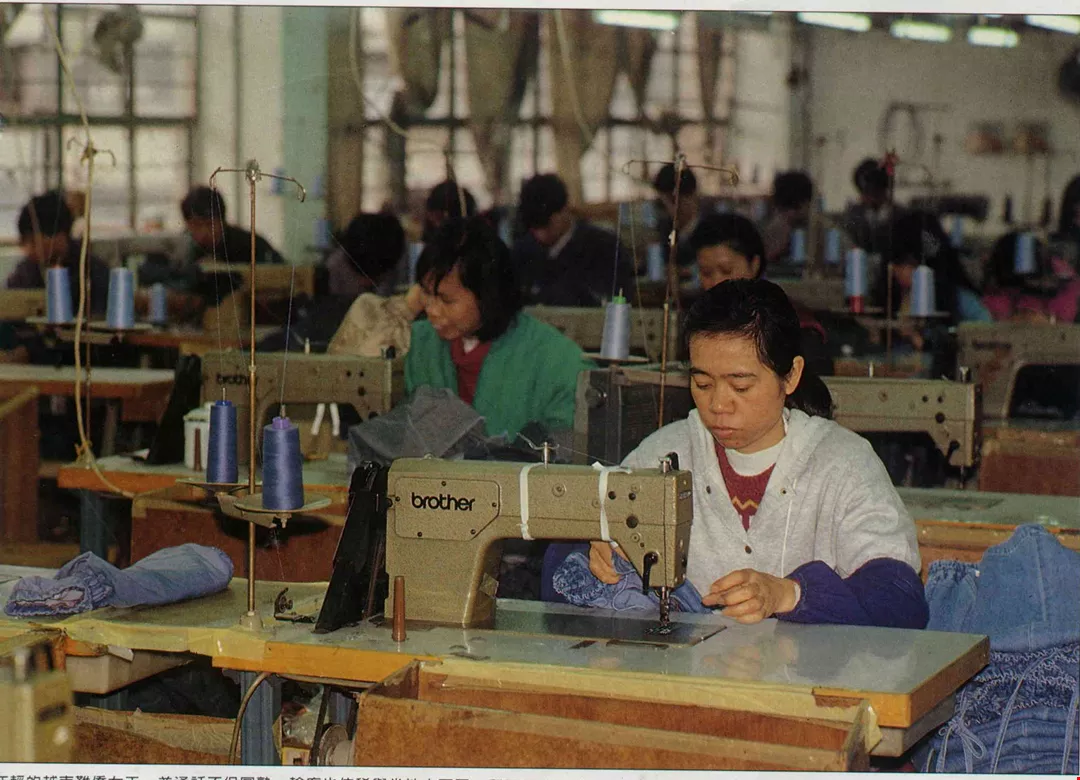
A young female returnee worker from Vietnam is not fluent in Mandarin, and her appearance differs somewhat from the locals, which creates an invisible barrier. Adjustment takes time.
Heavy burdens, ill-defined status
Liberalization and consequent economic development may have enabled overseas Chinese enterprises and farms to take on a new lease on life, but the inevitable conflicts and contradictions also continue to increase.
Peng Han-hua says, "as a resettlement organization, we of course give refugee returnees priority consideration in employment." However, employing these returnees, whose language, culture, and daily habits are somewhat different from the locals, is not necessarily a good thing for the working efficiency of these business enterprises.
Chuang Hsiang-lung of the Hai Yen Overseas Chinese farm has the grueling task of weighing the pros and cons: Either we opt for the preservation of the former national policy towards overseas Chinese affairs, along the model of the resettlement organization, or else we should respect the market economy and become a highly efficient economic entity. "In the past, the farm constituted a little world of its own, for within the farm they have established an old folks' home, a hospital, and a school," pointed out Chuang Hsiang-lung. Pensions for retired workers amounted to over a million dollars. These are the glorious but burdensome duties of the resettlement organization. On the other hand, the country accords preferential treatment to the workers by giving them tax rebates amounting to over a million dollars annually and approximately 700,000 renminbi of financial assistance.
However, tax rebate remissions will cease this year. Growing pressure is being brought to bear on this farm to be autonomous and accept responsibility for all profits and losses incurred. But rebates cannot be abolished overnight, for the refugee returnees have become accustomed to them. Chuang Lunghsiang, as a member of the Hai Yen farm's management committee, feels the pressure coming from both sides.
"As of now, we can only hope to attract foreign capital to help us to develop mountain forests, maritime products, or recreation and tourism." This seasoned old farm veteran is also beginning to reiterate the slogans of the average entrepreneur, namely the call for diversification, internationalization and corporatization. This is the art of survival.
The refugee returnee organizations are confronted by the problem of obtaining proper status within society, and the returnees themselves even more so.
The long-term centralized resettlement of returnees spells estrangement from the local people, and intermarriage only takes place between returnees and returnee offspring whether in the farm or the factory. There is even less possibility of choice where employment is concerned, and for the most part they go the rounds of the returnee affiliated enterprises. Furthermore, the children of those thus employed because of their youth and high spirits often quarrel with the locals. Although they have returned to their motherland, their sense of disorientation and alienation is often acute.
As of now, the mainland emphasizes a market economy and free enterprise, with the gradual withdrawal of protectionism for returnee businesses, and as the breach in basic standpoint between the locals and the returnees narrows, they must adapt to the new rules of the game imposed from without. As they watch their children riding on bikes or playing with each other in the paddy fields of the farm, it is hoped that time will heal all wounds and that the stigma of "returnee" will gradually disappear.
[Picture Caption]
p.85
The Overseas Chinese Enterprise Company of Xiamen's Home for Returnees. The old timers who have passed through the bitter experience of anti-Chinese campaigns overseas have only one wish, and that is to see their grandchildren grow up in their homes without being subject to fear and favoritism.
p.86
Overseas Chinese farms offer a peaceful if somewhat monotonous existence to over 100,000 returnees from Indonesia and Vietnam. Shown is the Hai Yen Farm in Taishan, Guangdong Province.
p.87
Economic reform on the mainland is bearing fruit. The old jerry-built dormitories of the returnees have gradually assumed a facelift. And row upon row of two-storey Western-style houses are taking their place.
p.88
Returnee workers discussing where to go for their recreation activities at the hotel for Cantonese returnees in Guangzhou. The young offspring of the returnees are barely tolerant of hardship at the farm, and they hope to transfer to urban areas and work in the enterprises operated by returnees, where salaries are higher and life more exciting.
p.89
A young female returnee worker from Vietnam is not fluent in Mandarin, and her appearance differs somewhat from the locals, which creates an invisible barrier. Adjustment takes time.
p.90
Mr. Huang, an employee for many years at the Overseas Chinese Enterprise Company, has lived to see his children grow up and his household fully equipped with the latest electric gadgets.
p.91
This old returnee celebrated his centennial last year. The photo shows one part of his home.
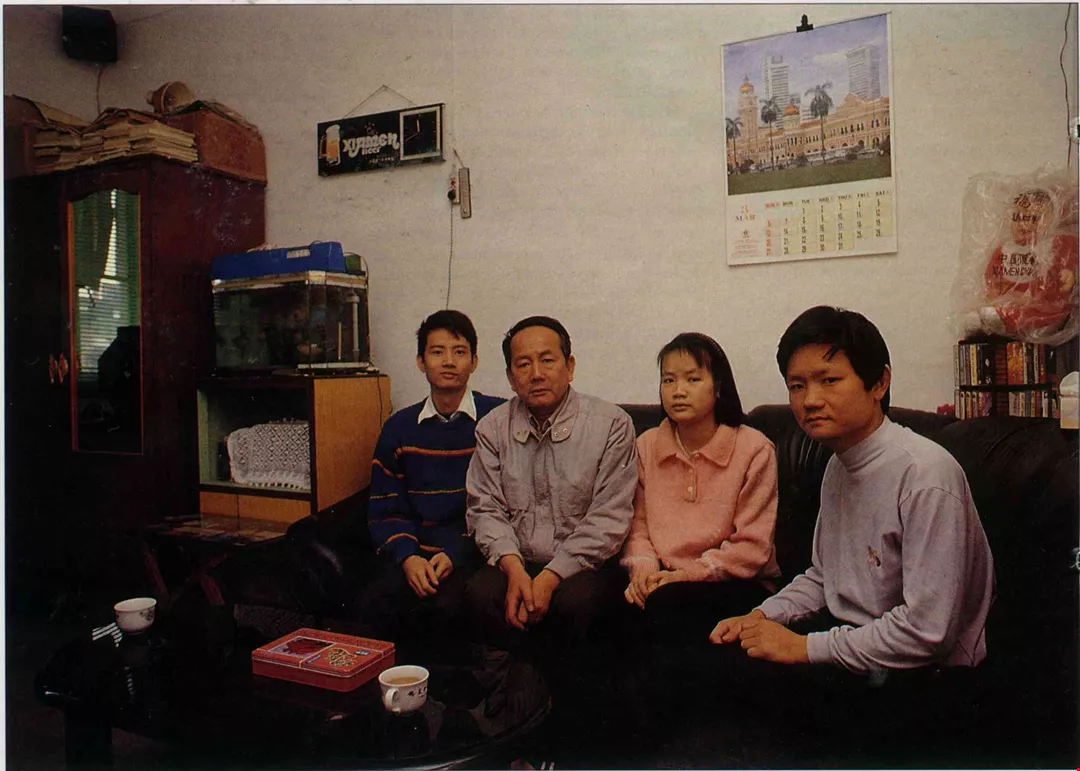
Mr. Huang, an employee for many years at the Overseas Chinese Enterprise Company, has lived to see his children grow up and his household fully equipped with the latest electric gadgets.
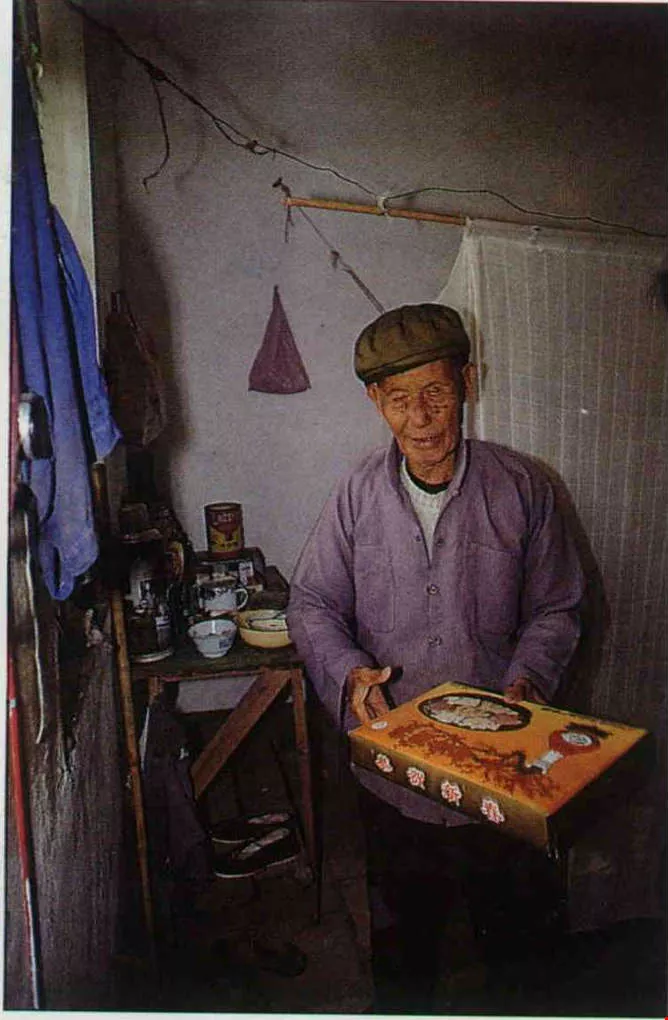
This old returnee celebrated his centennial last year. The photo shows one part of his home.


