Baby Boomers Meet the Future!
Teng Sue-feng / photos Chuang Kung-ju / tr. by Anthony W. Sariti
November 2004


Why do people work? To support a family? To realize their dreams? Or is it to pursue a sense of accomplishment, to enjoy a feeling of social participation? The story behind the evolution of work tells us these are all valid reasons.
In the next decade or so the world will be facing a problem-a baby-boomer generation of historic proportions will reach retirement age. Perhaps, then, we may add a reason or two for working. People work for their retirement and to make preparations for enjoying their later years.
The retirement of the baby boomers and the increase in the elderly population is the most significant demographic trend of this century. Taiwan is no exception. In the last several years both the government and private industry have announced a series of retirement-friendly measures, and there has been a debate on pension reform and old age annuities, as well as how-to pamphlets, like Retire at 50 and Retire on NT$30 Million, that have constantly appeared in the media. Everything people were hearing encouraged them to think about retirement. Is it true that the time has come to "lay down one's armor and return to the fields" and plan for early retirement?
"The new labor pension system guarantees each person a pension. The future trend will be for these to be paid monthly," says Wu Chih-shing, Taipei County office director of the Bureau of Labor Insurance, speaking at the Sanchung City labor recreation center one October Sunday morning. He is seeking to dispel doubts among the more than 100 workers who have come to listen.
Since the passage of the Labor Pension Act in June, the telephone service hotline of the Bureau of Employment and Vocational Training of the Council of Labor Affairs has been ringing off the hook. The flood of calls reflects an anxiety shared by some 8 million Taiwan workers: how do you convert from the old system to the new? Which one is more beneficial?
Mr. Chen, a 50-year-old worker in the garment industry, describes the situation after listening to director Wu's explanation: "The old system is like a bowl of beef noodles you can see but can't get your hands on; the new system is like a bowl of noodle soup with no beef, but that you actually can get to eat."
In general, the old system encouraged employees to stay with one company from beginning to end in order to get their retirement money. The new system is different. In response to the collapse of the lifelong employment system, the constant stream of businesses moving overseas, redundancy payments and plant closures, and the constant need of workers to find new employment, thus making it very difficult to build up seniority at one particular company, the new system allows seniority to move with the individual. Changing companies thus has no influence on seniority, which governs the pension payment.
Wu Chih-shing reminds his audience that in the past many workers used to think, "a bird in the hand is worth two in the bush," and would request a lump sum retirement payout as soon as they qualified. But very few people were actually able to keep hold of the money. Normally when children learned their parents had come into some cash, they would want them to help out with a loan to start a business. "Are grown children who hold out their hands to take money from elderly parents going to take care of them later on?" he asks.
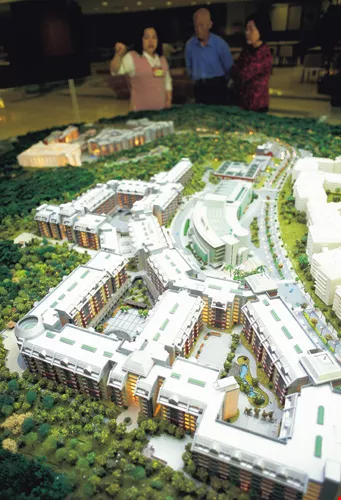
An aging Taiwan society has spawned an industry to look after it that combines health and leisure. Many middle-aged people have begun early on to search out a place where they can spend the evening of their lives. Pictured at left is a model of a sheltered housing project to be built by the Formosa Plastics group.
An aging society
Although Wu's warning words may not be 100% accurate, they are not far off the mark! Of course there are also loyal and loving children who are more than willing to take care of their aging parents, but 40- or 50-year-olds cannot just think about raising kids as a way to support themselves in old age because they are about to come face to face with a phenomenon very difficult to reverse-the younger population will never again outnumber the older.
"When you get old, who will take care of you?" This has become the most pressing question for the post-war baby boomers born in the 1960s who form the backbone of the labor market. The boomer generation that will reach retirement age in the next decade or so is a real "sandwich" group. Above them are their beloved parents, but as they look below they see precious few people. The next generation may not have the capacity to take care of them in old age.
In 1961 the average Taiwan woman gave birth to 5.58 children. Twenty-five years later in 1986 the birthrate was only 1.67, a drop of 70%. With a poor economy in 2003, the birth rate reached a new low of 1.2.
In 1993 Taiwan became an aged society as defined by the UN. The over-65 population reached 7% of the total, some 1.9 million people. Today, ten years later, the proportion of old people has increased to 11.6%. The Council for Economic Planning and Development estimates that by 2031 this proportion will rise to 23%, for an elderly population of more than 5.6 million people.
An aging population, a decreasing birthrate and a consequent increase in the social welfare burden-people have long been tired of hearing such negative news but many neither want nor dare to think about how this unavoidable trend will affect our future.
Is it true that the sandwich generation can only depend upon a life of hard work to take care of them in the future? A look at the evolution of work shows us that the concept of retirement is really intimately tied up with attitudes toward work itself.
Richard Donkin, a columnist for the Financial Times, describes in detail the evolution of work in his book, Blood, Sweat and Tears: The Evolution of Work. He goes from the slaves of Roman times, the guild workers and serfs of the Middle Ages on through the Protestant Reformation of the 17th century when workers believed in a diligent and simple work ethic.
The shift from an agricultural society, where work began with the sunrise and production changed with the seasons, to the three-shift factory model, where workers never saw the light of day, was accompanied by much resistance and struggle. It took the US and Europe some two to three hundred years to make the transition from preindustrial to industrial society, and this transition extended into the mid-20th century. It was during this period that the concept of retirement was born as circumstances changed. Concerned about productive forces, capitalists took into consideration the relative physical and technological backwardness of middle-aged and older workers and began to draw up retirement systems.

If the world enters a period of low interest and a person is depending only on money that has been saved, then life could get progressively worse. But retirees must also carefully manage their money. They cannot put all their eggs in one basket, or they may lose everything they've worked for.
A long highway
In the 1960s when the US and Europe were moving from a manufacturing economy to a services-based economy they began to utilize the labor of developing countries and moved factories to Central and South America and Asia. As a result, Asia's "four tigers" came into being. In Taiwan, for example, both Philips and RCA set up factories at that time.
"For workers in an industrialized society, an office career is like a highway where you know the next stop," says Professor Lin Wan-i of the Department of Social Work at National Taiwan University (NTU). He cites an example from Taiwan of the early years where many workers joining the government-run Taiwan Power Company were 16-year-old middle-school graduates who, after graduation, began as trainees and then moved up the ladder to engineers. Forty or 50 years later they received a liberal pension and spent the rest of their days enjoying life.
A few years ago a discussion began in North America on the formation of a "post-work society," with topics like the one-man office, the mobile office, the home office and Internet marketing. Even preparing for one's next job was considered a kind of work. Work no longer had a definite form or definite criteria. The maturing service economy had already ceased to depend exclusively upon labor and work hours to determine salaries. Intellectual ability, interpersonal relationships, outward appearance, personal influence and individual effort can affect the accumulation of wealth. The autonomy of the individual is more pronounced in a post-work society.
But comparing Taiwan with the US and Europe, "the transition period for Taiwan from the 'preindustrial' to the 'post-work' stage was compressed into 50 years, and there was not enough time to make some needed adjustments," says Lin Wan-i, who is an expert on social welfare programs around the world. The US and Europe took more than a hundred years to create the basic medical, educational, social welfare, and environmental protection structures that supported social change. For example, Germany put in place national compulsory education in 1860 and in 1881 started a social insurance program. In 1890 Sweden saw the introduction of an insurance system. As for Taiwan, even during the 1960s when the nine-year compulsory national education system began, it was very difficult to prepare for this because it was done in too hurried a fashion.

US retirement age rises as old people stay healthy longer source: Inevitable Surprises: Thinking Ahead in a Time of Turbulence, Chinese edition (China Times Publishing)/ art: Wei Chin-hua
Not "married" to the job
But more than ten years ago a 40-plus worker could more or less know when he would retire and how much of a pension he would receive with a high degree of certainty about a comfortable future. After the transformation of social structures and forms of work, however, future prospects now appear like "flowers in the fog."
"It is difficult to say whether the concept of post-work society will stabilize and become a mainstream idea, but we must admit its existence, that we are dealing with multiple choices," stresses Lin Wan-i. Most countries' economies are fundamentally a mix of both manufacturing and service industries. Finland's Nokia and Sweden's IKEA remain important pillars of their respective economies, for example, and only a minority of people has chosen the lifestyle of the post-work society.
Thus some people enjoy their work and derive a sense of belonging from it. Some people are "married" to their work, cannot separate themselves from it and work too much overtime. Some people regard not working as a kind of work and enjoy being "job nomads" at the office, and the individual differences are widening. Flexible retirement, early retirement and deferred retirement fit somewhere in between.
Under the current changing and very uncertain circumstances, how to plan for the future has become a "required course" for the government and individuals alike.
"The government must respond to the changes in industrial structure and meet the demands of different kinds of people," argues Lin Wan-i. The government labors under two myths: one is that there is no way to respond to the future, thinking we are still living in an industrial society; the second is overdoing it, thinking we have already entered a post-work society. Taiwan is thus being pulled in both directions. We're either reacting too slowly on the one hand or our heads are being turned by globalization on the other.
"We need to move ahead by interconnected steps, not by disjointed leaps. We must put in place as soon as possible basic structures that can support social change, and then make appropriate and flexible adjustments," Professor Lin emphasizes.

The baby boomers represent a sandwich generation, with parents above them and children below. In ten years or so as they gradually move into old age, they may still be shouldering heavy burdens because the working population will decrease and they will have only themselves to depend upon.
Live longer, work longer
After a great deal of tumult, the Labor Pension Act passed in June does not, according to some labor organizations, mean a way out of labor/capital disputes over pension rights because it has "moved too quickly."
"The new labor pension system should cover all those with employment under the same roof, including part-time workers, outside contractors and those on renewable contracts. There should be some thinking about flexibility in dealing with high-risk individuals and those with unstable incomes," says Lin. The government cannot allow those who do not receive pensions to just float around society, blown this way and that. Should these people later become indigent it will still be the government's responsibility to take care of them.
Lai Chin-lin, deputy minister at the Council of Labor Affairs, says some workers seem to have a misunderstanding with regard to the temp worker industry. They worry that companies just want to hire "atypical workers." In fact, the temp industry is subject to the Labor Standards Law and company owners must make a pension fund allocation for each employee. A draft National Annuity Act has now been sent for review to the Legislative Yuan that is designed to include homemakers and other non-employed people and provides a minimum subsistence guarantee to every citizen.
In addition to reforms that have begun or are about to begin, there are ideas fermenting about raising the retirement age in order to accumulate reserves for future needs in response to the coming dramatic increase in the healthy aged population.
A survey of countries around the world shows that delaying retirement and breaking through the retirement age limit is the trend of the future. In 2001, for example, Germany raised the retirement age from 65 to 67. The retirement age in Great Britain is currently 65 but they are planning to abolish all restrictions to prevent employers from using age as an excuse to force employees into retirement. The US has raised the age for receiving a retirement annuity to 66 and Japan has changed it to 65.
A comparison of life expectancy and retirement age makes the situation immediately clear. When US retirement systems were first drawn up in the 1950s the average life expectancy was just over 60, a few years less than the mandated retirement age of 65. The overwhelming majority of hardworking citizens died without ever having drawn any money from the system at all. But in the future when life expectancy rises to 80 or 90 years it won't make any sense to have people retire early and then spend 20-some years waiting each month for their annuity checks.
The discussion on raising the retirement age has now found its way to Taiwan. The focus of the discussion is whether an overly large retired population will cause a collapse of government finances.
"How do you define retirement? It is very hard to standardize a definition. The government talks about the age at which one receives a retirement payment or old age payment, or can apply to receive a pension from a private company, but this age is not the same as the actual age at which people stop working," admits labor economics researcher Associate Professor Hsin Ping-lung of NTU's Graduate Institute of National Development. If the government is worried about the financial burden, it can start first with "regulating the age at which the military, civil servants and teachers apply to receive their monthly retirement salaries" to avoid a situation where an increasing number of military, civil servants and teachers in their fifties put in their retirement papers, then not only enjoy their monthly annuity of 80-90% of their original salary but can turn right around and start a new career working in the office of a public or private company, thus creating a huge double-edged sword affecting the government budget on the one hand and job opportunities in the workplace on the other, angering workers from other occupations.
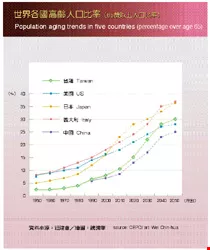
Population aging trends in five countries(percentage over age 65) source: Council for econnmic planning and development
Earlier retirement for the young?
In actual fact, this change of direction in national social welfare policy corresponds to a certain extent to the change of values and demands of the younger generation.
Last year the Cathay Life Insurance company conducted a major "retirement survey" of 20- to 59-year-old policyholders. According to the survey, 83% of policyholders felt they didn't need to depend on anyone else for their retirement, that one should depend on "oneself." Only 6% felt the responsibility was that of the children. The idea of having children as a hedge against one's old age had clearly weakened. Only 5% felt retirement was the responsibility of "the government," showing many people felt the government system could provide only a minimum guarantee and was not enough to provide an easy and comfortable retirement.
A more detailed division along age lines yielded the following: those in the 20-29 category hoped to retire at an average age of 54.7 years; 30-39 at 55.9 years and 40-49 at 57.8 years old. It is worth exploring why the younger the age group, the earlier people want to retire.
"Young people have a very high sense of independence and want to skip over the long-term, fixed model of work. They look to make a little less money but after that spend their days as they please," explains Chu Chan-mao, a researcher at Cathay Life Insurance. But there are contradictions between this mindset and the stark reality of the retirement environment of the future. Chu believes the younger generation is clearly misjudging the situation. Because young people have a philosophy of immediate gratification and do not yet have family responsibilities, this unrealistic, optimistic way of thinking becomes possible.
If we compare these findings with those of a 1996 survey conducted by the Ministry of the Interior on living conditions of the elderly, we find that 64% of the elderly "live with their children," and 48% "depend upon their children for support," but that there was a yearly downward trend. The proportion of the elderly who "depended upon their children for support" had dropped by 17.6% over the previous decade. Obviously, the sandwich generation had long been psychologically prepared to "go it alone."
But the MOI inquiry revealed at the same time a piece of very disquieting news: some 70% of working people aged 50-64 who are about to enter old age lack concrete plans for life after retirement. The lack of plans for later years does not necessarily mean a miserable and dreary old age but it certainly means there is no sense of security and represents a missed opportunity for financial planning, an important life lesson.
Professor Robin K. Chou of National Chengchi University's Department of Finance, in his book Making Money Without Trying!?, makes clear from the very beginning with some straight talk that one should not totally rely on an employer's promises or government guarantees to plan for life after retirement. Otherwise one day when they write you a bad check, you may have no one to complain to. He gives an example. Even such a law-abiding society as that of the US saw the Enron collapse of 2000. What was tragic was that most Enron employees had invested their retirement money in company stock and when the company collapsed a lifetime of hard work went down the drain. This lesson explains the importance of "spreading risk."

As Taiwan's birthrate drops each year, we have gone from an attitude that "two children are just right" to "one child is quite enough," and children have become a sparse and valuable group.
Investing in oneself
Future retirees would be well advised to first understand government and private retirement plans, make an overall evaluation of the situation, then weigh the cards they hold and put together some plans for the future.
Vivian Tsai, a contributor to Win-Win Weekly, set up a 15-year retirement plan with an accumulation of some NT$30 million. A sociology graduate from NTU, she began financial planning early on. After graduation she worked as a stockbroker, but was buffeted by the first wave of the boom and bust stock market of the early 90s. She went from monthly earnings of some NT$2-300,000 to a low point when she returned to Chiayi to sell a house of her father's and pay off her debts and then began her career in the media.
"NT$30 million is not difficult," explains the fortyish Tsai as she opens up the compound interest tables in the notebook she carries around with her. All you need is to maintain an average compound interest of 5% and in 15 years you will increase your investment 2.079 times. If you put away NT$1 million a year, then in 15 years you can reach your goal of NT$30 million.
But knowing how to put away NT$1 million a year and how to select a financial product that will return 5% requires some hard work. In recent years Vivian Tsai has studied the stock market and foreign currency and has learned a lot. She doesn't buy big brand name products, has a job that interests her and her biggest expense goes toward education. Three years ago she simultaneously passed the entrance exam for an MBA at National Chengchi University and Peking University in mainland China. With "an ambition to collect student IDs from all the world's leading universities," Tsai is studying for her MBA at both NCCU and PU. On the weekend when other people are relaxing and having fun, she is crisscrossing the Taiwan Strait to study. She estimates that in the last two years she has spent on a yearly average at least NT$1 million on tuition and airfares. Relying on academic studies, accumulating a depth of professional knowledge and a circle of contacts, Vivian Tsai is now a free and independent worker, going after her 15-year retirement goal with all her effort.
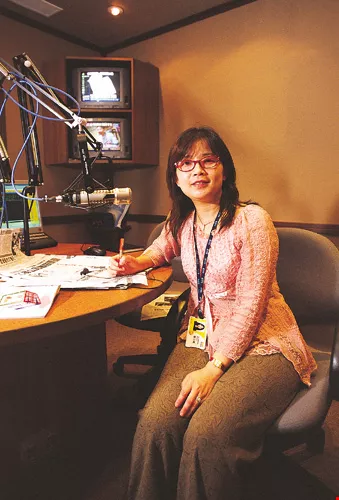
The office of the future will change from one of "full employment" to one of "full participation." Part-time and individual, independent workers will be able to come and go according to the rhythm of their own lives. Vivian Tsai now bridges the print and broadcast media as a special correspondent and program host.
Exchanging time for money
Perhaps it is not feasible for everyone to put away NT$1 million a year, but investing in oneself can be a long-term plan and is a sure economic bet.
"The old idea of saving money for retirement is no longer feasible. Currency can lose value and is really not dependable. Right now people should be spending all their effort at saving up human capital, raising their hireability, so that when a person goes out looking for a job he can actually get hired," says Hsin Ping-lung. Hireability is based on two factors: good health and lifelong functional learning.
But when Hsin examined the time devoted to on-the-job training by the government and by private industry he found a problem. "The less capable a person was, the less likely he was to pursue study opportunities." Hsin points out that research by the OECD also shows that no matter how much a government might invest, it only exacerbates inequality of income distribution since it's the able people who get the most benefit. The "winner's circle" effect is very obvious.
"We have to begin by building social values and getting more people to recognize the importance of study and learning," says Hsin.
The entire world will be facing the problem of "vacant seats" left behind by the baby boomers as they move into retirement. This huge change has gotten many companies in North America to thinking, why not encourage workers with a lot of seniority to choose a flexible retirement plan so their experience can be passed down and benefit the changing of the guard?
In his book Inevitable Surprises: Thinking Ahead in a Time of Turbulence (Gotham Books, 2003), the American futurist Peter Schwartz talks about how in the future older people will be managing households, so the definition of "retirement" will change once again. Thus when workers with a lot of seniority retire from the office it will no longer necessarily represent a dramatic life change. Schwartz also notes that older workers need less training than young ones, and that the over-50s represent the fastest growing group of Internet users. For companies that rely heavily on a worker's judgment rather than physical abilities, older workers are more efficient.
For this reason older managers and knowledge workers have an opportunity to get a third, fourth, fifth or sixth job as they enter the latter stage of life; and people who can enter and leave the workforce as they please are those who display good character, are more economically active, more sociable and healthier than otherwise. What we can predict is that if retirement is a time when we can start anew and enjoy some rest and relaxation and, relying on our experience, wisdom and ability, create an entirely new life, the dividing line between work and retirement will no longer be as clear as it has been in the past, and the impact of the baby boomer retirement wave will send some new sparks flying.

With late marriage and late childbearing, Taiwan's population is aging rapidly source: Ministry of the Interior/ art: Wei Chin-hua
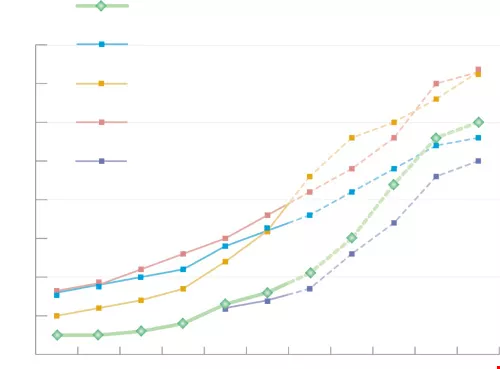
Population aging trends in five countries(percentage over age 65) source: Council for econnmic planning and development
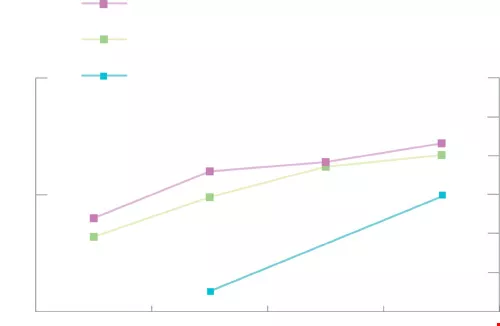
With late marriage and late childbearing, Taiwan's population is aging rapidly source: Ministry of the Interior/ art: Wei Chin-hua
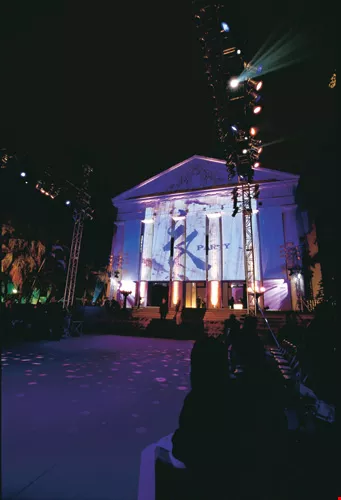
Creative industries like advertising, clothing and design attract people from all lines of work. With no set hours, this is the typical model for the "post-work society."
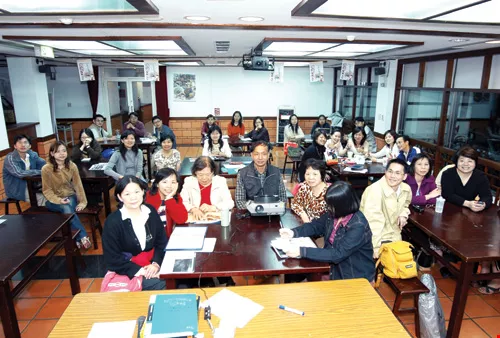
In the new century the only thing that doesn't change is "change." People have to keep "charging themselves up" to prepare for a second and third job.

If the world enters a period of low interest and a person is depending only on money that has been saved, then life could get progressively worse. But retirees must also carefully manage their money. They cannot put all their eggs in one basket, or they may lose everything they've worked for.
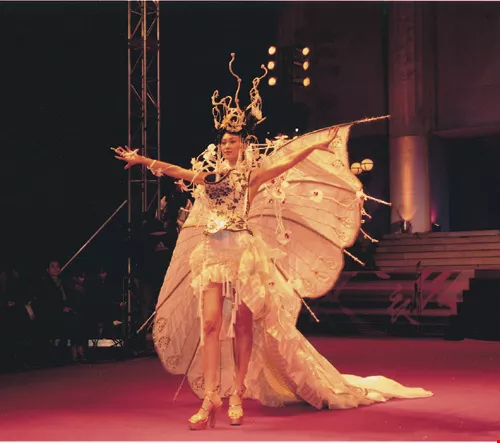
Creative industries like advertising, clothing and design attract people from all lines of work. With no set hours, this is the typical model for the "post-work society."

If the world enters a period of low interest and a person is depending only on money that has been saved, then life could get progressively worse. But retirees must also carefully manage their money. They cannot put all their eggs in one basket, or they may lose everything they've worked for.
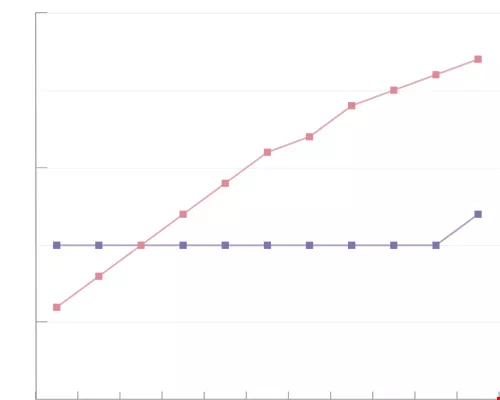
US retirement age rises as old people stay healthy longer source: Inevitable Surprises: Thinking Ahead in a Time of Turbulence, Chinese edition (China Times Publishing)/ art: Wei Chin-hua


@List.jpg?w=522&h=410&mode=crop&format=webp&quality=80)


