Teng Hsiang-yang:Self-made Ethnographer
Chang Chiung-fang / photos Vincent Chang / tr. by David Mayer
February 2000


If you take an interest in the aboriginal tribes of central Taiwan, it won't be long before you run into the name of Teng Hsiang-yang. It matters little what leads to this interest. You might be filming a documentary or writing a magazine or newspaper article. You might be engaged in a high-powered research project at Academia Sinica, or just writing a graduate thesis. In any case, Teng's copious fieldwork is not something you can afford to ignore.
Among other projects, Teng's work with the Thao (also known as the Shao or Sao), a tiny aboriginal tribe living in the vicinity of Sun Moon Lake, looms particularly important in the wake of the Chichi earthquake, for the temblor has dealt a heavy blow to a community that now has only 282 members left. Teng has thrown himself wholeheartedly into the task of rebuilding the one village where the Thao remain.
So who exactly is Teng Hsiang-yang? How did he become such an important figure in the academic community?
Teng Hsiang-yang had originally been planning to catch a flight on September 23 to celebrate the Mid-Autumn Festival together with his wife and children. Little did he know, however, that his plans would be interrupted on September 21 by the biggest earthquake to hit Taiwan in a century.
A giant jolt in the wee hours sent Teng's apartment building listing and caused the fourth floor to collapse entirely. On the first floor, where Teng ran a medical testing laboratory, a quake-related power outage prevented him from opening the front door. He then hung a rope out a third-floor window and lowered himself to safety, injuring his hands slightly in the process.
He wasn't too worried about the injuries, nor was the destruction of his laboratory a major concern. He was, however, extremely anxious to save the results of ethnological fieldwork going back nearly two decades. For Teng, these materials were priceless treasures. "Luckily," says Teng, "I managed to get about 80-90% of it out."
Taiwan's great melting pot
A Hakka from the township of Puli, Teng was born in 1951. Puli and the nearby rural townships of Yuchih, Kuohsing, and Jen'ai comprise an area known as Shuishalien, where many different ethnic groups have always lived side-by-side. In addition to Fujianese, Cantonese, Hakkas, and the Pingpu aborigines (various plains-dwelling aboriginal tribes that have almost completely assimilated into the Han Chinese community), the area is also home to many mountain-dwelling aboriginal tribes, including the Atayal, Sediq, Bunun, Thao, Perugawan, Pazeh, Taokas, and Murauts.
Although Teng makes his living by running a medical testing lab, a fortunate combination of circumstances has also sparked an abiding interest in ethnology.
Explains Teng, "I grew up listening to the old folks tell stories about the aboriginal tribes. There was talk about headhunting expeditions and wars. They used to scare us kids by saying 'The tribesmen will get you!'" He had frequent contact with aborigines, and many of his best friends in school were aborigines. After graduating from the Department of Medical Laboratory Science at Chungtai Institute of Health Sciences and Technology, he took up an internship at the Puli Christian Hospital, where many of the patients were also aborigines.
In 1974, Teng opened a medical testing laboratory in Puli. Besides providing Teng with a livelihood, the lab also brought him into contact with the aborigines, among whom he would make many friends.
Tajik Bawan, a member of the Atayal tribe, first met Teng ten years ago when he visited the lab for a blood test. Teng's reputation preceded him, for Bawan had already heard about "the mugan (Chinese person) in Puli who knows a lot about us aborigines."
Self-trained ethnographer
Living in an ethnically complex area like Puli, Teng has always been very aware of ethnic conflict as well as the fusion and disappearance of cultures.
In 1967 Wei Huei-lin, an anthropology professor at Academia Sinica, asked Teng to take him to interview aborigines. Teng picked up a lot of valuable fieldwork techniques by watching Professor Wei interview the old folks. Thereafter, whenever he had any spare time he would go visit the aborigines and chat with the old folks.
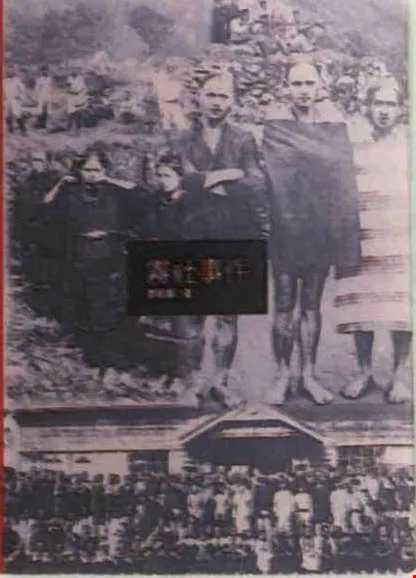
Teng's interest in the Wushe Incident of 1930 (in which members of several aboriginal tribes killed over 100 Japanese people in the village of Wushe and later met with grave retribution from the colonial authorities) was piqued when his father gave him two documents on the subject. "After I started taking an active interest in the Wushe Incident in 1981, people warned me to be careful." Many scholars used to steer clear of Taiwan's colonial history, but Teng happened to take an interest in the subject just as Taiwanese society was beginning to become more liberal. The fact that Teng was not a member of the academic community was also fortunate, for it freed him of the pressures that academics must deal with.
Says Teng, "This was about the story of my hometown. I felt that this research simply had to be done." Although an amateur in the field of ethnography, Teng is highly regarded in academic circles for his work in recording the oral history of Taiwan's aborigines. His good friend Wang Hao, who teaches in junior high school, jokingly calls Teng "the Puli Center for Ethnographic Fieldwork."
"When I first started doing my fieldwork there were still about 20 survivors of the Wushe Incident, but they've all passed away now." According to Teng, most of the ones lucky enough to survive were extremely reluctant to talk about it, and it took a long time for him to win their trust, but he did succeed eventually. "I had a couple of factors working in my favor. Number one, I wasn't a government official, and number two, I work in the field of medicine, so they weren't quite so wary of me." After starting off with such subjects as religious beliefs and tribal customs, the old folks slowly got to the point where they were willing to break their silence on more sensitive issues.
Teng does his homework
In the field of anthropology, there has been a growing trend in recent years to rely on the results of field studies to check the veracity of historical records.
Teng Hsiang-yang enjoys close relations with the aborigines, which is why researchers and graduate students interested in studying the Austronesian tribes of central Taiwan always come to Puli to seek Teng's help.
Teng is a frequent participant in research projects focusing on the aboriginal tribes. For example, in an Academia Sinica study that ran from 1992 to 1996 and focused on the cultural and kinship ties between Taiwan's nine main aboriginal tribes, Teng helped to study the Thao and the Pazeh (a plains-dwelling tribe). According to Hsu Mu-chu, a researcher at Academia Sinica's Institute of Ethnology, "Teng Hsiang-yang's status as a member of the medical community and his wide contacts among the aborigines enabled him to make a key contribution to the research project." If it hadn't been for Teng's detailed knowledge of the kinship ties in some clans, the researchers would never have been able in some cases to identify pure tribal lineages for study.
Says Teng, "The scholars at the Institute of Ethnology have always given me a lot of support." Having received so much help, Teng has practically felt an obligation to make it count.
As a medical technician without formal training in ethnology, Teng's qualifications for doing fieldwork have been questioned by some, but his work is highly regarded among the specialists at the Institute of Ethnology and the Institute of Linguistics, Preparatory Office, two Academia Sinica bodies with which Teng has worked closely.
According to Hsu Mu-chu, "He is very hard working, and his fieldwork methods come very close to what we ask of academic researchers." Hsu points out that Teng's study of the Thao is especially valuable because no one else has done any fieldwork on this tribe since 1958. Teng spent six years recording their religious festivals, marriage customs, property ownership system, land development, etc. In so doing, he has done much to make up for 40 years of neglect.
According to Hsu, the theoretical framework used by anthropologists must be supported by the results of fieldwork, and Teng has done a very thorough job of providing excellent first-hand materials.
Close observation over an extended period of time by local citizens can make up for the shortcomings of academic research. Teng is in a better position than a professional researcher to engage in long-term observation of the month-long harvest festival of the Thao, for example, because he lives in the local area. Thus it is that he has been able to record the Thao tribe's religious festivals over a long period. This has been very helpful for researchers. Hsu Mu-chu is now writing a book on the history of the Thao, and is relying heavily on Teng's work.
Honorary Sediq
In Hsu's opinion, it is Teng's deep concern for his fellow human beings that has enabled him to devote so much of himself for such a long time to his fieldwork. "It isn't every anthropologist," says Hsu, "who shows this quality."
This concern for his fellow human beings has earned Teng many friends among the aborigines.
One such friend is a man named Takken (Chinese name: Teng Chien-tang), the great-grandson of a tribal chieftain. His grandfather and grandmother were survivors of the Wushe Incident, but they had always been unwilling to talk about the past. Says Takken, "I had never even heard of the Wushe Incident when I was a kid. It was only after I entered the university that people gradually started talking about it." He points out that it is very unusual for someone, purely out of personal interest and concern, to visit old folks in so many tribes and do a systematic study of their history. "Our ancestors owe him a great debt."
Says the teacher Tajis Bawan, "Before I met Teng Hsiang-yang, I didn't have a very clear image of who we were as a people, and I had only heard unsubstantiated rumors and snippets about the Wushe Incident." Later, however, he was invited to accompany Teng on his trips to interview old folks in the mountains. These forays were very moving experiences for Bawan. "Here this man is not even a member of our tribe, yet he has been spending so much time and effort on our behalf. How can we be content to know nothing about ourselves?" With Teng's encouragement, Bawan started interviewing old folks on his own and recording his tribe's eating habits, manner of dress, housing, geographic distribution, arts, folk legends, daily life, and other traditions.
At the same time, there are some Atayal people who view Teng with suspicion, saying, "He's just another plains dweller trying to make money." Others have said, "He's out to become famous." Bawan, too, had once harbored such suspicions, but since getting involved in fieldwork himself, he has discovered how quickly the expenses add up for transportation, development of slides, and so much more. Not only is it not a money-making proposition, it's actually a drain on one's personal finances. As for fame, Bawan asks, "So what if he has become famous? It didn't happen overnight. During the nearly 20 years that he's devoted himself to his fieldwork, making a name for himself has been the last thing on his mind."
To thank him for his contributions to their tribe, Teng's Atayal friends call him "Hiro," which means "sun" in Sediq. Bawan simply considers him a member of the Atayal tribe. "If we are the Atayal nation, then he is an honorary member of the Sediq." (The Sediq are one branch of the Atayal tribe.)
The Thao have also conferred similar status upon Teng, whom they call "Ita Thao" ("one of us Thao").
Kudos and criticism
Teng Hsiang-yang has written a number of articles based on his years of fieldwork, including: "Tracing the Origins of Written Language Among the Plains-Dwelling Aborigines of Puli," "Why the Languages of the Plains-Dwelling Aborigines of the Puli Basin Have Disappeared," "The Effect Upon the Thao Tribe of Han Chinese Settlement of the Shuishalien Area." He has also written several books, including: "The Wushe Incident," "Thick Fog, Dark Clouds," and "The Face of the Thao."
The Wushe Incident, which was selected as one of the ten best books of the year, provides a comprehensive history of the Wushe Incident and includes many valuable historical photos.
With a keen sense of pathos, Teng writes, "Misunderstandings and hatred born of cultural differences and ethnic divisions were the main culprits behind the Wushe Incident."
In 1993 Teng won the 16th China Times Prize for Nonfiction for Thick Fog, Dark Clouds-Aftermath of the Wushe Incident for an Atayal family.
Thick Fog, Dark Clouds focuses on the life of Yawai Taimo, daughter of an Atayal chieftain. In connection with the plan of the Japanese colonial authorities to pacify the "barbarians," Yawai was married off in 1912 to Sazuka Narusuke, the top-ranking police official in Wushe. Unfortunately for Yawai, the Wushe Incident of 1930 put people from mixed marriages like hers in a complex predicament. Amidst the burning ethnic tensions of the time, developing a sense of personal identity was especially difficult for the children, who hardly knew whether to consider themselves Japanese, Taiwanese, Atayal, or Chinese. Thick Fog, Dark Clouds is the story of innocent, helpless victims of Taiwan's turbulent history.
Li Jen-kuei, director of Academia Sinica's Institute of Linguistics, Preparatory Office, wrote as follows in the book's preface: "Much has been written about the Wushe Incident, but Teng Hsiang-yang is the only one to do it with such depth and feeling."
Teng, however, feels rather uncomfortable about winning a prize for nonfiction with his very first book. "It's not that my writing was all that good. The story itself is just very compelling." After more than ten years of field research, Teng wrote the book (over 100 pages long) in just five evenings and then let his friends read the manuscript. One of his friends, the highly successful nonfiction writer Liao Chia-chan, had only gotten five minutes into the book before exclaiming, "This is going to win literary prizes!" Little did he know that his words would prove prophetic.
Says Liao, "A professional writer could never go that long without writing anything, but Teng Hsiang-yang doesn't make his living as a writer, and that enabled him to let the book gradually take shape over a long period of time."
Right after winning the literary prize, however, Teng was hit with a lawsuit by the grandson of Shimoyama Hiroshi and Sazuka Toyoko, two of the people that Teng wrote about in the book. The suit charges Teng with seven counts of libel.
Puli's "ambassador to New Zealand"
The lawsuit was just part of a string of misfortunes for Teng. A nephew taking part in fieldwork fell into Sun Moon Lake and drowned. Teng's older sister, who had cared for him when he was growing up, died from cancer. Deeply dispirited, Teng put his fieldwork aside and moved to New Zealand with his family in 1995.
The move was greeted with criticism: "All that talk about his love for Puli was just a put-on." Teng, however, responded, "We are moving to New Zealand mainly for our children's education. I myself am not leaving Puli. In fact, I'll be bringing the best of New Zealand back here with me." In his view, there is much that we could learn from New Zealand, including its emphasis on lifelong learning, and its sorted waste collection. His good friend Wang Hao jokingly calls Teng "Puli's ambassador to New Zealand."
On one visit back home, people who had once collaborated in his fieldwork asked him to help formulate a community development project for Puli, and a group that had taken part in his study of the Thao tribe asked him to get back into fieldwork. And so it was that the gravity of hometown, friends, and the land pulled Teng back to Puli again. Leaving his wife and children in New Zealand, he returned to Puli to resume his unfinished work.
"I tried to write in New Zealand, but I don't know whether it was the easy life or the distance. I just couldn't do it."
Since returning, however, he still hasn't been able to concentrate on his writing. "I'm too involved in local affairs. There are more errands and busywork than I have time for."
According to Wang Hao, personal relationships in a small town like Puli are very close, and anyone with an outspoken personality ends up getting forced into all sorts of civic responsibilities. Teng happens to be one of the more outspoken types in Puli.
Teng is the first person that many people meet when visiting Puli. Not long after Li Chia-tung became president of National Chi-Nan University he made it a point to visit Teng Hsiang-yang and Liao Chia-chan to discuss ways to strengthen relations between the university and the local community.
Teng is thus very well known in Puli, and extremely active in community affairs. The list of projects in which he has been involved is long: a comprehensive community development project; an effort to preserve the Tamalin archeological site; the writing of the section on aboriginal culture in a textbook on native culture in Nantou; the Puli Music and Arts Festival; an effort to persuade Academia Sinica to establish a campus in Puli; etc.
Passing the torch
Teng had originally set himself a goal of getting his tenth book written and published last year. With a lot of material on hand, and with a lot of the book already written, all he needed to do was add the finishing touches.
Part of the book focuses on the story of Inoue Hajime, a Japanese doctor whose life Teng has been studying for the past ten years. Says Teng, "After Inoue's father met his death in Taiwan at the hands of aborigines on a head hunting expedition, Inoue swore to 'avenge' his father's death with kindness. He ended up living 38 years among the aborigines, not even returning to Japan when his mother passed away. He finally left Taiwan in 1947. When I went to Japan last January and paid my respects at his grave, I discovered that his gravestone was inscribed in Atayal. I used to cry every time I talked about this wonderful doctor, but I'm getting a little less emotional about it as time goes by. I have to hurry up and get the book written."
Teng had been planning to pass the torch to others, both in community affairs and in his efforts to collect the oral histories of the aborigines. "I've done my bit," said Teng, "and soon it will be time to let the aborigines speak for themselves."
Then the earthquake threw a wrench in Teng's plans. After his medical laboratory was destroyed, Teng characteristically reacted by throwing his energies into the task of rebuilding the local community. He has kept himself busy preparing posters, organizing a community newspaper, and establishing the "New Puli Community Development Foundation."
Says Teng, "Puli won't let me go!" The effort to rebuild the community takes precedence over everything else, so it looks like Teng's writing plans will have to be postponed. One thing, however, remains certain-Teng's love for Puli and the aborigines will never fade.
p.96
The Wushe Incident was a taboo subject for many years in the academic community, but Teng Hsiang-yang's interest was piqued when his father gave him two documents related to the incident.
p.96
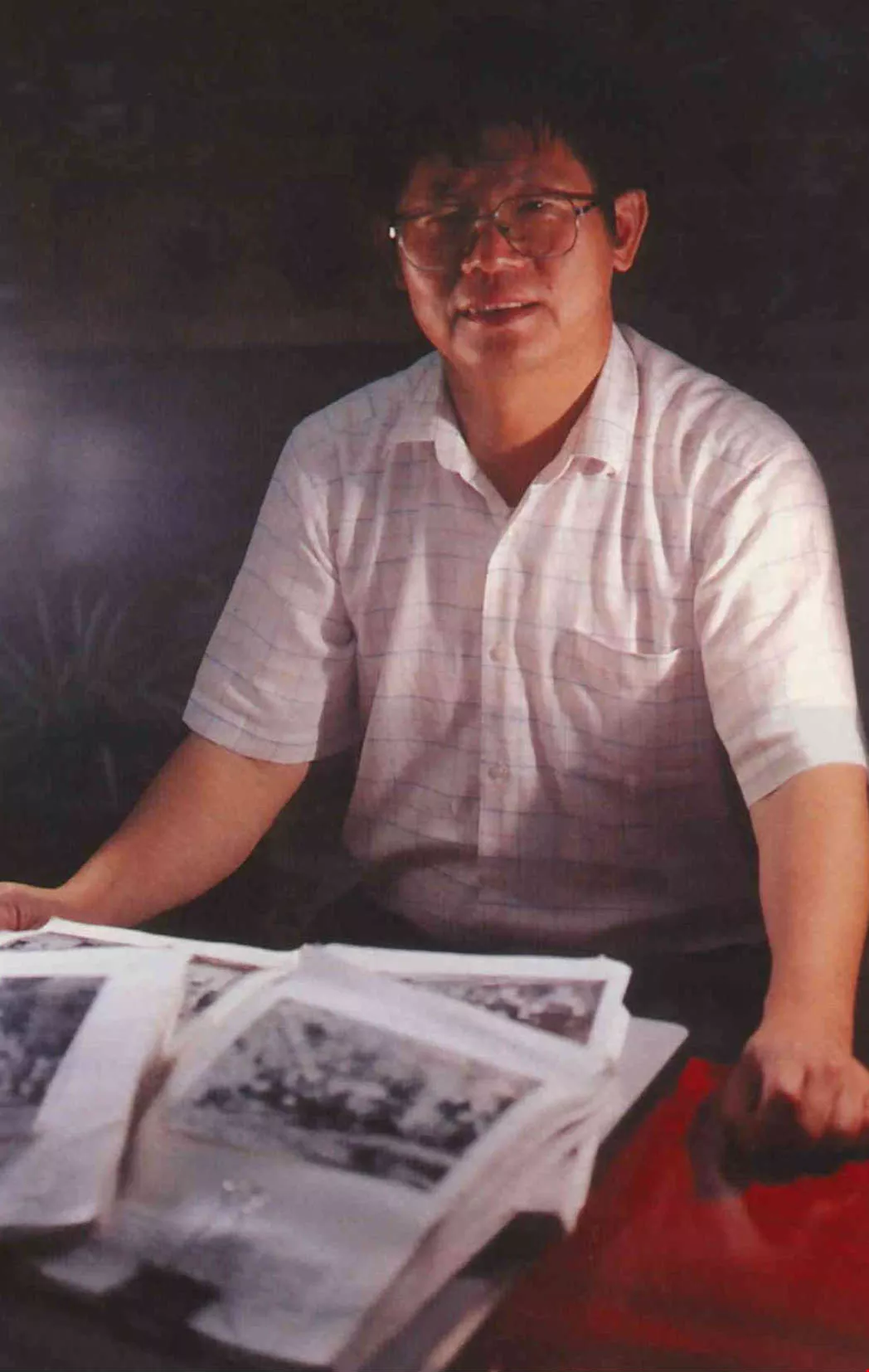
Teng Hsiang-yang, who grew up in Puli at the foot of Mt. Niumien, has become a walking repository of information on the Atayal and Thao tribes as well as the Han-assimilated descendants of various former plains-dwelling aboriginal tribes. Anyone interested in doing ethnography in this area is sure to seek Teng's advice.
p.97
Thick Fog, Dark Clouds tells the tale of what befell one Atayal family after the Wushe Incident. The tides of history played a decisive role in the life of Yawai Taimo, who experienced many dramatic and sometimes tragic twists of fate.
p.98
Teng Hsiang-yang can often be found at festivals and ceremonies of the Thao tribe, who have come to regard him as one of their own.
p.101
Teng Hsiang-yang is more than a friend to the aborigines of Puli. He also has a hand in looking after their health. The Thao man pictured here, who has long suffered from gout, has come to ask for Teng's medical advice.
p.102
Teng Hsiang-yang's medical lab and home were destroyed in the September 21 earthquake. Teng scrambled among the rubble to save his most highly prized possessions-material gathered over the course of years of ethnographic fieldwork. (photo by Hsueh Chi-kuang)
p.103
After his wife and children moved to New Zealand, Teng Hsiang-yang returned alone for an extended stay in Puli, where his only companionship has been a houseful of research materials.
Teng Hsiang-yang, who grew up in Puli at the foot of Mt. Niumien, has become a walking repository of information on the Atayal and Thao tribes as well as the Han-assimilated descendants of various former plains-dwelling aboriginal tribes. Anyone interested in doing ethnography in this area is sure to seek Teng's advice.
Thick Fog, Dark Clouds tells the tale of what befell one Atayal family after the Wushe Incident. The tides of history played a decisive role in the life of Yawai Taimo, who experienced many dramatic and sometimes tragic twists of fate.
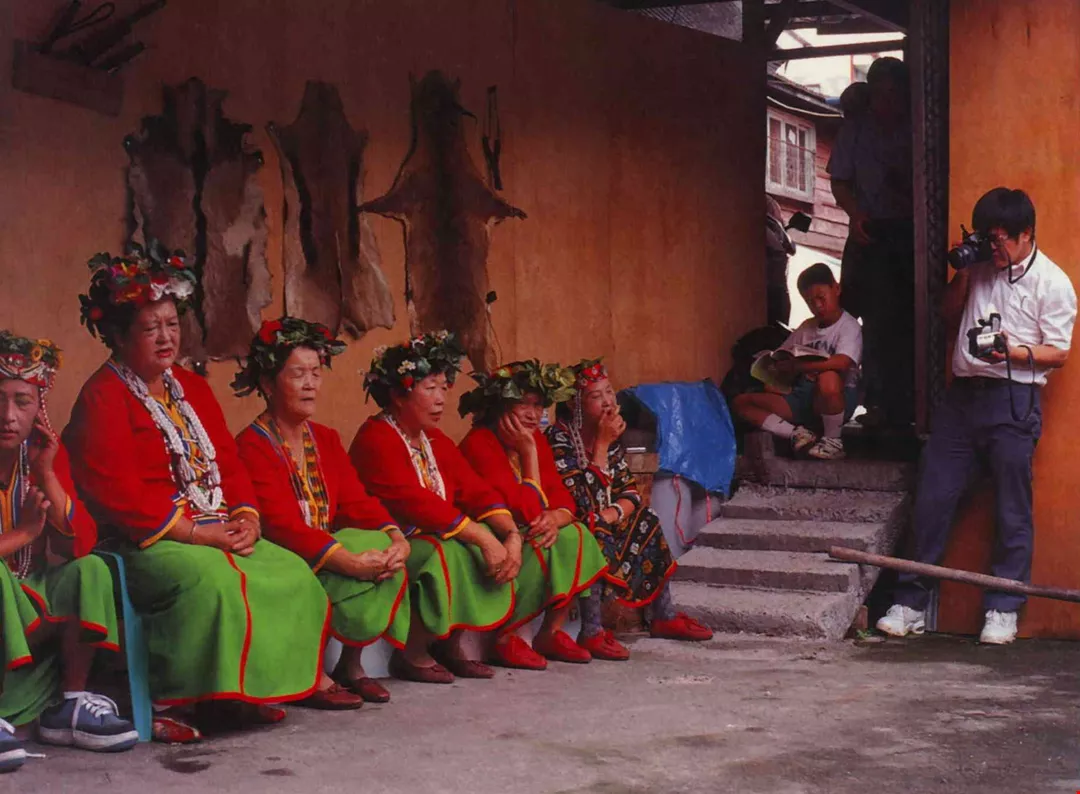
Teng Hsiang-yang can often be found at festivals and ceremonies of the Thao tribe, who have come to regard him as one of their own.
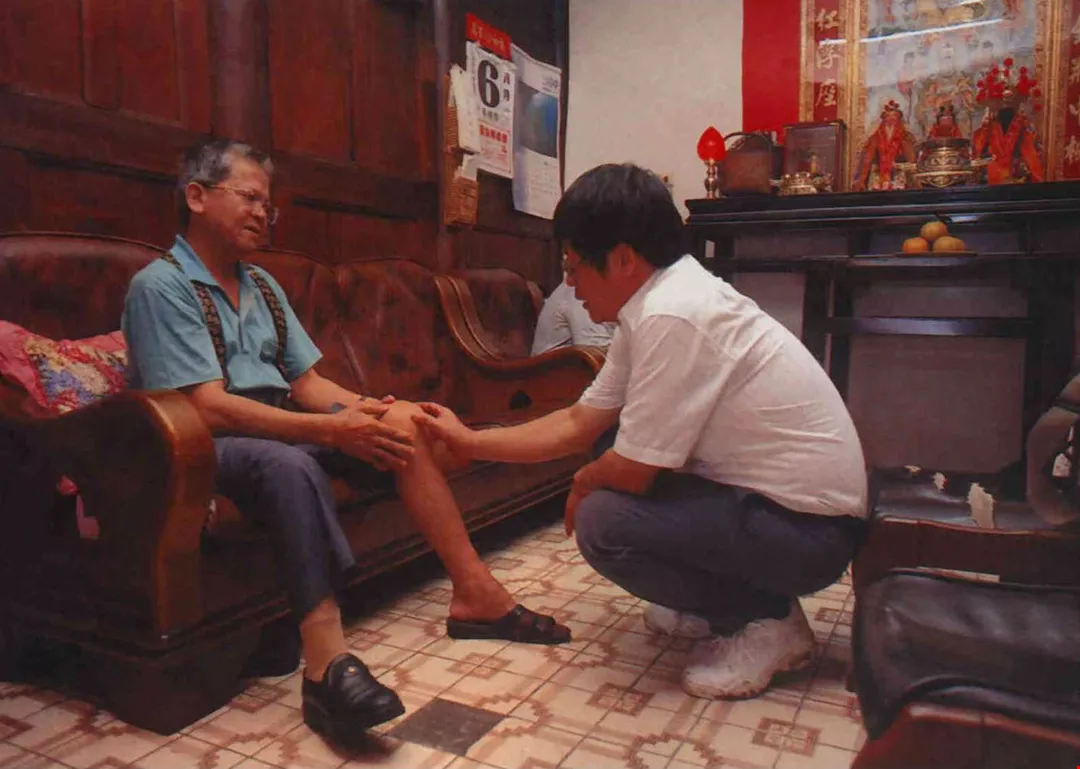
Teng Hsiang-yang is more than a friend to the aborigines of Puli. He also has a hand in looking after their health. The Thao man pictured here, who has long suffered from gout, has come to ask for Teng's medical advice.
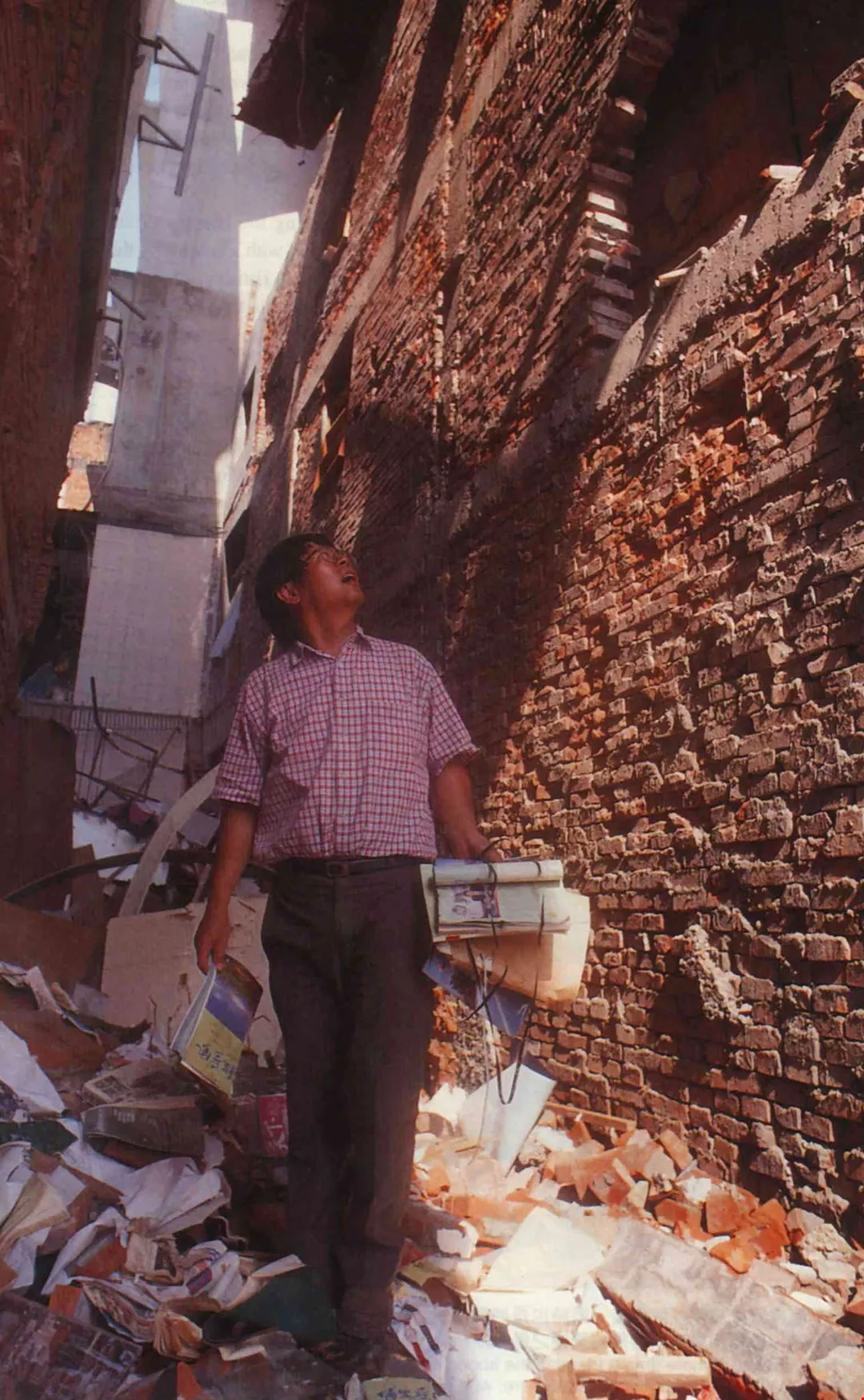
Teng Hsiang-yang's medical lab and home were destroyed in the September 21 earthquake. Teng scrambled among the rubble to save his most highly prized possessions-material gathered over the course of years of ethnographic fieldwork. (photo by Hsueh Chi-kuang)
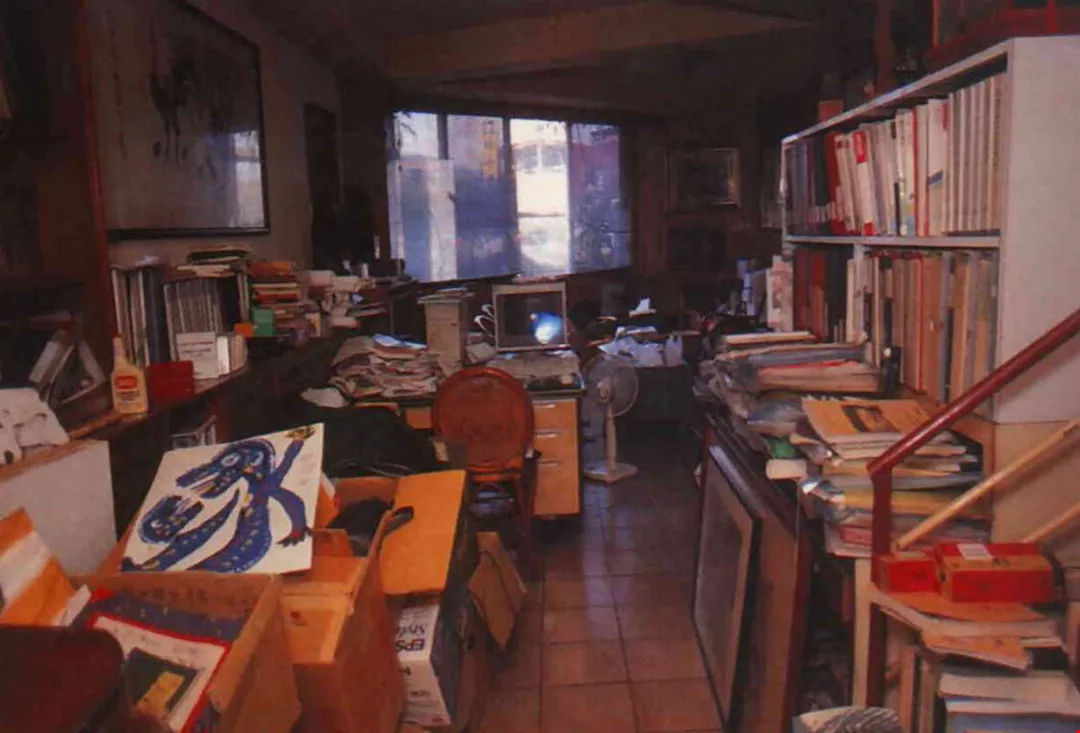
After his wife and children moved to New Zealand, Teng Hsiang-yang returned alone for an extended stay in Puli, where his only companionship has been a houseful of research materials.


@List.jpg?w=522&h=410&mode=crop&format=webp&quality=80)


