

Following the recent death of Liu Shao-tang, publisher of Biographical Literature magazine, Taipei City cultural affairs bureau director Liu Ying-tai said his passing could not help but make one worry that his passion for rooting out and preserving living historical materials will soon be gone from the world too. And who will take over the running of his 38-year-old magazine and continue in the spirit of lifelong perseverance which earned Liu the deepest respect?
When Liu Shao-tang, publisher of Biographical Literature magazine, died of liver cancer on 10 February 2000, it came as a heavy blow to Taiwan's cultural, academic and publishing circles, and awakened many people's reverence and nostalgia for Liu's unfailing lifelong dedication to biography as a form of literature.
Liu Shao-tang, who in the course of his life rescued or brought to light countless quantities of Republican-era historical materials, and was variously described as "single-handedly the equal of a nation" and "head of the 'unofficial Academia Historica,'" never sought fame or fortune, and was always affable, cordial and sincere. His death caused great sorrow among his many old friends, who flocked to the memorial altar in the Liu family residence to offer incense in his memory. Major newspapers in Taiwan and Hong Kong reported and commented on his death in extensive obituaries and editorials. Dozens of people from artistic, literary, media and academic circles wrote articles or letters expressing their grief. They included veteran journalist Pu Shao-fu, whose friendship with Liu Shao-tang went back half a century; historian Chiang Yung-ching; educationalist Chang Hsi-che; authors Yang Nien-tsu, Chiu Hsiu-chih and Kuo Kuan-ying; and senior journalists Yeh Ming-hsun, Chi Kao-ju, Lu Keng and Jin Zhong, editor-in-chief of Hong Kong's Open magazine. Among them were many "disciples" who looked up to Liu Shao-tang as their teacher, and were devastated by his death.
On 12 February, Liu's friends and acolytes met to plan the arrangements for his funeral. His beloved disciples, entrepreneur brothers Yen Chang-keng and Yen Chang-shou, organized the meeting, and 92-year-old Pu Shao-fu, publisher of Newsdom magazine, flew over specially from Hong Kong to take the chair. It was decided that in accordance with Liu Shao-tang's wishes, the funeral would be a simple affair, without official funeral notices being sent out, but that a memorial collection of articles would be compiled and printed. Funeral donations would be used to establish a fund for a "Liu Shao-tang Biographical Literature Prize," to encourage others to follow in Liu's footsteps, so that the biographical literature to which Liu devoted his life can continue with new vitality. Plans were also mooted to stage a seminar on "Liu Shao-tang and Modern Chinese History," and a retrospective exhibition of biographical literature.
That Liu Shao-tang's death elicited such a huge response at a time when all of Taiwan's media are packed with electoral news in the run-up to the March presidential ballot, is not only a measure of the widespread respect which Liu earned by his lifelong professionalism and refusal to lower standards, but also shows that Taiwan is still a place with deep feelings and concern for intellectual matters. The passing of this great master has left many with a great sense of loss. "Although Liu Shao-tang reached the age of 80," said a World Tribune editorial, "his death gave people a powerful sense that he had been 'taken too young,'" The comment is indicative of the special regard in which he was held.
Just what kind of man was Liu Shao-tang?
In autobiographical notes which Liu wrote a few years ago for the benefit of his many local and overseas visitors, he outlined his career prior to founding Biographical Literature: "Liu Shao-tang (original name Liu Tsung-hsiang); ancestral home Lutai, Hebei Province; born in Jin County, Liaoning Province, on the 14th day of the ninth lunar month, 1921. Former posts: reporter, editor, editor-in-chief; (part-time:) university teacher, director of the Institute for Biographical Studies, Chinese Culture College. As a boy, Liu loved reading Republican history, and as a student at Peking University was deeply influenced by university president Hu Shih, who advocated the development of biography as a literary form. Liu's interest in biography grew ever stronger, and over the years he collected books of biography and history. After coming to Taiwan from mainland China, in early 1962 he decided to set up the monthly magazine Biographical Literature," in order to preserve material for historiography, and also to open up a new avenue for literature.
Throughout the 38 years since its foundation, Biographical Literature has resolutely maintained two "three no's" policies: editorially, it does not publish articles under pseudonyms, does not publish purely laudatory articles, and does not publish articles previously published elsewhere; and operationally it does not accept advertising, does not accept government or private subsidies, and does not actively market itself. In fact, over the years Biographical Literature has attained a highly respected status among historians and other readers, entirely by virtue of the caliber of its historical materials and the quality and depth of its writing. Today it still has a circulation of 15,000 copies, with several thousand regular subscribers.
China Times deputy editor-in-chief Su Teng-chi, who was a favorite disciple of Liu Shao-tang's, stresses that in the past autobiographical writings and memoirs were generally dismissed as "one-sided accounts." But Liu did not subscribe to this view. He believed that it is only with the help of these previously ignored autobiographical materials left behind by ordinary people that the true face of history gradually appears. The more than 10,000 articles published in the past 453 issues of Biographical Literature, totaling over 100 million Chinese characters and comprising autobiographies, chronologies, reminiscences, the diaries and important manuscripts of famous people, research papers on valuable historical materials and commentaries on history books, include thousands upon thousands of "one-sided accounts" from which one may piece together the modern history of China. In article after article in Biographical Literature a realistic picture emerges of a huge range of topics, such as the 1927 KMT party purge, the 1930 battles in China's central plain between the forces of Chiang Kai-shek and the Northern warlords, the 1931 Mukden Incident, the 1936 Xi'an Incident, the War of Anti-Japanese Resistance, the Communist-Nationalist civil wars, and Communist underground organizations. If people of the generation which has grown up in Taiwan since the 1960s still have some capacity to understand modern Chinese history and to make critical judgments about the past, then at least part of the credit is undeniably due to Biographical Literature. In 1997, Liu Shao-tang took the innovative step of compiling past issues of the magazine into CD editions. This is indicative of his concern to preserve historical materials and to promote the genre of biographical literature.
Soon after he first came to Taiwan, Liu published a series of articles describing his experiences in mainland China in the period following the Communist takeover of the mainland, as a member of a Communist Party "Southbound Work Team" and as a reporter for the official Xinhua News Agency. His writing style was humorous and sparse, and the articles were later collected together into a best-selling book entitled Out of Red China, which caused a sensation and which the US Information Service had translated for publication in 14 languages. Thanks to this, Liu was invited to meet President Chiang Kai-shek three times, and this has much to do with why, after he started Biographical Literature, he never got into serious trouble although articles often ventured into areas which were politically sensitive in the martial law era. In 1996, Liu Shao-tang received a national award for special contributions to art and culture in recognition of his achievements with Biographical Literature. However, he never cared in the slightest about such honors, but simply hoped that Biographical Literature could keep going, issue by issue, rescuing as much historical material from oblivion as possible. A series of articles which recently started in the magazine entitled "I Was Chiang Kai-shek's Personal Secretary," by former Deputy Foreign Minister Shen Chi, is an excellent, highly readable yet historically heavyweight account, of the kind so typical of Biographical Literature; it was also the result of almost a decade of solicitation, cajoling and insistence on Liu's part. This outstanding editor had his own conception of modern Chinese history, and a unique understanding of where to go, who to seek out, what to ask them to write about and how it should be written. No wonder, then, that he never felt able to pass on the heavy burden of editorship, or that right up until he finally succumbed to his illness he was still reviewing articles, and left behind enough publication-ready material to fill several issues.
Columbia University history professor T.K. Tong, a long-standing contributor to Biographical Literature, wrote these words in Liu's memory: "As godfather to countless biographies, you enlivened the literary spirit of a generation; without Bo Le in the world, there can be no thousand-league horses [i.e. others' talents will only be developed if someone has the skill to recognize them]. You enlisted the best from both sides of the strait to write of the elder statesmen of three dynasties; I know that without Bao Shuya [a minister famed as a judge of men], henceforth there will be no more capable commanders." Such was the depth of sorrow felt by an author at the loss of his editor.
Liu Shao-tang, this "head of the 'unofficial Academia Historica'" who boldly challenged the monopoly of the powerful over the right to interpret history, was also a scholar who made history into literature and brought it into the homes of ordinary people. He had an influence on society of a different kind from that of politicians. Liu Shao-tang and Biographical Literature should be long remembered for having quietly saved for posterity the memories of two whole generations that were almost lost, and having imperceptibly influenced the orientation of research into Republican history. Perhaps this two-line elegy to Liu by presidential candidate James Soong is the best tribute to the life of this widely respected and loved independent historian: "For recording the affairs of a century/ You will be remembered for all time." Whether anyone will carry on his life's work is a test for today's people of culture.
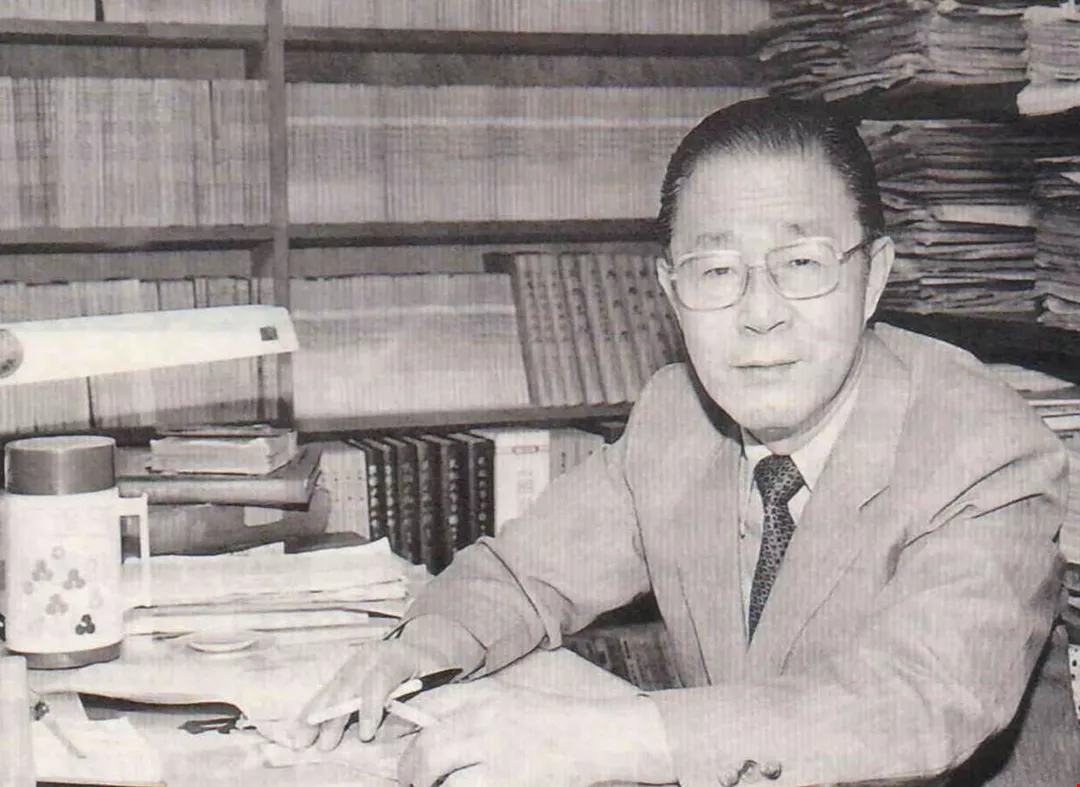
Through many decades, after treating authors, friends and acolytes to a convivial evening of food, wine and conversation in a restaurant, Liu Shao-fu would return home to work through the night editing a mountain of articles for Biographical Literature magazine. But in the end the strain took a toll on his health. (courtesy of Biographical Literature magazine)
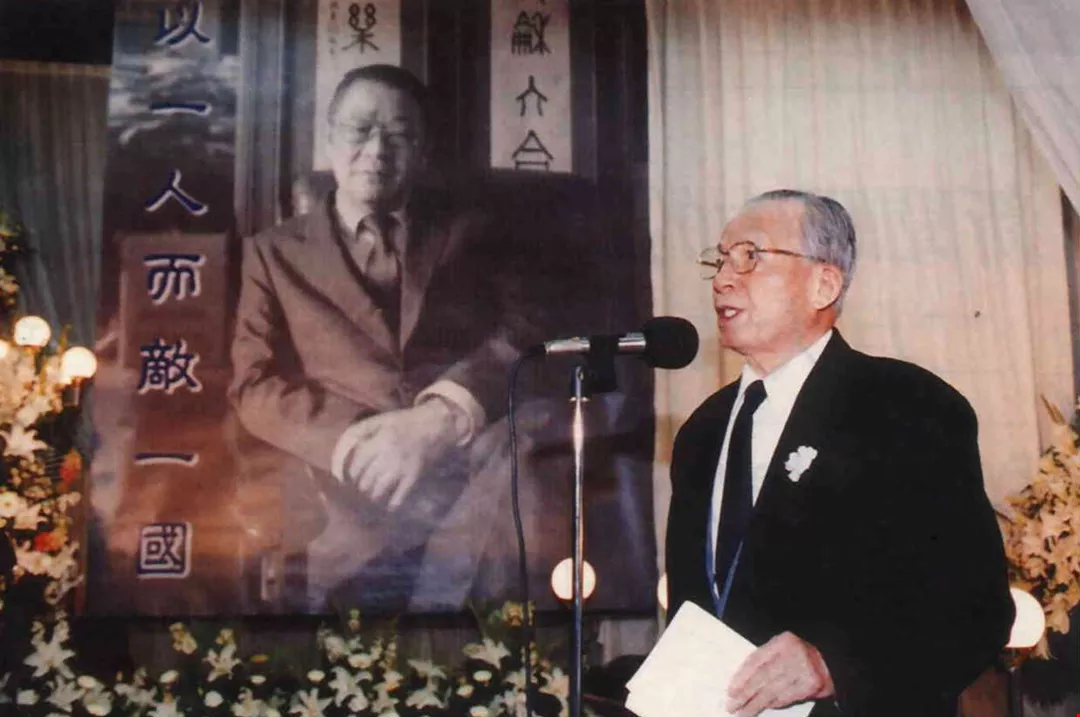
(facing page) Liu Shao-tang's memorial ceremony was a simple yet solemn occasion. The achievements which sprang from his lifelong determination "not to let living history die," and the respect of historians who regarded him as "single-handedly the equal of a nation," were witnessed in the large pictures to either side of his memorial altar. A recording of Liu's voice, speaking with his habitual humor, and anecdotes from his life recounted by his old friend Pu Shao-fu, brought smiles amid the tears of those present.
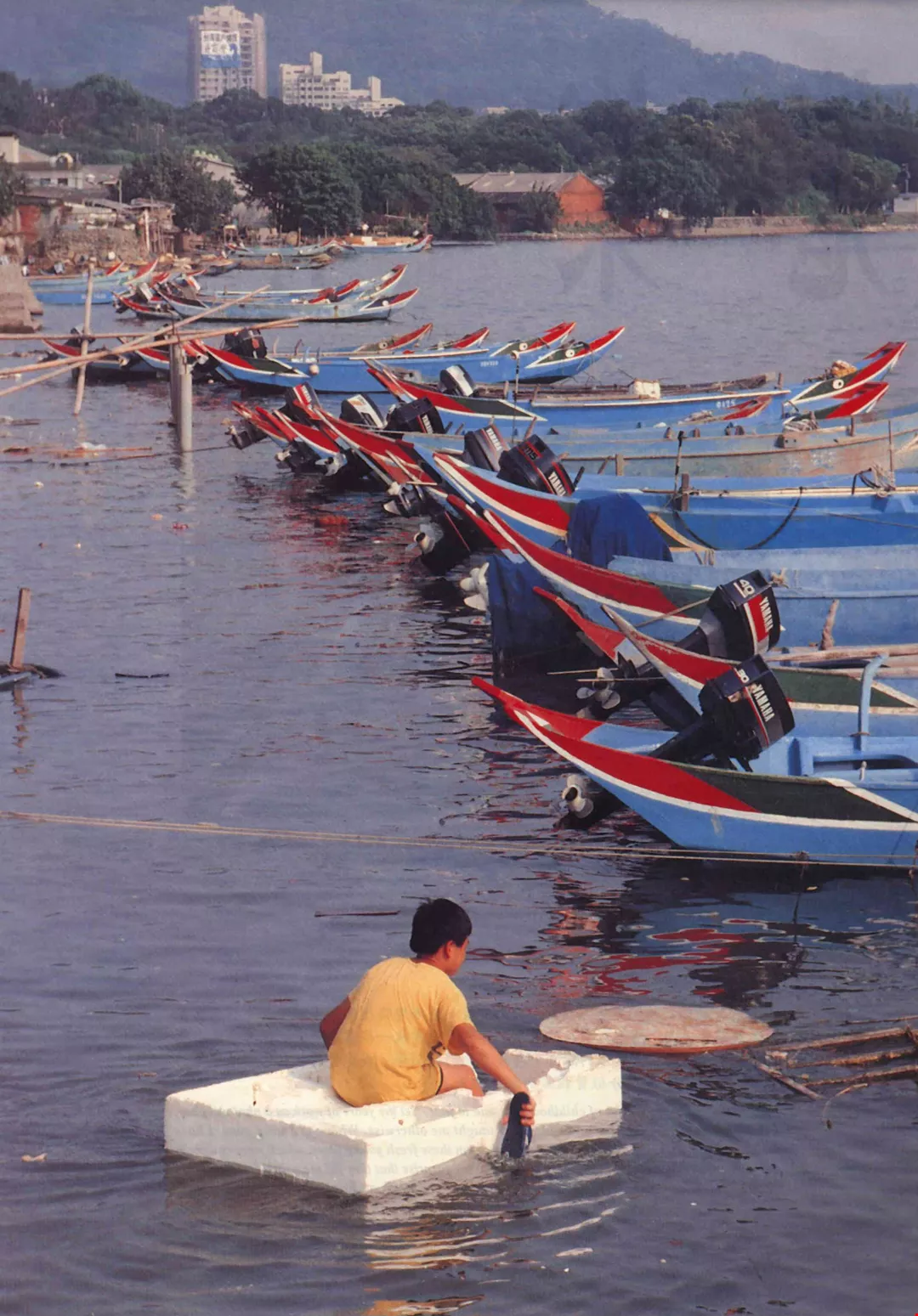
One day, on the dock for the Tanshui River Ferry, I saw this curious sight. It really made me wonder: the grown-ups' boats will set off for fishing banks or clam beds, but to what destination, my young friend, are you rowing in your Styrofoam dinghy?
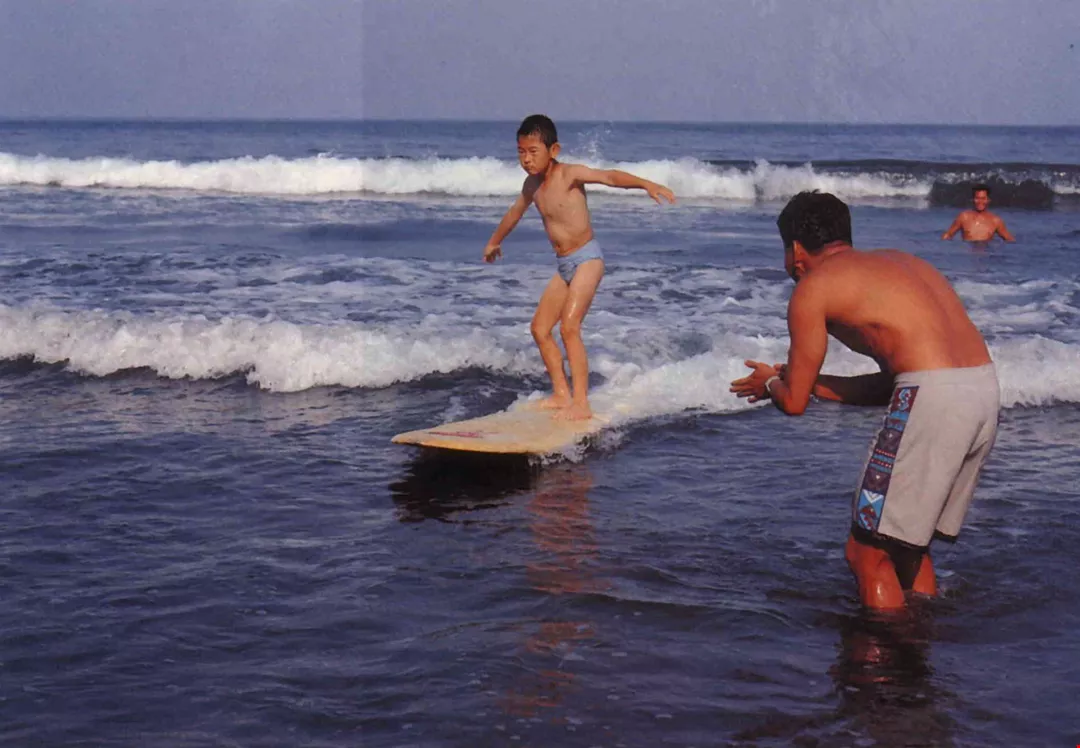
In the fresh air of Taiwan's northeast coast, a young boy climbed onto his surfboard under his father's attentive tutelage, falling into the salty water time and again before finally skimming across the surface with his legs firmly balanced on board. Seeing the look of determination on his face, you can't help but want to shout: Bravo!
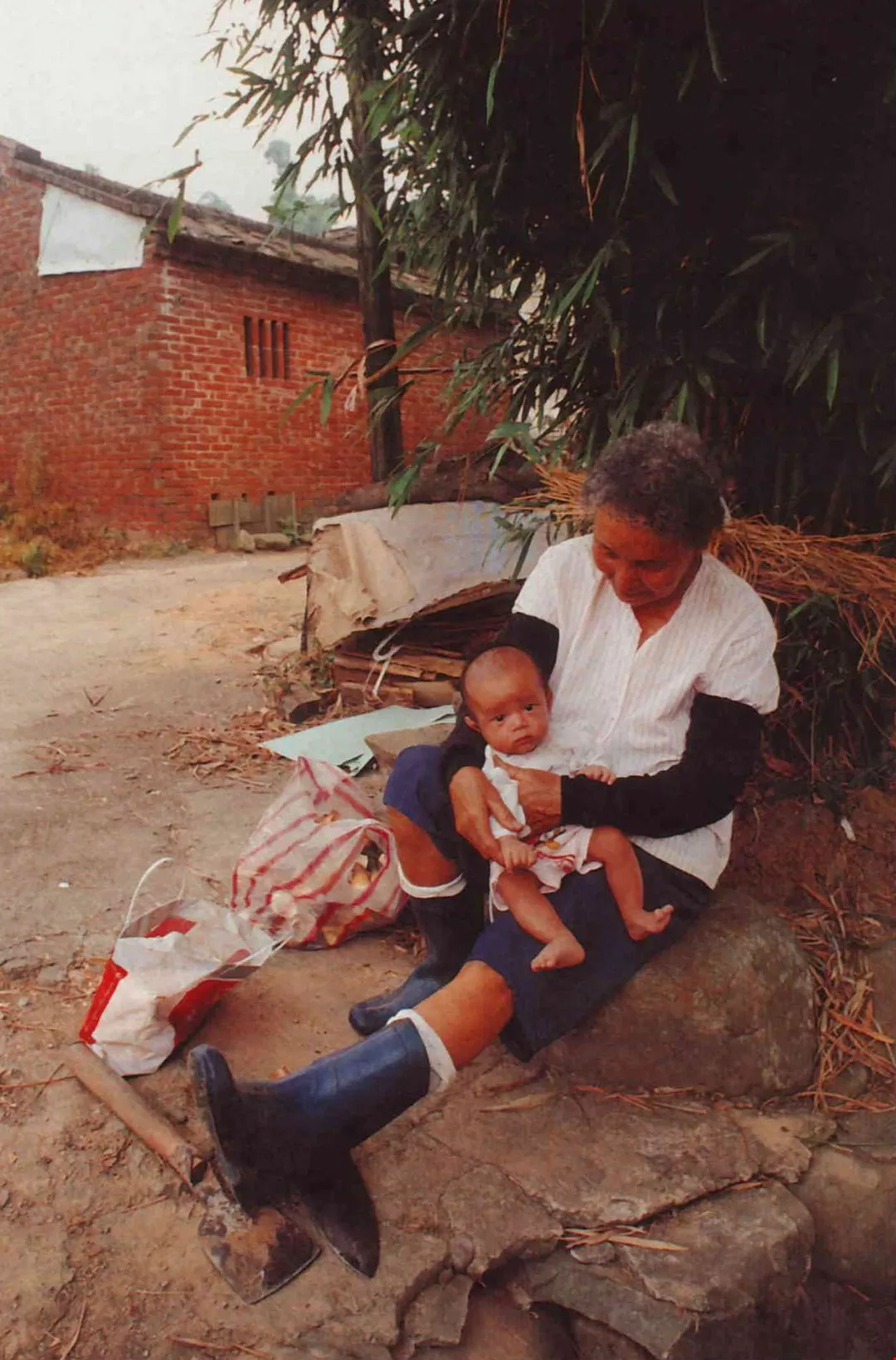
As nightfall approached an elderly woman brought home a bag of bamboo shoots that she had just dug up. Before going inside to cook, she picked up her grandson, who was clearly her pride and joy, and made goo-goo eyes at him. As she did, an overwhelming sense of family bliss enveloped my camera.
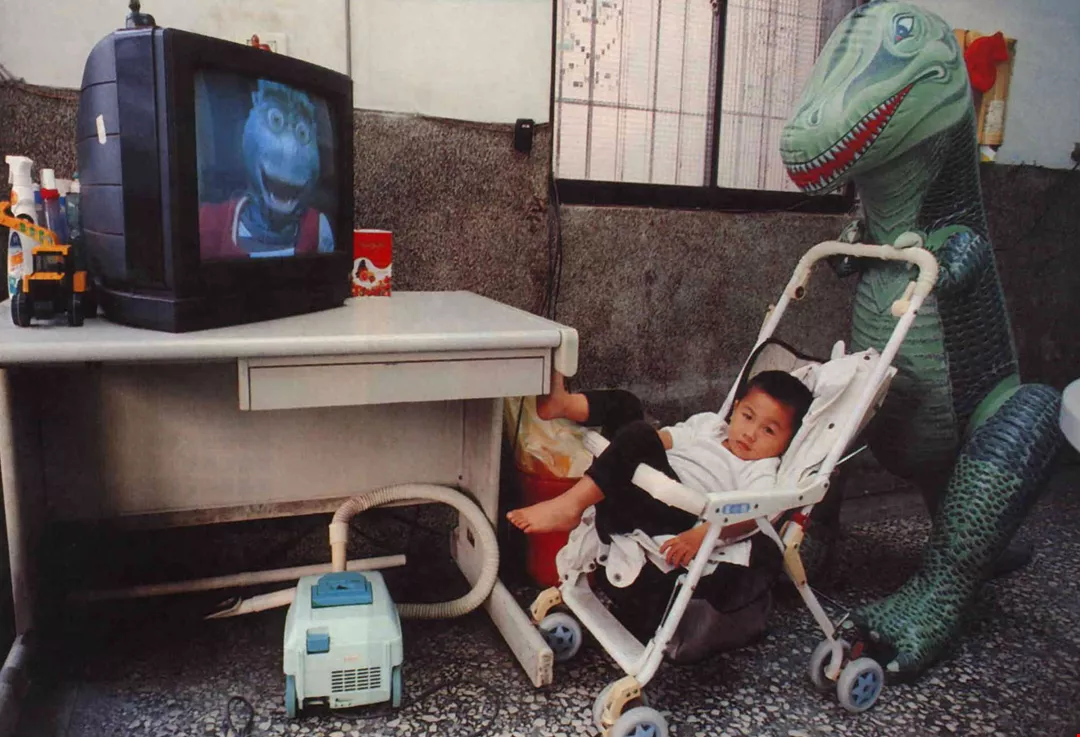
Inside a car rental company in front of the Kaohsiung airport, the woman owner's four-year-old son had just awoken from his midday nap. With eyes still half-asleep, he watched a dinosaur cartoon, while a blow-up dinosaur, a treasured birthday present, loomed behind him. I couldn't help but smile and quickly took this photo to record the scene.
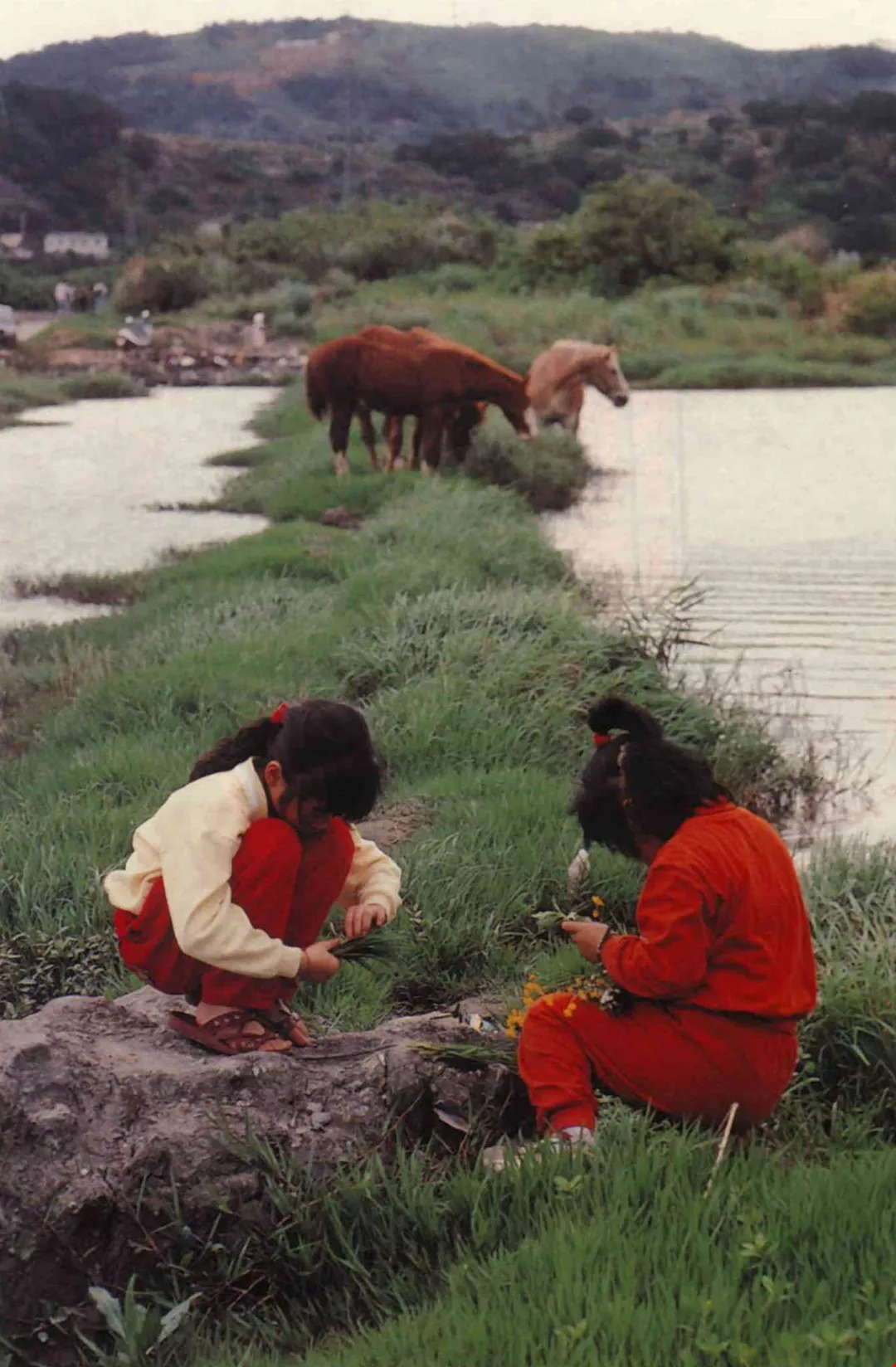
One afternoon, as I was on my way to take photos at the Kuantu Bird Reserve, I saw two little girls gathering wild flowers and grasses. They said that they wanted to weave them together and give them to their horsey friends. After hearing these children's adorable explanation, I found myself passing a warm and romantic afternoon.
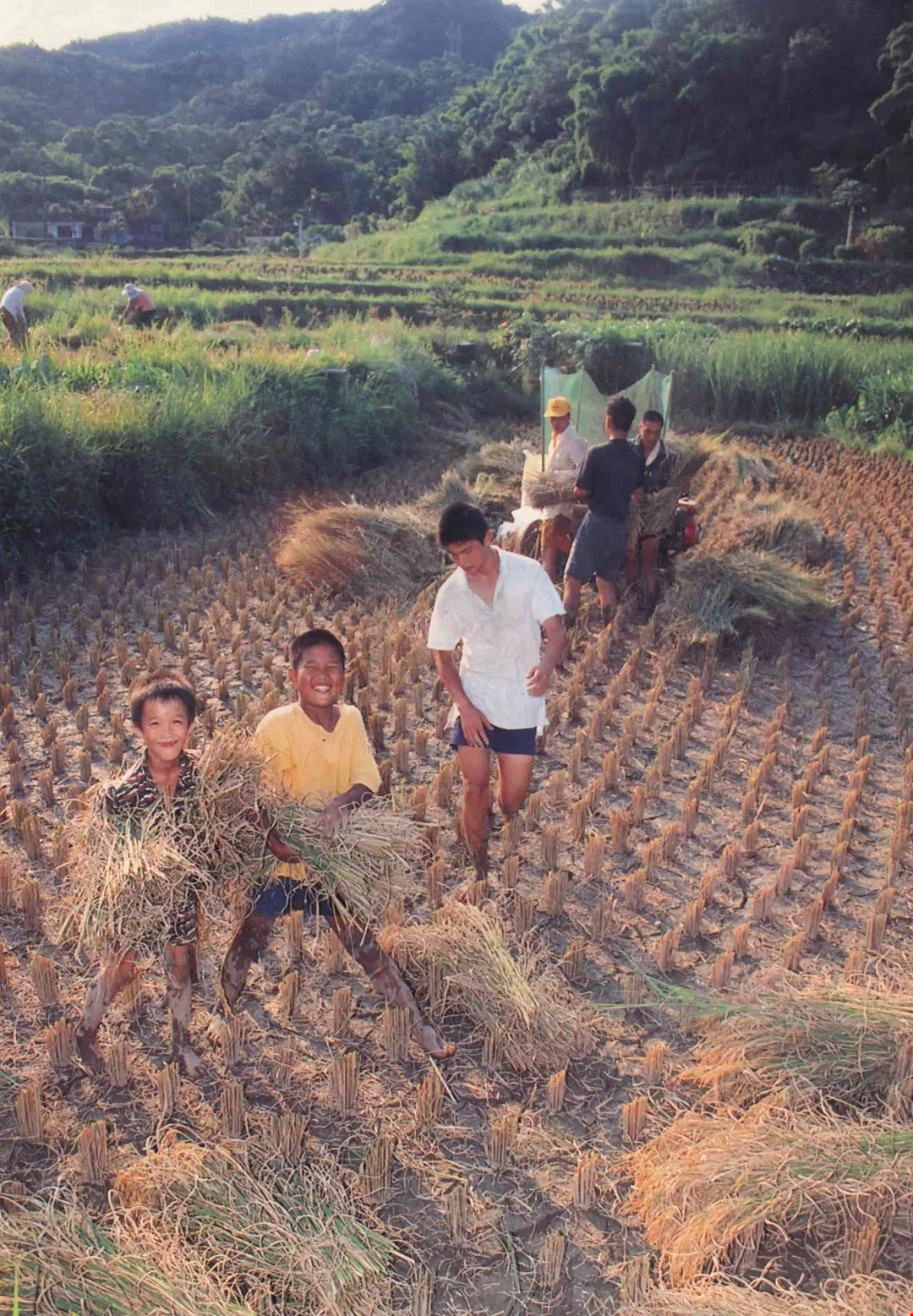
It was a good afternoon to harvest crops. Two cousins had taken advantage of a school holiday to go barefoot to the fields and cut rice with their family. The lively and innocent laughter of the two boys ran counterpoint to the threshing machine's steady buzz and resounded through the green hills all around them.


