

The Taiwan movie industry's long si-lence has at last been broken by a piece of news sure to delight movie fans-Taiwan New Wave director Edward Yang won the best director prize at the 53rd Cannes International Film Festival for his new movie, A One and a Two. After a long absence, Yang is once again the darling of the local media.
The decline of the local film industry has driven other artists of his generation into other fields far removed from film. Where does Yang, who has been involved with Taiwanese film for nearly 20 years, find the strength to keep going? What Taipei stories will this director, who has been called "Taiwan's Woody Allen" by critics abroad, give us?
In recognition of the outstanding performance of Taiwanese movies at this year's Cannes International Film Festival, the Government Information Office arranged an "awards tea" in mid-June. On the day of the tea, security was tight because President Chen Shui-bian had also come to offer his congratulations and thank the movie makers for the honor they had brought to Taiwan. In offering some remarks, President Chen commented that he had been very concerned about the domestic film industry during his tenure as mayor of Taipei. President Chen noted that as mayor he had promoted "mosquito theaters" (outdoor screenings of films) and movie festivals, and urged Taiwanese people to give local films their support. President Chen also said he felt that the reason that local films had difficulty finding a local audience was that they are "not close enough to people's lives."
Edward Yang then took the stage. With flashbulbs popping all around, he received his award then spoke to the audience for some time. Yang told them he had never anticipated getting so much attention, and was both surprised and flattered. He also expressed the wish that A One and a Two's leading man, Wu Nien-jen, were there to share in the honor.
Yang's speech then took a sharp turn. With great emotion, he told the audience: "This is the high point of my movie career, but I am sad because the Taiwan film industry is at its lowest point ever; those who work in the industry have seen their hair turn white from their struggles. I hope the young people who go into film do not have their passion for it destroyed by Taiwan's indifference to local films."
A low point for the film industry
The famed director Hou Hsiao-hsien also was invited to the tea. Responding to President Chen's comment about local films not being "close enough to people's lives," Hou remarked, "We don't make movies just to give people something ordinary, but something that will uplift them." Hou said he feels that the ideas and methods of the producers and distributors differ, and that the local market is too small to cover development costs. As a result, there is no Taiwan film industry, only individuals struggling to make their own films.
"I always take my cameras into homes to film. How are my films 'not close enough to people's lives'?" asks Yang. He goes on to say calmly that Taiwan's film makers are putting everything they have into making their films. The fact that they cannot sell good films indicates there is something wrong with the distribution system.
While A One and a Two has not yet been shown commercially in Taiwan, the students and faculty of Yang's alma mater, Chiao Tung University, were lucky enough to get a first look at it the day before this year's commencement ceremonies. Also in attendance were friends, film-lovers and journalists from all over Taiwan who had made the journey to Hsinchu to catch the film's Taiwanese premiere. For Yang himself, premiering the film at Chiao Tung involved more than just sentiment for his alma mater: "You probably don't realize it, but the projection and sound equipment here are top-notch. I'd have a hard time finding equipment this good in Taipei."
In a short introduction to the screening, Yang remembered the president's comment on Taiwanese film, stating: "Some people feel that Taiwanese films are disconnected from everyday life. I think when you finish watching this film, you might hold a different view."
Childhood sketches
A One and a Two describes the lives of the three generations of a typical middle-class Taipei family, all of whom live in the same house. The film stars the multi-talented Wu Nien-jen as the worried president of a high-tech company which is moving into a new business. But the family's difficulties do not end there. His elderly mother-in-law is in a coma following a stroke; his wife feels powerless because there is nothing she can do about her mother's condition; his eldest daughter, a student at a well-known high school, is struggling to come to terms with the fleeting nature of relationships; and his seven-year-old son is beginning to explore the world around him.
Every time the little boy appeared on screen during the two-hour-fifty-minute screening, his wise innocence elicited laughter from the audience. Wu is at ease on the screen and gives a striking performance as the unhappy president, making it quite easy for the audience to put itself in his character's shoes. According to Yang, Wu is "an actor of genius." After the screening, Yang was surrounded by members of the audience. Some wanted his autograph, while others told him "Great movie!" and asked questions about the structure of the plot.
Most people enjoy trying to find aspects of the director in the characters he brings to the screen. In the case of A One and a Two, one does not have to look very hard. Like the main character, Yang also worked in the high-tech industry for a number of years. Yang graduated from the electrical and control engineering department at Chiao Tung University, attended graduate school in the US and worked as an engineer for seven years. What made him give up the bright prospects of high-tech and throw himself into film?
To understand this, one has to look back at his childhood. Growing up in the poverty-ridden 1950s, the young Yang was fond of letting his thoughts run wild. He also drew with and on anything that came to hand, filling the walls in his family's home with drawings as far as he could reach. When he got a little older and began going to movies with classmates, he would recreate the plots in pictures as soon as the movies finished. In those days his family was poor, and Yang had to rely on his imagination to make his world rich. To realize his fantasies, he had to bring them to life himself. Unable to afford comics, he drew his own. As a child, he made up stories and used to illustrate them in class, passing his drawings along to classmates, many of whom eagerly awaited his comics every day.
Though he attended Taipei's top junior and senior high schools, his grades were not very good; Yang still remembers that he ranked 45th out of the 53 students in his graduating class.
From machinery to movies
At the end of May, Yang returned to his alma mater to give a lecture in which he spoke about how his career change came about.
Directing his remarks to the underclassmen in the audience, Yang said that when he filled out his university entrance exam forms, he initially only applied to the architecture programs at Tunghai University and Cheng Kung University because his grades in high school had been poor and he felt his only skill was drawing. However, a teacher encouraged him to include a few more programs. Smiling, Yang told them, "I had no idea I'd do so well on the test; without meaning to, I'd tested into Chiao Tung." But he felt a great deal of pressure at Chiao Tung. "My freshman year was agony. My grades were bad and I lost interest in school. My sophomore year, I was still wondering if I should try to get into a different school."
Then he had an epiphany. He thought, "If other people can do it, why can't I? Thereafter, I didn't worry about whether this was right for me or not. My attitude was, since I'm here, I might was well make the most of my studies." With this change of attitude, he began to apply himself to his studies and his grades improved.
After graduating from Chiao Tung, Yang attended graduate school in Florida, doing research and writing his thesis under the direction of another Chiao Tung alumnus. Yang's thesis concerned Chinese-language input systems for computers, an area into which not much research had yet been done. It was an enlightening experience for him, teaching him how to complete a project with only limited resources.
Although his advisor encouraged him to continue on towards a PhD, Yang decided to go to Los Angeles to study film. But the training he received at film school left him disappointed. "In the sciences, you search for evidence. I couldn't get used to the fact that in the humanities, everyone has their own rationale. I finally concluded that I had no talent." Yang said he spent only one semester there before withdrawing.
To make a living, Yang went to Seattle where he "looked for what my mother called 'a normal career,' and became a computer engineer." But though he had no financial worries, by the time he turned 30 he didn't know what he was looking for from life and felt lost and depressed. However, serendipity intervened. Yang saw the film The Wrath of God by the New Wave German director Werner Herzog. Yang was shocked: "I realized you didn't have to make films like Hollywood. I realized that you could use your initiative, that you could make a spirited film in the most difficult of circumstances. And I thought, 'Maybe I still have a chance to make films.'"
A new force in Taiwan film
At the age of 33, after having spent 11 years in the US, Yang's life underwent a major change. A friend wanted to make a movie, and knowing that Yang could write scripts, asked him to help. So Yang took some time off from his job and returned to Taiwan, not realizing that he would stay.
When Yang returned to Taiwan in 1981, changes were brewing in the Taiwan film industry. Kung-fu movies and love stories based on the novels of Chiung Yao were no longer drawing audiences. The local industry was also feeling the impact of changes in Hong Kong, where New Wave talents were moving from television into film. In Taiwan, Chang Ai-chia, who had herself gone from acting to directing, used her personal clout to get Taiwan Television Enterprise (TTV) to produce a series called Eleven Women aimed at developing new talent. Yang was asked to direct an episode.
The trend to developing new talent also affected Taiwan's largest film studio-Central Motion Picture Studios. At the prompting of Hsiao Ye and Wu Nien-jen, Ming Chi, who was then president of Central, allowed Yang, Ko Yi-cheng, Tao Te-cheng and Chang Yi to collectively direct In Our Time. Yang's direction of the "Hope" segment caught the attention of critics.
According to the critic Peggy Chiao, "His next two films, That Day, on the Beach and Taipei Story, both made their mark on Taiwan's film circle: in its released version, That Day, on the Beach ran for two hours and forty minutes; Taipei Story, meanwhile, had only a four-day run in the theaters." At that time, Chiao wrote that Hou Hsiao-hsien had mortgaged his house so that Yang could make Taipei Story, a film in which Hou also played the leading man. When the film was pulled from theaters after only four days, Hou lost everything.
"Yang's next film, The Terrorizers, turned his situation around." Chiao says that Yang's cool and precise aesthetic, when turned on Taipei society and the relationships between its people, cut Taipei's culture apart with surgical precision and offered up a diagnosis of its ills. The film was both a critical and commercial success, winning acclaim and a Golden Horse for Best Picture in 1986, raking in more than NT$10 million in ticket sales, and even winning a Silver Leopard at the Locarno International Film Festival.
Having used film to examine modern society in each of his first three movies, Yang turned his lens to the 1960s and Taipei's Kuling Street for his fourth film. The film focuses on a teenage love affair that ended in the murder of a 14-year-old girl by a 14-year-old boy with a knife. The film, which took three years to complete, revolves around these events, but is filled out with Yang's own recollections of the 1950s and 1960s.
The film stirred up a great deal of debate when it was released. Yang had described a tumultuous period in Taiwan's history, a period in which the many thousands of people from different backgrounds and different provinces who had retreated to Taiwan with the KMT government were settling in to life here. Ten years after the retreat, their children were growing up, but the fear of the Communists remained at almost fever pitch. There was discrimination against Taiwanese; the influence of Japanese culture was in decline, while that of American culture was on the rise. For these many reasons, the 1960s were a peculiar period in Taiwan's history. Yang's film, like Hou Hsiao-hsien's movie about the February 28 Incident, City of Sadness, is one which helps the viewer to understand Taiwan's recent history.
"Very Taipei"
Most of the eight films Yang has produced during his nearly 20 years in the business describe urban life, and viewed in terms of their imagery, the films (and Yang) could be described as "very Taipei."
Yang says that he makes his films in Taipei because it costs less to do so and because it is the place he knows best. "I'm very practical in everything I do. I'm in Taipei, so I make these kinds of movies. Taiwan offers these tools and conditions, so I make the best possible use of them."
In analyzing Yang's work, the critic Edmond K.Y. Wong says, "His take on society is terribly incisive. In That Day, on the Beach and Taipei Story, we see the economic side of Taiwan and realize 'Oh, that's how Taiwan's society came to be this way.' In A Confucian Confusion and Mahjong his use of irony is even more cutting."
Non-Chinese critics have said that Yang's later movies are reminiscent of Woody Allen's work. Both directors portray the loneliness, powerlessness, betrayals, deceit, violence and potential terror of modern urban life in detail.
But in Wong's view, Edward Yang and Woody Allen take different approaches to dealing with the problems of the city. "Allen has a very Manhattan sophistication, and he always takes the audience beyond the problems by making them laugh and making them angry. He uses his movies to attempt to find relief from life's myriad impossibilities and limitations. But Yang's movies are not looking for a way out. Instead, they bring people face to face with the realities of Taiwanese life that have no resolution. He places these problems naked before the viewer and asks 'Can you hate them as I do?' But at the same time, he makes a strict moral judgement about this hate."
Two titans
Yang is often compared to Hou Hsio-hsien in terms of the language he employs in his films and his status within Taiwan's film circle.
In the 1980s, a number of young directors joined Taiwan's film community. They made a bold break with tradition and gave rise to a new wave in local film. After a harsh winnowing, only Hou Hsiao-hsien and Edward Yang remained, the former noted for his excellent grasp of Taiwanese imagery and the latter for his clinical depiction of the urban middle class.
According to Wong: "Hou Hsiao-hsien stresses the whole and has a deep sympathy for the humanity of his characters. Edward Yang, on the other hand, isn't always completely sympathetic towards his characters and sometimes even seems to hate the world. Especially in his later works, he delves into how society goes about destroying people's humanity and ruins the lives of the young. His work continually laments the disappearance of life's purity." Wong notes that the two men's personalities clearly differ, with "one gentle, the other cold; one sentimental, the other rational."
Yang's scientific training is also evident in his style of working on the set. In comparing the two men, Tu Tu-chih, a sound technician who has worked with both, says Hou Hsiao-hsien is less controlling, often allowing his actors to develop scenes on their own and capturing the spontaneous expressions that result. Yang, on the other hand, is very logical and desires structure. All his actors' movements are very precise; when an actor says a line, Yang wants him or her to move to some particular spot.
However, looking at the two directors' positions within the film circle, Yang's career as a director seems to have had some lows.
On this point, film critic Li Fu-chung has written, "When Yang won the Golden Horse for Best Picture for The Terrorizers, he and Hou were the twin titans of local film. But the moment passed. Hou went on to do well at Cannes and Venice with City of Sadness and The Puppetmaster. Then it was Tsai Ming-liang who was bringing home Golden Lions and Silver Bears, while Yang, one of the first generation of outstanding talents in Taiwan's New Cinema, seemed unable to move forward."
A Confucian Confusion was entered at Cannes, but came away without a prize. Mahjong played in Taipei, but did poorly at the box office. Interviewed by the media at Cannes, Yang said that A Confucian Confusion was about the distrust that exists between modern people, while Mahjong was about young people's deceitfulness. He said that both films were true to life, perhaps too true to life, and that this excess of honesty was probably the reason audiences did not connect with the film. After Mahjong, Yang stopped making films for a time. He admits that he used that time to reflect, searching for an approach to film-making that was right for him.
After a time, a Japanese company asked Yang, the Hong Kong director Stanley Kuan and the Japanese director Shunji Iwai to each direct a movie set against the background of modern Asia. It was this request that led Yang to make A One and a Two, a film which he had been thinking about for more than 10 years.
Taking movies online
The technically trained Yang has long wondered why the gulf that separates technology and the humanities is so deep. With the advent of the Internet Age, he has also become concerned with the impact of the Internet on film-making and distribution.
While speaking at Chiao Tung University, Yang said that when he was in Cannes, a foreign reporter had commented that all of this year's Chinese language entries at Cannes were over two and a half hours long. The reporter asked, "What's the story with Asian people? Don't you need to use the bathroom when go to the movies?"
Yang answered, "Of course we do. It's just that modern people have fewer and fewer opportunities to see movies in a theater. With the invention of video tapes and DVDs, audiences are no longer subject to the run-time limits of movie theaters."
Yang went on to say, "With the advent of the Internet Age, the length of films is a non-issue. You can tell a story in five minutes, or you can tell a story over 50 days. You can even add several parallel story lines and have them develop together." According to Yang, the way of doing business which grew out of the old technology is out of date. In the Internet Age, those who continue to approach the film business in the old way will quickly become obsolescent.
When Yang returned from Cannes he organized an online press conference, and he is now building a website for A One and a Two. He plans to share information about the movie, including the script, stills, and illustrations, with the online community.
Many people who have seen A One and a Two are curious about the meaning of the film's title.
Yang says that as one advances through middle age, one slows down. Now all he wants to do is make clear, comprehensible movies. For that reason, he gave this movie the Chinese title Yi Yi (lit: One One). "One is a beginning. When you open a Chinese dictionary to the first page, the first word is yi. Yi Yi also refers to looking at things individually."
After four years of silence, after years of separating the wheat from the chaff, Yang's career as a director has hit a new high with A One and a Two. For Yang, this new high also represents a new start.
p.73
Edward Yang won the award for best director at the Cannes Film Festival for his work A One and A Two, marking another high point in his 20-year directorial career. Every award won overseas by a Taiwan film breathes new life into the industry. (photo by Hsueh Chi-kuang)
p.74
In 1983, Yang completed his second dramatic film on the theme of female self-awareness, That Day, On the Beach. The photo is of the film's lead, Chang Ai-chia. (courtesy of Central Motion Pictures, Long Shong International)
p.75
In 1986, Yang completed his study of threat-filled urban culture, The Terrorizers. This won Taiwan's Golden Horse Award for best film, and critics declared that Yang had "achieved a unique modernist style." (courtesy of Central Motion Pictures, Golden Harvest Films)
p.75
In The Terrorizers, Hong Kong star Miaw Chian Ren plays an author trapped by writer's block. As the result of an anonymous call, she begins to doubt her husband's fidelity, and a story of family troubles ensues. (courtesy of Central Motion Pictures, Golden Harvest Films)After returning to Taiwan from Cannes, Yang was feted at an event sponsored by the Taipei City Government. He invited the cast and crew of A One and A Two on stage one at a time to be applauded by the audience. From left: Taipei City Bureau of Cultural Affairs director Lung Ying-tai, Taipei Mayor Ma Ying-jeou, and female lead Li Kai-li. (photo by Hsueh Chi-kuang)
p.76
After three films in a row focusing on human relationships in the city, Yang brought his lens back to 1960s Taiwan to complete a work of broad scope touching on gangs, ethnicity, and foreign culture in Taiwan-A Brighter Summer Day. (courtesy of Central Motion Pictures, Edward Yang)
p.77
A Brighter Summer Day is based on a real incident that occurred in the 1960s, in which a 14-year-old boy knifed a 14-year-old girl to death. This four-hour film is filled with the director's childhood memories. (courtesy of Central Motion Pictures, Edward Yang)
p.78
Yang has loved to read and draw comics since he was a child. He often uses drawings to illustrate how he envisions his film characters. He drew this picture for the cast of A Confucian Confusion. (courtesy of Edward Yang)
p.79
Yang completed his fast-paced, incisive, and lively comedy A Confucian Confusion in 1994. The photo shows the director at work in front of the Chiang Kai-shek Memorial Hall. (photo by Vincent Chang)
p.80
After returning to Taiwan from Cannes, Yang was feted at an event sponsored by the Taipei City Government. He invited the cast and crew of A One and A Two on stage one at a time to be applauded by the audience. From left: Taipei City Bureau of Cultural Affairs director Lung Ying-tai, Taipei Mayor Ma ying-jieou, and female lead Li Kai-li.(photo by Hsueh Chi-kuang)
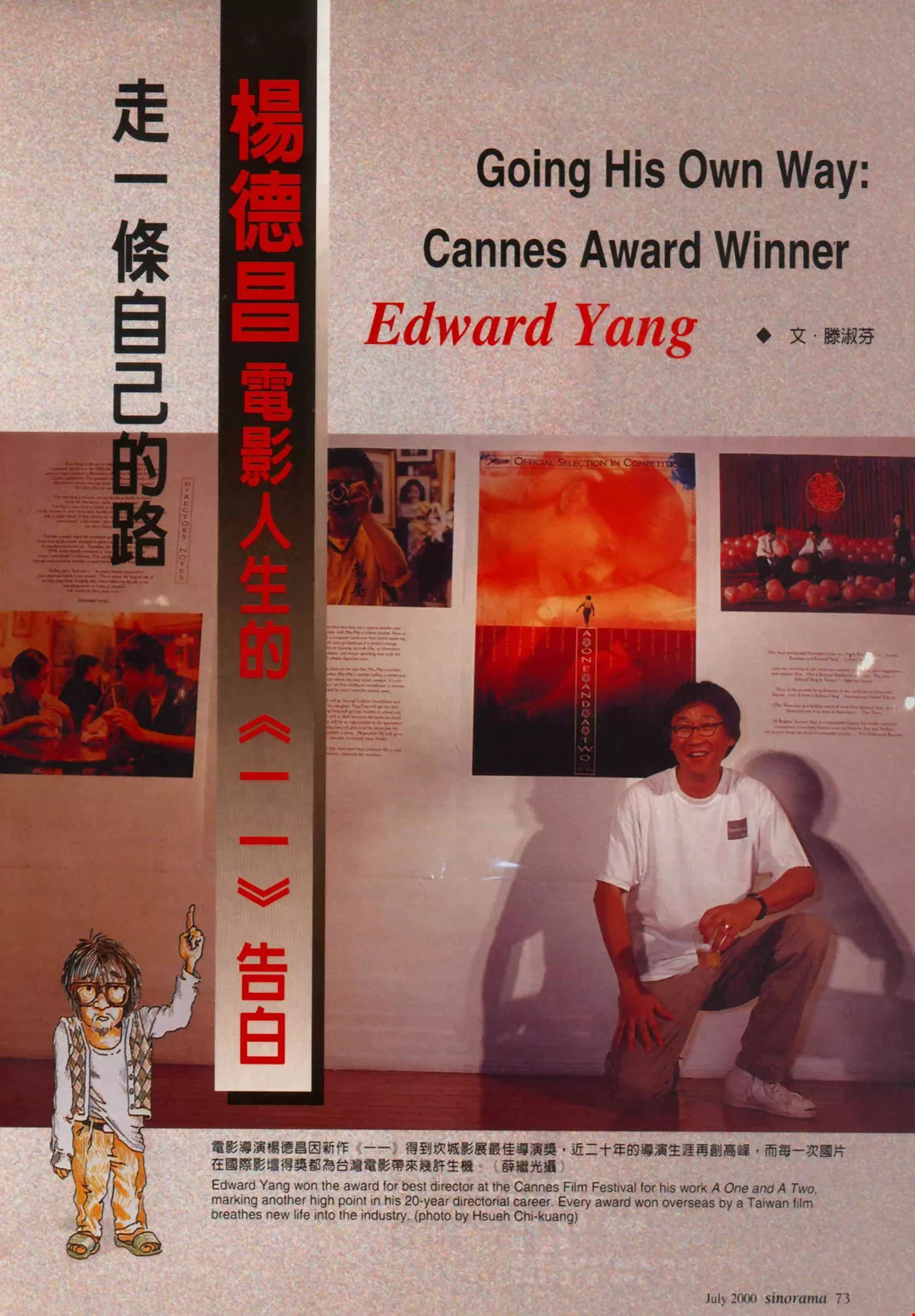
Edward Yang won the award for best director at the Cannes Film Festival for his work A One and A Two, marking another high point in his 20-year directorial career. Every award won overseas by a Taiwan film breathes new life into the industry. (photo by Hsueh Chi-kuang)
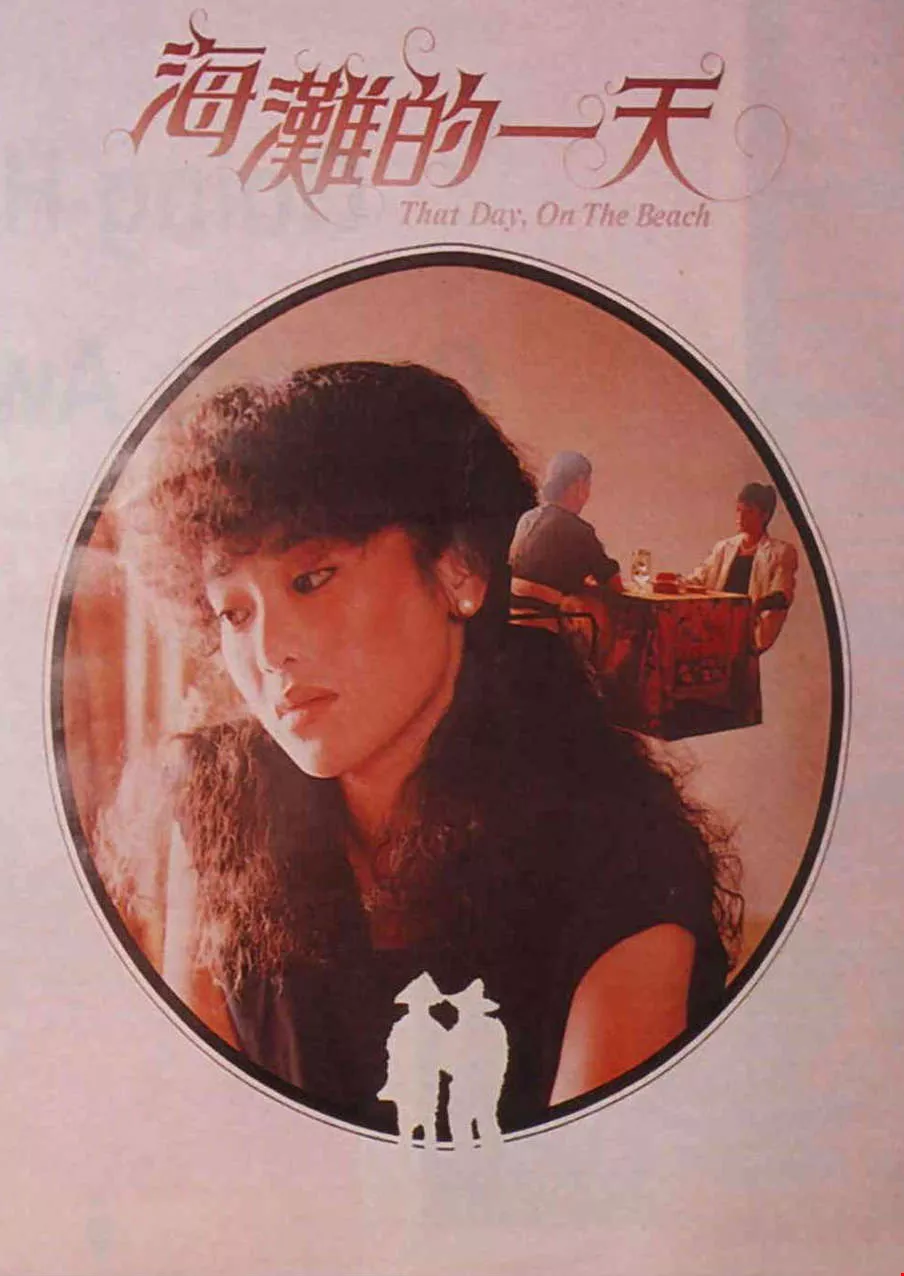
In 1983, Yang completed his second dramatic film on the theme of female self-awareness, That Day, On the Beach. The photo is of the film's lead, Chang Ai-chia. (courtesy of Central Motion Pictures, Long Shong International)
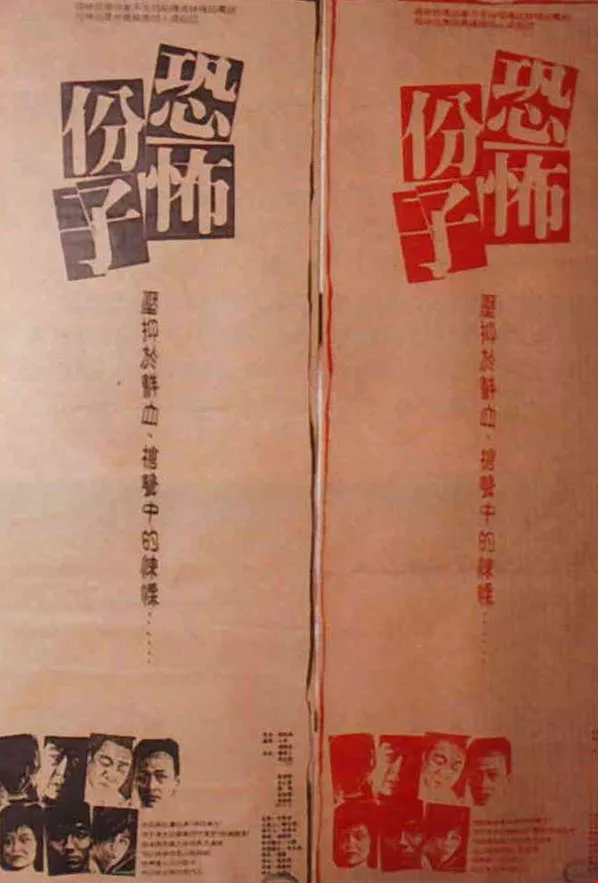
In 1986, Yang completed his study of threat-filled urban culture, The Terrorizers. This won Taiwan's Golden Horse Award for best film, and critics declared that Yang had "achieved a unique modernist style." (courtesy of Central Motion Pictures, Golden Harvest Films)
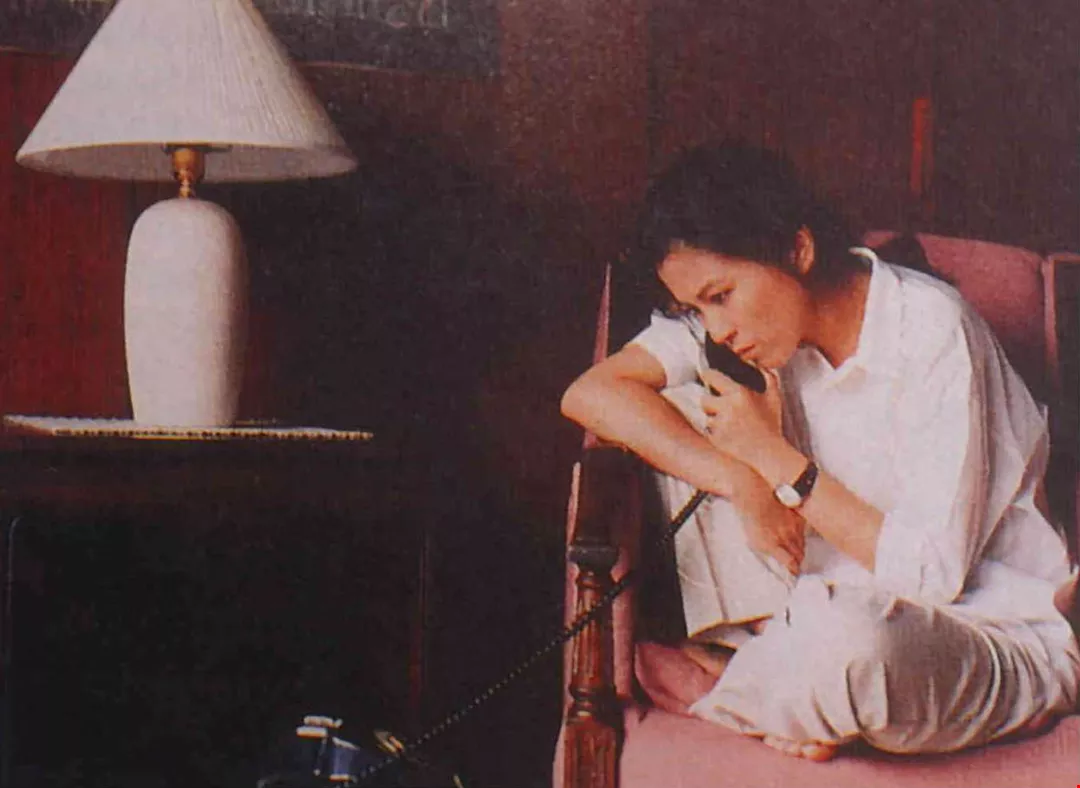
In The Terrorizers, Hong Kong star Miaw Chian Ren plays an author trapped by writer's block. As the result of an anonymous call, she begins to doubt her husband's fidelity, and a story of family troubles ensues. (courtesy of Central Motion Pictures, Golden Harvest Films)

After three films in a row focusing on human relationships in the city, Yang brought his lens back to 1960s Taiwan to complete a work of broad scope touching on gangs, ethnicity, and foreign culture in Taiwan-A Brighter Summer Day. (courtesy of Central Motion Pictures, Edward Yang)
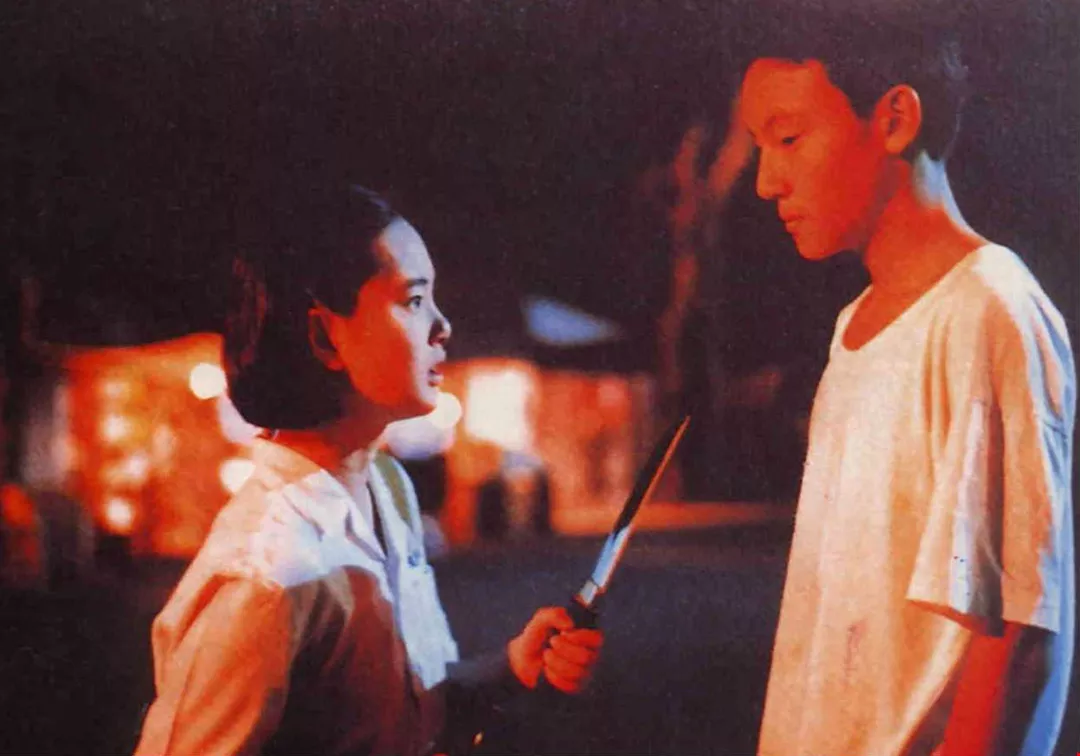
A Brighter Summer Day is based on a real incident that occurred in the 1960s, in which a 14-year-old boy knifed a 14-year-old girl to death. This four-hour film is filled with the director's childhood memories. (courtesy of Central Motion Pictures, Edward Yang)
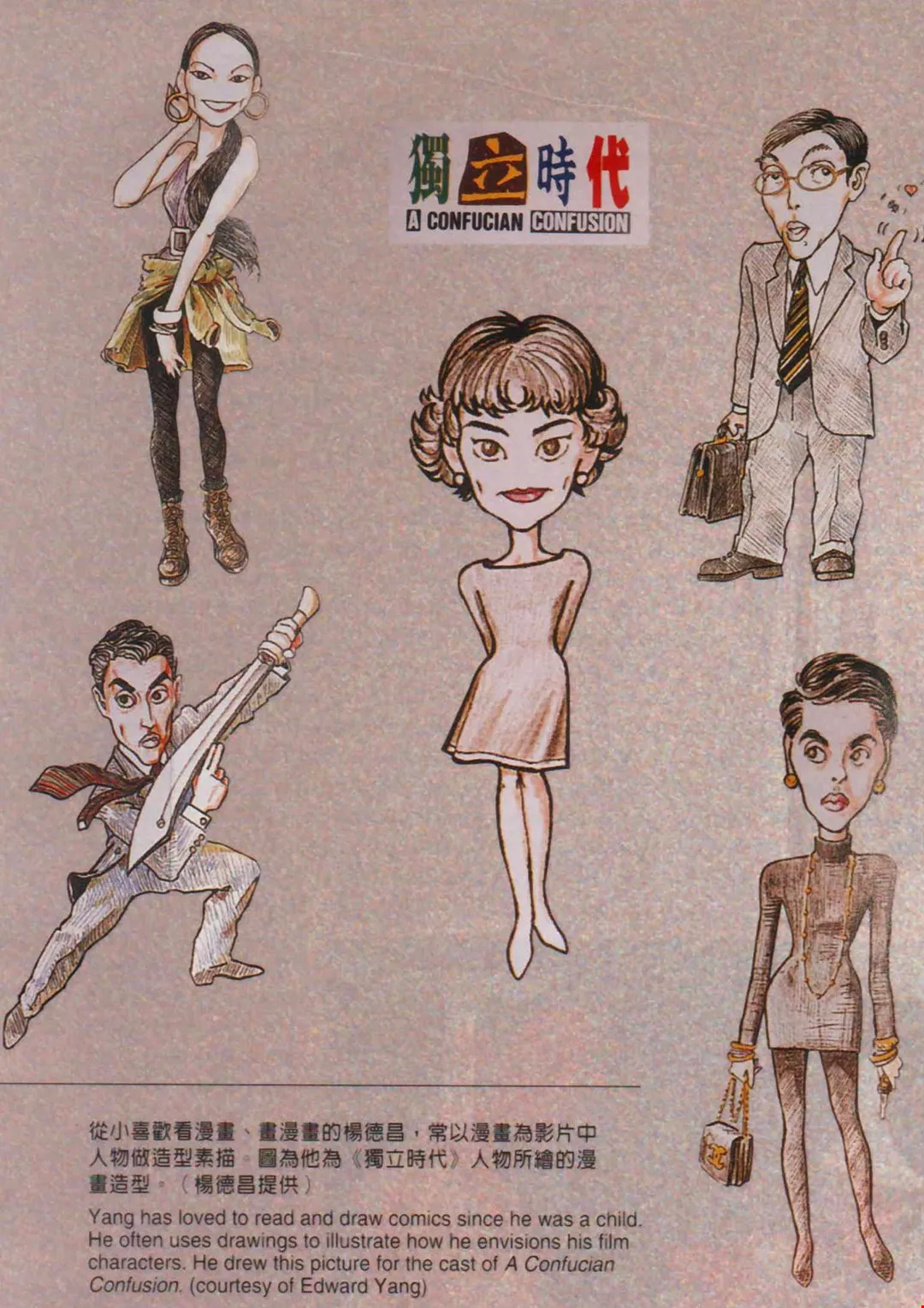
Yang has loved to read and draw comics since he was a child. He often uses drawings to illustrate how he envisions his film characters. He drew this picture for the cast of A Confucian Confusion. (courtesy of Edward Yang)
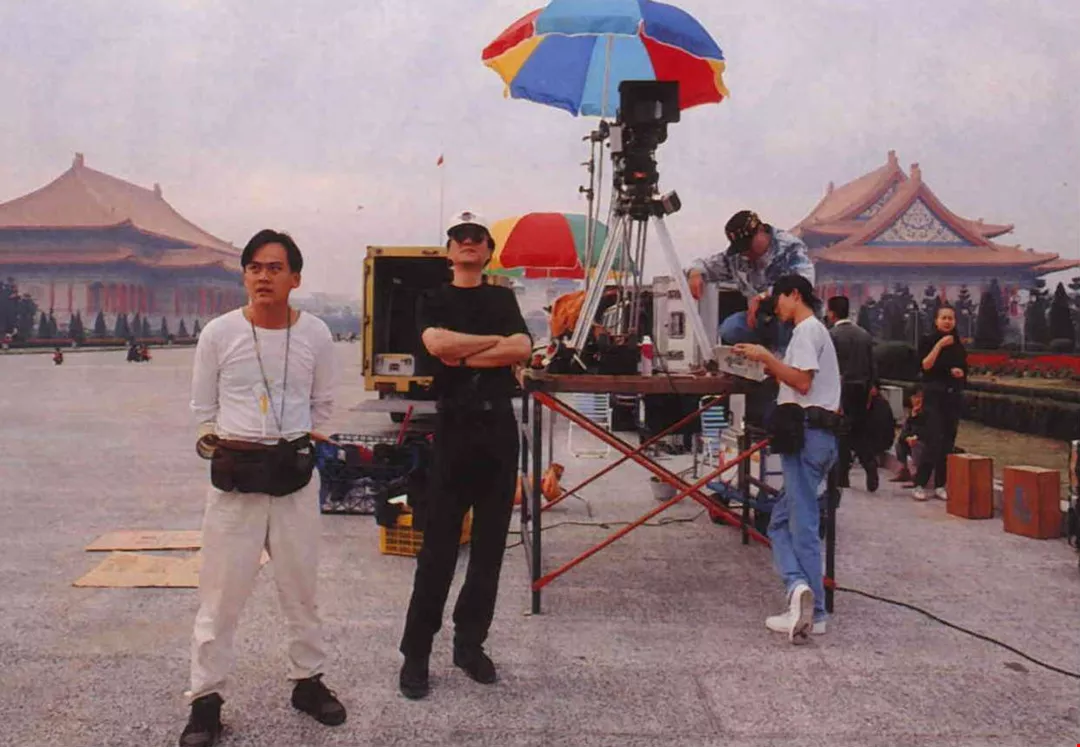
Yang completed his fast-paced, incisive, and lively comedy A Confucian Confusion in 1994. The photo shows the director at work in front of the Chiang Kai-shek Memorial Hall. (photo by Vincent Chang)
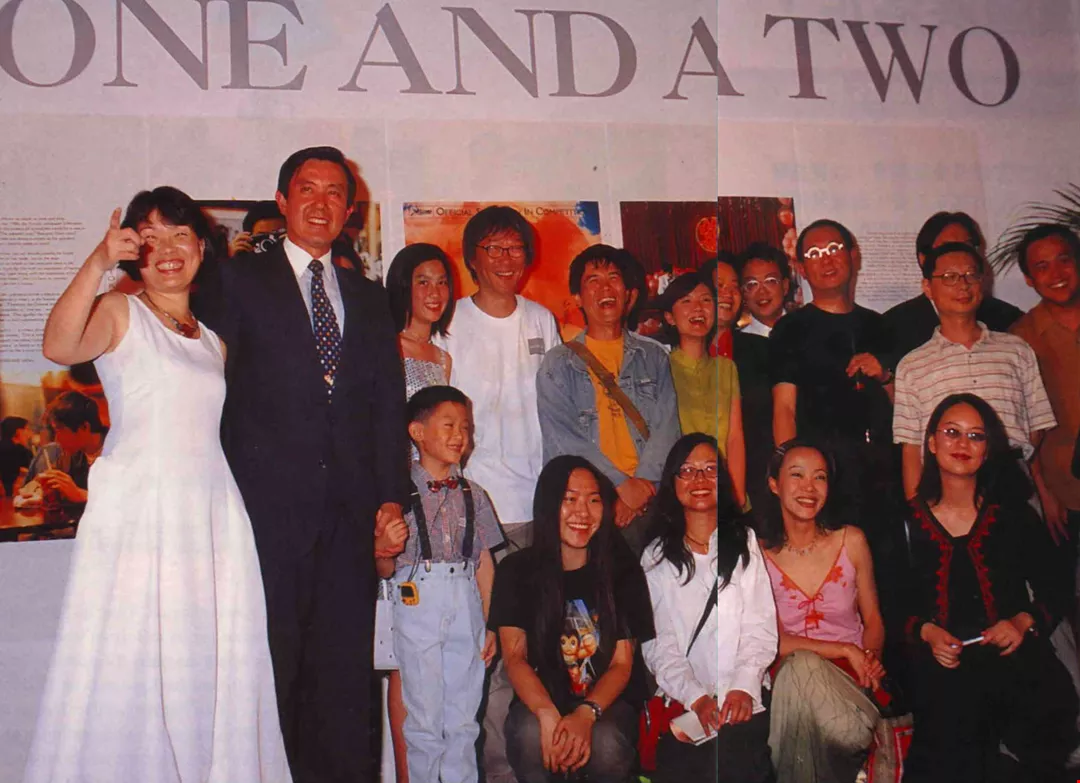
After returning to Taiwan from Cannes, Yang was feted at an event sponsored by the Taipei City Government. He invited the cast and crew of A One and A Two on stage one at a time to be applauded by the audience. From left: Taipei City Bureau of Cultural Affairs director Lung Ying-tai, Taipei Mayor Ma ying-jieou, and female lead Li Kai-li.(photo by Hsueh Chi-kuang)


@List.jpg?w=522&h=410&mode=crop&format=webp&quality=80)


