Changing Fashions in Foreign Study
Teng Sue-feng / photos Lin Meng-san / tr. by Jonathan Barnard
April 1995


"Come one, come all, come to Taiwan University; Go one, go all, go to America." Mention foreign study and you can't help but mention America, the perennial favorite among students from Taiwan going abroad.
While America still leads the pack, it's worth noting that the number of Taiwanese traveling to its shores has been falling since 1992. Are foreign study trends changing? Which ways are the winds of education blowing now?
Wei Kuo-chin, with a master's from Taiwan University in Chemistry, applied to a number of American universities at the beginning of this year, planning to start in a doctoral program this fall. His decision made classmates gasp, "Even today you still dare to go abroad to study!"
The high rate of unemployment among people with advanced degrees has been a hot topic in the media, but it didn't scare him away from his plans. "If you think too much, there's too much that you'll never dare do," he says. "And if you spend your time now carefully mapping out a future, it won't be of any use anyway." Still, to get his PhD in biochemistry he plans to study carbohydrates. Since that field is just getting off the ground in Taiwan, he feels it offers more room for career growth.
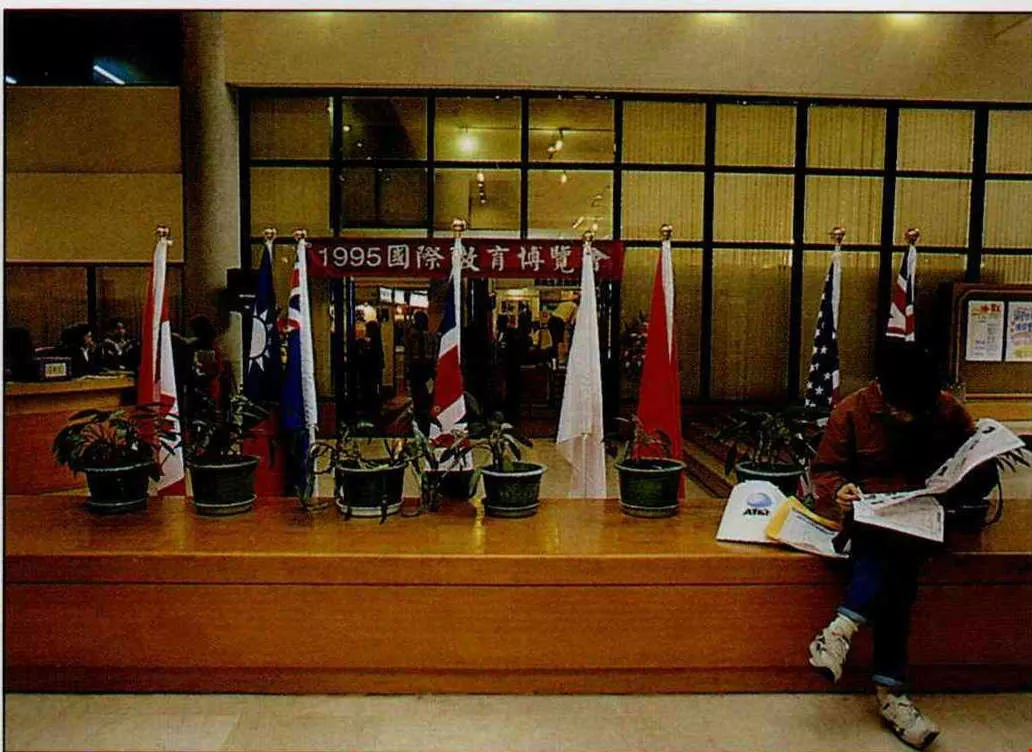
Look how many countries are welcoming students from Taiwan! Besides collecting information about foreign study, think about future career plans too. (photo by Vincent Chang)
A competitive market
The fact is that among highly educated Taiwanese there is a long tradition of going abroad to study. It's almost as if they feel that life will lack something without at least one foreign study trip. Few academics and major government officials don't have foreign degrees, which have traditionally been seen to bring glory upon one's forebears and to represent status and achievement of a higher level.
But in a few years things have greatly changed. Over the last two years, the number of students returning from study abroad has suddenly leaped. Before 1981, only a couple of hundred were coming back a year; in 1990 the figure reached 2800; and last year it surpassed 6500, resulting in an imbalance between supply and demand in the job market for the highly educated. Yet economists conjecture that the overabundance may prove to be a short-lived phenomenon. While the imbalance may have caused some to slow their steps, great numbers of Taiwan's students are still heading to foreign lands.
In March the National Central Library and the Taipei International Convention Center each separately held foreign study fairs, and numerous educational institutions sent representatives to talk with students face to face. The fairs drew throngs of students collecting information about studying in various countries. Clearly, there is not going to be a sudden break with the tradition of studying abroad. Perhaps the only change is that America is no longer the only choice.
In the peak year of 1992 the American Institute in Taiwan granted 13,000 student visas to Taiwanese. The figure has been falling ever since, down to 9700 last year.
In three years America has attracted 4000 less students. Are they all going to other countries?
Five or six years ago, such English-speaking countries as Great Britain, Australia and New Zealand started in a big way to promote their institutions of higher education to Taiwanese. With their economies slumping, these countries have noted the spending power of students from Taiwan and have opened wide their educational doors. Taiwanese students are being hotly fought over by various Western Countries.
Britain is the country with the most obvious increase. In 1992, less than 2000 Taiwanese students were going to Britain a year; by last year their numbers had risen to 3900.
Chen Yu-chi, who will graduate from Chengchih University's journalism department this year, is preparing to go to Britain to study public relations. Why Britain? "Because there are too many Taiwanese studying in the United States." Furthermore, Britain doesn't have much nightlife outside of pubs, and she doesn't have much interest in drinking anyway. Without distractions, she'll be able to bear down and get her master's in a year. The choice exactly suits her requirements.
Generally speaking, getting a master's takes two years in America but only one in Britain. Then there's the favorable exchange rate. One year's tuition only costs about NT$300,000, cheaper than in the States. And quite a few students from Taiwan who long for the abundant artistic culture of Europe, choose Britain because they can't speak French, German or Spanish. With the continent nearby, and with high marks for length of study, cost, and language, the dark horse of Great Britain has become a front runner.

Before going to America, many students can't avoid coming to Nanyang street, known for its Stanley Kaplan-style cram schools and language centers.
Scattered to the winds
Other English-speaking countries, such as New Zealand, Australia and Canada, have also been sparing no effort to attract students from Taiwan, but they're not meeting with the same success.
Take Australia. In 1992 students from Taiwan making their way there totalled 1500, rising to 2100 last year, an increase of 27 percent. Yet "many are using study as the first step to immigration," admits Alan Yuan, director of Australia's International Development Program in Taiwan.
Lamenting that Australia is often only a "second choice" to America and Britain, he notes that some students don't go to Australia until they've been refused a visa by the United States.
There are no breakdowns to show the numbers going for language study as opposed to an undergraduate, master's or doctoral degree, but Yuan has observed that most are going to enroll in undergraduate programs. In particular, many students at technical junior colleges go to Australia for a university degree, and in deciding to go they usually consider the question of immigration. This may happen as well in other major targets for Taiwanese emigration, such as New Zealand and Canada.
Whether for a degree or just to take a language course, going abroad to study is no longer a great feat to pull off. Yet there are more considerations involved than in the old days, when the process just entailed a few trips to the Foundation for Scholarly Exchange.
"Those leaving now have more inner turmoil than those coming back," stresses Chen Pu-yan, director of management development at the Foundation for Scholarly Exchange. It isn't a matter of America's losing students to Great Britain, but rather that "Taiwan's students are scattering in every which direction," so that many don't know what to do.
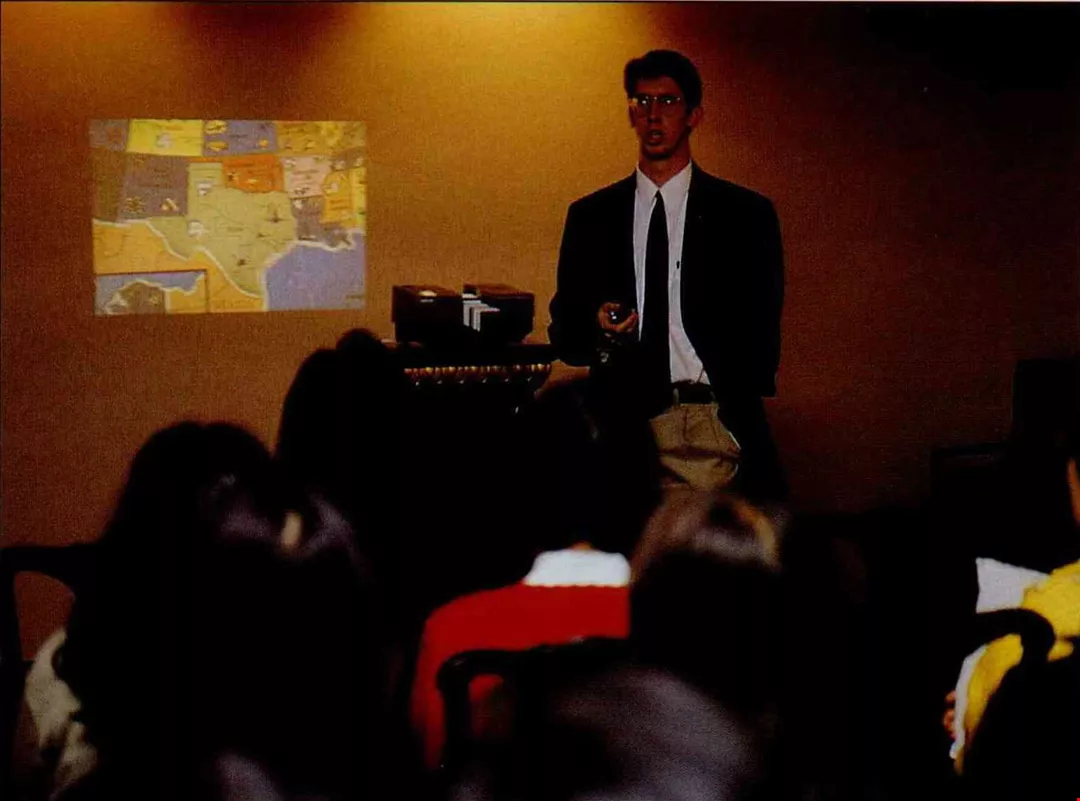
With an eye on Taiwan's bulging wallets, institutions of higher education in various Western nations make the trek to Taiwan. Graduate and undergraduate education, as well as language study, are all for sale.
Taking the firet step
To look on the bright side, you could say that students, given a greater selection, are choosing a diversity of destinations. But from another angle, you could describe "the first step toward studying abroad as becoming fraught with peril," says Chen Pu-yen. The baffling array of choices may make it hard to choose a country and school.
Roo Reid, director of Taipei's Anglo-Taiwan Education Center (ATEC), has noticed this sort of problem. Sometimes he'll come across a student who asks straight-out his first time in, "Which school should I apply to?"
It's more or less of a problem depending on educational level. Those going for their doctorates are usually more mature and clearer about what they want.
Wherever they're studying, a doctorate will take upwards of five years to obtain. Without genuine interest in their studies, doctoral students could never bear the long, lonely days bent over their books. For those aiming to get a doctorate abroad, the concern is always financial support.
Wei Kuo-chin, who is applying to doctoral programs in the United States, says that he'll go where he can get a scholarship.
Wang An, a sociology department graduate student at Soochow University, says economic factors also played a big part in his decision not to take the well-trod path to America but instead go to Germany, the birthplace of sociology.
Mention of his dream to obtain a doctorate in sociology makes him sigh. "Time waits for no man," he says. When he was an undergraduate, his teachers would say that PhDs would never have problems finding work. "Bear down with your studies and the rewards will be there," they said.
But even now that jobs for sociology doctorates have dried up, he is still determined to go abroad and study. German universities, unlike their American counterparts, charge no tuition, and state universities in America keep raising tuition year after year. He feels that the difference is between paying with money in America or with one's youth in Germany. Although many people suggested that he go to an American university and apply for a scholarship in his second year, he felt that relying on hard work to get himself a scholarship wasn't practical. What if he didn't get one? And so he decided to learn German instead, an investment of time instead of money.
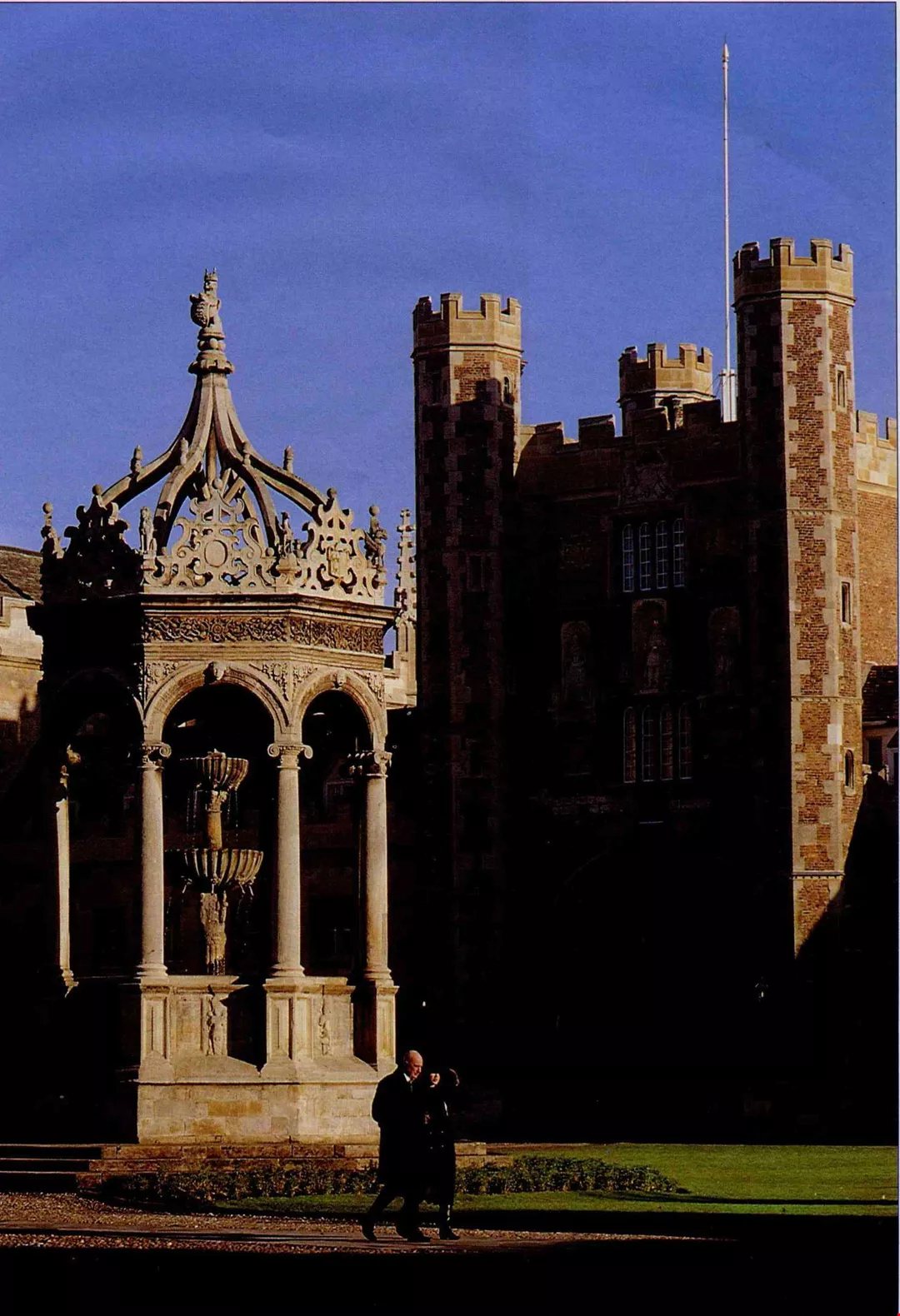
Trinity College, Cambridge University. With their ancient architecture and air of history, British universi ties attract the second largest numbers of Taiwanese students. (photo by Vincent Chang)
What's hot?
Those preparing to get their doctorates know what they want to study, but for those leaving to get their master's--the single largest group of students going abroad--it's a decision that requires a lot of thought. Statistics suggest that half of those going to America don't study what they did as undergraduates.
For those who studied humanities or physical sciences in Taiwan, more than half switch to studying business administration or computers. Is the change of heart due to practical considerations?
By conservative estimates, 60 percent of all students going to America go for their masters'. And 47 percent of students polled by ATEC from last April to this January revealed plans to get a master's degree.
After all, a master's only requires a year or two, which represents much less of an economic burden. But the competition is also fiercest at this level.
The Executive Yuan's Directorate General of Budget, Accounting and Statistics recently released work-force figures that break down based on educational level. Before 1990 the graduates of vocational high schools had the highest rate of unemployment. But in 1991 those with graduate degrees took over the lead, which they've held for three of the four years since.
The directorate points out that when supply exceeds demand, those with graduate degrees start sinking to the undergraduate-degree labor market.
Seeing these trends, students going abroad can't help wondering which fields will offer the best career prospects. What fields are hot? Do trends show what makes most sense to study?
We took these questions and asked overseas study agents and the educational centers of various countries, and they responded by describing what fields students are choosing. Their answers were very similar.
The Foundation for Scholarly Exchange conducted a survey of students going to study in the United States the year before last, which revealed that 30 percent of them, and a whopping 56 percent of the women among them, were entering MBA programs, which accept applicants regardless of their undergraduate majors. Social sciences were the women's second favorite area of study. For the men, engineering topped the list, followed by business administration and computers.
And among those going to Britain too, MBA programs take the lion's share, followed by such fields as mass communications, art and design, and accounting.
Yet the growing numbers of MBAs earned abroad combined with those taken in Taiwan have been eliciting headlines like "MBAs fall from favor." It's a buyer's job market.
Still, many scholars predict that MBAs will once again become highly prized.
Huang Tung-chun, the director of the Institute of Human Resources at National Central University, says that the information industry is growing fastest in Taiwan. To accomplish much-discussed industrial upgrading, great numbers of professionals will be required, including MBAs, whose administrative skills will be needed to raise efficiency. Without a doubt, they and engineers will both have bright futures. He also sees the flow of personnel to small and medium-sized firms as a good development.
Most MBAs, it must be noted, are generalists lacking practical work experience. It isn't realistic for them to hold onto the old expectations of getting a high salary and high position right after earning their degrees.
The special assistant to the president of a computer company frankly states that the three people in the job before him all had MBAs, but with insufficient practical experience, they all felt unqualified and quit.
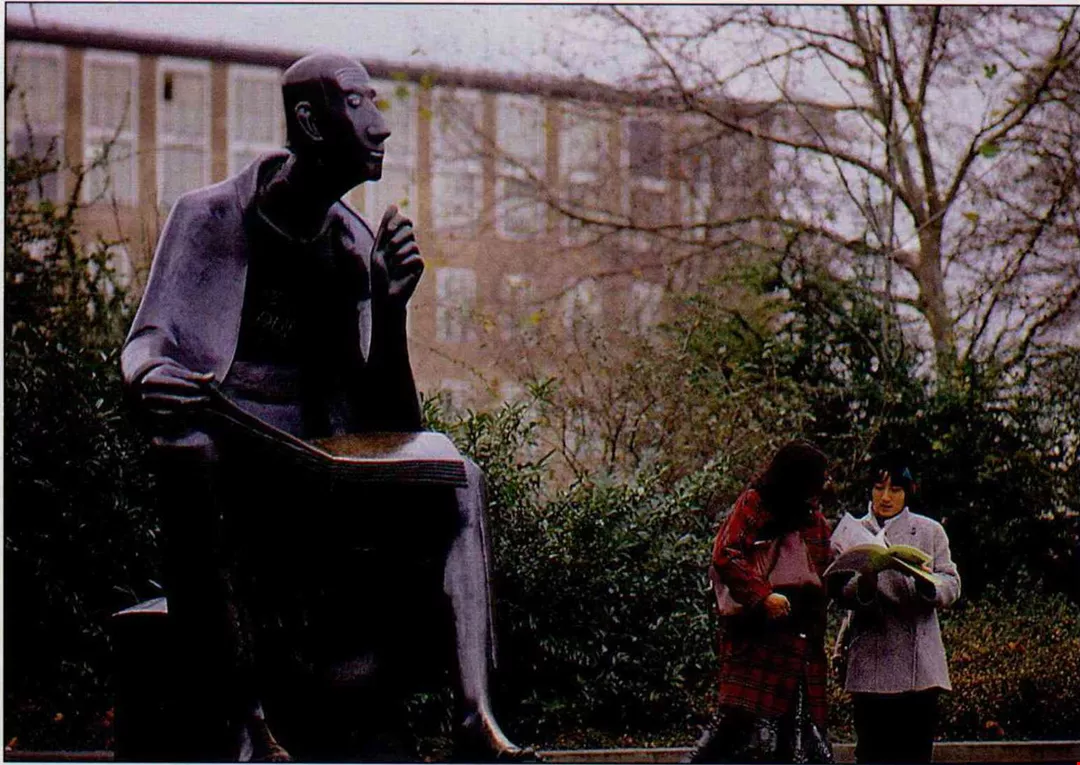
Germany's Cologne University. Europe's aura of high culture attracts people studying social sciences and humanities. Many players on Taiwan's political stage studied in Germany. (photo by Cheng Yuan-ching)
PhDs selling sesame seed cakes
The sated demand for doctorates in the academic world, which has forced PhDs to turn to industry, is well known. Yet Huang Tung-chun notes that those with doctorates in such fields as medical administration, medical engineering and biotechnology will have opportunities as long as they don't scorn offers from industry.
The fact is that these changes have already weakened many PhDs' resolve to become professors at all costs.
A Miss Lai, who spent 10 years in Paris getting her doctorate in philosophy, came back last year and began working as a writer for a newspaper. When asked why she studied a field as unpopular as philosophy, she says, "I studied for my doctorate because I wanted to stay in Paris." After she had been in Paris for three years and earned her MA, she felt that she had neither had enough of the city nor attained a satisfactory command of the French language, and so she decided to go for a doctorate.
Since she has long known that advanced study in the humanities is not a road to riches. her decision to get a PhD didn't impose much psychological pressure on her, and later she didn't even end up looking for a job that made use of her degree. As far as she's concerned, her doctorate's value was in "giving me the opportunity to stay in Paris for 10 years and enjoy the sanctuary of academia."
Wang An, who likes academic research and has heard the dire warnings about the highly educated unemployed, has given himself several options. He's learned from others who have studied in Germany that Taiwan-German trade is taking off. Taiwanese firms going to Germany for trade fairs are in desperate need of workers who can speak German and Chinese. If this chance to work turns his interest to trade fairs, he could even change fields.
And so if his first plan doesn't work out, he still has an alternative. Thinking long term, he says that an old Chinese expression puts it best: "Having a skill is better than 10,000 pieces of gold." He sees his future father-in-law, who sells fried sesame seed cake, working from early morning to noon; the unrelenting stream of customers gives him not a moment to spare. He has decided to ask the old man to teach him how to make them before he goes to Germany. If worse comes to worse, he can always sell sesame cakes in the morning and then teach a class or two in the afternoon. And his degree? "I'll just put it in a drawer, and use it if I get the chance."
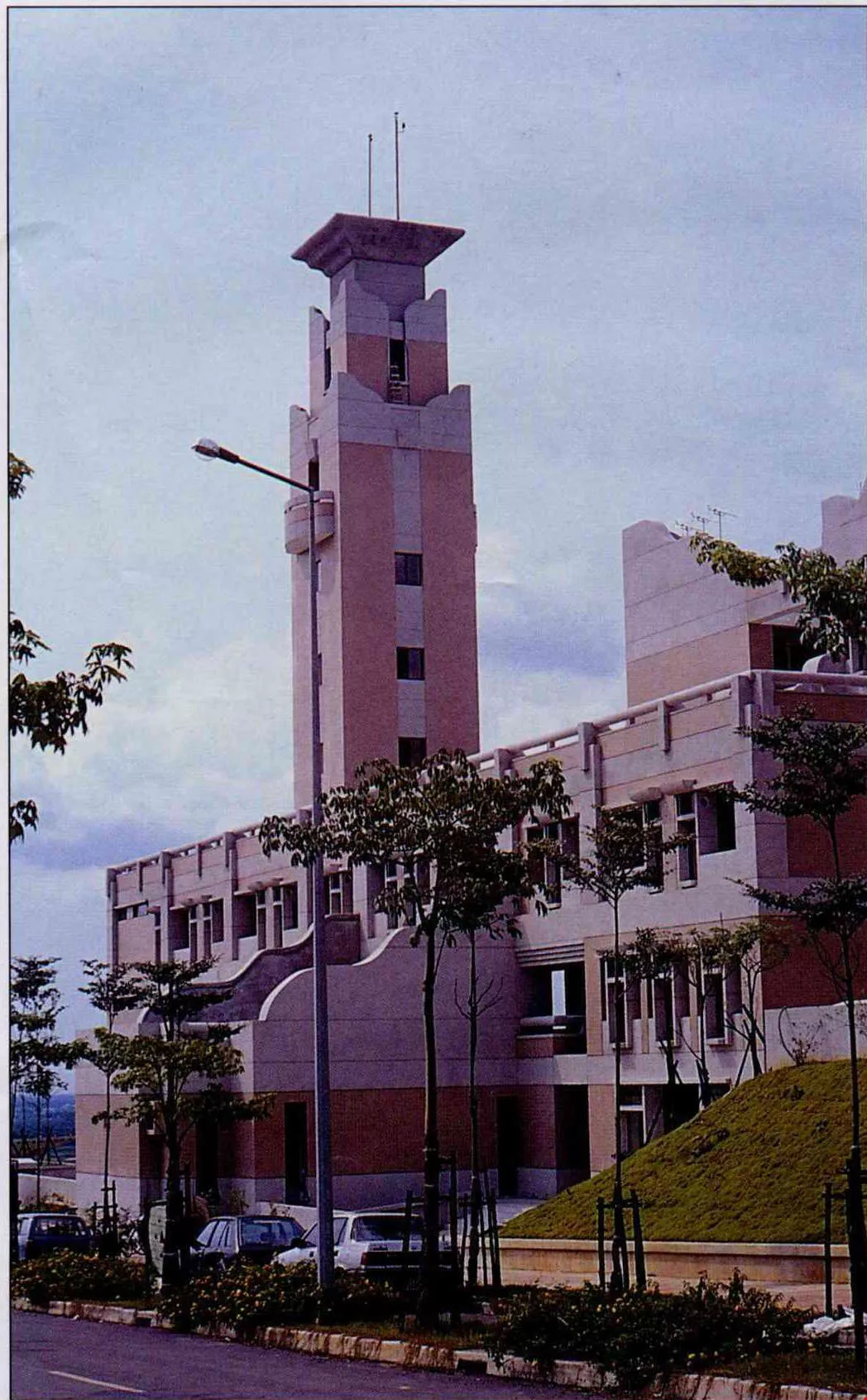
(top) Among Taiwanese universities, National Chungcheng University in Chiayi leads in student-faculty ratio, square footage per student, and the percentage of instructors with doctorates. Graduate education in Taiwan does in fact match up to what is offered abroad. And since contacts won't be broken in leaving and returning, students have a head start on grabbing hold of job opportunities. (photo by Pu Hua-chih)
The future
If PhDs see nothing wrong with doing physical labor, then those with masters' degrees should be prepared to descend even lower.
"No one can tell you what the future will bring," stresses Huang Tung-chun. Yet pursuing research should hone problem-solving skills, which are more valuable than mere book learning. Huang recommends that students go after their masters' to broaden their interests. In that way, they will be able to take on new challenges at a moment's notice, whatever changes the future brings.
"You can think about future trends, but don't fret over them too much, because you are probably just groping in the dark," says the Foundation for Scholarly Exchange's Chen Pu-yan. Regarding the future of mass communications, he says, "The move toward multi-media is inevitable." This realm isn't contained in any one discipline, but rather combines the three fields of mass communications, computers, and art and design. And studying multi-media also answers the call to broaden skills.
For more than a decade people have been asking whether they should go abroad, and what they should study if they do. To answer these questions, Chen says it's best to go back to the basics: personal interests, values, abilities, and opportunities.
Others say that the academic side isn't the be-all and end-all of a foreign study trip, that just broadening one's horizons is enough. Chen asks them to think long and hard: Do you really want to spend so much money doing it? Is it worth spending all that money on a language school abroad just because "taking a language course" or "traveling and studying" sounds better than just plain "traveling." Can it be that there aren't any good foreign-language courses in Taiwan? Or do you just want to force yourself to enter a native-speaking environment?
With these questions, what he really wants to say is this: "There are a lot of reasons for going abroad to study, but we haven't found the underlying motivation." How lousy you'll feel if you spend NT$1-2 million to go abroad and don't end up happy about the trip.
No one holds a magic wand that can put you on the right track with one tap. In this mixed-up age, you'll have to guide yourself.
[Picture Caption]
p.38
Should I study abroad? Will a foreign degree brighten my future job prospects?
p.39
Look how many countries are welcoming students from Taiwan! Besides collecting information about foreign study, think about future career plans too. (photo by Vincent Chang)
p.40
Before going to America, many students can't avoid coming to Nanyang street, known for its Stanley Kaplan-style cram schools and language centers.
p.41
With an eye on Taiwan's bulging wallets, institutions of higher education in various Western nations make the trek to Taiwan. Graduate and undergraduate education, as well as language study, are all for sale.
p.42
Trinity College, Cambridge University. With their ancient architecture and air of history, British universities attract the second largest numbers of Taiwanese students. (photo by Vincent Chang)
p.43
Germany's Cologne University. Europe's aura of high culture attracts people studying social sciences and humanities. Many players on Taiwan's political stage studied in Germany. (photo by Cheng Yuan-ching)
p.44
(top) Among Taiwanese universities, National Chungcheng University in Chiayi leads in student-faculty ratio, square footage per student, and the percentage of instructors with doctorates. Graduate education in Taiwan does in fact match up to what is offered abroad. And since contacts won't be broken in leaving and returning, students have a head start on grabbing hold of job opportunities. (photo by Pu Hua-chih)
p.44
(bottom) Engineers will still be in high demand in Taiwan's future. (photo by Pu Hua-chih)
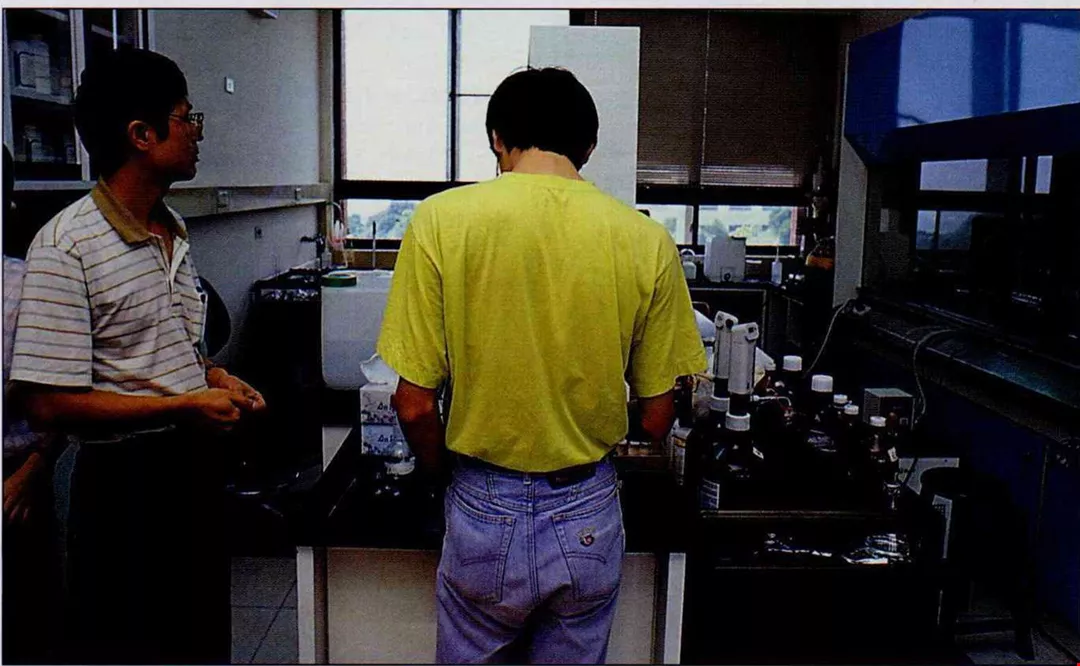
(bottom) Engineers will still be in high demand in Taiwan's future. (photo by Pu Hua-chih)


@List.jpg?w=522&h=410&mode=crop&format=webp&quality=80)


