Growing Up with Health Insurance
Chang Chung-fang / photos Huang Li-li / tr. by Christopher MacDonald
April 1993


The rate of child mortality in well-to-do Taiwan remains fairly high. Why is this?
Universal health insurance, which forms part of the Six-year National Development Plan, has yet to be introduced, but this February Kaohsiung County put its own "child health insurance" into effect. How did they set about it?
Lin Chin-tsung from Tashe in Kaohsiung County currently works as a factory security guard, while his wife supplements the family income with manual work at home. Five years ago their second eldest daughter was in a car accident. She survived for ten days in hospital at a cost of over NT$500,000 in medical charges, but in the end it was to no avail. Now the Lins' two-year old daughter Chi-ying has had to undergo surgery to remove a tumor in her right leg, followed by a long program of chemotherapy and drugs.
Just when it seemed there was nowhere to turn for their daughter's medical bills, the village secretary told Mrs. Lin that Chi-ying could get coverage under Kaohsiung County government's child health insurance scheme. With coverage, they can apply for assistance toward all Chi-ying's medical charges. The insurance does not cover total costs, but it certainly helps.
Mrs. Lin, who still has not got over the pain of losing her daughter five years ago, hugs Chi-ying's head, left bare by the chemotherapy, and says anxiously: "I don't know if my daughter will ever be able to grow up." Chi-ying has a long battle for health ahead of her, but at least she has been given the opportunity of treatment. Some youngsters don't get a chance at all.
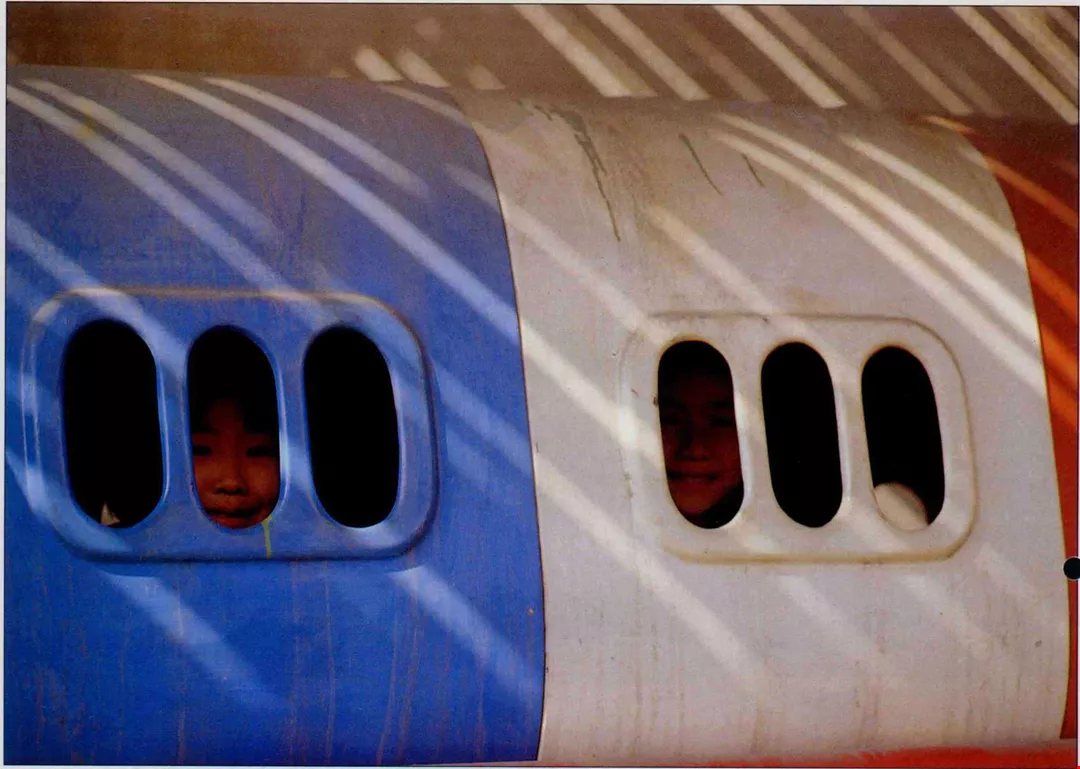
Children are the shared assets of a society, and deserve the protection of society's shared strength.
"High" child mortality rate:
In 1987, Professor Lu Hung-chi of National Taiwan University (NTU) Medical institute took a survey of 50 teaching hospitals in the Taiwan area. His results show that on average, more than 5,400 seriously ill children every year are unable to obtain the necessary hospital treatment, or even "check themselves out" of hospital, on account of the expense to their families.
Even more surprising is the fact that in Taiwan, with its world-leading foreign exchange reserves, child mortality remains high, in spite of rapid progress in terms of general health and an adult mortality rate approaching the level of the advanced nations. According to the World Health Organization report for 1984-86, the mortality rate for children under 14 in Taiwan, except newly born infants, is between 2.5 and 3.3 times the rate in Japan, Sweden and Holland. Measuring child mortality as a proportion of total mortality (5.9%), the ROC ranks 27th in the world, far behind developing nations such as (former) Czechoslovakia, Poland, Portugal and Greece, and only a little better than in Cuba, Chile and Argentina.
Lu Hung-chi believes one of the reasons is that Taiwan is still without a center for childrens' medicine. Hospitals have long been oriented towards adults, with pediatrics left relatively short of talent, skills and equipment, so that child mortality remains higher than in the advanced nations.
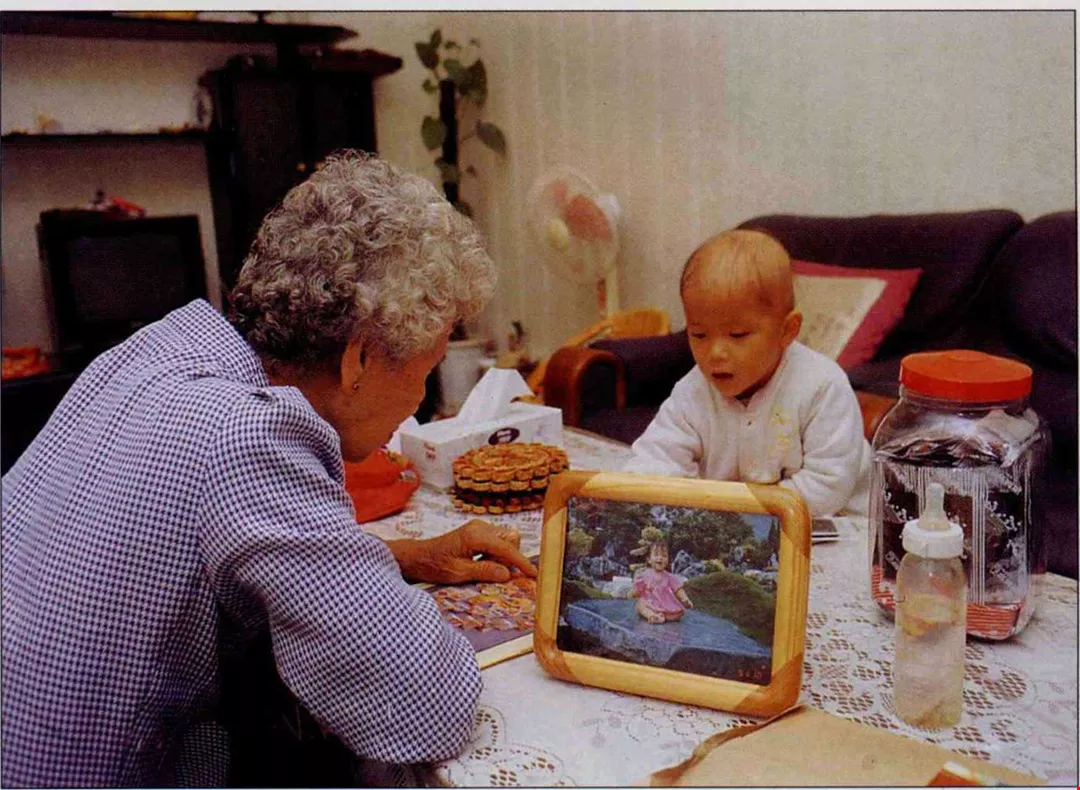
Chi-ying is undergoing chemotherapy. She has lost her hair and lost weight as a result, being transformed from the lively, playful child that she was before she fell sick. Luckily, her parents took out coverage for her under Kaohsiung County's child health insurance, giving her a chance of a cure.
Save our children!
Another factor is the problem of expense. Nowadays, open heart surgery and bone-marrow transplants can be performed thanks to advances in technology and medicine, yet the huge costs involved put them beyond the reach of most families.
Lu Hung-chi, pediatric cardiologist at NTU who doubles as director of the ROC Association for Pediatric Medicine, says that while doctors wish to diagnose and cure sick children, there are frequent occasions where parents don't have the money for an operation and may even abandon the treatment altogether.
In one incident, a parent smuggled his child from hospital on the night after an operation to remove a cancer tumor, because he couldn't pay the child's medical fees. After that, he did not dare take the child back to hospital for regular follow-up examinations, but unfortunately the cancer spread and there was no choice but to return. The hospital provided treatment, but by then the cancer had been allowed to spread for too long.
In another case, a child with diabetes needed regular shots of insulin, but the parents, who had several children and a lot to pay for, really wanted to abandon the treatment. Under pressure from people around them, however, saying "you can't be so heartless!" they had to continue borrowing to pay for the child's medicine. There have also been instances of parents who finally resort to dumping their child at hospital and renouncing all responsibility.
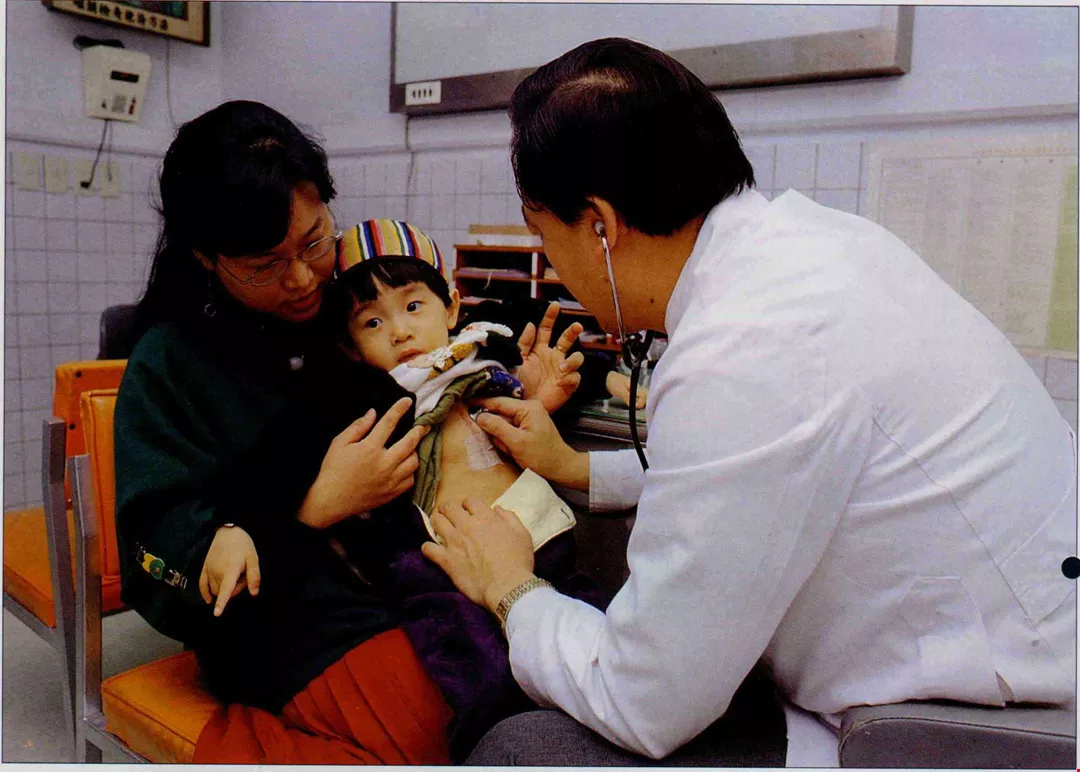
Medical costs for treating children with heart disease are a big burden on the family. They too are among the people most in need of child health insurance.
Ensuring children's right to health:
According to Lu Hung-chi, "We can't simply depend on doctors to take care of children." Doctors cannot do it alone; it takes help from the whole of society. Twenty-two years ago Lu established the Foundation for Children with Heart Diseases, using the strength of society at large to aid children with heart ailments.
There are many such similar foundations, but since they rely on donations, the money they have available to pay for treatment of sick children is limited. The government has perhaps more money available, but its funds too are not without limits, while it also has strict conditions and complex procedures which few people know about.
Evidently, charitable contributions and extensive fund-raising by the major hospitals are not enough to solve the problem of paying for child medical treatment. If all children are to have a fair opportunity of receiving treatment when ill, what is required is a comprehensive child health insurance system. Dr. Su Ing Wang, director of the Women & Children's Center in Kaohsiung County, points out that children's medical costs are fully covered by the government in those European countries with a comprehensive welfare system. The US and Japan have a system of collective insurance, providing coverage to company employees which extends to their family members, including the children.
In the ROC, however, insurance plans exclude young children, apart from the coverage introduced last July for dependents of civil servants. In other words, society and the state do not attach due importance to the "right to health" of young children, who have no productive capability. When a child falls ill, destiny decides the cure.
How come Kaohsiung county is able to do it?:
On February lst, while other counties and cities continued to wait for instructions from the central authorities or anticipate the introduction of national health insurance, Kaohsiung County went ahead and launched the country's first "child health insurance" scheme. Says Dr. Wang: "you can't just wait for a child to fall ill." Yuchen Yueh-yin, magistrate of Kaohsiung County for two successive terms, has continually prioritized issues concerning people's livelihood, learning the views of the public through open hearings on welfare for the aged, disabled and the young.
"Perhaps it's because females are more concerned about social welfare!" comments Dr. Wang. Social welfare is a focal point for local government in Kaohsiung County, where the magistrate, the chief of the social section and the director of the Women & Children's Center, which is actually running the insurance scheme, are all women.
Funding for the scheme is basically not a problem. Kaohsiung County government social section chief Cho chun-ying points out that Kaohsiung County has tax revenues of about NT$1.36 billion, and there is no difficulty in allocating more than NT$700 million for the social welfare fund. In fact, the county applied to the provincial government two years ago to set up insurance for the elderly and the young, and had a budget of NT$76 million earmarked for the purpose. But the plan only got under way once it received approval last September.
What kind of insurance do young children need? To what degree is the county government able to provide it? These are the first questions that the Women & Children's Center has had to address. Chen Hui-yuan, who is in charge of running the scheme, points out that children over the age of six have safety insurance at school. Infants under two, however, present a potential high risk that few insurance companies are willing to take on. With those companies that do, the insurance premium is very high, and the government cannot afford the cost either. So it was decided to start with insurance for children between the ages of two and six.
Cultivating faithful future clients:
In comparison with most commercial insurance, the "terms" of Kaohsiung county's child health insurance are quite liberal. According to Frank Hsunfa Lin, associate professor at Chengchi University's Graduate School of Insurance, the premiums are fairly light relative to the range of coverage and size of compensation. Furthermore, the scheme does not exclude sufferers from congenital diseases, or people who only get insured once they are already ill, two types of clients that would not be eligible for most commercial insurance.
Lin, who is also a member of the Ministry of Finance Life Insurance Policy inspection Board, applauds Kaohsiung County's child health insurance as a very "progressive" scheme. "This can be seen from the higher payments made of disability than for death," he remarks. Most schemes provide the same payment for both, when in fact treatment and care for the disabled proves far more expensive in the long run.
The most notable feature of the scheme is the "Experienced Refund" system. This is an agreement between the scheme's underwriter, Aetna Life insurance, and the Kaohsiung County government. The insurance company keeps open records of income and expenditure, and when accounts are drawn up at the end of the year, Aetna retains a fixed proportion for personnel costs and deducts the amount paid to claimants, then refunds the remainder to Kaohsiung County for the following year's insurance fund. Even Frank Lin, who participated in the initial evaluations, expresses surprise that the insurance company accepted this. On this point, Frank Lian, assistant manager of the Kaohsiung branch of Aetna comments that his company attaches great importance to its long-term image and prestige.
Difficulties remain:
The Kaohsiung County govemment is fully committed, and there is excellent coordination with the underwriting company, but what results has the scheme had in practice?
There are an estimated 60,000 children between the ages of two and six in the county. Subtracting those already covered by public insurance, or who are disabled or come from low-income households, this leaves approximately 30,000 children. Currently more than 18,000 of those have insurance coverage, which means that there are over 10,000 children in the county without health insurance.
Frank Lian admits that there have been difficulties that were not anticipated at first, beginning with the presentation tour to towns and villages, which produced many frustrating occasions. In some towns no one paid any attention. In Chiaotou and Luchu, rowdies turned up and wrecked the event. Not one of the target audience from kindergartens and day-care centers attended, though there were usually a couple of hundred elderly gentlemen on hand to claim a free boxed-lunch.
Another difficulty, in addition to the problem of disseminating information, was caused by the low cost of the premiums, which means that kindergartens have to take much of the responsibility for handling applications. Tsai Su-chen, the principal of Yuhua Kindergarten in Fengshan, says; "we at the kindergartens of course want to provide a better guarantee for the children," but when the kindergarten has to bug parents for photographs, residence booklet photocopies and other documentation, some parents find it a nuisance. The kindergarten does not have the time to keep pestering them, and in the end has to give up. At Yuhua for example, only around 90 of the more than 200 pupils have insurance.
Jointly sharing the risk:
Misguided notions pose another obstacle to the insurance scheme. "Insurance is a sensible system for sharing risk," says Frank Lin. But some residents of Kaohsiung County don't see it that way. For example, a mother of a pair of twin brothers only took out insurance for one of them because he happened to be ill at the time. Most claims at present are for illness that began before the insurance did, because the rules allow people who pay the premium before the end of February to backdate coverage to February lst. There have even been cases of insurance taken out for children after they have died.
Because of the "Experienced Refund" agreement the insurance company cannot make extra profits out of the system, and verification of claims is on the generous side. If payment can be made then it will be made. Kaohsiung County government has already included child health insurance in its budget, and is not expecting any refund from the insurance company. It is an approach that helps the benefits provided by the scheme to appear a lot like social welfare.
Many other counties and cities are hoping to follow the example set by Kaohsiung County. In November 1989, Taipei City started up its own group insurance for children, targeted only at public day-care centers and kindergartens, with premiums wholly paid by parents. According to Miss Lin, who runs the city's women and children's welfare section, from the beginning of February the social bureau will expand the system to include private day-care centers and kindergartens and will hold a presentation tour. But the city government is not considering subsidizing the insurance premium. "After several years of this, citizens will have the concept of paying for their own insurance," she says.
Taoyuan, Taipei County, Pingtung and Kao-hsiung City are also intending to set up health Insurance for children and have made inquiries in turn with Kaohsiung County government and insurers. It is a result that Kaohsiung County government is delighted to see.
Kaohsiung County's child health insurance rules
Requirements:
1. For children over two and under school age.
2. Parent (or legal representative) officially resident in Kaohsiung County for at least six months.
Premium:
NT$690 per insured, per (six month) period. 60% paid by Kaohsiung County government, 40% (NT$276) paid by parent.
Coverage:
1. Accidental injury: includes death and disablement. Compensation of NT$200,000 for death, and up to a maximum of NT$300,000 for disablement, depending on age.
2. Medical coverage for accidental injury: refund of medical expenses incurred through accidental injury, up to a maximum of NT$10,000 per accident.
3. Hospitalization charges: When hospitalization is required for treatment of disease or accidental injury, separate refund will be made for in-patient charges, surgery costs etc.
[Picture Caption]
P.110
Children are the shared assets of a society, and deserve the protection of society's shared strength.
P.111
Chi-ying is undergoing chemotherapy. She has lost her hair and lost weight as a result, being transformed from the lively, playful child that she was before she fell sick. Luckily, her parents took out coverage for her under Kaohsiung County's child health insurance, giving her a chance of a cure.
P.112
Medical costs for treating children with heart disease are a big burden on the family. They too are among the people most in need of child health insurance.
P.114
Children are the masters of tomorrow's society, and their right to health deserves respect.


@List.jpg?w=522&h=410&mode=crop&format=webp&quality=80)


@List.jpg?w=522&h=410&mode=crop&format=webp&quality=80)
