

When the kidneys become diseased, there is generally no discomfort. By the time symptoms appear, the kidneys have already sustained irreversible damage. Therefore, regular care of the kidneys is extremely important.
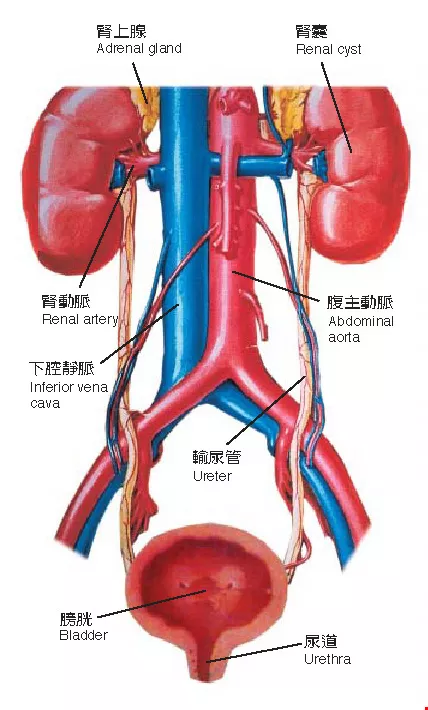
Functions of the Kidneys 1 Regulate the body's balance of water and electrolytes 2 Excrete metabolic wastes 3 Excrete chemical substances 4 Regulate blood pressure 5 Stimulate production of red blood cells 6 Stimulate production of calcitriol, an "activated" form of Vitamin D3 courtesy of the National Kidney Foundation ROC
Taking Care of Your Kidneys
1. Do not take medication unless instructed to do so by a physician-especially analgesics, anti-inflammatory drugs, Chinese herbal medicines of unknown origin, and tonics taken long-term.
2. Throat and tonsil infections should be thoroughly treated to avoid streptococcus-induced kidney inflammation.
3. Avoid overly salty foods in the diet, as well as excessive amounts of meat, as they increase the burden on the kidneys.
4. Drink plenty of water to prevent the formation of kidney stones. Persons with kidney stones should change their lifestyle and diet, and monitor the stones until they disappear.
5. Do not delay urinating, as retaining urine in the bladder promotes the growth of bacteria there, causing bladder infections that may affect the kidneys.
6. Persons with diabetes or high blood pressure must carefully control their condition.
7. Urinalysis and blood tests should be performed every year, and a physician consulted immediately should any abnormalities be discovered
How do the kidneys work?
A kidney is an organ formed out of a million or so balls of capillaries (the kidney's functional units, the nephrons). The entire body's blood is constantly passing through the kidneys a rate of 1200cc per minute. The kidneys remove uric acid, blood urea nitrogen (BUN), creatinine and excess water from the blood.
The kidneys, like the liver, are organs that work tirelessly and unnoticed, until something goes wrong. As long as toxic substances remain in the blood, the kidneys will keep working night and day. Even if their function is compromised due to overwork or damage from infection or injury, the kidneys' owner will remain unaware of this impairment.
How do the kidneys go bad?
Kidney disease can be classified into two major categories: hereditary and acquired. Inherited kidney ailments include polycystic kidney disease and hereditary nephritis. Acquired diseases can be further divided into nephrogenic, which originate in the kidneys themselves, and non-nephrogenic types.
Nephrogenic kidney diseases include glomerulitis (largely caused by colds) and interstitial nephritis (usually caused by medications that are toxic to the kidneys or to which they react allergically). Non-nephrogenic kidney disease is the result of collateral effects of somatic ailments such as high blood pressure, diabetes, and systemic lupus erythematosus.
What are the symptoms of kidney problems?
1. Foaming of the urine that does not quickly dissipate (caused by proteins in the urine).
2. Infrequent urination during the daytime, and frequent urination at night (deterioration in kidney function, so that the kidneys must continue working longer than normal and cannot rest).
3. Bloody or turbid urine.
4. Change in facial color (accumulation of yellow or black pigments due to anemia).
5. Fatigue and edema.
6. Pain in the waist, back, or lower abdomen.
7. Difficulty in viewing near objects. (This results when kidney disease causes the blood pressure to rise, affecting the retina and leading to abnormalities in the eye's fundus.)
What will happen if dialysis is not received in end-stage renal disease?
When kidney function declines to less than 10% of normal, the patient has entered the so-called end stage of kidney failure. The kidneys can no longer metabolize toxins in the blood, causing symptoms of uremia, such as nausea, vomiting, itchy skin, edema, and anemia.
At the same time, the kidneys' inability to eliminate excess water from the body leads to shortness of breath, high blood pressure, congestive heart failure and pulmonary edema, and the patient will have difficulty breathing.
What is dialysis?
Dialysis uses a type of semi-permeable membrane, allowing blood loaded with BUN to come in close contact with the dialysis solution. Due to the physical principles of diffusion and convection, the BUN in the blood is transported into the dialysis solution and is thereby removed from the body.
Such a procedure using artificial composite or fibrous membranes is what is known as hemodialysis, or "kidney cleansing" in popular Chinese parlance. Using one's own peritoneum, or abdominal lining for dialysis, what is termed peritoneal dialysis, is known colloquially as "belly cleansing".
At present, most dialysis patients in Taiwan use the hemodialysis approach, while peritoneal dialysis is used in extremely rare cases. Peritoneal dialysis requires that the dialysis solution be changed four or five times a day, each time taking 20 to 30 minutes, thereby impacting a normal lifestyle. Furthermore, this approach results in relatively less thorough removal of toxins, such that after one or two years, due to the loss of remaining kidney function, the patient often becomes unable to urinate, and the mortality rate rises from 8% to 15%. Therefore, although the cost is lower than for hemodialysis, few people in Taiwan choose to use it. This situation is unlike that of the US, where organ donation is widespread, so that while patients await their transplant operation, they often select peritoneal dialysis for detoxification as it can be performed at home.
How long does a dialysis session last, and how often must it be performed?
Four to six hours, three times a week.
What do dialysis patients need to pay attention to?
1.Proper diet: The amount of proteins, phosphorus, potassium, sodium, and water needs to controlled.
2.Moderate exercise.
3.Take supplements of iron and erythropoietin.
4.Control blood pressure.
What complications are possible with dialysis?
1.Cardiovascular disease: This is the leading killer of dialysis patients. Retention of water and salt causes high blood pressure, which over extended periods of time leads to cardiac hypertrophy.
2.Infections: The second leading cause of death of dialysis patients. Because dialysis patients have a lower level of immunity, they easily contract bacterial and viral infections.
3.Bone disorders: Kidney failure causes an increase of blood phosphorus and a decrease of calcium in the blood, causing the loss of calcium from the bones, which results in bone pain and atrophy.
4.Skin itchiness: Caused by excessive amounts of calcium, phosphorus, and magnesium in the blood.


