

When American political cartoonist Ranan R. Lurie came to the ROC recently in his search to create a cartoon image for the Chinese people, many Chinese turned their hands to sketching "self-portraits" of their own. After much effort, they were surprised to discover that the features were rather fuzzy.
The shadow of Fu Manchu has clung to the image of the Chinese people for too long. Originally a character in a novel written over half a century ago by a British reporter, Fu Manchu came to life as an evil villain in the movies. With his skullcap, pigtail, spidery moustache, and long fingernails, he became the stereotypical Chinese to many foreigners of an earlier generation.
Supersleuth Charlie Chan presented a more positive character, but "his frequent quotations from Confucius and his rather elegant way of solving cases were not enough to compensate for the low position of the Chinese in the eyes of most foreigners," according to one film critic.
Riding the crest of the kungfu movie craze, Bruce Lee created his own image of the chivalrous martial arts hero many years later.
But the image of Chinese presented in American movies remains problematical. MGM's recent film "The Year of the Dragon," depicting a policeman's struggle against crime in New York's Chinatown, created a storm of protest in the Chinese-American community and led to a multimillion dollar lawsuit.
Besides "The Year of the Dragon," recent news of the behavior problems of Chinese schoolchildren sent overseas to study, golfer T. C. Chen's double-eagle record, astronaut Taylor Wang's flight in space, and the ROC's fight against commercial counterfeiting has led people abroad to wonder: Just what, after all, are the Chinese all about? And it has led Chinese to wonder just what their image is abroad.
Images, according to sociologists, are created through both formal and informal channels. Textbooks belong to the former category; the mass media and personal contacts belong to the latter.
Novels and films are especially influential in shaping the image of a people. While Pearl Buck, John Steinbeck, Somerset Maugham, and Jack London have presented Chinese people positively in their fiction, most of the Asians caricatured in American movies, according to author Chang Hsi-kuo, "all have a common keynote--they're cruel and inscrutable."
This kind of image is certainly not flattering. But if we try to piece together an image of the Chinese people ourselves, what kinds of characteristics would it have?
Diligence would have to be a Chinese trademark. The monumental labor of the Chinese immigrants who laid much of America's transcontinental railroads during the mid-19th century is well known. And Chinese today are just as industrious. Six full workdays per week is common practice in business, and work hours in the ROC, although fewer than in South Korea, exceed those of the U.S. or Europe.
The Chinese enthusiasm for work has helped the Republic of China on Taiwan, with a land area that ranks 127th in the world in terms of size (and two thirds of which is mountainous), become 39th in the world in GNP and 11th in the world in exports in a period of less than 40 years.
The other side of diligence is thrift. The ROC's savings rate of 34 percent has been among the highest in the world for many years. Outside of petroleum producing countries, the ROC's foreign exchange reserves of over US$20 billion are tops in the world.
Intelligence is another trait many people see in the Chinese. Astronaut Taylor Wang, cellist Ma Yo-yo, Nobel prizewinners Li Cheng-tao and Yang Chenning, architect I. M. Pei, and others have all achieved considerable recognition overseas. Casper Shih, president of the China Productivity Center, whose family is in Canada, tells a story about his 12-year-old daughter as an example. Her grades are always excellent, even if she is sometimes slack in her studies. One classmate felt put out by this, but another told him matter-of-factly, "Forget it. She's Chinese--you aren't!"
Some people think these are just the individual achievements of a minority of Chinese in an overseas environment, but Taiwan itself is rich in human re sources. College graduates number 1.4 million and represent 11.5 of the workforce, a percentage second in Asia only to Japan. And the ROC currently has more students pursuing advanced study in the U.S. than has any other country in the world.
The importance that Chinese attach to the family leaves a deep impression on people from other countries. Novelist Pearl Buck recalled never seeing a policeman where she grew up in China. Public order was regulated by strict clan rules administered by family elders. Children learned to respect their elders at home and their teachers in school.
Chinese culture emphasizes the obligations of children to their parents and the respect due to older people. Two- and three-generation households, although less common than in the past, can still be found on Taiwan, and most young people heed the opinions of their parents in choosing a field of study, a career, or even a spouse.
Friendliness and personal warmth are also part of the image. "Is it not a joy for a friend to come from afar?" goes an old saying of Confucius. "A guest from far away is treated to dinner at a restaurant; the seating must be just right; and there's a lot of mutual inviting and yielding," a well-travelled sports figure says.
Speaking of eating, Chinese food is famous worldwide. Some people think a man's greatest happiness is to live in an American house, drive a German car, be married to a Japanese wife, and eat Chinese food.
To a foreigner's way of thinking, a Chinese will eat almost anything. But eating for the Chinese is more than a biological necessity; it is a way of cement ing social bonds. Weddings, funerals, religious sacrifices, business meetings, and friendly get-togethers all call for a meal. Added up, the expense in time and money is enormous.
An overemphasis on eating reflects one of the negative sides of the Chinese image. Another is a certain "nouveau-riche" mentality in questions of taste. On seeing green wallpaper matched with a purple ceiling in the home of one well-to-do family here, a foreign friend of Dr. Lai Sheng-ch'uan remarked, "You Chinese know how to make money, but you don't know how to spend it!"
Chinese tourists also spend generously. On his visit to West Berlin last year, Taipei Mayor Hsu Shui-teh came across a department store that flies the ROC flag year round to welcome eager shoppers from Taiwan. And many stores overseas now specially hire Mandarin-speaking clerks to serve similar customers.
While the economic achievements of the ROC are undeniable, the reputation of Chinese businessmen has been tarnished because of incidents of counterfeiting and unreliability. Casper Shih once bought a brand-name suitcase and an imitation one for comparison. The imitation was not bad in the big places, but flaws were apparent in the small ones, like the zipper and the corners. "It's evident we have the ability to do it well, but not the heart," he says. "Small places" like these have damaged the image that the reliable old firms of China's past worked so long and so hard to build up.
It is regrettable that the friendliness and warmth of the Chinese character are too often marred by impoliteness to strangers and a lack of concern for the general welfare. Littering, traffic violations, and cutting in line are not uncommon behavior.
Anthropologist Li Yi-yuan of the Academia Sinica explains that warmth and courtesy, for a Chinese, gradually fade out like the ripples on a pond the more distant the relationship is that he has with someone. China takes as its model the father-and-son relationship, aimed at preserving the family line, and not, like the West, that of husband and wife, emphasizing reciprocity among equals.
Some people ask, is a nation's image really all that important? Experts say that a good international image can help win for a people the friendship and support of other countries. International understanding and support, especially from the U.S., is important to the ROC in resisting both the Chinese Communists, who threaten to use military force against Taiwan, and growing sentiments abroad for restricting free trade in the name of protectionism.
So what can we do to improve our image? It will take both special efforts to get our message across and certain changes in behavior.
Some promotional strategies were suggested by economist Kao Hsi-chun in an article he wrote for Taiwan's Commonwealth magazine. He said we must first be clear about our targets (public opinion, the government, academia, and business, in that order), our areas of concern (the U.S., Europe, and the countries of the Pacific Basin), and our objectives, which are two. One is to actively present the flourishing, advanced, and free society we have built on Taiwan amid difficult circumstances. And the other is to clear up international misunderstandings, be they economic, political, or social.
"But to be effective, an image must depend on the good behavior of each and every citizen, and that must begin with education," says Kao Hsin-t'an, the widely travelled host of China Television Systems' weekly newsmagazine. Dr. Lai Sheng-ch'uan agrees in the importance of education, but he thinks the purpose goes beyond changing others' views of us. "The most important thing is to be more satisfied with and confident in ourselves," he says.
When that self-confident image one day appears, the shadow of Fu Manchu will disappear of itself and become nothing more than a dusty old memory.
[Picture Caption]
Pigtailed Chinese from the Ching dynasty (1644-1911) were long the image most foreigners had of the Chinese. (courtesy Hsiung Shih Art Monthly)
The sinister Fu Manchu was taken as a stereotype of the Chinese by many Westerners. (courtesy World Screen Magazine)
Charlie Chan (second from left) was a more positive, if still somewhat slippery, character. (courtesy World Screen Magazine)
The kungfu heroes played by Bruce Lee swept away the old image of China as the "Sick Man of Asia." (courtesy World Screen Magazine)
Loyalty and filial piety, the large characters written on the left, are traditional virtues still valued by Chinese today.
Diligence is a Chinese trademark.
An elderly couple holding hands illustrates the Chinese view of love as "husband and wife--companions from youth to old age."
Reflected in the glass windows of this high rise are the tense, hurried figures of contemporary Chinese. (photo by Li Chiu-ting)
A craving for things Western is a characteristic of the younger generation.
The Chinese not only eat these strange items, they believe many are specially nutritious.
Some foreigners think Chinese are "messy."
A hundred tables for a weeding party is nothing extraordinary. Foreigner s find the amounts Chinese spend on food astounding. (photo by Lin T'ien-fu)
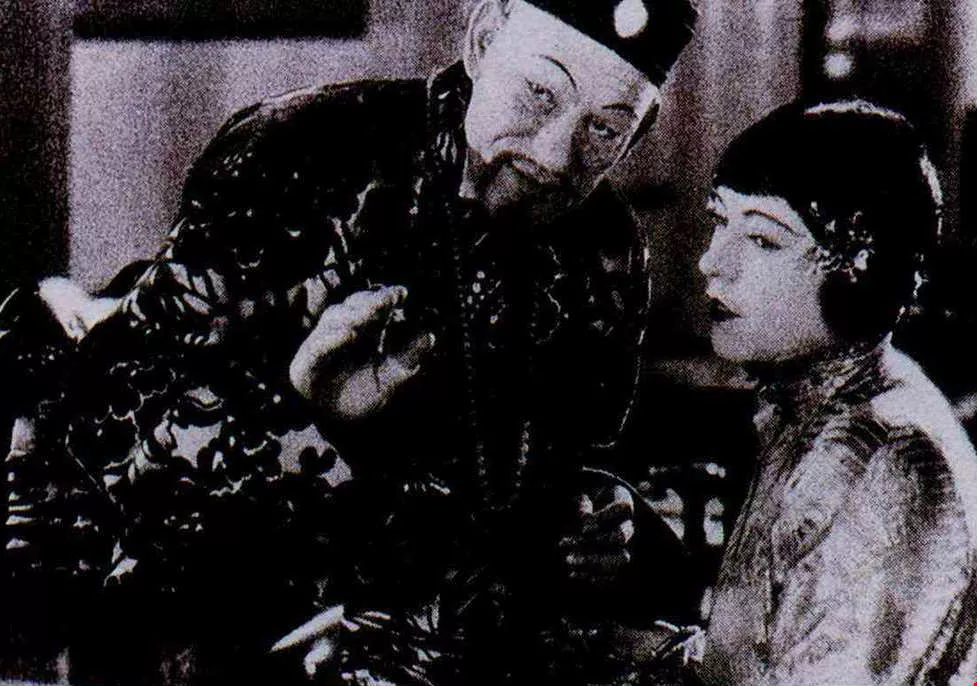
The sinister Fu Manchu was taken as a stereotype of the Chinese by many Westerners. (courtesy World Screen Magazine)
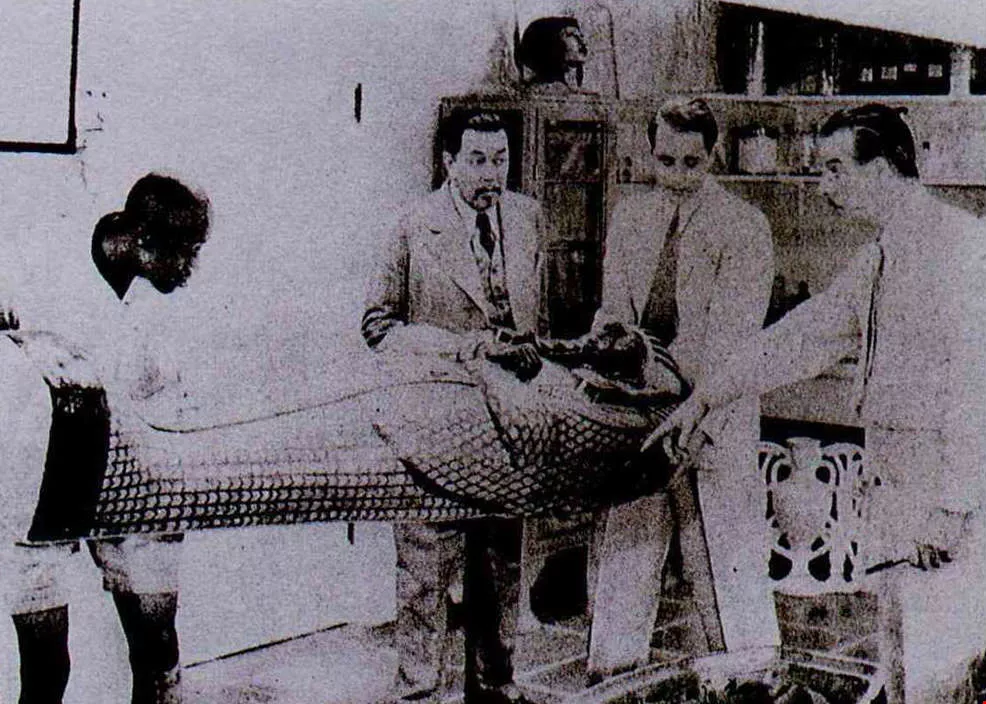
Charlie Chan (second from left) was a more positive, if still somewhat slippery, character. (courtesy World Screen Magazine)
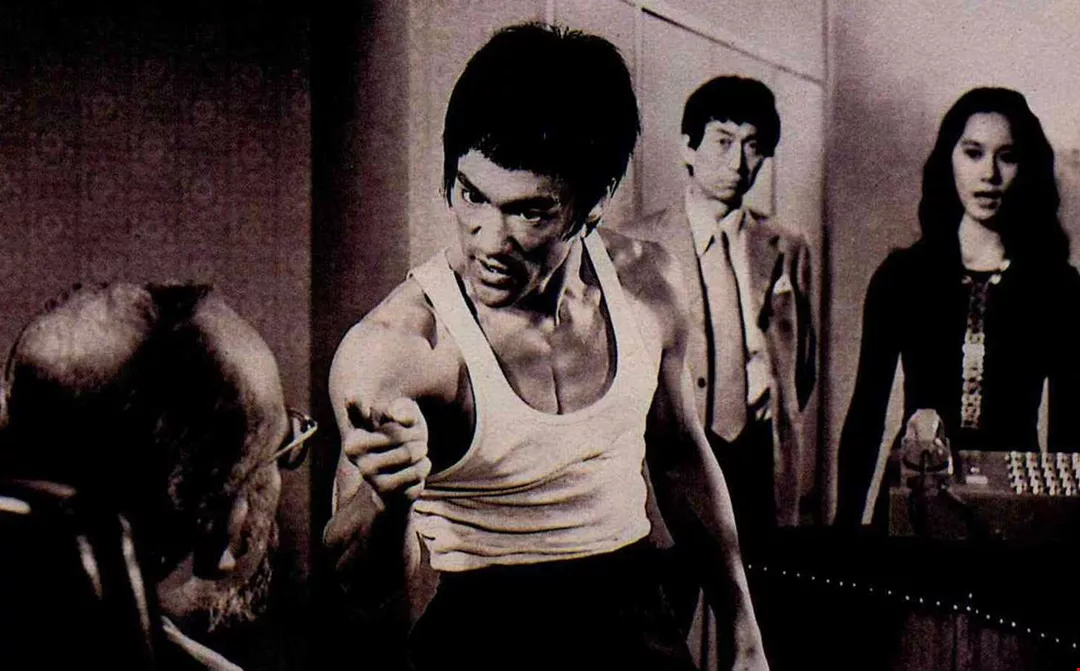
The kungfu heroes played by Bruce Lee swept away the old image of China as the "Sick Man of Asia." (courtesy World Screen Magazine)


@List.jpg?w=522&h=410&mode=crop&format=webp&quality=80)


