

Day care centers and kindergartens have been becoming more and more popular in Taiwan in the past ten years. This is due to the industrialization of society, and the concentration of population in urban areas. Now most families in Taiwan are closer to the nuclear family pattern common in the West, and frequently both father and mother have outside jobs. The parents feel they don't have adequate time to care for their children, and try to find helpers to take their place.
Along with the above social changes, the level of schooling in Taiwan is rising, and many parents think their children ought to have them an edge in future schooldays. The parents' expectations are summed up in the saying "Let the boys grow into dragons, the girls into phoenixes." Under these circumstances, the day care centers and kindergartens try to devise educational programs to satisfy parents.
Day care centers were once distinguished from kindergartens by their lower age range of pupils, and by their lesser emphasis on schooling. But today the distinction is blurred. So called kindergartens have some pupils as young as three years old, and most day care centers attempt to offer educational programs.
Because the children at these centers are so young, health-protection measures are a must. These especially take the form of providing nutritious meals for the children, with foods from each of five major food groups. In addition, the children at many centers have semiannual health checkups. Some facilities also give vaccinations.
The matter of physical training for the youngsters must take into account the fact that children's bodies are still developing, and cannot do all the things grownups do. A number of centers prefer letting children play in the natural manner that they play at home, rather than imposing organized sports on them at a tender age. The Chinese teachers employ an ancient proverb, "Don't pull at a seedling to make it grow faster," to justify their view. Wu Chin-chi, a professor of psychology, says, "Children at an early age should just use large muscle movements, not small muscle movements such as those in writing."
Professor Wu says pre-school education has three objectives. "To give them a cognitive base, and a basis for getting along with other people. To teach them basic movements such as getting dressed, putting on shoes, washing their faces, and the like. To provide an environment that encourages their natural curiosity."
To see the challenges that face a kindergarten, we took a look at Jung-hsing kindergarten, which has a history of more than twenty years. The school's directors feel that if children are made to do delicate work such as writing too young, they may develop problems for years afterward. Ch'en I-i, the director of the kindergarten, declares, "Typically parents didn't understand our policy of giving the children a 'life education,' and didn't want to send their children here. In these circumstances, we had to work extra hard to give the children the best education, one we could be sure would have good results. After seven years of being in the red, we finally made a small profit in the eighth year."
The kindergartens and day care centers are regulated at the national level by the ministries of the Interior and of Education, and at the local level by branches of the local governments. But many centers are not up to government standards, and high demand is straining available facilities. Moreover, most teachers in the facilities have very limited training in early childhood education. This situation is arousing a lot of concern, and parents hope there will soon be improvements in the situation. Presumably, if parents continue to demand improved facilities the centers will improve, just as day care centers have changed from being mere care facilities to being educational institutions in the past ten years.
[Picture Caption]
1. The attentive appearance of small children at class. 2.-5. The Experimental Day Nursery run by the Free China Relief Association's young charges at various activities; 2 shows watercoloring; 3 shows children playing happily on a slide. 4 shows children making shapes with clay. 5 shows children building a castle with blocks.
1.2. Children at the Tri-Service Day Care Center making cut-outs in the art class, and playing with puppets in the speech class. 3.-7. Classes at Jung-hsing Kindergarten. 3.4.5. Jung-hsing emphasizes life education; the students all have to learn to brush their teeth, dress, and put on shoes. In order to change the habits of children who are finicky eaters, the students make their own Chinese ravioli. 6. Children in an art class use red, yellow, and blue tempera paint to paint on white paper, to let the children mix colors as they wish, and understand the result of mixing. 7. A teacher and students sing together in the playground.
The kindergarten affiliated with the Taipei Municipal Teachers' College and its activities. 1. Children absorbed in drawing. 2.4.6. Children playing on playground equipment after class. 3. Singing and performing in the singing class, with the teacher's accompaniment. 5. The kindergarten has a lot of teaching aids and toys, and also pays attention to interior decorating; here is an attractive mural.
1.3.4. Ch'eng Chang Children's institute. 1 shows a ladder in a corner of the institute for children to play on. 3 shows children sitting on the carpet listening to a teacher tell stories. 4 shows children concentrating on cutting paper. 2. National Taiwan Normal University has a Department of Home Economics, which runs a kindergarten; the children are in the library using audio-visual equipment to watch a cartoon.
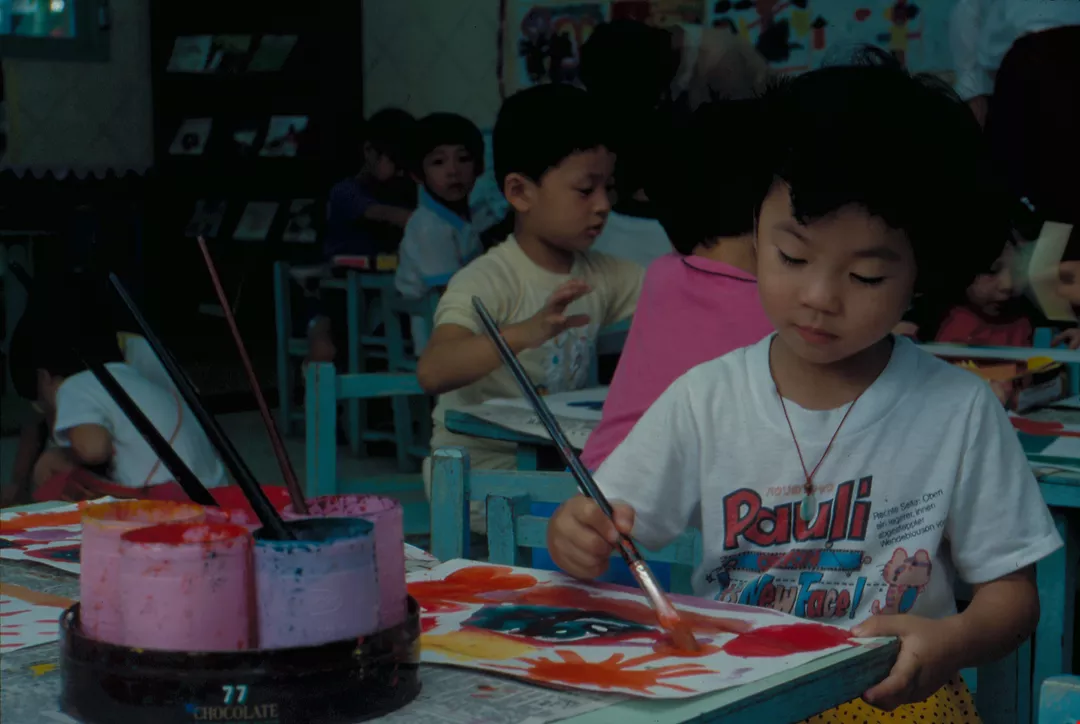
2.-5. The Experimental Day Nursery run by the Free China Relief Association's young charges at various activities; 2 shows watercoloring;.
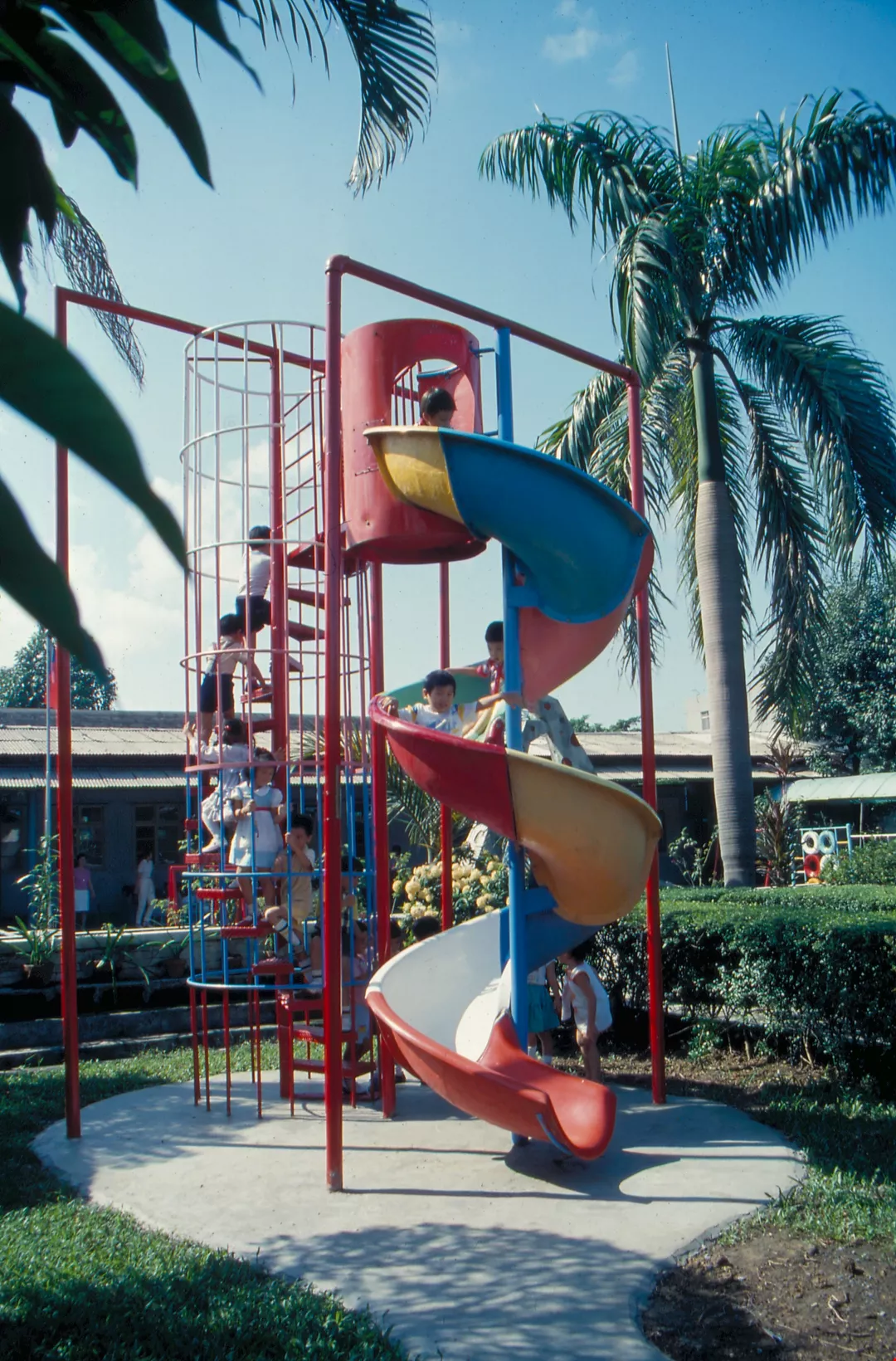
3 shows children playing happily on a slide.
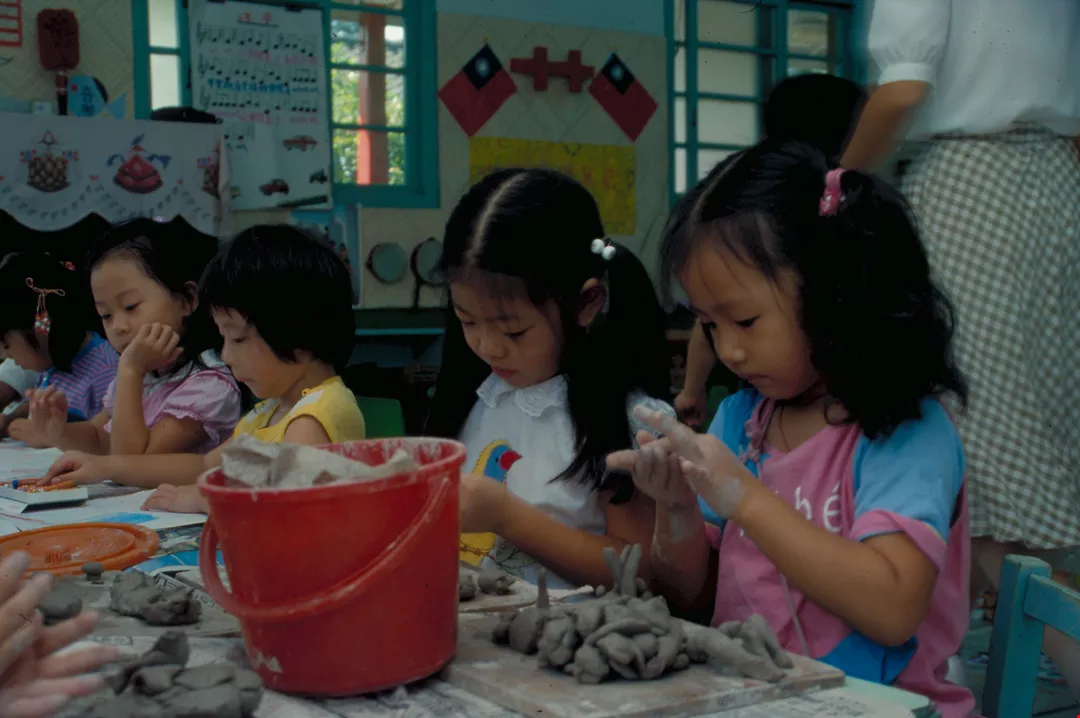
4 shows children making shapes with clay.
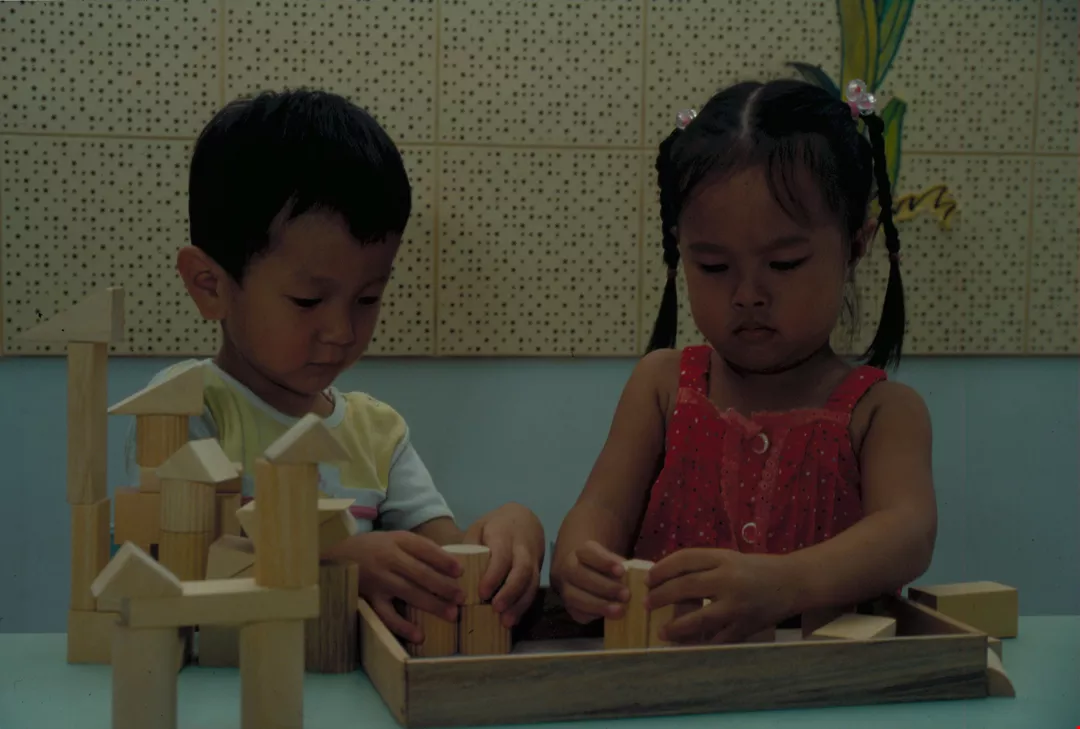
5 shows children building a castle with blocks.
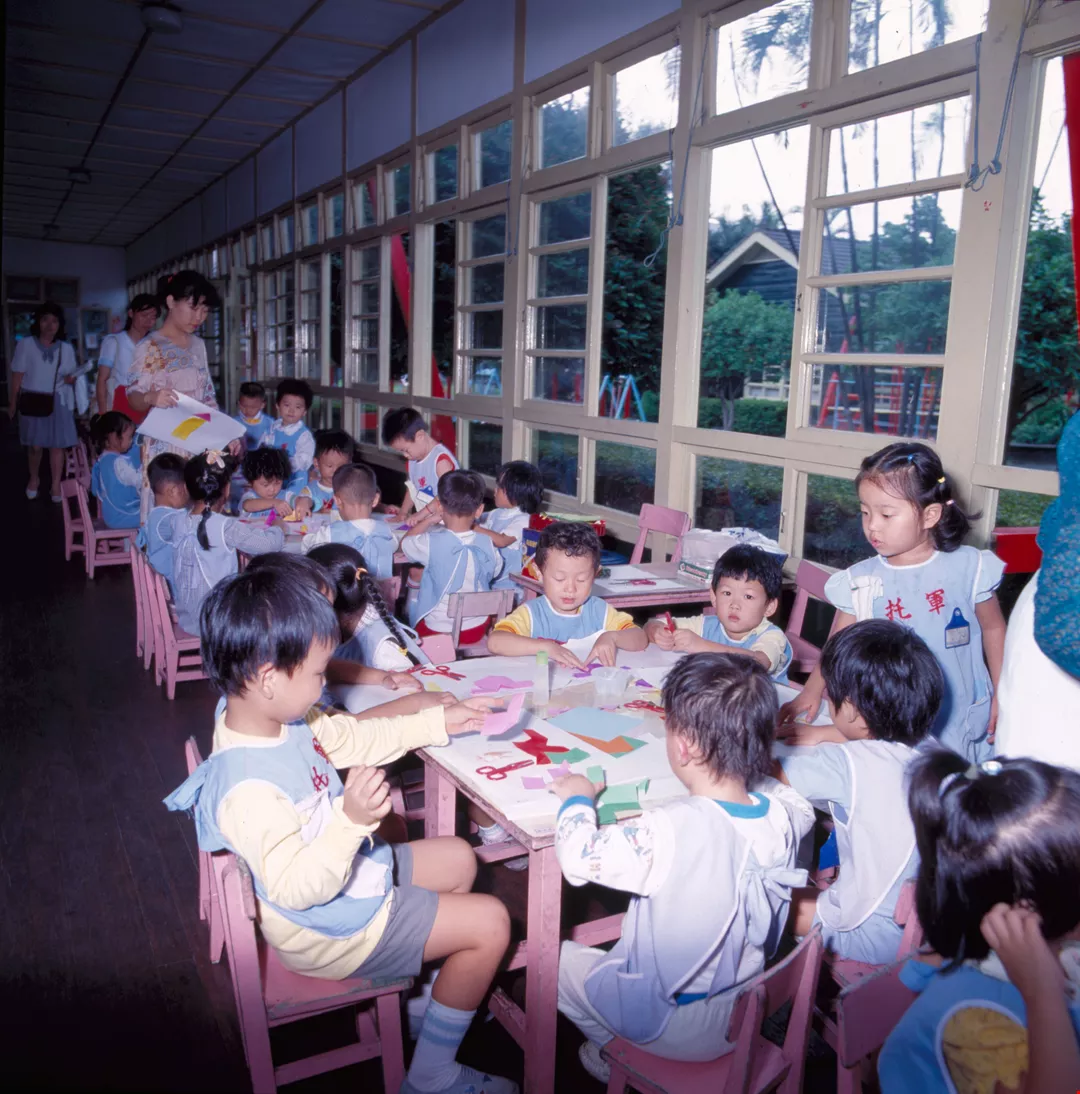
1.2. Children at the Tri-Service Day Care Center making cut-outs in the art class, and playing with puppets in the speech clas.
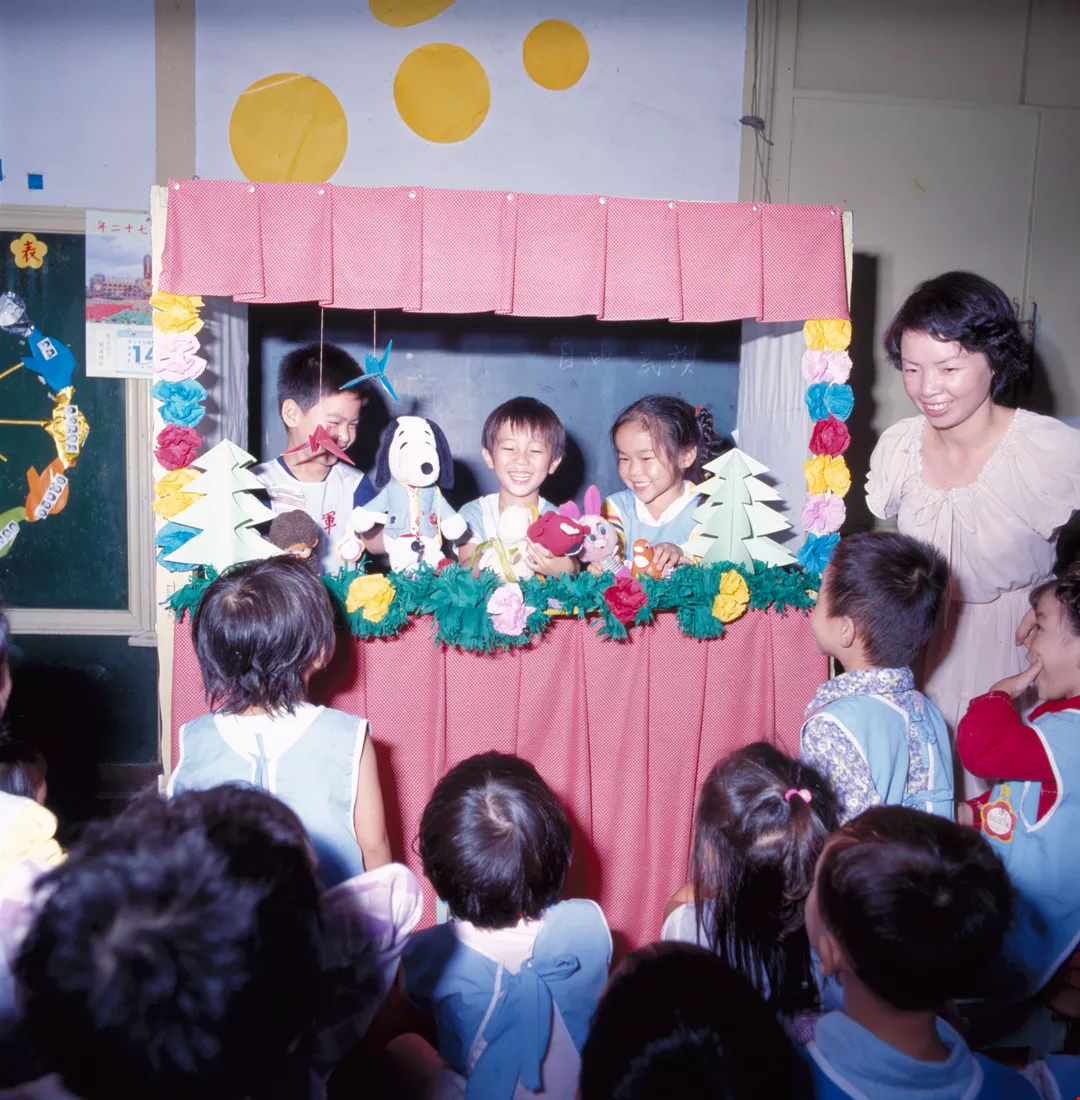
1.2. Children at the Tri-Service Day Care Center making cut-outs in the art class, and playing with puppets in the speech clas.
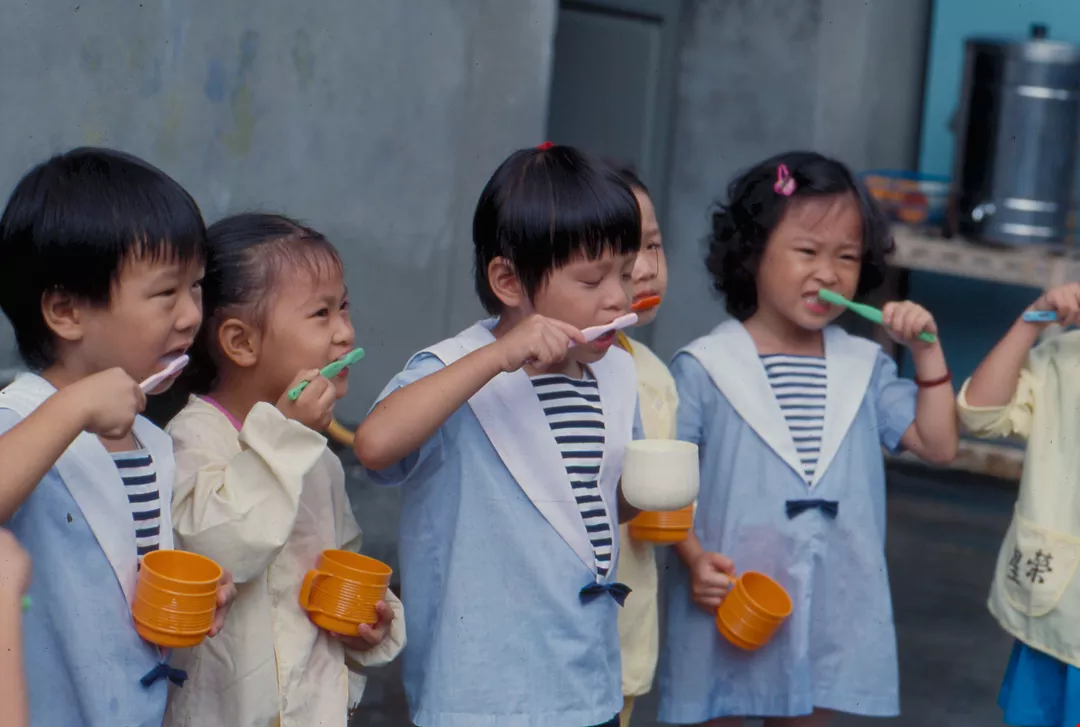
3.-7. Classes at Jung-hsing Kindergarten. 3.4.5. Jung-hsing emphasizes life education; the students all have to learn to brush their teeth, dress, and put on shoes. In order to change the habits of children who are finicky eaters, the students make their own Chinese ravioli.
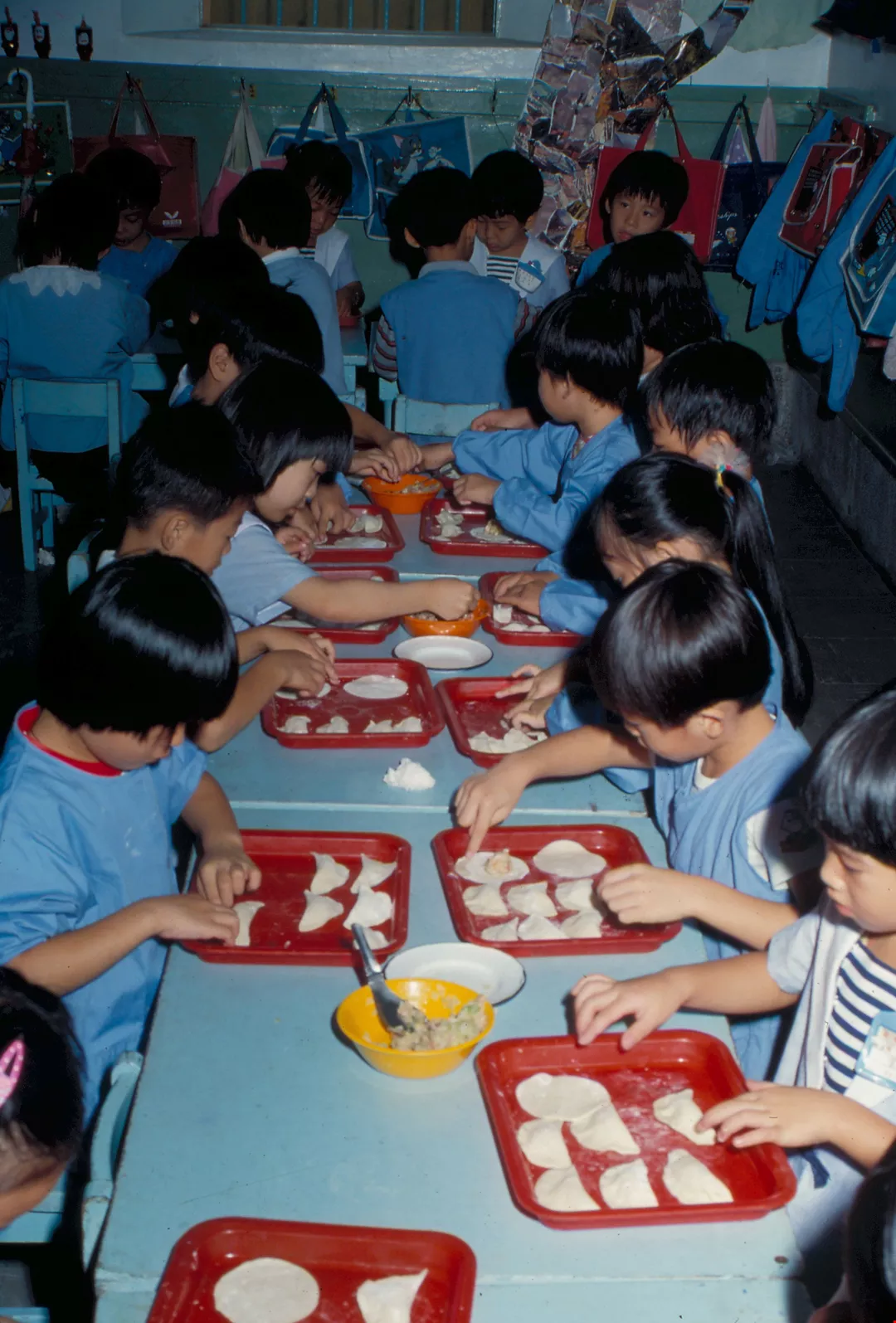
3.-7. Classes at Jung-hsing Kindergarten. 3.4.5. Jung-hsing emphasizes life education; the students all have to learn to brush their teeth, dress, and put on shoes. In order to change the habits of children who are finicky eaters, the students make their own Chinese ravioli.
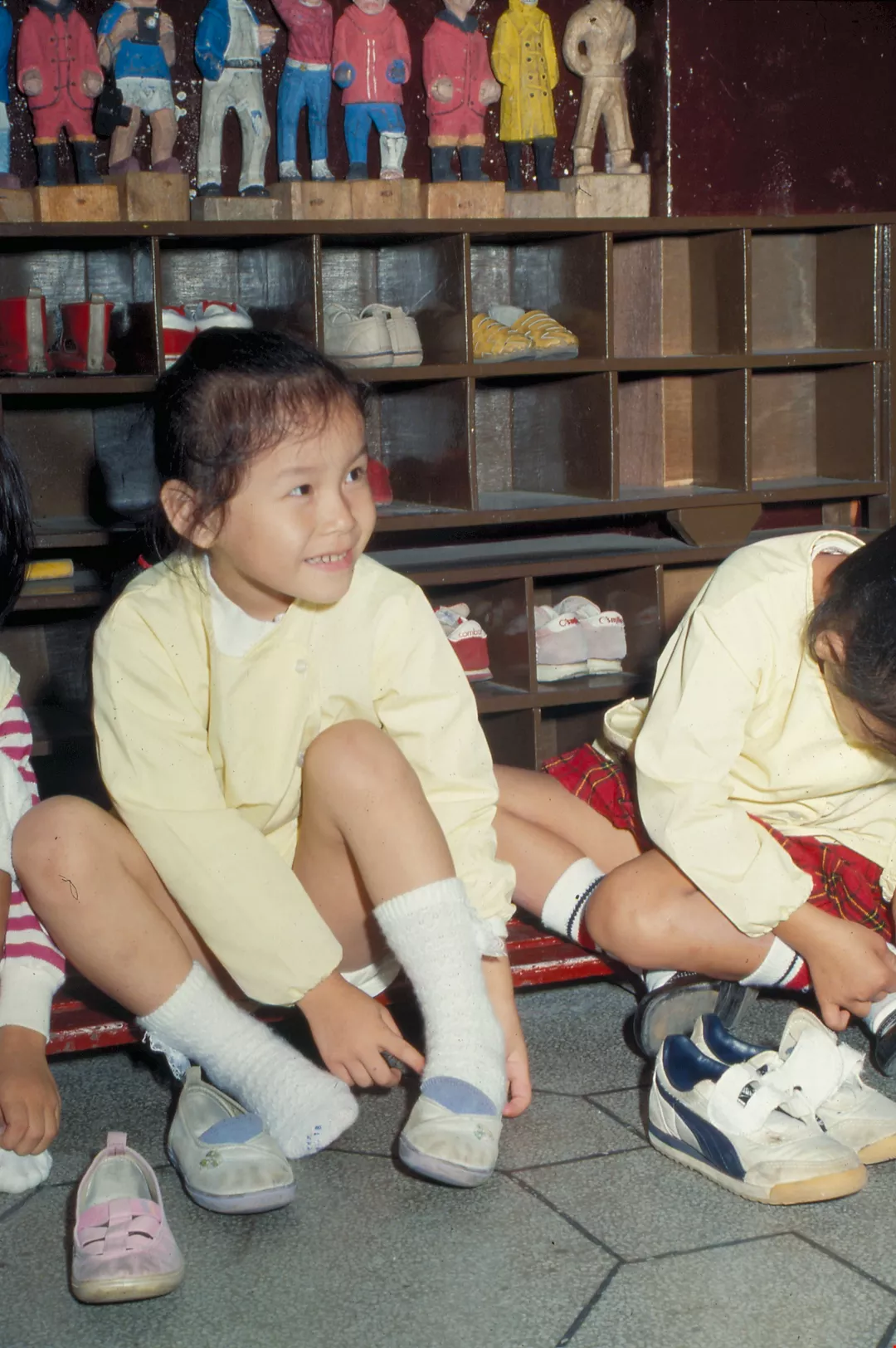
3.-7. Classes at Jung-hsing Kindergarten. 3.4.5. Jung-hsing emphasizes life education; the students all have to learn to brush their teeth, dress, and put on shoes. In order to change the habits of children who are finicky eaters, the students make their own Chinese ravioli.
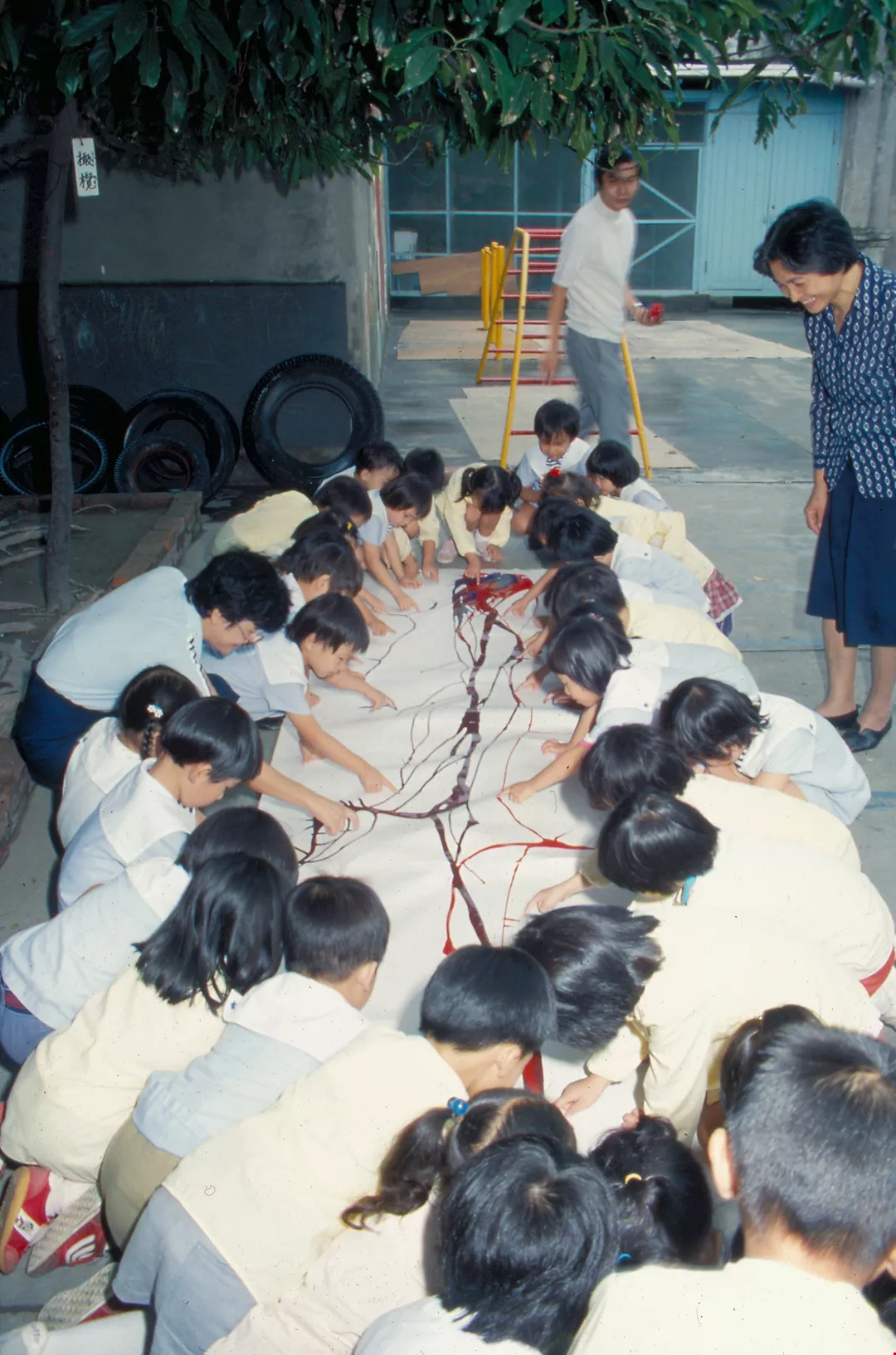
6. Children in an art class use red, yellow, and blue tempera paint to paint on white paper, to let the children mix colors as they wish, and understand the result of mixing.
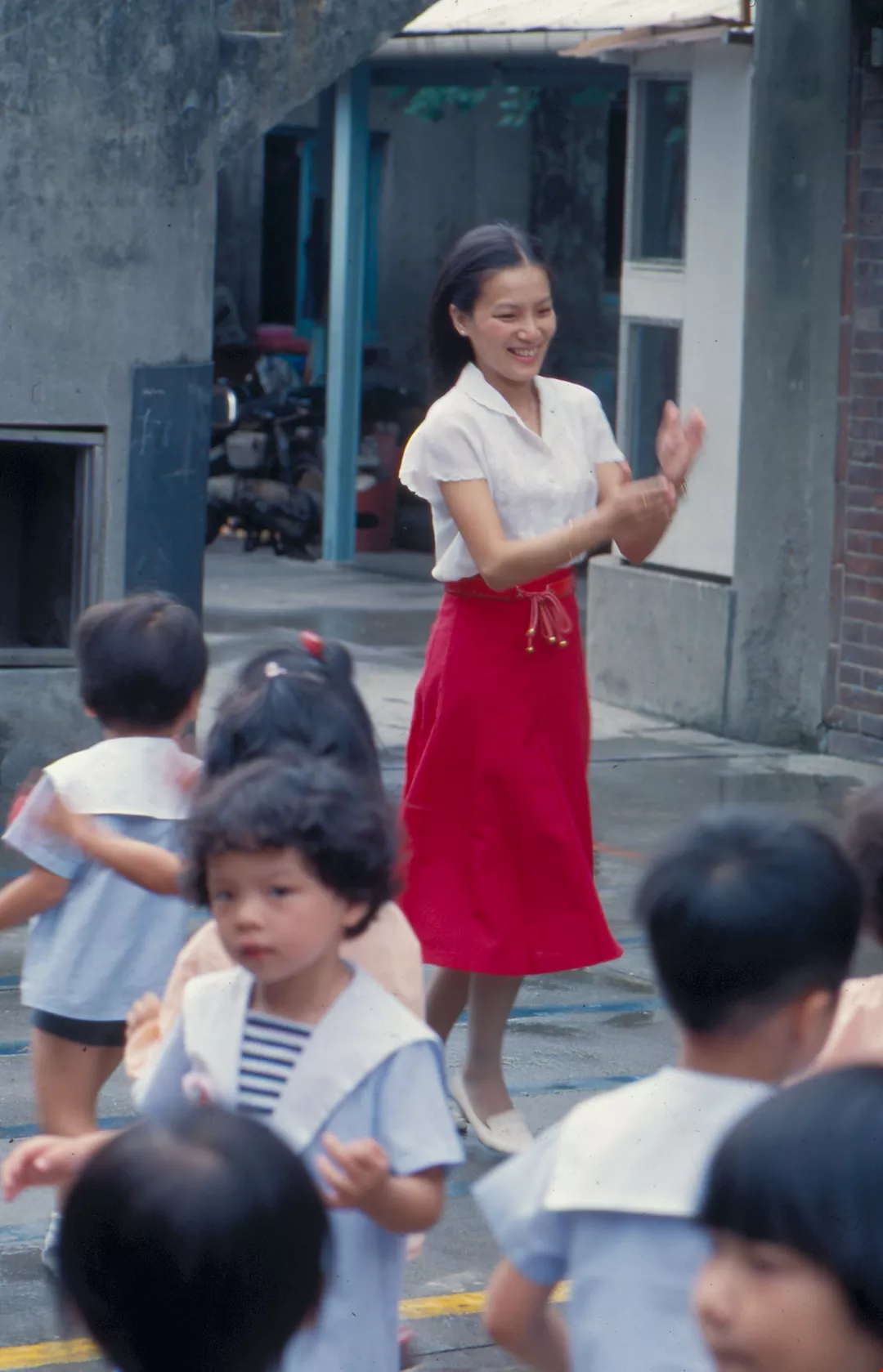
7. A teacher and students sing together in the playground.
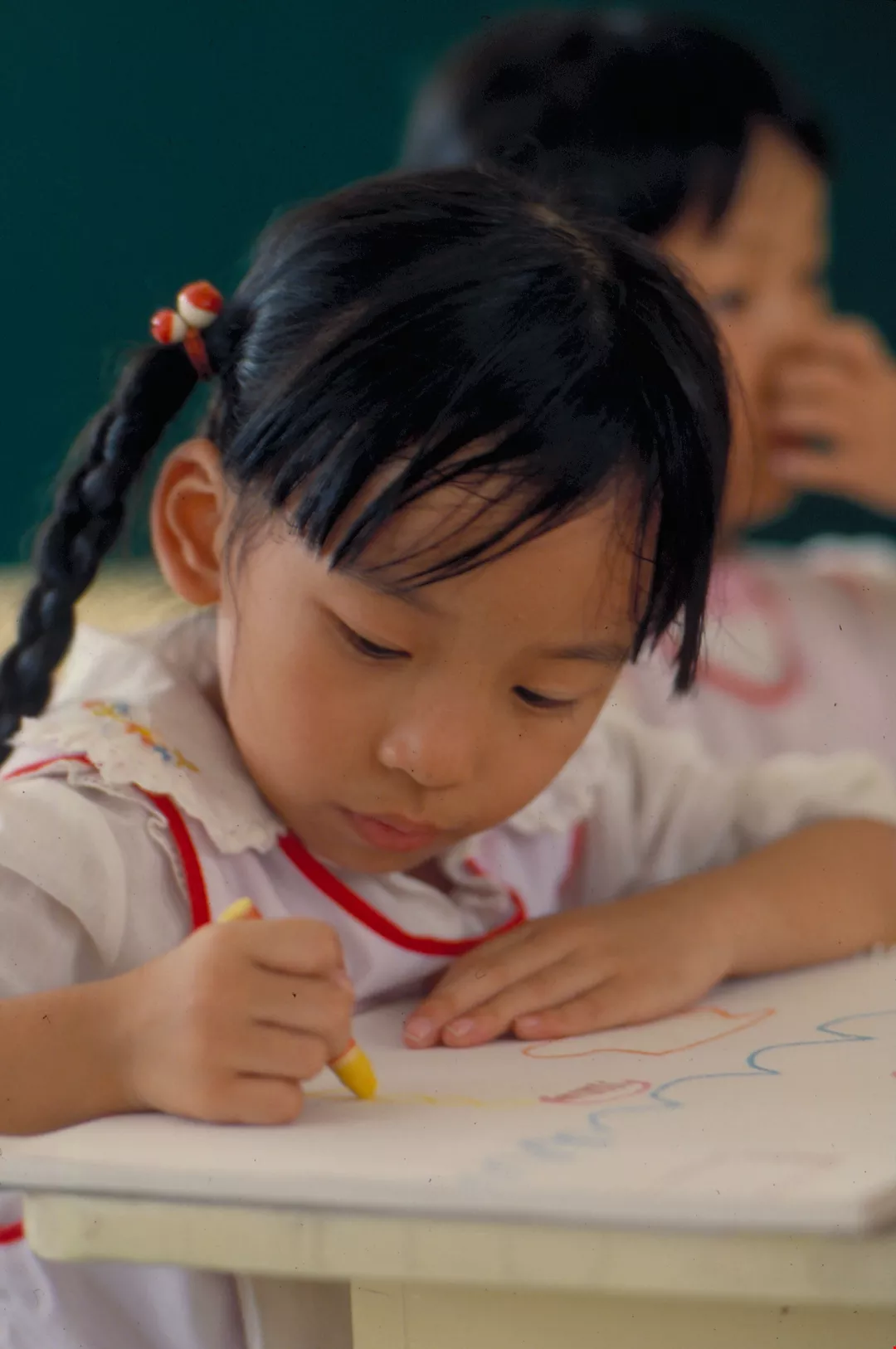
The kindergarten affiliated with the Taipei Municipal Teachers' College and its activities. 1. Children absorbed in drawing.
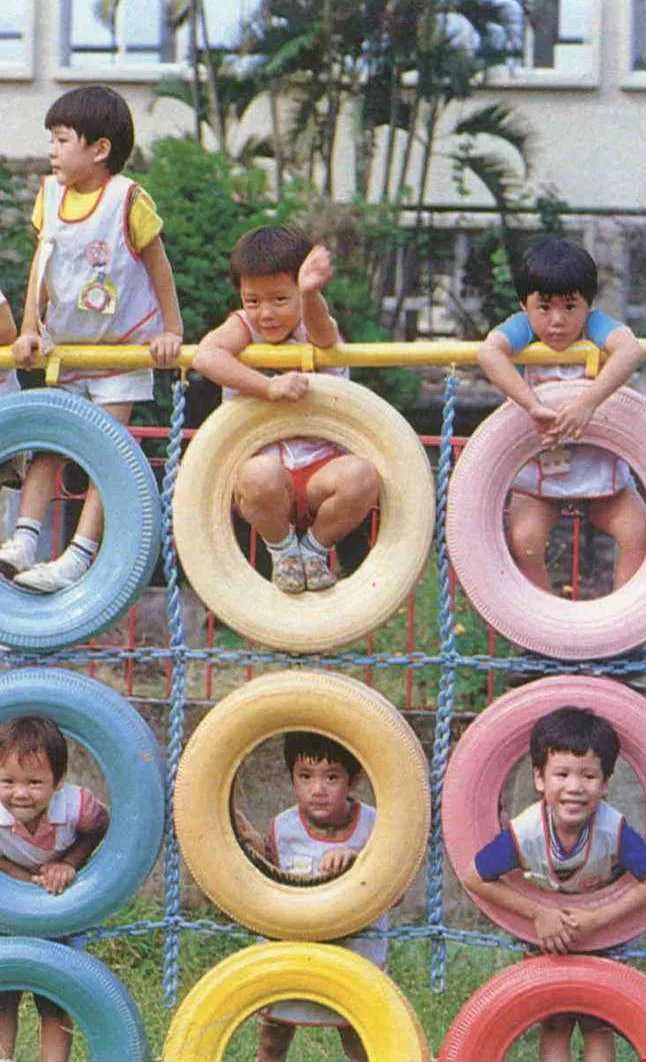
2.4.6. Children playing on playground equipment after class.
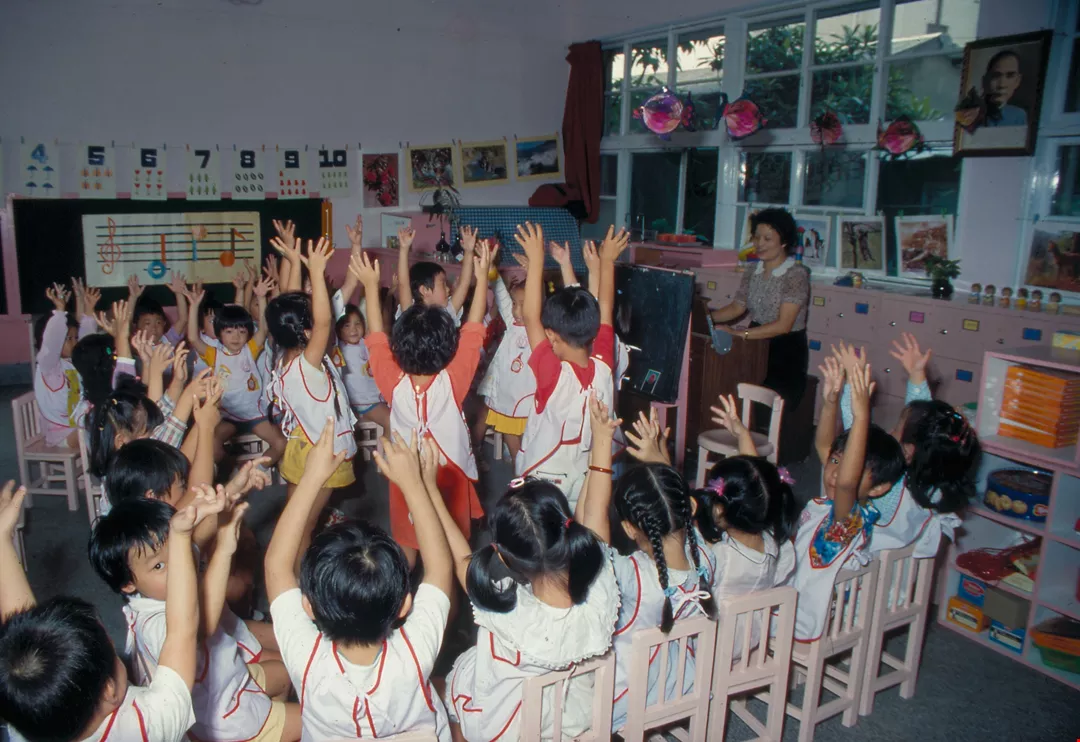
3. Singing and performing in the singing class, with the teacher's accompaniment.
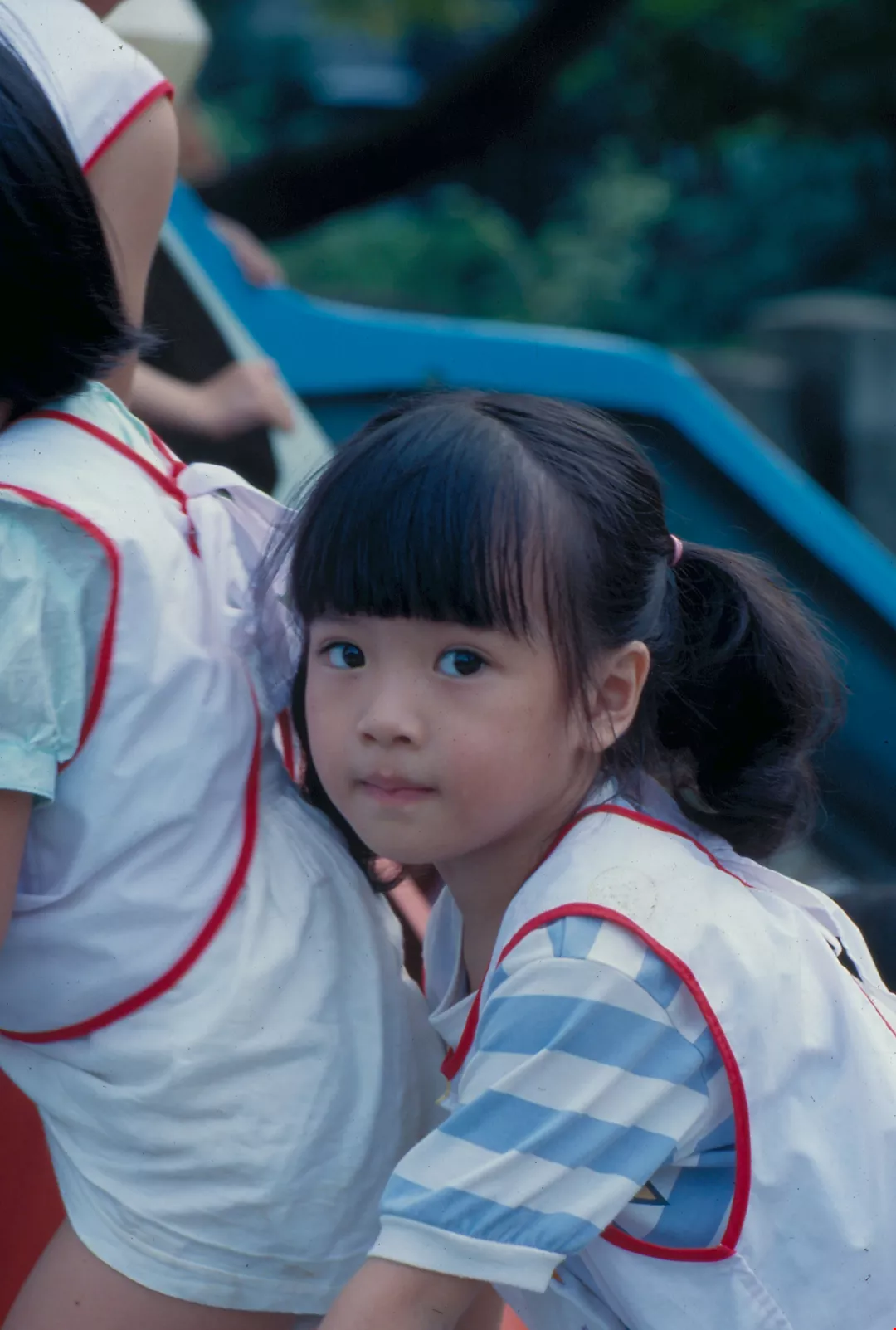
2.4.6. Children playing on playground equipment after class.
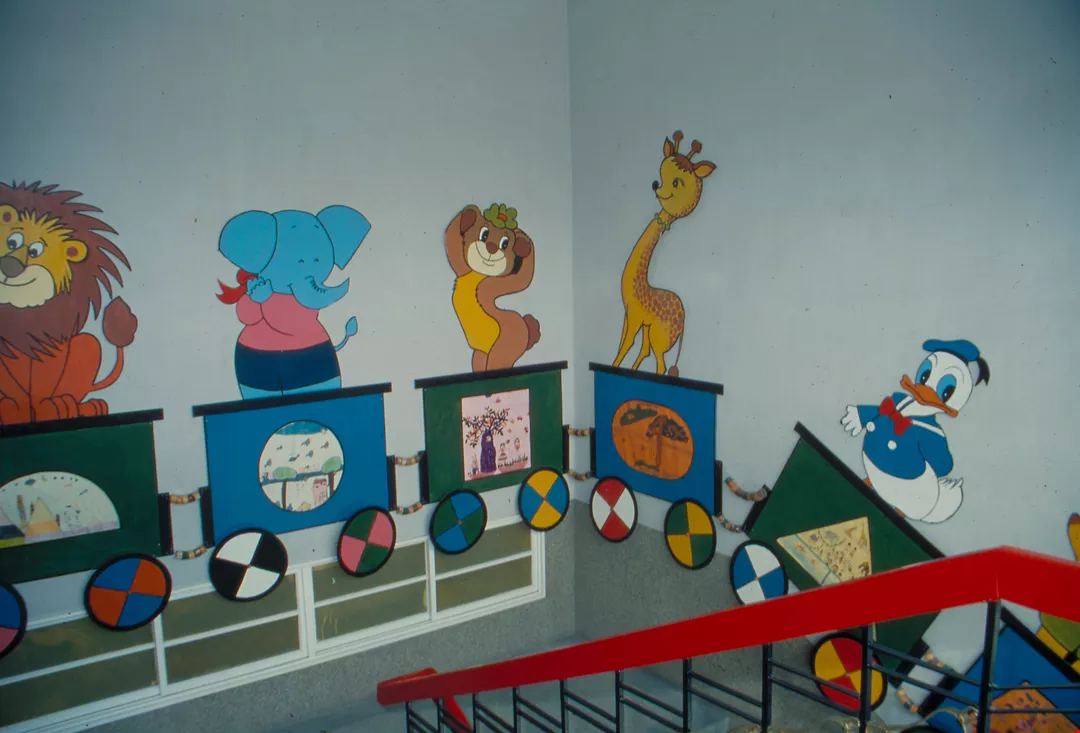
5. The kindergarten has a lot of teaching aids and toys, and also pays attention to interior decorating; here is an attractive mural.
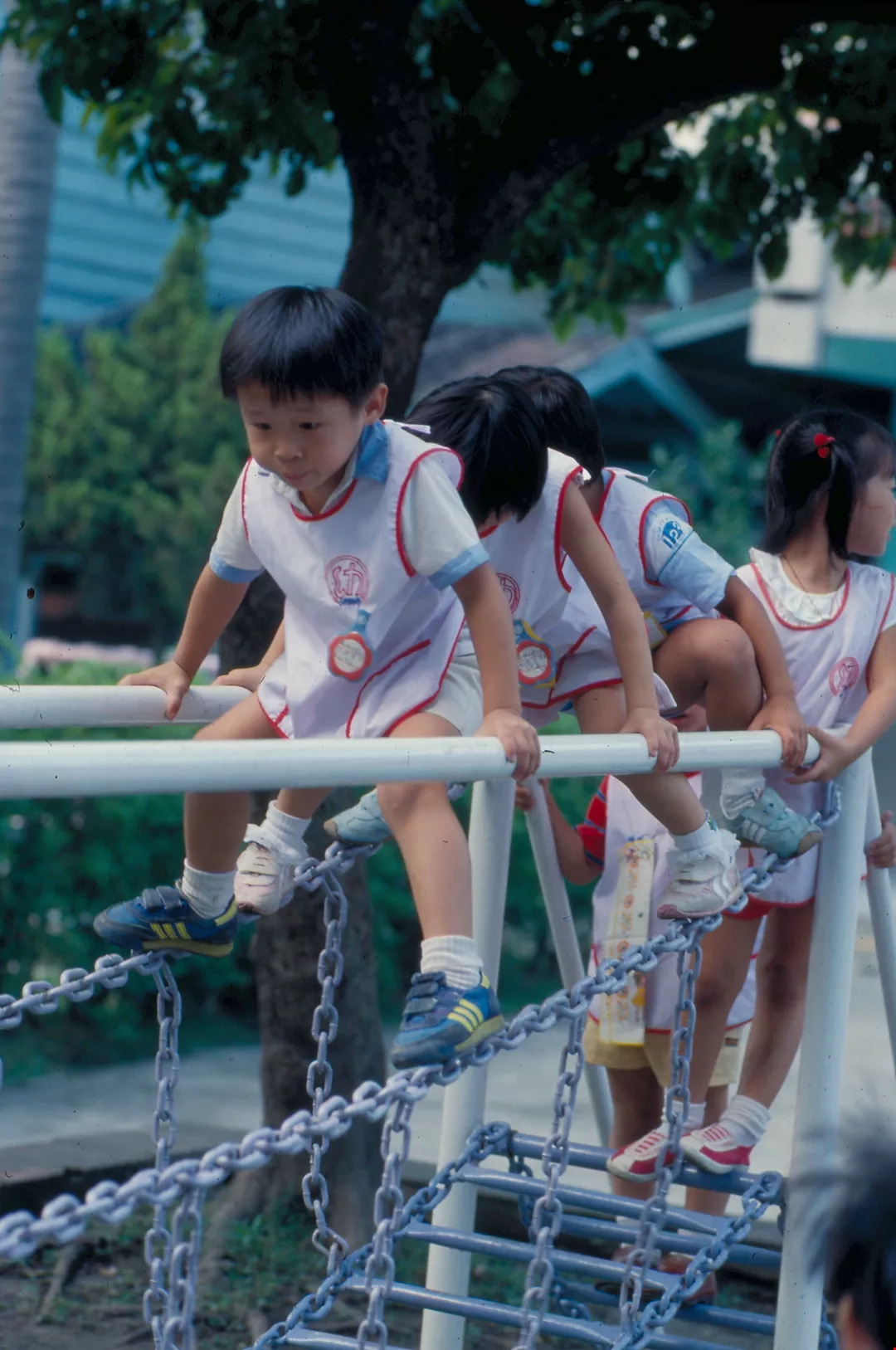
2.4.6. Children playing on playground equipment after class.
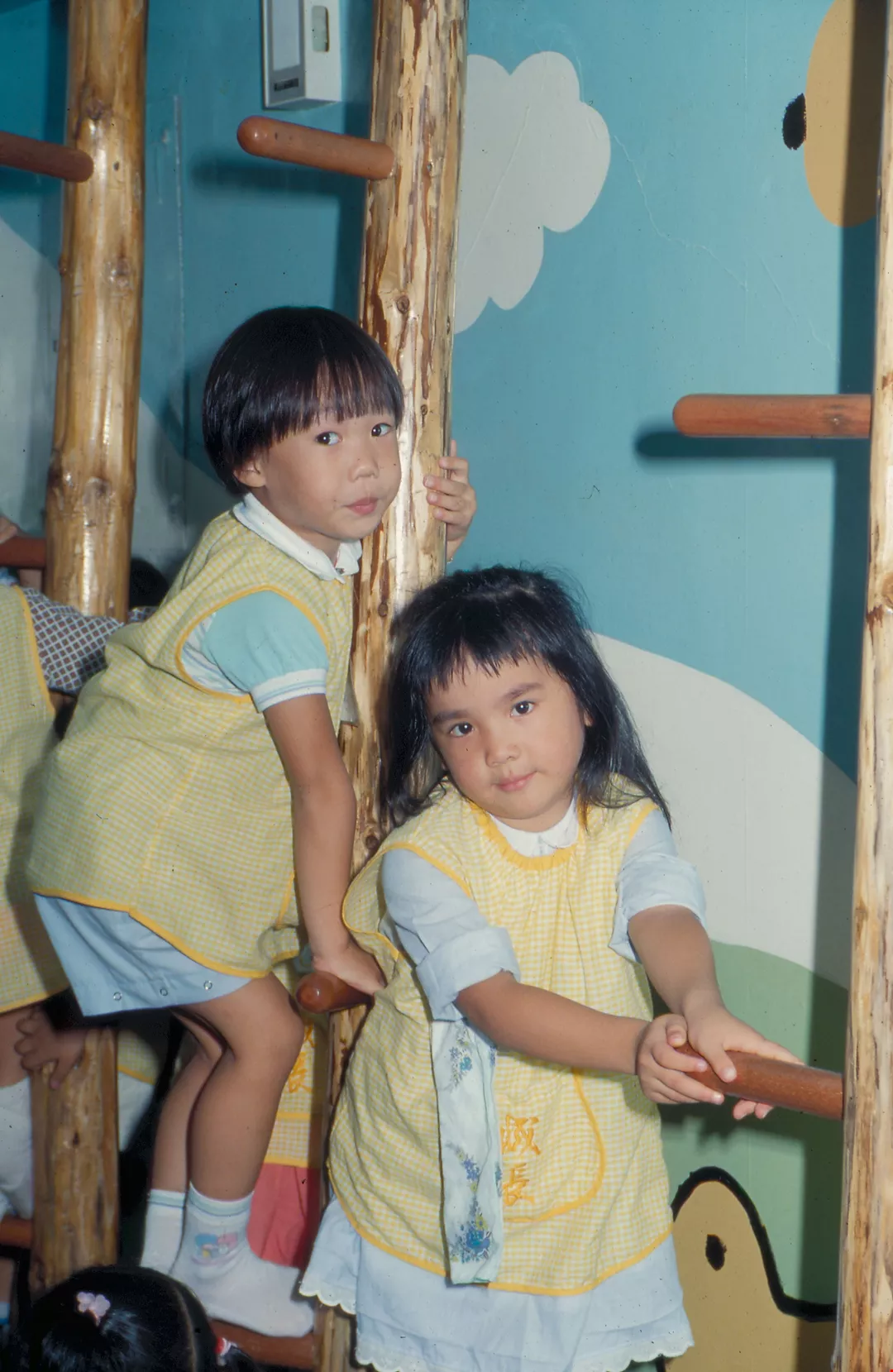
1.3.4. Ch'eng Chang Children's institute. 1 shows a ladder in a corner of the institute for children to play on.
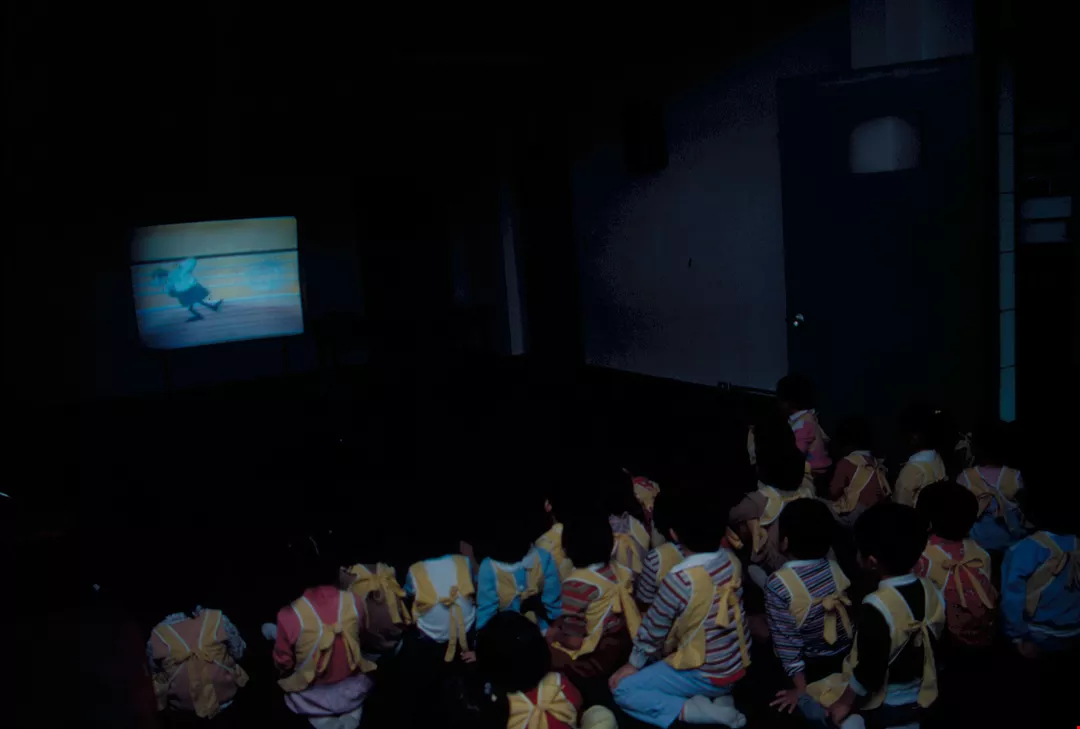
2. National Taiwan Normal University has a Department of Home Economics, which runs a kindergarten; the children are in the library using audio-visual equipment to watch a cartoon.
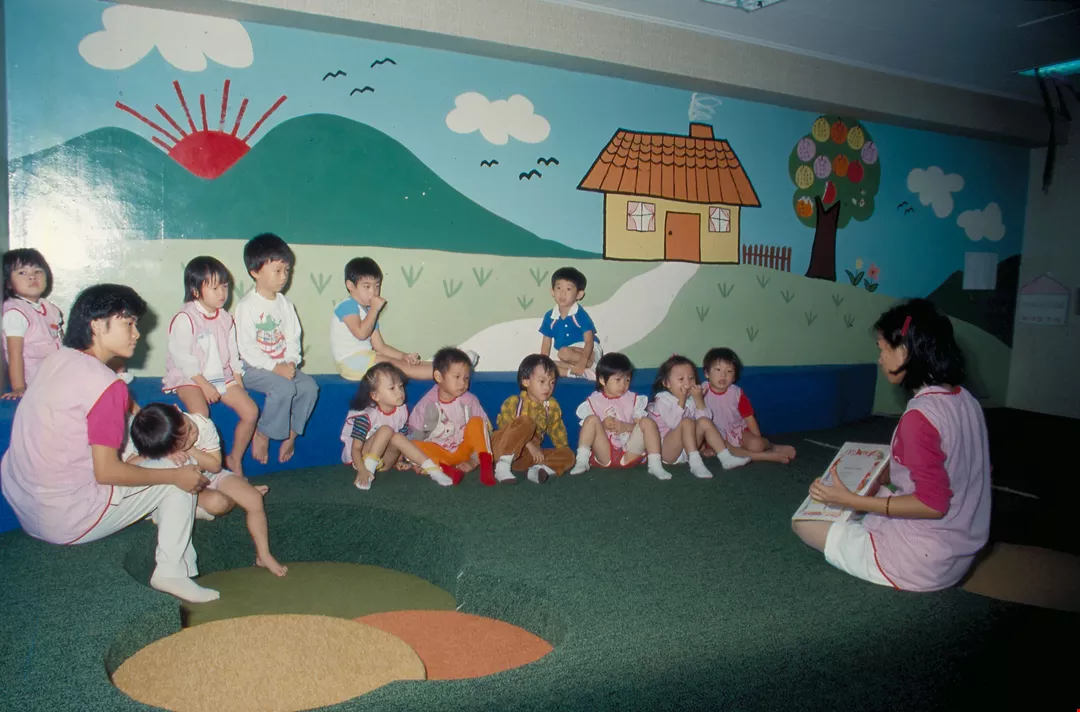
3 shows children sitting on the carpet listening to a teacher tell stories.
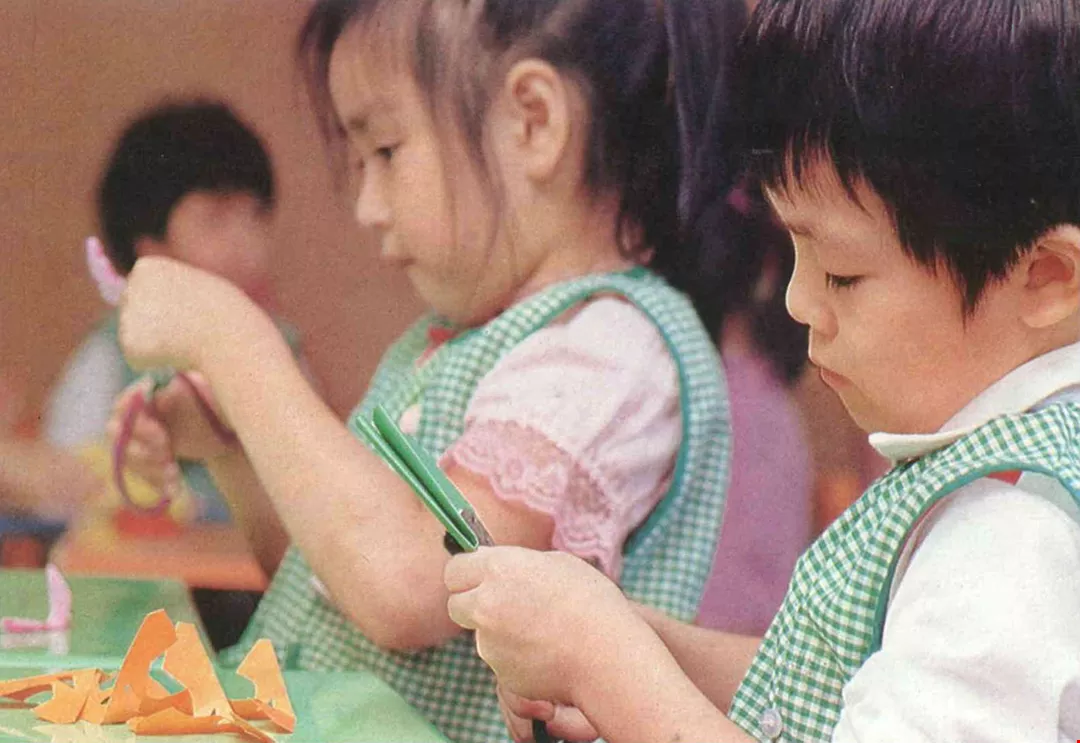
4 shows children concentrating on cutting paper.


@List.jpg?w=522&h=410&mode=crop&format=webp&quality=80)


