Can Chinese people really accept nude art?
"Why not?" art critic Ho Huai-shuo reacts immediately. He believes that once the curiosity, suspicion, rejection, and enthusiasm have passed, we can become accustomed to nude art, just as we have to Western food and clothing or any other foreign cultural influence.
Human nature, be it Chinese or foreign, ancient or modern, theoretically has its common denominators; nothing human can be completely strange or unfamiliar to us. From the drive for food and sex to the thirst for freedom and democracy and the quest for truth and beauty, the psychology and the logic are the same; what's different is how people of different times and places express them, all in their own ways. So when two different cultures make a "close encounter of the third kind," understanding and communication are needed before conflict and rejection can yield to acceptance and appreciation.
Just so, nude art's arrival in China, the land of decorum and propriety, led immediately to misunderstanding and suspicion. And the nervous soldiers standing in the front line were the teachers and students of college art departments.
Drawing from nude models was introduced to China by the painter Liu Hai-su when he returned from studying in France in the 1920's. But when word got out that "Liu's got a girl in his classroom with her pants off!" the local warlord issued an immediate cease-and-desist, and only a personal appearance by Ts'ai Yuan- p'ei, the minister of education, saved the day.
Over half a century later, the social ostracism of nude models seems to have shown little improvement. When I visited the art department at National Taiwan Normal University for this article, the model there nervously refused to have her picture taken, confessing that neither her family nor her friends knew about her profession.
Nude painting class may sound like fun to someone who has never been there, but with our countrymen's conservative mores, the students are apt to be as nervous as the model is reticent.
In his classic work on the subject, The Nude, the late Kenneth Clark had this to say about painting from the nude: "It is widely supposed that the naked human body is in itself an object upon which the eye dwells with pleasure and which we are glad to see depicted. But anyone who has frequented art schools and seen the shapeless, pitiful model which the students are industriously drawing will know that this is an illusion."
Ts'ai Yuan-p'ei, the erstwhile education minister, held the theory that art "purifies" the soul and that Greek statues are perfectly innocent in their beauty.
Can the magic of art really transform the body of a warm, desirable female into that of an otherworldly, rarefied saint? If so, why have Chinese continued to argue for the past half century about "sex in art" and "the national character"?
The argument commonly goes something like this: A sanctimonious guardian of the public morals points to a nude painting and says, "If that's not sex, what is?" While his adversary, flushing to the ears, rejoins, "Sex? Only someone with a dirty mind would think like that!"
So it goes back and forth, and until someone invents a device to measure the precise physiological reactions, neither can prove who is more titillated than who.
Ho Huai-shuo thinks the crux of the problem lies in rampant moralistic Philistinism. Art and sex are fundamentally interfused and not in conflict at all, he maintains.
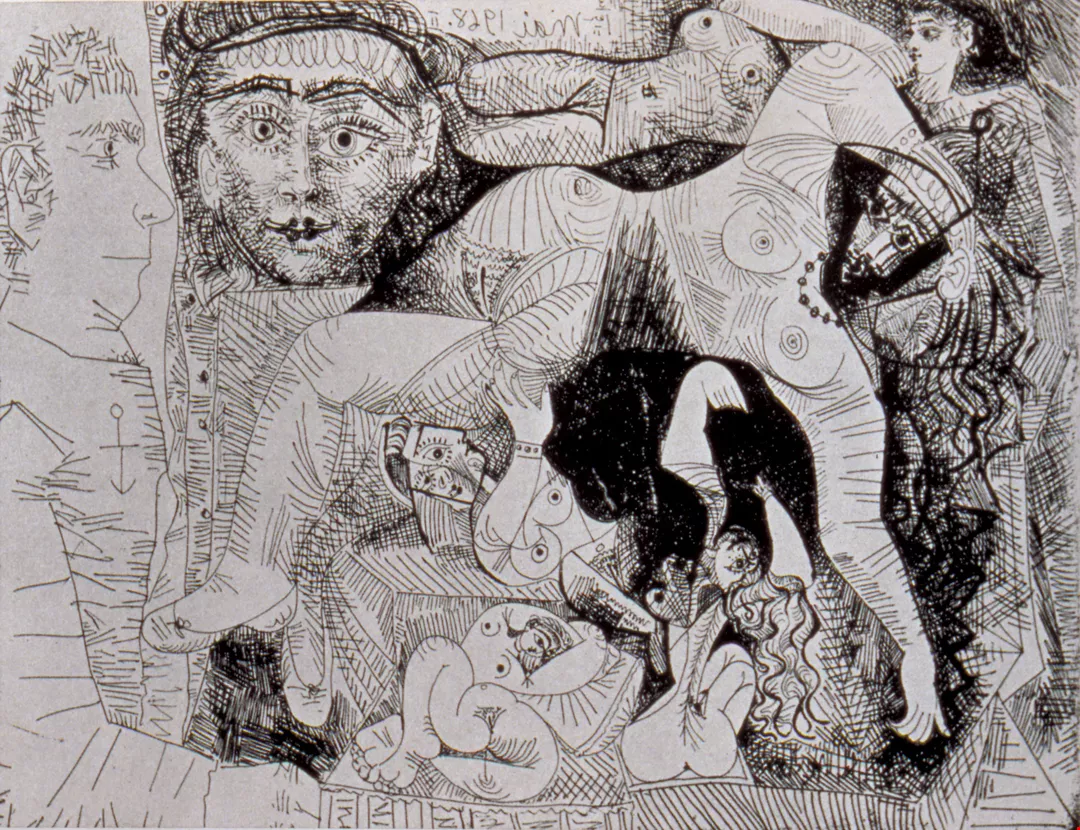
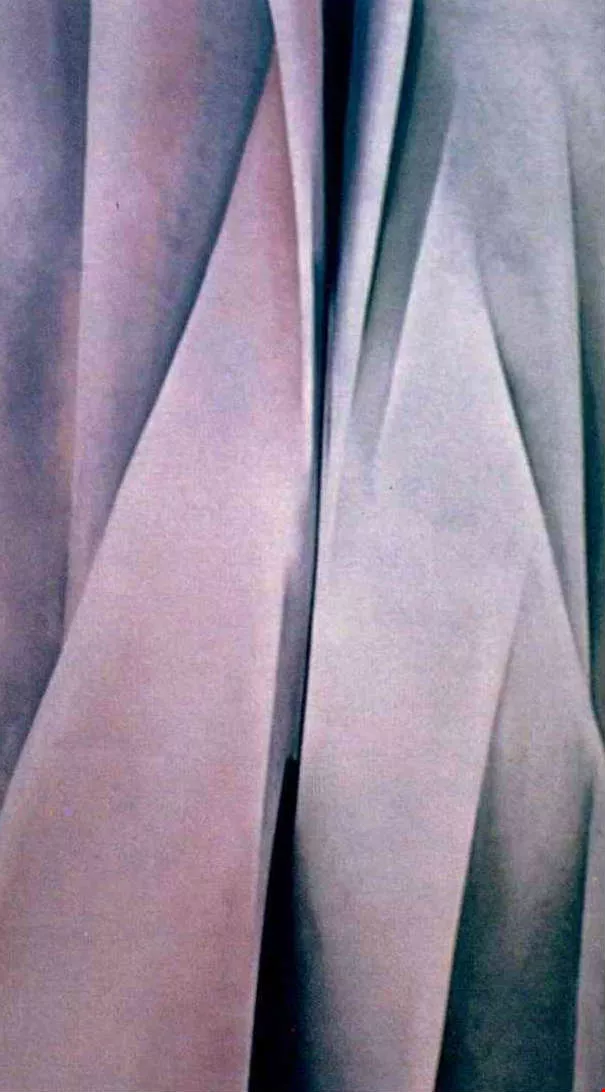
The painter Li Te says, "First ask whether the piece is good art. If it is, the rest is no problem." As examples he points to Picasso's erotic drawings and Georgia O'Keefe's suggestive flowers. These works have sex as a theme, but there's no question of their being "dirty pictures."
"Art reflects life, and sex is clearly an important part of life," Ho Huai-shuo continues. "Unless you've eliminated sex from the body, you can't say art can't include sex."
Actually, even in the West, where it has had thousands of years of tradition, nude art has not been without controversy.
To the Greeks, the body and the soul were equally important, and a beautiful soul would necessarily reside in a beautiful body. Under this belief were shaped the perfect proportions of Greek nude sculpture, which have remained an ideal of beauty in Western esthetics ever since.
During the middle ages, however, the nude practically disappeared from art. Tseng Yu, a researcher at the National Palace Museum, explains that "Christianity held that the body is the root of all sin. That's why Adam and Eve were expelled from the Garden of Eden." From being a mirror of spiritual perfection, the body had turned into an object of shame.
An interesting example of the radical change that took place can be seen in the way the Three Graces were portrayed, fully clothed, in the middle ages. As Kenneth Clark wrote, "When the Graces are represented by three nervous ladies hiding behind a blanket, they no longer convey to us the civilising influence of beauty."
During the Renaissance, when the status of Man was reaffirmed, the art of the nude reached a new peak, capable of expressing a host of emotions and concepts. Tseng Yu says that the nude did not yield its primacy of place in Western art until after the 17th and 18th centuries, when it was replaced by landscape painting.
Of course, artists did not stop exploring the complex beauty of the human body, and their works often gave rise to controversy. Manet's Dejeuner sur l'herbe aroused the ire of 19th-century Parisians for portraying a nude woman in an everyday, nonmythological setting. And in the early 20th-century, Modigliani's nude paintings were boycotted, largely because their delectable skin tones were considered sensually too enticing.
So history shows us that Westerners' "sympathy" for nude art has varied according to time and place, too. And while "national characters" may differ East and West, historical parallels can be found. China's Han (206 B.C. to 220 A.D.) and T'ang (618-907) dynasties, like ancient Greece and the Renaissance, were periods of cultural splendor and national power, but after the Sung dynasty (960-1279) the splendor, as in the Western middle ages, gradually dimmed.
Chinese veins may not run with the blood of satyrs, but we're not all saints, either. Just how should we deal with nudity in art?
Kenneth Clark provides us with a passage for reflection. He quotes a noted professor who said, "If the nude is so treated that it raises in the spectator ideas or desires appropriate to the material subject, it is false art, and bad morals." Lord Clark replies: "This high-minded theory is contrary to experience. . . .No nude, however abstract, should fail to arouse in the spectator some vestige of erotic feeling. . . [otherwise] it is bad art and false morals."
Faced with nude art we may, perhaps inevitably, feel somewhat uncomfortable and embarrassed. But we can at least try to learn to live with it, in "peaceful coexistence" so to speak, and admit that the body can be equally as beautiful and important as the spirit.
[Picture Caption]
And one of Georgia O'Keefe's "flowers." (photo courtesy of Artists Magazine)
From this artist's expression you can see that drawing from the nude is not necessarily enticing. (photo by Ouyang Chih-ting)
One of Picasso's later etchings. (photo courtesy of Artists Magazine)
Looking at a Greek statue of the Three Graces (right), we can see how poorly treated they were in the middle ages. (photo courtesy of Huang Ts'a i-lang)
These paintings were both subjects of controversy in the West. On the left is Manet's Dejeuner sur l'herbe and on the right Modigliani's Nu ass is sur un divan (photo courtesy of Hsiung Shih Art Monthly)
From this artist's expression you can see that drawing from the nude is not necessarily enticing. (photo by Ouyang Chih-ting)
One of Picasso's later etchings. (photo courtesy of Artists Magazine)




@List.jpg?w=522&h=410&mode=crop&format=webp&quality=80)


@List.jpg?w=522&h=410&mode=crop&format=webp&quality=80)