Convicts of the Mind--The Mentally Ill Await Liberation
Chang Chung-fang / photos Hsueh Chi-kuang / tr. by Jonathan Barnard
November 1994


Cheng Tai-an, a bio-medical researcher at the Academia Sinica, says that one out of five people in Taiwan has some sort of mental disorder.
But in Taiwan the mentally ill and their families are still a group hiding in the shadows. Lin Shou-cheng, director of the Taipei Association for the Families of Recovering Psychiatric Patients, notes that hospitals' duty of providing confidentiality makes it difficult to get data about patients' families. When preparing to form his association, he had "to stand guard" at psychiatric wards to get information. Of the patients' relatives he was able to buttonhole, only 13 percent would join.
What kind of situation are the mentally ill and their families facing now?
Based on a study Chen Tai-an did for the Family Medicine Department at National Taiwan University, 65 percent of the ill have mental problems. A startling statistic to be sure. Are there, as the Taiwanese expression goes, "lots of crazies in years of bad harvest"? As anxieties have grown with the advance of industrial and commercial society, have we entered an age of mental illness?
Mental illness covers a vast range of problems, which can be lumped into two general groups. The first includes psychoneuroses, such as anxiety neuroses, phobias, and obsessive-compulsive neuroses. The second group covers mental illnesses that more fit people's notions about what it means to "go mad"--such as schizophrenia, manic depression, and paranoia. These are of uncertain cause.
That startling "one out of five" comprises mostly those with psychoneuroses. According to the results of a study on mental illness in Taiwan by NTU's Ye Ying-kun, mental disorders have increased 8-15 times during the past two decades of social transformation. But major mental illnesses such as schizophrenia have held steady at only about 3 percent of the total.
Estimates put the number of people in Taiwan with mental illnesses that are not of psychological origin at about 60,000. These may account for only one-seventh of all the mentally ill, but because the cause of illness is unclear, no radical treatment is available. This fact, combined with many misunderstandings about these illnesses, puts great pressure on the patients and their families. All the cases discussed below are of patients whose mental illness is not psychological in origin.
One woman, spent physically and mentally, says her daughter's illness has caused both the daughter and her younger brother to get divorced. The mother says she used to take care of her daughter without regret or complaint, but recently the task has been too much for her. It has got to the point where the mother has even started wondering, "Why doesn't she just hurry up and die?"
A father of a patient admits, "I've thought about selling off all my assets and sending my daughter to a home to keep her isolated. . . ." Many relatives of the mentally ill have felt the same way. The mentally ill can be very hard to deal with. They may, for instance. make a lot of noise for hours on end. When family members just can't cope any longer, thoughts like those above surface.
The mentally ill have been around since ancient times. Yet except for the moslems of Arabia who found a spiritual meaning in their abnormal state and treated them as spiritually blessed, most societies have traditionally viewed them as the cursed, bodies deserted by their spirits, violators of sacred laws, or people possessed by the devil--even incarnations of the devil himself. They have faced brutal punishments, such as death by burning.
In the 18th century the medical community finally began viewing mental illness as a disease and started to research it more deeply. But prejudices and misconceptions about the mentally ill survive to the present.
Chinese have traditionally believed that people were mentally ill because their ancestors were bad, and many still avoid seeking treatment.
The media bears some of the blame by focusing only on the negative. As soon as a mental patient assaults or murders someone, the press has a field day. As a result, most people equate mental illness with violence, regarding mental patients as beasts from whom one can't run away quick enough.
The mentally ill cannot take high school and college entrance exams. On the application forms, the fine print holds the clause: "The mentally ill and those with communicable diseases are ineligible." The "Parks Management Regulations" even bar the mentally ill from entering parks.
In February of this year the Department of Rapid Transit Systems announced that it planned to prohibit the mentally ill from riding Taipei's new rail system, but after the Society of Psychiatry stridently protested, this anachronistic regulation was dropped.
Mental illness usually appears when men are in their twenties and women in their thirties. It may or may not be inherited, but Chang Shang-wen, a psychiatrist at Shin Kong Wu Ho Su Memorial Hospital, notes that a close relative who is schizophrenic raises one's own chances to 2-3 percent--or about ten times normal.
The nature, course and aftermath of a mental illness may differ greatly from person to person. Mental illnesses that are not purely psychological in nature can be roughly divided into the following groups: schizophrenia, manic depression, paranoia, organic psychosis, and reactive psychosis. All of these diseases take their sufferers off the plane of reality.
Chen Chiao-chi, director of psychiatry at the Taipei City Psychiatric Center, says that people are often under the mistaken impression that mental illnesses are untreatable. "The truth is that if you work hard at it, there's still a good chance that a patient's condition will improve with appropriate treatment," he says.
Schizophrenia presents a variety of obstacles to perception, emotion and thought. Chang Shang-wen compares a schizophrenic to "a computer infected with a virus." Schizophrenics make mistakes in the way they process information.
They may, for instance, have auditory hallucinations--to the point of holding conversations with people that don't exist. Those who suffer from paranoia will have some thoughts that don't quite mesh with reality, and they will be adamant about them. They may think that people are following them, or wanting to hurt them, or poisoning their food. They are given to extreme emotional reactions--crying, laughing or becoming very scared for no apparent reason. And they may go into silent withdrawal and refuse to associate with others.
One patient believes he is a rocking chair. Another says that Superman is his father, and complains, "He's very mean to me and has never let me fly!" Some schizophrenics believe that they have the ability to predict the future and foresee the misfortunes that await their friends and relatives.
The medical community has made major advances in its understanding of mental illness, but the root cause of these illnesses--like that of cancer-- remains a riddle.
"There will not be an 'earth-shaking' advance in the search for the cause of schizophrenia," cautions Chen Chiao-chi. It's very probably a combination of biological, psychological and social factors.
In 1952, when drugs to fight mental illness appeared, many psychiatrists began to believe that thental illness was caused by changes in the brain's cells. Hence, they began to put more weight on the biological.
Chen Chiao-chi points out that drugs against mental illness are kinds of neural substances that obstruct the transference of dopamine in the brain. Because these drugs had success against paranoia and auditory hallucinations, excessive dopamine was fingered as the culprit.
Chen says that doctors can only treat the symptoms of mental illness. Just as a pain killer reduces the pain of a headache, drugs can help with the symptoms of schizophrenia. One may, for instance, stop hearing imaginary sounds. But the intrinsic nature of schizophrenia is reduced reasoning abilities and abnormal emotional responses, which drugs cannot change.
And drugs don't work for some 25 percent of patients (about 10-20,000 in Taiwan)--even if they are only treating the symptoms. What are these patients to do? It's a serious problem.
Mental illness is most likely to act up during a change of season.
Not long ago the media reported on several incidents of the mentally ill acting violently. In one case, a family brought a psychiatric patient to the hospital when he fell ill. With no beds available they had to bring him back home, where he killed a member of his own family.
All families of psychiatric patients know how hard it can be to get a bed in a psychiatric ward.
One relative of a psychiatric patient recalls that once, so as not to disturb the neighbors and avoid the rush hour traffic, four or five members of the family left home with the patient at 5:00 a.m., arriving at the hospital before 6:00. Because the patient would forcefully attempt to leave a parked car, they circled in the hospital neighborhood, calming and cajoling the patient until 9:00 when they registered. Then they waited until about 11:00, with the result that there were no beds available, and they had to go home!
Chang Shang-wen points out that there are no empty beds in the psychiatric wards of any Taiwan hospital. They all have waiting lists of 30 or 40 patients. "As a result, many people who need hospitalization are still at home waiting for a bed" --at least 2000 by his estimate. And the unavailability of hospital treatment when patients fall ill is a major reason for those unfortunate incidents.
According to a study on psychiatric wards in Taipei hospitals carried out by the Taipei City Psychiatric Center, the Taipei area has 457 beds for acute cases, far from the 1170 beds needed. For chronic patients there are 2639 beds--more than 2000 short of the goal of eight such beds per 10,000 people. The imbalance of supply and demand makes it easy to understand how getting a bed wouldn't be easy.
And because it's so difficult for patients to get admitted, relatives hesitate at checking recovered patients out. It makes for a vicious cycle.
Inadequate funding is a major cause of the shortage. Chang Shang-wen points out that psychiatric wards need a staff of two to three times a normal ward, but for each of their patients the government only reimburses the hospitals a third of what most patients pay [the mentally ill are treated free of charge]. The result is that every general hospital's psychiatric ward loses money. And so hospitals at all levels are unwilling to expand their psychiatric departments, maintaining as few beds for psychiatric patients as needed to meet Health Department standards.
In such circumstances, homes like Kaohsiung's "Lungfatang" become the choice of last resort for many families.
The extremely controversial Lungfatang has been around for 20 years. Psychiatric professionals point out that this home has no professional medical staff and doesn't let patients take medicine. Flatly breaking medical principles, it even locks up patients--prompting criticism that its methods "violate human rights."
Although a source of constant controversy, it is the last hope to many of the families of the mentally ill, a floating log in a vast sea of troubles.
For many years now, Lungfatang has played the role of an institution of last resort. It has taken virtually all comers--more than 700 mentally ill all told. And it doesn't matter if the patients at Lungfatang are "saved" --at least to a certain extent their families are.
Chang Shang-wen believes that Lungfatang's existence is an "embarrassment" to psychiatrists. He disagrees with many of its ways of doing things but acknowledges that it does take a load off the families. From a social standpoint, it undeniably serves a function.
Its existence displays the social results of the industrialization of Taiwan: Families are less and less able to bear the burden of caring for the mentally ill. And it illustrates how the government and health institutions come up short in providing care and support to the mentally ill and their families.
Patients whose conditions are stable and don't need hospitalization still need regular hospital out-patient visits and long-term medication.
Chang Shang-wen notes that 20 percent of patients will have an outbreak only once in their life. For them, medication can be stopped after six months to a year. The remaining 80 percent of patients need long-term medication or a shot every two to four weeks.
Because of most people's misconceptions about mental illness, when they hear of the need for long-term medication, they despair, to the point of even giving up treatment. But Chang Shang-wen points out that from a biological standpoint the treatment effectiveness of mental illness is about the same as for such diseases as diabetes and high blood pressure. "But when you inform patients that they have high blood pressure or diabetes, they can accept it. They can't accept being told that they have a mental illness!"
To lessen the fear and pressure that patients and their families feel, doctors rarely tell it straight. Chen Chiao-chi uses "collapse" as a euphemism for "an outbreak of schizophrenia." Chang Shang-wen describes schizophrenia as "a disease of the brain"!
Early on, many patients can't see the disease for what it is, and think that they aren't ill. This may delay treatment past the time when it would be most effective.
Such issues as social welfare and employment for the mentally ill also await resolution.
One father worries about his daughter's future. He says that in today's age of individualism he can't ask her siblings to take on the responsibility of caring for her. "And I know that letting her marry would be 'immoral,'" he admits. It would add to the responsibilities of the husband, and there would be concerns about passing the disease on to their children. But looking to turn over responsibility for her, he hopes that one day his daughter will find a suitable partner, so that she can pass her days happily with someone to take care of her.
A mother points out that as her daughter's illness gets increasingly serious, her brothers' and sisters' rejection of her is increasingly obvious. As for the future, she says in helplessness, "I do my best to help her get medical treatment, but for the rest she'll have to count on her good luck! . . . It may be her fate to live on the streets!"
According to estimates by the Taipei City Psychiatric Center, about 15 percent of schizophrenics can recover to the point of living on their own, and as many as 50-70 percent can live lives that approach the normal.
Yet mental illness is not like appendicitis; you can't just cut it out and be done with it. The mentally ill will need to undergo a recovery process before they can go back to society.
One mother says her son became ill while in the army eight years ago, and that after receiving treatment for many years, his situation is already quite stable. Once he tried working in an electronics factory. Though work didn't start until eight, he'd be so nervous that he'd get up at five. This, combined with the drowsiness that is a side effect of his medication, made him short on energy at work and continually yawning, and soon after he got the job, his boss told him to hit the road.
Recently, he took a test to be a cashier at a parking lot, and managed to pass the written test. But he was rejected after being interviewed.
Seeing her son facing repeated rejection has naturally been very painful for the mother. But she has had the good sense to keep from being over-protective. She lets him take his knocks. "Since the illness is a given, you've got to have the courage to go on with your life."
Chang Shang-wen says that rehabilitation is extremely important for the mentally ill. Treatment with drugs eliminates the symptoms and prevents them from coming back. But after treating patients, you want to get them past those muddle-headed days and help them rekindle their life ambitions. For this, long-term rehabilitation is essential.
The Anhe Occupational Workshop and Harvest Occupational Workshop are two neighborhood rehabilitation workshops sponsored by the Bureau of Social Affairs and the Taipei City Psycatric Center. Liao Yuan-yuan, a teacher at Anhe, says patients' families often don't care much about the income, they just want a patient to have more order to his life and a chance for social interaction.
Lin Shou-cheng, director of the Taipei Association for the Families of Recovering Psychiatric Patients, says that community rehabilitation is an important part of treating the mentally ill. In the past the medical community focused on the first stage of medical treatment, giving short shrift to the later work of rehabilitation.
So that even more mentally ill can leave their homes and get out into society, the association hopes that a rehabilitation center can be established in each of Taipei's 12 districts. These will give patients access to rehabilitation near their homes, and give local residents a chance to understand and accept them.
Some families have already taken the first steps. Now what they need most is society's help and acceptance.
[Picture Caption]
p.109
Because of misconceptions about mental illness and the uncertainty of its causes, psychiatric patients and their families live in the shadows.
p.110
Music ensembles and songchiangchen performance troupes composed of Lungfatang's more stable patients have made foreign tours.
p.111
Having left the plane of reality, the mentally ill easily get scared and withdraw into themselves. They have abnormal emotional reactions.
p.112
In helplessness, many decide finally to consign a mentally ill relative to a home. While this may relieve them of a burden, they can't help but break out in tears when visiting.
p.113
A large proportion of street people are mentally ill. Some have been kicked out by their families; others have left on their own to live the life of a vagabond.
p.115
No man is an island, and the mentally ill and their relatives are even less able to cope with being cut off from society. More than anyone, they need help and acceptance.
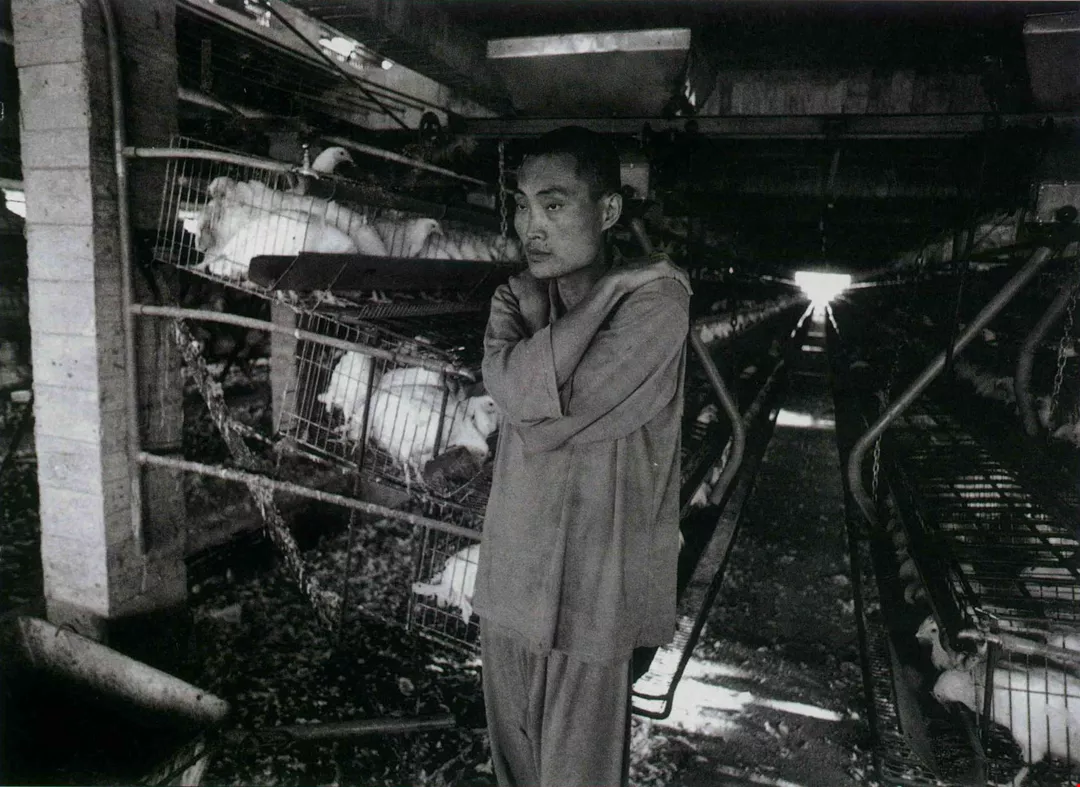
Having left the plane of reality, the mentally ill easily get scared and withdraw into themselves. They have abnormal emotional reactions.
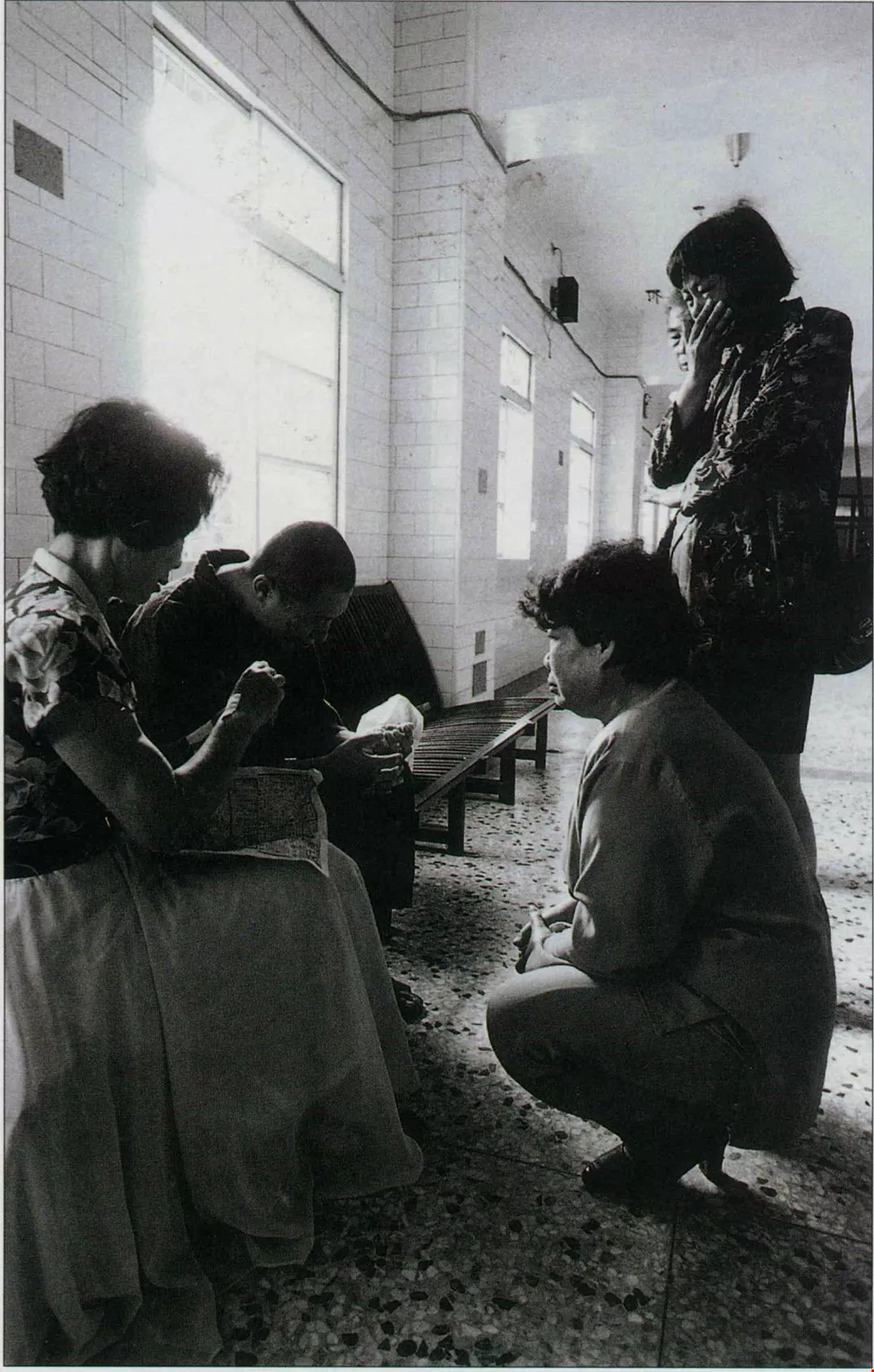
In helplessness, many decide finally to consign a mentally ill relative to a home. While this may relieve them of a burden, they can't help but break out in tears when visiting.
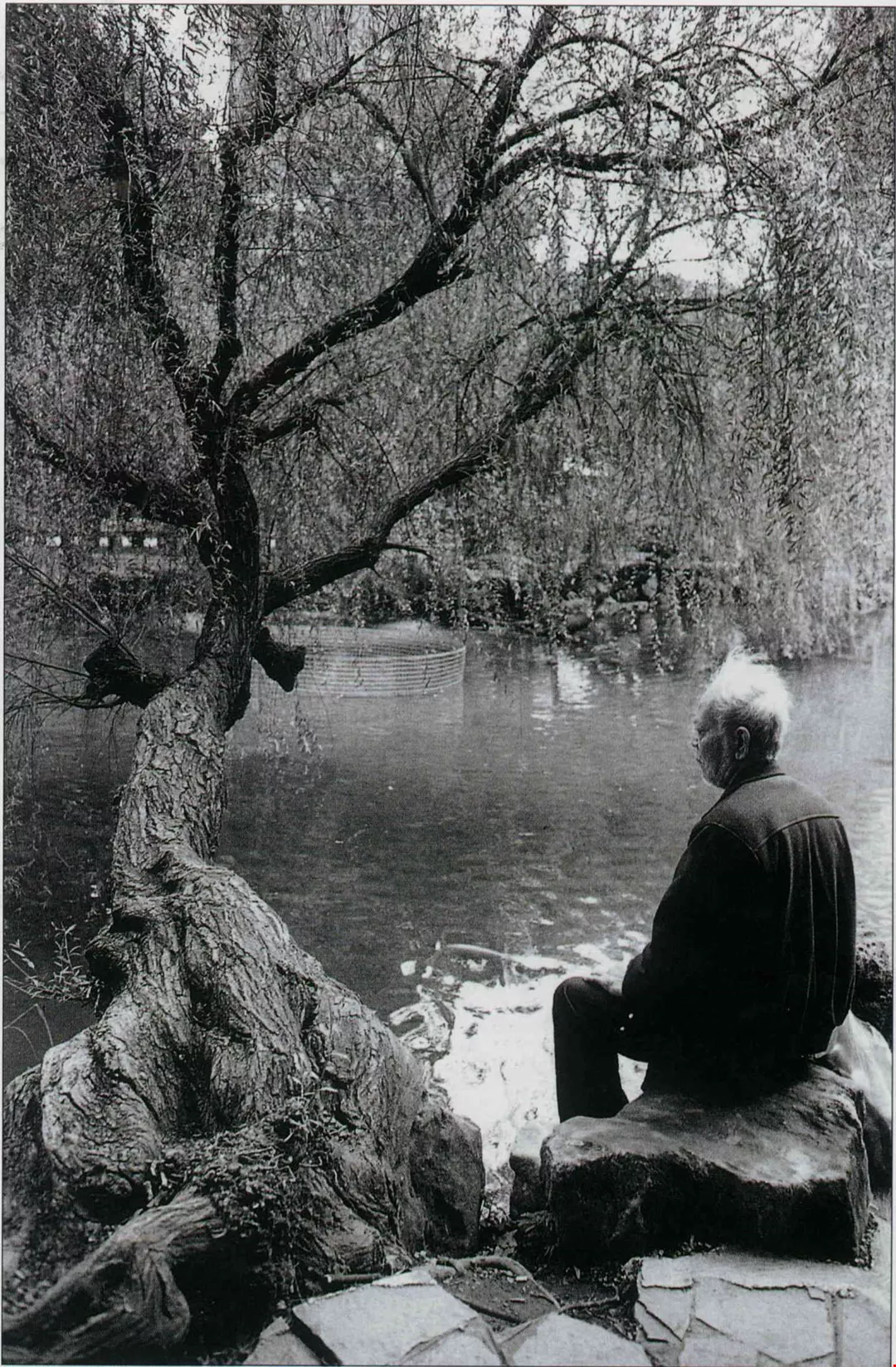
No man is an island, and the mentally ill and their relatives are even less able to cope with being cut off from society. More than anyone, they need help and acceptance.


@List.jpg?w=522&h=410&mode=crop&format=webp&quality=80)


@List.jpg?w=522&h=410&mode=crop&format=webp&quality=80)
