Aging but Still Single--Well-to-do, Educated Women Look for Love
Yang Ling-yuan / photos Chi Kuo-chang / tr. by Scott Williams
October 2005


For the last two years, Japanese women have been heatedly debating The Grumbling of Losers, a Japanese book about unmarried, childless women in their 30s.
Author Sakai Junko's book contrasts these "losers" with "winners," that is, women who by 30 have acquired financially successful husbands and had children. In it, she observes that Japanese society takes an extremely prejudicial view of single women. Even though most of these "losers" are financially independent, with the means to live the "good life" and a taste for brand-name goods, fine food, and travel, they feel pressure to marry from their families and from society at large.
Sakai, herself a "loser," notes that "loser" women don't want to marry just for the sake of marrying, but rather are seeking a partner who is truly compatible, one with whom they can share life's pleasures. These alleged "losers" may not have found husbands, but they've learned to face their shared situation with aplomb and live their own lives at their own pace. Surely this has earned them the right to feel proud even in "defeat."
But Taiwan's "losers" choose to withdraw and be silent. They don't readily reveal their thoughts and feelings, and they suffer from a disgraceful lack of attention and support from society at large.
Of late, the media taken to calling the generation currently in its prime the "New Three Nos" generation--no marriage, no career and no children--and argues that their reluctance to marry is the root of the problem. The numbers are certainly intriguing. According to the Ministry of the Interior, in 2003 only 76.8% of Taiwanese women between the ages of 35 and 39 were married. That means that nearly a quarter of Taiwanese women enter their fourth decade unmarried, with most having never married, and a smaller number divorced or widowed. This number is far lower than Taiwan's 1981 figure of 92.4% and contemporary Korea's 96.7%, and ranks below even Japan's 86.2% and Hong Kong's 85.4%.
Have modern Taiwanese women really chosen not to marry because, as some suggest, they've become more self-aware? When you actually look around, what you find are not inveterate singles, but women who crave marriage more than most people can imagine. Unfortunately, it's a cold world they face--the more educated they are, the older they are, and the more they earn, the more difficult it becomes for them to find a spouse.
"This society is out of whack," says Liu Yi-chun, executive director of the Singles Care Society. "Men and women do not have equal opportunities." According to Liu, Taiwanese people are still constrained by traditional ideas about choosing a spouse--unmarried women who are older, highly educated and have high incomes (the much-talked about "three highs") have a hard time finding potential mates of comparable age and economic means. But single men with the same attributes actually enjoy more options as they get older because they have an ever-increasing pool of women younger than themselves to draw on.
Research sponsored by the National Science Council on changes in marriage rates and in approaches to finding a spouse in Taiwan shows that 16.24% of women 40 years of age and older holding a graduate degree are unmarried, versus only 5% of the men in the same group.
In fact, the data on Taiwan's unmarried men show that the majority are of low socioeconomic status. Such men match up poorly with women in the "three highs" category, but at least have the option of pursuing a foreign bride. Other than not marrying, what options are available to single women in their 30s and beyond?
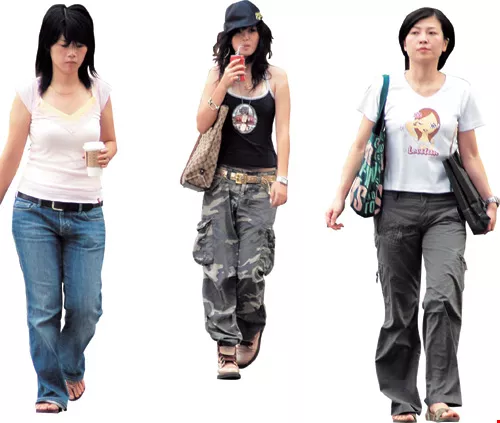
Walking the city, we see beautiful women of every shape and type, each of whom has had her own experience of life's joys. However, among them are many silent, repressed, unmarried women who require greater support and assistance from society.
"Marrying myself off!"
"I'm not going to sacrifice quality," says the unmarried Fang-ting (not her real name). "If I can't find a good man, then I just won't marry." Fang-ting, who is nearing 40, separated from a long-term boyfriend three years ago. Since then, it's been just her and her dog. Far from having a narrow group of acquaintances, Fang-ting works in public relations for a large firm and has many friends of the opposite sex. But these male friends are either married, in a long-term relationship, or regard her just as a professional colleague. She has no interest in coming between established couples, nor does she want a casual relationship, so she's maintained a certain distance between herself and her male friends.
"A friend was going to introduce me to the 50-year-old son of a successful businessman," she says. "He was a dignified-looking man, but he was a divorce with a child." When she abruptly turned down the offer, her friends wondered what she had against divorces. All she could say was that she felt a kind of obscure prejudice against them. Because she has never married, she sees herself as "untainted." But now that her youthful bloom has gone, is her only hope for marriage a divorce? Even though research from the United States has indicated that people in a second marriage are generally happier than those in a first, she still believes that divorce is evidence that the divorce is personally immature or unable to manage relationships in an adult manner. She also believes that building relationships with stepchildren is difficult, and she's unwilling to be an overworked and unloved stepmother.
Fang-ting, who lives in metropolitan Taipei, doesn't live with her parents or relatives, and doesn't have to deal with their "concern" on a daily basis. Even so, there's no way for her to avoid her parents' grumbling when the family gets together for a meal--they worry that they'll never have a chance to hold their grandchildren in their arms, that her advancing age means that she'll give birth to a child with health problems, that there'll be no one to inherit her apartment and her savings....
Fang-ting used to retort: "How you can hurry something as important as a marriage? Uncle Chang's daughter is unhappily married, and Auntie Li's daughter is divorced!" She knows that her parents' values were formed in the days when a woman followed her husband no matter what he was and that they can't understand the women of her generation's demands for a "good" marriage. But Fang-ting is seeking more than a marriage of convenience or one that she knows won't last.
"I will marry myself off!" she exclaims. She firmly believes that somewhere on this Earth, there is a man waiting for her who desires love as much as she does, and is as willing as she is to invest time in making a marriage work: it just hasn't been her fate to meet him yet.
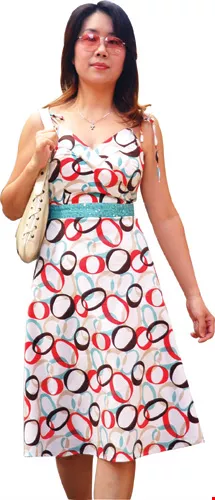
Doing charity work to find a spouse
Parents like Fang-ting's who are deeply concerned about their daughter's marriage may be a little annoying, but they are also warm and caring. Li-li (not her real name) is not so fortunate. The 39-year-old works in a hospital, always dresses nicely, and keeps the small apartment where she lives alone absolutely spotless. She thinks she has thoroughly prepared herself to be a good wife and mother, but so far remains a spinster. She gets a lump in her throat every day when she comes home and turns on the lights in her empty apartment. Li-li is too self-conscious to go to a sex shop, much less a nighttime hotspot, so when she watches a passionate scene on the TV, all she can do is quietly clutch her pillow or masturbate until the hunger that wracks her body passes.
Once, Li-li "accidentally" revealed to her younger sister how strongly she desired to be married. She never expected her sister, who already has two children of her own, to snap back at her, "Give me a break! Can't you live without a man?" Li-li was furious.
"Maybe I'm too 'useful,'" she says, "so my family keeps unconsciously hinting that I needn't marry, that I should just spend my life like this." Li-li comes across as direct and efficient, and is well situated both financially and professionally. When her parents became ill, it was she who hired an Indonesian caregiver for them. When money was tight for her brother, she helped him out. And she is frequently a last-minute babysitter for her younger sister. Li-li is happy to be able to help, but when she recalls that no one ever asks about her love life, her mood sours.
Mei-chun (not her real name), a 50-year-old woman originally from southern Taiwan, has a never-say-die attitude. She's spent every day of her 20-some years in the working world looking for a husband. Whenever she finds a target, she drifts through her working hours fantasizing about marriage. But once she learns that the man is married or has a girlfriend, she changes jobs. Even though she once worked for 24 companies in a single year, and is constantly shifting targets, she has never yet dared express her interest in anyone, choosing instead to be a secret admirer. In the end, she can only watch as someone else steals away the man of her dreams.
"I really don't get it," says Mei-chun. "Why am I fated to have a such tough time with love?" She has looked on with envy as one after another of her girlhood friends have married, borne children and become grandparents, while she herself has doesn't even have a boyfriend.

"Men work," goes the old saying, "women rely on their in-laws." Women have traditionally been viewed as part of their husband's family rather than their own natal family. Many women therefore turn to the Buddha or fortunetellers for help finding a family that they'll be able to rely on for a lifetime.
A wealthy husband
The Singles Care Society's Liu Yi-chun has been matchmaking for 15 years. In recent years, she's noticed that the number of women joining dating services has increased several times more rapidly than the number of men. "Most are nurses or beauticians," she says, "because all their coworkers are women, and because the night shifts they work keep them from socializing." According to Liu, if these women hit the age of 32 without a prospective partner by their sides, alarm bells begin to ring and they join a dating service.
Women of relatively low socioeconomic standing have joined these services en masse, and are "processed" pretty quickly. The oldest members of these services are instead almost all highly educated women with high incomes. These professors and PhDs gave their youths to books. It was only after they had completed their degrees and found stable work that they suddenly realized the importance of socializing. But time waits for no one, and age is the cruelest of realities.
"Many of the men looking for wives," says Liu, "just toss aside the personal information of women who are older than themselves!"
According to Liu, even though there are very advanced beauty treatments available today that can "lock in" a woman's youthful appearance, biological aging remains a fact that causes potentially suitable men to hesitate. "While older women marrying younger men may be fashionable overseas," says Liu, "it's still thought of as taboo in Taiwan." Society is prone to mocking women in such relationships for "keeping a boy toy." Liu thinks that the high opinion that "three highs" women tend to have of themselves makes them reluctant to give such relationships a try.
A woman's level of education can also be an obstacle. When highly educated women who haven't found a good partner in graduate school enter the working world or academia, they find that the only men in this new setting are either married colleagues or young students. The traditional male superiority complex is also a problem--few men are willing to become involved with a woman who is more highly educated than themselves. Such women become all too familiar with how lonely it is at the top!
Parents all too often encourage their daughters from childhood to study hard, to not focus on their dress and appearance, and to avoid having too many or the "wrong kind" of boyfriends, without telling them of the potentially serious lifelong consequences of focusing so exclusively on their studies.
Chang Mei (not her real name), a pretty woman who teaches at a prestigious university in northern Taiwan, is a typical example. She holds a PhD from an American university and has already been teaching for seven years. The dual pressures of teaching and publishing are running her ragged, but it is the voice inside her head constantly asking, "Where is my soul mate?" that really makes her frantic.
Chang, a devout Buddhist who believes in karma and transmigration of the soul, often drags her friends with her to see a medium who is reputed to be a skilled fortuneteller. On several recent visits, this medium had solemnly averred that she would soon meet the man for her. Now her friends have taken to teasing her because, in spite of her enthusiastic participation singles-club activities, she has yet to meet anyone at all.
On the eve of her 40th birthday, Chang again dragged a friend with her to have her fortune told. On looking at her birth date and time, the medium changed her tune, this time averring, "No, you aren't fated to marry in this life. You don't want me to lie to you, right?" The words were like a bolt from the blue, and Chang burst into tears on the spot. She said she hadn't done any harm to anyone in this life, and only wanted a family of her own. Why, she asked herself, was this so hard? Crushed by this disappointment, she has begun to doubt herself. "What," she wonders, "is my purpose in this life?"
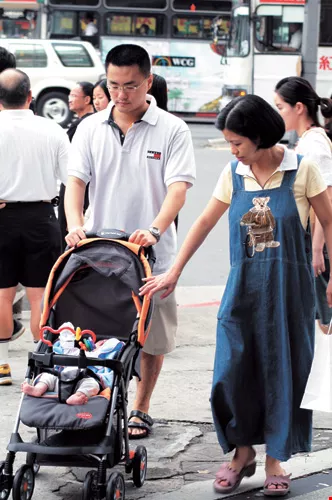
Slim pickings
Both personal and extra-personal issues factor into the difficulties highly educated women face in finding a spouse. Sha Yi-jen, now retired from her position in the Department of Sociology at National Taiwan University, noted the ever-increasing numbers of unmarried female PhDs on campus, and, two years ago, started a singles club on campus to provide free matchmaking services for them. The club has introduced hundreds of highly educated men and women to one another, but she says that the men are too picky and that the women have set their sights too high. Over the last two years, wedding bells have rung only once for club members. The rest of the introductions have resulted only in near misses. "The men are eccentric," exclaims and exasperated Sha, "and the women are strange, too. It's infuriating!"
In Sha's view, the most important issue is that the gender breakdown of the people looking for partners is skewed--she is deeply concerned that the singles club has nearly 80 female members versus fewer than 10 men. She thinks another issue is that people who haven't married by the age of 30 are either too conservative or too picky. "If you keep tossing away all the stones in your path in hopes of finding a better one," she analogizes, "the pickings can get pretty slim."
"Single men with the qualities women are looking for aren't usually willing to 'demean' themselves by joining a singles club," explains Liu Yi-chun. "They've got friends and family of their own that will introduce prospective partners. Others just prefer to remain bachelors for their whole lives." Her singles club has only a few male members who have advanced degrees and earn a lot of money. These men have very high opinions of themselves and tend to take their oddities as attributes. For example, one man who is under 165 centimeters tall insists that he is only interested in women who are at least 170 centimeters tall. Another who is very successful in his career is looking for an obedient woman, who will fulfill her "wifely duties" with respect to her husband and children.
To avoid the troubles wrought by the "three highs," some women attempt to conceal their degrees and earning power. Take Li-hsiang (not her real name), for example. She was born in 1949 and holds a master's degree, but has "downgraded" herself to a bachelor's degree on her singles-club information. When she was younger, she had no interest in marrying. She had grown up watching her separated parents bicker and had little faith in marriage. As she got older and saw how well her friends' marriages worked, she gained a new perspective and began to yearn for a marriage of her own. But she is facing tremendous hurdles--she's wasted many years, and now she's inherited more than NT$100 million from her parents. Fearing that she'll meet a con artist who'll steal her money and her heart, she's become very cautious.
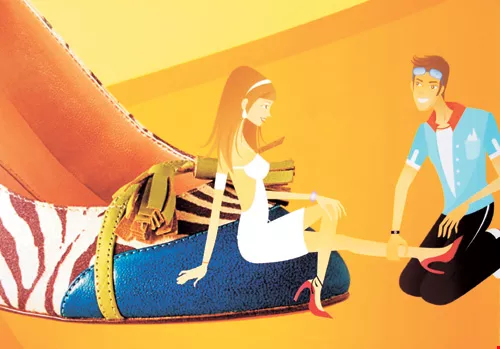
The last of the ladies
Chien Chen, a former-in-chief editor of the Chinese edition of Penthouse magazine, has seen many, many women struggling to press ahead on the path to marriage, but has a different take on the issue. "Women at every stage of life should be able to find love and marriage," she says. The many years she's spent observing women in love and her many single friends have shown her that although there are many reasons why "three highs" women have difficult love lives, the most important are that the women don't know what love is and don't know how to be "women."
She cites as an example of a very senior female professor she knows who married into an important local family. Both the woman and her husband are getting on in years, but the professor, who cuts such a dignified figure in the classroom, never forgets to use the most dulcet tones to call for her husband's assistance when going downstairs or getting into the car.
"This professor is willing to be girlish and soft, to be her husband's 'little lady' and thereby stroke his male ego," says Chien. "In contrast, most 'three highs' women have not only set their sights very high, on some kind of ideal, but also disdain using any womanly wiles. No wonder they can't catch a husband."
Another female friend of Chien's who works in the tech industry saw with her own eyes a flight attendant in the first-class cabin intentionally spill a drink on one of the Hsinchu tech industry's nouveau riche. She then handed over her business card on the pretext of taking responsibility for the accident. Everyone knew exactly what she was doing--she was painstakingly creating an opportunity to get to know this man. "The women of this younger generation have thrown the restraint of our generation out the window!" complained Chien's 42-year-old friend, who hasn't had a boyfriend of her own in six years.
"It's not that these older singles can't marry," says Chien. "But they have to want it more." She offers another example, a friend who thought she would be married by the age of 35. When she hit 38 still unmarried, she mustered her courage and asked all her friends to introduce prospects to her. Her friends responded enthusiastically, and within a year she had met more than 100 men. She finally found the man she was looking for in a never-married 42-year-old, and the two of them walked down the aisle this past July.
Chien thinks that too many women seeking partners just don't open their mouths. Instead, they sit shyly by, silently praying that Prince Charming will ride up out of nowhere. They don't realize that times have changed, and that a modern prince requires a princess who will show some initiative of her own in the marital quest.
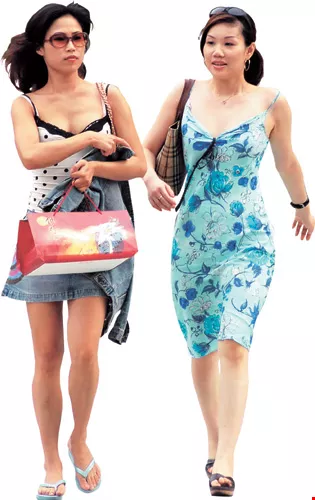
Walking the city, we see beautiful women of every shape and type, each of whom has had her own experience of life's joys. However, among them are many silent, repressed, unmarried women who require greater support and assistance from society.
Don't trade marriage for love
"Love for the older single woman," says online novelist Chang Ai, "isn't always built upon the expectation of marriage." In her words, love is the power that sets life's flame alight. But women at different stages in their lives aren't necessarily looking for the same thing out of love. A woman in her 20s may want passion and fireworks, and feel that marriage isn't important. By her 30s, she may want a stable relationship with a husband and children. And by the time she reaches 40, an unmarried woman may want nothing more than someone compatible by her side.
The 46-year-old Chang, herself unmarried, has been involved with a married man for many years and is intimately familiar with these kinds of there-but-not-there relationships. Because there is no need for commitment, they can enjoy their time together to the utmost. Chang has not lacked for other companions, but the others have been so much more parochial in comparison to her married lover that there has been no way to create deeper relationships. She thinks that her experience of such an intense but impermanent relationship is what has enabled her to write romance novels.
"More and more older single women are accepting their situation," says Chang. "If you can't get that married life you wanted, then take love instead. And what's wrong with a little sex sometimes? In the end, your life is your own. The most important thing is to live it without regrets!" While Chang urges women to work hard to find a spouse, she also cautions them against letting their desire for marriage suffocate them. Whether they marry or not, older singles must remember to love themselves and to be brave enough to love others.

Rather than pining away for a fantasy, women who can't find a spouse need to remember what's really important--loving themselves and living without regrets.

Rather than pining away for a fantasy, women who can't find a spouse need to remember what's really important--loving themselves and living without regrets.

.jpg?w=1080&mode=crop&format=webp&quality=80)
"Men work," goes the old saying, "women rely on their in-laws." Women have traditionally been viewed as part of their husband's family rather than their own natal family. Many women therefore turn to the Buddha or fortunetellers for help finding a family that they'll be able to rely on for a lifetime.

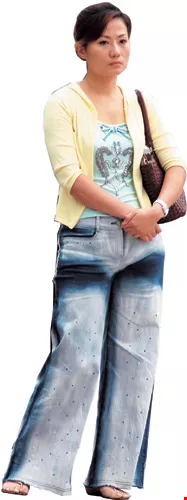
Walking the city, we see beautiful women of every shape and type, each of whom has had her own experience of life's joys. However, among them are many silent, repressed, unmarried women who require greater support and assistance from society.
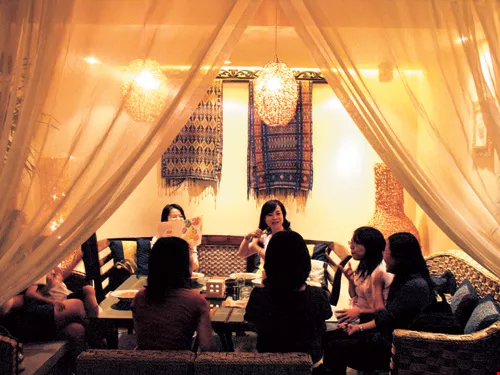
Rather than pining away for a fantasy, women who can't find a spouse need to remember what's really important--loving themselves and living without regrets.
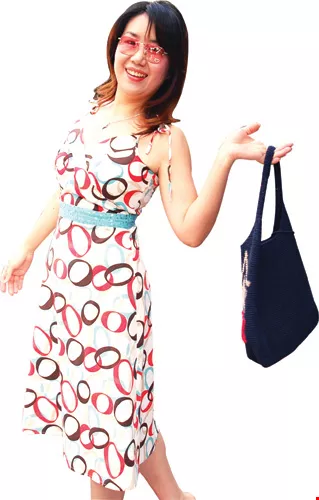
Walking the city, we see beautiful women of every shape and type, each of whom has had her own experience of life's joys. However, among them are many silent, repressed, unmarried women who require greater support and assistance from society.

Family is a prison, a walled fortress. Those inside want to get out, while those on the outside fervently desire to get in. When will the dreams of unmarried older women come true?

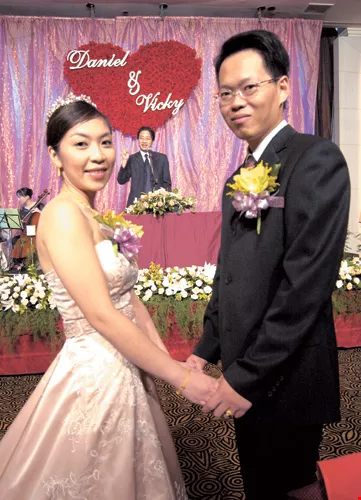
If they are lucky enough to find a partner, older women generally have the maturity and experience to make their good fortune last.
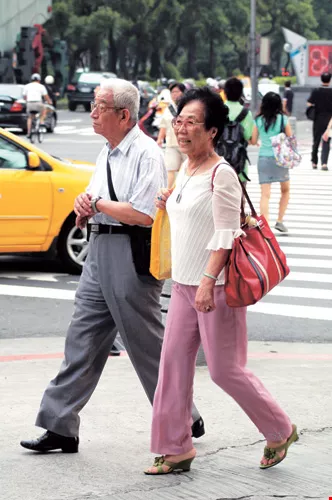

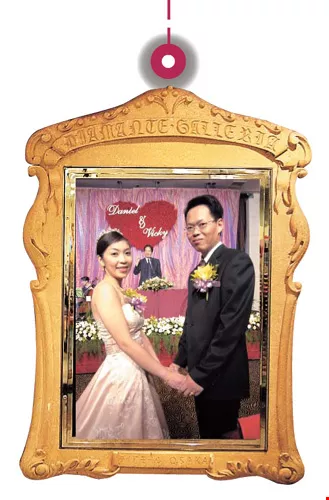
Family is a prison, a walled fortress. Those inside want to get out, while those on the outside fervently desire to get in. When will the dreams of unmarried older women come true?
.jpg?w=1080&mode=crop&format=webp&quality=80)
"Men work," goes the old saying, "women rely on their in-laws." Women have traditionally been viewed as part of their husband's family rather than their own natal family. Many women therefore turn to the Buddha or fortunetellers for help finding a family that they'll be able to rely on for a lifetime.
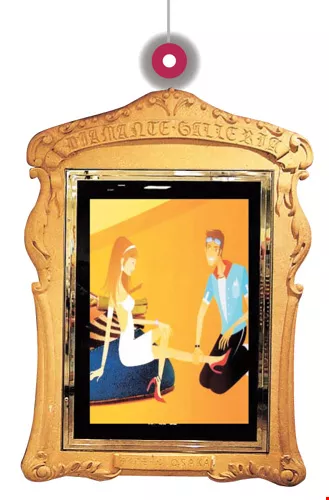
Family is a prison, a walled fortress. Those inside want to get out, while those on the outside fervently desire to get in. When will the dreams of unmarried older women come true?

Rather than pining away for a fantasy, women who can't find a spouse need to remember what's really important--loving themselves and living without regrets.


@List.jpg?w=522&h=410&mode=crop&format=webp&quality=80)


@List.jpg?w=522&h=410&mode=crop&format=webp&quality=80)
