Formosa Hakka Radio-- Taiwan's Hakka Find Their Voice
Chang Chiung-fang / photos Vincent Chang / tr. by Scott Williams
December 1998


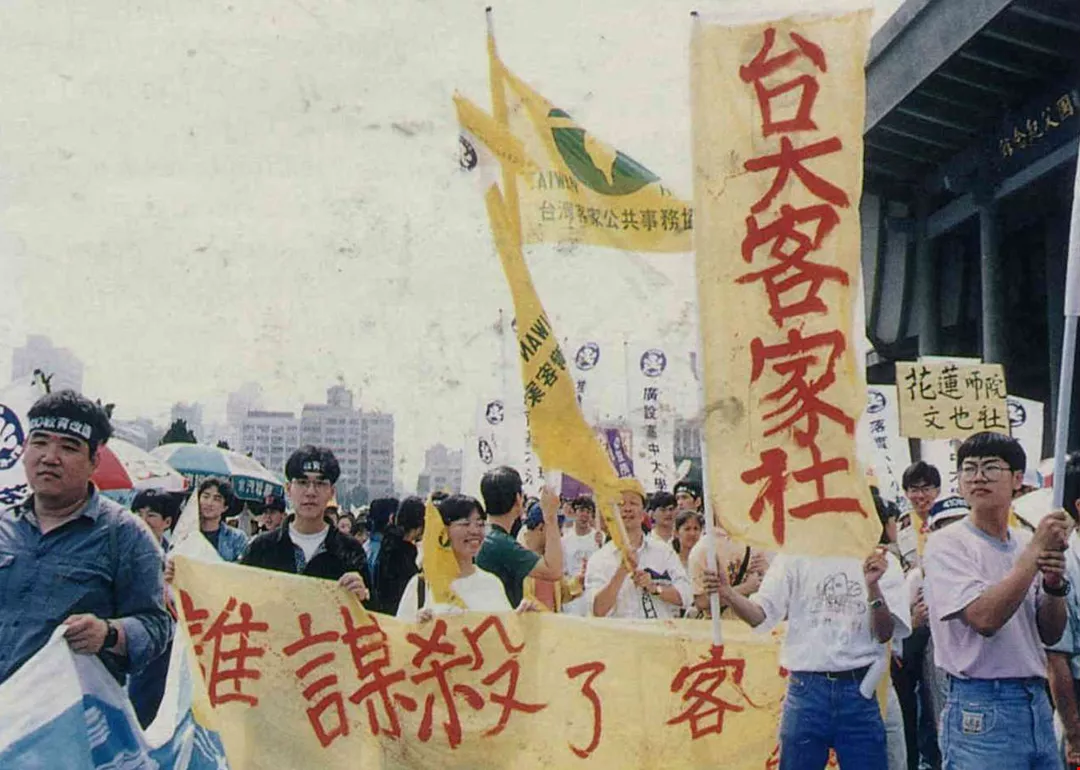
s the decline of Hakka culture a result of the larger environment or mi staken policies? The picture shows a protest by the National Taiwan University Hakka Society at the time of the "April 10 Educational Reform Movement." (courtesy of Huang Tse-yao)
Formosa Hakka Radio is Taiwan's first Hakka radio station. Its birth was long anticipated by Hakka from the Greater Taipei, Hsinchu, Taoyuan and Miaoli areas, and now even Hakka residing overseas are responding with enthusiasm.
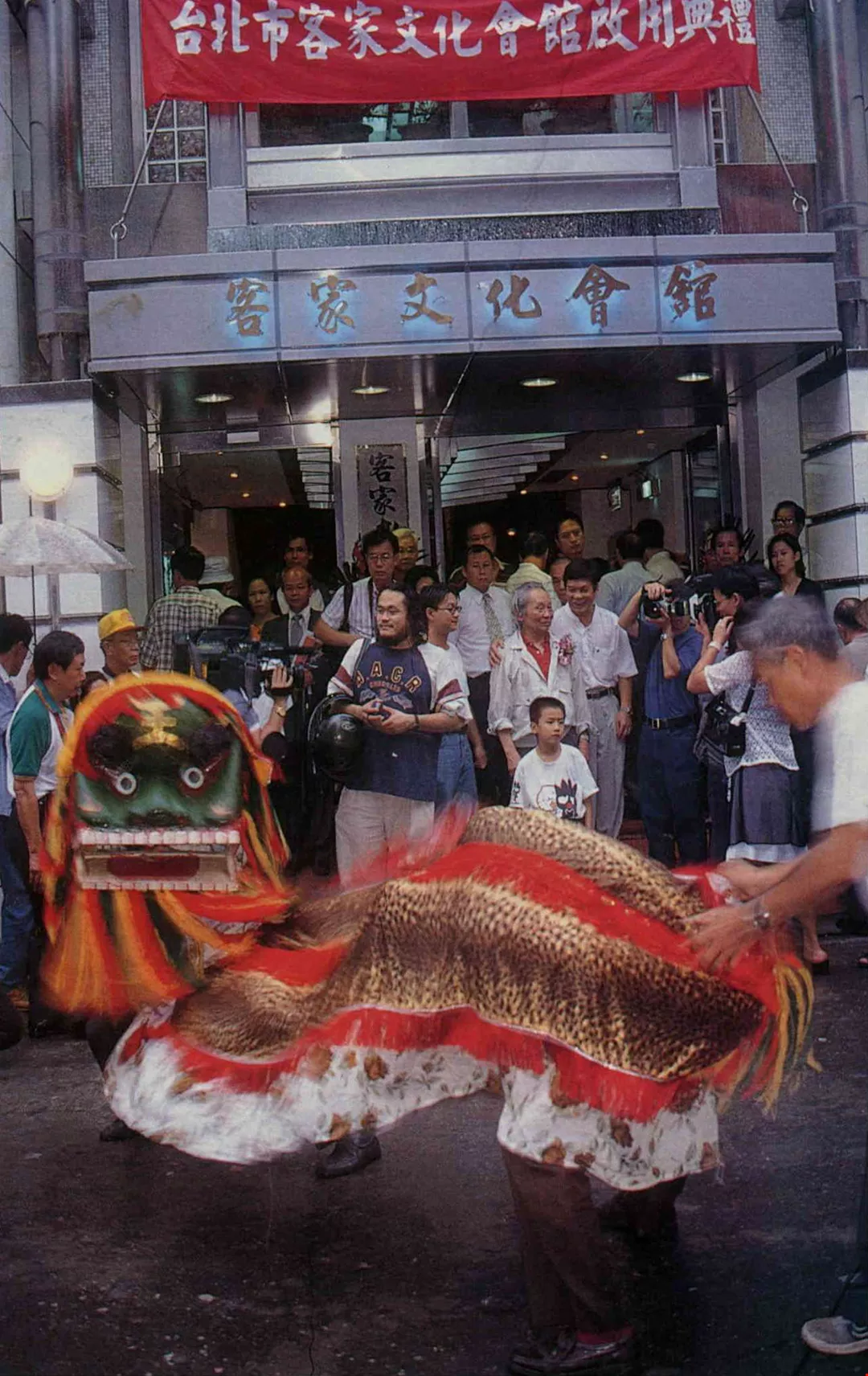
The impressive opening of the Hakka Cultural Center and the formal establishment of Formosa Hakka Radio last year are in part attempts to avert the loss of Hakka culture.
Last year, the station was awarded Chu Chen-yi of Saint Louis University's "Taiwan Hakka Cultural Award."
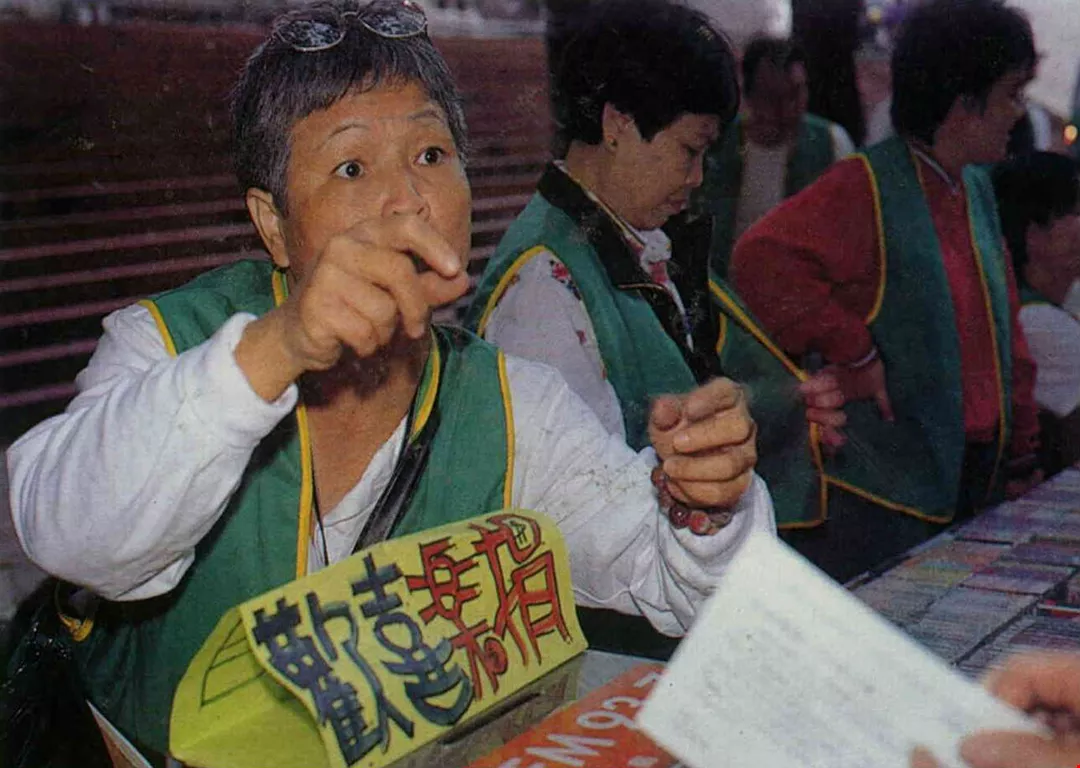
Although Formosa Hakka Radio was built out of the heartfelt donations of the Hakka community, factional strife at the station is causing a decline in those donations.
Formosa Hakka Radio has traveled a hard road through blood and tears to make the changeover from "pirate" to legal status. However, the difficulties involved in the makeover and competition between various factions mean that the station, which is of such moment to the Hakka community, is now facing a serious crisis.
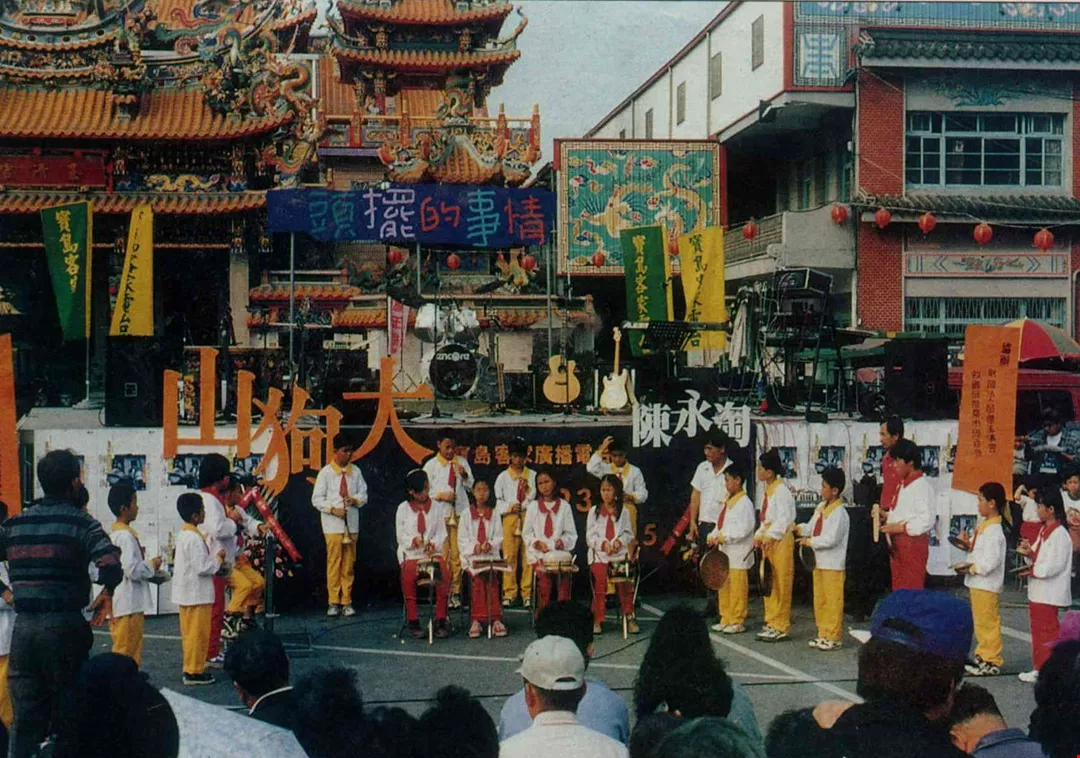
The station often sponsors events aimed at bridging the distance between itself and its audience. The picture shows a concert organized by the station in Miaoli. (courtesy of Formosa Hakka Radio)
Five years ago, Chen Kuei-hsien, the original chairman of Formosa Hakka Radio, returned to Taiwan from the US to take up a position as an associate research fellow at the Academia Sinica's Institute of Atomic and Molecular Sciences. This just happened to be the period in which Taiwan's airwaves were being liberalized and "underground" radio stations were beginning to appear. Chen noted, however, that there were no stations in Taipei, legal or underground, broadcasting in the Hakka language. Even when driving through Taoyuan, Hsinchu and Miaoli-all of which have large Hakka populations-on his way home to Nantou, Chen searched the airwaves in vain for the sound of a Hakka voice. The lack of Hakka on the air disappointed him terribly.Fighting for the right to be heard
But this disappointment was not unique to Hakkas who, like Chen, had returned to Taiwan from abroad.
A survey on Hakka use of the media and their satisfaction with it conducted in June of last year by Liu You-li, an assistant professor in the broadcasting department at National Chengchi University, revealed that more than 50% of those surveyed felt that the amount of Hakka radio programming was "inadequate" More than 20% thought that it was "extremely inadequate."
A survey conducted in 1995 revealed that less than 1.5% of Taiwan's radio programming was in Hakka. But Hakka make up approximately 12% of Taiwan's population. Clearly, their right to receive programming in their own language was being ignored.
In fact, before Formosa Hakka Radio got its start as an underground radio station in 1994, Taiwan had only a smattering of Hakka programming, and certainly no Hakka station.
Even now, of a total of more than 100 broadcasters in Taiwan, only three broadcast in Hakka: Formosa Hakka Radio, the Broadcasting Corporation of China's Hakka station and Taoyuan's New Hakka Radio, the latter two established only in 1997.
The principal reason for this persistent lack of Hakka stations lies in restrictions placed on language by broadcasting regulations.
Before 1976, the "Regulatory Guidelines for Broadcast Radio and Television Programming" stipulated that programming in "dialects" (i.e. Sinitic languages other than Mandarin Chinese, such as Taiwanese and Hakka) could not account for more than 55% of total programming. The broadcast regulations promulgated in 1976 went one step further-AM stations had to air a minimum of 50% Mandarin programming, while FM stations were required to air a minimum of 70%.
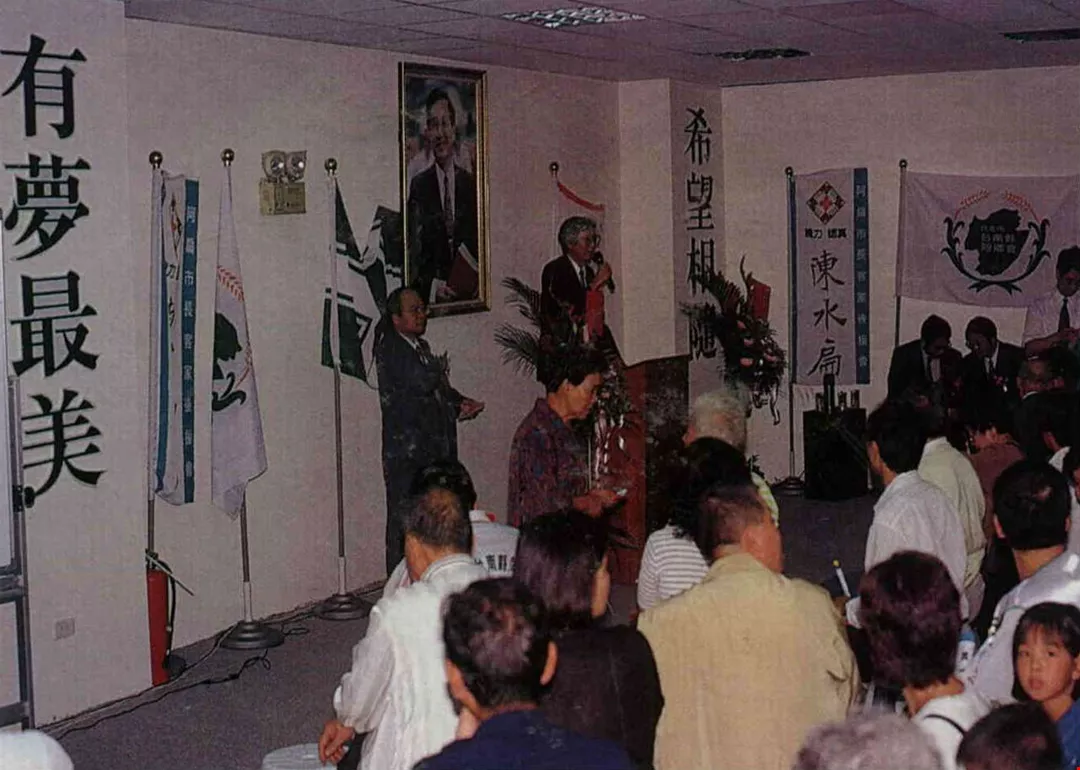
The founders of the station are all well-known figures in the political arena. The picture shows the opening ceremony of the "Hakka Society for the Support of Chen Shuibian.".
The government's linguistic policy together with commercial considerations such as advertising efficacy meant that there were few opportunities even for Hakka programs to get on the air, much less an exclusively Hakka station.Give back our mother tongue
The appearance of Formosa Hakka Radio was intimately connected to circumstances in the larger environment.
The "Give Back Our Mother Tongue" movement began at the end of December 1988, following tremendous efforts on the part of a group of Hakka concerned about the future prospects of the Hakka community. Between six and seven thousand people participated in demonstrations demanding "complete liberalization of Hakka radio programming, and revision of article 20 of the broadcasting regulations, which limits the use of 'dialects' in broadcasting, to support the preservation of these 'dialects' and to create a pluralistic and liberalized language policy."
The "Taiwan Hakka Public Service Association" was established in 1990. Chung Chao-cheng, the well-known Hakka writer who founded the association and served as its director, says that the association was an active organization which had great faith in democracy and sought its institution in Taiwan. To rescue the language, culture and dignity of the Hakka, the association decided to establish a radio station.
"The decision to found a Hakka radio station was a response to the threat of extinction facing the Hakka language," says the writer Li Chiao, also a member of the Taiwan Hakka Public Service Association.
In 1993, the Legislative Yuan revised the restrictions on "dialects." The new article stipulates: "Radio stations broadcasting domestically should primarily use the languages of the nation. This article particularly guarantees the right of broadcast of the languages of ethnic minorities or other minority groups and makes no stipulations about language use ratios," and further liberalizes the airwaves.
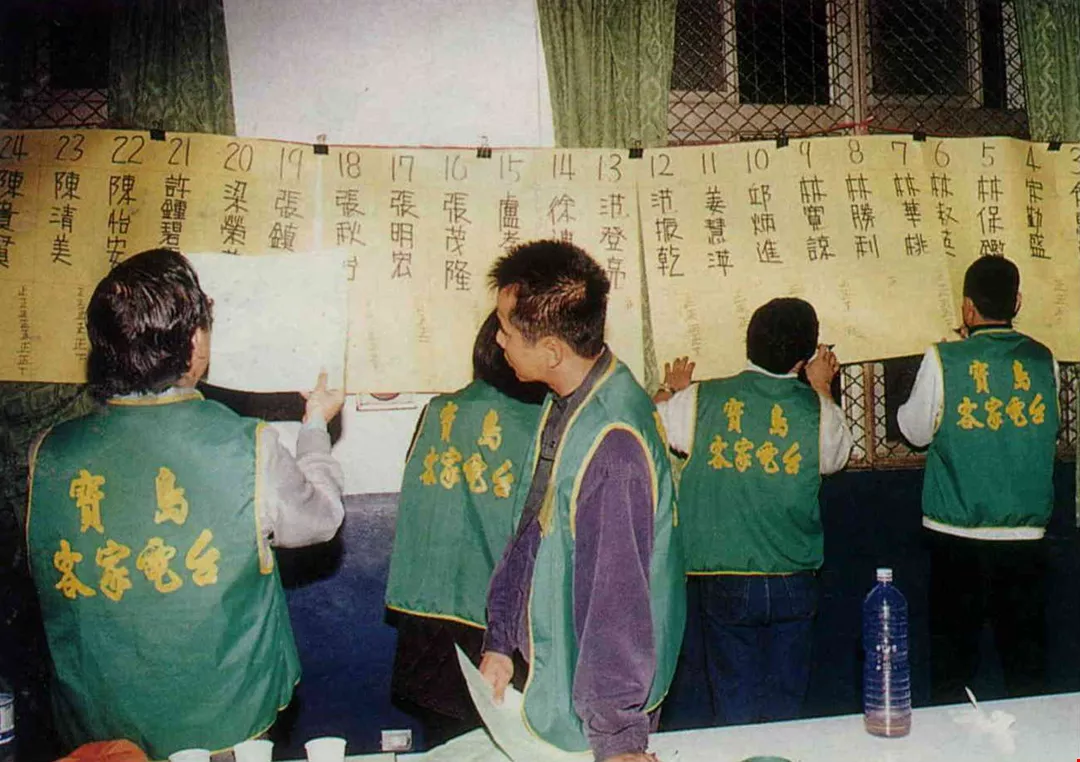
The association's first supervisor was chosen in January 1997, at a fund -raising event held at Sungwu Primary School in Taoyuan County's Pingchen. However, the passion ate atmosphere led to factional splits. (courtesy of Formosa Hakka Radio)
Although the restrictions on the use of "dialects" had been removed and the airwaves liberalized, getting Formosa Hakka Radio established remained no easy task.Searching for a frequency
In April of 1994, their first effort-The New Voice of Formosa, an underground radio station-began broadcasting one hour a day of discussion-format Hakka programming. But in July, the station was seized and its broadcasts temporarily halted.
In September of the same year, Formosa Hakka Radio began broadcasting as an underground radio station. While operating under the continuous threat of being shut down, the station applied to the Government Information Office for legal status as a low-power community radio station.
In order to devote himself to the running of the station, the first station director of the underground period, Huang Tzu-yao, closed the plastics company he had long run. Huang felt that setting up a radio station was more helpful to the cause of preserving Hakka culture than keeping the family genealogy. He says, "It was the only way I could face my ancestors."
Although Formosa Hakka Radio was continuously faced with the possibility of being shut down during its "pirate" days, this crisis atmosphere helped the station's directors to reach consensus and mobilize the public.
When the list of approved stations was released at the end of the year, Formosa Hakka Radio was not on it. Huang explains that the business plan submitted with the application was insufficiently professional. In addition, they had submitted their application for the Ta-an District, the most competitive in terms of the number of applicants. As a result, it was rejected in the second stage of the review process.
The station then gathered together a number of members of the Hakka community to petition the Legislative Yuan. On December 30, more than 1000 Hakka gathered before the doors of the Legislative Yuan, petitioning for the "return of their rights as Hakkas" and requesting that the government guarantee "minority groups' right to be heard."
After several protests and much struggle, in 1995 Jason Hu, then director-general of the GIO, made a pledge, and the Hakka community made a special application to establish a medium-power radio station.
Unfortunately, all the frequencies which testing by the Ministry of Transportation and Communications' (MOTC) Directorate General of Telecommunications had shown to be available had already been distributed. It was only the tireless testing of frequencies by a few of the founders using borrowed equipment which revealed one which could be used-FM 93.7. After confirmation by the MOTC, the GIO finally accepted their application.
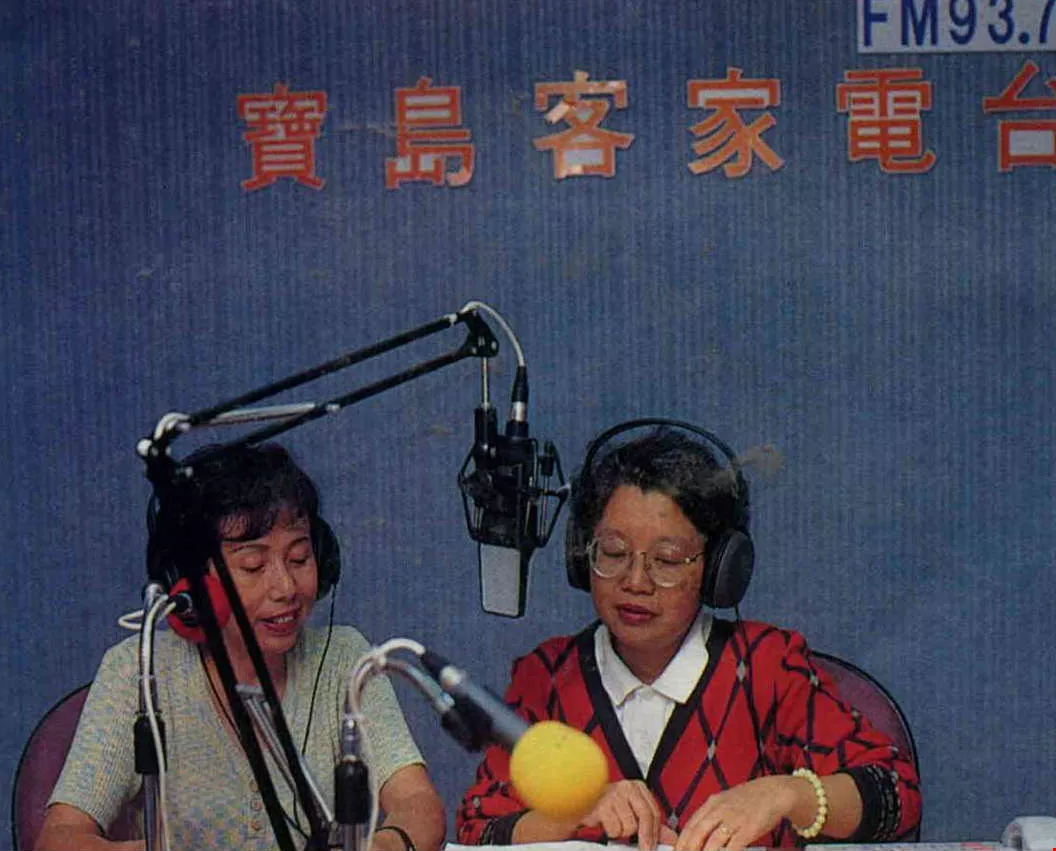
The biggest crisis the Hakka currently face is the disappearance of their language. In fact, it was the "Give Back Our Mother Tongue" movement which led to the creation of Formosa Hakka Radio. The station was Taiwan's first Hakka radio station and is in urgent need of public support.
In July of 1996, the GIO formally approved Formosa Hakka Radio's application and granted permission to establish the station. However, there was a catch-regulations stipulated that the station had only half a year to raise NT$30 million in funding.Bit by bit
Each of the station's directors recalls a plethora of moving stories on the sources of these donations.
"A Mr. Huang, whose son had been killed by a motorcycle, received NT$800,000 in compensation. He donated the first installment of NT$200,000 that he received to the station. . . ."
Chang Chiang-mei, an elderly women who survives by collecting old newspapers and magazines for recycling, donated a large bag of change to the station. "When we received this donation, it was as if the coins had been warmed by the sincerity of her feelings," says Liu Hui-chen, one of the station's founders and its first director after formal approval. Liu says it was this kind of support that kept the station's staff going.
Huang Tzu-yao says that when their fund-raising efforts were at their peak, fund-raising dinners were always packed; in one afternoon, they could easily bring in donations of NT$3-5 million.
Formosa Hakka Radio was built bit by bit out of 20 some fund raising events at which more than 6000 donations worth a total of NT$40.17 million were received.
Not only did the money come from the Taipei, Taoyuan, Hsinchu and Miaoli areas, donations were even received from people in the Taichung, Nantou and Kaohsiung areas, in spite of the fact that these areas are too distant to pick up the station's signal.
Amid the great expectations of the Hakka community, the staff of Formosa Hakka Radio came through, and the station was formally established.
"Formosa Hakka Radio has a space in which to exist," says Hao Shih-ying, planning manager at Cheng Sheng Broadcasting, pointing out that there are between 300,000 and 400,000 Hakka in the Taipei area. As there are no other Hakka radio stations, a high proportion of these people will listen to Formosa Hakka Radio.
Hao mentions that Cheng Sheng itself even broadcast a Hakka program provided by the GIO for one year. The program was very popular with the Hakka community, but because the station was not a Hakka station, many of the station's core listeners protested that they did not understand the program. Even programs in the adjacent time slots were adversely affected, suffering declining ratings and advertising.
Formosa Hakka Radio does much to ease the longing for their hometowns of many of Taipei's Hakka who had long lived in a world without Hakka voices.
When Mr. Hung, who left his hometown to come to Taipei many years ago and is now in his 70s, first heard a Hakka radio broadcast, he was both saddened and deeply moved; he could not help but shed tears while he listened. There are many other similar examples. A Ms. Yang, who lives on Yangming Mountain, carries her radio with her nearly all day long, listening to Hakka programs. For her, the station is almost dearer to her heart than her always-busy son.
The station has had another effect, arousing the "Hakka consciousness" of many Hakka and awakening them to the danger of disappearance that their mother tongue faces.
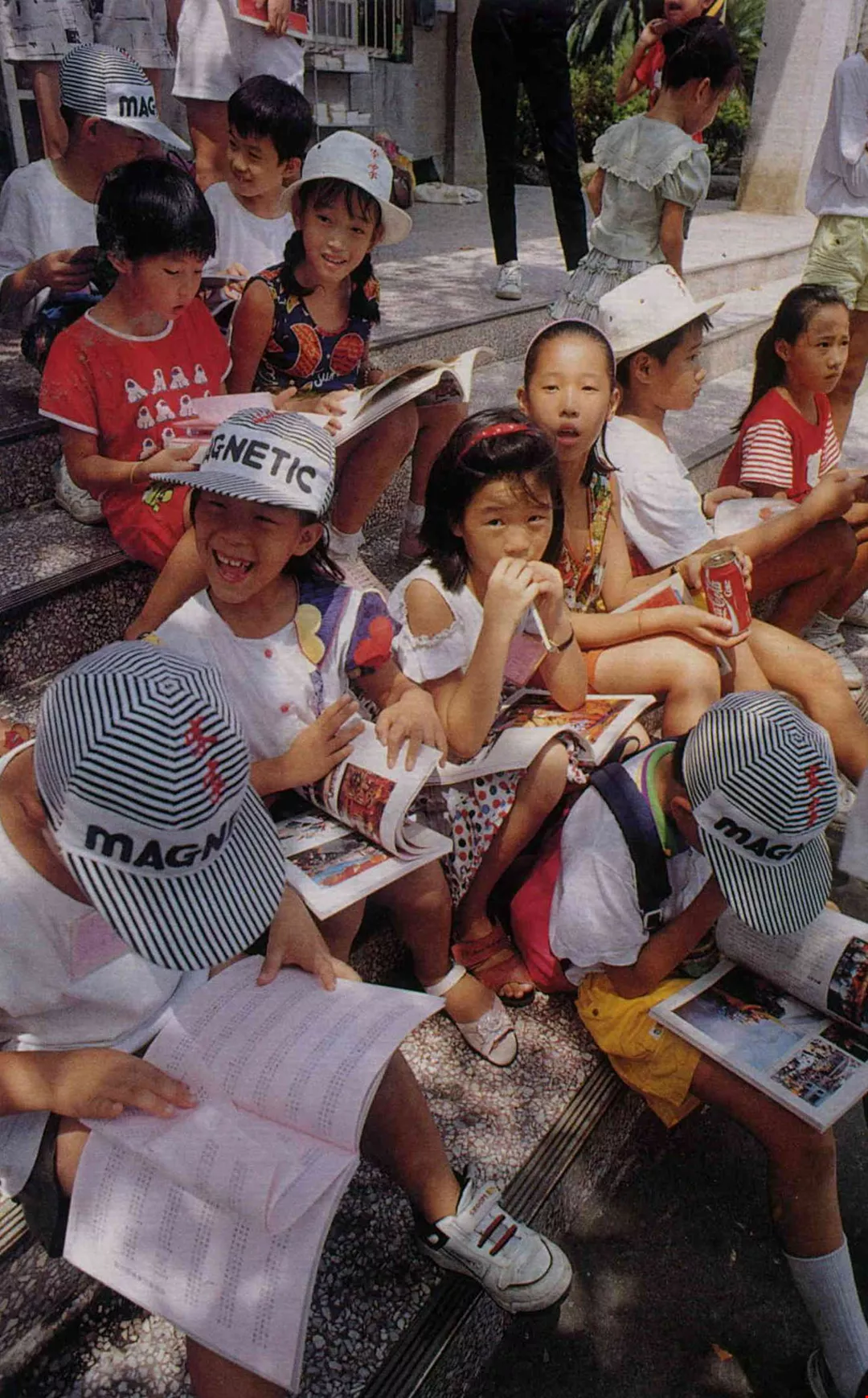
The station's mission is the preservation of Hakka culture, in part by i nteresting youth in it. The picture shows a Hakka culture retreat put on by Hsinchu's Yimin Temple. (photo by Diago Chiu)
Liu Mei-chih, a teacher at Chungli's Hsinchieh Primary School, became a regular and enthusiastic listener when she became aware of the existence of Formosa Hakka Radio. She and her husband began speaking Hakka in their home and teaching the language to their children. Over the course of two years, the children have learned some everyday conversation, and their eldest daughter has even founded a Hakka club at her high school.An attitude to life
Still more interesting is that not all of the station's listeners are Hakka. Chuang Chi-ming, a professor in the Department of Information Engineering and Computer Science at Tamkang University, is an example of this non-Hakka variety of listener.
Chuang says, "We who have been involved in the democracy movement and called for ethnic integration for so long have never really entered into the lives of other ethnic groups." He says that in order to understand and appreciate Hakka culture, he has made learning Hakka his goal for this year.
"Learning languages is not really very difficult," says Chuang, who listens to the station whenever he has a free moment. He says that at the outset, he could only guess at what was being said. But after four months of listening, he was invited onto one of the station's programs where he used Hakka to talk with Li Chiao and Jerry Wu. Li was moved and immediately expressed his own willingness to take up the study of Taiwanese.
Today, while Chuang's Hakka is not fluent, he understands 90% of what he hears and can handle general conversation without difficulty.
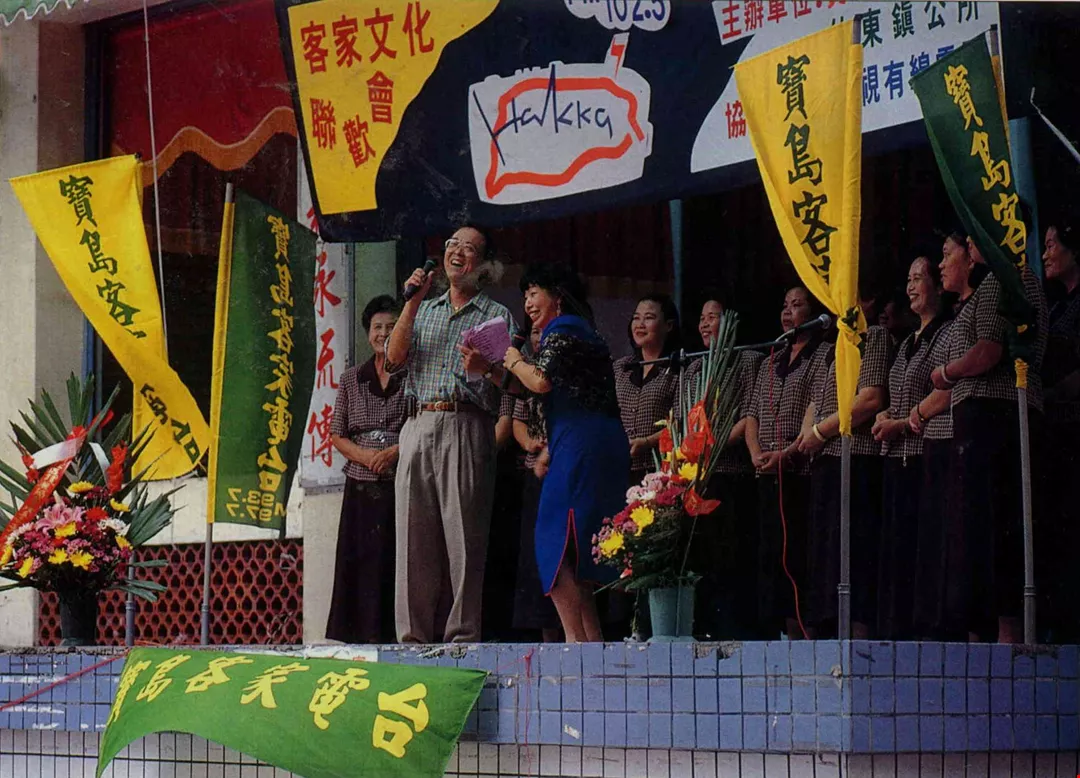
At the end of October, the station held a party for its listeners in a park in Chutung, but attendance was lower than in the past. Whither Formosa Hakka Radio?
Huang Mei-ying, the former head of the Academia Sinica's Institute of Ethnology, is also a listener. Though she only listens occasionally, she is very supportive of the station. She even has her son, a third-year student in primary school, listen, too. "It's an attitude," she says. Although her child won't necessarily learn to speak Hakka, she feels that he should at least be exposed to other languages and cultures.Empathy for other minorities
Those listening to the broadcasts aren't just listening to language; Formosa Hakka Radio produces a variety of programs, including programs covering news, politics and discussion such as "News Talk," "Hakka Forum" and "Town Hall," and shows on Hakka culture such as " Hakka Yodeling," "The Beauty of Hakka" and "Food Talk." In addition, there are also informative programs on the law, transportation, insurance, medicine, technology, health and music.
In looking at the station's programming, one is also becomes aware of its man-agement's respect for multiculturalism.
"The Sunrise Tribe" airs every Monday to Thursday evening from 9:00 to 10:00 p.m. Hosting duties on the show rotate between members of Taiwan's Saisiyat, Atayal, Ami and Paiwan aboriginal tribes, who introduce aboriginal language and culture to their listeners.
Those at the station, themselves members of the Hakka minority, appreciate the predicament of even smaller minority groups. Liu Hui-chen says, "From the time we were an underground station, Formosa Hakka Radio has always set aside a time for aboriginal programming. Our objective is to increase understanding between different ethnic groups."
Huang Mei-ying strongly approves of this policy. She says that ethnic consciousness cuts both ways. Although it can strengthen an ethnic group's feeling of ethnic identity, if it is coupled with a rejection of "others," it is very definitely not a good thing. While Formosa Hakka Radio is bringing about a coalescence of ethnicity, it has not forgotten to be respectful of the cultures of other ethnic groups; it is very open-minded.No experience to build on
Somewhat surprising is that none of the founders of the station had any experience in the radio business.
"None of us were working in our own field," says Jerry Wu, the current director of the station. Wu says that he was a teacher of accounting at Tunghai University, but when he became involved in the Hakka movement, he unexpectedly ended up working in broadcasting.
The only people they had with anything like experience in the field worked in the hardware side of things. These were people such as Huang Yung-dar, a professor of electronic engineering at National Taiwan University of Science and Technology, and Chen Kuei-hsien, an associate research fellow in the Institute of Nuclear and Molecular Sciences at the Academia Sinica, who knew a great deal about transmitting, data processing and electro-magnetic waves. They played a very important role in setting the station up.
But when the station made the transition from underground to legal status, from amateur to professional, personnel became an even greater headache.
Wu says, "People who have feelings for Hakka culture and have worked in the media are few and far between." According to Wu, of the 87 hosts currently employed by the station, fewer than 10 have previous media experience. Fewer still have experience and speak standard Hakka.
The non-standard Hakka of the program hosts is a source of distress to many older listeners.
Huang Yung-dar, who hosts " Hakka Yodeling," says that the Hakka of many young people has been heavily influenced by Mandarin, becoming a sort of "Hakkarin." For example, the first part of the word for "wedding invitation"-xitie in Mandarin-is pronounced something like the English word "he" in Hakka. Many young people, however, pronounce it like the Mandarin xi, making it sound as if it is a "death invitation" in Hakka. Another example is the word for "bathe"-literally, "wash-body" in Hakka. Again, the Mandarin xi sound has influenced the Hakka, making young people's pronunciation of the word sound like "dead body." Such non-standard pronunciations naturally sound terrible to elderly Hakka.
Nonetheless, the language difficulties are secondary. The station, which Chung Chao-cheng said "exerts a powerful centripetal force on the Hakka community and should have been able to do good things," now faces a crisis stemming from dissension among its own staff.
Chen Kuei-hsien, the station's chairman, says that problems which have long troubled the Hakka-including parochialism, resistance to change, the hegemony of the elderly over the young and, most particularly, rivalries between different political parties and differing views on the question of reunification with the mainland-have recurred at the station. "Wherever you have people, you have these kinds of problems. This just proves that Hakka are no different from other people," say Chen. He feels that these differences of opinion at the station are nothing much out of the ordinary.Making Hakka the issue
The founding and fund-raising for Formosa Hakka Radio were conducted under the auspices of "rescuing the Hakka." As a result, the emergence of various factions and the strong political stand of the station's programs have been greeted with suspicion by Hakka who espouse the principle of non-involvement in politics.
Jerry Wu admits that the station has made its views on political issues very clear. It has always retained the opposition character that was formed in its early days and has tended towards the stance of the island's largest opposition party, the DPP.
In fact, this is not the first instance among Hakka media in which the waving of a political banner has led to internal conflicts. Huang Tzu-yao, editor-in-chief at Hakka Magazine, says that the magazine's predecessor, Hakka Affairs, was also harmed by such conflicts.
Huang says that after the success of the "Give Back Our Mother Tongue" movement, which Hakka Affairs promoted, the magazine's circulation went through the roof. Later, when the magazine became too political in tone, subscriptions plummeted and it was unable to continue publishing. Fortunately, the Paochung Yimin Temple in Fangliao contributed a large sum of money which allowed the magazine to go on under the name of Hakka Magazine. The new magazine changed its tone, putting Hakka issues at the center and relegating party politics to the sidelines.
In spite the lesson of Hakka Magazine, Formosa Hakka Radio has been unable to avoid the same trap. Fortunately, some of its more reform-minded staff have become aware of the danger.
In moving from underground to legal status, most stations pass through a transition period. Formosa Hakka Radio is no different. "It's a different environment. The opposition character of the early days is no longer appropriate. The station needs to transform itself," says Liu Hui-chen.
Jerry Wu also believes that as the media is a public service, its political character should be moderated. He says that in the future, Formosa Hakka Radio will also move in this direction.A "culture gap"
In addition to factional struggles, Formosa Hakka Radio is also facing the problem of market segmentation.
The proclaimed goals of the station include "the preservation of the Hakka tongue and promotion of Hakka culture." However, the station has largely failed to attract younger listeners.
Looking at the demographics of the donors to the station, those who call in to its shows and participants in the events its promotes, it is obvious that its listeners and supporters come from among the older segment of the population.
Jerry Wu says that there is a positive correlation between the age of donors to the station and the size of their donation. "The older a Hakka is, the deeper his feelings about his ethnic identity and the more supportive of the station he is."
Chung Chao-cheng says that in the past the station's programs tended to be talk shows which discussed current events and the station's current difficulties. They were aired without any thought of their design. Now, however, shows are planned and evaluated. They are "younger" and more sophisticated.
According to Liu Hui-chen, in order to attract younger listeners the station has turned over some of its evening timeslots to on-campus Hakka clubs. The clubs participate in and host shows, including "Music Buffet," "Internet Live Music," "Jazz Mood" and "Studio Study Club." These are not the sort of programs that the older generation is interested in. "Older listeners have fled, and we haven't built up a younger audience."
Ada Im, head of Crystal Records and former manager of Taiwan FM Radio, makes a keen observation on how a small station must make a living in the Taipei area where it is surrounded by several large stations. "Market segmentation is critical." Im points out that although Formosa Hakka Radio's audience is clearly Hakka, they must use age and other factors break it down further. She says this is necessary because it is impossible to satisfy all groups simultaneously, and if they attempt to, they will "lose focus."Whither Hakka radio?
Still more worrisome are the station's source of financing and the prospect of its being unable to continue its operations. Because Formosa Hakka Radio was established as a foundation-backed public-service radio station, all profits must be used for public service activities. Moreover, in order to preserve its status as an instrument for the transmission of Hakka language and culture, station policy dictates that it will not stoop to broadcasting any programs on fortune telling or accepting advertisements for medications.
But internal struggles over the station's direction have led to a shrinking audience and a continuing decline in donations. Worse still, the economy has weakened and advertising has dropped off. In short, Formosa Hakka Radio is facing operational difficulties.
"My plan has always been for a change of format," says Chen Kuei-hsien. He says that if a media outlet wants to remain viable over the long haul, it cannot continue to hold out its hand to the public; it must become self-sufficient.
However, becoming self-sufficient in the commercial radio environment is easier said than done. Cheng Sheng Broadcasting's Hao Shih-ying says that in recent years most ads have gone to stations which employ pop idols and follow fashions-stations such as the Voice of Taipei and UFO, which have larger audiences. There's no way that smaller stations can get their hands on these large ad accounts.
"There is already less enthusiasm," admits Huang. Not only are the events the station sponsors losing money, people even turn up at them to protest.
But if the station doesn't survive, establishing another Hakka station will be very difficult. Li Chiao says, "Starting another station will be impossible." Wu concurs, stating, "There won't be another one." Wu believes that if Formosa Hakka Radio fails, those who have worked so enthusiastically and so hard to promote Hakka issues will be devastated. "That would be an unforgivable mistake," he says emphatically.
As Chen says, "Everybody is learning." This includes the board, the station director, the hosts and even the listeners. Everyone is reflecting on what they have learned from these trials.
Starting a business is difficult. Keeping it going is more difficult still. Finding a way to pull Formosa Hakka Radio through its ordeals will be a test of the wisdom of the Hakka people.


@List.jpg?w=522&h=410&mode=crop&format=webp&quality=80)


@List.jpg?w=522&h=410&mode=crop&format=webp&quality=80)
